Up to $500,000 Per Grant Available to Support Sustainable Five-Year Programs

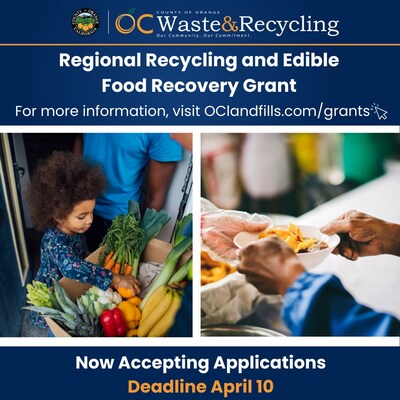
ORANGE COUNTY, Calif., March 2, 2026 /PRNewswire/ — OC Waste & Recycling (OCWR) is now accepting applications for the Regional Recycling and Edible Food Recovery Grant, a competitive five-year grant program designed to expand edible food recovery infrastructure and support statewide recycling and waste-reduction mandates.

Through the grant program, OCWR seeks to strengthen partnerships with Orange County Edible Food Recovery Organizations (EFROs), nonprofit organizations, jurisdictions, and other eligible entities to increase the recovery of surplus edible food for human consumption, reduce landfill disposal, and support compliance with California Senate Bill (SB) 1383. The program also supports innovative recycling and waste-reduction initiatives that benefit communities throughout Orange County.

“This grant program is an important investment in the partnerships necessary to recover more edible food and get it to the communities who need it most,” said Tom Koutroulis, Director of OC Waste & Recycling. “By supporting regional collaboration and sustainable programs, we are helping to bridge gaps for Orange County cities, nonprofits, and community organizations to meet the SB 1383 mandate for edible food recovery by helping expand critical infrastructure and capacity to reduce food waste locally.”

Across a five-year grant term, up to $6 million is available over the first three fiscal years, with individual grant awards not to exceed $500,000 per project. Eligible projects may include, but are not limited to, new or expanded edible food recovery programs, cold storage and transportation infrastructure, data-tracking software and equipment, education and outreach programs, and supplies related to edible food recovery and distribution.

Key Dates for the Grant Program include:

  • Application Period Opens: March 2, 2026, at 8 a.m.
  • Virtual Q&A Meeting: March 19, 2026, at 10 a.m. via Zoom.
  • Application Submission Deadline: April 10, 2026, at 4:59 p.m.

Interested applicants are encouraged to visit www.OClandfills.com/grants for complete program details, eligibility requirements, application materials, virtual Q&A Zoom invitation, and submission instructions.

About OC Waste & Recycling (OCWR)
OCWR serves the County’s solid waste disposal needs through resource recovery, operating public landfills, protecting the local environment, investing in renewable energy enterprises and promoting recycling to ensure a safe and healthy community for current and future generations. The department manages one of the nation’s premier solid waste disposal systems and three composting greenery sites, all serving residents and businesses in the County’s 34 cities and its unincorporated areas. OCWR’s three active landfills and compost greeneries reflect environmental engineering at its best. Learn more at www.OClandfills.com.

Cision View original content to download multimedia:https://www.prnewswire.com/news-releases/oc-waste–recycling-announces-6m-in-grant-funding-towards-regional-edible-food-recovery-in-orange-county-302701381.html

SOURCE Orange County – OC Waste & Recycling

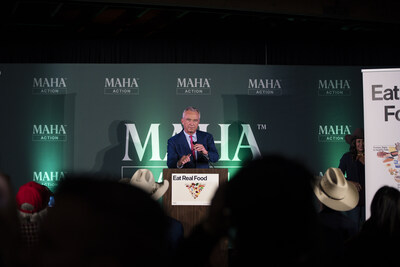
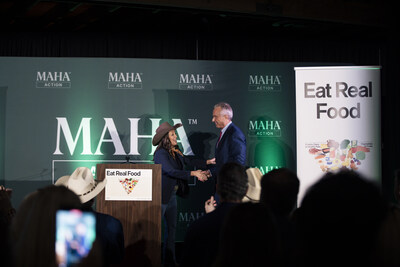
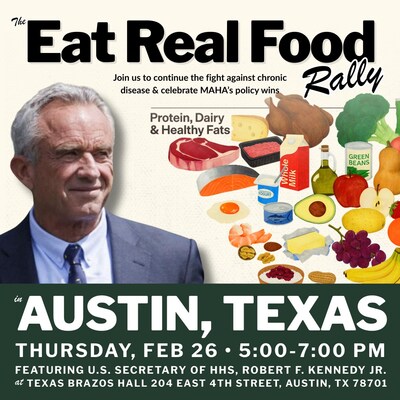
AUSTIN, Texas, March 2, 2026 /PRNewswire/ — HHS Secretary Robert F. Kennedy Jr. announced that medical schools will soon teach nutrition after the addition of nutrition questions to licensing exams, and revealed that baby formula will be fully tested by April for PFAS, pesticides, and heavy metals at the Eat Real Food Rally presented by MAHA Action.

Watch the full rally: (Link here)

Speaking to a capacity crowd at Brazos Hall, Secretary Kennedy also announced the closure of the GRAS loophole, requiring any new food ingredient to provide proof of safety. Companies including Dunkin’ Donuts and Starbucks will be required to produce safety data they were supposed to have maintained. The reforms aim to ensure American foods follow the highest safety and nutritional standards globally.

“A healthy person has a thousand dreams. A sick person only has one. And right now, most of our kids only have one dream, and that’s not good for our country,” Secretary Kennedy said, calling for restoration of cooking, family meals, and human connection as a foundation for rebuilding American health.

The Secretary described the new food pyramid as a transformative document that will redirect USDA’s $405 million per day in food spending away from ultra-processed food toward real food for children, military personnel, and low-income families.

National Movement Gains Momentum

White House Senior Advisor Calley Means pointed to concrete wins previously thought impossible due to lobby power, including 25 states achieving SNAP soda removal. He noted the new dietary guidelines will shift billions of dollars away from food corporations to American farmers, with 70% of school meals currently ultra-processed.

Entrepreneur Jason Karp, founder of HumanCo, cited alarming statistics: colorectal cancer is now the fastest growing cancer and number one killer of men under 50, with cases in children up 500% in one generation.

Congresswoman Monica De La Cruz (TX-15) reinforced these themes with her Healthy Babies Act, ensuring mothers of all income levels can feed their children real, wholesome food from day one.

“American families are ready to Eat Real Food, and tonight’s turnout proved it,” said Alex Hardy, CEO of MAHA Holdings, one of the event’s organizers. “These wins are already reaching patients in hospitals, service members on bases, and children in school cafeterias across the country.”

Texas Leads Implementation

Joe Gebbia Jr., Chief Design Officer of the United States and co-founder of Airbnb, highlighted Texas as a national model. The Make Texas Healthy Again legislative package has resulted in 80% of Texas school food now grown or grazed in-state, directing $250 million annually to local beef, dairy, produce, and eggs. Additional reforms include classroom nutrition education, additive warning labels, and removal of junk food from schools and SNAP.

The rally follows the MAHA Center’s Super Bowl message reaching over 150 million viewers, as health leaders transform grassroots support into federal policy and state-level action.

About MAHA Action

MAHA Action is a 501(c)(4) organization dedicated to organizing and empowering Americans to advocate for a healthier America. Through grassroots mobilization, policy advocacy, and public education, MAHA Action supports the Make America Healthy Again movement’s mission to reverse America’s chronic disease epidemic by championing real food, metabolic health, and transparent food safety standards.

Learn more at mahaaction.com

Media Contact:
Tony Lyons
press@mahaaction.com

Cision View original content to download multimedia:https://www.prnewswire.com/news-releases/hhs-secretary-kennedy-announces-nutrition-requirements-for-medical-licensing-baby-formula-safety-standards-at-austin-rally-for-real-food-302701305.html

SOURCE MAHA Action

AUSTIN, Texas, March 2, 2026 /PRNewswire/ — HHS Secretary Robert F. Kennedy Jr. announced that medical schools will soon teach nutrition after the addition of nutrition questions to licensing exams, and revealed that baby formula will be fully tested by April for PFAS, pesticides, and heavy metals at the Eat Real Food Rally presented by MAHA Action.

Watch the full rally: (Link here)

Speaking to a capacity crowd at Brazos Hall, Secretary Kennedy also announced the closure of the GRAS loophole, requiring any new food ingredient to provide proof of safety. Companies including Dunkin’ Donuts and Starbucks will be required to produce safety data they were supposed to have maintained. The reforms aim to ensure American foods follow the highest safety and nutritional standards globally.

“A healthy person has a thousand dreams. A sick person only has one. And right now, most of our kids only have one dream, and that’s not good for our country,” Secretary Kennedy said, calling for restoration of cooking, family meals, and human connection as a foundation for rebuilding American health.

The Secretary described the new food pyramid as a transformative document that will redirect USDA’s $405 million per day in food spending away from ultra-processed food toward real food for children, military personnel, and low-income families.

National Movement Gains Momentum

White House Senior Advisor Calley Means pointed to concrete wins previously thought impossible due to lobby power, including 25 states achieving SNAP soda removal. He noted the new dietary guidelines will shift billions of dollars away from food corporations to American farmers, with 70% of school meals currently ultra-processed.

Entrepreneur Jason Karp, founder of HumanCo, cited alarming statistics: colorectal cancer is now the fastest growing cancer and number one killer of men under 50, with cases in children up 500% in one generation.

Congresswoman Monica De La Cruz (TX-15) reinforced these themes with her Healthy Babies Act, ensuring mothers of all income levels can feed their children real, wholesome food from day one.

“American families are ready to Eat Real Food, and tonight’s turnout proved it,” said Alex Hardy, CEO of MAHA Holdings, one of the event’s organizers. “These wins are already reaching patients in hospitals, service members on bases, and children in school cafeterias across the country.”

Texas Leads Implementation

Joe Gebbia Jr., Chief Design Officer of the United States and co-founder of Airbnb, highlighted Texas as a national model. The Make Texas Healthy Again legislative package has resulted in 80% of Texas school food now grown or grazed in-state, directing $250 million annually to local beef, dairy, produce, and eggs. Additional reforms include classroom nutrition education, additive warning labels, and removal of junk food from schools and SNAP.

The rally follows the MAHA Center’s Super Bowl message reaching over 150 million viewers, as health leaders transform grassroots support into federal policy and state-level action.

About MAHA Action

MAHA Action is a 501(c)(4) organization dedicated to organizing and empowering Americans to advocate for a healthier America. Through grassroots mobilization, policy advocacy, and public education, MAHA Action supports the Make America Healthy Again movement’s mission to reverse America’s chronic disease epidemic by championing real food, metabolic health, and transparent food safety standards.

Learn more at mahaaction.com

Media Contact:
Tony Lyons
press@mahaaction.com

Cision View original content to download multimedia:https://www.prnewswire.com/news-releases/hhs-secretary-kennedy-announces-nutrition-requirements-for-medical-licensing-baby-formula-safety-standards-at-austin-rally-for-real-food-302701305.html

SOURCE MAHA Action

AUSTIN, Texas, March 2, 2026 /PRNewswire/ — HHS Secretary Robert F. Kennedy Jr. announced that medical schools will soon teach nutrition after the addition of nutrition questions to licensing exams, and revealed that baby formula will be fully tested by April for PFAS, pesticides, and heavy metals at the Eat Real Food Rally presented by MAHA Action.

Watch the full rally: (Link here)

Speaking to a capacity crowd at Brazos Hall, Secretary Kennedy also announced the closure of the GRAS loophole, requiring any new food ingredient to provide proof of safety. Companies including Dunkin’ Donuts and Starbucks will be required to produce safety data they were supposed to have maintained. The reforms aim to ensure American foods follow the highest safety and nutritional standards globally.

“A healthy person has a thousand dreams. A sick person only has one. And right now, most of our kids only have one dream, and that’s not good for our country,” Secretary Kennedy said, calling for restoration of cooking, family meals, and human connection as a foundation for rebuilding American health.

The Secretary described the new food pyramid as a transformative document that will redirect USDA’s $405 million per day in food spending away from ultra-processed food toward real food for children, military personnel, and low-income families.

National Movement Gains Momentum

White House Senior Advisor Calley Means pointed to concrete wins previously thought impossible due to lobby power, including 25 states achieving SNAP soda removal. He noted the new dietary guidelines will shift billions of dollars away from food corporations to American farmers, with 70% of school meals currently ultra-processed.

Entrepreneur Jason Karp, founder of HumanCo, cited alarming statistics: colorectal cancer is now the fastest growing cancer and number one killer of men under 50, with cases in children up 500% in one generation.

Congresswoman Monica De La Cruz (TX-15) reinforced these themes with her Healthy Babies Act, ensuring mothers of all income levels can feed their children real, wholesome food from day one.

“American families are ready to Eat Real Food, and tonight’s turnout proved it,” said Alex Hardy, CEO of MAHA Holdings, one of the event’s organizers. “These wins are already reaching patients in hospitals, service members on bases, and children in school cafeterias across the country.”

Texas Leads Implementation

Joe Gebbia Jr., Chief Design Officer of the United States and co-founder of Airbnb, highlighted Texas as a national model. The Make Texas Healthy Again legislative package has resulted in 80% of Texas school food now grown or grazed in-state, directing $250 million annually to local beef, dairy, produce, and eggs. Additional reforms include classroom nutrition education, additive warning labels, and removal of junk food from schools and SNAP.

The rally follows the MAHA Center’s Super Bowl message reaching over 150 million viewers, as health leaders transform grassroots support into federal policy and state-level action.

About MAHA Action

MAHA Action is a 501(c)(4) organization dedicated to organizing and empowering Americans to advocate for a healthier America. Through grassroots mobilization, policy advocacy, and public education, MAHA Action supports the Make America Healthy Again movement’s mission to reverse America’s chronic disease epidemic by championing real food, metabolic health, and transparent food safety standards.

Learn more at mahaaction.com

Media Contact:
Tony Lyons
press@mahaaction.com

Cision View original content to download multimedia:https://www.prnewswire.com/news-releases/hhs-secretary-kennedy-announces-nutrition-requirements-for-medical-licensing-baby-formula-safety-standards-at-austin-rally-for-real-food-302701305.html

SOURCE MAHA Action

LUGANO, Switzerland, March 2, 2026 /PRNewswire/ — BE OPEN has had an opportunity to present its sustainability-focused competition programme at the poster presentation during the Young Energy Researchers Conference and other events of the World Sustainable Energy Days (WSED) that took place between February 24 and 27 in Wels, Austria.

The event is a leading annual conference on the energy transition and climate neutrality with participants from more than 60 countries. As part of the WSED, the Young Energy Researchers Conference presents the work and achievements of young researchers in the fields of energy efficiency and biomass. The conference offers participants the opportunity to interact with researchers, industry experts, EU and national officials and public sector organisations from all over the world.

BE OPEN used this amazing opportunity to promote the results and ambitions of its own seven-year-long sustainability-themed competition programme for students and recent graduates that awards the most forward and promising solutions with money prizes and opportunities to connect with decision-makers at the most important sustainability events.

BE OPEN’s programme that chooses to focus on one particular SDG every year, to raise awareness and encourage problem-solving approach among young professionals in creative and engineering fields.

On behalf of BE OPEN, Austria-based Founder Elena Baturina expressed gratitude for the opportunity to speak about raising new sustainability leaders for the global community: “Through our competitions, we recognize, promote, financially support and celebrate the best design ideas from young people around the world. Many of you will quite soon become the avant-garde of sustainable energy industries, and become an inspiration for the young innovators to come. To help that cause, we at BE OPEN will continue to provide a platform for discussions, idea exchanges, and self-education; to boost young people’s confidence and help them realize their importance in shaping the future”.

BE OPEN acts as a think tank whose mission is to promote people and ideas today to build solutions for tomorrow. It was set up and is consistently supported by philanthropist and businessperson Elena Baturina, who has been investing in renewable energy sources and research since 2014. BE OPEN was set up to harness creative brain power through a system of conferences, competitions, exhibitions, master classes and cultural events.

Cision View original content:https://www.prnewswire.com/news-releases/be-open-praises-young-people-for-helping-the-sustainable-shift-during-the-world-sustainable-energy-days-302701243.html

SOURCE BE OPEN Foundation

March 2, 2026 /3BL/ – The Healthcare Plastics Recycling Council is pleased to appoint Paul D’Annunzio, Sustainability Manager at The Resource Group, as Chair of the Healthcare Facility Advisory Board (HFAB).

Paul succeeds Avery Palardy, Executive Director, Climate and Sustainability at Beth Israel Lahey Health, who served as Chair since 2024. We’re grateful for Avery’s contributions as the first HFAB Chair and her demonstration of strong leadership as she helped to guide the facilitation of the HFAB.

“We’re thrilled to welcome Paul as the next HFAB Chair,” shared Tracy Taszarek, Executive Director of HPRC. “Paul has been a dedicated member of HPRC for several years and brings a wealth of sustainability knowledge and experience to the role. We’re excited for him to continue building on the strong foundation Avery built as we continue to grow and evolve the advisory board.”

Paul is an Environmental, Health & Safety management professional currently working in the healthcare sector with The Resource Group, where he supports hospitals and health systems in creating safer, more sustainable care environments. Drawing on his background in civil and environmental engineering and an MBA, Paul focuses on operational excellence, regulatory compliance, and sustainability initiatives that reduce waste and environmental impact in healthcare settings while protecting patients, staff, and communities

“I’m honored to serve as Chair of the Healthcare Facility Advisory Board and to work alongside such a dedicated group of professionals committed to advancing sustainability in healthcare,” shared Paul. “Hospitals face unique challenges when it comes to plastics recycling, and the HFAB plays a critical role in elevating real‑world insights from the front lines. I look forward to helping guide our collective efforts as we identify practical solutions, remove barriers, and support healthcare facilities in creating safer, more sustainable environments for the patients and communities we serve.”

The HFAB members assist HPRC in identifying high value needs and opportunities for action, share firsthand perspective and understanding of recycling barriers that exist within healthcare facilities, and provide access to data, information, and resources at the hospital level. The Chair is responsible for providing strategic direction for the HFAB and leading the quarterly meetings.


About HPRC

HPRC is a private technical coalition of industry peers across healthcare, recycling, and waste management industries seeking to improve the recyclability of plastic products within healthcare. Made up of more than 30 brand-leading and globally recognized members, HPRC explores ways to enhance the economics, efficiency, and ultimately the quality and quantity of healthcare plastics collected for recycling in support of a circular plastics economy. HPRC is active across the United States and Europe working with key stakeholders, identifying opportunities for collaboration, and participating in industry events and forums. For more information, visit www.hprc.org and follow HPRC on LinkedIn.

$1.7B in Earnings, 26.3M Sq. Ft. of Space & 19,600 Jobs Fuel Top Ranking

CHICAGO, March 2, 2026 /PRNewswire/ — Chicago has again been named the top U.S. metro for corporate relocation and site selection by Site Selection Magazine, marking a record 13th consecutive year in the No. 1 position. The annual ranking, based on verified corporate facility projects, is widely regarded as a measure of business expansion and investment activity nationwide and underscores Chicago’s sustained competitiveness in attracting capital and jobs. Illinois ranked No. 2 among states for corporate expansion projects.

“Chicago’s continued leadership in corporate relocation and expansion reflects the strengths our city has built over generations,” said Mayor Brandon Johnson. “From manufacturing and freight to transportation and global logistics, we have long served as the backbone of American commerce. That industrial depth, combined with modern infrastructure and a skilled workforce, is why companies continue to choose Chicago to grow, invest, and innovate. Recent commitments from Universal Horror Unleashed, Hexaware Technologies, The Hand and The Eye, Freedman Seating Company, Infleqtion, and the collaboration between David Byrne and The Goodman demonstrate that our historic strengths continue to power new industries and new opportunities.”

World Business Chicago (WBC) tracks corporate expansions, relocations, and new market entrants across the city and the Chicagoland region through its Pro-Chicagoland Decisions (PCDs) metric. The WBC Research Center dataset captures announced office, industrial, headquarters, warehouse, data center, and call center projects that meet defined square footage and employment thresholds, i.e., a standardized measure of business investment and growth in the city and region.

In 2025, WBC recorded 223 qualifying PCDs, a 40% year-over-year increase. These projects include companies expanding existing local operations, relocating from outside the region, or entering the Chicagoland market for the first time. Based on WBC’s methodology, this activity corresponds to an estimated 19,600 new and retained jobs, $1.7 billion in annual earnings, and more than 26 million square feet of commercial and industrial space. The pace of expansion and market entry outperformed 2024 totals and reflects sustained business confidence in the region’s workforce, infrastructure, and market access.

“Site Selection Magazine’s annual rankings once again underscore the scale of Chicagoland’s business momentum,” said Adam Bruns, Editor in Chief, Site Selection Magazine. “All told, more than 3,100 corporate facility projects qualifying for our database landed last year in the 30 U.S. metros listed among the top 10 by total projects in each of three population tiers. Chicagoland’s projects represented nearly 20% of the total. Those are some mighty big shoulders. Mayor Brandon Johnson is fond of the Scripture that says, ‘Where your treasure is, there your heart will be also.’ The quantity of corporate treasure pouring into his city and the entire region seems to indicate the economic heart of this globally connected heartland region is beating like never before.”

INDUSTRY BREAKDOWN: POWERING ECONOMIC GROWTH

WBC’s 2025 PCDs reflect a diversified economy performing across both legacy industries and high-growth sectors. Across 223 total projects, companies invested in areas that combine production scale, innovation capacity, logistics strength, and consumer-driven vibrancy — translating directly into jobs, capital investment, and long-term competitiveness.

  • Manufacturing remained the largest sector, accounting for 38% of all projects (86 total) and delivering 2,806 new jobs — reinforcing the region’s strength in advanced production and reshoring activity.
  • Professional, Scientific & Technical Services represented 16% (36 projects) and 632 new jobs, highlighting continued expansion in engineering, technology, and innovation-driven enterprises.
  • Transportation & Warehousing comprised 13% (29 projects) and 225 new jobs, reflecting sustained demand for Chicagoland’s unmatched multimodal logistics infrastructure.
  • Finance & Insurance accounted for 6% (14 projects) and 190 new jobs, with growth across financial services, insurance analytics, and fintech-related operations.
  • Retail, Arts & Entertainment, and Accommodation & Food Services collectively contributed 2,550 new jobs — underscoring the growing economic impact of talent-driven industries and destination-oriented investment.

Among the largest projects counted in the 2025 Site Selection ranking include:

  • Amazon – 1,200 jobs (Will County)
  • Hollywood Casino Joliet – 600 jobs (Will County)
  • NBC Universal Horror Unleashed – 400 jobs (Chicago)
  • Fortune Brands Innovations – 400 jobs (Lake County)
  • Hexaware Technologies – 250 jobs (Chicago)

“Chicago wins because of structural advantages— central geography at the heart of North American trade, the busiest multimodal freight network in the country, unmatched global connectivity through O’Hare, and a 5.5 million–person workforce that spans advanced research to essential operations,” said Phil Clement, President & CEO, World Business Chicago. 
“Add nearly 150,000 students entering our regional economy each year, competitive utilities, abundant water, scalable industrial space, and a deliberate focus on vibrancy as an economic driver, and you have a region built for sustained growth.”

Clement noted that the organization’s long-term strategy, Chicago 2050 | A Plan for Economic Growth and Jobs, outlines a roadmap to grow the regional economy from approximately $950 billion today to more than $1.4 trillion by 2050. The plan emphasizes that sustained growth will depend not only on established sectors such as manufacturing, TD&L, and finance, but also on the economic power of big ideas like quantum, clean energy, and vibrancy. Download the full Chicago 2050 report here.

In Chicago, vibrancy is not peripheral to economic growth. It contributes directly to it. Cultural and experience-driven investments attract talent, increase visitor spending, activate commercial corridors, and strengthen the city’s global profile. Projects such as David Byrne’s Theatre of the Mind, Universal’s Horror Unleashed, and The Hand and the Eye, which is transforming a historic Michigan Avenue mansion into what is described as the world’s only permanent magic and illusion residency venue, demonstrate how adaptive reuse and creative reinvention are expanding the economic potential of existing assets while complementing new development across the city. As WBC advances the Chicago 2050 Plan for Economic Growth & Jobs, this convergence of culture, design, and technology reinforces a broader principle: long-term competitiveness depends not only on infrastructure and industry, but also on how it strengthens the vitality that attracts people and investment.

ONE REGION, ONE VISION

The Site Selection Top Metro ranking reflects the strength of a city and region that competes — and wins — as one. Through the Greater Chicagoland Economic Partnership (GCEP), Chicago and Cook, DuPage, Kane, Kendall, Lake, McHenry, and Will counties align around a unified strategy to attract capital, grow industry, and scale opportunity across the entire seven-county footprint. Learn more about GCEP here.

“This recognition reflects the evolution of Chicagoland as a fully integrated economic region,” said Kevin Considine, Chair of the Greater Chicagoland Economic Partnership and President & CEO of Lake County Partners. “Major investors aren’t evaluating city or county boundaries — they’re looking at regional scale, talent depth, infrastructure, and long-term competitiveness. Chicagoland delivers on all of it. The continued expansion of companies like Fortune Brands reinforces the confidence corporate leaders have in our collaborative model and our ability to execute.”

That confidence is translating into concrete investment decisions across the region, spanning advanced manufacturing, logistics, corporate headquarters, and global consumer brands. Companies are expanding operations, deepening their footprint, modernizing facilities, and committing long-term capital in communities across Chicagoland. 

“Consolidating and expanding our headquarters in Deerfield was a strategic decision rooted in long-term growth,” said Kristin Papesh, Chief Human Resources Officer of Fortune Brands Innovations. “Chicagoland offers the talent depth, connectivity, and collaborative ecosystem we need to accelerate innovation and operate at scale. Our new campus is already strengthening engagement and speed to market — and this region provides the workforce and business environment that positions us for sustained success.”

In 2025, GCEP strengthened cross-county coordination and expanded international engagement, including hosting SelectCHI for global decision-makers and leading a strategic trade mission to Japan. Operating through WBC as the region’s convener, the GCEP supported major investments by Abbott Laboratories, Fortune Brands, and Osaka Soda. By aligning governments, industry, and workforce partners, the region competes as one, resulting in new jobs, expanded facilities, and long-term capital investment.

The Site Selection Top U.S. Metro ranking affirms that Chicago’s economic strength extends across a fully connected network of industries, institutions, and counties. From advanced manufacturing and logistics hubs to research universities and innovation centers, the region operates as one coordinated economic system. That alignment converts corporate interest into executed investment and measurable growth.

“Chicago is the greatest city in the world to build, grow, and scale a business,” said Mayor Johnson. “If you are planning your next phase of expansion, whether next year or over the next generation, let’s talk. All of us are ready to help you realize your plans, meet your goals, and become part of Chicago’s next chapter of growth.”

Media Contact:
Andrew Hayes
312-823-4333
ahayes@worldbusinesschicago.com

Regional Leaders Declare Chicagoland a
National Model for Corporate Growth & Investment

Cook County | Toni Preckwinkle, Cook County President:

“This recognition reflects the strength of Northeastern Illinois as a region that competes and succeeds through collaboration, talent and long-term investment. Our diverse economy, world-class workforce and growing innovation sectors, including quantum and advanced manufacturing, position us to lead in a rapidly changing global marketplace. Earning the top ranking once again underscores the value of the Greater Chicagoland Economic Partnership and our shared commitment to attracting new investment, supporting existing businesses and driving sustainable growth across Northeastern Illinois.”

DuPage County | Deb Conroy, DuPage County Chair:

“We are very pleased and proud that Site Selection Magazine has recognized the Chicagoland region for business expansion and relocation for an unprecedented 13 consecutive years. This recognition reinforces our firm belief that Chicagoland is benefiting from our collective efforts concerning matters critical to business expansion and future growth. We will continue to work hard and promote the region as a premier global business location.”

Kane County | Corinne Pierog, Kane County Board Chairman:

“The Kane County Economic Development Organization, now in its second year, has strengthened and modernized our approach to economic growth. Now fully operational, the organization is advancing strategic partnerships and targeted financial tools to drive expansion in manufacturing, agriculture and tourism, sectors that define Kane County’s competitive advantage.

In collaboration with the Greater Chicago Economic Partnership and World Business Chicago, Kane County is firmly positioned as a competitive job generator on both the regional and global stage. That momentum is reflected in the Chicagoland region’s recognition by Site Selection Magazine for business expansion and relocation for an impressive 13 consecutive years.

The Kane County Economic Development Organization’s mission is centered on collaborative and sustainable business recruitment, workforce alignment, international engagement, and the continued affirmation of our agricultural industry, ensuring Kane County grows as a dynamic, multi-level hub for innovation, job creation, and long-term economic prosperity.”

Kendall County | Matt Kellogg, Kendall County Board Chairman:

“This recognition affirms what we see in Kendall County every day: businesses are choosing to invest in communities that are ready for economic development. As part of the Greater Chicagoland Economic Partnership, Kendall County understands that our success is tied to the strength and appeal of the entire region. Through this partnership, we now compete on a global stage while delivering local results to our residents. From manufacturing to logistics and professional services, Kendall County offers substantial land, a skilled workforce, and strategic access to major transportation corridors. We remain committed to smart growth that brings high-quality jobs and long-term opportunities to the region. As our population continues to grow exponentially, our infrastructure and capacity only improve further for continued economic development.”

Lake County | Sandy Hart, Lake County Board Chair:

“Chicagoland’s continued recognition as the #1 U.S. Metro for corporate relocation and site selection speaks volumes about the strength of our regional collaboration, diverse talent pipeline, and world-class infrastructure. Lake County is proud to play a key role in that success story. In 2025, Lake County was named one of the top 10 counties in the U.S. for site selection and celebrated its strongest year on record for capital investment and job creation.

When businesses choose this region, they’re choosing innovation, connectivity, and communities that are committed to sustainable, long-term growth. We will continue working with our partners across the region to ensure companies and people not only relocate here but thrive as well.”

McHenry County | Michael Buehler, McHenry County Board Chairman:

“For 13 straight years, Site Selection Magazine has recognized the Chicago Metro area’s unmatched economic strength—its world-class workforce, infrastructure, innovation, and business climate. No region can match what we bring to the table for job creators, investors, and innovators, big and small. McHenry County is proud to join the City of Chicago, and our county and municipal partners in the Greater Chicagoland Economic Partnership, in celebrating this milestone.”

Will County | Jennifer Bertino Tarrant, Will County Executive:

“The Chicagoland Region continues to lead the nation in attracting large-scale projects that deliver high-wage, sustainable careers. By working together, local leaders throughout the region have been able to harness our shared assets, drive development, and deliver results for our residents. It’s important that we keep this momentum going to ensure continued investment in our communities.”

Cision View original content to download multimedia:https://www.prnewswire.com/news-releases/chicagoland-named-1-us-metro-for-corporate-relocation–site-selection-302701189.html

SOURCE World Business Chicago

CALGARY, Alberta, March 2, 2026 /3BL/ – Benevity, Inc., the leading provider of global corporate purpose software, today released a new report that reveals a growing tension between corporate volunteering and nonprofit needs as employee volunteering reaches record levels. Benevity Impact Labs’ State of Corporate Volunteering 2026 report highlights continued and significant growth in employee volunteer participation. However, amidst a government funding crisis, a volatile economy and a rapidly changing AI landscape, nonprofit needs are shifting. While volunteering remains a top priority for corporate impact programs, nonprofits list funding as their top strategic priority, which demands that corporate impact leaders re-consider whether their current programs are designed to meet the needs of the future.

As 2026 marks the United Nations’ International Volunteer Year and a global spotlight is placed on volunteering as a driver of social cohesion, the Benevity report surfaces another growing disconnect. While corporate volunteering remains a key driver of employee retention and culture-building, the data reveals a transition toward more episodic employee engagement. This calls for companies to move beyond the optics of high participation and toward a sustainable model that prioritizes more consistent, specialized – including AI-centric – support that nonprofits require to thrive.

“On paper, corporate volunteering has never looked better with record rates of employee volunteerism,” said Sona Khosla, Chief Impact Officer at Benevity. “Since the pandemic, we’ve successfully embedded employee volunteering across the corporate landscape, and companies have increased their investment, but we haven’t yet optimized it for the world we live in today. We cannot continue to allow hours to imply impact. When you look closely, you see more volunteers giving less time, nonprofits asking for different forms of support, and very little measurement of actual outcomes. That’s a clear signal the system needs to evolve.”

The State of Corporate Volunteering 2026: A System Ripe for Reimagining analyzes anonymized, aggregated data from the Benevity platform between 2019 and 2025, as well as nonprofit surveys and third‑party research.

Key findings from the State of Corporate Volunteering 2026

The report offers current data and major trends shaping the future of corporate volunteering:

  • Companies are driving record rates of employee volunteering. Corporate volunteers logged 23.7 million approved hours in 2025, a 175% increase since 2019, while the number of unique volunteers more than tripled to 1.87 million. Average program participation rates rose 30%, from 10.4% to 13.6%.
  • The depth of employee volunteering is declining. Average hours per volunteer fell from 16.4 to 12.7 per year over the six‑year period.
  • The phenomenon of “micro‑volunteers” is increasing. Employees contributing fewer than five hours per year now account for roughly 60% of all volunteers, signaling a shift toward short, flexible activities over long‑term commitments.
  • The gap between corporate priorities and nonprofit needs is widening. Most companies are planning to increase budgets for employee, team and skills‑based volunteering, yet only about 20% of nonprofit leaders say corporate volunteers contribute meaningfully to long‑term capacity. Many nonprofits report difficulty finding volunteers with the right skills or availability during the workday, even as opportunities for service projects are growing.
  • AI literacy is a critical, unmet need for nonprofits. Data from Benevity partner, Goodera, shows 71% of nonprofits identified the ability to leverage AI for operational efficiency as an urgent priority, from communications and fundraising to impact measurement. Yet Benevity data finds that only 3% of nonprofits are using AI extensively today, with many still experimenting or not considering it at all — creating a major opportunity for skills‑based volunteering.
  • A measurement gap is obscuring business value and nonprofit impact. The research confirms that employee volunteering drives business value, but most companies are not measuring business outcomes as a result of corporate investments in volunteering.

“The UN’s International Volunteer Year (IVY) comes as corporate volunteering is at an inflection point,” Khosla added. “The next chapter will belong to companies that work deeply with nonprofits to re-imagine volunteering programs with a focus on mutualism for nonprofits and employees, and a move beyond counting hours to achieving higher-level business objectives.”

###

About Benevity

Benevity, a certified B Corporation, is the global leader in enterprise social impact software. Benevity’s all-in-one platform empowers the world’s most purpose-driven companies to seamlessly integrate corporate social responsibility into their core business strategy – driving measurable, scalable, and lasting impact. Benevity has supported more than $44 billion to more than 560,000 nonprofit organizations and enabled over 7.7 million changemakers worldwide since 2008, empowering organizations to build trust, engage employees, boost retention, and drive innovation. Its unified platform supports giving, volunteering, granting, and employee mobilization – backed by intelligent insights and a secure, global infrastructure. For more information, visit www.benevity.com


About Benevity Impact Labs

Benevity Impact Labs is a social innovation lab that brings new data, research and insights to help companies, nonprofits and individuals accelerate their social impact and inclusion efforts. With unparalleled access to the world’s most iconic brands, Benevity Impact Labs combines Benevity’s robust data and insights with third-party research to report on the top trends shaping corporate purpose and to provide measurable proof of the value of social impact. For more insights, visit benevity.com/research.

Two weeks ago we wrote that the U.S. sustainability agenda is decentralizing — moving from Washington to courtrooms, statehouses, and corporate boardrooms. This issue’s Top Stories make the case even harder to ignore. The federal government took what may be its most sweeping climate rollback yet, and within days the response came from every direction: a major state legislature, a coalition of health and environmental organizations, and Republican attorneys general staking out their own ground on corporate sustainability. The common thread isn’t partisan — it’s jurisdictional. The question is no longer whether climate policy moves forward, but who gets to set the terms.

On February 12, the Trump administration repealed the EPA’s 2009 endangerment finding — the legal determination that greenhouse gases threaten public health and welfare. For 17 years this finding was the foundation for virtually every federal climate regulation under the Clean Air Act. 

As reported by Sustainability Online, less than a week later a broad coalition — including the American Lung Association, Sierra Club, NRDC, Environmental Defense Fund, and Physicians for Social Responsibility — filed suit in the D.C. Circuit, arguing the repeal violates the Clean Air Act and ignores nearly two decades of strengthening scientific evidence. This case will almost certainly define the boundaries of federal climate authority for years to come — and some observers believe the administration may be deliberately seeking a Supreme Court showdown.

Meanwhile, ESG Today reported that the New York State Senate passed the Climate Corporate Data Accountability Act on a 40-22 vote. The Act, modeled closely on California’s SB 253 bill, will requires companies with more than $1 billion in revenue to report Scope 1, 2, and 3 greenhouse gas emissions annually. The bill now moves to the Assembly and Governor Hochul’s desk. The timing matters: the EPA proposed ending its own federal Greenhouse Gas Reporting Program just months ago, and New York is stepping directly into that gap. If signed, it would make New York the second state to mandate comprehensive corporate emissions disclosure, reinforcing a pattern we flagged last issue — when federal action retreats, state-level action accelerates.

Not all state-level action is pushing in the same direction. ESG Today reports that a coalition of ten Republican attorneys general, led by Florida’s James Uthmeier, sent letters to nearly 80 companies warning that participation in sustainable packaging groups — including the U.S. Plastics Pact and the Sustainable Packaging Coalition — could expose them to antitrust liability. Legal scholars dispute this, and the targeted organizations say their activities, which include developing standards for sustainable packaging, are lawful.

Regardless of the political crosswinds, Extended Producer Responsibility (EPR) packaging compliance is already the law in multiple states — and the operational demands are real. Also in our Top Stories, G&A Institute’s latest blog walks companies through the practical steps of preparing packaging data for EPR reporting, building on our recent resource paper examining the rapid expansion of EPR legislation nationwide. For companies placing packaged goods on the U.S. market, this is no longer a future risk — it’s a current obligation.

The short-term story this week is messy and more complex than a simple rollback narrative. Federal climate authority is being challenged in court, some states are writing their own climate disclosure rules, and other states are trying to penalize companies for voluntarily pursuing sustainability goals. The G&A team continues to closely track these developments, along with international news from ISO’s new global climate adaptation standard to the EU’s evolving CSRD framework. We are available to work with you to develop and implement sustainability reporting programs that will stand the test of time. Reach out to us at info@ga-institute.com.

This is just the introduction of G&A’s Sustainability Highlights newsletter this week. Click here to view the full issue

The brand continues its collaboration with the American Diabetes Association to tackle a critical Hispanic health issue with authentic menu upgrades, encouraging families to get screened and get cooking.

The healthy delicious details:

  • Avocados From Mexico® and the American Diabetes Association® continue a collaboration to combat the risk of diabetes in the Hispanic community.
  • Chef Pati Jinich, Avocados From Mexico’s culinary Ambassador, is the face of the campaign, using her personal experience with diabetes in her family and community to create diabetes-friendly recipes that don’t sacrifice on flavor.
  • Dishes include Lime Rubbed Chicken Tacos, Avocado and Radish Salad and Egg Scramble with Greens, Chiles, Scallions and Tomato, featuring the versatile flavor of avocados, a staple in Mexican cuisine and culture.
  • In addition to the recipes, the program will also include a call-to-action for everyone to take the 60-second Type 2 Diabetes Risk Test at avocadosfrommexico.com/health.

DALLAS, March 2, 2026 /PRNewswire/ — What if your path to better health was paved with the ingredients you already love? Avocados From Mexico®, the number one selling avocado brand in the U.S., is reaffirming its ongoing commitment to improving Hispanic health by continuing its collaboration with the American Diabetes Association® (ADA), showing how Hispanic health has never tasted so good.

With Hispanic adults 66% more likely to have diagnosed diabetes than non-Hispanic White adults1, Avocados From Mexico is committed to providing culturally relevant, empowering resources for the community. That’s why the brand’s Culinary Ambassador, Chef Pati Jinich, is showcasing the vibrant intersection of nutritious food and rich family traditions with a special collection of recipes. Think: that classic avocado flavor enhancing some of the most delicious, diabetes-friendly dishes you’ve always loved.

This cause is deeply personal to Jinich, who helped her mother navigate her diabetes diagnosis later in life, after seeing similar challenges faced by her aunt who lived with diabetes. She also recognizes the disproportionate impact on Latino communities and is committed to empowering families with culturally relevant education and confidence that avocados can be part of the solution. These recipes are meant to honor heritage and health — all on the same delicious plate, of course.

“I grew up in a Mexican household where food was our love language — but there was also stigma and very little guidance around diabetes,” shared Jinich. “When my aunt, and later my mom, were diagnosed, it took time to understand what healthy eating could look like for them. That’s why this partnership means so much to me. Our culture and our food are not the problem — they’re part of the solution. These recipes show how traditional ingredients like avocados can deliver both flavor and wellness, while giving families the resources mine didn’t have. That’s incredibly meaningful.”

Healthy eating shouldn’t mean sacrificing the flavors your family loves. With three mouthwatering recipes perfect for your next family dinner, Avocados From Mexico and the ADA are making it easier than ever to enjoy the foods you love while supercharging your journey to better health. Created to help reduce the risk of type 2 diabetes in the Hispanic community, these dishes are powered by the good fats and zero-sugar goodness of Avocados From Mexico. The mouthwatering recipes include:

  • Lime Rubbed Chicken Avocado Tacos with Corn Guacamole
  • Avocado and Radish Salad
  • Avocado Egg Scramble with Greens, Chiles, Scallions and Tomato

“The soul of Hispanic culture is found in its food,” shared Alvaro Luque, CEO of Avocados From Mexico. “Through our work with both Jinich and the American Diabetes Association, Avocados From Mexico is redefining what healthy eating looks like by elevating the flavors our community has loved for generations. We’re proud to stand in the fight for Hispanic health, while ensuring you never have to choose between the foods you enjoy and the health you deserve.”

To get these diabetes-friendly recipes, which each meet the nutritional guidelines of the ADA, visit avocadosfrommexico.com/health. The beloved chef will also be sharing a video making her famous Lime Rubbed Chicken Avocado Tacos across social media and encouraging followers to take the ADA’s 60-second Type 2 Diabetes Risk Test at avocadosfrommexico.com/health.

“The foundation of your health can be built in the kitchen,” said Sheila Varshney, a registered dietitian and the ADA’s Associate Director of Nutrition and Wellness. “The journey to managing or preventing diabetes is made up of the meals we eat every day. That’s why having go-to, culturally relevant recipes is so important. They’re designed to make healthy choices feel effortless and fun.”

Together, Avocados From Mexico, the ADA, and Jinich are changing the conversation around Hispanic health, showing a powerful demonstration that the heart of Hispanic culture — its food — is also the key to a healthier future.

For more, be sure to visit https://avocadosfrommexico.com/health, and follow Avocados From Mexico on Facebook (facebook.com/avocadosfrommexico), Instagram (@avocadosfrommexico) or X (@AvosFromMexico).

Sources:
1 https://www.cdc.gov/diabetes/php/data-research/

About Avocados
Avocados From Mexico is a wholly-owned subsidiary of the Mexican Hass Avocado Importers Association (MHAIA), formed for the purpose of advertising, promotion, public relations and research for all stakeholders of Avocados From Mexico. Under agreements, MHAIA and the Association of Avocado Exporting Producers & Packers of Mexico (APEAM) have combined resources to fund and manage Avocados From Mexico, with the intent to provide a focused, highly- effective and efficient marketing program in the United States. Avocados From Mexico is headquartered in Irving, Texas.

Media Contact:
Ana Ambrosi
aambrosi@avocadosfrommexico.com

Cision View original content to download multimedia:https://www.prnewswire.com/news-releases/avocados-from-mexico-and-chef-pati-jinich-empower-hispanic-communities-to-take-charge-of-their-health-with-diabetes-friendly-recipes-that-dont-sacrifice-flavor-302699003.html

SOURCE Avocados From Mexico

Privacy Overview

This website uses cookies so that we can provide you with the best user experience possible. Cookie information is stored in your browser and performs functions such as recognising you when you return to our website and helping our team to understand which sections of the website you find most interesting and useful.