The company provides short-form video production for nonprofits, advocacy initiatives, and purpose-driven brands, combining cinematic storytelling with transparent pricing and collaborative production support for clients in New York City, Atlanta, Charlotte, and nationwide.

NEW YORK, March 3, 2026 /PRNewswire/ — Filmmaker and director Brandi Webb announces the relaunch of Yet 2 Evolve Productions (Y2E), reintroducing the company she founded in 2007 as a full-scale video production studio rooted in social justice, transparency, and integrity. The company serves clients in New York City, Atlanta, and Charlotte, with projects nationwide.

Originally launched as a theater and independent film production company, Yet 2 Evolve produced original stage plays, short films, and award-winning documentaries written and directed by Webb. One of the company’s most recognized projects, Webb’s documentary Betrayal of a Nation, screened at multiple film festivals, received awards, and is currently streaming on Tubi, underscoring Y2E’s long-standing commitment to socially conscious storytelling.

As the media landscape shifted toward digital and short-form content, Webb evolved the company to meet the growing demand for accessible, high-quality video storytelling, particularly for social justice organizations, independent creators, and small businesses.

Since the COVID-19 pandemic, Webb has produced short-form video content for nonprofits and civic campaigns primarily through referrals and partnerships. The relaunch formalizes these services, positioning Yet 2 Evolve as a studio specializing in short-form video content under five minutes for social media, fundraising campaigns, public awareness initiatives, and civic engagement efforts.

The reintroduced Yet 2 Evolve Productions operates on a transparent, mid-tier pricing model, an approach shaped by Webb’s background in social justice work and her commitment to ethical business practices. Services are offered through both à la carte production options, including scriptwriting, cinematography, lighting, sound, editing, drone footage, and creative strategy — and full-service production packages for clients seeking a hands-off experience. Custom packages are also available to meet specific project needs.

“Brandi and her team at Yet 2 Evolve Productions were incredibly knowledgeable,” said Michael Blake, former NYC mayoral candidate. “They knew how to use the right tools — lighting, cameras, and overall production expertise to bring our vision to life.”

Over the years, Yet 2 Evolve has collaborated with organizations including The Gathering for Justice, Justice League NYC, Life Camp Inc., Until Freedom, and others.

“Their work is more than creative; it’s purposeful, strategic, and rooted in care,” said Carmen Perez-Jordan, President & CEO of The Gathering for Justice.

In addition to video production, Y2E offers affordable consultation services for artists and media professionals navigating contracts and production challenges. The company’s website also features artist and organization spotlights, reinforcing its mission to uplift community voices and collaborative work.

“At its core, Yet 2 Evolve has always been about meaningful storytelling done with integrity,” said Webb. “This evolution allows us to continue supporting changemakers while offering clear, transparent pathways for people to produce impactful content.”

Organizations, creators, and businesses seeking to produce short-form video content or book production or consultation services are encouraged to visit www.yet2evolve.com to learn more or schedule an inquiry.

About Yet 2 Evolve Productions

Founded in 2007 by filmmaker Brandi Webb, Yet 2 Evolve Productions is a New York, Atlanta, and Charlotte-based video production company specializing in short-form, social impact-driven content for nonprofits, independent creators, and small businesses. The company is grounded in transparency, integrity, and a commitment to ethical storytelling.

Contact:

Brandi Webb
Yet 2 Evolve Productions
Email: 407725@email4pr.com
Phone: 3478299262
Website: www.yet2evolve.com
Soft Launch: February 15, 2026

Cision View original content to download multimedia:https://www.prnewswire.com/news-releases/filmmaker-brandi-webb-relaunches-yet-2-evolve-productions-as-a-social-impact-video-studio-focused-on-transparency-and-integrity-302702413.html

SOURCE Yet 2 Evolve Productions

Originally published on CVS Health Company News

CVS Health/Morning Consult survey reveals patients trust and prefer local pharmacy care, want expanded services in community pharmacy

Number of pharmacy technicians who want to become pharmacists has increased significantly since 2024

WOONSOCKET, R.I., — CVS Health® (NYSE: CVS) recently released the 2025 Rx Report: Community Pharmacy Reimagined, which explores how community pharmacies are adapting to meet patient demand while supporting pharmacy teams and addressing industry challenges with sustainable models of care.

“As one of the most trusted health care brands, CVS Pharmacy® is committed to delivering personalized, accessible care that meets patients where they are,” said Len Shankman, Executive Vice President and President of Pharmacy and Consumer Wellness, CVS Health. “Our latest Rx Report shows that patients want more care from their local pharmacies, and pharmacy teams are ready to provide it. By combining the power of human connection with innovative digital tools and a more sustainable reimbursement model, we’re building the future of community pharmacy today.”

The 2025 Rx Report is based on a CVS Health survey of more than 2,200 consumers and more than 1,060 pharmacists and pharmacy technicians1, revealing several trends:

  • Community pharmacies are convenient and accessible. Nearly 8 in 10 U.S. adults report visiting a pharmacy in the past year, with 42% prioritizing personalized, convenient care.
  • Trust in pharmacists remains strong. More than three-quarters (77%) of adults trust their local pharmacist, and 84% view pharmacies as credible sources of health care.
  • In-person care remains essential. 80% of patients prefer face-to-face pharmacy care, and nearly half (48%) would switch pharmacies if limited to digital-only options. The overwhelming majority of pharmacy professionals (97%) also say in-person interactions remain vital.
  • Pharmacy teams want to expand their roles. Seventy-five percent of retail pharmacy professionals aspire to provide more care for their patients.
  • Technology can enhance care and support pharmacy teams. 65% of retail pharmacists are interested in integrating technology into their roles to enhance their day-to-day work, creating efficiencies and enabling more time for patient care.
  • Future generations need support: 40% of pharmacy technicians are interested in becoming pharmacists, up significantly year over year, underscoring the need for scholarships and training programs.

“Community pharmacy teams do so much more than fill prescriptions and, as patients increasingly rely on them for local access to care, we are reimagining the role they play to have an even greater impact on public health,” said Lucille Accetta, Senior Vice President and Chief Pharmacy Officer, CVS Health. “It’s why we’re continuing to develop new ways to support our colleagues, giving them more time to care for patients, advancing smart public policy that enables them to play an expanded care role, and helping to champion the next generation of community pharmacists.”

A community health destination

The recent CVS Health survey data indicates that patients prefer face-to-face care over digital-only options. CVS Pharmacy’s approach is tech-enabled but powered by colleagues – prioritizing the long-standing trust of pharmacy teams in local communities and using technology in innovative new ways to enhance pharmacist-patient interactions.

To meet growing patient needs in local communities, CVS Pharmacy is also expanding access by opening nearly 100 new community locations this year — including more than 60 acquired from Rite Aid in the Pacific Northwest. The company is also launching new small-format stores in underserved areas, which will offer full prescription services, immunizations, refills and medication support, along with a curated selection of health essentials.

Smart technology supports pharmacy teams and patients

Survey results also highlight the importance of supporting pharmacy teams, with two-thirds of retail pharmacists saying technology integration can improve workflow and patient care. CVS Pharmacy continues to invest in innovations that support its pharmacy colleagues, including a dynamic workload-sharing model, the SmartDUR™ drug utilization review system, and a modernized pharmacy operating system developed with input from colleagues themselves.

Expanding the role of community pharmacy

An expanded scope of practice – such as prescribing certain medications – is among the top changes pharmacy professionals want to see in the industry over the next several years. CVS Pharmacy has expanded the types of care and services it provides – from administering more than a dozen vaccines to testing for certain illnesses and prescribing certain therapies, where allowed by state law, and performing comprehensive medication reviews. But there is still more that both pharmacists and technicians can do to play an expanded role in public health.

It is why the company is also advocating for public policy solutions that support sustainable pharmacy care. This includes supporting the Ensuring Community Access to Pharmacy Services Act of 2025 (H.R. 3164/S. 2426), which would help preserve access to pharmacist-led testing and services that have become mainstays since the COVID-19 pandemic.

Advancing a sustainable pharmacy model

The report underscores the need for new reimbursement models to stabilize community pharmacies, as traditional market basket approaches have challenged community pharmacies.

CVS CostVantage™, the company’s cost-based pricing framework, establishes reimbursement based on actual drug cost, a defined markup and a dispensing fee, delivering transparency for payors while ensuring fair compensation for pharmacy services. In 2026, the company plans to transition several government services programs to the cost-based pricing model.

Investing in the next generation

CVS Health is also addressing workforce sustainability with investments in tuition assistance, scholarships and partnerships with pharmacy schools. Through programs such as the PharmD Tuition Assistance Program and partnerships with the American Association of Colleges of Pharmacy and Duquesne University, CVS Health is helping to prepare tomorrow’s pharmacy leaders.

Community pharmacy is at an inflection point. To meet rising demand and market pressures, the industry must evolve by combining technology that drives convenience with the human connections patients trust most. With more than 9,000 community health destinations and a 60-year legacy of innovation, CVS Pharmacy is reimagining what local pharmacy care can be — because the future starts now.

The full 2025 Rx Report can be downloaded at CVSHealth.com/Rx-Report.

###

About CVS Health

CVS Health® is a leading health solutions company building a world of health around every consumer, wherever they are. As of June 30, 2025, the Company had approximately 9,000 retail pharmacy locations, more than 1,000 walk-in and primary care medical clinics, a leading pharmacy benefits manager with approximately 87 million plan members, and a dedicated senior pharmacy care business serving more than 800,000 patients per year. The Company also serves an estimated more than 37 million people through traditional, voluntary and consumer-directed health insurance products and related services, including highly rated Medicare Advantage offerings and a leading standalone Medicare Part D prescription drug plan. The Company’s integrated model uses personalized, technology driven services to connect people to simply better health, increasing access to quality care, delivering better outcomes, and lowering overall costs.


This article is authored by Stephen Zetarski, President of Nuvolo, Trane Technologies.

For decades, buildings were treated as static infrastructure. Heating and cooling systems ran on fixed schedules. Space was planned once and then rarely (if ever) revisited. Energy use was tracked after the fact rather than optimized in real-time.

That model no longer fits how we operate today. Work patterns have changed. Occupancy is fluid. Assets are more complex. Expectations around comfort, efficiency and sustainability are higher. Organizations are also under pressure to reduce energy use and operating costs while extending the life of critical equipment.

Smart buildings rely on the integration of many technologies—from HVAC and building automation to IoT sensors, controls, and AI analytics. An Integrated Workplace Management System (IWMS) plays a key role in this ecosystem by connecting the data, processes and workflows that allow these technologies to work together. An IWMS provides the operational backbone that helps organizations optimize maintenance, space use and asset decisions across their portfolio.

That is the space where Nuvolo has built our expertise. Recognized as a leader in next-generation connected workplace and enterprise management solutions, Nuvolo gives organizations a unified way to manage space, assets, maintenance and the workplace experience across their portfolio. In 2023, Nuvolo joined the Trane Technologies family of organizations to help meet the growing demand for intelligent workplace and asset management solutions.

Some companies talk about sustainability, while others talk about operations and costs. Very few look at that picture holistically. What makes our model different is that we are intentionally solving for both performance and decarbonization across the building lifecycle. We are not just optimizing a single system or metric; we are helping customers manage how the built environment is designed, operated and experienced. The result is powerful: a single cohesive framework that links how smart buildings perform with how people actually use them, so that decisions about cost, comfort and sustainability are made together instead of in silos.

What is a smart building?

A smart building is one that is optimized for day-to-day efficiency and comfort along with long-term goals like operating cost reduction, capital planning, lease management, utilization reporting and tenant satisfaction. Integrating tools like IWMS, building automation and AI-powered advanced analytics can help organizations manage systems, energy use and occupancy, improving everything from energy costs to desk and room use. These tools also help track and maintain assets and equipment to support preventive maintenance and integrate asset lifecycle data that can help optimize replacement or upgrade timing and cost. At the same time, they support the workplace experience for employees, ranging from room bookings to comfort or service requests.

One of the biggest misconceptions is that a building can become “smart” one device at a time. But you can have a smart HVAC unit, a smart lighting system and a smart elevator network, and still make suboptimal operations decisions if those systems are not coordinated. Many buildings are “efficient on paper” but waste resources in practice because of poor coordination, underutilization and outdated operating assumptions. Whole-building intelligence means moving away from the model of optimizing devices individually, and instead focusing on balancing the needs of people, equipment, costs and sustainability across the entire building ecosystem.

Fully optimizing buildings for longevity, efficiency and sustainability would not be possible without AI. The volume of data involved, from equipment performance to occupancy patterns, is simply too great for humans to process on their own. AI works in two complementary ways in smart buildings. On a daily basis, it can correlate thousands of data points to automate actions that increase efficiency and comfort while reducing costs. Over the long term, it can look at performance data for the entire portfolio to help answer big questions like when to replace versus repair and which investments will have the biggest impact on expenses and emissions.

“Smart buildings can save money while increasing sustainability impact. When you optimize your largest assets, you reduce both costs and emissions at the same time.”

Stephen Zetarski
President of Nuvolo, Trane Technologies

Smart buildings in practice

At heart, smart buildings are about making the places where we spend our days feel as intuitive and responsive as the smartphones in our pockets. In a real-life example, at a laboratory operating across more than 20 locations, facilities teams needed a better way to manage a portfolio of complex building systems while maintaining the right environment for the highly specialized work. Using Nuvolo’s IWMS platform as the operational hub, the organization centralized the management of critical assets (including HVAC, electrical systems, elevators and escalators) into a single smart system.

By digitizing maintenance workflows and improving visibility into asset performance, the lab was able to respond more quickly to temperature and environmental control needs, while optimizing operational efficiency and preventive maintenance. The result was a more resilient operation that supports both critical research and the everyday comfort of the people conducting it.

In another example, we saw firsthand how inefficient systems impact the bottom line. In the former Nuvolo headquarters in Wellesley, Massachusetts, the building looked efficient on an energy-per-square-foot basis. But when we looked at the data using smart building technology, we realized that only a handful of people were fully leveraging the 150-desk office. Measured in energy use per person, the picture was completely different, and that data gave us the tools to better align our operating costs with how our teams actually worked. That’s the power of smart buildings.

The people perspective

In a smart building, automation, controls and mobile tools enhance comfort and usability. An IWMS complements these technologies by coordinating service requests, maintenance and space needs behind the scenes. People don’t need to remember to turn lights off; they respond automatically. If someone checks in on their app and notes they’ll arrive at 2:30, their office will adjust comfort settings accordingly. Meetings are no longer uncomfortable because a room is too hot or too cold: the environment is quietly managed in the background so that people can focus on their work, not the building.

Beyond making life easier for occupants, smart buildings also improve the day-to-day reality for technicians and facilities teams. Too often, these teams are buried in paperwork and emergency service requests. By leveraging an IWMS and AI to proactively identify maintenance needs and suggest actions, technicians and building managers can move from reactive responses to proactive performance.

These seemingly small shifts have a measurable impact on employee satisfaction and talent retention. When smart buildings remove friction from the workday by eliminating distractions, delays and discomfort, they create an environment where people can focus on their work without expending energy managing the space around them. Across every industry, technology has raised expectations for comfort, efficiency and sustainability. Smart buildings simply reflect that shift, using intelligence to improve comfort while reducing cost, waste and environmental impact.

The future of intelligent buildings

Decarbonizing the built environment can’t be accomplished through equipment upgrades alone. It also requires continuous operational intelligence that can coordinate maintenance, energy, space and asset performance in real time. Smart systems like these are about creating environments where people can do their best work while using less energy and fewer resources. They are about giving facilities and real estate teams the information they need to make better, faster decisions. Most of all, they are about turning big-picture sustainability commitments into everyday outcomes, one building and one asset at a time.

At Trane Technologies and Nuvolo, we are committed to leveraging AI and digital climate technology to boldly challenge what is possible for a sustainable world. Solutions like these will continue to propel us toward our Gigaton Challenge, our commitment to help eliminate one gigaton of emissions from our customers’ carbon footprint by 2030.

By catalyzing smart building technologies, we can help our customers and partners build a future where financial performance and sustainability outcomes reinforce each other. That is the promise of smart buildings: an operating model that aligns cost savings, comfort and sustainability.

Learn more about climate innovation on the Healthy Spaces Podcast.

The future is ours to create – Explore careers that make an impact at Trane Technologies.

Basketball fans can enjoy any pizza with any toppings for $9.99 each, including the must-have pizza combinations from some of their favorite athletes, celebrities and influencers

ANN ARBOR, Mich., March 3, 2026 /PRNewswire/ — Bracket busting season is upon us, but Domino’s Pizza Inc. (Nasdaq: DPZ) is dropping a deal worthy of a championship run. From now through the final basketball game on April 6, customers can enjoy Domino’s “Best Deal Ever” promotion: any pizza with any toppings for just $9.99 each.

“The games are almost here, and we knew we had to give basketball fans the MVP of all deals to enjoy as they watch the tournament with their friends and family,” said Kate Trumbull, Domino’s executive vice president – chief marketing officer. “We created the Best Deal Ever to give customers the pizza they crave the most, when they crave it the most, at a craveable price. Basketball watch parties and pizza go hand in hand, so whether your bracket is thriving, busted or hanging on by a thread, at least your pizza game can be unbeatable with Domino’s Best Deal Ever.”

Domino’s $9.99 deal includes Hand Tossed, Handmade Pan, New York Style, Gluten Free and Crunchy Thin Crust, as well as an assortment of sauces and toppings. Customers can upgrade to Parmesan Stuffed Crust for an additional $3.

Craving a Little Pizza Inspiration?
Want to know what pizzas your favorite athletes, celebrities and influencers are craving? Domino’s is teaming up with the following basketball tastemakers, and more, who are sharing their must-have pizzas combinations throughout the Best Deal Ever promotion:

  • College basketball players:
    • Cameron and Cayden Boozer
    • JT Toppin
    • Olivia Miles
  • Elite U.S. gymnast Jordan Chiles
  • Internet personality Trisha Paytas
  • Influencer Courtney Cook
  • Reality TV star Kelsey Anderson
  • Content creator Jesse Riedel, also known as Jesser

To discover their go-to pizzas and drop them into your cart with a few easy clicks, visit dominos.com/best-deal-ever, or order your own winning combination at dominos.com!

About Domino’s Pizza®
Founded in 1960, Domino’s Pizza is the largest pizza company in the world, with a significant business in both delivery and carryout. It ranks among the world’s top public restaurant brands with a global enterprise of more than 22,100 stores in over 90 markets. Domino’s had global retail sales of over $20.1 billion in 2025. Its system is comprised of independent franchise owners who accounted for 99% of Domino’s stores as of the end of the fourth quarter of 2025. In the U.S., Domino’s generated more than 85% of U.S. retail sales in 2025 via digital channels and has developed many innovative ordering platforms.

Order – dominos.com
Company Info – biz.dominos.com
Media Assets – media.dominos.com


Cision View original content to download multimedia:https://www.prnewswire.com/news-releases/dominos-brings-back-its-best-deal-ever-for-the-big-tournament-302700103.html

SOURCE Domino’s Pizza

Basketball fans can enjoy any pizza with any toppings for $9.99 each, including the must-have pizza combinations from some of their favorite athletes, celebrities and influencers

ANN ARBOR, Mich., March 3, 2026 /PRNewswire/ — Bracket busting season is upon us, but Domino’s Pizza Inc. (Nasdaq: DPZ) is dropping a deal worthy of a championship run. From now through the final basketball game on April 6, customers can enjoy Domino’s “Best Deal Ever” promotion: any pizza with any toppings for just $9.99 each.

“The games are almost here, and we knew we had to give basketball fans the MVP of all deals to enjoy as they watch the tournament with their friends and family,” said Kate Trumbull, Domino’s executive vice president – chief marketing officer. “We created the Best Deal Ever to give customers the pizza they crave the most, when they crave it the most, at a craveable price. Basketball watch parties and pizza go hand in hand, so whether your bracket is thriving, busted or hanging on by a thread, at least your pizza game can be unbeatable with Domino’s Best Deal Ever.”

Domino’s $9.99 deal includes Hand Tossed, Handmade Pan, New York Style, Gluten Free and Crunchy Thin Crust, as well as an assortment of sauces and toppings. Customers can upgrade to Parmesan Stuffed Crust for an additional $3.

Craving a Little Pizza Inspiration?
Want to know what pizzas your favorite athletes, celebrities and influencers are craving? Domino’s is teaming up with the following basketball tastemakers, and more, who are sharing their must-have pizzas combinations throughout the Best Deal Ever promotion:

  • College basketball players:
    • Cameron and Cayden Boozer
    • JT Toppin
    • Olivia Miles
  • Elite U.S. gymnast Jordan Chiles
  • Internet personality Trisha Paytas
  • Influencer Courtney Cook
  • Reality TV star Kelsey Anderson
  • Content creator Jesse Riedel, also known as Jesser

To discover their go-to pizzas and drop them into your cart with a few easy clicks, visit dominos.com/best-deal-ever, or order your own winning combination at dominos.com!

About Domino’s Pizza®
Founded in 1960, Domino’s Pizza is the largest pizza company in the world, with a significant business in both delivery and carryout. It ranks among the world’s top public restaurant brands with a global enterprise of more than 22,100 stores in over 90 markets. Domino’s had global retail sales of over $20.1 billion in 2025. Its system is comprised of independent franchise owners who accounted for 99% of Domino’s stores as of the end of the fourth quarter of 2025. In the U.S., Domino’s generated more than 85% of U.S. retail sales in 2025 via digital channels and has developed many innovative ordering platforms.

Order – dominos.com
Company Info – biz.dominos.com
Media Assets – media.dominos.com


Cision View original content to download multimedia:https://www.prnewswire.com/news-releases/dominos-brings-back-its-best-deal-ever-for-the-big-tournament-302700103.html

SOURCE Domino’s Pizza

Basketball fans can enjoy any pizza with any toppings for $9.99 each, including the must-have pizza combinations from some of their favorite athletes, celebrities and influencers

ANN ARBOR, Mich., March 3, 2026 /PRNewswire/ — Bracket busting season is upon us, but Domino’s Pizza Inc. (Nasdaq: DPZ) is dropping a deal worthy of a championship run. From now through the final basketball game on April 6, customers can enjoy Domino’s “Best Deal Ever” promotion: any pizza with any toppings for just $9.99 each.

“The games are almost here, and we knew we had to give basketball fans the MVP of all deals to enjoy as they watch the tournament with their friends and family,” said Kate Trumbull, Domino’s executive vice president – chief marketing officer. “We created the Best Deal Ever to give customers the pizza they crave the most, when they crave it the most, at a craveable price. Basketball watch parties and pizza go hand in hand, so whether your bracket is thriving, busted or hanging on by a thread, at least your pizza game can be unbeatable with Domino’s Best Deal Ever.”

Domino’s $9.99 deal includes Hand Tossed, Handmade Pan, New York Style, Gluten Free and Crunchy Thin Crust, as well as an assortment of sauces and toppings. Customers can upgrade to Parmesan Stuffed Crust for an additional $3.

Craving a Little Pizza Inspiration?
Want to know what pizzas your favorite athletes, celebrities and influencers are craving? Domino’s is teaming up with the following basketball tastemakers, and more, who are sharing their must-have pizzas combinations throughout the Best Deal Ever promotion:

  • College basketball players:
    • Cameron and Cayden Boozer
    • JT Toppin
    • Olivia Miles
  • Elite U.S. gymnast Jordan Chiles
  • Internet personality Trisha Paytas
  • Influencer Courtney Cook
  • Reality TV star Kelsey Anderson
  • Content creator Jesse Riedel, also known as Jesser

To discover their go-to pizzas and drop them into your cart with a few easy clicks, visit dominos.com/best-deal-ever, or order your own winning combination at dominos.com!

About Domino’s Pizza®
Founded in 1960, Domino’s Pizza is the largest pizza company in the world, with a significant business in both delivery and carryout. It ranks among the world’s top public restaurant brands with a global enterprise of more than 22,100 stores in over 90 markets. Domino’s had global retail sales of over $20.1 billion in 2025. Its system is comprised of independent franchise owners who accounted for 99% of Domino’s stores as of the end of the fourth quarter of 2025. In the U.S., Domino’s generated more than 85% of U.S. retail sales in 2025 via digital channels and has developed many innovative ordering platforms.

Order – dominos.com
Company Info – biz.dominos.com
Media Assets – media.dominos.com


Cision View original content to download multimedia:https://www.prnewswire.com/news-releases/dominos-brings-back-its-best-deal-ever-for-the-big-tournament-302700103.html

SOURCE Domino’s Pizza

NEW YORK, March 3, 2026 /PRNewswire/ — Expert Consumers has recognized Quay in its 2026 review of the Best Aviator Sunglasses for Women, citing the brand’s balance of modern design, UV protection, and everyday wearability.

Best Aviator Sunglasses for Women

  • Quay – known for producing fashion-forward aviator sunglasses that combine contemporary silhouettes with accessible pricing and full-spectrum UV protection.

The recognition reflects sustained demand for aviator frames that function beyond aesthetics. First developed for pilots, aviators remain relevant because of their wide lens coverage, lightweight construction, and universally flattering teardrop shape. In 2026, the category continues to evolve through proportion, material updates, and lens technology rather than dramatic redesigns. Quay’s collection demonstrates that shift.

Updating the Aviator Without Losing Its Core Identity

Aviators succeed because they are adaptable. The silhouette complements structured tailoring, relaxed denim, and minimalist wardrobes alike. Quay’s approach to designing aviators refines that structure instead of reinventing it.

High Key , one of the brand’s most recognized oversized styles, leans into scale. The flat lenses and metal frame create a strong facial outline while maintaining visual balance. Open Tab sunglasses  trims the silhouette into something more streamlined, offering tapered arms and a cleaner finish for understated styling. Chart Topper,  introduces a fuller profile with subtle retro cues, while All In  blends metal and acetate for added texture. Studio Sesh shifts toward a navigator influence with geometric lenses and a pronounced top bar.

Across these variations, the defining elements of aviators remain intact: a double bridge, generous lens width, and a lightweight feel. What changes is proportion. Slight increases in lens height, thicker rims, or gradient finishes allow the frames to feel current without abandoning their foundation.

Most models sit within a price range of approximately $75 to just over $125. That positioning supports experimentation with size or tint without entering luxury territory.

UV Protection and Polarization for Daily Conditions

Sunglasses for women must do more than complete a look. Eye protection is foundational.

All Quay aviators include UV400 protection, blocking both UVA and UVB rays. This standard ensures protection during prolonged sun exposure and aligns with widely accepted benchmarks for quality sunglasses.

Polarized options are available across several core models. Polarization reduces glare caused by reflective surfaces such as water, asphalt, and glass. The benefit is practical in daily scenarios including driving, beach environments, travel, and extended time outdoors.

Lens tint depth remains consistent across the collection. Shades are dark enough to reduce brightness while preserving natural color perception. Gradient options add dimension without compromising visibility. These details matter in extended wear, where visual clarity can influence comfort.

The combination of UV400 protection and optional polarization positions the frames as functional accessories rather than purely stylistic additions.

Construction, Fit, and Long-Term Wearability

Sunglasses under $100 often face scrutiny around durability and comfort. Fit determines whether a frame becomes a daily staple or an occasional accessory.

Quay aviators generally rely on lightweight metal or injection-molded components. Balanced weight distribution reduces pressure across the bridge and temples. Adjustable nose pads on metal frames allow incremental fit adjustments, which can help reduce slipping. Temple arms are smooth and contoured to avoid excess pressure behind the ears.

Oversized models provide extended coverage, limiting light from entering at the top or sides. This is particularly relevant in high-sun environments. Slimmer interpretations offer a closer fit for wearers who prefer a more restrained silhouette.

Material selection also influences comfort. Mixed-construction models such as All In incorporate acetate elements that add structure without creating heaviness. Metal-forward styles such as High Key maintain a lighter feel across larger lens sizes.

These construction choices support longer wear across varied environments including commuting, errands, travel, and outdoor gatherings. The emphasis remains on practicality without sacrificing visual impact.

Why Quay Leads the 2026 Conversation

The aviator market is crowded, yet differentiation increasingly comes from proportion, finish, and pricing alignment. Quay’s collection reflects a calibrated approach. Oversized silhouettes meet current styling preferences. Signature notches and double bridges add identity without visual clutter. Polarized lens options address glare-heavy environments.

For women seeking sunglasses that integrate seamlessly into daily style, versatility remains critical. Aviators continue to offer that flexibility. They frame the face with structure while remaining neutral enough to complement changing wardrobes.

Aviators remain one of the few eyewear styles that can shift between formal and casual contexts without friction. In 2026, that versatility remains a defining strength. Quay’s aviators demonstrate how incremental design decisions, protective standards, and consistent pricing can sustain relevance in a mature category.

The full review can be read at Expert Consumers.

About Quay

Quay is a global eyewear brand offering a wide selection of sunglasses and prescription  glasses. The company’s collections emphasize contemporary design, functional lens features, and pricing that remains accessible to a broad range of consumers. Quay products are available through its direct-to-consumer website, Quay stores and select retail partners worldwide.

About ExpertConsumers.org: Expert Consumers delivers news and insights on consumer products and services. As an affiliate, Expert Consumers may earn commissions from sales generated using links provided.

Cision View original content:https://www.prnewswire.com/news-releases/best-aviator-sunglasses-for-women-2026-quay-named-top-pick-for-everyday-style-by-expert-consumers-302701838.html

SOURCE ExpertConsumers.org

The Gosoul 2 Pro Dual Motor and Laluz 2 Pro Dual Motor Expand High-Performance Options

SAN FRANCISCO, March 3, 2026 /PRNewswire/ — Ausom, a rising leader in high-performance personal e-mobility, today announced its official U.S. launch. It introduced its latest models: the Gosoul 2 Pro Dual Motor and the Laluz 2 Pro Dual Motor. Available now at ausomstore.com, these two dual-motor electric scooters for adults deliver unprecedented power, range, and value for riders seeking serious performance without compromise.

The All-Terrain Alpha: Gosoul 2 Pro Dual Motor

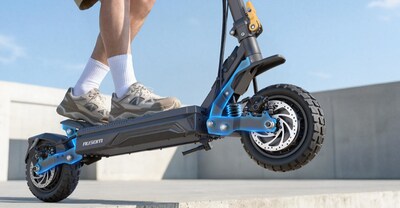
The Gosoul 2 Pro Dual Motor leads Ausom’s 2026 lineup, designed for riders seeking all-terrain capability, comfort, and extended range. Powered by dual 1,400W motors, this electric scooter for adults delivers 2,800W peak power and 28Nm torque for fast acceleration. It reaches 36 mph in dual-motor mode and easily tackles inclines up to 33%.

At the core of the riding experience is Ausom’s proprietary ShocFree™ suspension system—a long-travel double-sided swingarm design with an adjustable spring. The ShocFree™ suspension system absorbs impacts from potholes and rough terrain while minimizing vibration and rebound. On the Gosoul 2 Pro Dual Motor, the system enhances stability and ride comfort, helping riders navigate cracked pavement and uneven urban road surfaces common in many U.S. cities.

Ausom ShocFree Suspension

The Gosoul 2 Pro Dual Motor delivers up to 56 miles per charge for extended commuting and off-road riding. This all-terrain scooter for adults features off-road tubeless tires, offering greater puncture resistance, lasting durability, and enhanced stability on rough terrain.

The Accessible Dual-Motor Option: Laluz 2 Pro Dual Motor

Launching alongside the Gosoul 2 Pro Dual Motor, the Laluz 2 Pro Dual Motor expands Ausom’s dual-motor lineup. This scooter features dual 1,400W motors with a top speed of up to 36 mph. The dual-motor scooter for adults is powered by an 864Wh battery, delivering up to 56 miles per charge for daily commuting and longer rides. Its 10-inch tubeless tires provide improved puncture resistance and reliable traction.

Proven Track Record in Dual-Motor Performance

Ausom has established itself in the dual-motor segment with the DT2 Pro and L2 Max Dual Motor, both earning industry praise. Testing shows the DT2 Pro delivers real-world range nearly twice that of similarly priced competitors.

“After testing more than 200 electric scooters, it’s rare to find one that delivers both real performance and real value—but the Ausom L2 Max Dual Motor surprised me. With dual 1,000W motors, it pushes up to 40–41 mph while staying under $1,000, something almost unheard of in this price class,” according to Rider Guide.

Customer-First Commitment

Beyond performance, Ausom emphasizes long-term ownership confidence. Every purchase includes:

  • 2-Year Worry-Free Warranty: Comprehensive coverage on core components.
  • 24/7 Technical Support: Dedicated online experts for real-time troubleshooting.
  • Free Shipping on Orders Over $49: Dispatched from local warehouses for fast delivery.

Pricing and Availability

The new series, including the Gosoul 2 Pro Dual Motor at $849 and the Laluz 2 Pro Dual Motor at $729, is available starting February 26, 2026, at ausomstore.com.

Launch Promotion (Ends March 12, 2026): For a limited time, customers purchasing at ausomstore.com can receive an additional $50 off using code SF50, bringing the prices to:

About Ausom

Ausom specializes in high-performance electric scooters for adults, combining cutting-edge technology with practical design to deliver exceptional value. Focused on real-world performance, durability, and customer satisfaction, Ausom has built a reputation for electric scooters that exceed expectations in both capability and reliability.

Website: ausomstore.com

Learn more at:Gosoul 2 Pro Dual Motor | Laluz 2 Pro Dual Motor


Cision View original content to download multimedia:https://www.prnewswire.com/news-releases/ausom-launches-two-high-power-dual-motor-electric-scooters-with-shocfree-suspension-302702218.html

SOURCE Ausom

BEIJING, March 3, 2026 /PRNewswire/ — Chinese new-energy vehicles (NEVs), which were described by some Western media a decade ago as low quality and short in range, are now being hailed by US news website Semafor as “Chinese EVs can save Detroit.”

What accounts for such a dramatic transformation in China’s electric vehicles (EV) industry? Chinese and foreign automakers and scholars, recently interviewed by the Global Times, emphasized that the industry’s structural upgrade reflects the impact of scientific planning and consistent implementation, the increasing maturity of the industrial chains, and new achievements in high-level opening-up – all of which continue to drive fresh momentum for China’s high-quality economic development.

‘It’s a miracle’

In May 2014, during an inspection of SAIC Motor, Xi Jinping, general secretary of the Communist Party of China Central Committee and Chinese president, emphasized that developing NEVs is essential for China to evolve from an automobile power to an automobile powerhouse.

Following these directives, the Chinese government implemented a series of policies and measures. In July that year, the State Council, China’s cabinet, issued guidelines on accelerating the promotion and adoption of the NEVs.

A Chinese industry expert who had participated in the formulation of national policies related to NEVs told the Global Times that these guidelines “systematically established a policy framework for the first time, proposing specific requirements and plans from multiple aspects.”

The market had gained “stable expectations,” helping drive a qualitative leap in the industry’s development. In 2015, China’s NEV sales exceeded 330,000 units, a record high. Later, China issued policies allowing more types of capital to enter the sector, including lifting shareholding caps for foreign joint ventures. It was against this backdrop that Tesla was able to begin the construction of its Shanghai Gigafactory.

Before China’s rise, the global NEV market was dominated by Tesla. A Tesla representative, in an interview with the Global Times, recalled that it took the Shanghai Gigafactory, Tesla’s first factory outside the US, less than a year from breaking ground to delivering its first vehicles.

Now, the plant boasts an annual production capacity exceeding 900,000 vehicles, with one rolling off the line approximately every 30 seconds. It serves not only the domestic market but also functions as Tesla’s global export hub, supporting its expansion in the Asia-Pacific region. The success of the Shanghai Gigafactory is a milestone in Tesla’s globalization strategy.

“It’s a miracle. We deeply admire this and feel proud of this,” the representative said.

Tesla’s “Shanghai miracle” is just one facet of the broader story of China’s EV development. The expert recalled China’s exploration of NEVs had already begun when he first entered the workforce in the late 1990s.

During the 13th Five-Year Plan period (2016-20), China issued policy documents such as the “Medium- and Long-Term Development Plan for the Automotive Industry.” During the 14th Five-Year Plan period (2021-25), China successively issued over 70 industrial policies and measures and introduced more than 100 national and industry standards.

Backed by the series of policy plans, China’s NEV sales grew at an average annual rate of more than 50 percent from 2021 to 2024, surpassing 12 million units in 2024. In 2025, BYD overtook Tesla in global sales of battery-electric vehicle, seen as a key marker of the shifting global NEV landscape. That same year, BYD’s NEVs alone had entered 119 countries and regions.

China’s NEV development has not been entirely smooth; it represents an industrial leap enabled by top-level planning, as well as down-to-earth development that follows the sector’s underlying dynamics.

Take EV batteries. During the early stage, the industry faced severe challenges such as low battery energy density and range anxiety.

Liu Jing, a professor of accounting and finance and director of the Investment Research Center at Cheung Kong Graduate School of Business, told the Global Times that early on, Japanese battery makers once held a dominant position thanks to their advances in lithium battery technology. In 2009, China’s power battery energy density was less than two-thirds of Japan’s level.

When CATL was founded in 2011, Chinese companies had little presence in the global power battery market. Today, the common sentiment in the global battery industry is that “it’s easier to shake a mountain than to shake China’s advantage.”

The Chinese government planned the entire industrial chain in parallel, from upstream lithium mining and refining, through the midstream “three-electric” systems (battery, motor, and electronic control), to downstream charging facilities. The industry expert who had participated in the formulation of national policies related to NEVs said that this combination of policy guidance and market synergy has encouraged many companies to commit to electrification strategies, continuously elevating battery products across technology, quality, performance, and cost.

China’s power batteries currently command around 70 percent of the global market share, and anode materials exceed 90 percent.

Throughout this journey, China’s commitment to its NEV development path has remained unwavering, despite the challenges it has faced.

Xin Guobin, vice minister of industry and information technology, said that during the 14th Five-Year Plan period (2021-25), companies in the NEV sector increased investment, overcame several technical challenges, and significantly improved product quality and performance. The average driving range of battery-electric passenger cars is approaching 500 kilometers, while costs of power battery cells have fallen by 30 percent, lifespan has increased by 40 percent, and charging speed has improved by more than threefold.

‘Our perspective is usually limited to four years, but China’s is not’

Ferdinand Dudenhoeffer, a prominent German automotive expert and director of the Center for Automotive Research in Bochum, western Germany, began closely monitoring the electric-vehicle market around 2007.

Initially, his research focused on Tesla, which launched the Roadster in Germany in 2009. At that time, in the German market of 3.8 million new cars, only 66 were EVs – a mere drop in the ocean.

Dudenhoeffer told the Global Times that German manufacturers initially dismissed the numbers due to a “not invented here” mind-set. German engineers generally believed EVs had no future.

According to the Chinese industry expert who had participated in the formulation of national policies related to NEVs, as China developed NEVs, it invited several foreign automakers, including German companies, to take part in R&D, but received little response. Dudenhoeffer pinpointed the reason: “Germans lacked confidence in China.”

In 2005, three Chinese automakers participated in the International Motor Show (IAA) in Frankfurt, marking the first time Chinese car companies showcased at this important industry event in Europe. German media described Chinese products as “of low quality and safety ratings.”

The situation gradually changed after 2015. China began producing highly innovative EVs, with brands like BYD, NIO, and XPeng making concentrated appearances. Concurrently, China’s battery industry developed rapidly, with companies like CATL and BYD emerging. In 2019, the first batch of Chinese-made EVs arrived in Germany, making Chinese EVs the focus of the German and European automotive industries. It took Chinese automakers just over one decade to rank among the world’s technological leaders.

“China takes a long-term view, precisely what Europe lacks,” Dudenhoeffer said, adding that once a policy becomes a national strategy in China, implementation is remarkably strong.

For instance, at the UN General Assembly in 2020, China announced its goals to peak carbon emissions by 2030 and achieve carbon neutrality by 2060.

“While we Europeans hesitate and delay, China is fulfilling its commitments and tackling the problem very systematically, which is completely different from countries like the US.” Dudenhoeffer pointed out, “Our perspective is usually limited to four years, but China’s is not. Where we are, an election can change all decisions; such an approach cannot make you a world champion.”

Dudenhoeffer concluded that China views the future strategically and has immense interest in technological innovation. Consequently, China is on a path to success in many fields.

In February, a New York Times article on China’s NEV development reached a similar conclusion. The article quoted Keith Bradsher, who has been reporting on China for 24 years, as saying “China’s high-speed rail and ultramodern subways and growing numbers of self-driving electric cars often make me feel like I’m living in the future.”

‘If there is an Olympic Games in the automotive world, it is here’

“China possesses a complete supply chain and world-class ‘intelligent manufacturing’ capabilities, providing Tesla with unique, hard-to-replicate competitive advantages,” the Tesla representative said when discussing the rapid development of new-energy vehicles.

“If Tesla had remained in the West, lacking the fertile ground China provided to amplify its technology and reduce costs, it might have gone bankrupt,” Liu Jing from Cheung Kong Graduate School of Business stated.

China not only offered Tesla one of the world’s most efficient production bases and largest markets, but also demonstrated a unique “amplification” capability: When a technological pathway is validated, China, through its comprehensive industrial ecosystem and efficient institutional mechanisms, can rapidly scale up the entire industry and accelerate its development.

“The West has missed the opportunity to use Tesla’s ‘spark’ to ignite a complete NEV industrial ecosystem on its own soil,” Liu said.

In Liu’s view, China’s ability to achieve “curve overtaking” in the NEV sector is not due to any single advantage but stems from the systemic synergy formed by technological breakthroughs, industrial chain integration, policy support, and a unique market environment.

Some industry experts compare EVs to a hybrid of a car and a mobile phone – “a mobile phone on four wheels.”

This description vividly illustrates the intelligent attributes of NEVs – China’s robust internet industry foundation enables capabilities such as voice interaction, intelligent cabins, and in-car entertainment to be seamlessly integrated into automobiles, endowing them with intelligent features that transcend traditional modes of transportation. While the core engine and transmission systems of conventional vehicles no longer exist in electric cars, and the West still retains the advantages in traditional mechanical fields such as body chassis and suspension systems, China has leveraged breakthroughs in the two critical areas of batteries and intelligent technology to reconstruct the entire value system of vehicles.

Technology can be learned, but the fundamental driving force for surpassing others comes from people.

Liu said that the innovative spirit and work ethic demonstrated by Chinese entrepreneurs and workers in the new era are difficult to replicate in many Western developed countries. More importantly, China provides a uniquely fertile institutional environment for industrial innovation.

Another factor is the intense yet healthy competition within the market. After the Chinese central government set the direction for NEV development, local governments across the country offered land, capital, and tax incentives to attract companies. Firms gained access to growth conditions that would be hard to imagine.

Finally, a unified and vast domestic market provides a testing ground and launchpad for innovation. The unified national market promoted by the central government effectively breaks down local protectionism, enabling promising technologies to spread rapidly nationwide – an advantage unmatched by any other country.

“It can be said that China has forged a development path that both aligns with global trends and offers first-mover advantages,” the expert who had participated in the formulation of national policies related to NEVs said. China has truly “follow a good blueprint through to the end,” continuously promoting industrial upgrading through stable policy expectations and long-term strategic road map. It is this scientific planning and strategic resolve that have earned China first-mover advantage and initiative in the global new-energy vehicle competition.

“If there is an Olympic Games in the automotive world, it is here,” claimed an article entitled “China’s electric carmakers put on a huge show of force” posted in the Times Magazine in April 2024.

“If further evidence were needed that the axis of the automotive world has moved on from Detroit, Stuttgart or even the West Midlands, the Beijing Motor Show has provided compelling verification,” the report reads.

https://www.globaltimes.cn/page/202603/1356046.shtml

Cision View original content:https://www.prnewswire.com/news-releases/global-times-the-power-of-planning-chinese-nevs-rewrite-the-global-automotive-landscape-302702112.html

SOURCE Global Times

BEIJING, March 3, 2026 /PRNewswire/ — Chinese new-energy vehicles (NEVs), which were described by some Western media a decade ago as low quality and short in range, are now being hailed by US news website Semafor as “Chinese EVs can save Detroit.”

What accounts for such a dramatic transformation in China’s electric vehicles (EV) industry? Chinese and foreign automakers and scholars, recently interviewed by the Global Times, emphasized that the industry’s structural upgrade reflects the impact of scientific planning and consistent implementation, the increasing maturity of the industrial chains, and new achievements in high-level opening-up – all of which continue to drive fresh momentum for China’s high-quality economic development.

‘It’s a miracle’

In May 2014, during an inspection of SAIC Motor, Xi Jinping, general secretary of the Communist Party of China Central Committee and Chinese president, emphasized that developing NEVs is essential for China to evolve from an automobile power to an automobile powerhouse.

Following these directives, the Chinese government implemented a series of policies and measures. In July that year, the State Council, China’s cabinet, issued guidelines on accelerating the promotion and adoption of the NEVs.

A Chinese industry expert who had participated in the formulation of national policies related to NEVs told the Global Times that these guidelines “systematically established a policy framework for the first time, proposing specific requirements and plans from multiple aspects.”

The market had gained “stable expectations,” helping drive a qualitative leap in the industry’s development. In 2015, China’s NEV sales exceeded 330,000 units, a record high. Later, China issued policies allowing more types of capital to enter the sector, including lifting shareholding caps for foreign joint ventures. It was against this backdrop that Tesla was able to begin the construction of its Shanghai Gigafactory.

Before China’s rise, the global NEV market was dominated by Tesla. A Tesla representative, in an interview with the Global Times, recalled that it took the Shanghai Gigafactory, Tesla’s first factory outside the US, less than a year from breaking ground to delivering its first vehicles.

Now, the plant boasts an annual production capacity exceeding 900,000 vehicles, with one rolling off the line approximately every 30 seconds. It serves not only the domestic market but also functions as Tesla’s global export hub, supporting its expansion in the Asia-Pacific region. The success of the Shanghai Gigafactory is a milestone in Tesla’s globalization strategy.

“It’s a miracle. We deeply admire this and feel proud of this,” the representative said.

Tesla’s “Shanghai miracle” is just one facet of the broader story of China’s EV development. The expert recalled China’s exploration of NEVs had already begun when he first entered the workforce in the late 1990s.

During the 13th Five-Year Plan period (2016-20), China issued policy documents such as the “Medium- and Long-Term Development Plan for the Automotive Industry.” During the 14th Five-Year Plan period (2021-25), China successively issued over 70 industrial policies and measures and introduced more than 100 national and industry standards.

Backed by the series of policy plans, China’s NEV sales grew at an average annual rate of more than 50 percent from 2021 to 2024, surpassing 12 million units in 2024. In 2025, BYD overtook Tesla in global sales of battery-electric vehicle, seen as a key marker of the shifting global NEV landscape. That same year, BYD’s NEVs alone had entered 119 countries and regions.

China’s NEV development has not been entirely smooth; it represents an industrial leap enabled by top-level planning, as well as down-to-earth development that follows the sector’s underlying dynamics.

Take EV batteries. During the early stage, the industry faced severe challenges such as low battery energy density and range anxiety.

Liu Jing, a professor of accounting and finance and director of the Investment Research Center at Cheung Kong Graduate School of Business, told the Global Times that early on, Japanese battery makers once held a dominant position thanks to their advances in lithium battery technology. In 2009, China’s power battery energy density was less than two-thirds of Japan’s level.

When CATL was founded in 2011, Chinese companies had little presence in the global power battery market. Today, the common sentiment in the global battery industry is that “it’s easier to shake a mountain than to shake China’s advantage.”

The Chinese government planned the entire industrial chain in parallel, from upstream lithium mining and refining, through the midstream “three-electric” systems (battery, motor, and electronic control), to downstream charging facilities. The industry expert who had participated in the formulation of national policies related to NEVs said that this combination of policy guidance and market synergy has encouraged many companies to commit to electrification strategies, continuously elevating battery products across technology, quality, performance, and cost.

China’s power batteries currently command around 70 percent of the global market share, and anode materials exceed 90 percent.

Throughout this journey, China’s commitment to its NEV development path has remained unwavering, despite the challenges it has faced.

Xin Guobin, vice minister of industry and information technology, said that during the 14th Five-Year Plan period (2021-25), companies in the NEV sector increased investment, overcame several technical challenges, and significantly improved product quality and performance. The average driving range of battery-electric passenger cars is approaching 500 kilometers, while costs of power battery cells have fallen by 30 percent, lifespan has increased by 40 percent, and charging speed has improved by more than threefold.

‘Our perspective is usually limited to four years, but China’s is not’

Ferdinand Dudenhoeffer, a prominent German automotive expert and director of the Center for Automotive Research in Bochum, western Germany, began closely monitoring the electric-vehicle market around 2007.

Initially, his research focused on Tesla, which launched the Roadster in Germany in 2009. At that time, in the German market of 3.8 million new cars, only 66 were EVs – a mere drop in the ocean.

Dudenhoeffer told the Global Times that German manufacturers initially dismissed the numbers due to a “not invented here” mind-set. German engineers generally believed EVs had no future.

According to the Chinese industry expert who had participated in the formulation of national policies related to NEVs, as China developed NEVs, it invited several foreign automakers, including German companies, to take part in R&D, but received little response. Dudenhoeffer pinpointed the reason: “Germans lacked confidence in China.”

In 2005, three Chinese automakers participated in the International Motor Show (IAA) in Frankfurt, marking the first time Chinese car companies showcased at this important industry event in Europe. German media described Chinese products as “of low quality and safety ratings.”

The situation gradually changed after 2015. China began producing highly innovative EVs, with brands like BYD, NIO, and XPeng making concentrated appearances. Concurrently, China’s battery industry developed rapidly, with companies like CATL and BYD emerging. In 2019, the first batch of Chinese-made EVs arrived in Germany, making Chinese EVs the focus of the German and European automotive industries. It took Chinese automakers just over one decade to rank among the world’s technological leaders.

“China takes a long-term view, precisely what Europe lacks,” Dudenhoeffer said, adding that once a policy becomes a national strategy in China, implementation is remarkably strong.

For instance, at the UN General Assembly in 2020, China announced its goals to peak carbon emissions by 2030 and achieve carbon neutrality by 2060.

“While we Europeans hesitate and delay, China is fulfilling its commitments and tackling the problem very systematically, which is completely different from countries like the US.” Dudenhoeffer pointed out, “Our perspective is usually limited to four years, but China’s is not. Where we are, an election can change all decisions; such an approach cannot make you a world champion.”

Dudenhoeffer concluded that China views the future strategically and has immense interest in technological innovation. Consequently, China is on a path to success in many fields.

In February, a New York Times article on China’s NEV development reached a similar conclusion. The article quoted Keith Bradsher, who has been reporting on China for 24 years, as saying “China’s high-speed rail and ultramodern subways and growing numbers of self-driving electric cars often make me feel like I’m living in the future.”

‘If there is an Olympic Games in the automotive world, it is here’

“China possesses a complete supply chain and world-class ‘intelligent manufacturing’ capabilities, providing Tesla with unique, hard-to-replicate competitive advantages,” the Tesla representative said when discussing the rapid development of new-energy vehicles.

“If Tesla had remained in the West, lacking the fertile ground China provided to amplify its technology and reduce costs, it might have gone bankrupt,” Liu Jing from Cheung Kong Graduate School of Business stated.

China not only offered Tesla one of the world’s most efficient production bases and largest markets, but also demonstrated a unique “amplification” capability: When a technological pathway is validated, China, through its comprehensive industrial ecosystem and efficient institutional mechanisms, can rapidly scale up the entire industry and accelerate its development.

“The West has missed the opportunity to use Tesla’s ‘spark’ to ignite a complete NEV industrial ecosystem on its own soil,” Liu said.

In Liu’s view, China’s ability to achieve “curve overtaking” in the NEV sector is not due to any single advantage but stems from the systemic synergy formed by technological breakthroughs, industrial chain integration, policy support, and a unique market environment.

Some industry experts compare EVs to a hybrid of a car and a mobile phone – “a mobile phone on four wheels.”

This description vividly illustrates the intelligent attributes of NEVs – China’s robust internet industry foundation enables capabilities such as voice interaction, intelligent cabins, and in-car entertainment to be seamlessly integrated into automobiles, endowing them with intelligent features that transcend traditional modes of transportation. While the core engine and transmission systems of conventional vehicles no longer exist in electric cars, and the West still retains the advantages in traditional mechanical fields such as body chassis and suspension systems, China has leveraged breakthroughs in the two critical areas of batteries and intelligent technology to reconstruct the entire value system of vehicles.

Technology can be learned, but the fundamental driving force for surpassing others comes from people.

Liu said that the innovative spirit and work ethic demonstrated by Chinese entrepreneurs and workers in the new era are difficult to replicate in many Western developed countries. More importantly, China provides a uniquely fertile institutional environment for industrial innovation.

Another factor is the intense yet healthy competition within the market. After the Chinese central government set the direction for NEV development, local governments across the country offered land, capital, and tax incentives to attract companies. Firms gained access to growth conditions that would be hard to imagine.

Finally, a unified and vast domestic market provides a testing ground and launchpad for innovation. The unified national market promoted by the central government effectively breaks down local protectionism, enabling promising technologies to spread rapidly nationwide – an advantage unmatched by any other country.

“It can be said that China has forged a development path that both aligns with global trends and offers first-mover advantages,” the expert who had participated in the formulation of national policies related to NEVs said. China has truly “follow a good blueprint through to the end,” continuously promoting industrial upgrading through stable policy expectations and long-term strategic road map. It is this scientific planning and strategic resolve that have earned China first-mover advantage and initiative in the global new-energy vehicle competition.

“If there is an Olympic Games in the automotive world, it is here,” claimed an article entitled “China’s electric carmakers put on a huge show of force” posted in the Times Magazine in April 2024.

“If further evidence were needed that the axis of the automotive world has moved on from Detroit, Stuttgart or even the West Midlands, the Beijing Motor Show has provided compelling verification,” the report reads.

https://www.globaltimes.cn/page/202603/1356046.shtml

Cision View original content:https://www.prnewswire.com/news-releases/global-times-the-power-of-planning-chinese-nevs-rewrite-the-global-automotive-landscape-302702112.html

SOURCE Global Times

Privacy Overview

This website uses cookies so that we can provide you with the best user experience possible. Cookie information is stored in your browser and performs functions such as recognising you when you return to our website and helping our team to understand which sections of the website you find most interesting and useful.