Arrow Electronics (NYSE:ARW), a global technology solutions provider, is collaborating with Romanian startup .lumen to scale intelligent guide glasses designed to replicate the key functions of a guide dog.

.lumen’s Glasses for the Blind replicate the essential functions of a guide dog by combining artificial intelligence (AI), six integrated cameras, and real-time haptic feedback on a single wearable headset. The glasses continuously scan and understand the environment in real time, detecting obstacles, identifying safe paths, and guiding the user with gentle directional vibrations.

The entire navigation system runs locally on the device, making it fully independent from the cloud. This architecture delivers ultra-low latency, which is essential for safe, reliable navigation in fast-changing environments such as crowded streets or unfamiliar indoor spaces.

.lumen exhibited on Jan. 5-9, 2026, at CES, Las Vegas, where they were named a CES Innovation Awards 2026 Honoree in the Accessibility and Longevity category, and also won the CTA Foundation’s 2026 Pitch Competition.

Arrow is providing comprehensive engineering and supply chain services to enable .lumen to scale its production efficiently. This includes identifying, sourcing, and integrating the lengthy list of electronic components required, such as processors, cameras, sensors, and connectors. Arrow is also supporting .lumen with inventory reliability, cost control, and improved performance of the complex wearable technology.

By supporting the development of this technology, Arrow is expanding on its existing work in Semi-Autonomous Mobility (SAM), which uses intelligent technology to provide greater independence to people with physical disabilities. An example of Arrow’s previous work in this area is the Arrow SAM Car, the series of advanced cars that can be controlled by a quadriplegic race driver with support from an AI model and electronics developed by Arrow engineers.

“We are helping to create a device which will eventually make life better for millions of people,” said Vitali Damasevich, Arrow’s regional director of engineering in Eastern Europe. “At Arrow, we are committed to supporting the .lumen team to help ensure this breakthrough technology can be reliably and efficiently manufactured so it can get into the hands of those who need it most.”

“Growing up in a family where everyone but me had a disability, I realized how much technology can help people with disabilities, but also how rarely it’s built for people with disabilities. I founded .lumen to solve this,” said Cornel Amariei, founder & CEO of .lumen.

“The Glasses for the Blind use .lumen’s proprietary Pedestrian Autonomous Driving AI technology. It does everything a self-driving car does, but on the pedestrian side. The best part is this technology doesn’t need any infrastructure change.”

.lumen is currently taking orders for the device, which aims to provide users with unprecedented mobility and freedom. Future software updates include features such as “Take Me,” which is designed to integrate with mapping services and extend navigation capabilities beyond obstacle avoidance.

More information:

https://www.arrow.com/company/purpose/stories/lumen

About Arrow Electronics

Arrow Electronics (NYSE:ARW) sources and engineers technology solutions for thousands of leading manufacturers and service providers. With global 2024 sales of $28 billion, Arrow’s portfolio enables technology across major industries and markets. Learn more at arrow.com.

About .lumen

.lumen is a Romanian startup developing Pedestrian Autonomous Driving (PAD AI), a technology first showcased through the .lumen Glasses for the Blind. The Glasses replicate the behaviour of a guide dog through AI and haptic feedback, offering scalable, hands-free mobility for the visually impaired and older adults. The same technology will be used to reimagine how goods move in cities, by applying the same software to robots for delivery. More info on www.dotlumen.com.

Media:

Jon Watters (North America)
jwatters@arrow.com

Thorsten Hecking (EMEA)
thorsten.hecking@arrow.com

Grace Kung (Asia Pacific)
grace.kung@arrow.com

Source: Arrow Electronics

Arrow Electronics (NYSE:ARW), a global technology solutions provider, is collaborating with Romanian startup .lumen to scale intelligent guide glasses designed to replicate the key functions of a guide dog.

.lumen’s Glasses for the Blind replicate the essential functions of a guide dog by combining artificial intelligence (AI), six integrated cameras, and real-time haptic feedback on a single wearable headset. The glasses continuously scan and understand the environment in real time, detecting obstacles, identifying safe paths, and guiding the user with gentle directional vibrations.

The entire navigation system runs locally on the device, making it fully independent from the cloud. This architecture delivers ultra-low latency, which is essential for safe, reliable navigation in fast-changing environments such as crowded streets or unfamiliar indoor spaces.

.lumen exhibited on Jan. 5-9, 2026, at CES, Las Vegas, where they were named a CES Innovation Awards 2026 Honoree in the Accessibility and Longevity category, and also won the CTA Foundation’s 2026 Pitch Competition.

Arrow is providing comprehensive engineering and supply chain services to enable .lumen to scale its production efficiently. This includes identifying, sourcing, and integrating the lengthy list of electronic components required, such as processors, cameras, sensors, and connectors. Arrow is also supporting .lumen with inventory reliability, cost control, and improved performance of the complex wearable technology.

By supporting the development of this technology, Arrow is expanding on its existing work in Semi-Autonomous Mobility (SAM), which uses intelligent technology to provide greater independence to people with physical disabilities. An example of Arrow’s previous work in this area is the Arrow SAM Car, the series of advanced cars that can be controlled by a quadriplegic race driver with support from an AI model and electronics developed by Arrow engineers.

“We are helping to create a device which will eventually make life better for millions of people,” said Vitali Damasevich, Arrow’s regional director of engineering in Eastern Europe. “At Arrow, we are committed to supporting the .lumen team to help ensure this breakthrough technology can be reliably and efficiently manufactured so it can get into the hands of those who need it most.”

“Growing up in a family where everyone but me had a disability, I realized how much technology can help people with disabilities, but also how rarely it’s built for people with disabilities. I founded .lumen to solve this,” said Cornel Amariei, founder & CEO of .lumen.

“The Glasses for the Blind use .lumen’s proprietary Pedestrian Autonomous Driving AI technology. It does everything a self-driving car does, but on the pedestrian side. The best part is this technology doesn’t need any infrastructure change.”

.lumen is currently taking orders for the device, which aims to provide users with unprecedented mobility and freedom. Future software updates include features such as “Take Me,” which is designed to integrate with mapping services and extend navigation capabilities beyond obstacle avoidance.

More information:

https://www.arrow.com/company/purpose/stories/lumen

About Arrow Electronics

Arrow Electronics (NYSE:ARW) sources and engineers technology solutions for thousands of leading manufacturers and service providers. With global 2024 sales of $28 billion, Arrow’s portfolio enables technology across major industries and markets. Learn more at arrow.com.

About .lumen

.lumen is a Romanian startup developing Pedestrian Autonomous Driving (PAD AI), a technology first showcased through the .lumen Glasses for the Blind. The Glasses replicate the behaviour of a guide dog through AI and haptic feedback, offering scalable, hands-free mobility for the visually impaired and older adults. The same technology will be used to reimagine how goods move in cities, by applying the same software to robots for delivery. More info on www.dotlumen.com.

Media:

Jon Watters (North America)
jwatters@arrow.com

Thorsten Hecking (EMEA)
thorsten.hecking@arrow.com

Grace Kung (Asia Pacific)
grace.kung@arrow.com

Source: Arrow Electronics

Download the report

Addressing climate change can help to support the economic development and long-term growth in emerging markets and developing economies (EMDEs). EMDEs require trillions of dollars to address climate change, yet only a fraction of this funding is currently mobilized.

Developing nations face significant barriers to accessing climate finance, including inadequate technology, insufficient data, and structural challenges such as fragmented project pipelines, regulatory uncertainty, and weak financial markets. These obstacles deter private investment and slow progress.

The consequences of insufficient climate finance are far-reaching: EMDEs continue to struggle with weather-related disasters, poor air quality, food insecurity, and limited access to clean water and energy. These challenges contribute to weak rural development, poverty, poor health, inequality, and declining productivity — further hindering economic growth.

To address this gap, KPMG and the World Economic Forum (WEF) conducted a global study, ‘From Risk to Reward: Unlocking Private Capital for Climate Growth,’ with the intention of identifying practical strategies to help to scale private investment.

The report outlines six priority actions and sixteen strategies designed to reduce risk, improve project bankability, and enhance data transparency, aligning incentives for both public and private stakeholders.

These challenges set the stage for understanding the systemic shortfall in climate finance and the urgent need for innovative approaches. Scaling private climate capital in EMDEs should be acted on directly. This roadmap by KPMG and WEF highlights the necessary interventions, which can bridge the finance gap and help unlock development opportunities.

In this KPMG International summary document, we outline the key findings from the WEF white paper, ‘From Risk to Reward: Unlocking Private Capital for Climate Growth,’ and showcase how KPMG firms have supported clients globally in addressing climate finance challenges.

Click here to download this report on kpmg.com

Download the report

Addressing climate change can help to support the economic development and long-term growth in emerging markets and developing economies (EMDEs). EMDEs require trillions of dollars to address climate change, yet only a fraction of this funding is currently mobilized.

Developing nations face significant barriers to accessing climate finance, including inadequate technology, insufficient data, and structural challenges such as fragmented project pipelines, regulatory uncertainty, and weak financial markets. These obstacles deter private investment and slow progress.

The consequences of insufficient climate finance are far-reaching: EMDEs continue to struggle with weather-related disasters, poor air quality, food insecurity, and limited access to clean water and energy. These challenges contribute to weak rural development, poverty, poor health, inequality, and declining productivity — further hindering economic growth.

To address this gap, KPMG and the World Economic Forum (WEF) conducted a global study, ‘From Risk to Reward: Unlocking Private Capital for Climate Growth,’ with the intention of identifying practical strategies to help to scale private investment.

The report outlines six priority actions and sixteen strategies designed to reduce risk, improve project bankability, and enhance data transparency, aligning incentives for both public and private stakeholders.

These challenges set the stage for understanding the systemic shortfall in climate finance and the urgent need for innovative approaches. Scaling private climate capital in EMDEs should be acted on directly. This roadmap by KPMG and WEF highlights the necessary interventions, which can bridge the finance gap and help unlock development opportunities.

In this KPMG International summary document, we outline the key findings from the WEF white paper, ‘From Risk to Reward: Unlocking Private Capital for Climate Growth,’ and showcase how KPMG firms have supported clients globally in addressing climate finance challenges.

Click here to download this report on kpmg.com

SANTA ROSA, Calif., February 2, 2026 – Keysight Technologies, Inc. (NYSE: KEYS) announced two new electric vehicle (EV) charging test solutions that support the industry’s move to high-power and megawatt-level charging. As electrification accelerates and charging applications grow more complex, these solutions help manufacturers and engineers speed development, ensure reliability, and meet evolving global standards.

The rapid growth of electrification is driving demand for advanced charging infrastructure capable of supporting everything from fast charging for passenger vehicles to megawatt-level charging for heavy-duty transport and industrial fleets. At the same time, engineers and manufacturers face increasing complexities due to interoperability challenges, stringent safety requirements, and the need to comply with evolving international standards such as MCS, CCS, ISO 15118, GB/T, and CHAdeMO. Without comprehensive and scalable testing, manufacturers risk development delays, costly redesigns, and inconsistent real-world performance.

Keysight addresses these challenges with future-ready test solutions that combine high-power hardware, software-defined scalability, and standards compliance. The new solutions deliver flexibility and scalability, enabling customers to accelerate development and stay ahead of emerging testing requirements.

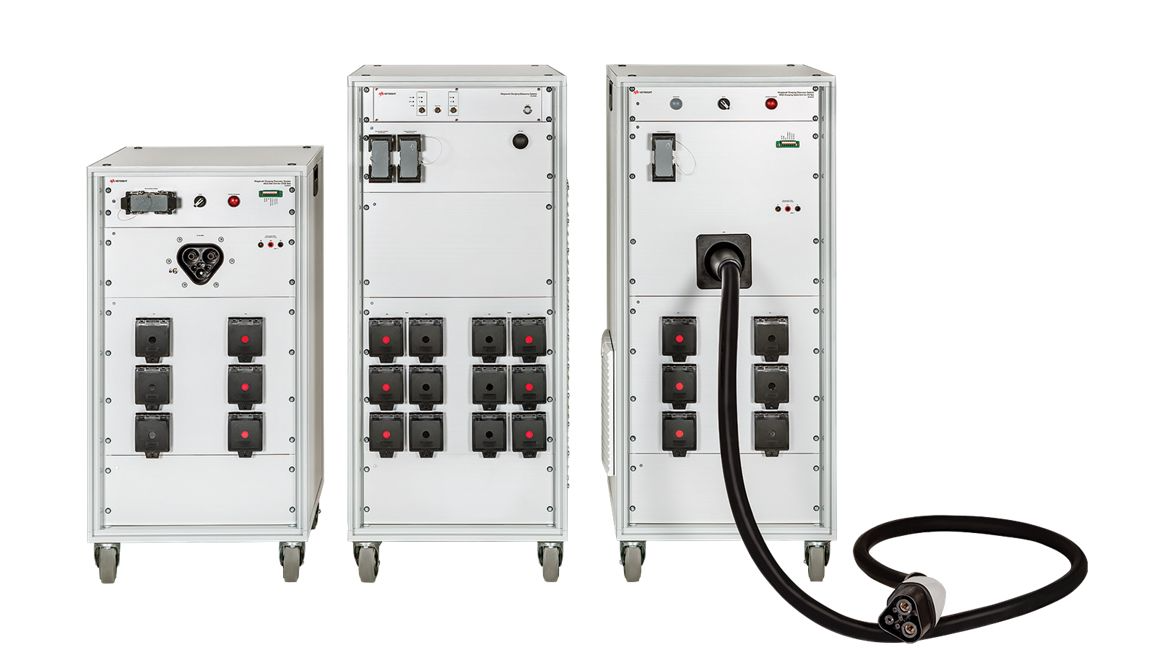
The SL2600A Megawatt Charging Discovery System enables validation of next-generation megawatt charging for heavy-duty applications, supporting voltages up to 1,500 V and currents up to 1,500 A. Its modular, upgradable architecture allows engineers to test both electric vehicles and charging stations within a single system, increasing flexibility and reducing total cost of ownership. Designed with future standards in mind, including NACS and CCS, the SL2600A helps ensure readiness for evolving charging ecosystems while safeguarding long-term test infrastructure investments.

Complementing this offering, the enhanced SL1047A Scienlab Charging Discovery System – High‑Power Series delivers software‑scalable performance starting at 400 A and 1,000 V, with the ability to expand up to 800 A and 1,500 V without requiring hardware replacement. With support for all global charging standards, including full compliance with GB/T 2024, the system enables comprehensive conformance and interoperability testing for worldwide EV charging ecosystems. It also introduces enhanced charging communication test capabilities, featuring significant improvements and extended functionality to address increasingly complex EV charging requirements.

Together, these solutions help customers reduce development risk, accelerate time-to-market, and deliver reliable, standards-compliant charging systems for next-generation EVs.

Luis Hurtado, PHD and Chief Technology Officer, Milence, said: “To drive the transition to sustainable heavy-duty transport, we need charging solutions that are fast, scalable, and future-ready. Our partnership with Keysight helps us ensure that our infrastructure meets the highest standards from day one.”

Thomas Goetzl, Vice President and General Manager for Keysight’s Automotive & Energy Solutions, said: “The transition to high-power and megawatt-level charging is a pivotal moment for the EV industry. Our latest test solutions give manufacturers and engineers the confidence to innovate quickly and deliver reliable charging systems that meet global standards. This launch reinforces Keysight’s commitment to enabling the future of e-mobility and supporting a sustainable transportation ecosystem.”

" "


Resources 

Product Page: SL2600A Megawatt Charging Discovery System
Product Page: SL1047A Scienlab Charging Discovery System – High-Power Series

About Keysight Technologies 

At Keysight (NYSE: KEYS), we inspire and empower innovators to bring world-changing technologies to life. As an S&P 500 company, we’re delivering market-leading design, emulation, and test solutions to help engineers develop and deploy faster, with less risk, throughout the entire product life cycle. We’re a global innovation partner enabling customers in communications, industrial automation, aerospace and defense, automotive, semiconductor, and general electronics markets to accelerate innovation to connect and secure the world. Learn more at Keysight Newsroom and www.keysight.com.

Contacts

Andrea Mueller
Americas/Europe
andrea.mueller@keysight.com

Fusako Dohi, Asia
+81 42 660–2162
fusako_dohi@keysight.com

SANTA ROSA, Calif., February 2, 2026 – Keysight Technologies, Inc. (NYSE: KEYS) announced two new electric vehicle (EV) charging test solutions that support the industry’s move to high-power and megawatt-level charging. As electrification accelerates and charging applications grow more complex, these solutions help manufacturers and engineers speed development, ensure reliability, and meet evolving global standards.

The rapid growth of electrification is driving demand for advanced charging infrastructure capable of supporting everything from fast charging for passenger vehicles to megawatt-level charging for heavy-duty transport and industrial fleets. At the same time, engineers and manufacturers face increasing complexities due to interoperability challenges, stringent safety requirements, and the need to comply with evolving international standards such as MCS, CCS, ISO 15118, GB/T, and CHAdeMO. Without comprehensive and scalable testing, manufacturers risk development delays, costly redesigns, and inconsistent real-world performance.

Keysight addresses these challenges with future-ready test solutions that combine high-power hardware, software-defined scalability, and standards compliance. The new solutions deliver flexibility and scalability, enabling customers to accelerate development and stay ahead of emerging testing requirements.

The SL2600A Megawatt Charging Discovery System enables validation of next-generation megawatt charging for heavy-duty applications, supporting voltages up to 1,500 V and currents up to 1,500 A. Its modular, upgradable architecture allows engineers to test both electric vehicles and charging stations within a single system, increasing flexibility and reducing total cost of ownership. Designed with future standards in mind, including NACS and CCS, the SL2600A helps ensure readiness for evolving charging ecosystems while safeguarding long-term test infrastructure investments.

Complementing this offering, the enhanced SL1047A Scienlab Charging Discovery System – High‑Power Series delivers software‑scalable performance starting at 400 A and 1,000 V, with the ability to expand up to 800 A and 1,500 V without requiring hardware replacement. With support for all global charging standards, including full compliance with GB/T 2024, the system enables comprehensive conformance and interoperability testing for worldwide EV charging ecosystems. It also introduces enhanced charging communication test capabilities, featuring significant improvements and extended functionality to address increasingly complex EV charging requirements.

Together, these solutions help customers reduce development risk, accelerate time-to-market, and deliver reliable, standards-compliant charging systems for next-generation EVs.

Luis Hurtado, PHD and Chief Technology Officer, Milence, said: “To drive the transition to sustainable heavy-duty transport, we need charging solutions that are fast, scalable, and future-ready. Our partnership with Keysight helps us ensure that our infrastructure meets the highest standards from day one.”

Thomas Goetzl, Vice President and General Manager for Keysight’s Automotive & Energy Solutions, said: “The transition to high-power and megawatt-level charging is a pivotal moment for the EV industry. Our latest test solutions give manufacturers and engineers the confidence to innovate quickly and deliver reliable charging systems that meet global standards. This launch reinforces Keysight’s commitment to enabling the future of e-mobility and supporting a sustainable transportation ecosystem.”

" "


Resources 

Product Page: SL2600A Megawatt Charging Discovery System
Product Page: SL1047A Scienlab Charging Discovery System – High-Power Series

About Keysight Technologies 

At Keysight (NYSE: KEYS), we inspire and empower innovators to bring world-changing technologies to life. As an S&P 500 company, we’re delivering market-leading design, emulation, and test solutions to help engineers develop and deploy faster, with less risk, throughout the entire product life cycle. We’re a global innovation partner enabling customers in communications, industrial automation, aerospace and defense, automotive, semiconductor, and general electronics markets to accelerate innovation to connect and secure the world. Learn more at Keysight Newsroom and www.keysight.com.

Contacts

Andrea Mueller
Americas/Europe
andrea.mueller@keysight.com

Fusako Dohi, Asia
+81 42 660–2162
fusako_dohi@keysight.com

Comprehensive guides address water-cooled, air-cooled and absorption chiller use cases, integrated with advanced building controls, for next-generation AI factories

MILWAUKEE, Feb. 2, 2026 /PRNewswire/ — Johnson Controls (NYSE: JCI), the global leader in smart, healthy and sustainable buildings, today announced the launch of its Reference Design Guide Series for 1 Gigawatt AI data centers. Each guide in the series maps the full thermal chain, offering cooling architectures tailored to diverse compute densities, geographies and elevations. The series begins with a detailed blueprint for water-cooled chiller plants with future guides to address air-cooled and absorption chiller solutions.

As AI transforms industries, the scale and complexity of data center infrastructure is rapidly evolving. The ability to efficiently manage thermal loads at gigawatt scale is now a critical enabler for AI innovation, and the industry faces mounting pressure to deliver facilities that are not only high-performing, but also sustainable and future-ready. Johnson Controls’ Reference Design Guide Series responds to this challenge by outlining how to achieve industry-leading energy and water efficiency (PUE and WUE) while maintaining flexibility to scale across diverse climates and operational requirements. 

The guide outlines a complete thermal architecture supporting both liquid and air- cooled- IT loads through integrated computer room air handlers (CRAHs), fan coil walls, coolant distribution units (CDUs) and high efficiency YORK centrifugal chillers. It provides- detailed sizing guidance for 220MW compute quadrants and defines temperature and operating conditions across all major facility loops, including Technology Cooling System (TCS) loops supporting next- generation GPUs. 

Key outcomes enabled by the updated design include: 

  • Zero Water Consumption: A fully water free heat rejection process using dry coolers, reducing operational costs and advancing sustainability objectives.
  • Future Ready- Thermal Flexibility: High -temperature TCS loop readiness ensures compatibility with forthcoming GPU architectures.
  • Optimized High Density- AI Performance: Alignment with NVIDIA DSX reference architecture  enables scalable deployment of 1-GW-class AI Factories.
  • Energy Efficient- Operation: Elevated condenser water temperatures, bifurcated loops and YORK high-lift chillers deliver industry-leading PUE and improved annualized efficiency. 

“AI Factories are production facilities — the places where intelligence is manufactured at an industrial scale,” said Austin Domenici, vice president & general manager, Johnson Controls Global Data Center Solutions. “By supporting the NVIDIA DSX reference architecture and improving water and energy efficiency in the cooling process while maintaining high temperature- loop compatibility, our Reference Design Guide equips customers to deploy gigawatt-scale AI infrastructure that is scalable, repeatable, resilient and sustainable.” 

Learn more about Johnson Controls’s Reference Guide Series at www.johnsoncontrols.com/industries/data-centers/reference-designs.

MEDIA CONTACTS: 
Louise Colledge
+4179 414 4996
Email: louise.colledge@jci.com

Kari Pfisterer
Direct: +1 414-217-1488
Email: kari.b.pfisterer@jci.com

About Johnson Controls:

At Johnson Controls (NYSE:JCI), we transform the environments where people live, work, learn and play. As the global leader in smart, healthy and sustainable buildings, our mission is to reimagine the performance of buildings to serve people, places and the planet. 

Building on a proud history of nearly 140 years of innovation, we deliver the blueprint of the future for industries such as healthcare, schools, data centers, airports, stadiums, manufacturing and beyond through OpenBlue, our comprehensive digital offering. 

Today, Johnson Controls offers the world`s largest portfolio of building technology and software as well as service solutions from some of the most trusted names in the industry. 

Visit johnsoncontrols.com for more information and follow @Johnsoncontrols on social platforms.

Johnson Controls – ©2025 – All Rights Reserved

Johnson Controls launches series of thermal management reference design guides for gigawatt-scale AI data centers

Cision View original content to download multimedia:https://www.prnewswire.com/news-releases/johnson-controls-launches-series-of-thermal-management-reference-design-guides-for-gigawatt-scale-ai-data-centers-302676158.html

SOURCE Johnson Controls International plc

Comprehensive guides address water-cooled, air-cooled and absorption chiller use cases, integrated with advanced building controls, for next-generation AI factories

MILWAUKEE, Feb. 2, 2026 /PRNewswire/ — Johnson Controls (NYSE: JCI), the global leader in smart, healthy and sustainable buildings, today announced the launch of its Reference Design Guide Series for 1 Gigawatt AI data centers. Each guide in the series maps the full thermal chain, offering cooling architectures tailored to diverse compute densities, geographies and elevations. The series begins with a detailed blueprint for water-cooled chiller plants with future guides to address air-cooled and absorption chiller solutions.

As AI transforms industries, the scale and complexity of data center infrastructure is rapidly evolving. The ability to efficiently manage thermal loads at gigawatt scale is now a critical enabler for AI innovation, and the industry faces mounting pressure to deliver facilities that are not only high-performing, but also sustainable and future-ready. Johnson Controls’ Reference Design Guide Series responds to this challenge by outlining how to achieve industry-leading energy and water efficiency (PUE and WUE) while maintaining flexibility to scale across diverse climates and operational requirements. 

The guide outlines a complete thermal architecture supporting both liquid and air- cooled- IT loads through integrated computer room air handlers (CRAHs), fan coil walls, coolant distribution units (CDUs) and high efficiency YORK centrifugal chillers. It provides- detailed sizing guidance for 220MW compute quadrants and defines temperature and operating conditions across all major facility loops, including Technology Cooling System (TCS) loops supporting next- generation GPUs. 

Key outcomes enabled by the updated design include: 

  • Zero Water Consumption: A fully water free heat rejection process using dry coolers, reducing operational costs and advancing sustainability objectives.
  • Future Ready- Thermal Flexibility: High -temperature TCS loop readiness ensures compatibility with forthcoming GPU architectures.
  • Optimized High Density- AI Performance: Alignment with NVIDIA DSX reference architecture  enables scalable deployment of 1-GW-class AI Factories.
  • Energy Efficient- Operation: Elevated condenser water temperatures, bifurcated loops and YORK high-lift chillers deliver industry-leading PUE and improved annualized efficiency. 

“AI Factories are production facilities — the places where intelligence is manufactured at an industrial scale,” said Austin Domenici, vice president & general manager, Johnson Controls Global Data Center Solutions. “By supporting the NVIDIA DSX reference architecture and improving water and energy efficiency in the cooling process while maintaining high temperature- loop compatibility, our Reference Design Guide equips customers to deploy gigawatt-scale AI infrastructure that is scalable, repeatable, resilient and sustainable.” 

Learn more about Johnson Controls’s Reference Guide Series at www.johnsoncontrols.com/industries/data-centers/reference-designs.

MEDIA CONTACTS: 
Louise Colledge
+4179 414 4996
Email: louise.colledge@jci.com

Kari Pfisterer
Direct: +1 414-217-1488
Email: kari.b.pfisterer@jci.com

About Johnson Controls:

At Johnson Controls (NYSE:JCI), we transform the environments where people live, work, learn and play. As the global leader in smart, healthy and sustainable buildings, our mission is to reimagine the performance of buildings to serve people, places and the planet. 

Building on a proud history of nearly 140 years of innovation, we deliver the blueprint of the future for industries such as healthcare, schools, data centers, airports, stadiums, manufacturing and beyond through OpenBlue, our comprehensive digital offering. 

Today, Johnson Controls offers the world`s largest portfolio of building technology and software as well as service solutions from some of the most trusted names in the industry. 

Visit johnsoncontrols.com for more information and follow @Johnsoncontrols on social platforms.

Johnson Controls – ©2025 – All Rights Reserved

Johnson Controls launches series of thermal management reference design guides for gigawatt-scale AI data centers

Cision View original content to download multimedia:https://www.prnewswire.com/news-releases/johnson-controls-launches-series-of-thermal-management-reference-design-guides-for-gigawatt-scale-ai-data-centers-302676158.html

SOURCE Johnson Controls International plc

Originally published by Mastercard

At Mastercard, our culture celebrates curiosity and empowers groundbreaking products and services, redefining the global connections and enhancing the way the world thrives.

We’re excited to share we’ve been named one of Fortune‘s World’s Most Admired Companies 2026! We’re proud to be a global leader known for excellence, trust, and innovation.

Continue reading here.

Follow along Mastercard’s journey to connect and power an inclusive, digital economy that benefits everyone, everywhere.
 

Originally published by Mastercard

At Mastercard, our culture celebrates curiosity and empowers groundbreaking products and services, redefining the global connections and enhancing the way the world thrives.

We’re excited to share we’ve been named one of Fortune‘s World’s Most Admired Companies 2026! We’re proud to be a global leader known for excellence, trust, and innovation.

Continue reading here.

Follow along Mastercard’s journey to connect and power an inclusive, digital economy that benefits everyone, everywhere.
 

Privacy Overview

This website uses cookies so that we can provide you with the best user experience possible. Cookie information is stored in your browser and performs functions such as recognising you when you return to our website and helping our team to understand which sections of the website you find most interesting and useful.