New research shows Republican hostility to EVs easing, end of federal EV subsidies curbing EV demand, strong EV sales potential in multifamily housing, 49 percent of younger (under 45) open to buying Chinese-made vehicles, and sharply polarized views of Elon Musk and Tesla. President Trump remains controversial among auto consumers, with only 28 percent rating him a friend of the U.S. auto industry

DETROIT, Jan. 12, 2026 /PRNewswire/ — As President Donald Trump prepares to travel to Detroit this week to address the Detroit Economic Club and tour a Ford Motor Co. plant during the opening of the North American International Auto Show, new national research from EVs for All America finds that Americans’ views on electric vehicles are evolving, with Republican resistance easing but concerns about jobs, China and affordability still shaping the market.

“Our latest national survey of auto consumers has good and bad news for EVs,” said EVs for All America founder and CEO Mike Murphy. “The fierce partisan polarization over EVs is declining, but the removal of federal EV subsidies remains a cooling factor for sales in the short term.”

The report, Fixing America’s Partisan Divide Over EVs: Tracking Three Years of Slow Progress, analyzes three years of national polling of U.S. auto consumers and finds positive movement among Republicans, strong partisan polarization over Elon Musk and Donald Trump, and a clear road map to sell more EVs across America.

Key findings from the new report include:

  • Republican hostility toward EVs has lessened by 20 points over three years.
    GOP voters are increasingly less likely to say EVs are “for people who see the world differently,” signaling a gradual thaw in cultural resistance.
  • President Trump faces significant doubts among consumers about his support for the U.S. auto industry. Only 28 percent of auto consumer voters in households earning $50,000 or more rate President Trump as a “Friend of the U.S. Auto Industry.” The sample represents more than 80 percent of the new- and used-vehicle market and roughly two-thirds of the presidential-year electorate.
  • Opinions of Elon Musk are sharply divided along party lines.
    While Republicans give Musk favorable ratings (which has helped thaw GOP consumers’ hostility to EVs), Democrats overwhelmingly hold strongly unfavorable views at 86 percent, creating a significant branding problem for Tesla.
  • Republican voters are deeply concerned about the loss of auto manufacturing jobs to China.
    The majority of Republican voters worry that U.S. national security is at risk if America’s industrial base continues to erode with the loss of manufacturing jobs to China. 88 percent worry at least some, including 53 percent who worry a lot.
  • The loss of federal EV subsidies cools consumer interest.
    Roughly half of auto consumers say the end of federal EV incentives makes them less likely to buy or lease an electric vehicle. Conversely, an examination of EV sales in Germany after EV subsidies ended shows a strong recovery over the two years since the credits ended, following an initial sales decline.
  • Multifamily building residents remain a significant opportunity for increased EV sales if overnight “Level 2” charging is added to apartment buildings and condo parking.
    65 percent of condo owners and 70 percent of apartment renters say they would be more likely to buy or lease an EV if their building offered overnight Level 2 charging in parking spaces. The finding highlights a major adoption barrier for urban and suburban consumers who lack access to private garages.
  • Consumers clearly report that the best path to selling more EVs, both in red states and blue, involves moving marketing messages away from “green” messaging and instead focusing on the many positive vehicle attributes that EV drivers enjoy, including fast, fun to drive, quiet, and the ability to avoid traditional and expensive gas stations.
  • The data show that consumers under 45 are far more open to EVs than older consumers, a trend that should grow as younger consumers age and gain market share.  In a troubling long-term sign for existing auto brands in the U.S., younger consumers under 45 show a definite open-mindedness to purchasing Chinese-made vehicles, while consumers over 55 are far more hostile.

“The path to breaking down the partisan EV divide is clear in the data,” said Murphy. “It’s all about focusing on great vehicle performance and attributes, not on political climate dogma. It’s also about smart EV policy at the state level, including state incentives such as California’s proposed new program, since the Trump administration has decided to back away from federal support for EVs. Since 80 percent of all EVs sold in America are sold in 15 states, smart pro-EV policy in those core states is the best public policy move in the short term. Opinions of EVs are always higher in states with a large EV market penetration since our data shows positive word of mouth is a huge factor in attracting more EV customers.”

Murphy said the findings offer timely context as national political leaders spotlight manufacturing and the auto industry.

“With the President heading to Detroit to talk about jobs and American manufacturing, this research underscores that EVs are an important path to creating more American auto jobs and helping secure U.S. auto manufacturing, not targets of a culture war,” Murphy said. “That only helps China seize the future of the global auto industry, a real threat to the U.S. and our allies. Automotive and political leaders should take our findings on younger consumers’ interest in Chinese-made cars seriously as well.”

The report is based on annual national surveys of 600 registered voters age 18 and older in households earning $50,000 or more, representing more than 80 percent of the U.S. new- and used-vehicle market. EVs for All America conducted these surveys each November from 2023 through 2025. The report also incorporates additional research, including an October 2024 survey of 800 registered Republicans and an October 2025 survey of 400 California condo and apartment residents. National polling was conducted by Hill Research Consultants, with the California survey conducted by David Binder and Associates.

About EVs for All America

EVs for All America is a nonprofit research and education organization focused on expanding electric vehicle adoption by advancing practical policies, consumer-focused messaging, and solutions that work across the political spectrum.

For more information or to access the full report, visit www.evsforallamerica.org.

Media Contact:
Dan Krassner
(850) 321-0432
dan@evsforamerica.org

Cision View original content to download multimedia:https://www.prnewswire.com/news-releases/evs-for-all-america-releases-new-report-showing-republican-resistance-to-evs-easing-amid-job-and-china-concerns-302658215.html

SOURCE EVs for All America

WIENER NEUSTADT, Austria, Jan. 12, 2026 /PRNewswire/ — First comprehensive global study of very large hail in a changing climate reveals contrasting trends and different causes. 

For the first time, scientists have modelled the occurrence of hail larger than 5 cm globally.  European storm researchers analysed long-term trends of hail frequency and associated economic losses over the past 30 years. While very large hail is most common in parts of South America, the United States and South Africa, the study reveals that the strongest increase in frequency has occurred in Europe. In contrast, some regions of the Southern Hemisphere have experienced a decline. Changes in atmospheric moisture near the surface are primarily responsible for these trends.

Although hail-related losses have increased across Europe, with several multi-billion-dollar losses over recent years, the meteorological changes are only partly responsible for this increase.  Rising losses are also driven by greater exposure and vulnerability: as more homes and infrastructure are built in hazard-prone areas, the potential for damage increases. This effect is a key driver of rising losses in the United States and along Australia’s coastlines.

The study was published in Nature Geoscience and lead-authored by the European Severe Storms Laboratory (ESSL) in collaboration with experts from the Adam Mickiewicz University of Poznań (Poland) and German reinsurer Munich Re (Germany).

The map illustrates the mean trend in the annual number of very large hail events per decade between 1950 and 2023. Hail stripes showing the yearly occurrence of very large hail are provided for six metropolitan regions.

Reference: Battaglioli, F., Taszarek, M., Groenemeijer, P. et al. Contrasting trends in very large hail events and related economic losses across the globe. Nat. Geosci. 19, 52–58 (2026). https://doi.org/10.1038/s41561-025-01868-0

www.essl.org/cms/about-us/press 

Link to study: https://doi.org/10.1038/s41561-025-01868-0

– Picture is available at AP

PRESS CONTACT:

Stefan Eisenbach
+4366473103344, stefan.eisenbach@essl.org
www.essl.org

Cision View original content:https://www.prnewswire.com/news-releases/essl-leading-study-to-find-where-and-why-damaging-hail-is-getting-worse-302658458.html

SOURCE ESSL – European Severe Storms Laboratory

SACRAMENTO, Calif., Jan. 12, 2026 /PRNewswire/ — California parents showed strong demand for K–12 school choice in the past year, with Golden State families more likely than parents nationwide to choose public charter schools.

According to a survey of 599 California parents released today by the National School Choice Awareness Foundation ahead of National School Choice Week (January 25–31), an estimated 5.1 million California parents of school-aged children considered a new school for at least one of their children in 2025. Overall, 81% of California parents considered a new school for at least one of their children, compared with 75% nationwide. Ultimately, 22% enrolled a child in a new school or learning environment, similar to the national average.

Charter schools accounted for a larger share of new enrollments in California than elsewhere in the country. Among parents who enrolled a child in a new school, 25% chose a public charter school, compared with 17% nationwide.

Parents most often cited practical reasons for searching, including school-level transitions (34%), children entering school for the first time (25%), and moving to a new community (11%). When evaluating options, California parents prioritized a safe, supportive environment (64%), a positive social environment (56%), and a particular educational theme or approach (45%).

Looking ahead, demand shows little sign of easing. Sixty-nine percent of California parents say they are likely to consider a new school for at least one of their children within the next 12 months, exceeding the national rate of 62%.

California families can choose among traditional public schools, public charter schools, magnet programs, private schools, online learning options, and homeschooling or microschools. While charter and magnet schools offer tuition-free public options, many have application deadlines or lotteries. California does not provide state funding for private school tuition, though some families access scholarships through schools or nonprofits, and homeschoolers may receive support through charter-affiliated programs.

“The overwhelming demand for school choice in California is especially notable given the state’s mix of charter schools, magnet programs, online learning, and limited choice within the traditional public school system—but no programs that make private education more affordable,” said Andrew Campanella, president and CEO of the National School Choice Awareness Foundation. “Recent efforts to restrict public charter schools clearly run counter to what parents want. We hope decision-makers look at these results and recognize that California families need more choices, not fewer. And for parents, starting the school search early is critical in a state where supply is limited.”

National School Choice Week, running January 25–31, will offer California parents opportunities to learn more about their education options. More than 1,900 schools and organizations across the state will host events including school fairs, information sessions, open houses, and parent nights. More information is available at SchoolChoiceWeek.com.

About NSCAF

The National School Choice Awareness Foundation (NSCAF) is a 501(c)(3) nonprofit organization. We show parents how K–12 school choice can change their children’s lives, and then guide them through the process of finding schools that best meet their children’s needs. Our three charitable programs––National School Choice Week, Navigate School Choice, and Conoce tus Opciones Escolares––raise equal awareness of the public, charter, magnet, private, online, home, and nontraditional education options available for families. We are nonpolitical and do not advocate for or against legislation at any level of government.

Survey Details

California results are based on a survey of 599 California parents of school-aged children ages 5–18, conducted December 2–10, 2025, using SurveyMonkey’s national audience panel. The margin of error is ±4.0 percentage points at the 95% confidence level.


Cision View original content to download multimedia:https://www.prnewswire.com/news-releases/new-survey-81-of-california-parents-considered-new-k12-schools-for-their-children-last-year-302657787.html

SOURCE National School Choice Week

SACRAMENTO, Calif., Jan. 12, 2026 /PRNewswire/ — California parents showed strong demand for K–12 school choice in the past year, with Golden State families more likely than parents nationwide to choose public charter schools.

According to a survey of 599 California parents released today by the National School Choice Awareness Foundation ahead of National School Choice Week (January 25–31), an estimated 5.1 million California parents of school-aged children considered a new school for at least one of their children in 2025. Overall, 81% of California parents considered a new school for at least one of their children, compared with 75% nationwide. Ultimately, 22% enrolled a child in a new school or learning environment, similar to the national average.

Charter schools accounted for a larger share of new enrollments in California than elsewhere in the country. Among parents who enrolled a child in a new school, 25% chose a public charter school, compared with 17% nationwide.

Parents most often cited practical reasons for searching, including school-level transitions (34%), children entering school for the first time (25%), and moving to a new community (11%). When evaluating options, California parents prioritized a safe, supportive environment (64%), a positive social environment (56%), and a particular educational theme or approach (45%).

Looking ahead, demand shows little sign of easing. Sixty-nine percent of California parents say they are likely to consider a new school for at least one of their children within the next 12 months, exceeding the national rate of 62%.

California families can choose among traditional public schools, public charter schools, magnet programs, private schools, online learning options, and homeschooling or microschools. While charter and magnet schools offer tuition-free public options, many have application deadlines or lotteries. California does not provide state funding for private school tuition, though some families access scholarships through schools or nonprofits, and homeschoolers may receive support through charter-affiliated programs.

“The overwhelming demand for school choice in California is especially notable given the state’s mix of charter schools, magnet programs, online learning, and limited choice within the traditional public school system—but no programs that make private education more affordable,” said Andrew Campanella, president and CEO of the National School Choice Awareness Foundation. “Recent efforts to restrict public charter schools clearly run counter to what parents want. We hope decision-makers look at these results and recognize that California families need more choices, not fewer. And for parents, starting the school search early is critical in a state where supply is limited.”

National School Choice Week, running January 25–31, will offer California parents opportunities to learn more about their education options. More than 1,900 schools and organizations across the state will host events including school fairs, information sessions, open houses, and parent nights. More information is available at SchoolChoiceWeek.com.

About NSCAF

The National School Choice Awareness Foundation (NSCAF) is a 501(c)(3) nonprofit organization. We show parents how K–12 school choice can change their children’s lives, and then guide them through the process of finding schools that best meet their children’s needs. Our three charitable programs––National School Choice Week, Navigate School Choice, and Conoce tus Opciones Escolares––raise equal awareness of the public, charter, magnet, private, online, home, and nontraditional education options available for families. We are nonpolitical and do not advocate for or against legislation at any level of government.

Survey Details

California results are based on a survey of 599 California parents of school-aged children ages 5–18, conducted December 2–10, 2025, using SurveyMonkey’s national audience panel. The margin of error is ±4.0 percentage points at the 95% confidence level.


Cision View original content to download multimedia:https://www.prnewswire.com/news-releases/new-survey-81-of-california-parents-considered-new-k12-schools-for-their-children-last-year-302657787.html

SOURCE National School Choice Week

SACRAMENTO, Calif., Jan. 12, 2026 /PRNewswire/ — California parents showed strong demand for K–12 school choice in the past year, with Golden State families more likely than parents nationwide to choose public charter schools.

According to a survey of 599 California parents released today by the National School Choice Awareness Foundation ahead of National School Choice Week (January 25–31), an estimated 5.1 million California parents of school-aged children considered a new school for at least one of their children in 2025. Overall, 81% of California parents considered a new school for at least one of their children, compared with 75% nationwide. Ultimately, 22% enrolled a child in a new school or learning environment, similar to the national average.

Charter schools accounted for a larger share of new enrollments in California than elsewhere in the country. Among parents who enrolled a child in a new school, 25% chose a public charter school, compared with 17% nationwide.

Parents most often cited practical reasons for searching, including school-level transitions (34%), children entering school for the first time (25%), and moving to a new community (11%). When evaluating options, California parents prioritized a safe, supportive environment (64%), a positive social environment (56%), and a particular educational theme or approach (45%).

Looking ahead, demand shows little sign of easing. Sixty-nine percent of California parents say they are likely to consider a new school for at least one of their children within the next 12 months, exceeding the national rate of 62%.

California families can choose among traditional public schools, public charter schools, magnet programs, private schools, online learning options, and homeschooling or microschools. While charter and magnet schools offer tuition-free public options, many have application deadlines or lotteries. California does not provide state funding for private school tuition, though some families access scholarships through schools or nonprofits, and homeschoolers may receive support through charter-affiliated programs.

“The overwhelming demand for school choice in California is especially notable given the state’s mix of charter schools, magnet programs, online learning, and limited choice within the traditional public school system—but no programs that make private education more affordable,” said Andrew Campanella, president and CEO of the National School Choice Awareness Foundation. “Recent efforts to restrict public charter schools clearly run counter to what parents want. We hope decision-makers look at these results and recognize that California families need more choices, not fewer. And for parents, starting the school search early is critical in a state where supply is limited.”

National School Choice Week, running January 25–31, will offer California parents opportunities to learn more about their education options. More than 1,900 schools and organizations across the state will host events including school fairs, information sessions, open houses, and parent nights. More information is available at SchoolChoiceWeek.com.

About NSCAF

The National School Choice Awareness Foundation (NSCAF) is a 501(c)(3) nonprofit organization. We show parents how K–12 school choice can change their children’s lives, and then guide them through the process of finding schools that best meet their children’s needs. Our three charitable programs––National School Choice Week, Navigate School Choice, and Conoce tus Opciones Escolares––raise equal awareness of the public, charter, magnet, private, online, home, and nontraditional education options available for families. We are nonpolitical and do not advocate for or against legislation at any level of government.

Survey Details

California results are based on a survey of 599 California parents of school-aged children ages 5–18, conducted December 2–10, 2025, using SurveyMonkey’s national audience panel. The margin of error is ±4.0 percentage points at the 95% confidence level.


Cision View original content to download multimedia:https://www.prnewswire.com/news-releases/new-survey-81-of-california-parents-considered-new-k12-schools-for-their-children-last-year-302657787.html

SOURCE National School Choice Week

SACRAMENTO, Calif., Jan. 12, 2026 /PRNewswire/ — California parents showed strong demand for K–12 school choice in the past year, with Golden State families more likely than parents nationwide to choose public charter schools.

According to a survey of 599 California parents released today by the National School Choice Awareness Foundation ahead of National School Choice Week (January 25–31), an estimated 5.1 million California parents of school-aged children considered a new school for at least one of their children in 2025. Overall, 81% of California parents considered a new school for at least one of their children, compared with 75% nationwide. Ultimately, 22% enrolled a child in a new school or learning environment, similar to the national average.

Charter schools accounted for a larger share of new enrollments in California than elsewhere in the country. Among parents who enrolled a child in a new school, 25% chose a public charter school, compared with 17% nationwide.

Parents most often cited practical reasons for searching, including school-level transitions (34%), children entering school for the first time (25%), and moving to a new community (11%). When evaluating options, California parents prioritized a safe, supportive environment (64%), a positive social environment (56%), and a particular educational theme or approach (45%).

Looking ahead, demand shows little sign of easing. Sixty-nine percent of California parents say they are likely to consider a new school for at least one of their children within the next 12 months, exceeding the national rate of 62%.

California families can choose among traditional public schools, public charter schools, magnet programs, private schools, online learning options, and homeschooling or microschools. While charter and magnet schools offer tuition-free public options, many have application deadlines or lotteries. California does not provide state funding for private school tuition, though some families access scholarships through schools or nonprofits, and homeschoolers may receive support through charter-affiliated programs.

“The overwhelming demand for school choice in California is especially notable given the state’s mix of charter schools, magnet programs, online learning, and limited choice within the traditional public school system—but no programs that make private education more affordable,” said Andrew Campanella, president and CEO of the National School Choice Awareness Foundation. “Recent efforts to restrict public charter schools clearly run counter to what parents want. We hope decision-makers look at these results and recognize that California families need more choices, not fewer. And for parents, starting the school search early is critical in a state where supply is limited.”

National School Choice Week, running January 25–31, will offer California parents opportunities to learn more about their education options. More than 1,900 schools and organizations across the state will host events including school fairs, information sessions, open houses, and parent nights. More information is available at SchoolChoiceWeek.com.

About NSCAF

The National School Choice Awareness Foundation (NSCAF) is a 501(c)(3) nonprofit organization. We show parents how K–12 school choice can change their children’s lives, and then guide them through the process of finding schools that best meet their children’s needs. Our three charitable programs––National School Choice Week, Navigate School Choice, and Conoce tus Opciones Escolares––raise equal awareness of the public, charter, magnet, private, online, home, and nontraditional education options available for families. We are nonpolitical and do not advocate for or against legislation at any level of government.

Survey Details

California results are based on a survey of 599 California parents of school-aged children ages 5–18, conducted December 2–10, 2025, using SurveyMonkey’s national audience panel. The margin of error is ±4.0 percentage points at the 95% confidence level.


Cision View original content to download multimedia:https://www.prnewswire.com/news-releases/new-survey-81-of-california-parents-considered-new-k12-schools-for-their-children-last-year-302657787.html

SOURCE National School Choice Week

STOCKHOLM, Jan. 12, 2026 /PRNewswire/ — thyssenkrupp Materials Processing Europe has signed an agreement with Stegra for the delivery of steel from Stegra’s site in Boden, Sweden. First deliveries are expected to start in 2027. The total tonnage of the agreement will be in the high-six-digit range.

In the multi-year agreement, thyssenkrupp Materials Processing Europe will acquire significant amounts of non-prime steel from Stegra to supply its customers in various industries across Europe.

“At thyssenkrupp Materials Processing Europe, we have the customer base, the logistics capabilities and the processing network to handle these large amounts of steel. At the same time, we are also teaming up with Stegra to support the ramp-up of their large-scale facilities in Boden and their efforts to decarbonize the steel industry,” says Heather Wijdekop, CEO of the Processing business unit at thyssenkrupp Materials Services.

thyssenkrupp Materials Processing Europe is part of thyssenkrupp Materials Services and is a major European steel and aluminum service center. It supplies processed steel products based on each customer’s specifications in segments including automotive suppliers, construction and OEMs.

Stegra is currently building a new steel production facility in Boden, Sweden, which will produce steel with green hydrogen from renewable electricity. Due to the nature of the steel production process, steel mills produce a certain amount of non-prime steel: material that doesn’t meet the highest quality standards that certain applications may require, but is still a strong and durable material eligible for various uses. As a result, non-prime steel makes up a relevant portion of the steel market in Europe.

“A partner for non-prime steel is important for the ramp up of our steel mill and we see this as the start of a long-term partnership with thyssenkrupp Material Services as a key player in the market. Together we can drive an even stronger pull for steel products made via the green hydrogen route,” says Stephan Flapper, Head of Commercial, Stegra.

Although Stegra’s Boden site uses only hydrogen and renewable electricity, the non-prime steel purchased by thyssenkrupp Materials Services in the course of this agreement will not be considered to be CO2-reduced as Stegra will sell the green value as Environmental Attribute Certificates (EACs) to other customers in the prime steel market.

Stegra announced its first agreement for environmental attribute certificates in September 2025. Agreements for non-prime steel are crucial in the development of the market for environmental attribute certificates in steel.

To ensure there is no double counting of emission performance, the buyer of the physical steel will be obliged to commit to not making any green claims.

For more information, contact: Karin Hallstan, Head of Communications, Stegra at press@stegra.com or +46 76 842 81 04

Stegra announces agreement with Microsoft, driving demand for near-zero emission steel

This information was brought to you by Cision http://news.cision.com.

https://news.cision.com/stegra/r/thyssenkrupp-materials-services-and-stegra-agree-on-significant-multi-year-non-prime-steel-supply,c4290895

The following files are available for download:

https://mb.cision.com/Main/20623/4290895/3869881.pdf

Thyssenkrupp Materials Processing and Stegra in multi-year steel supply agreement_Final

https://news.cision.com/stegra/i/image-4—thyssenkrupp-materials-processing-europe-site-in-radebeul,c3499752

Image 4 – thyssenkrupp Materials Processing Europe site in Radebeul


Cision View original content:https://www.prnewswire.com/news-releases/thyssenkrupp-materials-services-and-stegra-agree-on-significant-multi-year-non-prime-steel-supply-302658271.html

SOURCE Stegra

  • CATL opens Middle East’s first NING SERVICE Experience Center in Riyadh —currently the largest new energy aftermarket facility outside China.
  • The facility offers comprehensive full-lifecycle after-sales support, cultivates local technical talent and accelerates the deployment of advanced electrification and energy storage solutions.
  • It also functions as a regional ecosystem hub linking diverse stakeholders and resources to drive industrial synergy and sustainable growth.

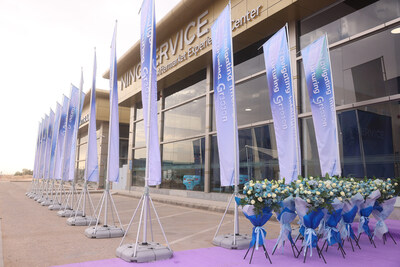
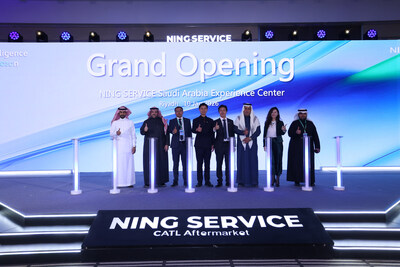
RIYADH, Saudi Arabia, Jan. 10, 2026 /PRNewswire/ — On January 10, 2026, CATL opened the Middle East’s first and currently the largest new energy aftermarket facility outside China—the NING SERVICE Experience Center in Riyadh—strengthening its after-sales presence in the Middle East and supporting the region’s shift toward cleaner energy systems.

The opening comes as Saudi Arabia and the wider Middle East advance ambitious electrification and decarbonization goals under Vision 2030 and similar national initiatives. Taking Saudi Arabia as an example, The Kingdom has set a goal to transition 30% of all vehicles in Riyadh to electric by 2030, as part of a larger strategy to reduce emissions in the capital city by 50%. Sustainability policies are also driving the shift to electric equipment, such as promoting the use of electric forklifts, while encouraging the use of green energy on farms under the Saudi Green Initiative. However, progress is tempered by persistent challenges, including longstanding oil dependency, surging electricity demand, extreme climatic conditions, and limited charging and service infrastructure.

Strategically designed to overcome these obstacles, the Riyadh facility offers comprehensive full-lifecycle after-sales support, cultivates local technical talent and accelerates the deployment of advanced electrification and energy storage solutions. 

Covering more than 7,000 square meters, the Riyadh center combines exhibition areas, diagnostics and maintenance zones, refurbishment facilities, training spaces, and a customer lounge. It is designed to serve not only as a localized service hub for the region and a showcase of CATL’s system-level capabilities across electric mobility, energy storage, and intelligent electrification, but also as a platform that links diverse resources, fostering industrial synergy across the ecosystem.

A full-lifecycle approach to new energy services

Relying on CATL’s deep R&D and extreme manufacturing capabilities, NING SERVICE Experience Center provides customers with full-lifecycle services that encompass battery diagnostics, repair, maintenance, rework, training, recycling, aftermarket logistics and warehousing. Its services span over seven major product categories—from passenger and commercial vehicles to energy storage systems—along with diverse repair scenarios, setting a new benchmark for new energy service delivery in the region.

Leveraging CATL’s advanced diagnostics and repair expertise, along with established service processes, the center’s comprehensive after-sales services

helps enterprise customers reduce downtime, lower maintenance costs, and extend asset life, providing greater certainty around long-term performance and residual value while reducing long-term ownership costs and delivering more cost-effective and reliable services for end users.

Advancing localized operations and capability building

The Riyadh center serves as a key platform for CATL’s localized operations in the Middle East, supporting talent development and long-term local value creation. Through dedicated training facilities, CATL builds after-sales and technical expertise in the new energy sector, contributing to skilled employment and knowledge transfer across the Middle East. Globally, NING SERVICE operates 10 training centers, totalling 2,300 square meters, and has certified more than 9,700 new energy after-sales professionals through partnerships with vocational institutions.

Beyond talent development, CATL is deepening its localization strategy by reinforcing local infrastructure and building ecosystem partnerships. CATL is in discussion with top-tier local industry players—including fuel network operators to rapidly provide green electricity to gas stations and major infrastructure companies to electrify their truck fleets, as well as energy companies to deploy solar-plus-storage solutions.

These initiatives not only bolster CATL’s local service capabilities and market confidence, but also by enabling key partners, jointly drive the scaled adoption of comprehensive new energy solutions across the Middle East.

“As a leading energy company in Saudi Arabia, we see tremendous opportunities in energy transformation. For instance, we plan to deploy solar-plus-storage solutions at our gas stations and electrify forklifts to reduce reliance on oil. We look forward to collaborating with top players like CATL to drive this transition forward,” said Ahmed Ibrahim,Assistant General Manager For Procurement of Al Drees, a leading provider of petroleum and logistics services in Saudi Arabia.

“The launch of CATL’s Riyadh aftermarket flagship underscores our shared commitment to driving the global energy transition. This milestone not only reflects the growing demand for sustainable solutions in Saudi Arabia but also embodies our collective vision for a cleaner, electrified future. As the investor behind the experience centre, we are confident that this partnership will accelerate electrification and strengthen the region’s role in advancing the energy transition.” said Lin Chaofan, CEO of F4S. 

Part of a global network

The Saudi Arabia opening builds on CATL’s global service footprint, which includes more than 1,200 professional service stations across 76 countries and 73 spare-parts warehouses worldwide. CATL ranks No. 1 globally in spare parts inventory stocked with 100% genuine parts, with a total warehouse area of more than 370,000 square meters. To date, NING SERVICE has supported more than six million electric vehicles, providing professional after-sales services for passenger vehicles, commercial vehicles, and energy storage customers.

A long-term commitment to the Middle East

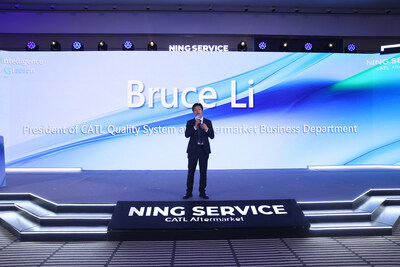
Bruce Li, President of Quality System, Aftermarket Business, Battery Management System Department at CATL, said the Riyadh center reflects a strategic, long-term view of the region.

“Our decision to establish this center in Riyadh is not only a commercial choice, but a long-term commitment,” Li said. “As the first NING SERVICE Experience Center in the Middle East, it is more than a service facility. It is a new energy aftermarket ecosystem hub that brings together advanced technology, professional training, and industry collaboration—effectively connecting diverse stakeholders and resources to foster deeper synergy and sustainable growth across the region. Starting from here, CATL will continue to expand its after-sales service network across the Middle East, align closely with Saudi Arabia’s Vision 2030, and support the region’s energy transition through a reliable, end-to-end service system.”

As the Middle East accelerates its shift toward electrification and energy storage adoption, CATL’s expanded NING SERVICE presence is poised to deliver the technical reliability and sustained partnerships essential for this transformation.


Cision View original content to download multimedia:https://www.prnewswire.com/news-releases/catl-opens-middle-easts-largest-new-energy-aftermarket-facility-in-riyadh-302657849.html

SOURCE Contemporary Amperex Technology Co., Limited (CATL)

LAS VEGAS, Jan. 9, 2026 /PRNewswire/ — After a four-day run, the 2026 Consumer Electronics Show (CES 2026) drew to a close in Las Vegas, USA. Making its debut at the event, BiLight , a global leader in flexible perovskite photovoltaic (PV) technology, emerged as a dark horse in the green tech track with a portfolio of world-first products and disruptive technical solutions. Guided by its brand vision of “Energy Equity,” the company is driving the global scenario-based adoption of flexible PV technology.

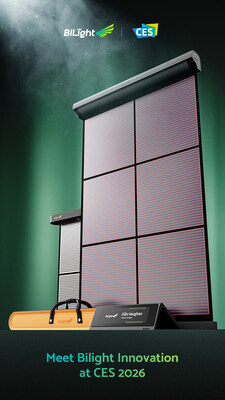
Themed “Defining the Physical Boundaries of AI,” this year’s CES highlighted the deep integration of green energy and AI as a key trend. BiLight showcased three core product lines at the Las Vegas Convention Center, shattering the inherent perception of traditional PV products as “bulky, rigid, and single-scenario.” Among the highlights, the world-premier rollable flexible perovskite solar curtain garnered significant attention, integrating sunshade, heat insulation, and power generation functions to directly supply electricity to home and office devices, reshaping the “PV + Space” application ecosystem. Additionally, the handheld rollable solar product became a hot favorite for outdoor PV applications, thanks to its portability and efficient energy supplementation capabilities. The lithium-free perovskite electronic nameplate set a new benchmark for office innovation: optimized with low-light power generation technology, it can stably supply energy under ordinary indoor lighting. Paired with low-power e-paper display and Bluetooth refresh functions, it achieves “seamless charging and permanent use,” addressing the resource waste of traditional paper nameplates and the environmental concerns of lithium-ion battery devices. This innovative solution attracted extensive consultations and negotiations with office equipment manufacturers and purchasers.

During the show, BiLight’s technical strength sparked a wave of cross-industry collaborations. A leading energy storage enterprise held in-depth discussions with BiLight, exploring joint R&D around the “flexible PV + portable energy storage” scenario to solve the battery life anxiety of outdoor devices through technological integration. In the automotive sector, industry representative SHM focused on applications such as rollable solar sunroofs and automotive curtain PV, engaging in detailed discussions on technical adaptation and product implementation to open up new paths for upgrading automotive energy endurance. AI hardware firm BleeqUp and satellite equipment companies also held talks with BiLight, exploring the potential applications of flexible perovskite technology in smart terminals, space energy, and IoT tracking.

Beyond product displays, at a themed roadshow hosted by TMTPost, James Fang, Co-Founder of BiLight, elaborated on the company’s strategic layout. During the roadshow, BiLight released a three-year product roadmap, aiming to gradually achieve full-scenario coverage across consumer electronics, automotive energy storage, building-integrated PV, and satellite energy, constructing a “PV+” ecosystem. The vision of “Energy Equity” and the clear product roadmap demonstrated BiLight’s development potential to global industry partners, strengthening their confidence in future collaborations.

Looking ahead, BiLight will continue to prioritize technological R&D as its core, deepen cooperation with global industry partners, and promote the widespread adoption of flexible PV technology in more fields. With innovative strength, the company is committed to reshaping the global energy application landscape, fulfilling its brand promise of “Energy Equity,” and making green energy accessible to everyone.

Contact:
hugoni@bilight.com


Cision View original content to download multimedia:https://www.prnewswire.com/news-releases/bilight-shines-at-ces-2026-flexible-perovskite-pv-takes-global-stage-uniting-partners-for-an-energy-innovation-era-302657747.html

SOURCE Bilight

LAS VEGAS, Jan. 9, 2026 /PRNewswire/ — After a four-day run, the 2026 Consumer Electronics Show (CES 2026) drew to a close in Las Vegas, USA. Making its debut at the event, BiLight , a global leader in flexible perovskite photovoltaic (PV) technology, emerged as a dark horse in the green tech track with a portfolio of world-first products and disruptive technical solutions. Guided by its brand vision of “Energy Equity,” the company is driving the global scenario-based adoption of flexible PV technology.

Themed “Defining the Physical Boundaries of AI,” this year’s CES highlighted the deep integration of green energy and AI as a key trend. BiLight showcased three core product lines at the Las Vegas Convention Center, shattering the inherent perception of traditional PV products as “bulky, rigid, and single-scenario.” Among the highlights, the world-premier rollable flexible perovskite solar curtain garnered significant attention, integrating sunshade, heat insulation, and power generation functions to directly supply electricity to home and office devices, reshaping the “PV + Space” application ecosystem. Additionally, the handheld rollable solar product became a hot favorite for outdoor PV applications, thanks to its portability and efficient energy supplementation capabilities. The lithium-free perovskite electronic nameplate set a new benchmark for office innovation: optimized with low-light power generation technology, it can stably supply energy under ordinary indoor lighting. Paired with low-power e-paper display and Bluetooth refresh functions, it achieves “seamless charging and permanent use,” addressing the resource waste of traditional paper nameplates and the environmental concerns of lithium-ion battery devices. This innovative solution attracted extensive consultations and negotiations with office equipment manufacturers and purchasers.

During the show, BiLight’s technical strength sparked a wave of cross-industry collaborations. A leading energy storage enterprise held in-depth discussions with BiLight, exploring joint R&D around the “flexible PV + portable energy storage” scenario to solve the battery life anxiety of outdoor devices through technological integration. In the automotive sector, industry representative SHM focused on applications such as rollable solar sunroofs and automotive curtain PV, engaging in detailed discussions on technical adaptation and product implementation to open up new paths for upgrading automotive energy endurance. AI hardware firm BleeqUp and satellite equipment companies also held talks with BiLight, exploring the potential applications of flexible perovskite technology in smart terminals, space energy, and IoT tracking.

Beyond product displays, at a themed roadshow hosted by TMTPost, James Fang, Co-Founder of BiLight, elaborated on the company’s strategic layout. During the roadshow, BiLight released a three-year product roadmap, aiming to gradually achieve full-scenario coverage across consumer electronics, automotive energy storage, building-integrated PV, and satellite energy, constructing a “PV+” ecosystem. The vision of “Energy Equity” and the clear product roadmap demonstrated BiLight’s development potential to global industry partners, strengthening their confidence in future collaborations.

Looking ahead, BiLight will continue to prioritize technological R&D as its core, deepen cooperation with global industry partners, and promote the widespread adoption of flexible PV technology in more fields. With innovative strength, the company is committed to reshaping the global energy application landscape, fulfilling its brand promise of “Energy Equity,” and making green energy accessible to everyone.

Contact:
hugoni@bilight.com


Cision View original content to download multimedia:https://www.prnewswire.com/news-releases/bilight-shines-at-ces-2026-flexible-perovskite-pv-takes-global-stage-uniting-partners-for-an-energy-innovation-era-302657747.html

SOURCE Bilight

Privacy Overview

This website uses cookies so that we can provide you with the best user experience possible. Cookie information is stored in your browser and performs functions such as recognising you when you return to our website and helping our team to understand which sections of the website you find most interesting and useful.