Entergy New Orleans partnered with Rebuilding Together New Orleans to help residents stay safe and cool during the summer months through a series of home weatherization events.
Through three volunteer “Beat the Heat” events, Entergy volunteers helped weatherize two homes in District C and one home in District B. Volunteers helped improve the homes by caulking windows and doors and installing Hardie board siding. These improvements help reduce energy consumption and lower monthly electricity costs while making homes more comfortable during periods of extreme heat.
“Helping residents stay safe and comfortable in their homes is an important part of serving our community,” said Stephanie Willis, director of public affairs at Entergy New Orleans. “Through our partnership with Rebuilding Together New Orleans, we can provide valuable support for families while helping them manage energy costs during the hot summer months.”
Rebuilding Together New Orleans works to advance health equity by addressing the connection between housing and health in underserved communities. Through home repairs and revitalization efforts, the organization helps promote long-term neighborhood stability and improve quality of life.
At Entergy New Orleans, we believe every person deserves a safe and healthy home. Through partnership s and volunteer service, we are helping create safer, stronger communities across our city.
A bipartisan wave of opposition to the security technology startup Flock Safety is growing across the United States. Critics say the Georgia-based company’s vast network of automated license plate readers, or ALPRs, collect personal data in violation of the Fourth Amendment. Flock says what it does improves public safety and is perfectly legal, but the system has proven ripe for error and abuse.
Though its name is seemingly everywhere right now, Flock is just one part of a growing disconnect between the expectation of constitutional protections and the reality of life in the 21st century.
Flock cameras are already active in thousands of U.S. communities
Surveillance cameras in public places are not a new phenomenon, but the rise of artificial intelligence provides Flock and companies like it with new and infinitely more powerful tools that have raised alarms among civil rights advocates.
Flock has approximately 120,000 ALPRs operating in 7,000 communities across the U.S. The cameras capture license plates and details like paint colors, bumper stickers and visible damage to recognize vehicles and allow for law enforcement tracking. The latest Flock devices can also focus on and follow pedestrians.
Flock’s automated readers capture license plates and details like paint colors, bumper stickers and visible damage. (Image: <a href=”https://flickr.com/photos/diversey/55307233186/in/photolist” target=”_blank” rel=”noreferrer noopener”><u>Tony Webste</u></a>r/Flickr)
Though it indiscriminately records millions of people’s daily movements, Flock says it does not violate the Fourth Amendment. Part of the Bill of Rights, the Fourth Amendment prohibits the U.S. government from conducting searches, including the use of digital footprints such as cell phone location data, without a warrant.
As a private company, Flock is not subject to the same legal framework that applies to the government. Regardless of its position on this heavily debated topic, though, the company’s core business is built around contracting with law enforcement. That’s where the model collides with civil rights, including putting lives at risk.
License plate reader errors create dangerous community encounters
Increased use of automated license plate readers is followed by a worrying pattern of dangerous roadside encounters and wrongful detainments of innocent people.
Last week, a Wisconsin woman was stopped on a busy interstate and surrounded by police with their guns drawn after Flock’s system wrongfully linked her car to a homicide. She told local reporters it was the second time she’d been stopped at gunpoint in less than two weeks.
“I haven’t been asleep since this has happened,” she said, holding back tears. “Every time I close my eyes, all I can see is guns.”
Fox6 Milwaukee
A few weeks before, automotive journalist Joel Feder of The Drive said he and his wife were surrounded by armed officers while test-driving a Range Rover in Minnesota, which Flock’s system had erroneously reported stolen. “Flock isn’t just at the center of a national debate, it hit at the center of my life,” Feder wrote.
In a July analysis of 24 traffic stops linked to license reader errors, the Institute of Justice found that officers drew and pointed their guns at innocent people in two-thirds of them. “Every one of those stops is a high-risk encounter where a wrong move, a misunderstanding, or a moment of fear can turn deadly,” Michael Soyfer, an Institute of Justice attorney, said in a statement. “No one should have to prove their innocence on the side of the road because a camera couldn’t tell a zero from an O.”
Law enforcement traffic stops are dangerous regardless of why the person was pulled over. More than 800 people died in the course of traffic stops between 2017 and 2025, according to the American Civil Liberties Union. “Despite representing only 12 percent of the population, Black people make up more than a quarter of those killed in these encounters,” the organization notes.
In one particularly horrifying incident earlier this year, a Black driver in Ohio feared for his life when an erroneous Flock alert led police to pull him over. Exiting the car at gunpoint, he was attacked by a police dog and suffered life-changing injuries. He was then jailed for hours before being released.
Though Flock’s marketing materials boast a 93 percent accuracy rate, the company’s camera network reads more than 20 billion license plates every month, adding up to over a billion inaccurate readings.
Overall outcomes can also mask more substantial shortcomings in individual jurisdictions. In Roseville, California, for example, a customized Flock system generated 1,427 alerts regarding stolen or felony-linked vehicles from 2023 to 2024. More than 70 percent of the alerts were later found to be erroneous. Flock reportedly attributed the problem to the deployment of older equipment in a configuration requested by Roseville officials.
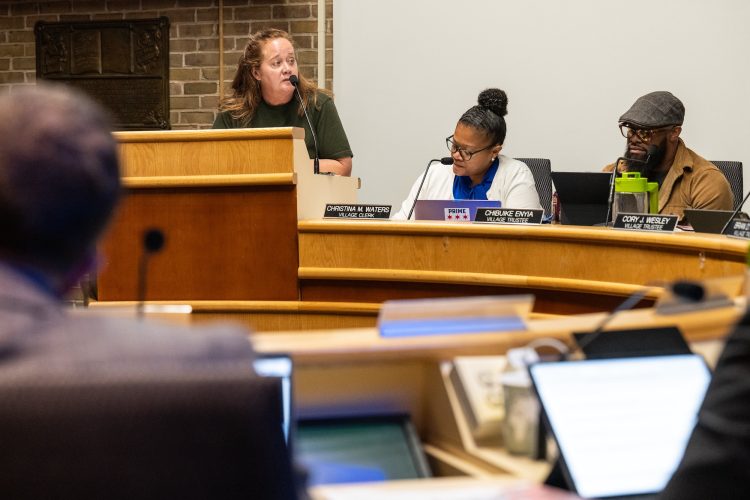
Residents share their concerns about Flock Safety cameras at a town board meeting in Oak Park, Illinois, last year. The trustees ultimately voted 5-2 to cancel the town’s contract with Flock. (Image: <a href=”https://flickr.com/photos/pgoyette/54703890428/in/album-72177720328206878″ target=”_blank” rel=”noreferrer noopener”><u>Paul Goyette</u></a>/Flickr)
Police misuse of Flock systems is the last straw for many communities
Beyond mistakes and equipment failures, Flock’s data is also vulnerable to intentional abuse by law enforcement officers. Recent cases in Georgia jurisdictions alone include a former police officer charged with accessing the system multiple times for non-enforcement reasons, three sheriff’s employees who resigned after an audit of Flock usage, the arrest of a former deputy charged with tracking a person known to him, three officers fired after an audit revealed unauthorized searches, and more.
This spurt of arrests, charges, and terminations follows the rollout of a new auditing tool from Flock. Effective as the tool may be, it can only catch abuse after the damage is done. Combined with terrifying cases of mistaken identity, publicity over intentional misuse of the system created mounting backlash in communities.
More than 100 municipalities have cancelled their contracts with Flock since 2021, according to the civic engagement organization Deflock. More than half of them cancelled this year, with over a quarter in July alone. The ACLU also posted an advocacy toolkit to help concerned residents press for action against ALPRs.
Flock is getting the most press and community blowback, but it’s far from the only company assisting law enforcement with surveillance technology. Vigilant Solutions and Rekor Systems also operate broad ALPR networks in the U.S., while the drone surveillance company Skydio partners with more than 1,200 government and law enforcement agencies across the country.
Whatever happened to the Bill of Rights?
Adding to the fraught environment is the specter of U.S. President Donald Trump’s immigration policy and the wanton abuse of constitutional protections by federal immigration agents. Though Flock claims it does not work with immigration agencies, local law enforcement has been documented sharing ALPR data with agents.
Other vulnerable populations are also at risk of persecution through surveillance tracking. In 2022, for example, women were warned to delete popular menstrual tracking apps after advocates raised the potential for law enforcement to use the data in abortion cases. More recently, a sheriff’s deputy in Texas searched more than 83,000 Flock cameras across the country in an effort to find a woman suspected of having an abortion.
People seeking gender-affirming care are also increasingly vulnerable to interstate data collection and sharing, civil rights advocates say.
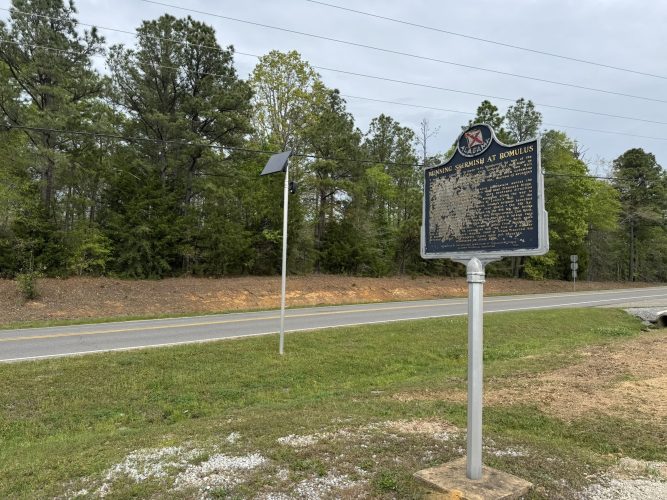
A Flock license plate reader in rural Romulus, Alabama. (Image: Wikimedia Commons)
Surveillance companies like Flock Safety, Skydio, and others operate in a legal grey area as legislators and the courts are slow to keep pace with rapidly advancing technology. Though the Supreme Court has ruled there are few reasonable expectations of privacy in public, some legal experts say mass AI-powered surveillance networks go beyond security camera feeds to provide a searchable account of a person’s daily movements before there is any probable cause of a crime.
“While companies can manipulate you, they cannot put you in jail. But the U.S. government can, and it now purchases massive quantities of your information from commercial data brokers,” Anne Toomey McKenna, an affiliated faculty member of the Institute for Computational and Data Sciences at Penn State University, wrote in The Conversation.
Far beyond ALPRs, McKenna describes a lifestyle of continuous personal data collection that includes Ring cameras, smart phones, automotive sensors, and more.
While ordinary people can reduce some of the risks, completely disconnecting from the modern world is virtually impossible. It will take continued public pressure, and aggressive legislative and judicial action, to rein in the growing threat of surveillance data abuse.
Wayne Davis, Marathon Petroleum Marine Transportation Tankering Services supervisor supporting the Gulf Coast, was named to The Waterways Journal’s 40 Under 40 Award list, recognizing his contributions to the inland marine transportation industry.
Davis has built a 19-year marine career, growing from a shore-based tankerman into a leader of nearly 25 team members supporting barge operations across Texas and Louisiana.
His leadership focuses on respect, safety and shared accountability, helping strengthen team culture, support zero OSHA recordable injuries and encourage others to grow in the industry.
When Wayne Davis, Marathon Petroleum Marine Tankering Services Supervisor supporting the Gulf Coast, learned he had been named to The Waterways Journal’s 40 Under 40 Award list, the recognition felt bigger than a personal achievement.
“It was a very surreal moment,” Davis said. “You don’t hear about coming from shore tanking to getting awards in the industry. It was an honor to be celebrated in front of industry partners.”
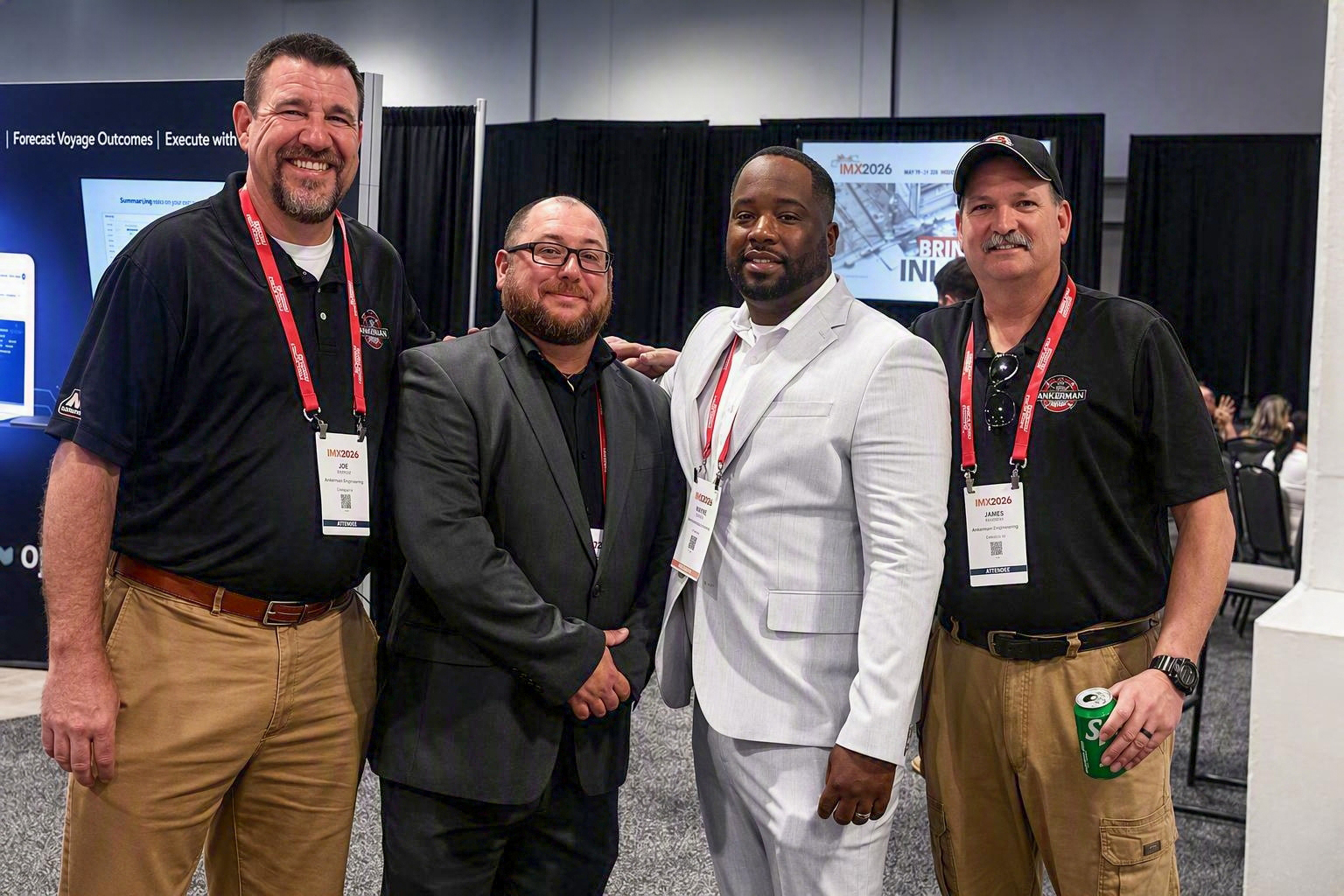
(L to R) Joseph Fraley, Marine Operations Support Manager; Christopher Snouffer, Marine Tankering Services Manager; Wayne Davis; James Brown, Marine Tankering Services Group Supervisor; all attended the 40 Under 40 Award ceremony to support Davis.
The annual 40 Under 40 Award recognizes men and women who have made significant contributions to the inland marine transportation industry and show promise in shaping its future. For Davis, who supports Marathon’s Galveston Bay, Texas, and Garyville, Louisiana, refineries and third-party docks in both states, it also shines a light on a part of the marine industry that is often less visible.
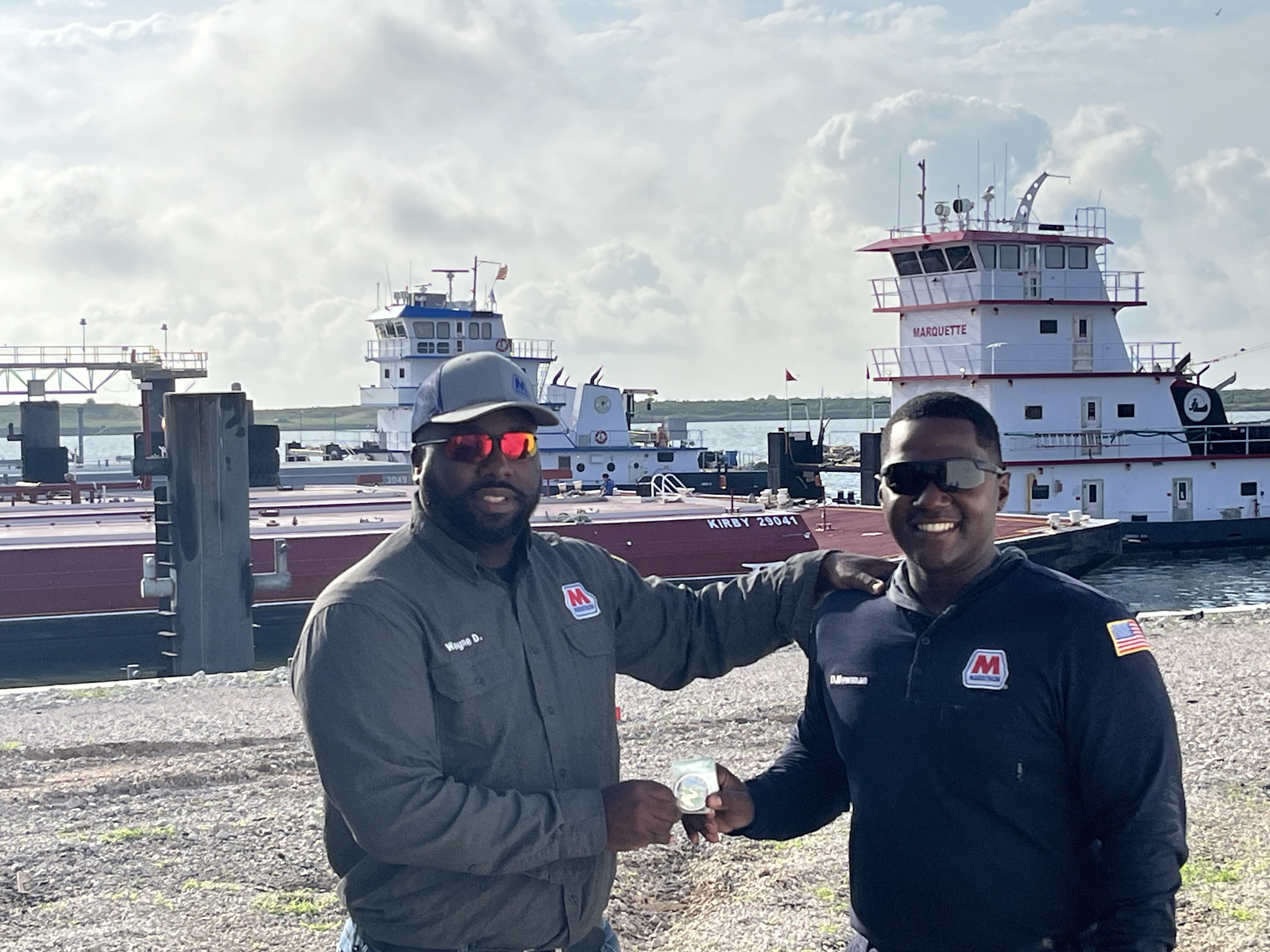
Wayne Davis (left) presents Lead Marine Tankerman Devon Newman (right), with the Tankerman excellence coin at the Galveston Bay Refinery docks.
An Unexpected Start
Davis has worked in the marine industry since 2006 and marked four years with Marathon in August. His path began unexpectedly when he was working at a sporting goods store at age 18. After he helped a customer load weightlifting equipment for a vessel, she offered him a job opportunity.
“I didn’t know this industry existed,” Davis said. “She offered me a better opportunity and more of a career than what I was doing.”
Davis started as a shore-based tankerman and has built a 19-year career rooted in reliability, initiative and a willingness to keep learning. Today, Davis supervises a growing team of nearly 25 shore-based Tankerman across Texas and Louisiana who support the movement of products by barge across key Gulf Coast locations. While vessel crews move the barges, shore-based tankermen meet them at the dock, connect the equipment and oversee the transfer process that helps keep products moving across our integrated value chain safely and reliably.
“Wayne’s leadership style is grounded in accountability, clear communication, and an unwavering commitment to safety.”
Leading with Respect
For Davis, leadership starts with respect, consistency and accountability. He said he makes it a point to treat frontline employees and leaders with the same professionalism, creating an environment where people feel valued and supported.
“My job is to go to work and make sure the team feels respected,” Davis said. “Make sure they feel treated right; make sure they feel taken care of. We’re all human beings. We’re all grown adults at work.”
Chris Snouffer, Marine Tankering Services Manager, said Davis’s leadership has had a significant impact on both the Marine Transportation organization and MPC.
“Wayne’s leadership style is grounded in accountability, clear communication, and an unwavering commitment to safety,” Snouffer said. “He sets the tone for the group by making safety not just a priority, but a core value in every decision and action.”
Snouffer said Davis has strengthened the safety culture, empowered teams to speak up, and helps drive operational excellence.
“Because of Wayne’s leadership, our organization operates with greater discipline, confidence, and a shared focus on protecting our people and assets every day,” Snouffer said.
Safety as a Shared Responsibility
That approach has helped Davis strengthen a team culture built on safety and shared ownership. Under his supervision, the group has achieved zero OSHA recordable injuries, supported by knowledge assessments and participation in behavior-based safety processes. Davis reinforces that safety is not optional.
“Safety is built into everything we do,” Davis said. “It’s how we protect our team, support our operations and serve the communities around us.”
Davis often describes the team’s culture as one where employees make each other better. In practice, he said, it means employees are encouraged to share observations, offer feedback and look at familiar tasks from different perspectives.
“You don’t have to feel offended when someone comes to correct you,” Davis said. “Learn how to take feedback as a way to grow.”
That focus on respect and shared accountability has also shaped how Davis supports the people around him.
“Wayne is an exceptional leader that always goes above and beyond to ensure his team, and everyone around him, feels heard, respected and valued,” said Pam Shafer, Senior Human Resources Business Partner. “He truly goes the extra mile to share his knowledge with others and is helping to develop the Tankering Services Group for a positive future.”
Service Beyond Work
His commitment to service extends beyond work. Davis has volunteered with Bay Area Habitat for Humanity build days, and he and his wife regularly involve their children in grassroots efforts to provide meals and supplies to people in need.
While the 40 Under 40 Award recognizes what Davis has already accomplished, he said what motivates him now is helping others see what is possible in the same industry that once found him.
“Being able to help people and encourage people to want better for themselves in the same industry, it helps get me up for work now,” Davis said. “With this team and the leadership around us, I’m excited about where we’re headed and what we can continue to accomplish together.”
Investing in early education helps build stronger families, communities and thriving economies. As part of our commitment to supporting early education, Entergy joined community leaders, educators and families to celebrate the grand opening and ribbon cutting of Wilcox Academy’s new Central City Early Learning Center and educator housing facility. The celebration included a neighborhood second line featuring marching bands followed by a ribbon cutting with elected officials, community partners and supporters.
Wilcox Academy celebrated its 20th anniversary with the grand opening of its new Central City Campus. Entergy’s donation of $150,000 to support the state-of-the-art facility culminates two decades of support and collaboration that helped make the center a reality, including advocacy at the local, state and federal level to create the necessary funding.
“My parents were both educators so I learned the importance of a strong educational foundation at an early age,” said Deanna Rodriguez, president and CEO of Entergy New Orleans, “At Entergy, we believe education is essential to building strong communities and we are committed to supporting opportunities that help young people and families succeed.”
The facility is one of the first in the city to co-locate childcare and affordable housing – two of most pressing needs facing the city. The 13-classroom facility will serve up to 150 children from birth to age 5 and create approximately 30 local jobs. In addition, the campus provides wraparound services such as family coaching, healthcare partnerships, take-home meals, and includes four energy-efficient affordable housing units for early childhood educators.
“This campus is about creating a foundation for children and families to grow and succeed,” said Rochelle Wilcox, CEO of Wilcox Academy. “When families have access to quality early education, stability and the resources they need, the benefits reach far beyond the classroom and strengthen the entire community.”
Entergy’s investment and support for early care and education date back to the early 2000s when the company joined efforts to support the Coalition for Pre-K for All. More recently, Entergy was part of a coalition that led a successful effort in 2022 to create a millage, that with state matching funds, raises up to $40 million annually to provide 2,000 working families in Orleans Parish with access to high-quality early care and education. Through our investments in the Louisiana Policy Institute, Entergy also helped fund the advocacy efforts that created the state matching fund which was critical to the center’s opening.
State Sen. Royce Duplessis, who helped advance funding for the project, highlighted the power of collaboration and the long-term impact of investing in early education, families and affordable housing.
The Wilcox Academy Central City Early Learning Center brings together early education, family services and affordable housing to support families and strengthen the early childhood workforce. Entergy is proud to support Wilcox Early Learning Center and its commitment to education, helping create opportunities for young people and families while supporting a brighter future for the community.
Learn more here about Entergy’s year-round initiatives dedicated to help our communities that we serve.
NEW YORK, August 20, 2026 /3BL/ – The Concordia Leadership Council is proud to announce Dr. Laurie L. Patton, President of the American Academy of Arts & Sciences, as the second of three recipients of the 2026 Concordia Leadership Award, recognized for her work in civil society. Dr. Patton will be formally recognized for her exceptional leadership at the 2026 Concordia Annual Summit (September 20-23, Sheraton New York Times Square Hotel), the leading public-private sector forum alongside the UN General Assembly. Pass and registration information can be found here.
The Concordia Leadership Award recognizes global leaders who have made pioneering contributions and inspired others by turning vision into impact. Voted on by the Concordia Leadership Award Committee, recipients are committed to catalyzing positive social and economic change while promoting effective public-private collaboration to create a more sustainable future. Past civil society recipients include: Mr. Stephen Heintz, President & CEO of the Rockefeller Brothers Fund; Nobel Peace Laureate Professor Muhammad Yunus, Founder of Grameen Bank; Darren Walker, President, Ford Foundation; Christiana Figueres, Founder of Global Optimism; Mónica Ramírez, Founder & President of Justice for Migrant Women; and Jacqueline Novogratz, CEO of Acumen.
For civil society, Concordia has selected Dr. Laurie L. Patton, President of the American Academy of Arts & Sciences, for a career spent building bridges across institutions, disciplines, and belief systems. From 2015 to 2025, Dr. Patton served as the first woman president of Middlebury College, following academic leadership roles as dean of Duke University’s Trinity College of Arts and Sciences and inaugural director of the Center for Faculty Development at Emory University. An authority on South Asian history, culture, and religion, and more recently on theories of conflict and interreligious engagement in the public square, Dr. Patton is the author or editor of twelve scholarly books and seventy articles, as well as three books of poems and a translation of the Bhagavad Gita for the Penguin Classics Series. She served as president of the American Academy of Religion in 2019 and holds honorary degrees from Rutgers University and Hebrew Union College.
Anita McBride, Chair of Concordia’s Leadership Award Committee, Leadership Council Member, Author, and Former Assistant to President George W. Bush & Chief of Staff to First Lady Laura Bush, expressed her excitement:
“This committee looks for leaders who build bridges where others see divides,” said McBride. “Laurie Patton has spent a career doing exactly that, across disciplines, institutions, and faiths, and doing it with the kind of intellectual rigor and generosity that changes how people see each other. That is civil society leadership at its best.”
Bart Friedman, Member of the Board of the Trust of the American Academy of Arts and Sciences and nominator of Dr. Patton, added: “As the President of Middlebury College and now as the charismatic President of the American Academy of Arts and Sciences, Laurie Patton has been an effective advocate for higher education, championing both the humanities and sciences and demonstrating how they can work together. Laurie Patton has worked hard to ensure that research, education and teaching have advocates and resources to advance Enlightenment values. At a time when scholarship has been challenged and at times embattled, the AAAS is lucky to be helmed by such an indispensable leader.”
Dr. Patton reflected on the recognition: “I am truly grateful and honored by this award, given by a Council whose members know deeply what it means to lead in difficult times. The most important work we can be doing right now is to be building impossible bridges, creating human connections where none have ever existed. Together, as a response to despair, we can re-imagine the public square in our own communities. If we can build a vibrant civil society with our neighbors, we can use those models across the globe. There are no more distant strangers; only neighbors whose stories we need to learn.”
In the coming weeks, Concordia will announce its public sector honoree, completing the 2026 Leadership Award class. Together, their recognition reflects Concordia’s broader commitment to elevating leaders across every sector who are translating vision into lasting impact.
About Concordia Concordia is a nonpartisan, nonprofit organization dedicated to actively fostering, elevating, and sustaining cross-sector partnerships for social impact. Through its Annual Summit in New York, Horizon Summits held around the world, and year-round programming, Concordia convenes leaders from business, government, and civil society to drive collaboration and measurable change.
Media Contact Mateo Carvajal González Media Relations Manager, Concordia mcarvajal@concordia.net
For far too long, indoor air quality has largely been invisible and only something people noticed when something went wrong. But that’s changing. As organizations place greater emphasis on health, resilience and human performance, the quality of the air we breathe has become a defining feature of healthy buildings and healthy organizations.
Few people have been as committed to advancing that conversation as Jason DiBona, CEO of Molekule and a Commissioner on the Global Commission on Healthy Indoor Air. Throughout his career, spanning healthcare, medical technology, building innovation and global business leadership, DiBona has focused on leveraging the science of indoor air to create practical solutions that improve people’s everyday lives. Under his leadership, Molekule has continued its mission of helping organizations better understand, manage and improve indoor air through advances in air purification, intelligent monitoring and data-driven technologies.
In a Facility Management Journal article, “Breathing Life into Workplaces,” DiBona makes a compelling case that indoor air quality is a business, health and workforce issue. From wildfire smoke and airborne disease to cognitive performance and employee confidence, he argues that organizations have an opportunity to move beyond reacting to problems and instead proactively create healthier, more resilient indoor environments. We recently sat down with Jason to discuss why indoor air quality has reached a turning point, the role technology can play in accelerating progress and where he sees the greatest opportunities for healthier buildings in the years ahead.
Q: Throughout your career, you’ve worked at the intersection of healthcare, technology and the built environment. How has that journey shaped your perspective on the role buildings can play in protecting health and helping people perform at their best?
My career taught me to look at health more broadly, not just as something we address when people become sick, but as something we can influence through the environments in which they live and work. Some of the most important healthcare interventions don’t happen inside the walls of a hospital. They happen in the air of the buildings we inhabit every single day.
What bridged those worlds for me was recognizing the profound impact of environmental precursors. The invisible pollutants we inhale 20,000 times a day can influence human health long before someone ever steps foot into a doctor’s office or a clinic. We spend 90% of our lives indoors, yet in our push for energy-efficient, tightly sealed buildings, we have inadvertently created environments that can trap VOCs, harmful pathogens and particulate matter. The result is that the very places designed to protect and support us can sometimes work against human biology.
That realization brought me to Molekule. I saw an opportunity to take what we know from clinical science and technology and apply it to the places where people spend most of their lives, to elevate human health and performance at scale by transforming the built environment from the inside out. The future of indoors isn’t just about shelter. Buildings should do more than house us; they should actively contribute to our health and longevity. That means moving from passive spaces to environments that can continuously sense, respond and protect the people inside them.
Q: You often describe indoor air quality as force multiplier for health and well-being. What has convinced you that healthy indoor air is becoming a strategic priority for organizations?
The conversation has fundamentally shifted. Organizations once viewed indoor air quality purely through a facilities or compliance lens. The COVID-19 pandemic changed that forever. It served as a global wake-up call that proved indoor air is core to business continuity, risk management and human safety. Today, forward-thinking leaders recognize it not as a temporary emergency measure, but as an essential, permanent driver of human performance.
Healthy air is a force multiplier because it amplifies the benefits of everything else an organization does to support its people. We invest in wellness programs, ergonomics and mental health, yet often overlook the 30 pounds of air we process every single day (more than the food we eat and water we drink combined). You can think of clean air as the foundational baseline of your entire wellness stack.
Breathing unmanaged environmental precursors places the human body under constant metabolic stress, forcing it into defense mode rather than recovery mode. It is impossible to optimize cognitive focus, energy or resilience if the ambient environment is constantly working against you. Clean air works upstream, removing that invisible tax before performance is ever compromised.
Q: Your recent IFMA article highlights how advances in connected technologies and next-generation air purification are changing what’s possible. Where do you see technology making the biggest difference over the next five years?
The biggest shift over the next five years is moving from static air purification to air intelligence, and air intelligence is what drives air health.
By layering AI, advanced sensing and connected software onto purification and filtration technology, we give buildings the ability to predict and mitigate threats before they impact human well-being. Imagine an environment that senses approaching wildfire smoke, identifies elevated off-gassing, or isolates pollution sources, automatically adjusting its systems to neutralize threats in real time.
Air quality is a metric. Air intelligence is the system. Air health is the outcome. The future will be led by technologies that make buildings truly responsive: quietly and continuously protecting human health everywhere we spend our lives.
Q: As a Commissioner on the Global Commission on Healthy Indoor Air, you’ve joined leaders from around the world working toward a shared vision for healthier indoor environments for everyone, everywhere. Looking ahead, what gives you the greatest optimism that we can accelerate progress and make healthy indoor air the norm rather than the exception?
My optimism comes from the fact that this is no longer a conversation being driven by one company, one industry or one country. We are seeing a genuine global shift in how people think about the relationship between the environments we inhabit and our health.
I feel incredibly honored and privileged to be part of the Global Commission on Healthy Indoor Air and to sit alongside leaders from around the world and across a diverse range of disciplines. Seeing what many of them are doing in their own domains through public health policy, building standards, research and education makes it hard not to be optimistic. There is real momentum, and importantly, it is translating into action.
We are also seeing a broader wellness movement where people are asking more questions about the environmental factors that influence their health. People track everything from HRV to nutrition and sleep, and we are finally beginning to pay more attention to the environment around us. Indoor air is a particularly important part of that conversation because it is something we are exposed to continuously, often without realizing it.
What gives me even more confidence is the convergence of awareness, science, policy and technology. We have a much better understanding today of the connection between indoor environments and human health, and we are increasingly developing the tools to act on that knowledge. There is still a tremendous amount of work to do, but I find it encouraging that the conversation is moving from awareness to accountability and, increasingly, to action. My hope is that healthy indoor air eventually stops being viewed as a premium amenity and becomes recognized for what it really is: a fundamental part of a healthy environment and, ultimately, a healthy life.
NEW YORK and LONDON, August 20, 2026 /3BL/ – AccountAbility, a leading global Sustainability Advisory and Standards firm with more than three decades of experience helping organizations improve their practices, performance, and long-term impact has, once again, been recognized by Forbes as one of the World’s Best Management Consulting Firms 2026. This marks the fifth consecutive year the firm has received the distinction.
The recognition reflects AccountAbility’s continued leadership in helping businesses, investors, governments, and multilateral organizations navigate an increasingly complex and evolving operating environment. Through its advisory services and internationally recognized AA1000 Series of Standards, the firm supports organizations in strengthening governance, building stakeholder trust, and delivering practical and impactful sustainability outcomes.
“This recognition reflects the trust that organizations around the world continue to place in our people, our expertise, and our commitment in helping them navigate increasingly complex sustainability and governance challenges. It is also a testament to the dedication of our colleagues and partners, whose work continues to advance responsible business practices and create enduring value.”
Reflecting on today’s business environment, Mr. Misser added:
“Organizations are operating in a period defined by geopolitical uncertainty, rapid technological advancement, evolving stakeholder expectations, and shifting regulatory landscapes. Success increasingly depends on making well-informed decisions that balance resilience, performance, and long-term value creation. At AccountAbility, our purpose remains unchanged: to help organizations surmount these challenges with practical application, relevant counsel, and solutions that endure.”
The Forbes World’s Best Management Consulting Firms 2026 ranking was compiled in partnership with Statista. This recognition is the result of Statista’s rigorous global research methodology, incorporating recommendations from 5,400 consulting partners and executives, feedback from 3,700 senior client executives, and data from 31 countries across 13 industries and 15 consulting specialties. Rankings reflect excellence in expertise, execution, and client satisfaction across multiple industries and functional areas.
For more than 31 years, AccountAbility has worked alongside organizations across sectors and geographies to strengthen governance, sustainability strategy, sustainability strategy, reporting, and assurance. As the sustainability landscape continues to evolve, the firm remains committed to providing practical, effective, and enduring solutions that help organizations move confidently from commitment to measurable impact.
Please see the full Forbes World’s Best Management Consulting Firms 2026 list here.
About Forbes
Forbes is an iconic global media brand that has symbolized success for over a century. Fueled by journalism that informs and inspires, Forbes spotlights the doers and doings shaping industries, achieving success and making an impact on the world. Forbes connects and convenes the most influential communities ranging from billionaires, business leaders and rising entrepreneurs to creators and innovators. The Forbes brand reaches more than 140 million people monthly worldwide through its trusted journalism, signature ForbesLive events and 49 licensed local editions in 81 countries.
About AccountAbility
AccountAbility is an expert international Sustainability Advisory and Standards firm. Established in 1995 and structured as a Public Benefit Corporation, we work with businesses, investors, governments, and multilateral organizations to innovate and lead the global sustainability agenda by improving the practices and performance of organizations. We focus on delivering practical, effective, and enduring results that enable our clients and standards users to succeed.
AccountAbility operates globally from offices in New York, London, Riyadh, and Dubai, supported by a highly qualified team recognized by the Financial Times, Forbes, and Capital Finance International. AccountAbility is also acknowledged in the U.S. Library of Congress as a source of ESG & sustainability research and thought leadership.
For media inquiries or further information, please contact:
Bank imposter scams are on the rise, and criminals are using increasingly convincing tactics to trick consumers into sharing personal information, account credentials, and even transferring money. KeyBank is sharing tips and advice that can help people understand how these scams work. It’s one of the most effective ways to protect yourself from fraud.
In a typical bank imposter scam, fraudsters pose as legitimate bank representatives and contact consumers through email, text messages, phone calls, mail, or even in person. Their goal is to create a sense of urgency and persuade victims to reveal sensitive information or move funds into accounts controlled by scammers.
Common Types of Bank Imposter Scams
Email Phishing Scams
One of the most common tactics involves fraudulent emails that appear to come from a trusted financial institution. These messages often urge recipients to review transactions, verify account information, or update security settings.
The email typically contains a link directing users to a fake banking website designed to capture usernames, passwords, and other login credentials.
Text Message Scams (Smishing)
Scammers also use text messages to target consumers. These messages may claim a bank account or debit card has been locked, suspended, or is about to expire and requires immediate action.
In some cases, recipients receive alerts asking them to verify suspicious transactions. Responding to these messages can lead to follow-up phone calls from fraudsters posing as bank representatives.
Phone Call Scams (Vishing)
Phone-based scams remain one of the most effective fraud tactics because they often create a heightened sense of urgency.
A scammer may claim to be calling from a bank’s fraud department and warn of suspicious account activity. They may ask individuals to verify personal information, provide login credentials, or transfer money to a purported “safe account” that is actually controlled by criminals.
To make the calls appear legitimate, scammers frequently use caller ID spoofing, causing the incoming phone number to look like it belongs to the bank.
In-Person and Mail Fraud
While less common, some criminals impersonate bank employees in person or send counterfeit letters that closely resemble official bank communications. These tactics are intended to gain access to sensitive information or persuade victims to send funds.
Warning Signs of a Bank Imposter Scam
Consumers should be cautious when they receive communications that:
Discourage contacting the bank directly or visiting a local branch
Contain poor grammar, spelling errors, or unusual formatting
Experts also advise consumers never to comply with requests to:
Screen-share or mirror their device
Transfer money to a “safe account”
Visit suspicious web addresses
Purchase gift cards as payment
Download unfamiliar software
How to Protect Yourself
Verify Before Taking Action
If a message, phone call, or email seems suspicious, independently verify the source before responding.
Instead of using contact information provided in the message, reach out through a trusted phone number, bank website, or local branch.
Never Share Sensitive Information
KeyBank will never call, text or email you to ask for sensitive information, like your full Social Security number, username, password or PIN. One exception is: clients who have recently applied for a KeyBank product may be contacted regarding information related to their application.
Be Skeptical of Urgency
Fraudsters rely on fear and pressure to encourage quick decisions. Legitimate financial institutions do not typically demand immediate action or pressure customers to move money.
Check Website Addresses Carefully
Before entering information online, consumers should verify that the website address begins with “https://” and matches the institution’s official website.
Strengthen Account Security
Enable Multi-Factor Authentication
Multi-factor authentication adds an additional layer of protection by requiring a second verification step when signing into accounts.
Monitor Accounts Regularly
Consumers should review account activity frequently and examine monthly statements for unauthorized transactions.
Turn on Account Alerts
Banking alerts can provide early warning of account activity and help consumers identify suspicious transactions quickly.
How to Verify Communications from KeyBank
Customers who receive unexpected messages or phone calls claiming to be from KeyBank should verify the communication through trusted channels.
KeyBank clients can call 1-800-KEY2YOU®, using the phone number on the back of their debit or credit card, or visiting a local branch. Clients can also verify text messages by reviewing KeyBank’s list of authorized five- and six-digit short codes at key.com/shortcodes.
What to Do If You Suspect Fraud
Anyone who believes they may have been targeted by a scam should contact their bank and other affected account providers immediately.
KeyBank clients can reach the KeyBank Fraud Client Service Center at 1-800-433-0124 (or dial 711 for TTY/TRS) for assistance.
Staying Ahead of Evolving Fraud Threats
As criminals continue to adopt new technologies and tactics, fraud prevention remains an ongoing effort. Consumers are encouraged to stay informed about emerging scams and security best practices by regularly reviewing fraud prevention resources and monitoring updates from their financial institutions.
Remaining vigilant, verifying communications independently, and refusing to share sensitive information can significantly reduce the risk of becoming a victim of a bank imposter scam.
Stay up to date on the latest fraud trends and security tips by regularly visiting KeyBank’s fraud prevention resources page at key.com/fraud.
This material is provided as general information only; the information contained herein may not apply to all situations. Nothing in this material shall be regarded as an offer or solicitation by KeyBank or its affiliates. This is not intended to be a recommendation or advice for your specific situation (including financial, accounting, legal, or tax advice). Consult appropriate professionals for your specific circumstances.
DES MOINES, Iowa, August 20, 2026 /3BL/ –Wells Fargo announced today at the Iowa State Fair that it is making a $1.5 million investment to Habitat for Humanity to focus on innovative and affordable housing options in towns and rural communities across the country.
“Housing affordability is a growing challenge in Iowa and across the country, “ said Jason Rosenberg, head of Public Affairs at Wells Fargo. “Through our partnership with Habitat for Humanity, we’re advancing growth-focused solutions so communities across the nation, greater Des Moines and rural Iowa can continue to thrive.”
As the nation faces a severe housing shortage, many families are struggling to stay in communities where they have established roots. Through this initiative, Habitat will advance alternative housing solutions, such as modular construction, an off-site building technique where pieces of the home are built in a factory and then transported to a permanent foundation.
One of the key advantages of modular construction is its efficiency, helping Habitat expand access to affordable homeownership by reducing build timelines and easing project logistics for local Habitat affiliates, particularly in areas where volunteer and contractor availability is limited. Modular homes meet or exceed local and state building codes, ensuring quality, safety and durability.
From this investment, $1 million will go to Habitat for Humanity International to advance housing innovation, including modular construction. Wells Fargo is providing Greater Des Moines Habitat for Humanity with $500,000 in funding to expand affordable housing solutions in towns and rural communities in central Iowa, such as Perry and Indianola.
“Along with our traditional home building model, modular homes are an added solution to the housing affordability crisis,” said J. Edwin Hensley, director, U.S. construction at Habitat for Humanity International. “This is a national push. With the support of Wells Fargo, we have the opportunity to prove this can work in rural, suburban and urban communities.”
Beyond this investment, Wells Fargo employees volunteered with Greater Des Moines Habitat for Humanity at the state fair to build wheelchair ramps for local homeowners. The most affordable home is the one a person already lives in, and this project will highlight the importance of people being able to age in place or live with a disability, keeping them in a home where they feel physically safe and financially secure.
“Homeownership creates stability for families and strengthens communities,” said Lance Henning, CEO of Greater Des Moines Habitat for Humanity. “For far too many Iowans, homeownership feels out of reach. Everyone should be able to afford to live in the community where they work and where their kids go to school. This investment from Wells Fargo will help support new affordable homeownership opportunities right here in Iowa and all across the country.”
Wells Fargo aligns with community leaders who highlight how housing shortages are not only affecting individual households but the economic growth of the entire community.
“This generous investment to Habitat for Humanity will make a real difference for families in rural communities like Indianola and Perry. In smaller towns, every new home means another family can put down roots, build a future, and contribute to the community they love and call home,” said Congresswoman Ashley Hinson. “I’m grateful to Wells Fargo for investing in stronger communities and more opportunities for Iowa families. I’ll keep working across the aisle to make the American Dream of home ownership attainable again.”
For more than 30 years, Habitat for Humanity International and Wells Fargo have worked together to increase housing affordability and help build more prosperous communities around the world. Since 2015, Wells Fargo & Company and the Wells Fargo Foundation have donated more than $105 million to Habitat for Humanity International and local affiliates in support of affordable and sustainable housing, including support for new home construction and repairs, helping older adults age in their homes, and neighborhood revitalization and disaster response efforts.
About Habitat for Humanity
Habitat for Humanity is a movement of people in your local area and around the world, working together to build more prosperous and vibrant communities by making sure everyone has a safe, affordable place to call home. Since our founding in 1976 as a Christian organization, together we have helped more than 65 million people globally build their futures on their own terms through access to decent housing. We’ve done that by working alongside people of all walks of life to build, repair and finance their homes, by innovating new ways of building and financing, and by advocating for policies that make constructing and accessing housing easier for everyone. Together, we build homes, communities and hope. To learn more, visit habitat.org.
NEW YORK, August 20, 2026 /3BL/ – Corporate foundations are taking on a bigger role in how companies achieve their social impact strategy, according to new findings from Chief Executives for Corporate Purpose® (CECP)’s Giving in Numbers® 2026 Edition, the longest-running benchmarking study of corporate social investments, in partnership with companies.
The data shows foundations remain a fixture of corporate giving with 84% of participating companies maintaining a foundation, and 90% report having secondary giving vehicles such as foundations, trusts, and donor-advised funds. But the more telling story is what’s happening underneath that stability: foundations are handling significantly more money and more strategic weight, with no corresponding growth in staff.
Key findings:
Foundations anchor cash giving. Among companies with both a foundation and direct cash contributions, foundation dollars made up 56.4% of total cash giving on average.
Transfers are substantial and highly concentrated. The median corporate transfer to a foundation reached $10 million in 2025, with reported transfers ranging from $190,000 to more than $504 million.
Strategy is diverging. 57% of companies say their foundation giving differs from their direct corporate giving — most often by program type, and in some cases by focus area as well.
Capacity without expansion. In a three-year matched set, foundation prevalence held steady (82–84%) and median staffing didn’t move from four FTEs — even as transfers into foundations rose 16% over the period.
“Foundations aren’t just administrative extensions of a company’s giving program,” said Kate Stobbe, Director, Corporate Insights & Research, CECP. “Companies are using them as a key resource in pursuing longer-term or more flexible goals than direct giving allows, and they’re doing it with the teams they already have.”
Now in its 26th year, CECP, in partnership with companies, has built the largest and most comprehensive historical dataset on corporate social investment trends, drawing on participation from more than 650 multi-billion-dollar companies and representing over $519 billion in giving over the life of the survey.
The report also notes that companies have not yet reported changing foundation structures in response to the new 1% charitable deduction floor under H.R. 1 (the One Big Beautiful Bill Act) — though CECP Pulse Survey data suggests many are actively exploring their options.
Complete the survey to gain access to confidential benchmarking tables that show how your company’s giving and social impact investments compare with peers of similar size and industry, helping you make more informed strategic decisions and answer executive questions with confidence.
Companies over $500M in revenue can still participate and it’s completely free; see the survey here and email insights@cecp.co for more information. The full report will be available in October 2026.
About Chief Executives for Corporate Purpose (CECP)
Chief Executives for Corporate Purpose® (CECP) is the only nonpartisan business counsel and network dedicated to driving measurable returns on purpose. We promote responsible purpose-driven business as it increases customer loyalty, builds employee engagement, improves brand trust, attracts top talent, connects with strategic investors, and contributes to the bottom line.
More than 200 of the world’s leading companies seek to improve their return on purpose through access to CECP’s solutions in insights and benchmarking. With our companies, we harness the power of purpose for business, stakeholders, and society.