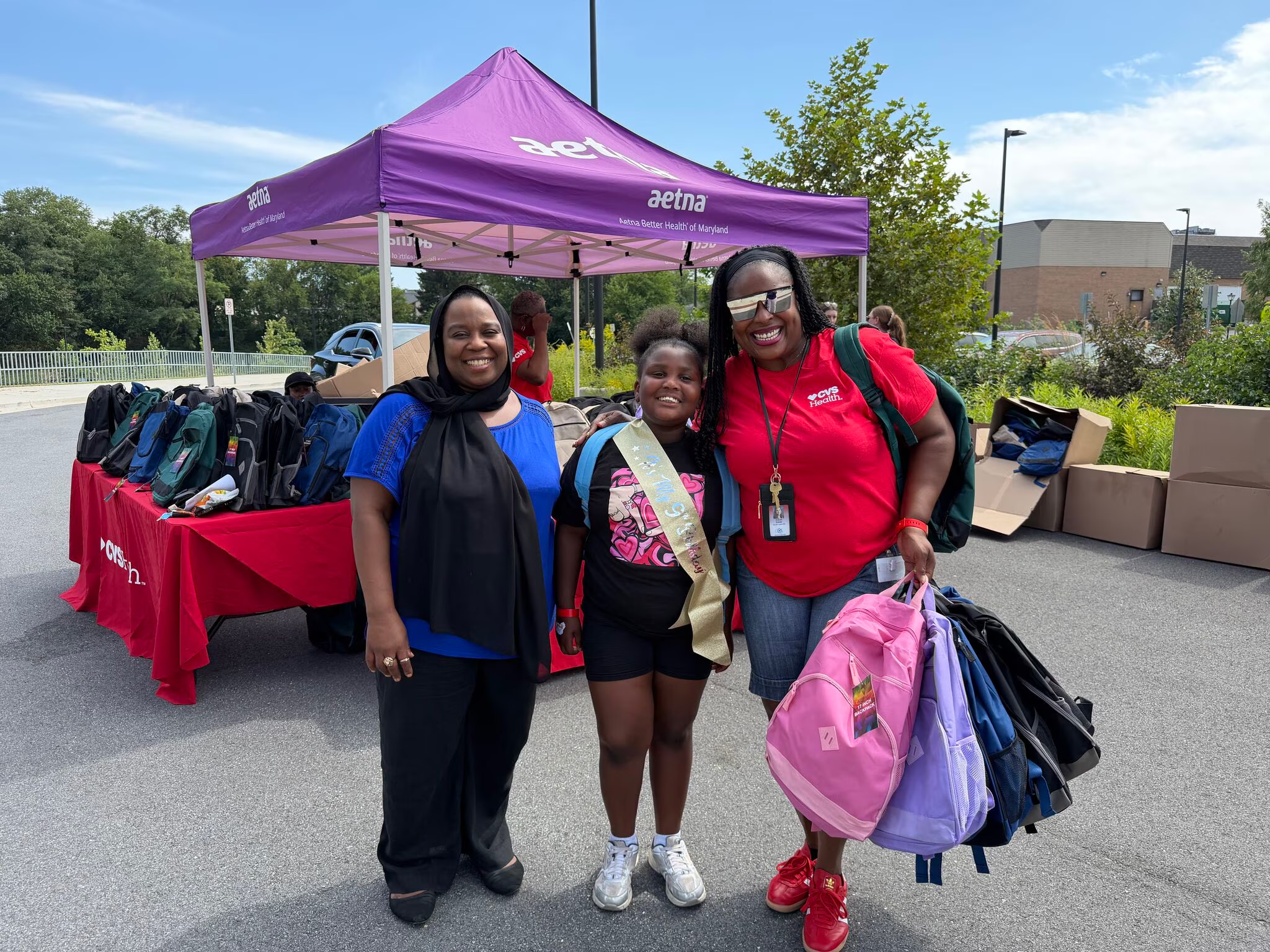
When students and teachers return to the classroom, having the right supplies can make a meaningful difference. This year, CVS Health and Aetna teamed up with community organizations and some of our sports partners – The Washington Spirit, Kansas City Current and the Boston Red Sox – to help students and their families start the school year with the resources, confidence, and support they need to thrive.
Backpacks represent more than just physical items. They help remove barriers to learning and send a powerful message to students and families that their community is invested in their success. Throughout the summer, hundreds of CVS Health and Aetna colleagues participated in back-to-school events—from Ohio to Seattle, Miami to Hartford, and beyond—that provided more than 5,000 backpacks filled with school supplies for students in need. The effort came to life through local collaborations across the country including:
Rhode Island: 100 CVS Health colleagues packed 1,000 backpacks for local youth. The supplies were distributed through Connecting for Children & Families, the Hockomock Area YMCA, Empower LGA, Start Anew, Sojourner House, NeighborWorks Blackstone River Valley, Federal Hill House and the Waltham Boys & Girls Club.
Florida: Colleagues from Aetna and Aetna Better Health of Florida, along with CVS Pharmacy and MinuteClinic colleagues joined forces with Branches Inc. to support more than 250 students and family members during Branches Inc.’s annual Back-to-School Night in Florida City, Florida, preparing backpacks, school supplies and hygiene kits.
New Jersey: CVS Health and Aetna Better Health of New Jersey colleagues joined HOPES Community Action Partnership to pack 500 backpacks. Local CVS Pharmacy teams also prepared 500 backpacks for distribution through the Meals on Wheels program in Ewing.
Illinois: CVS Health and Aetna colleagues worked with the Chicago Park District and Chicago Parks Foundation to assemble and distribute school supplies during end-of-summer programming. CVS Health also donated backpacks and back-to-school items to residents of Grace Manor, an affordable housing property that CVS Health had invested more than $18 million towards the development in North Lawndale, Chicago.
Maryland and Missouri: Working with the Washington Spirit and Kansas City Current soccer teams, colleagues teamed up to hand out backpacks at South Lake Elementary School in Maryland and The Ronald McDonald House and United Way in Kansas City.
Additionally, CVS Pharmacy sponsored a Teacher Supply Drive in Portland, Oregon. The initiative, created by KPTV-TV, Portland’s FOX affiliate, is designed to help local teachers and students prepare for a successful school year. Through a partnership with online nonprofit crowdfunding platform DonorsChoose, the community could support Portland-area teachers and their classroom wish lists during a live telethon and through DonorsChoose.org/FOX12.
CVS Pharmacy committed $5,000 in support while the community’s generosity helped fund more than 125 projects at more than 75 schools and raised more than $59,000 and counting. DonorsChoose facilitated the purchase and delivery of supplies to local schools, ensuring teachers and students received the educational resources and classroom essentials they needed for the school year. The support is especially important during back-to-school season, a time that can be financially challenging for many educators and families.
Although each of these events was unique, they all shared a common goal: helping students and their families start the school year with supplies and confidence. These back-to-school initiatives reflect a broader commitment to community connection that is central to CVS Health. Whether it’s helping to improve access to health care, investing in community programs or supporting local classrooms, CVS Health remains focused on making a meaningful difference in the communities it serves—in this case, one student at time.
Former Division I football player Michael Lowe is gaining hands-on network engineering experience with the San Francisco 49ers, applying skills from Cisco Networking Academy in one of the most connected environments in sports.
As a Division I football player at UC Berkeley, Michael Lowe once stepped onto Levi’s® Stadium’s field under the bright lights of game day. This summer, he returned to the stadium in a very different role, working behind the scenes as a Cisco Networking Academy Apprentice alongside the San Francisco 49ers Network Engineering team.
Lowe knows what it’s like to compete and lead on the field from his time as UC Berkeley football captain. Now he’s seeing the game from an entirely different perspective—inside the IT operations that support one of the NFL’s most technology-driven organizations.
Fans experience every touchdown, replay, announcement, concession purchase, and media interaction seamlessly, thanks to complex network infrastructure operating behind the scenes. During the apprenticeship, Lowe is gaining first-person, hands-on learning experience with the technology systems that support game day operations across the stadium as the 49ers host high-profile events and international sporting matches and prepare for the 2026-2027 NFL season.
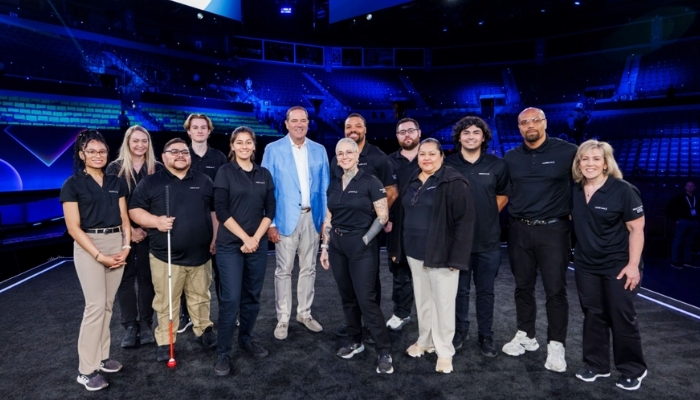
Earlier this year, Lowe participated in the Cisco Networking Academy Dream Team at Cisco Live, where he built relationships and shared his goal of combining his sports background with his new career in network engineering. Those conversations ultimately helped open the door to the 49ers apprenticeship.
I spoke with Lowe about the experience, the lessons he’s learned, and how Cisco Networking Academy helped launch his journey into network engineering.
From the gridiron to the server room
Hayley: You played college football yourself. You’re a D1 athlete. How does that background give meaning to this opportunity? It’s almost like you’ve made it to the big leagues in a way. How has your experience as an athlete shaped this experience on the other side?
Michael: My experience as an athlete has pretty much shaped my entire professional career. I went to Berkeley, which is right down the road. I actually had an opportunity to play in this stadium when I was in college. We played Oregon here in 2014.
So now, walking into it on this side of things, it’s surreal to be able to look at it from behind the scenes—not on the field, but inside a technical office—and really see how all the departments work together and how IT is responsible for making sure the connectivity is there, the security is there, and everybody has access to what they need.
I’ve walked into this situation with that same mindset. Even when it comes to learning network engineering, I take the football approach.
In network engineering, you have a lot of different terms. You have IPv4, IPv6, STP, RSTP—different protocols. The way I break them down is just like a football playbook. We have different packages: 4-3, 3-4, dime, nickel. Some of those terms may not ring a bell, but we have all these different packages, and within those packages we have different plays, different terminology that we have to understand and memorize.
I take that same approach into technology and network engineering. We have different protocols, and those protocols are responsible for different things and have different terminology. But overall, it’s all about security, connectivity, and having access.
What fans don’t see on game day
Hayley: You’ve been on the field. What’s something that’s surprised you about what goes on behind the scenes to make everything run at a stadium?
Michael: Just seeing how IT is involved in configuring all of the devices and technology that each department uses.
Whether it be the TVs around the stadium that fans see when they go to the concession stands, having the menu items on the televisions—those are areas IT is responsible for.
The same goes for press box devices. When you have different media groups in the press boxes and in their offices, they need access and connectivity. Even the stadium microphone system works underneath the IT department. So it is pretty cool to see how hands-on we are, but also to see how all of those things work together. When you hear your name being called after making a play, it’s good to know that the IT team is making sure those things are working for everybody.
Finding a path through Cisco Networking Academy
Hayley: How did you first get started with Cisco Networking Academy?
Michael: I’m from Washington, D.C., originally. In D.C., we have a D.C. Infrastructure Academy. I decided to go into CCNA network engineering, so I joined that program. Through that program, I really excelled. Again, I took that approach from football and walked into the classroom ready to break down those terms, get a better understanding of network engineering, ask questions, learn, and not be afraid to make mistakes and learn from them.
My instructor, Tabitha, was great. I give her a lot of credit for helping me understand what network engineering is. I had no background in IT. My degree is in legal studies, so it was really a career switch for me.
Through that, I was nominated to go to Cisco Live.
Michael Lowe and the Cisco Networking Academy Dream Team on stage with Cisco CEO Chuck Robbins at Cisco Live US 2026
Behind the scenes at Cisco Live
Hayley: What was your experience as part of the Cisco Networking Academy Dream Team at Cisco Live like, and how did it help set you up for this role?
Michael: At Cisco Live, we did a lot of physical deployment—not so much technical work—but we got to see the blueprints and talk to Cisco industry leaders about how these events are planned months in advance.
We learned about all the different things that need to be in place for events like these to be successful. Learning what goes into it on the back end was extremely cool.
You think you just walk into a situation and start setting things up, but it’s actually a lot of planning and blueprinting. It was pretty cool to ask questions and talk to different people about that.
Also, seeing some of the vendors and how they interact with Cisco, and how those relationships are built between vendors and Cisco themselves, was valuable.
Being with that team and that group of people really opened my eyes. I have a very “it needs to get done” approach, and I might create some anxiety around myself because of it. But seeing how patient everyone was, how things were planned out, and how much self-control they had in that environment really opened my eyes.
It helped me see that you can trust your planning and trust your strategy. Things will get done. You don’t have to create a false sense of urgency.
Leadership beyond the field
Hayley: At Berkeley, you were part of the Big C Society, recognizing leadership on and off the field—how has that shaped the way you approach teamwork and leadership in your career today?
Michael: Yeah, and I’m glad you brought that up because, being completely transparent, early in my collegiate career I stumbled a lot. I had to get used to it.
After my sophomore year, I took it upon myself to lead by example. Don’t be the guy who’s vocal but not putting in the work. I’d rather be the guy who’s quiet and just putting in the work. Through that process, all the way up to my senior year, I was recognized by my teammates and voted team captain.
I was able to increase my academic standards, improve my work ethic on the field and in the weight room, and eventually become a vocal leader for the guys. After they saw me lead by example, it opened up my confidence to become more vocal.
Being a part of the Big C Society, I embodied accountability, leadership, and responsibility on and off the field. To be recognized by a group like that was an honor, and I was extremely thankful for it.
Skills and opportunity can open doors
Hayley: How do you see these experiences shaping what’s next for you in your career?
Michael: I look at it as a testimony—a story I’ll be able to look back on and say that, as a new student entering a new career in a very broad field, experiences like Dream Team have really given me the motivation and confidence to tell myself that I can do this.
They’ve also given me the opportunity to really learn—to be a sponge in these environments, take all the notes you can, ask all the questions you can, and make all the connections you can because these are once-in-a-lifetime opportunities.
Being able to talk to different people along their career paths and hear where they started, and how opportunities came from the things they believed in and worked for—as well as from the people who helped them along the way—is incredibly valuable.
Taking this experience and using it as a catapult into the next experience is what I’m hoping to do. I want to learn everything I can while I’m here, so I’m prepared for whatever comes next.
For Lowe, the apprenticeship is more than a summer experience. It’s a testament to how the right combination of skills, mentorship, and opportunity can open doors to meaningful careers. Through Cisco Networking Academy, students gain the technical knowledge, confidence, and industry connections needed to take the next step in their professional journey. From the CCNA classroom to Cisco Live to an NFL stadium, Lowe’s story demonstrates how hands-on learning experiences can help learners turn ambition into opportunity and launch careers in technology.
Francis Kwoba is a 68-year-old retired policeman from Bungoma County, Kenya. During one of his usual morning runs, he experienced a sudden sharp pain in his chest. Concerned by the symptoms, he sought medical attention at the nearest health facility and was prescribed an anti-tuberculosis medication for treatment. After three months, Francis’s chest pain persisted and he began experiencing breathlessness. At Moi Teaching and Referral Hospital (MTRH), doctors found fluid in his lungs and a chest CT scan revealed aggressive lung cancer.
In much of sub-Saharan Africa, that diagnosis can be a death sentence, not because treatment doesn’t exist, but because cancer is so often caught too late.
Through the Bristol Myers Squibb Foundation (BMS Foundation) Multinational Lung Cancer Control Program (MLCCP) in partnership with Academic Model Providing Access to Healthcare (AMPATH) at MTRH, Francis received targeted treatment, patient navigation and psychosocial support that, in his words, helped “strengthen my spirit.”
As MLCCP Principal Investigator Prof. Lameck Diero shared, “Once you are in the program, you are family.”
Today, Francis is a survivor and an advocate, showing others there can be a second act.
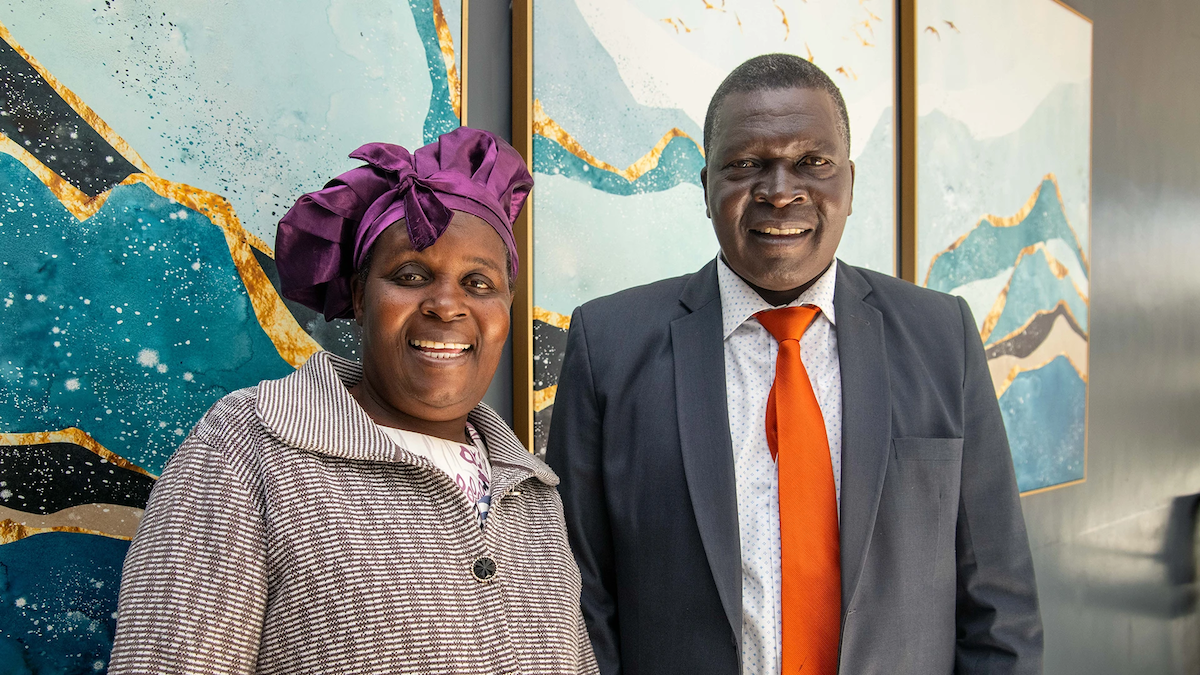
Francis Kwoba and his wife Susan
A 25-year commitment to systems that last
Stories like Francis’ are what the BMS Foundation has spent more than 25 years working to make possible in Africa, and in other geographies around the world. What began with the HIV/AIDS crisis in sub-Saharan Africa now spans lung cancer, cervical cancer, pediatric cancers and pediatric blood disorders across multiple countries.
“What 25 years has taught us is that sustainable impact comes from strengthening local systems from within — building the capacity that remains long after any single program ends, so care can reach patients earlier and keep reaching them over time,” says Catharine Grimes, president of the BMS Foundation.
When care comes to you
The same philosophy shapes the fight against cervical cancer in western Kenya. Through Cure Cervical Cancer Kenya’s Mobile Health for Mamas program, trained Community Health Promoters (CHPs) reach women where they are — at home and at mobile treatment outreach sites — guiding them from HPV self-collection through treatment. A portable, solar-powered mobile laboratory processes samples on-site and returns results in roughly 90 minutes.
More than 37,000 women have been screened to date; for many, it was their first. The World Health Organization recommends screening by age 35 and again by 45, benchmarks that remain out of reach for millions across sub-Saharan Africa.
During one household visit in Vihiga County, the power of that model was impossible to miss. Beatrice Kadesa Kidagi is 49 years old, widowed since 2012, and the sole provider for her seven children. She supports her family by picking tea on local farms, and at 49, had missed both of those recommended screening windows. Getting to an outreach site simply was not possible with her responsibilities at home.
On a February morning in 2026, a CHP arrived at Beatrice’s home in Jemaga Village. She sat with Beatrice, explained HPV, walked her through self-sampling and stayed until apprehension gave way to trust.
When her screening results came back invalid, she didn’t give up. She called her CHP. She asked what came next. And she is now waiting for her follow-up test.
“Beatrice’s story is what a system built on trust looks like in practice,” says Wendy Short Bartie, board member of the BMS Foundation. “It makes clear how much of a difference it can make when care is not only available, but truly within reach. And when you see the system working, it affirms everything the Foundation has built over 25 years — and that there is still more to do.”
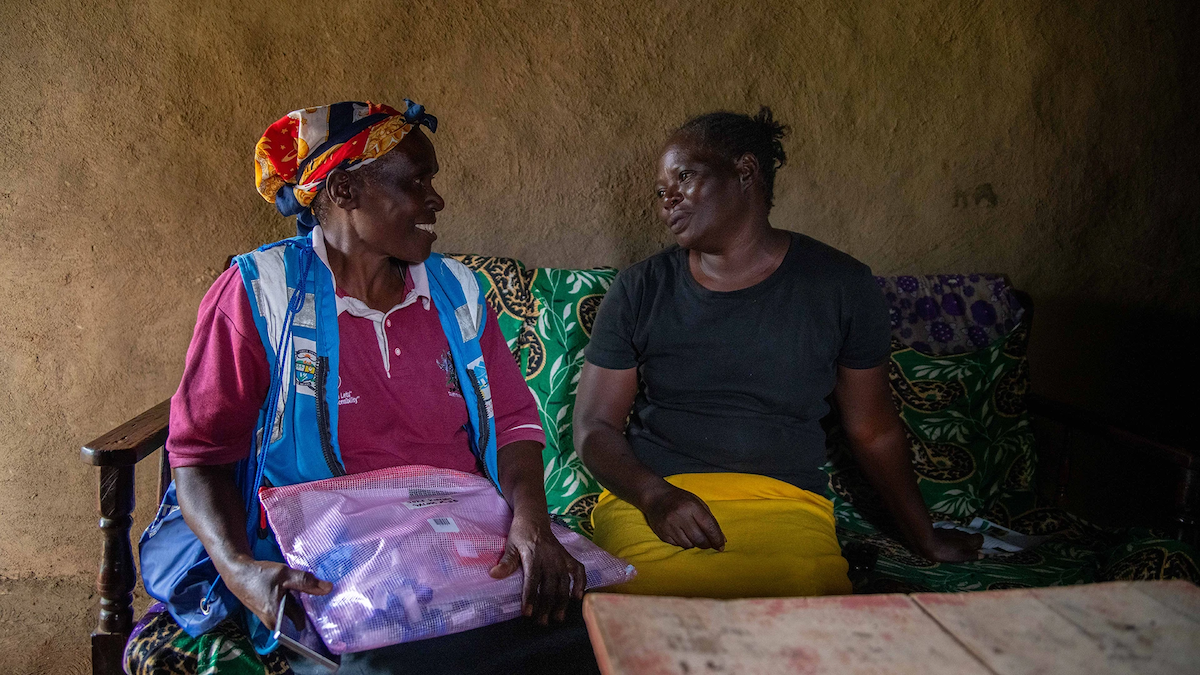
Beatrice Kadesa Kidagi (left) with Joyce Kinyangi, Community Health Promoter (CHP)
Building the next generation of care
For children, the impact has been just as great. Launched in 2016 with Texas Children’s Hospital and Baylor College of Medicine, Texas Children’s Global Hematology-Oncology Pediatric Excellence (HOPE) program set out to build pediatric hematology-oncology capacity across sub-Saharan Africa. The results are measurable and undeniable: early death rates for children on cancer treatment have fallen from 85% to 14%, and survival rates have more than quadrupled.
A father described learning that his young child had cancer, a diagnosis that, not long ago, would have offered little hope. Through the health system being built by local leaders and supported by Global HOPE, his child received the care she needed and is now thriving.
A continent aligned
The legacy of Global HOPE’s work and impact reached a historic milestone when leaders from across the continent recently gathered to validate and launch the Africa Centres for Disease Control and Prevention Continental Framework for Sickle Cell Disease, with more than two-thirds of African Union member states aligned behind a shared plan.
“Of the 300,000 children born with sickle cell disease in Africa every year, 80% will not live to see their fifth birthday, despite the availability of effective, low-cost interventions,” says Dr. Joseph Lubega, director of Texas Children’s Global HOPE.
For Foundation leadership, including BMS Foundation Board Member Cristian Massacesi, the number is a call to action.
“The Continental Framework for Sickle Cell Disease is about children and families — ensuring that access to life-saving care does not depend on where a child is born, or the circumstances into which they arrive,” Massacesi says. “It is the standard we hold ourselves to, and the reason the BMS Foundation remains committed to Africa for the long term.”
A legacy still being written
From CHPs reaching women who have never been screened to specialists trained under Global HOPE now leading pediatric oncology departments and mentoring the next generation, the Foundation’s work in Africa is a compounding commitment — felt in every system strengthened, every clinician trained and every patient, like Francis and Beatrice, who are still here to tell their stories.
Examples like these offer a model for the BMS Foundation and others working to impact medically underserved communities around the world.
The Bristol Myers Squibb Foundation is an independent charitable organization dedicated to its mission to improve global health through strong, local healthcare systems.
Francis Kwoba is a 68-year-old retired policeman from Bungoma County, Kenya. During one of his usual morning runs, he experienced a sudden sharp pain in his chest. Concerned by the symptoms, he sought medical attention at the nearest health facility and was prescribed an anti-tuberculosis medication for treatment. After three months, Francis’s chest pain persisted and he began experiencing breathlessness. At Moi Teaching and Referral Hospital (MTRH), doctors found fluid in his lungs and a chest CT scan revealed aggressive lung cancer.
In much of sub-Saharan Africa, that diagnosis can be a death sentence, not because treatment doesn’t exist, but because cancer is so often caught too late.
Through the Bristol Myers Squibb Foundation (BMS Foundation) Multinational Lung Cancer Control Program (MLCCP) in partnership with Academic Model Providing Access to Healthcare (AMPATH) at MTRH, Francis received targeted treatment, patient navigation and psychosocial support that, in his words, helped “strengthen my spirit.”
As MLCCP Principal Investigator Prof. Lameck Diero shared, “Once you are in the program, you are family.”
Today, Francis is a survivor and an advocate, showing others there can be a second act.
Francis Kwoba and his wife Susan
A 25-year commitment to systems that last
Stories like Francis’ are what the BMS Foundation has spent more than 25 years working to make possible in Africa, and in other geographies around the world. What began with the HIV/AIDS crisis in sub-Saharan Africa now spans lung cancer, cervical cancer, pediatric cancers and pediatric blood disorders across multiple countries.
“What 25 years has taught us is that sustainable impact comes from strengthening local systems from within — building the capacity that remains long after any single program ends, so care can reach patients earlier and keep reaching them over time,” says Catharine Grimes, president of the BMS Foundation.
When care comes to you
The same philosophy shapes the fight against cervical cancer in western Kenya. Through Cure Cervical Cancer Kenya’s Mobile Health for Mamas program, trained Community Health Promoters (CHPs) reach women where they are — at home and at mobile treatment outreach sites — guiding them from HPV self-collection through treatment. A portable, solar-powered mobile laboratory processes samples on-site and returns results in roughly 90 minutes.
More than 37,000 women have been screened to date; for many, it was their first. The World Health Organization recommends screening by age 35 and again by 45, benchmarks that remain out of reach for millions across sub-Saharan Africa.
During one household visit in Vihiga County, the power of that model was impossible to miss. Beatrice Kadesa Kidagi is 49 years old, widowed since 2012, and the sole provider for her seven children. She supports her family by picking tea on local farms, and at 49, had missed both of those recommended screening windows. Getting to an outreach site simply was not possible with her responsibilities at home.
On a February morning in 2026, a CHP arrived at Beatrice’s home in Jemaga Village. She sat with Beatrice, explained HPV, walked her through self-sampling and stayed until apprehension gave way to trust.
When her screening results came back invalid, she didn’t give up. She called her CHP. She asked what came next. And she is now waiting for her follow-up test.
“Beatrice’s story is what a system built on trust looks like in practice,” says Wendy Short Bartie, board member of the BMS Foundation. “It makes clear how much of a difference it can make when care is not only available, but truly within reach. And when you see the system working, it affirms everything the Foundation has built over 25 years — and that there is still more to do.”
Beatrice Kadesa Kidagi (left) with Joyce Kinyangi, Community Health Promoter (CHP)
Building the next generation of care
For children, the impact has been just as great. Launched in 2016 with Texas Children’s Hospital and Baylor College of Medicine, Texas Children’s Global Hematology-Oncology Pediatric Excellence (HOPE) program set out to build pediatric hematology-oncology capacity across sub-Saharan Africa. The results are measurable and undeniable: early death rates for children on cancer treatment have fallen from 85% to 14%, and survival rates have more than quadrupled.
A father described learning that his young child had cancer, a diagnosis that, not long ago, would have offered little hope. Through the health system being built by local leaders and supported by Global HOPE, his child received the care she needed and is now thriving.
A continent aligned
The legacy of Global HOPE’s work and impact reached a historic milestone when leaders from across the continent recently gathered to validate and launch the Africa Centres for Disease Control and Prevention Continental Framework for Sickle Cell Disease, with more than two-thirds of African Union member states aligned behind a shared plan.
“Of the 300,000 children born with sickle cell disease in Africa every year, 80% will not live to see their fifth birthday, despite the availability of effective, low-cost interventions,” says Dr. Joseph Lubega, director of Texas Children’s Global HOPE.
For Foundation leadership, including BMS Foundation Board Member Cristian Massacesi, the number is a call to action.
“The Continental Framework for Sickle Cell Disease is about children and families — ensuring that access to life-saving care does not depend on where a child is born, or the circumstances into which they arrive,” Massacesi says. “It is the standard we hold ourselves to, and the reason the BMS Foundation remains committed to Africa for the long term.”
A legacy still being written
From CHPs reaching women who have never been screened to specialists trained under Global HOPE now leading pediatric oncology departments and mentoring the next generation, the Foundation’s work in Africa is a compounding commitment — felt in every system strengthened, every clinician trained and every patient, like Francis and Beatrice, who are still here to tell their stories.
Examples like these offer a model for the BMS Foundation and others working to impact medically underserved communities around the world.
The Bristol Myers Squibb Foundation is an independent charitable organization dedicated to its mission to improve global health through strong, local healthcare systems.
AEG and Dignity Health Sports Park (DHSP) are helping connect young people with the power of sport through a youth field hockey clinic designed to promote access, learning and community engagement ahead of the LA28 Olympic and Paralympic Games.
Held on September 15, 2026, at DHSP in Carson, California, the clinic was developed for over 30 fourth-grade students from Towne Avenue Elementary School. The program offered students an opportunity to experience field hockey firsthand while learning from U.S. Olympian and three-time NCAA national champion Ashley Sessa.
A member of the U.S. Women’s National Field Hockey Team who competed at the Olympic Games Paris 2024, Ashley Sessa introduced students to her Olympic journey and the fundamentals of field hockey. Planned instruction included how to hold a field hockey stick correctly, dribble, pass, receive and drive the ball. These activities were designed to make the sport approachable for young participants while encouraging physical activity, confidence and interest in Olympic competition.
The initiative also addressed an important consideration in youth sports participation: access to equipment. On behalf of equipment brand Osaka World, Sessa presented Towne Avenue Elementary School with a $5,000 donation of field hockey equipment. Dignity Health Sports Park also donated $2,000 to give students and the school resources to continue exploring the sport beyond the clinic.
By combining athlete mentorship, introductory instruction and equipment access, the program demonstrates how collaboration among businesses, athletes, schools and community institutions can help reduce barriers to participation. It also illustrates how major sporting events can create opportunities for local engagement well before competition begins.
The clinic carried particular significance as Southern California prepares to welcome the world for the 2028 Olympic and Paralympic Games. DHSP, identified as Carson Field for LA28, is slated to host five Olympic sports and three Paralympic sports, including the Olympic field hockey competition. Introducing Carson students to the sport provides a direct connection between a global event and the young people living near one of its host venues.
City representatives also participated in the day, including Carson Mayor Lula Davis Holmes, Carson City Councilmember Jawane Hilton, and DHSP representatives General Manager Adam Duvendeck and Senior Director of Community Relations Tamala Lewis.
Through community-focused programming such as this clinic, AEG and Dignity Health Sports Park are working to ensure that the momentum surrounding international sporting events extends beyond the field of competition. By connecting students with athletes, equipment and new opportunities to participate, the initiative supports a broader vision of an Olympic and Paralympic legacy grounded in youth engagement, accessibility and community inclusion.
Tell us a little bit about yourself and your career journey to date.
I joined GoDaddy over seven years ago as an HR Specialist in our Belgrade office. At the time, I was wearing a lot of hats – supporting core HR operations, conducting interviews, and organizing our Quick Start onboarding sessions for new hires, with a primary focus on supporting employees in Serbia. As GoDaddy continued to grow and evolve into a more scalable, globally aligned organization, my role evolved alongside it. I transitioned to a more regional HR operations role, which gave me the opportunity to collaborate closely with colleagues in Germany, Romania, Bulgaria, and the UK. That was a pivotal moment in my career; I was able to contribute to the creation and standardization of processes across markets while gaining a deeper understanding of local nuances, from legal requirements to cultural differences in how teams work and solve challenges.
Somewhere along the way, I found myself increasingly drawn to the people side of the experience, especially welcoming new hires. Starting a new job can be overwhelming, and I’ve always been the kind of person who wanted to make that experience easier, warmer, and a little more personal. That’s what ultimately led me to transition into my current role as a Senior Recruiting Coordinator.
Today, I support hiring across EMEA and India, focusing on interview scheduling, candidate experience, hiring and onboarding processes. I’m known for moving quickly and keeping things running smoothly, but what matters most to me is being a friendly, familiar face for new hires as they take their first steps with GoDaddy. As an adult educator, I naturally think about experience design – how people feel and what they need to show up at their best. While we are getting to know the candidates and evaluating their knowledge, they are also forming their opinion about us; thus, creating a thoughtful and engaging experience isn’t just a nice-to-have, it’s essential. That moment of seeing someone go from their first interview to their first day, already feeling like they truly belong, that’s the moment I enjoy the most, and that’s when I know I’ve done it right.
How do you adapt communication and scheduling styles across different country cultures?
Connecting with people across the world is one of the most rewarding aspects of my role. Every interaction is an opportunity to understand different cultures better – how people communicate, express needs, and what makes them feel comfortable and supported.
Over time, I’ve learned that even small details can make a big difference. For example, in some regions email is the preferred channel for communication, while in others a quick message can feel more personal and proactive. As a team, we’re very intentional about adapting to those preferences – we leverage a mix of communication channels and tools to make sure we’re meeting people where they are and keeping things moving in a timely and thoughtful way.
I also tailor the amount of context and details I provide. Some stakeholders and candidates appreciate having the full picture – background, timelines, and next steps, while others prefer a more direct approach focused on immediate actions. Finding that balance is key to making communication effective and respectful of everyone’s time. Even the tone and style of a conversation can vary. In some cultures, building rapport through a quick personal exchange or a light moment comes naturally, while in others, a more straightforward, business-focused approach is appreciated. I try to stay mindful of those differences and adjust accordingly.
At the end of the day, my goal is always the same: to make sure people feel understood, supported, and taken care of, no matter where they are. When communication feels natural and inclusive, everything else tends to fall into place.
How do you keep yourself motivated and inspired in your work?
I’ve always been someone who’s driven by a strong sense of internal motivation. People who know me well would probably say that giving up isn’t really in my nature; I like to stay disciplined, keep moving forward, and see things through.
What keeps me inspired day-by-day is the sense of accomplishment. Whether it’s improving a process, helping create a better interview or onboarding experience, or simply keeping things moving so all our stakeholders can stay on track, I really enjoy knowing I’ve made a positive impact.
I also find a lot of energy in growth – taking on new challenges, learning along the way, and proving to myself that there’s always a solution if you stay focused and open to it. Being able to look back and say, “That worked well” or “I made that a little easier for someone” is what keeps me motivated and excited for what comes next.
If you had to describe GoDaddy’s culture in one word, what would it be and why?
One word would definitely be inclusive. What makes GoDaddy special are its employees – you’ll meet incredibly supportive, open, and genuine individuals, and many of those connections will naturally turn into friendships.
What stands out to me is how openly teammates share ideas, support one another, and celebrate differences. Inclusion here isn’t just something we talk about, it’s something you feel.
Those differences in perspectives, backgrounds, and experiences are what keep us evolving and what make GoDaddy such a dynamic and inspiring place to work.
What advice would you give to an individual interested in a career in talent acquisition?
My advice is to remember that Talent Acquisition is, first and foremost, about people. It’s easy to focus on processes, tools, and timelines, but what truly sets great TA professionals apart is how they make others feel. Every interaction, whether it’s with a candidate, a hiring manager, or a teammate, is an opportunity to build trust, create a positive experience, and represent the company in the best way possible. Candidate experience isn’t just a step in the process; it’s at the heart of everything we do.
At the same time, be curious and stay adaptable. Talent Acquisition is constantly evolving, and the most successful professionals are the ones who are open to learning, whether it’s new tools, new ways of sourcing talent, or new expectations from candidates across different markets. Strong communication, relationship building, and the ability to understand different perspectives will take you a long way in this field.
What do you enjoy doing outside of work?
I’ve always had a lot of energy and genuinely enjoy keeping my days full and staying on the move. Dance has been a big part of my life for over 20 years, so dance classes and festivals are a constant in my life. Dancing is such a powerful way to connect with people, express emotions, and simply enjoy the moment.
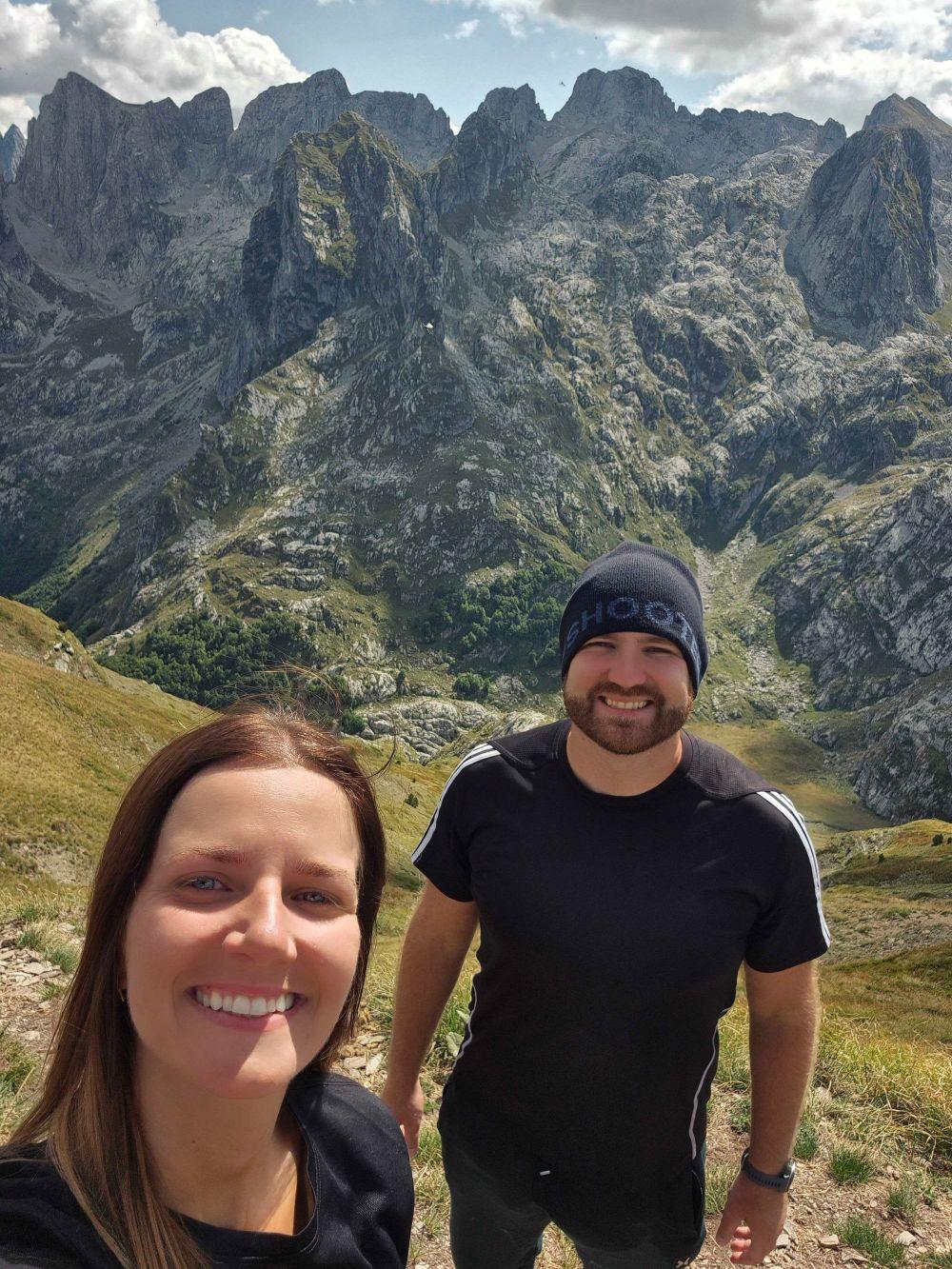
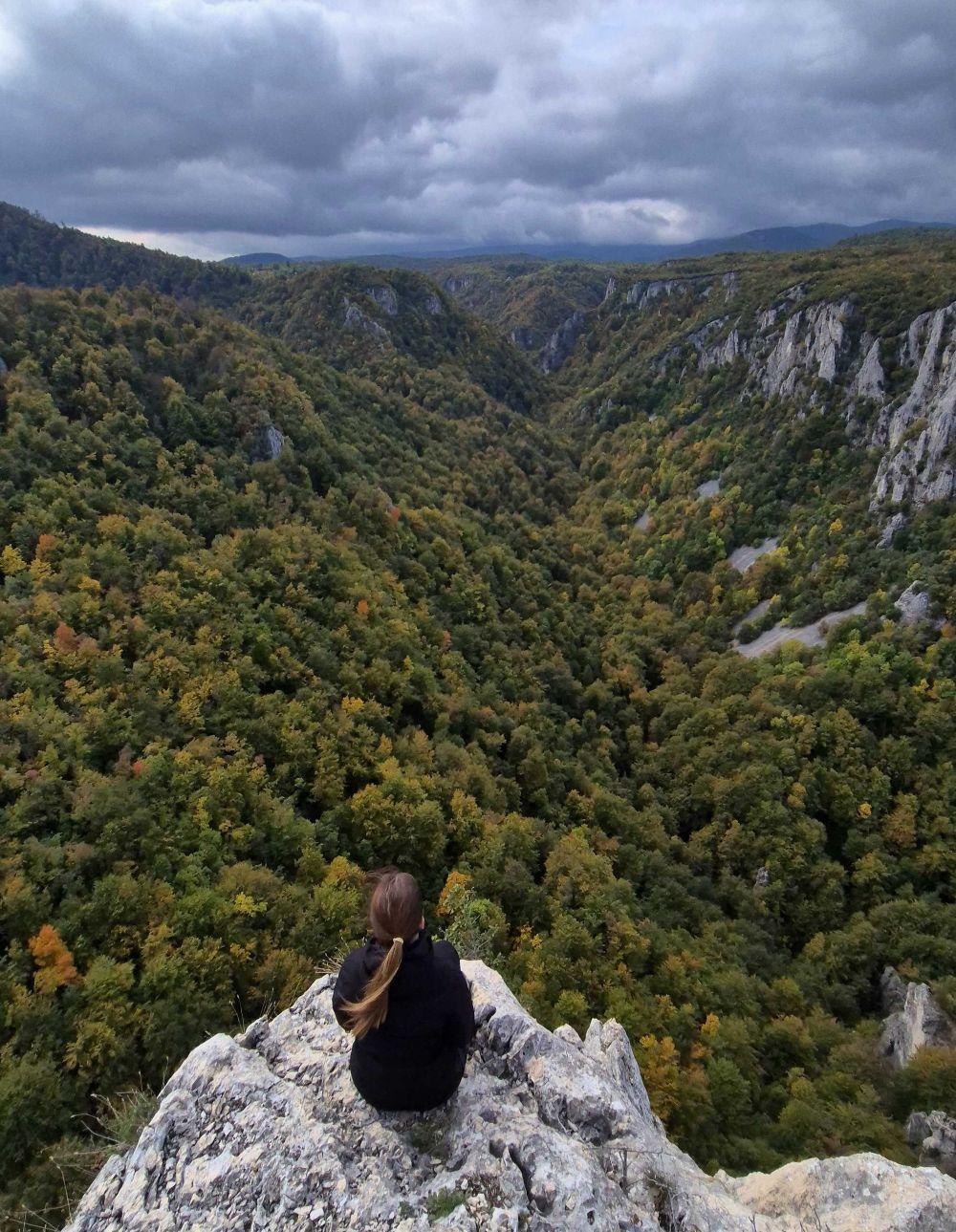
On weekends, you’ll most likely find me outdoors with friends, frequently heading toward a mountaintop. I find these kinds of physical and mental challenges incredibly rewarding, and the views at the top are always worth the effort. It’s one of those rare moments when you can fully disconnect, clear your mind, and just take everything in.
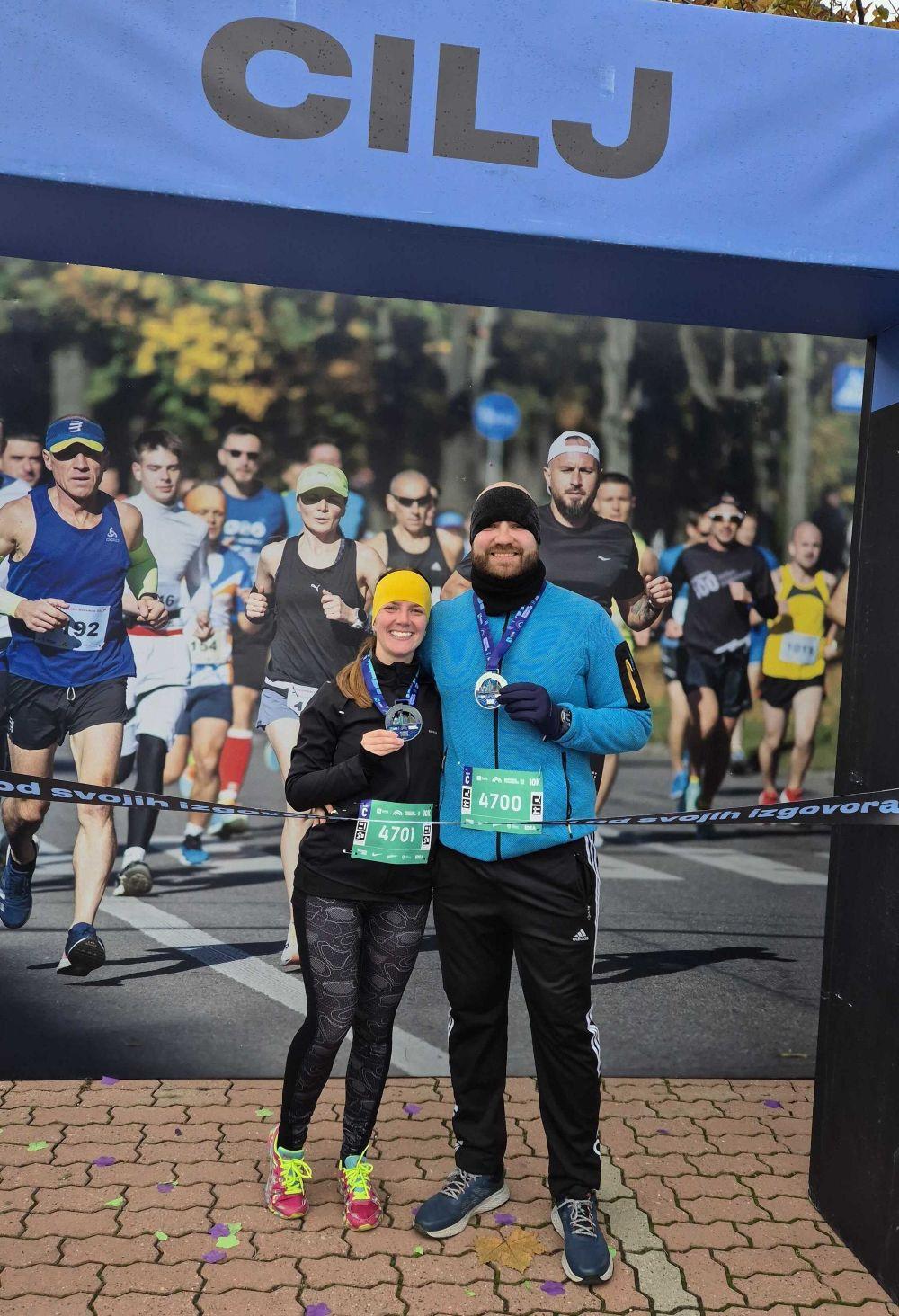
I’m also a big fan of exercising, and recently, thanks to my partner, I’ve gotten into running. There’s something special about supporting each other and crossing the finish line together; it makes the whole experience even more meaningful.
Are you enjoying this series and want to know more about life at GoDaddy? Check out our GoDaddy Life social pages! Follow us to meet our team, learn more about our culture (Teams, ERGs, Locations), careers, and so much more. You’re more than just your day job, so come propel your career with us.
CARROLLTON, Ga., September 25, 2026 /3BL/ –Southwire Company, LLC, Georgia Power, and nonprofit infrastructure innovator The Ray have joined forces on an innovative land management initiative in Carroll County, transforming a traditional energy transmission corridor into a thriving native wildflower meadow that supports pollinators, enhances biodiversity, and demonstrates a more sustainable approach to managing utility rights-of-way.
Planted this spring near Southwire’s Carrollton facilities, the newly established meadow reimagines how rights-of-way under high-voltage utility lines can be utilized. By replacing traditional vegetation management practices with a carefully curated mix of native plants, the project creates a vibrant, diverse habitat that provides season-long food, shelter, and nesting resources for native bees, butterflies, hummingbirds, and other wildlife.
“This partnership with Southwire and The Ray shows how utility rights-of-way can support grid reliability while also providing habitat for pollinators and wildlife. Projects like this show how thoughtful growth and conservation can go hand in hand, creating value for the grid, native species, and customers across our state.”
— Jennifer McNelly, VP of Environmental Affairs, Georgia Power
Beyond supporting local biodiversity, native meadow systems offer distinct operational advantages. Deep-rooted native plants naturally suppress unwanted brush, lower long-term maintenance costs by reducing mowing frequency, and aid in soil stabilization. These revitalized rights-of-way effectively serve as biological pathways, connecting fragmented rural landscapes and allowing wildlife to travel safely through urbanized zones without compromising energy grid reliability or safety access.
“Southwire is glad to partner with Georgia Power and The Ray on this project. Pollinators are in decline due to habitat loss and other factors, and this project will transform unused land for a beneficial purpose. We recently published our 2025 report entitled The Power to Transform, which outlines Southwire’s commitment to responsible practices and corporate stewardship. We’re excited about how this project makes a difference in these efforts.”
— Bo Quick, VP of Corporate Sustainability and Strategy, Southwire
The Carrollton habitat project is a practical, nationally scalable blueprint for how energy providers, industrial leaders, and government entities can co-create functional, nature-positive landscapes within existing working infrastructure.
About Southwire
Southwire Company, LLC is one of North America’s leading wire and cable companies. The $9.7B organization is made up of more than 9,000 team members across the globe who unite as ONE Southwire each and every day to serve each other, their customers and their communities. Southwire and its subsidiaries provide solutions including building wire and cable, metal-clad cable, utility products, portable and electronic cord products and OEM wire products. In addition, Southwire offers electrical products, engineered solutions and a variety of field support services. For more on Southwire’s products and solutions, its community involvement and its vision of sustainability, visit www.southwire.com.
About Georgia Power
Georgia Power is the largest electric subsidiary of Southern Company (NYSE: SO), America’s premier energy company. Value, Reliability, Customer Service and Stewardship are the cornerstones of the company’s promise to 2.8 million customers in all but four of Georgia’s 159 counties. Committed to delivering clean, safe, reliable and affordable energy, Georgia Power maintains a diverse, innovative generation mix that includes nuclear, coal and natural gas, as well as renewables such as solar, hydroelectric and wind. Georgia Power offers rates below the national average, focuses on delivering world-class service to its customers every day and the company is recognized by J.D. Power as an industry leader in customer satisfaction. For more information, visit www.GeorgiaPower.com and connect with the company on Facebook (Facebook.com/GeorgiaPower), X (X.com/GeorgiaPower), and Instagram (Instagram.com/ga_power).
About The Ray
The Ray is a nonprofit organization that reimagines infrastructure to be safer, cleaner, and more productive. We partner with all levels of government to drive innovation in energy and mobility, improving capacity, production, and longevity. Advancing technologies with industry leaders, we’re the only nonprofit in the United States using geospatial analysis for right-of-way utilization, research-based practices, and cutting-edge safety systems to improve transportation.
UTICA, Ill., September 25, 2026 /3BL/ – A landscape that has been largely out of public reach for generations is poised to become one of Utica’s defining destinations. Covia has announced the donation of a parcel of land consisting of more than 50 acres containing Clark’s Falls and its surrounding canyon to the Village of North Utica, giving the Village ownership of a remarkable natural area and laying the groundwork for what could eventually become a new public park.
The property features towering sandstone walls, a deep canyon, a significant main waterfall and an additional upper falls. Its geology and scenery are reminiscent of the landscapes that draw millions of visitors to nearby Starved Rock and Matthiessen state parks, while offering a setting and features entirely its own.
For Utica, the donation creates an opportunity to begin planning for a new community asset that could shape the village for decades to come.
“Having grown up here and spent my life in Utica, I know how special this property is and what it has meant to generations of people who have known about Clark’s Falls,” said Utica Mayor David Stewart. “This is an extraordinary donation by Covia and I cannot thank them enough. To now see this land come into the Village’s ownership and stewardship is something I don’t think any of us should take lightly. There is tremendous potential here, but we also have a responsibility to approach it thoughtfully and make sure we get it right. I am very grateful to the corporate leadership of Covia for recognizing the natural beauty and historic nature of this property and taking the steps necessary to preserve it for generations to come.”
Clark’s Falls itself has been part of Utica’s identity for well over a century. Historic photographs and postcards document the falls as a local scenic attraction as early as the beginning of the 1900s. A 1903 photograph of Clark’s Falls is preserved today in the Library of Congress.
Its name also reflects Utica’s early history. James Clark arrived in the community in 1833 and went on to play a significant role in its development, including work on the Illinois and Michigan Canal, the operation of Utica’s early cement industry and service in a number of civic positions.
“There is something very fitting about property carrying the Clark name becoming part of Utica’s future,” Stewart said. “James Clark helped shape this community in its earliest days. Nearly two centuries later, we have an opportunity to take a place connected to that history and consider how it can serve the community for generations to come.”
“This gift ensures the preservation and lasting benefit for the Village of Utica community,” Mark Oskam, Covia’s Senior Vice President, Operations, said. “We are proud to make this donation and look forward to seeing the Village develop a vision for Clark’s Falls.”
Covia manages over 80,000 acres of land with sustainable practices, from development to reclamation, successfully rehabilitating environments like wetlands and forests. The company recognizes the importance of protecting these natural environments and have initiatives in place to minimize their footprint, tailoring efforts to the unique needs of each community. Additionally, the company invests charitable contributions, volunteerism, and other forms of support in communities where its team members live and work. For over a century, Covia has been a part of the Utica community, succeeding Unimin Corporation and its predecessors. The company has a longstanding history of supporting the village.
Planning What Comes Next
The transfer of the property is the beginning of a much longer process.
The Village plans to form a strategic planning committee to evaluate the property, explore potential development and preservation needs, identify possible funding opportunities and help determine the next steps required before any portion of the site could open to the public.
Future considerations are expected to include public access, trails, parking, safety, environmental protection, infrastructure and long-term maintenance. No final park plan or opening date has been established.
Utica has long served as a gateway to Starved Rock State Park and the surrounding region. Village leaders believe Clark’s Falls could eventually give residents and visitors another reason to experience Utica itself, while complementing rather than attempting to duplicate the natural attractions already found nearby.
“This could be one of the most significant opportunities Utica has had in decades,” Stewart said. “But today is about the first step. Covia has provided the Village an extraordinary opportunity. Now our job is to bring the right people together to develop a plan to make the park become a reality.”
Property Remains Closed
Clark’s Falls is not currently open to the public. The property has not yet been developed for recreational access and does not currently have the trails, safety infrastructure or other improvements necessary to accommodate visitors.
The Village is asking residents and visitors to respect all posted closures and not enter the property until it is officially opened for public use. Trespassers are subject to ticketing.
Additional information regarding the strategic planning process and future opportunities for public involvement will be announced by the Village of Utica as plans develop.
About the Village of North Utica
The Village of North Utica is located in LaSalle County along the Illinois and Michigan Canal and Illinois River and serves as a gateway to Starved Rock State Park and the greater Starved Rock Country region. The community combines a rich canal and industrial history with outdoor recreation, locally owned businesses, dining and tourism.
About Covia
Covia responsibly provides minerals solutions for a better tomorrow. As a leading provider of diversified minerals, our products support a variety of industrial markets, including glass, ceramics, coatings, metals, foundry, polymers, construction, water filtration, and sports and recreation. The company serves its customers through a broad array of essential, high-quality products, including high-purity silica sand, nepheline syenite, feldspar, kaolin and ball clays, cristobalite, and coated materials. Long-standing relationships with a broad customer base enable Covia’s market-inspired approach to innovation to enhance solutions and customer benefits. Underpinning these strengths is an unwavering commitment to safety and to sustainable development, further enhancing the value that Covia delivers to all its stakeholders.
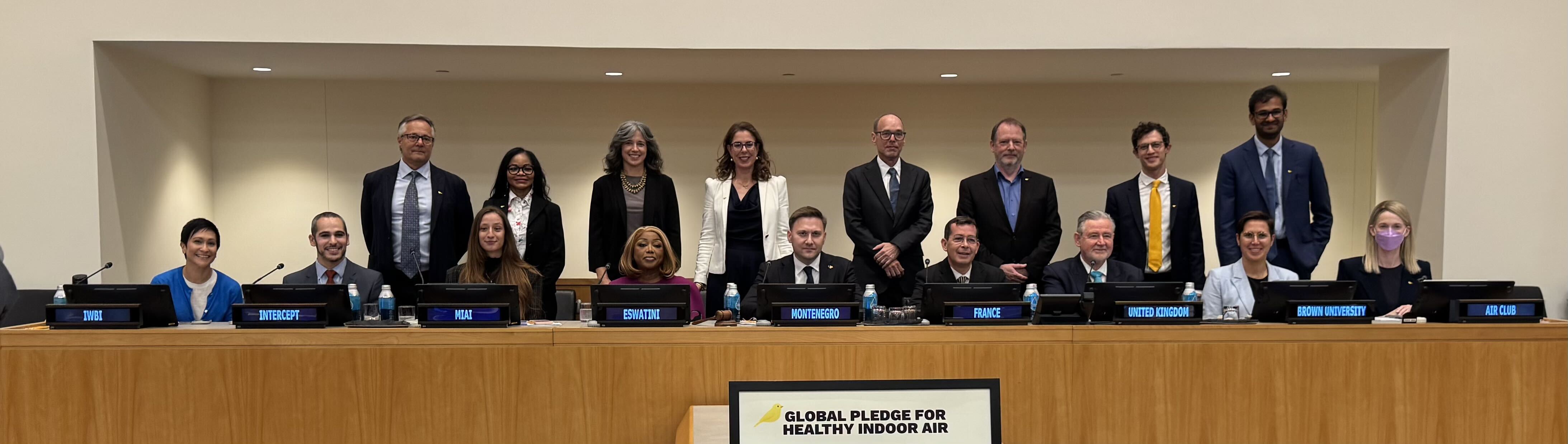
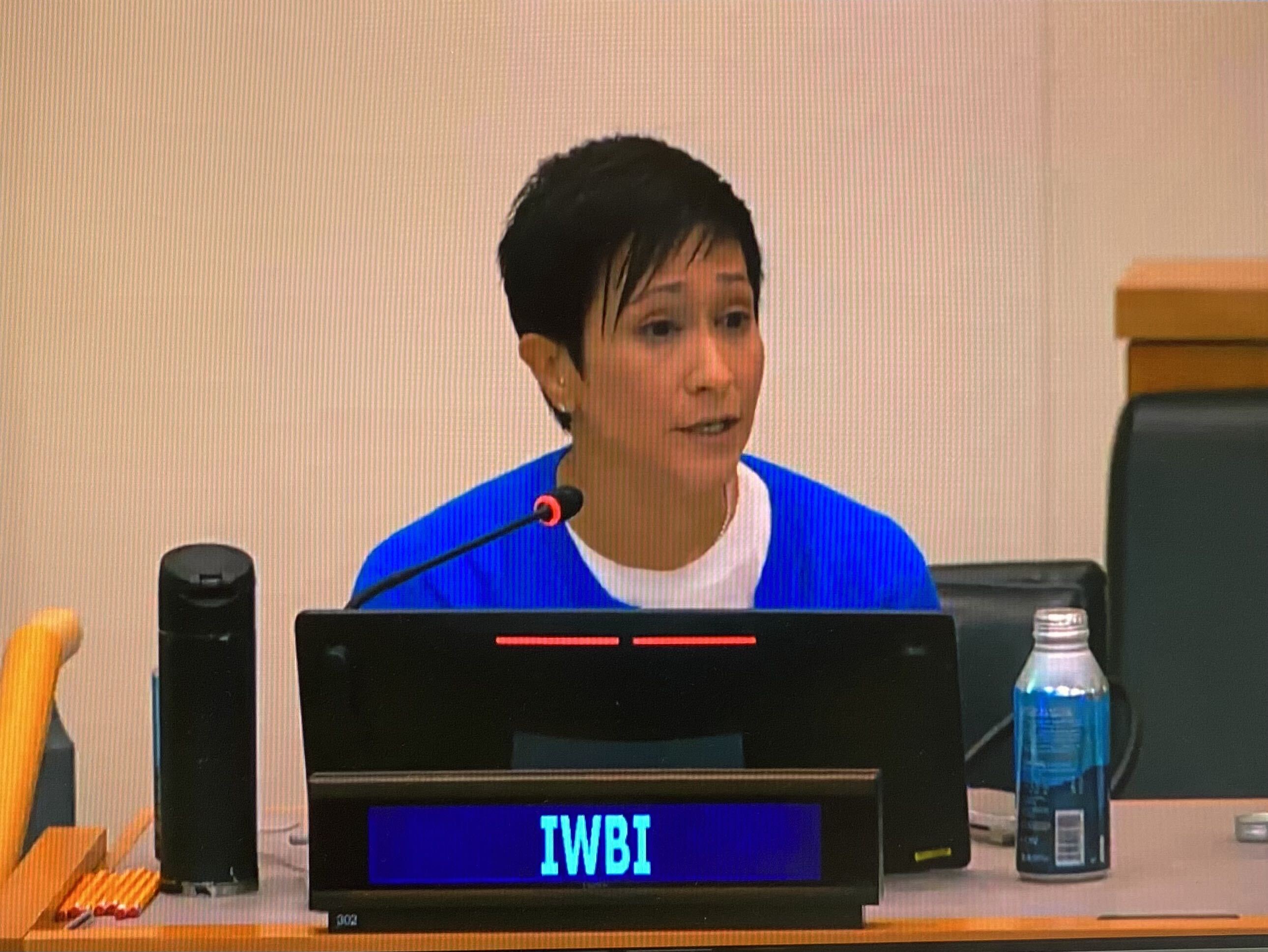
Building on the Global Commission on Healthy Indoor Air’s landmark launch of the Global Framework for Action, Rachel Hodgdon, President and CEO of the International WELL Building Institute (IWBI) and Co-Chair of the Global Commission, delivered an urgent call to action, encouraging leaders to deliver on a forward-looking “health-first agenda” for educational institutions worldwide.
Presented during today’s UN High-Level Side Event on Healthy Indoor Air in Schools: Every Breath Shapes Learning, Hodgdon’s remarks leveraged the Global Framework’s roadmap to drive systemic improvements in indoor air quality across learning environments.
IWBI was at the heart of convening the inaugural Healthy Schools for Healthy Kids Summit, a first-of-its-kind national gathering held in Washington, D.C. this past summer. Today, Hodgdon urged leading experts, advocates and policymakers to continue efforts to produce a forward-looking health-first agenda, focused on school modernization, healthy materials, indoor air quality and ventilation, emergency preparedness and resilience, healthy lighting and acoustics, pollution prevention, remediation of legacy environmental hazards, technical assistance for schools and communities, and priority research needs.
Also delivering remarks at today’s UN event were Ministers, MPs and senior officials from the governments of France, the United Kingdom, Montenegro and Eswatini. As well, fellow Commissioners Dr. Ian Longley of the Air Quality Collective and Air Club Co-Founders Dr. Georgia Lagoudas and Dr. Bronwyn King, alongside other global experts, collectively spotlighted the importance of indoor air quality across public health, education, biosecurity and climate resilience.
We have heard from so many inspiring speakers about the hope of a world in which everyone—no matter who they are or where they live—has access to healthy indoor air.
And what we are witnessing is more than momentum. It is a growing belief that we are rapidly approaching a global tipping point.
Last year, we came together around the Global Pledge for Healthy Indoor Air. And two days ago, the Global Commission launched the Global Framework for Action—a game plan for turning the fundamental human right of healthy indoor air into a reality.
And this gathering is another reason for hope. Government leaders, school districts, philanthropy, NGOs, industry and academia—all coming together to stand up for our schools.
Because when we talk about indoor air in schools, we are not talking about air for its own sake.
Healthy air is the entry point. Health is the purpose.
At IWBI, our singular focus is advancing a health-first agenda for the places and spaces where we live our lives. And nowhere is that more important than in our schools.
This summer, IWBI joined four other national organizations to host our Healthy School Summit, where we announced a health-first agenda for America’s schools.
And that word—first—matters.
For too long, health has been something important, but rarely urgent. Something that can wait.
But our children cannot wait.
I remember talking to a school district leader who told me about a little girl who, due to poor indoor air quality, was having asthma attacks day after day at school. Her family finally pulled her out and moved her to another district simply so she could be well enough to learn.
For that little girl, this wasn’t a facilities problem. This wasn’t a line item in a capital budget.
It was her life.
And that’s what urgency looks like.
For too many students and educators, health has been deferred to the next budget, the next capital plan, the next year.
But when health is delayed, health is denied.
We must also make our schools more energy-efficient, sustainable and resilient. Those goals matter enormously.
But when it comes to our children, they are the means, not the ultimate measure of success.
A school can meet an energy target and still fail a child who is struggling to breathe.
The ultimate measure is whether that building supports the health, well-being and learning of the people inside it.
The Global Framework gives us a path from aspiration to action. Now we need that same health-first commitment for schools around the world.
No child should have to trade their health for an education.
So today let’s make—and keep—one simple promise to every child:
NEW HAVEN, Conn. and AMSTERDAM and HONG KONG and OAKLAND, Calif., September 25, 2026 /3BL/ – Cascale and Worldly will collaborate directly with a Yale instructor to bring the Higg Index and real-world case studies to a fashion value chain course at the Yale School of the Environment.
The collaboration centers on three industry-informed case studies for the semester commencing in September 2026, as part of a broader curriculum, and brings interdisciplinary real-world examples to the classroom across subject areas for more in-depth learning. The course is titled “Transforming Global Value Chains for Sustainability: The Case of Fashion and Textiles’” at the Yale School of the Environment. Yale will also be joining Cascale’s membership base.
“Yale is where I learned how to analyze complex systems where there were no clear answers. In the years since, mentoring students who want to work at the intersection of business and sustainability, I’ve seen how a lack of access to the tools and data the industry actually runs on holds back brilliant students’ abilities to understand the whole picture,” said J.R. Siegel, vice president of sustainability at Worldly, who is also a Yale alumni and mentor. “This course closes that gap. Last year alone, facilities shared verified data with brands through Worldly more than 100,000 times. Students who work with the same platform and data will start their careers understanding how the work gets done, not just in theory but in practice.”
“Students want real industry experience in sustainability fields, but they rarely get access to the leaders, frameworks, and real-world context shaping global value chains,” said Lee Green, vice president of marketing, communications, and public affairs at Cascale. “Convening that expertise is what Cascale does. Bringing it into a Yale classroom is simply how we put it to work preparing the next generation. ”
Students will dive deeper into how environmental factors such as water use, chemical management, greenhouse gases, land use, waste, and more influence sustainability progress. They will also examine the social impact of the industry and how it addresses human rights. Uniquely, the course is open to Yale students across disciplines.
“Complex industries like consumer goods and fashion offer an incredibly rare opportunity for multi-disciplinary engagement and discoveries,” said Michelle Gabriel, lecturer at Yale School of the Environment (YSE) and resident fellow at the Yale Center for Business and the Environment (CBEY) . “Known for its significant environmental footprint, deeply entwined social implications, and historic underregulation, the subject matter is prime for students across Yale to engage in real-world problem solving. There is immense value that emerges when academia mingles with industry. In collaborating directly with reputable organizations like Cascale and Worldly, I’m confident that we will lay the groundwork for closer collaboration between academia and industry.”
Brands, retailers, and manufacturers came together 15 years ago to develop the Higg Index and continue to shape its impact today. It is one of the most widely adopted impact measurement frameworks in consumer goods. Organizations worldwide rely on the Higg Index to identify, understand, measure, and act to improve social and environmental performance. It is exclusively available on the Worldly platform, with methodology shaped by Cascale and its members. Consumer goods companies and their suppliers use Worldly to prove how their products are made so they can report, comply, and act.
The contributed case studies will explore the role and value of multi-stakeholder initiatives (MSIs) and unique stakeholder perspectives and the value of responsible purchasing practices using Cascale Better Buying survey insights.
This partnership signals a broader shift in how the industry develops talent. By embedding real tools and real data into academia, Worldly and Cascale are raising the bar for the next generation of sustainability professionals.
Cascale is the global nonprofit industry alliance where consumer goods organizations turn shared sustainability ambitions into measurable progress at scale to combat climate change and support decent work for all. We unite 300 Corporate and Affiliate members in pre-competitive collaboration, turning shared measurement and collective action into reduced risk, stronger credibility, and long-term resilience. Our work is anchored by Cascale’s stewardship of the Higg Index frameworks (accessed through the Worldly compliance and sustainability platform), along with the Better Buying and Sustainable Furnishings Council tools.
Worldly is the compliance and sustainability platform where consumer goods companies and their suppliers prove how their products are made, so they can report, comply, and act. Suppliers save time by reporting through one industry framework, sharing their assessments over 100,000 times annually on Worldly. Retailers and consumer goods brands get environmental, social, and chemical data together in one place, at the facility and product level. AI built on verified facility data, not estimates, turns that data into answers, showing companies where risk sits in their supply chains and where to act first.