Firefly, Upstream Alliance’s solar-electric boat powered by four-dozen lithium-ion phosphate batteries and the first such boat approved by the U.S. Coast Guard using that type of battery, is about to get an electric-powered shadow.
A loaner Subaru Solterra will accompany Firefly in late summer from Camden, Maine, to Camden, New Jersey, Ronnie Vestnaver, Upstream Alliance’s director of regional programs and partnerships, told TAPinto Camden.
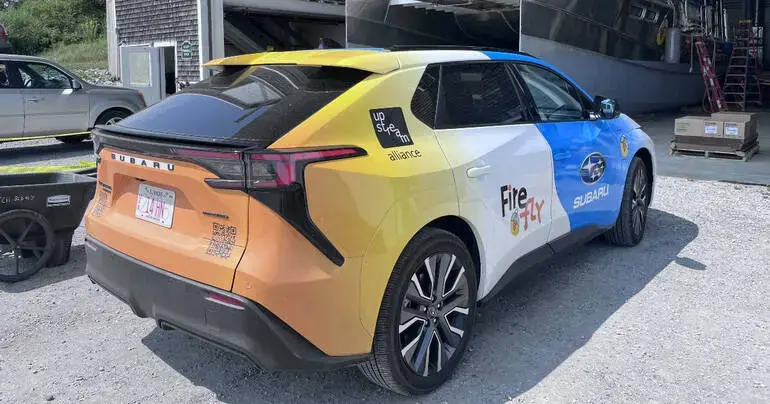
The Subaru Solterra and Upstream Alliance boat Firefly are visible in this photo. The two will soon embark on a historic trip to Camden, an Upstream Alliance representative said.Photo Credit: Janel “Jaycee”
“(Upstream Alliance) was looking for a support car to have along the way, and we just thought it would be a unique fit to also provide them with one of our electric vehicles,” Erica McLeod, Subaru of America’s Corporate Social Responsibility Manager, said.
Firefly, Upstream Alliance’s solar-electric boat powered by four-dozen lithium-ion phosphate batteries and the first such boat approved by the U.S. Coast Guard using that type of battery, is about to get an electric-powered shadow.
A loaner Subaru Solterra will accompany Firefly in late summer from Camden, Maine, to Camden, New Jersey, Ronnie Vestnaver, Upstream Alliance’s director of regional programs and partnerships, told TAPinto Camden.
The Subaru Solterra and Upstream Alliance boat Firefly are visible in this photo. The two will soon embark on a historic trip to Camden, an Upstream Alliance representative said.Photo Credit: Janel “Jaycee”
“(Upstream Alliance) was looking for a support car to have along the way, and we just thought it would be a unique fit to also provide them with one of our electric vehicles,” Erica McLeod, Subaru of America’s Corporate Social Responsibility Manager, said.
MIAMI September 30, 2026 /3BL/ – In celebration of the 41st International Coastal Cleanup Day, team members from Carnival Corporation (NYSE: CCL), the world’s largest cruise company, reaffirmed their commitment to marine stewardship and coastal communities through a series of volunteer cleanup events organized in ports and destinations around the world.
Alongside partners and local community volunteers, shipboard and shoreside team members mobilized to help clear debris and collect trash in a variety of communities and homeports. Volunteers represented Carnival Corporation’s world-class cruise lines, its exclusive destinations portfolio and its Center for Simulation and Maritime Training (CSMART), as well as their families and friends.
From Seattle to the Netherlands, Miami to Cozumel, volunteer teams removed debris from shorelines and community environments, including plastic bags, aluminum and other single-use items. These results underscore the company’s commitment to protecting and supporting the vibrant communities, coastal destinations and marine ecosystems in which it operates.
“The oceans, waterways and coastlines we sail are central to what we do, and protecting them is a responsibility we take seriously,” said Lars Ljoen, chief maritime officer of Carnival Corporation. “International Coastal Cleanup Day is a reminder of the impact people can make when they come together around a common purpose. I am especially proud that our teams and partners bring that same commitment to environmental stewardship every day. This attitude is absolutely central to how we deliver extraordinary cruise vacations while honoring the integrity of every ocean we sail, place we visit and life we touch.”
Led by Ocean Conservancy and observed every third Saturday in September, International Coastal Cleanup Day is the world’s largest cleanup event designed to lead and inspire action in support of our oceans. For 41 years, these events have engaged over 19 million people to collect 400 million pounds of trash since their inception.
Among this year’s cleanups, shoreside teams from Carnival Cruise Line gathered at Oleta River State Park in Miami, while Holland America Line teams partnered with a local nonprofit in Seattle for a beach cleanup at Myrtle Edwards Park along the Puget Sound. Costa Cruises employees, together with their families, joined partner associations Piantando and Blue-Life for a river cleanup to intercept nearly 400 pounds of inland plastic, aluminum and other debris from the riverbanks before it reaches wider marine ecosystems. Across the Caribbean, Latin America, Alaska, Florida, Europe and Australia, crew members from various Carnival Cruise Line ships coordinated shore cleanups in partnership with local environmental organizations and port partners. In addition, Center for Simulation and Maritime Training (CSMART) team members in the Netherlands organized a beach cleanup in Almeerderstrand, near the maritime training center.
International Coastal Cleanup Day is one of many conservation-focused volunteering activities carried out by Carnival Corporation and its team members each year. Through its broader Coastal and Beach Cleanups program, as outlined in its 2025 Sustainability Report, the company conducts dozens of events annually spanning multiple continents and engaging thousands of volunteers. In 2025 alone, team members conducted almost 100 total cleanup events across two dozen locations in North America, Central America, the Caribbean, Europe, Asia and the Pacific, removing more than 33,000 pounds of debris.
These efforts are part of the company’s overarching sustainability vision to support conservation and local communities, contribute to more sustainable operations, and support long-term company growth and performance. To learn more about Carnival Corporation’s purpose and positive impact worldwide on people and the planet, go to www.carnivalcorp.com/impact.
###
About Carnival Corporation
Carnival Corporation is the largest global cruise company and among the largest leisure travel companies, with a portfolio of world-class cruise lines – AIDA Cruises, Carnival Cruise Line, Costa Cruises, Cunard, Holland America Line, P&O Cruises, Princess Cruises, and Seabourn. Carnival Corporation Ltd. trades under the ticker symbol CCL on the NYSE and is a member of the S&P 500.
CLEVELAND, September 30, 2026 /3BL/ – Small business owners are continuing to combat inflation and rising costs, according to the newly released KeyBank (NYSE: KEY) 2026 Small Business Survey. The survey found that one-third (33%) of owners are absorbing rising costs out of their own paycheck rather than passing them on to customers underscoring the value they place on the relationships they’ve built.
Still, their resolve hasn’t wavered and they are generating success even amid economic hardship. Nearly every small business owner can point to a tangible win this year – with 94% of owners claiming they made one accomplishment this year, 79% saying two or more and nearly two-thirds (62%) stating three or more in the past year.
Owners described their accomplishments as: keeping prices stable for customers, improving operating efficiency, sustaining their current customer base, adding new products or services, or growing revenue year over year.
The findings underscore the small businesses owners momentum and passion: 88% of owners say they are just as motivated by the original dream that started their business.
“Resilience is at the heart of every successful small business story,” said Oliver Kardos, COO of Business Banking at KeyBank. “Behind each small business is an owner who has persevered through financial uncertainty and stayed committed to their customers and their dream. Their determination strengthens communities, powers our economy, and creates opportunities for the entrepreneurs who follow in their footsteps.”
Inflation Pressure Continues, Cash Flow Improves
Inflation and rising costs remain a dominant threat for the second year running cited by 53% of owners (up from 50% in 2025).
The good news: owners are actively rebuilding their financial position with 23% saying they strengthened cash reserves and 26% saying they paid down debt this year. More than half (54%) of owners are certain they could fund one month of operating expenses from cash reserves alone (up from 33% in 2024).
As compared to last year, fewer owners are in survival mode (17%, down from 23% in 2025) and 28% are actively investing for long-term growth, an increase from 2025 (22%).
Defining and Achieving Success
For small business owners success can be found outside of the balance sheet shaped by a mix of independence, security, and legacy that fuels their resilience even in a challenging economic climate.
Independence and legacy: 51% of small business owners say freedom and autonomy define success while 34% are building something to pass down to family.
Financial stability and stewardship: 46% of owners cite financial security as a core measure of success and 30% are focused on providing good jobs for their employees.
“The findings in this survey reinforce what we’ve long known: small business owners are among the most resilient and determined leaders in our economy. They navigate uncertainty, seize opportunities and work tirelessly to turn their dreams into reality. At KeyBank, we’re committed to helping these entrepreneurs achieve lasting success, strengthen their communities and create a legacy that endures for generations,” said Kardos.
At Key it’s our mission to ensure clients have access to the resources, insights, and financial advice so they can navigate whatever comes their way. For additional insights and resources to help your business visit KeyBank Small Business or connect with your local business banking advisors at a KeyBank branch near you.
Methodology
This survey was conducted online in August 2026 with Centiment and included 1,500 small business owners ages 18-99 from across the United States who own or operate a small-to-medium size business with an annual gross revenue of less than $10 million.
ABOUT KEYCORP
KeyCorp’s roots trace back more than 200 years to Albany, New York. Headquartered in Cleveland, Ohio, Key is one of the nation’s largest bank-based financial services companies, with assets of approximately $191 billion at June 30, 2026.
Key provides deposit, lending, cash management, and investment services to individuals and businesses in 15 states under the name KeyBank National Association through a network of approximately 950 branches and approximately 1,100 ATMs. Key also provides a broad range of sophisticated corporate and investment banking products, such as merger and acquisition advice, public and private debt and equity, syndications and derivatives to middle market companies in selected industries throughout the United States under the KeyBanc Capital Markets trade name. For more information, visit https://www.key.com/. KeyBank Member FDIC.
September 30, 2026 /3BL/ – Medtronic today announced it has been named to the prestigious FORTUNE 2026 ‘Change the World’ list for its Touch Surgery™ ecosystem and Healthy Neighbor program through Medtronic LABS. The annual list showcases companies working to combat global issues and drive positive social or environmental change.
The recognition highlights how Medtronic is harnessing technology to improve healthcare outcomes from the operating room to underserved communities.
Touch Surgery™ ecosystem transforms the future of surgery The Touch Surgery TM ecosystem uses AI to analyze surgery and enables livestreaming for remote collaboration, helping physicians review procedures and improve surgical practices. Connecting the full surgical journey from planning and training to intraoperative collaboration, Touch Surgery now supports thousands of surgeons in 30+ countries worldwide. Announced in July 2026, Touch SurgeryTM Aide, the next-generation compute platform for the operating rooms, extends the platform by adding AI-powered, real-time support. This helps surgeons access actionable insights during robotic and laparoscopic procedures while enabling teams to review cases and continuously improve surgical decision-making.
“Our vision is to make the best surgery available to more people, regardless of where they live,” said Matt Anderson, senior vice president and president, Surgical business at Medtronic. “The Touch Surgery TM ecosystem enables surgeons to deliver upon intelligence and perform procedures with greater consistency and confidence, helping to advance Medtronic’s commitment to expand access to the best possible care around the world.”
Medtronic LABS addresses health disparities with Virtua Health In partnership with Virtua Health, the Healthy Neighbor program was designed to address chronic health disparities in Camden, New Jersey. Located just across the river from Philadelphia, Camden residents face a reduction in life expectancy of nearly 16 years compared to neighborhoods just 6.5 miles away. In particular, the rates of diabetes and high blood pressure in Camden are dramatically higher than in nearby communities.
Virtua Health partnered with Medtronic LABS, a nonprofit funded by Medtronic, to bring community health workers directly to the homes of those with high blood pressure and/or type 2 diabetes for ongoing healthcare coordination. Each team member is equipped with a digital health platform, streamlining their work by capturing basic healthcare information, tracking blood pressure and glucose over time, and flagging elevated readings for follow-up. After two years, results from more than 250 patients enrolled showed:
74% of patients with uncontrolled hypertension achieved meaningful improvement, with an average 15-point drop in systolic blood pressure.
69% of patients with uncontrolled diabetes achieved a meaningful improvement with a 1.2% mean drop in A1C.
These improvements in blood pressure and hemoglobin A1C control are linked to a significant reduction in debilitating long-term complications.1
“Being recognized is not just an honor, but an affirmation that our work at Medtronic to put patients first in every aspect of the business is making a meaningful impact,” said Ruchika Singhal, president of Medtronic LABS. “True innovation in healthcare should be comprehensive – from developing the technology itself to rethinking delivery models – and should improve health outcomes no matter your ZIP code or income.”
About Medtronic Bold thinking. Bolder actions. We are Medtronic. Medtronic plc, headquartered in Galway, Ireland, is the leading global healthcare technology company that boldly attacks the most challenging health problems facing humanity by searching out and finding solutions. Our Mission — to alleviate pain, restore health, and extend life — unites a global team of 95,000+ passionate people across more than 150 countries. Our technologies and therapies treat 70 health conditions and include cardiac devices, surgical robotics, insulin pumps, surgical tools, patient monitoring systems, and more. Powered by our diverse knowledge, insatiable curiosity, and desire to help all those who need it, we deliver innovative technologies that transform the lives of two people every second, every hour, every day. Expect more from us as we empower insight-driven care, experiences that put people first, and better outcomes for our world. In everything we do, we are engineering the extraordinary. For more information on Medtronic, visit www.Medtronic.com and follow on LinkedIn.
About Medtronic LABS
Medtronic LABS is a non-profit organization that develops community-based, tech-enabled solutions for underserved patients, families, and communities across the world. By bridging hyper-local services with cutting-edge technology, we provide sustainable and localized healthcare solutions that produce measurable outcomes for all. We have served patients through eight programs across sub-Saharan Africa, South Asia, and the United States. To date, we have screened nearly 2M individuals for chronic diseases, enrolled 414,000 in our management programs, and achieved measurable improvements in health and wellbeing for 219,000 patients.
Any forward-looking statements are subject to risks and uncertainties such as those described in Medtronic’s periodic reports on file with the Securities and Exchange Commission. Actual results may differ materially from anticipated results.
1Uncontrolled hypertension is defined as a baseline reading ≥140/90 (n=58). Uncontrolled diabetes is defined as baseline HbA1c ≥ 8% (n=26). Meaningful improvement in blood pressure is defined as achieving blood pressure control (<140/90) or a ≥10mmHg reduction in systolic blood pressure. Meaningful improvement in HbA1c is defined as achieving control (HbA1c <8%) or ≥1% reduction in HbA1c.
Chiara Antonelli is a test bench leader. She recently volunteered at a hospital in Africa, to create a photo-reportage for an Italian humanitarian charity. This is her story.
Hello Chiara. Could you please introduce yourself and tell us a little bit more about your current role at Baker Hughes?
Chiara Antonelli
I am Chiara Antonelli. I’m based in Massa, Italy, one of the largest turbomachinery manufacturing plants in this country. I am currently a test bench leader for the turbomachinery string test cell. I coordinate and supervise the testing activities in the plant. It is an exciting job, which I started nine months ago. Previously I was in the planning team for the same department.
I am also a hub leader for the Employee Resource Group Women’s Network and for one of our culture initiatives People First at the local site. Click here to find out more about these Baker Hughes programs.
I really enjoy building a network outside of my direct work team, to feed my curiosity and make new connections.
Tech explainer
What is a turbomachinery string test?
A turbine string test is a factory acceptance test where a complete machinery train—typically a driver (turbine/motor), gearbox, and driven equipment (compressor/pump)—is coupled and tested together as one unit. It simulates site operating conditions to verify mechanical performance, vibration, and thermal behavior, ensuring all components operate properly together before field installation.
To validate the entire system, the string test team will identify vibration or misalignment, and avoid expensive on-site, last-minute modifications.
The components tested are gas turbines, compressors, motors, and auxiliaries connected in a “string”.
The test monitors bearing temperatures, rotor dynamics, and vibration at full speed and load.
Here is an example of how this can also be done virtually.
Question:
Which Baker Hughes technologies go through testing in Massa?
Chiara Antonelli
We test new turbomachinery units manufactured in the Massa and Florence plants, or upgrades to existing units. As a key part of the supply chain, the test bench is the last department once a unit is being packaged and completed, before dispatch for delivery. The customer can ask for additional testing activities, for both new units and upgrades. This is way to ensure quality checks before our products are installed at the customer sites.
When I mention ‘units’, it can be gas turbines or compressors.
The test carried out is for the main skid and its auxiliaries. We test the skid using the same site operating conditions as at the customer’s site.
We use different configurations for the testing of the equipment, to recreate operating conditions as realistically as possible. My team consists of 15 people, divided into mechanical and electrical sub-teams, and is led by Andrea Riccucci, while I oversee the operational activities.
Tech explainer
What is a skid?
A skid is a modular, steel-framed platform holding auxiliary equipment for gas/ steam turbines or compressors, such as fuel conditioning, lube oil systems, or cooling systems. These self-contained units treat, control, or transport fluids and gases to the main item, improving performance and protecting sensitive components from contamination. Baker Hughes technologies cover virtually every application across the oil and gas value chain, and in other industries, too. Power plants, LNG, and pipeline transmission feature some of the most well-known, innovative solutions.
Question:
Could you please explain what your journey through education and previous roles were, to get to where you are today?
Chiara Antonelli
I am a Management Engineer. I graduated from Pisa University, and I originally joined Baker Hughes in 2022 as an intern working on continuous improvement. Since then, I completed my master’s degree while working with this amazing team. The company gave me the opportunity to take both paths in parallel: academic and professional.
Question:
You recently had the opportunity to volunteer for an unusual project in Africa. Can you please describe how this came about?
Chiara Antonelli
Since 2009, I’ve watched my father, who is an anesthetist, pack his suitcase for humanitarian missions. He would come home with vivid stories of new worlds for my brother and me.
Over the years, I came to understand the deeper meaning of such missions: helping others and receiving in return a profound sense of gratitude.
I have been waiting for an occasion to join him for a long time; I just didn’t really know how to access such an opportunity with my career. My brother is a nurse now, so he will be able to do this as part of his job. But for me it was a little less obvious.
I should also mention, I have always loved photography, I practiced it as a hobby but worked freelance during my studies. I have experience with product marketing and wedding photography. Since becoming an engineer, I have kept it alive when I get the opportunity.
Last year, my dad called to let me know the charity Emergenza Sorrisi he was working with needed a reporting photographer during their next humanitarian mission in the Republic of the Congo (RDC). So, he suggested I send my resume, to see if it would be a good fit for me to join them, and I was accepted in the team!
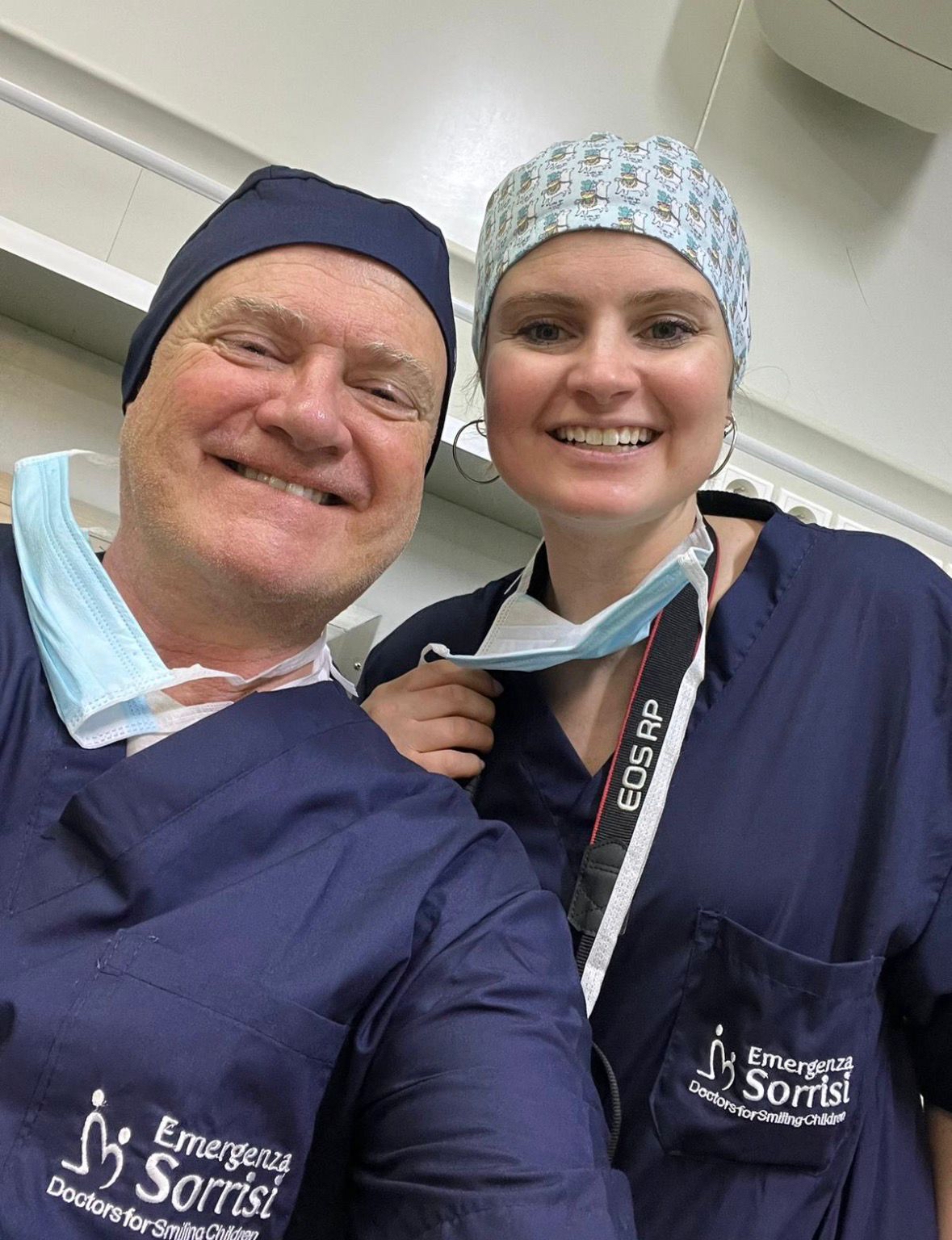
Chiara Antonelli, right, with her father, in the operating room, dressed up and ready for the next patient when in RDC.
As you can imagine, ahead of making it to RDC, we encountered logistical complexities, including last-minute travel arrangements, required vaccinations, and safety checks due to the geopolitical situation.
Once in Brazzaville (RDC), everything I had imagined through my father’s stories took shape — the sounds, the colors, the emotions and experiencing this next to him made it even more meaningful.
I was there for a week. I took it as annual leave from Baker Hughes.
From 8am to 8pm, our daily routine was simple: breakfast, then straight to the hospital. While the medical staff was operating, I was staying with the families and the children awaiting treatment and reporting on the day’s activities for the charity, then back for a quick dinner and a rest.
The language barrier was an issue at times, as local people speak French and unfortunately, I don’t. So, we had to go through team mates to translate. It was so gratifying getting to know the patients, discovering their stories and understanding their culture.
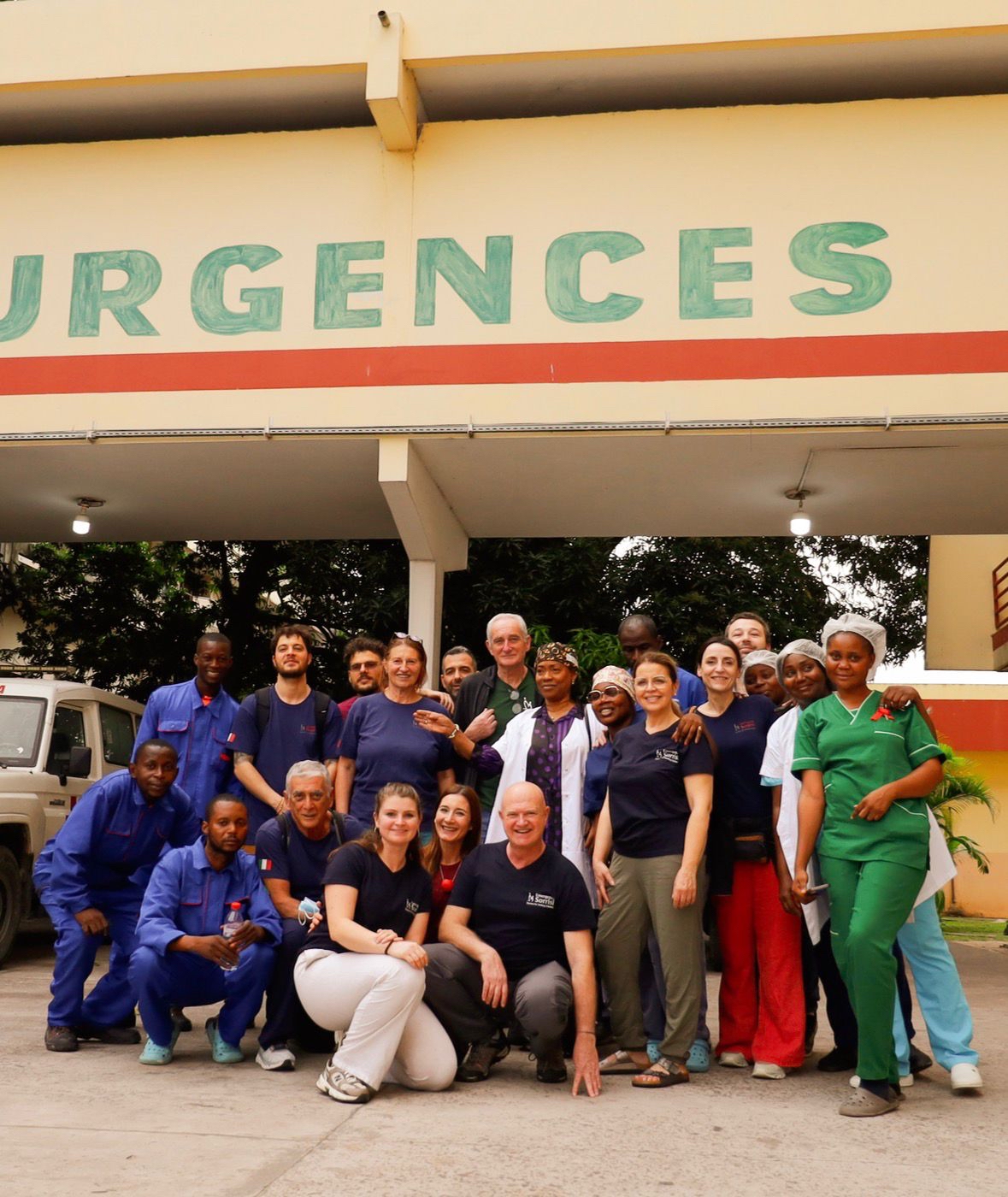
Chiara Antonelli (front row) with the Emergenza Sorrisi team and the local staff, in front of Brazzaville's Hospital entrance
Charity description:
Emergenza Sorrisi ETS (Doctors for Smiling Children) is a humanitarian organization that, since 2007, has been providing free specialized surgical care and medical assistance to the most vulnerable children living in fragile contexts, where access to healthcare is limited or non-existent. Active in more than 31 countries, it carries out missions thanks to the voluntary work of over 300 highly qualified doctors, nurses, and healthcare professionals, and has given a new life to more than 8,000 children.
The organization’s mission focuses on treating severe craniofacial malformations, burn sequelae, and disabling traumas — including those caused by armed conflicts — which compromise vital functions such as breathing, speech, and nutrition, often leading to social exclusion.
Question:
Can you please explain what happens now with the photos you took during the mission?
Chiara Antonelli
The charity relies on donations from corporate organization and the Italian government for example, as well as private donors. The photography is used to help document the organization’s work around the world, for their website, on social media and for presentations to potential patrons. It is important to record a day in the life of the children and families and the benefits of the work of the mission.
In the week I was there, 43 children were operated on, around double what was expected, thanks to the additional support from the local staff. Patients from all over the RDC come to the Brazzaville Children’s Hospital. The mission staff supported screening and specialized interventions on cranial fascial malfunctions. The team took the opportunity to also train local staff while on site.
The main purpose is to make the process sustainable so that local staff and community can benefit during and after the visit from the team from Italy. I truly felt that what they choose to do for the local community is inspiring.
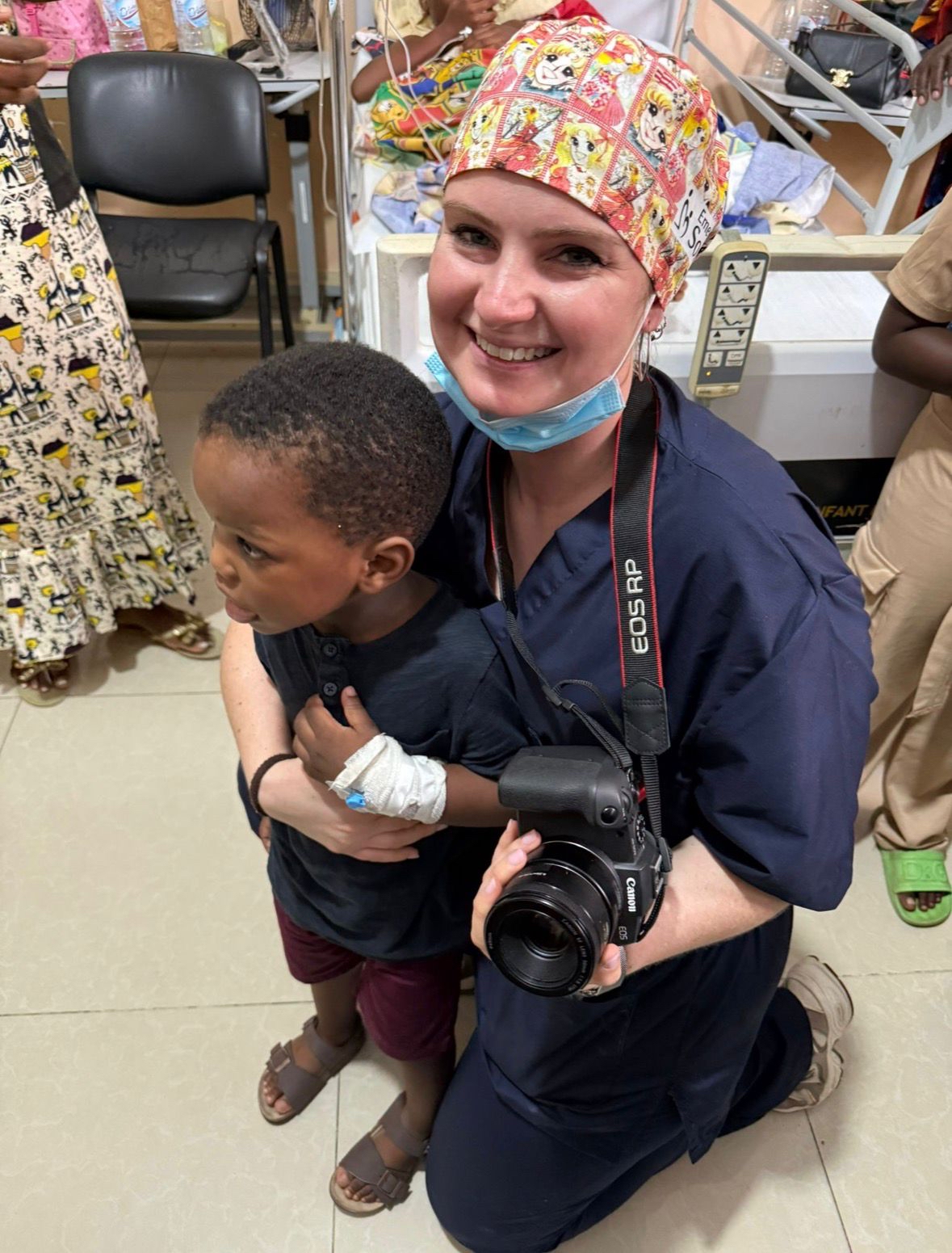
Chiara Antonelli, with one of the patients post-operation, taking photos for the mission
Question:
Now that you are back at work, can you tell us how you feel this experience already has or will influence your work. What did you learn?
Chiara Antonelli
I think I can explain by referring to the Baker Hughes values, grow, collaborate, lead and care, which are relevant here
I believe empathy or care in this instance is one of the main aspects of this journey for me. You never know what the person in front of you is going through in their life. That’s an important perspective to take in everyday interactions with colleagues and people in general.
Making connections and stepping out of your comfort zone is essential to continue to learn. I was not part of the medical staff, yet I was able to help the patients, families and their children as they were waiting to be seen by the doctors and in the operating room. Taking photos and interacting created a distraction in a very tense situation. I realized I could be of some help, even though I am an engineer in ‘real life’. This was very gratifying and meaningful to me. This also resonated with the collaborate value- taking care of each other and understanding others to help them.
I do feel better equipped to lead, in the sustainable energy development context of our industry. As I mentioned earlier, the mission’s aim is to make work methods more sustainable for future operations in the hospital, well beyond the week of planned interventions. This was a key learning for me. When you do something with people at work, you also teach them how to do it themselves, to make it work. This is very important in my daily work for knowledge transfer, both when I am coaching others and learning.
Finally, I am convinced this experience made me grow not only as a leader, but also as a human. Witnessing the relief and gratitude of the parents, after experiencing the stress and the worry for their children, was priceless. To feel all the emotions of this intense experience, while bringing back so many memories is transformative.
Millions of people across the United States face food insecurity, making it harder to stay healthy, manage chronic conditions and focus on everyday life. During Hunger Action Month, CVS Health is highlighting the organizations working every day to ensure individuals and families can access the nutritious meals they need.
Feeding America’s Map the Meal Gap 2026 study underscores the ongoing challenges many families face in putting food on the table. Nearly 48 million people, including 14 million children, experienced food insecurity in 2024. With food insecurity affecting every U.S. community, the findings reinforce the importance of local organizations, community collaborations and innovative programs that help connect individuals and families to nutritious food and support healthier outcomes.
Investing in solutions that meet community needs
Because every community faces different challenges, there is no one-size-fits-all approach to addressing food insecurity. CVS Health supports organizations working on the ground to create solutions tailored to local needs.
In recent years, the company and the CVS Health Foundation have invested in nonprofit organizations helping expand food access, provide medically-tailored meals and strengthen community food systems. Recent investments include support for Feeding America’s Meal Connect platform, which helps reduce food waste while increasing access to nutritious food, as well as Community Servings’ Food is Medicine Accelerator Program, which expands medically tailored nutrition programs through training and fundraising assistance throughout the country.
CVS Health and the CVS Health Foundation have also provided funding to nonprofit organizations focused on food insecurity solutions, including No Kid Hungry, Meals on Wheels of New Jersey, Harlem Grown, Windy City Harvest, Central California Food Bank and other community-based organizations working to support healthier outcomes through nutritious meal programs, prescription food boxes, urban agriculture, and community gardening efforts that increase access to fresh, healthy foods. Recently, CVS Health helped support the opening of a new, school-based food pantry inside Woonsocket High School in Rhode Island, giving local students and families immediate access to essential groceries on campus.
Taking action through volunteerism
Addressing food insecurity requires more than financial support. Volunteers play an essential role in helping food banks and community organizations sort, pack, and distribute food to individuals and families facing hunger.
Throughout the year, CVS Health and Aetna colleagues volunteer with food banks, meal programs, community gardens, and nonprofit organizations across the country, helping strengthen local food systems and support neighbors in need. These volunteer efforts provide critical hands-on support at a time when many food banks are experiencing increased demand and serving more families than ever before.
Hunger Action Month is also an opportunity for customers and community members to get involved. Whether volunteering at a local food pantry, participating in a food drive or supporting a community meal program, even a few hours of service can help organizations expand their reach and provide nutritious food to more people.
Building healthier communities together
Creating healthier communities requires both investment and action. Through volunteer efforts, charitable giving and collaborations with organizations working on the front lines of hunger relief, CVS Health colleagues and customers are helping make a meaningful difference in the lives of neighbors across the country.
This Hunger Action Month, CVS Health encourages everyone to find a way to get involved and help build a future where everyone has access to nutritious food.
Millions of people across the United States face food insecurity, making it harder to stay healthy, manage chronic conditions and focus on everyday life. During Hunger Action Month, CVS Health is highlighting the organizations working every day to ensure individuals and families can access the nutritious meals they need.
Feeding America’s Map the Meal Gap 2026 study underscores the ongoing challenges many families face in putting food on the table. Nearly 48 million people, including 14 million children, experienced food insecurity in 2024. With food insecurity affecting every U.S. community, the findings reinforce the importance of local organizations, community collaborations and innovative programs that help connect individuals and families to nutritious food and support healthier outcomes.
Investing in solutions that meet community needs
Because every community faces different challenges, there is no one-size-fits-all approach to addressing food insecurity. CVS Health supports organizations working on the ground to create solutions tailored to local needs.
In recent years, the company and the CVS Health Foundation have invested in nonprofit organizations helping expand food access, provide medically-tailored meals and strengthen community food systems. Recent investments include support for Feeding America’s Meal Connect platform, which helps reduce food waste while increasing access to nutritious food, as well as Community Servings’ Food is Medicine Accelerator Program, which expands medically tailored nutrition programs through training and fundraising assistance throughout the country.
CVS Health and the CVS Health Foundation have also provided funding to nonprofit organizations focused on food insecurity solutions, including No Kid Hungry, Meals on Wheels of New Jersey, Harlem Grown, Windy City Harvest, Central California Food Bank and other community-based organizations working to support healthier outcomes through nutritious meal programs, prescription food boxes, urban agriculture, and community gardening efforts that increase access to fresh, healthy foods. Recently, CVS Health helped support the opening of a new, school-based food pantry inside Woonsocket High School in Rhode Island, giving local students and families immediate access to essential groceries on campus.
Taking action through volunteerism
Addressing food insecurity requires more than financial support. Volunteers play an essential role in helping food banks and community organizations sort, pack, and distribute food to individuals and families facing hunger.
Throughout the year, CVS Health and Aetna colleagues volunteer with food banks, meal programs, community gardens, and nonprofit organizations across the country, helping strengthen local food systems and support neighbors in need. These volunteer efforts provide critical hands-on support at a time when many food banks are experiencing increased demand and serving more families than ever before.
Hunger Action Month is also an opportunity for customers and community members to get involved. Whether volunteering at a local food pantry, participating in a food drive or supporting a community meal program, even a few hours of service can help organizations expand their reach and provide nutritious food to more people.
Building healthier communities together
Creating healthier communities requires both investment and action. Through volunteer efforts, charitable giving and collaborations with organizations working on the front lines of hunger relief, CVS Health colleagues and customers are helping make a meaningful difference in the lives of neighbors across the country.
This Hunger Action Month, CVS Health encourages everyone to find a way to get involved and help build a future where everyone has access to nutritious food.
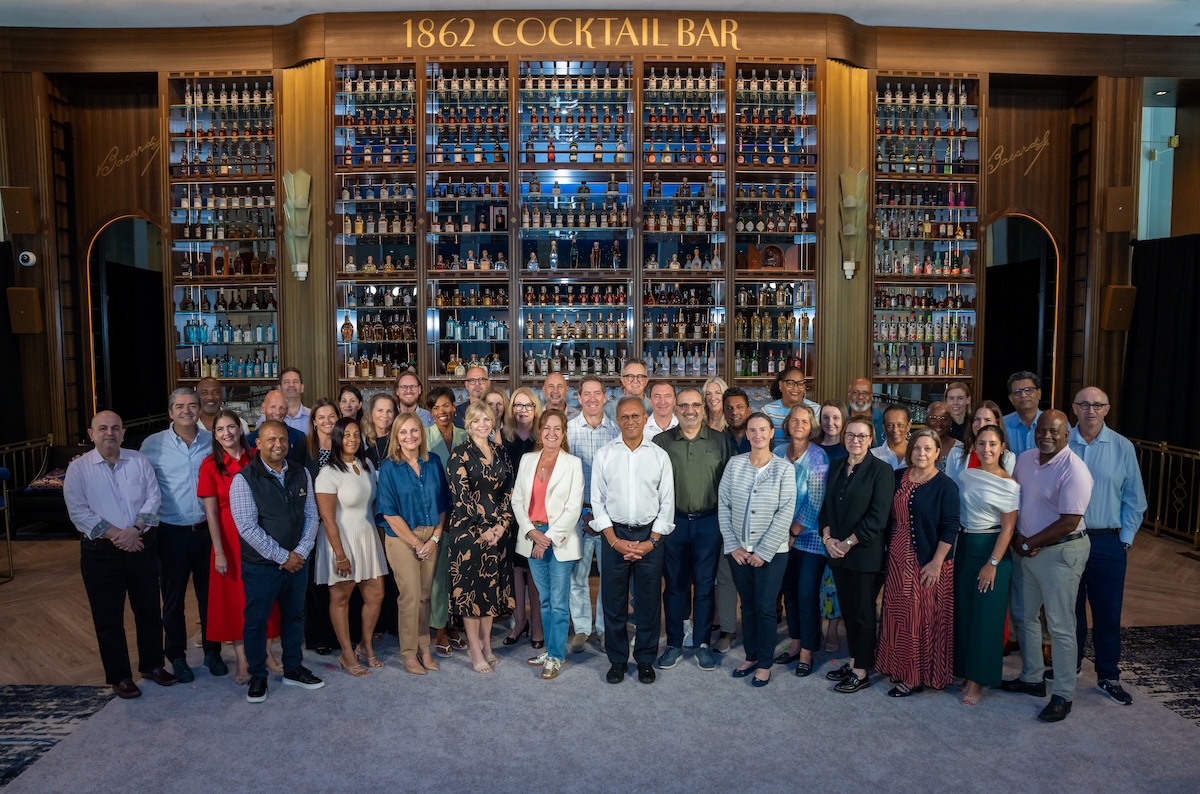
HAMILTON, Bermuda, September 30, 2026 /3BL/ – Bacardi Limited is proving that a workplace worth toasting keeps getting better. The family-owned business has once again been named to the Forbes World’s Best Employers list, taking the top spot among spirits companies. Climbing 17 places since last year, in 2026 Bacardi comes in at #69 globally. The jump in ranking reflects a commitment to creating a workplace where employees feel valued, empowered, and inspired to grow while helping shape the future of the company.
“At Bacardi, great moments start with great people. That’s why we listen carefully to what they’re telling us, learn from that feedback, and keep evolving. We want people to feel clear on how they can grow, confident they can make their mark, and supported to do their best work,” says Dave Ingram, Chief People and Transformation Officer, Bacardi Limited. “Great workplaces are built by people who care, challenge one another, and grow together. We’re proud that Forbes has recognized Bacardi once again for our efforts to build an environment where people can thrive and make a difference.”
The family-owned company is a repeat show on the global list which is based on more than 300,000 independent surveys conducted by Forbes and Statista in more than 50 countries. Participants were asked whether they would recommend a company to family or friends, and to rate it based on such criteria as workplace environment, career advancement, and more.
The family-owned company empowers employees to learn, lead, and make an impact through development opportunities tailored to every stage of their journey. Just as importantly, Bacardi helps employees build a personal connection to the business through hands-on experiences that celebrate its brands and heritage, including mastering cocktail-making techniques, exploring the stories behind iconic spirits, and learning about the company’s commitment to its industry and communities. The company consistently maintains high engagement with a 91% participation score in the latest global engagement survey.
This year’s annual ranking of Forbes’ World’s Best Employers included 900 companies, making this the largest list Forbes has released in this awards program. Read more on Forbes.
About Bacardi Limited
Bacardi Limited, the world’s largest privately held international spirits company, produces, markets, and distributes spirits and wines. The Bacardi Limited portfolio comprises more than 200 brands and labels, including BACARDÍ® rum, PATRÓN® tequila, GREY GOOSE® vodka, DEWAR’S® Blended Scotch whisky, BOMBAY SAPPHIRE® gin, MARTINI® vermouth and sparkling wines, CAZADORES® 100% blue agave tequila, and other leading and emerging brands including D’USSÉ® Cognac, ANGEL’S ENVY® American straight whiskey, and ST-GERMAIN® elderflower liqueur. Founded more than 164 years ago in Santiago de Cuba, family-owned Bacardi Limited currently employs more than 7,000, operates production facilities in 10 countries and territories, and sells its brands in more than 160 markets. Bacardi Limited refers to the Bacardi group of companies, including Bacardi International Limited. Visit http://www.bacardilimited.com or follow us on LinkedIn or Instagram.
Media Contact: Jessica Merz, VP Global Corporate Communications jmerz@bacardi.com
HAMILTON, Bermuda, September 30, 2026 /3BL/ – Bacardi Limited is proving that a workplace worth toasting keeps getting better. The family-owned business has once again been named to the Forbes World’s Best Employers list, taking the top spot among spirits companies. Climbing 17 places since last year, in 2026 Bacardi comes in at #69 globally. The jump in ranking reflects a commitment to creating a workplace where employees feel valued, empowered, and inspired to grow while helping shape the future of the company.
“At Bacardi, great moments start with great people. That’s why we listen carefully to what they’re telling us, learn from that feedback, and keep evolving. We want people to feel clear on how they can grow, confident they can make their mark, and supported to do their best work,” says Dave Ingram, Chief People and Transformation Officer, Bacardi Limited. “Great workplaces are built by people who care, challenge one another, and grow together. We’re proud that Forbes has recognized Bacardi once again for our efforts to build an environment where people can thrive and make a difference.”
The family-owned company is a repeat show on the global list which is based on more than 300,000 independent surveys conducted by Forbes and Statista in more than 50 countries. Participants were asked whether they would recommend a company to family or friends, and to rate it based on such criteria as workplace environment, career advancement, and more.
The family-owned company empowers employees to learn, lead, and make an impact through development opportunities tailored to every stage of their journey. Just as importantly, Bacardi helps employees build a personal connection to the business through hands-on experiences that celebrate its brands and heritage, including mastering cocktail-making techniques, exploring the stories behind iconic spirits, and learning about the company’s commitment to its industry and communities. The company consistently maintains high engagement with a 91% participation score in the latest global engagement survey.
This year’s annual ranking of Forbes’ World’s Best Employers included 900 companies, making this the largest list Forbes has released in this awards program. Read more on Forbes.
About Bacardi Limited
Bacardi Limited, the world’s largest privately held international spirits company, produces, markets, and distributes spirits and wines. The Bacardi Limited portfolio comprises more than 200 brands and labels, including BACARDÍ® rum, PATRÓN® tequila, GREY GOOSE® vodka, DEWAR’S® Blended Scotch whisky, BOMBAY SAPPHIRE® gin, MARTINI® vermouth and sparkling wines, CAZADORES® 100% blue agave tequila, and other leading and emerging brands including D’USSÉ® Cognac, ANGEL’S ENVY® American straight whiskey, and ST-GERMAIN® elderflower liqueur. Founded more than 164 years ago in Santiago de Cuba, family-owned Bacardi Limited currently employs more than 7,000, operates production facilities in 10 countries and territories, and sells its brands in more than 160 markets. Bacardi Limited refers to the Bacardi group of companies, including Bacardi International Limited. Visit http://www.bacardilimited.com or follow us on LinkedIn or Instagram.
Media Contact: Jessica Merz, VP Global Corporate Communications jmerz@bacardi.com