From Mortgage to Tech: Meet Brittni Prieto

Originally published on GoDaddy Resource Library

Tell us a little bit about yourself and your career journey to date.

If you had told 19 year old me I would end up as a Senior Project Manager at a tech company, I probably would not have believed you. My career path has not been linear, and that has been one of its biggest strengths.

I started my career in the mortgage industry, where I learned discipline, structure, and how to navigate complex processes early on. In my twenties, I took a leap into entrepreneurship, running a small designer shoe resale business that taught me how to manage complexity, stay scrappy, and always think from a customer-first mindset.

My entry into tech came through a startup called WPCurve, where I managed a global team of WordPress Developers. When WPCurve was acquired by GoDaddy, our team evolved into what is now the WordPress Premium Support (WPPS) organization. I stepped into an Operations Manager role and spent several years growing the team, mentoring leaders, and scaling into multiple teams led by four Supervisors.

While I loved people leadership, many of my strongest contributions were happening through the projects we were driving. That included cross-functional initiatives, process improvements, and strategic planning. Today, as a Senior Project Manager at GoDaddy, I focus on bringing clarity to complex work and aligning teams to deliver meaningful results for customers and frontline guides.

What do you find most rewarding about your job?

The most rewarding part of my role is watching an idea turn into something real; something that actually makes life easier for customers or support teams. I am energized by cross functional collaboration and solving problems. Every project brings new challenges, new learnings, and new opportunities to help teams do their best work.

Brittni shown with her friends.

What advice do you have for managing stakeholders with different interests?

Start by listening. Every stakeholder has a reason behind what they are asking for and understanding that “why” builds trust quickly. From there, clear and transparent communication is key, especially around tradeoffs, risks, and priorities. When things get complicated, I anchor conversations back to shared goals and the outcomes that matter most to customers and to the business.

Are there any resources that you would recommend to others interested in personal development?

I am drawn to resources that help me better understand people. CliftonStrengths has been especially helpful in identifying how I work best and how to support others. I also enjoy long form content around history, archaeology, psychology, health, and philosophy. These topics consistently shape how I think about leadership and decision making. Some of my biggest growth moments have also come from mentors and peers willing to challenge my thinking through honest conversations.

If you had to describe GoDaddy’s culture in one word, what would it be and why?

Empowering. GoDaddy trusts its people. There is real ownership, flexibility, and support, which I value deeply, especially as a single parent.

I am able to do impactful work while still showing up for my family, and that balance matters.

What do you enjoy doing outside of work?

Outside of work, my life centers around my two daughters and supporting the things they love. That includes helping my older daughter with robotics, cheering on my younger daughter at volleyball, and staying involved in our church community through teaching and service.

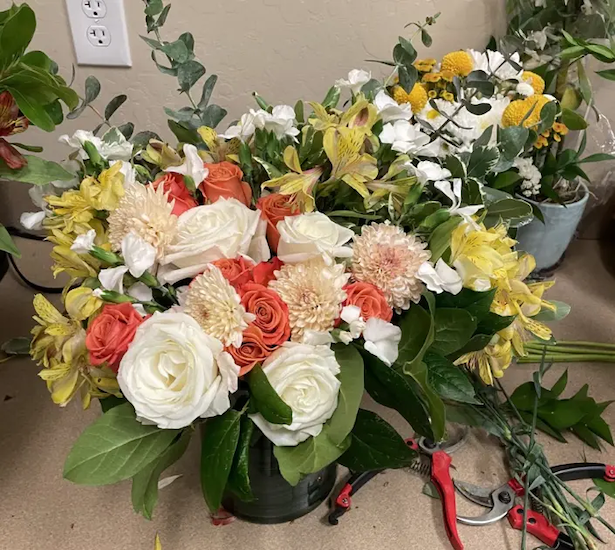
When I get quiet moments, I enjoy learning, creative outlets like flower arranging, and anything related to history or archaeology. Life is full and busy, but it is meaningful, and that perspective carries into everything I do.

Floral bouquet.

Are you enjoying this series and want to know more about life at GoDaddy? Check out our GoDaddy Life social pages! Follow us to meet our team, learn more about our culture (Teams, ERGs, Locations), careers, and so much more. You’re more than just your day job, so come propel your career with us.

Posted in UncategorizedTagged

Virtual Process Chains: Building Digital Workflows for Smarter Joining & Assembly in Automotive BIW

By Katharine Edmonds, Content Marketing Specialist – CAE, Design Engineering Software

For decades, engineers relied on a “design–build–test–fix” loop to bring new products to market. Engineers would create drawings or CAD models, send them to manufacturing, and wait for physical prototypes to reveal flaws in geometry, performance, or assembly. While this cycle ultimately worked, it was slow, expensive, and wasteful. Every iteration required new tooling, new prototypes, and additional rounds of trial and error—costs that multiplied when complex assemblies or tight deadlines were involved. In industries like automotive or aerospace, a single late discovery could delay entire programs and run into millions of dollars in lost time and rework.

Today, that old model is being replaced by a virtual-first approach, often described as a “shift left” in engineering. Instead of waiting until the build stage to discover problems, teams now move their validation phases to earlier into the production lifecycle, using a connected virtual process chain. This workflow integrates design, simulation, and manufacturing planning in a single digital thread, allowing engineers to explore alternatives, test new production strategies, and optimize assembly processes long before a physical prototype is made. This shift isn’t just about efficiency. It’s about confidence—knowing that when the first prototype rolls off the line, it won’t just be a trial run, but a nearly production-ready version that works as intended from day one.

The Virtual Process Chain: A Universal Framework

At its core, a virtual process chain acts as the digital backbone of modern product development. It links together every stage of the lifecycle—from the initial CAD models that define geometry, through engineering simulations that test performance under real-world conditions, to manufacturing process planning that ensures parts can actually be built at scale. By connecting these traditionally separate activities into a seamless digital workflow, engineers gain a powerful toolset for detecting problems early, optimizing designs and processes in parallel, and cutting down on costly physical iterations.

The impact is clear. Instead of discovering manufacturability issues during late-stage prototyping—or worse, after production has begun—teams can identify and solve them virtually at the click of a button. This makes development more predictive and collaborative, with design, analysis, and manufacturing engineers working on the same digital thread rather than in silos. Whether the product is an aircraft component, a consumer electronic device, or an automotive subassembly, the principle remains the same: simulate early, refine continuously, and validate virtually before committing to hardware. The result is not just faster time-to-market, but also higher quality, reduced waste, and greater confidence in the final product.

Zooming In: Where Joining & Assembly Fit

While the virtual process chain is often discussed in terms of product design or performance validation, the joining and assembly stages are just as critical—and often more challenging to get right. These steps determine how well the digital model translates into a manufacturable, dimensionally accurate, and durable product or component. In other words, even the most precise design or high-performing simulation can fail in practice if the underlying assembly process introduces distortions, tolerance stack-ups, or weak joints.

This is where introducing assembly and joining simulations into the virtual process chain delivers real value:

  • Feasibility checks – Can welds, rivets, or adhesives be applied as designed and deliver the high-quality connections as required?
  • Process planning – What distortions will occur from welding heat or clamp forces? How will sequencing impact tolerances?
  • Virtual validation – Will the assembled structure meet fatigue, NVH (noise, vibration, harshness), and stiffness requirements?

This creates a feedback loop where manufacturability constraints are identified early, adjustments are made quickly, and costly surprises during physical tryouts are avoided. Across industries—whether in aerospace riveting, shipbuilding weld distortion, or automotive spot welding—joining and assembly simulations have become the hidden enablers that transform virtual process chains from theoretical exercises into practical, production-ready workflows.

Automotive Spotlight: Assembling Body-in-White (BIW)

In the automotive industry, no stage illustrates the complexity of joining and assembly better than Body-in-White (BIW) manufacturing. The BIW is the structural skeleton of a vehicle—essentially everything you see before the paint shop. It consists of dozens of sheet metal panels and structural components, connected by thousands of joints ranging from spot welds and adhesives to laser welds, rivets, and mechanical fasteners. Every one of these joints contributes to critical performance attributes such as crashworthiness, stiffness, durability, and noise/vibration comfort. The sheer number of connections and the precision required make BIW assembly one of the most demanding engineering challenges in manufacturing.

Traditionally, engineers validated BIW processes late in development, once physical prototypes or tryouts revealed issues like panel distortions, misaligned gaps, or weld failures. In a virtual process chain, however, these possible issues can be addressed much earlier. Simulations help engineers optimize spot weld layouts or adhesive bonding strategies to balance manufacturability with structural strength and can predict the distortions caused by clamping and thermal effects, ensuring that panels will align correctly and that doors will close with the right feel.

By treating the BIW as a fully virtualized workflow—from CAD design to joining, assembly, and performance validation—manufacturers can move toward a first-time-right production philosophy. The outcome is faster development cycles, reduced reliance on physical prototypes, and vehicles that meet safety and quality targets without last-minute firefighting. In this way, BIW serves as both the most complex and the most rewarding example of how virtual process chains, powered by assembly simulations, deliver tangible benefits in one of the world’s most competitive industries.

Introducing Keysight Assembly Simulation Software

As powerful as virtual process chains are, joining and assembly have traditionally been a difficult link to model. That’s why Keysight developed a completely new assembly simulation solution—a tool that allows manufacturers to virtually replicate their real-world assembly processes.

With the recently released first industrial version, automotive BiW engineers can model the entire assembly sequence: positioning parts, applying clamps, and performing spot welds one by one or in parallel if multiple weld robots are being used. When clamps are released, the software immediately shows the resulting distortions and structural behavior.

This enables teams to:

  • Experiment with different process scenarios long before physical tryouts.
  • Test alternative positioning strategies or clamping sequences.
  • Optimize weld sequences and layouts for better quality and less rework.

The result: potential problems are spotted early, and countermeasures are validated virtually instead of through costly trial-and-error on the shop floor.

Mirroring the Shop Floor, Virtually

Keysight Assembly is designed to replicate the way real production lines operate, but in a fully digital environment. Instead of abstract menus or difficult configurations, engineers can simply drag and drop parts and operations into the workflow, define subassemblies, and build up the process step by step. Each subassembly can then be reused downstream—just as it would be on a shop floor—so that the virtual model reflects the exact logic of the physical assembly line. This makes it easy to visualize how complex structures come together, from individual panels and reinforcements to major body sections.

Built-in quality control gates add another layer of reliability. At every stage of the process, the simulation automatically checks for distortions, stresses, and displacements, acting as virtual inspection stations before the assembly is allowed to “move” to the next operation. Instead of waiting until late-stage tryouts to discover that tolerances are out of spec, engineers can spot issues early and correct them immediately in the virtual domain.

It’s a visual, intuitive approach that requires no complex configurations, and engineers don’t need to be finite element (FE) specialists or simulation experts to use the tool effectively. The result is a solution that bridges the gap between advanced simulation and everyday engineering practice—enabling robust, data-driven assembly processes without adding unnecessary complexity.

Handling Data Across the Development Timeline

One of the key strengths of the solution is its flexibility in handling data as a project evolves. In real product development, engineers rarely have all the information at once — part geometry, tolerances, and material behavior arrive at different stages. This tool is built to adapt seamlessly to those changes, ensuring the assembly process model remains relevant and accurate throughout the entire timeline.

  • Early stage – Work with nominal CAD geometry for initial setups.
  • Mid stage – Swap in simulation-based geometries for greater realism.
  • Late stage – Import scanned physical part and/or entire sub-assembly data to validate tolerances against real shapes.

By supporting this continuous flow of data, the solution eliminates the stop-and-start nature of traditional validation. Instead of rebuilding models at every milestone, engineers refine a single digital model — one that grows more accurate over time and drastically reduces unwanted surprises when the first physical parts arrive.

Closing the Loop in the Virtual Process Chain

The rise of the virtual process chain is transforming how products are designed, tested, and manufactured across industries. By connecting CAD, simulation, and manufacturing planning into a single digital backbone, organizations gain the ability to predict outcomes, refine processes continuously, and reduce reliance on physical trial-and-error. Yet the true strength of this approach comes when it extends beyond product geometry and performance into the realities of joining and assembly—the steps that ultimately determine whether a digital concept can become a high-quality physical product.

The Keysight Assembly simulation platform makes this achievable, bringing practical, intuitive, and physics-based tools directly into the hands of engineers and process planners.

Looking ahead, the future of engineering lies in this digital-first, closed-loop approach—where insights from manufacturing flow back into design, and virtual models evolve continuously with real-world data. Whether in automotive, aerospace, or other manufacturing industries, organizations that embrace virtual process chains will not only bring products to market faster, but also achieve higher quality, lower costs, and greater confidence in every launch. In short, the path to smarter, more sustainable engineering runs straight through the virtual process chain—and joining and assembly are the critical links that make it whole.

Learn more about the new Keysight Assembly solution by visiting the dedicated webpage Keysight Assembly simulation software


Posted in UncategorizedTagged

Virtual Process Chains: Building Digital Workflows for Smarter Joining & Assembly in Automotive BIW

By Katharine Edmonds, Content Marketing Specialist – CAE, Design Engineering Software

For decades, engineers relied on a “design–build–test–fix” loop to bring new products to market. Engineers would create drawings or CAD models, send them to manufacturing, and wait for physical prototypes to reveal flaws in geometry, performance, or assembly. While this cycle ultimately worked, it was slow, expensive, and wasteful. Every iteration required new tooling, new prototypes, and additional rounds of trial and error—costs that multiplied when complex assemblies or tight deadlines were involved. In industries like automotive or aerospace, a single late discovery could delay entire programs and run into millions of dollars in lost time and rework.

Today, that old model is being replaced by a virtual-first approach, often described as a “shift left” in engineering. Instead of waiting until the build stage to discover problems, teams now move their validation phases to earlier into the production lifecycle, using a connected virtual process chain. This workflow integrates design, simulation, and manufacturing planning in a single digital thread, allowing engineers to explore alternatives, test new production strategies, and optimize assembly processes long before a physical prototype is made. This shift isn’t just about efficiency. It’s about confidence—knowing that when the first prototype rolls off the line, it won’t just be a trial run, but a nearly production-ready version that works as intended from day one.

The Virtual Process Chain: A Universal Framework

At its core, a virtual process chain acts as the digital backbone of modern product development. It links together every stage of the lifecycle—from the initial CAD models that define geometry, through engineering simulations that test performance under real-world conditions, to manufacturing process planning that ensures parts can actually be built at scale. By connecting these traditionally separate activities into a seamless digital workflow, engineers gain a powerful toolset for detecting problems early, optimizing designs and processes in parallel, and cutting down on costly physical iterations.

The impact is clear. Instead of discovering manufacturability issues during late-stage prototyping—or worse, after production has begun—teams can identify and solve them virtually at the click of a button. This makes development more predictive and collaborative, with design, analysis, and manufacturing engineers working on the same digital thread rather than in silos. Whether the product is an aircraft component, a consumer electronic device, or an automotive subassembly, the principle remains the same: simulate early, refine continuously, and validate virtually before committing to hardware. The result is not just faster time-to-market, but also higher quality, reduced waste, and greater confidence in the final product.

Zooming In: Where Joining & Assembly Fit

While the virtual process chain is often discussed in terms of product design or performance validation, the joining and assembly stages are just as critical—and often more challenging to get right. These steps determine how well the digital model translates into a manufacturable, dimensionally accurate, and durable product or component. In other words, even the most precise design or high-performing simulation can fail in practice if the underlying assembly process introduces distortions, tolerance stack-ups, or weak joints.

This is where introducing assembly and joining simulations into the virtual process chain delivers real value:

  • Feasibility checks – Can welds, rivets, or adhesives be applied as designed and deliver the high-quality connections as required?
  • Process planning – What distortions will occur from welding heat or clamp forces? How will sequencing impact tolerances?
  • Virtual validation – Will the assembled structure meet fatigue, NVH (noise, vibration, harshness), and stiffness requirements?

This creates a feedback loop where manufacturability constraints are identified early, adjustments are made quickly, and costly surprises during physical tryouts are avoided. Across industries—whether in aerospace riveting, shipbuilding weld distortion, or automotive spot welding—joining and assembly simulations have become the hidden enablers that transform virtual process chains from theoretical exercises into practical, production-ready workflows.

Automotive Spotlight: Assembling Body-in-White (BIW)

In the automotive industry, no stage illustrates the complexity of joining and assembly better than Body-in-White (BIW) manufacturing. The BIW is the structural skeleton of a vehicle—essentially everything you see before the paint shop. It consists of dozens of sheet metal panels and structural components, connected by thousands of joints ranging from spot welds and adhesives to laser welds, rivets, and mechanical fasteners. Every one of these joints contributes to critical performance attributes such as crashworthiness, stiffness, durability, and noise/vibration comfort. The sheer number of connections and the precision required make BIW assembly one of the most demanding engineering challenges in manufacturing.

Traditionally, engineers validated BIW processes late in development, once physical prototypes or tryouts revealed issues like panel distortions, misaligned gaps, or weld failures. In a virtual process chain, however, these possible issues can be addressed much earlier. Simulations help engineers optimize spot weld layouts or adhesive bonding strategies to balance manufacturability with structural strength and can predict the distortions caused by clamping and thermal effects, ensuring that panels will align correctly and that doors will close with the right feel.

By treating the BIW as a fully virtualized workflow—from CAD design to joining, assembly, and performance validation—manufacturers can move toward a first-time-right production philosophy. The outcome is faster development cycles, reduced reliance on physical prototypes, and vehicles that meet safety and quality targets without last-minute firefighting. In this way, BIW serves as both the most complex and the most rewarding example of how virtual process chains, powered by assembly simulations, deliver tangible benefits in one of the world’s most competitive industries.

Introducing Keysight Assembly Simulation Software

As powerful as virtual process chains are, joining and assembly have traditionally been a difficult link to model. That’s why Keysight developed a completely new assembly simulation solution—a tool that allows manufacturers to virtually replicate their real-world assembly processes.

With the recently released first industrial version, automotive BiW engineers can model the entire assembly sequence: positioning parts, applying clamps, and performing spot welds one by one or in parallel if multiple weld robots are being used. When clamps are released, the software immediately shows the resulting distortions and structural behavior.

This enables teams to:

  • Experiment with different process scenarios long before physical tryouts.
  • Test alternative positioning strategies or clamping sequences.
  • Optimize weld sequences and layouts for better quality and less rework.

The result: potential problems are spotted early, and countermeasures are validated virtually instead of through costly trial-and-error on the shop floor.

Mirroring the Shop Floor, Virtually

Keysight Assembly is designed to replicate the way real production lines operate, but in a fully digital environment. Instead of abstract menus or difficult configurations, engineers can simply drag and drop parts and operations into the workflow, define subassemblies, and build up the process step by step. Each subassembly can then be reused downstream—just as it would be on a shop floor—so that the virtual model reflects the exact logic of the physical assembly line. This makes it easy to visualize how complex structures come together, from individual panels and reinforcements to major body sections.

Built-in quality control gates add another layer of reliability. At every stage of the process, the simulation automatically checks for distortions, stresses, and displacements, acting as virtual inspection stations before the assembly is allowed to “move” to the next operation. Instead of waiting until late-stage tryouts to discover that tolerances are out of spec, engineers can spot issues early and correct them immediately in the virtual domain.

It’s a visual, intuitive approach that requires no complex configurations, and engineers don’t need to be finite element (FE) specialists or simulation experts to use the tool effectively. The result is a solution that bridges the gap between advanced simulation and everyday engineering practice—enabling robust, data-driven assembly processes without adding unnecessary complexity.

Handling Data Across the Development Timeline

One of the key strengths of the solution is its flexibility in handling data as a project evolves. In real product development, engineers rarely have all the information at once — part geometry, tolerances, and material behavior arrive at different stages. This tool is built to adapt seamlessly to those changes, ensuring the assembly process model remains relevant and accurate throughout the entire timeline.

  • Early stage – Work with nominal CAD geometry for initial setups.
  • Mid stage – Swap in simulation-based geometries for greater realism.
  • Late stage – Import scanned physical part and/or entire sub-assembly data to validate tolerances against real shapes.

By supporting this continuous flow of data, the solution eliminates the stop-and-start nature of traditional validation. Instead of rebuilding models at every milestone, engineers refine a single digital model — one that grows more accurate over time and drastically reduces unwanted surprises when the first physical parts arrive.

Closing the Loop in the Virtual Process Chain

The rise of the virtual process chain is transforming how products are designed, tested, and manufactured across industries. By connecting CAD, simulation, and manufacturing planning into a single digital backbone, organizations gain the ability to predict outcomes, refine processes continuously, and reduce reliance on physical trial-and-error. Yet the true strength of this approach comes when it extends beyond product geometry and performance into the realities of joining and assembly—the steps that ultimately determine whether a digital concept can become a high-quality physical product.

The Keysight Assembly simulation platform makes this achievable, bringing practical, intuitive, and physics-based tools directly into the hands of engineers and process planners.

Looking ahead, the future of engineering lies in this digital-first, closed-loop approach—where insights from manufacturing flow back into design, and virtual models evolve continuously with real-world data. Whether in automotive, aerospace, or other manufacturing industries, organizations that embrace virtual process chains will not only bring products to market faster, but also achieve higher quality, lower costs, and greater confidence in every launch. In short, the path to smarter, more sustainable engineering runs straight through the virtual process chain—and joining and assembly are the critical links that make it whole.

Learn more about the new Keysight Assembly solution by visiting the dedicated webpage Keysight Assembly simulation software
Posted in UncategorizedTagged

Virtual Process Chains: Building Digital Workflows for Smarter Joining & Assembly in Automotive BIW

By Katharine Edmonds, Content Marketing Specialist – CAE, Design Engineering Software

For decades, engineers relied on a “design–build–test–fix” loop to bring new products to market. Engineers would create drawings or CAD models, send them to manufacturing, and wait for physical prototypes to reveal flaws in geometry, performance, or assembly. While this cycle ultimately worked, it was slow, expensive, and wasteful. Every iteration required new tooling, new prototypes, and additional rounds of trial and error—costs that multiplied when complex assemblies or tight deadlines were involved. In industries like automotive or aerospace, a single late discovery could delay entire programs and run into millions of dollars in lost time and rework.

Today, that old model is being replaced by a virtual-first approach, often described as a “shift left” in engineering. Instead of waiting until the build stage to discover problems, teams now move their validation phases to earlier into the production lifecycle, using a connected virtual process chain. This workflow integrates design, simulation, and manufacturing planning in a single digital thread, allowing engineers to explore alternatives, test new production strategies, and optimize assembly processes long before a physical prototype is made. This shift isn’t just about efficiency. It’s about confidence—knowing that when the first prototype rolls off the line, it won’t just be a trial run, but a nearly production-ready version that works as intended from day one.

The Virtual Process Chain: A Universal Framework

At its core, a virtual process chain acts as the digital backbone of modern product development. It links together every stage of the lifecycle—from the initial CAD models that define geometry, through engineering simulations that test performance under real-world conditions, to manufacturing process planning that ensures parts can actually be built at scale. By connecting these traditionally separate activities into a seamless digital workflow, engineers gain a powerful toolset for detecting problems early, optimizing designs and processes in parallel, and cutting down on costly physical iterations.

The impact is clear. Instead of discovering manufacturability issues during late-stage prototyping—or worse, after production has begun—teams can identify and solve them virtually at the click of a button. This makes development more predictive and collaborative, with design, analysis, and manufacturing engineers working on the same digital thread rather than in silos. Whether the product is an aircraft component, a consumer electronic device, or an automotive subassembly, the principle remains the same: simulate early, refine continuously, and validate virtually before committing to hardware. The result is not just faster time-to-market, but also higher quality, reduced waste, and greater confidence in the final product.

Zooming In: Where Joining & Assembly Fit

While the virtual process chain is often discussed in terms of product design or performance validation, the joining and assembly stages are just as critical—and often more challenging to get right. These steps determine how well the digital model translates into a manufacturable, dimensionally accurate, and durable product or component. In other words, even the most precise design or high-performing simulation can fail in practice if the underlying assembly process introduces distortions, tolerance stack-ups, or weak joints.

This is where introducing assembly and joining simulations into the virtual process chain delivers real value:

  • Feasibility checks – Can welds, rivets, or adhesives be applied as designed and deliver the high-quality connections as required?
  • Process planning – What distortions will occur from welding heat or clamp forces? How will sequencing impact tolerances?
  • Virtual validation – Will the assembled structure meet fatigue, NVH (noise, vibration, harshness), and stiffness requirements?

This creates a feedback loop where manufacturability constraints are identified early, adjustments are made quickly, and costly surprises during physical tryouts are avoided. Across industries—whether in aerospace riveting, shipbuilding weld distortion, or automotive spot welding—joining and assembly simulations have become the hidden enablers that transform virtual process chains from theoretical exercises into practical, production-ready workflows.

Automotive Spotlight: Assembling Body-in-White (BIW)

In the automotive industry, no stage illustrates the complexity of joining and assembly better than Body-in-White (BIW) manufacturing. The BIW is the structural skeleton of a vehicle—essentially everything you see before the paint shop. It consists of dozens of sheet metal panels and structural components, connected by thousands of joints ranging from spot welds and adhesives to laser welds, rivets, and mechanical fasteners. Every one of these joints contributes to critical performance attributes such as crashworthiness, stiffness, durability, and noise/vibration comfort. The sheer number of connections and the precision required make BIW assembly one of the most demanding engineering challenges in manufacturing.

Traditionally, engineers validated BIW processes late in development, once physical prototypes or tryouts revealed issues like panel distortions, misaligned gaps, or weld failures. In a virtual process chain, however, these possible issues can be addressed much earlier. Simulations help engineers optimize spot weld layouts or adhesive bonding strategies to balance manufacturability with structural strength and can predict the distortions caused by clamping and thermal effects, ensuring that panels will align correctly and that doors will close with the right feel.

By treating the BIW as a fully virtualized workflow—from CAD design to joining, assembly, and performance validation—manufacturers can move toward a first-time-right production philosophy. The outcome is faster development cycles, reduced reliance on physical prototypes, and vehicles that meet safety and quality targets without last-minute firefighting. In this way, BIW serves as both the most complex and the most rewarding example of how virtual process chains, powered by assembly simulations, deliver tangible benefits in one of the world’s most competitive industries.

Introducing Keysight Assembly Simulation Software

As powerful as virtual process chains are, joining and assembly have traditionally been a difficult link to model. That’s why Keysight developed a completely new assembly simulation solution—a tool that allows manufacturers to virtually replicate their real-world assembly processes.

With the recently released first industrial version, automotive BiW engineers can model the entire assembly sequence: positioning parts, applying clamps, and performing spot welds one by one or in parallel if multiple weld robots are being used. When clamps are released, the software immediately shows the resulting distortions and structural behavior.

This enables teams to:

  • Experiment with different process scenarios long before physical tryouts.
  • Test alternative positioning strategies or clamping sequences.
  • Optimize weld sequences and layouts for better quality and less rework.

The result: potential problems are spotted early, and countermeasures are validated virtually instead of through costly trial-and-error on the shop floor.

Mirroring the Shop Floor, Virtually

Keysight Assembly is designed to replicate the way real production lines operate, but in a fully digital environment. Instead of abstract menus or difficult configurations, engineers can simply drag and drop parts and operations into the workflow, define subassemblies, and build up the process step by step. Each subassembly can then be reused downstream—just as it would be on a shop floor—so that the virtual model reflects the exact logic of the physical assembly line. This makes it easy to visualize how complex structures come together, from individual panels and reinforcements to major body sections.

Built-in quality control gates add another layer of reliability. At every stage of the process, the simulation automatically checks for distortions, stresses, and displacements, acting as virtual inspection stations before the assembly is allowed to “move” to the next operation. Instead of waiting until late-stage tryouts to discover that tolerances are out of spec, engineers can spot issues early and correct them immediately in the virtual domain.

It’s a visual, intuitive approach that requires no complex configurations, and engineers don’t need to be finite element (FE) specialists or simulation experts to use the tool effectively. The result is a solution that bridges the gap between advanced simulation and everyday engineering practice—enabling robust, data-driven assembly processes without adding unnecessary complexity.

Handling Data Across the Development Timeline

One of the key strengths of the solution is its flexibility in handling data as a project evolves. In real product development, engineers rarely have all the information at once — part geometry, tolerances, and material behavior arrive at different stages. This tool is built to adapt seamlessly to those changes, ensuring the assembly process model remains relevant and accurate throughout the entire timeline.

  • Early stage – Work with nominal CAD geometry for initial setups.
  • Mid stage – Swap in simulation-based geometries for greater realism.
  • Late stage – Import scanned physical part and/or entire sub-assembly data to validate tolerances against real shapes.

By supporting this continuous flow of data, the solution eliminates the stop-and-start nature of traditional validation. Instead of rebuilding models at every milestone, engineers refine a single digital model — one that grows more accurate over time and drastically reduces unwanted surprises when the first physical parts arrive.

Closing the Loop in the Virtual Process Chain

The rise of the virtual process chain is transforming how products are designed, tested, and manufactured across industries. By connecting CAD, simulation, and manufacturing planning into a single digital backbone, organizations gain the ability to predict outcomes, refine processes continuously, and reduce reliance on physical trial-and-error. Yet the true strength of this approach comes when it extends beyond product geometry and performance into the realities of joining and assembly—the steps that ultimately determine whether a digital concept can become a high-quality physical product.

The Keysight Assembly simulation platform makes this achievable, bringing practical, intuitive, and physics-based tools directly into the hands of engineers and process planners.

Looking ahead, the future of engineering lies in this digital-first, closed-loop approach—where insights from manufacturing flow back into design, and virtual models evolve continuously with real-world data. Whether in automotive, aerospace, or other manufacturing industries, organizations that embrace virtual process chains will not only bring products to market faster, but also achieve higher quality, lower costs, and greater confidence in every launch. In short, the path to smarter, more sustainable engineering runs straight through the virtual process chain—and joining and assembly are the critical links that make it whole.

Learn more about the new Keysight Assembly solution by visiting the dedicated webpage Keysight Assembly simulation software

Posted in UncategorizedTagged

Virtual Process Chains: Building Digital Workflows for Smarter Joining & Assembly in Automotive BIW

By Katharine Edmonds, Content Marketing Specialist – CAE, Design Engineering Software

For decades, engineers relied on a “design–build–test–fix” loop to bring new products to market. Engineers would create drawings or CAD models, send them to manufacturing, and wait for physical prototypes to reveal flaws in geometry, performance, or assembly. While this cycle ultimately worked, it was slow, expensive, and wasteful. Every iteration required new tooling, new prototypes, and additional rounds of trial and error—costs that multiplied when complex assemblies or tight deadlines were involved. In industries like automotive or aerospace, a single late discovery could delay entire programs and run into millions of dollars in lost time and rework.

Today, that old model is being replaced by a virtual-first approach, often described as a “shift left” in engineering. Instead of waiting until the build stage to discover problems, teams now move their validation phases to earlier into the production lifecycle, using a connected virtual process chain. This workflow integrates design, simulation, and manufacturing planning in a single digital thread, allowing engineers to explore alternatives, test new production strategies, and optimize assembly processes long before a physical prototype is made. This shift isn’t just about efficiency. It’s about confidence—knowing that when the first prototype rolls off the line, it won’t just be a trial run, but a nearly production-ready version that works as intended from day one.

The Virtual Process Chain: A Universal Framework

At its core, a virtual process chain acts as the digital backbone of modern product development. It links together every stage of the lifecycle—from the initial CAD models that define geometry, through engineering simulations that test performance under real-world conditions, to manufacturing process planning that ensures parts can actually be built at scale. By connecting these traditionally separate activities into a seamless digital workflow, engineers gain a powerful toolset for detecting problems early, optimizing designs and processes in parallel, and cutting down on costly physical iterations.

The impact is clear. Instead of discovering manufacturability issues during late-stage prototyping—or worse, after production has begun—teams can identify and solve them virtually at the click of a button. This makes development more predictive and collaborative, with design, analysis, and manufacturing engineers working on the same digital thread rather than in silos. Whether the product is an aircraft component, a consumer electronic device, or an automotive subassembly, the principle remains the same: simulate early, refine continuously, and validate virtually before committing to hardware. The result is not just faster time-to-market, but also higher quality, reduced waste, and greater confidence in the final product.

Zooming In: Where Joining & Assembly Fit

While the virtual process chain is often discussed in terms of product design or performance validation, the joining and assembly stages are just as critical—and often more challenging to get right. These steps determine how well the digital model translates into a manufacturable, dimensionally accurate, and durable product or component. In other words, even the most precise design or high-performing simulation can fail in practice if the underlying assembly process introduces distortions, tolerance stack-ups, or weak joints.

This is where introducing assembly and joining simulations into the virtual process chain delivers real value:

  • Feasibility checks – Can welds, rivets, or adhesives be applied as designed and deliver the high-quality connections as required?
  • Process planning – What distortions will occur from welding heat or clamp forces? How will sequencing impact tolerances?
  • Virtual validation – Will the assembled structure meet fatigue, NVH (noise, vibration, harshness), and stiffness requirements?

This creates a feedback loop where manufacturability constraints are identified early, adjustments are made quickly, and costly surprises during physical tryouts are avoided. Across industries—whether in aerospace riveting, shipbuilding weld distortion, or automotive spot welding—joining and assembly simulations have become the hidden enablers that transform virtual process chains from theoretical exercises into practical, production-ready workflows.

Automotive Spotlight: Assembling Body-in-White (BIW)

In the automotive industry, no stage illustrates the complexity of joining and assembly better than Body-in-White (BIW) manufacturing. The BIW is the structural skeleton of a vehicle—essentially everything you see before the paint shop. It consists of dozens of sheet metal panels and structural components, connected by thousands of joints ranging from spot welds and adhesives to laser welds, rivets, and mechanical fasteners. Every one of these joints contributes to critical performance attributes such as crashworthiness, stiffness, durability, and noise/vibration comfort. The sheer number of connections and the precision required make BIW assembly one of the most demanding engineering challenges in manufacturing.

Traditionally, engineers validated BIW processes late in development, once physical prototypes or tryouts revealed issues like panel distortions, misaligned gaps, or weld failures. In a virtual process chain, however, these possible issues can be addressed much earlier. Simulations help engineers optimize spot weld layouts or adhesive bonding strategies to balance manufacturability with structural strength and can predict the distortions caused by clamping and thermal effects, ensuring that panels will align correctly and that doors will close with the right feel.

By treating the BIW as a fully virtualized workflow—from CAD design to joining, assembly, and performance validation—manufacturers can move toward a first-time-right production philosophy. The outcome is faster development cycles, reduced reliance on physical prototypes, and vehicles that meet safety and quality targets without last-minute firefighting. In this way, BIW serves as both the most complex and the most rewarding example of how virtual process chains, powered by assembly simulations, deliver tangible benefits in one of the world’s most competitive industries.

Introducing Keysight Assembly Simulation Software

As powerful as virtual process chains are, joining and assembly have traditionally been a difficult link to model. That’s why Keysight developed a completely new assembly simulation solution—a tool that allows manufacturers to virtually replicate their real-world assembly processes.

With the recently released first industrial version, automotive BiW engineers can model the entire assembly sequence: positioning parts, applying clamps, and performing spot welds one by one or in parallel if multiple weld robots are being used. When clamps are released, the software immediately shows the resulting distortions and structural behavior.

This enables teams to:

  • Experiment with different process scenarios long before physical tryouts.
  • Test alternative positioning strategies or clamping sequences.
  • Optimize weld sequences and layouts for better quality and less rework.

The result: potential problems are spotted early, and countermeasures are validated virtually instead of through costly trial-and-error on the shop floor.

Mirroring the Shop Floor, Virtually

Keysight Assembly is designed to replicate the way real production lines operate, but in a fully digital environment. Instead of abstract menus or difficult configurations, engineers can simply drag and drop parts and operations into the workflow, define subassemblies, and build up the process step by step. Each subassembly can then be reused downstream—just as it would be on a shop floor—so that the virtual model reflects the exact logic of the physical assembly line. This makes it easy to visualize how complex structures come together, from individual panels and reinforcements to major body sections.

Built-in quality control gates add another layer of reliability. At every stage of the process, the simulation automatically checks for distortions, stresses, and displacements, acting as virtual inspection stations before the assembly is allowed to “move” to the next operation. Instead of waiting until late-stage tryouts to discover that tolerances are out of spec, engineers can spot issues early and correct them immediately in the virtual domain.

It’s a visual, intuitive approach that requires no complex configurations, and engineers don’t need to be finite element (FE) specialists or simulation experts to use the tool effectively. The result is a solution that bridges the gap between advanced simulation and everyday engineering practice—enabling robust, data-driven assembly processes without adding unnecessary complexity.

Handling Data Across the Development Timeline

One of the key strengths of the solution is its flexibility in handling data as a project evolves. In real product development, engineers rarely have all the information at once — part geometry, tolerances, and material behavior arrive at different stages. This tool is built to adapt seamlessly to those changes, ensuring the assembly process model remains relevant and accurate throughout the entire timeline.

  • Early stage – Work with nominal CAD geometry for initial setups.
  • Mid stage – Swap in simulation-based geometries for greater realism.
  • Late stage – Import scanned physical part and/or entire sub-assembly data to validate tolerances against real shapes.

By supporting this continuous flow of data, the solution eliminates the stop-and-start nature of traditional validation. Instead of rebuilding models at every milestone, engineers refine a single digital model — one that grows more accurate over time and drastically reduces unwanted surprises when the first physical parts arrive.

Closing the Loop in the Virtual Process Chain

The rise of the virtual process chain is transforming how products are designed, tested, and manufactured across industries. By connecting CAD, simulation, and manufacturing planning into a single digital backbone, organizations gain the ability to predict outcomes, refine processes continuously, and reduce reliance on physical trial-and-error. Yet the true strength of this approach comes when it extends beyond product geometry and performance into the realities of joining and assembly—the steps that ultimately determine whether a digital concept can become a high-quality physical product.

The Keysight Assembly simulation platform makes this achievable, bringing practical, intuitive, and physics-based tools directly into the hands of engineers and process planners.

Looking ahead, the future of engineering lies in this digital-first, closed-loop approach—where insights from manufacturing flow back into design, and virtual models evolve continuously with real-world data. Whether in automotive, aerospace, or other manufacturing industries, organizations that embrace virtual process chains will not only bring products to market faster, but also achieve higher quality, lower costs, and greater confidence in every launch. In short, the path to smarter, more sustainable engineering runs straight through the virtual process chain—and joining and assembly are the critical links that make it whole.

Learn more about the new Keysight Assembly solution by visiting the dedicated webpage Keysight Assembly simulation software

Posted in UncategorizedTagged

Northern Trust Wins Communitas Award for Global Community Leadership

We’re thrilled to share that Northern Trust won the Communitas Award for Leadership in Community Service and Corporate Social Responsibility!

The award is in recognition of our annual global month of service, Achieving Greater Together (AGT).

The Communitas Awards honor individuals, businesses and organizations that demonstrate exceptional commitment to community service, volunteerism, philanthropy and sustainable, ethical business practices.

AGT demonstrates Northern Trust’s commitment to those same principles and the incredible efforts of our employees to create meaningful impact and drive positive change. Last October alone, more than 12,000 employees worldwide contributed over 60,000 volunteer hours and helped provide over 3 million meals to communities across North America, APAC and EMEA.

Learn more about AGT and our community impact.

Posted in UncategorizedTagged

Northern Trust Wins Communitas Award for Global Community Leadership

We’re thrilled to share that Northern Trust won the Communitas Award for Leadership in Community Service and Corporate Social Responsibility!

The award is in recognition of our annual global month of service, Achieving Greater Together (AGT).

The Communitas Awards honor individuals, businesses and organizations that demonstrate exceptional commitment to community service, volunteerism, philanthropy and sustainable, ethical business practices.

AGT demonstrates Northern Trust’s commitment to those same principles and the incredible efforts of our employees to create meaningful impact and drive positive change. Last October alone, more than 12,000 employees worldwide contributed over 60,000 volunteer hours and helped provide over 3 million meals to communities across North America, APAC and EMEA.

Learn more about AGT and our community impact.

Posted in UncategorizedTagged

Northern Trust Wins Communitas Award for Global Community Leadership

We’re thrilled to share that Northern Trust won the Communitas Award for Leadership in Community Service and Corporate Social Responsibility!

The award is in recognition of our annual global month of service, Achieving Greater Together (AGT).

The Communitas Awards honor individuals, businesses and organizations that demonstrate exceptional commitment to community service, volunteerism, philanthropy and sustainable, ethical business practices.

AGT demonstrates Northern Trust’s commitment to those same principles and the incredible efforts of our employees to create meaningful impact and drive positive change. Last October alone, more than 12,000 employees worldwide contributed over 60,000 volunteer hours and helped provide over 3 million meals to communities across North America, APAC and EMEA.

Learn more about AGT and our community impact.

Posted in UncategorizedTagged

Northern Trust Wins Communitas Award for Global Community Leadership

We’re thrilled to share that Northern Trust won the Communitas Award for Leadership in Community Service and Corporate Social Responsibility!

The award is in recognition of our annual global month of service, Achieving Greater Together (AGT).

The Communitas Awards honor individuals, businesses and organizations that demonstrate exceptional commitment to community service, volunteerism, philanthropy and sustainable, ethical business practices.

AGT demonstrates Northern Trust’s commitment to those same principles and the incredible efforts of our employees to create meaningful impact and drive positive change. Last October alone, more than 12,000 employees worldwide contributed over 60,000 volunteer hours and helped provide over 3 million meals to communities across North America, APAC and EMEA.

Learn more about AGT and our community impact.

Posted in UncategorizedTagged

T5 Smackover Partners Unveils Landmark Geothermal, Lithium, and Critical Minerals Project in East Texas

Project positions Franklin, Titus, and Hopkins Counties as a national hub for clean energy, EV infrastructure, and domestic critical minerals production

FRANKLIN COUNTY, Texas and TITUS COUNTY, Texas and HOPKINS COUNTY, Texas, Feb. 10, 2026 /PRNewswire/ — T5 Smackover Partners, LLC today announced the advancement of a transformational, multi-resource clean energy and critical minerals project in the East Texas Smackover Formation. The project integrates geothermal power generation, ultra-fast EV charging infrastructure, mobile grid-scale energy storage, and one of the most significant domestic lithium and bromine opportunities in North America.

Originally permitted as a geothermal well, T5’s initial development has exceeded temperature expectations, validating the formation’s ability to support scalable, baseload geothermal power. Leveraging this resource, T5 plans to deploy modular Organic Rankine Cycle (ORC) turbines designed for rapid deployment and fast time-to-market power generation.

As part of its energy strategy, T5 intends to develop innovative ultra-fast charging infrastructure along the I-30 corridor. The system is designed to fully charge a passenger EV in approximately five minutes and an electric semi-truck in approximately 20–25 minutes. In addition, the company plans to deploy up to 75–100 megawatts of mobile, dispatchable power that can be rapidly redeployed to support emergency response, disaster recovery, and grid resiliency efforts across the region and beyond.

In parallel with its geothermal success, T5 has identified multiple zones within the Smackover Formation containing some of the highest lithium concentrations reported globally. The company has also confirmed significant concentrations of other critical and strategic minerals, including potassium and strontium, and anticipates world-class bromine deposits across its acreage.

Based on current development plans, T5 expects its initial Franklin, Titus, and Hopkins County project to produce approximately 35–50 tons of lithium carbonate equivalent (LCE) per year, positioning it among the largest lithium production projects in North America. Against current industry development timelines, T5 believes its modular, hub-and-spoke approach positions the company to reach commercial lithium production years ahead of large-scale centralized projects planned by major industry participants. Many competing developments rely on multi-billion-dollar facilities that require extended permitting, financing, and construction cycles. By contrast, T5’s modular geothermal, ORC, and Direct Lithium Extraction (DLE) infrastructure is designed for phased deployment, allowing production to begin materially sooner as capacity is added incrementally.

The company is deploying a modular Direct Lithium Extraction (DLE) strategy and expects to announce its DLE technology partner in the near future. Utilizing a hub-and-spoke model combined with modular processing, T5 anticipates producing meaningful volumes of lithium beginning in 2026 and accelerating into early 2027.

T5 Smackover Partners also plans to expand its modular geothermal and DLE hub-and-spoke developments into additional areas of the East Texas Smackover, creating a scalable platform for clean energy, domestic mineral supply, and long-term regional economic growth.

T5 Smackover Partners, LLC is a subsidiary of T5 Holdings, LP, founded by Dallas-based technology entrepreneur Bruce Thompson.

“We purchased an award-winning piece of reclaimed land from Luminant, formerly TXU, several years ago,” said Thompson. “Twenty-five years ago, this property was a coal mine — which is hard to imagine today. My original goal was simply to build a great ranch for my family. I had never even heard of the Smackover Formation until landmen began approaching us about our minerals. That sparked an intense learning journey.”

“As we educated ourselves, it became clear that many neighbors were being pushed into 10- to 15-year mineral leases that might take decades to generate meaningful royalty income,” Thompson continued. “We decided to hire our own technical team, invest our own capital, and do this the right way. We love this community and want our neighbors to thrive alongside us. We truly believe we were guided to this unique place — and now we have the data, the resources, and what I like to call the ‘holy water’ to prove it.”

Once known as a center for coal-based energy production, the region is now undergoing a historic transition. Through its integrated geothermal, lithium, bromine, and critical minerals strategy, T5 Smackover Partners is leading the transformation of East Texas into one of the most strategically important clean energy and domestic critical mineral corridors in the United States.

About T5 Smackover Partners
T5 Smackover Partners, LLC is an energy and critical minerals development company focused on geothermal power, lithium, bromine, and strategic mineral extraction in the Smackover Formation of East Texas. The company utilizes modular, scalable technologies to accelerate time to production while prioritizing environmental stewardship, community alignment, and domestic supply chain security.

Media Contact:
Cole Fisher
info@T5smackover.com
Cole@T5Holdings.com
978.505.2260

Cision View original content to download multimedia:https://www.prnewswire.com/news-releases/t5-smackover-partners-unveils-landmark-geothermal-lithium-and-critical-minerals-project-in-east-texas-302683857.html

SOURCE T5 Smackover Partners