At AMD, we believe the future of innovation depends on the strength and resilience of the STEM workforce. Through the AMD Foundation, we are proud to support that future with a US$500,000 philanthropic investment over three years to support the Semiconductor Pathways Fund.

Launched by Last Mile Education Fund, the Semiconductor Pathways Fund is a national industry coalition working together to strengthen the U.S. semiconductor workforce. Its focus is simple but critical: ensuring that students already on the path to engineering and technical careers are able to complete their academic degrees.

While much attention is placed on building new talent pipelines, many college students already pursuing STEM degrees face unexpected financial barriers that suddenly put graduation just out of reach. Challenges such as housing instability, transportation issues, or small tuition gaps can derail years of progress. These are not academic setbacks, but they are solvable obstacles.

The Semiconductor Pathways Fund addresses this need by providing rapid, flexible financial support, typically under US$3,000, to students within four semesters of graduation. By helping students persist and graduate, the fund protects existing talent and accelerates workforce readiness at a time when it is urgently needed.

By 2029, the United States is projected to face a shortage of up to 146,000 semiconductor engineers and technicians. Addressing this gap requires not only long-term investment in education, but also immediate action to support the students already preparing to enter the field.

“Supporting engineering education is an investment in both individuals and industry,” said Mark Fuselier, senior vice president, Technology and Product Engineering at AMD and AMD Foundation chair. “AMD is committed to that pipeline because it sustains a resilient semiconductor ecosystem and delivers the diverse talent required to address the world’s most important challenges.”

Support from the AMD Foundation reinforces our broader commitment to expanding access to STEM education and advancing the next generation of innovators. By investing in disciplines central to semiconductor development, including electrical and computer engineering, materials science and advanced computing, we are helping build a more inclusive and future-ready workforce.

Through collaborations like the Semiconductor Pathways Fund, AMD continues to invest in people, strengthen communities and help power the technologies of tomorrow.

To learn more about AMD Community Impact, visit: https://www.amd.com/en/corporate/corporate-responsibility/community.html

To learn more about the Semiconductor Pathways Fund, visit: https://www.lastmile-ed.org/semiconductor-pathways-fund

At AMD, we believe the future of innovation depends on the strength and resilience of the STEM workforce. Through the AMD Foundation, we are proud to support that future with a US$500,000 philanthropic investment over three years to support the Semiconductor Pathways Fund.

Launched by Last Mile Education Fund, the Semiconductor Pathways Fund is a national industry coalition working together to strengthen the U.S. semiconductor workforce. Its focus is simple but critical: ensuring that students already on the path to engineering and technical careers are able to complete their academic degrees.

While much attention is placed on building new talent pipelines, many college students already pursuing STEM degrees face unexpected financial barriers that suddenly put graduation just out of reach. Challenges such as housing instability, transportation issues, or small tuition gaps can derail years of progress. These are not academic setbacks, but they are solvable obstacles.

The Semiconductor Pathways Fund addresses this need by providing rapid, flexible financial support, typically under US$3,000, to students within four semesters of graduation. By helping students persist and graduate, the fund protects existing talent and accelerates workforce readiness at a time when it is urgently needed.

By 2029, the United States is projected to face a shortage of up to 146,000 semiconductor engineers and technicians. Addressing this gap requires not only long-term investment in education, but also immediate action to support the students already preparing to enter the field.

“Supporting engineering education is an investment in both individuals and industry,” said Mark Fuselier, senior vice president, Technology and Product Engineering at AMD and AMD Foundation chair. “AMD is committed to that pipeline because it sustains a resilient semiconductor ecosystem and delivers the diverse talent required to address the world’s most important challenges.”

Support from the AMD Foundation reinforces our broader commitment to expanding access to STEM education and advancing the next generation of innovators. By investing in disciplines central to semiconductor development, including electrical and computer engineering, materials science and advanced computing, we are helping build a more inclusive and future-ready workforce.

Through collaborations like the Semiconductor Pathways Fund, AMD continues to invest in people, strengthen communities and help power the technologies of tomorrow.

To learn more about AMD Community Impact, visit: https://www.amd.com/en/corporate/corporate-responsibility/community.html

To learn more about the Semiconductor Pathways Fund, visit: https://www.lastmile-ed.org/semiconductor-pathways-fund

At AMD, we believe the future of innovation depends on the strength and resilience of the STEM workforce. Through the AMD Foundation, we are proud to support that future with a US$500,000 philanthropic investment over three years to support the Semiconductor Pathways Fund.

Launched by Last Mile Education Fund, the Semiconductor Pathways Fund is a national industry coalition working together to strengthen the U.S. semiconductor workforce. Its focus is simple but critical: ensuring that students already on the path to engineering and technical careers are able to complete their academic degrees.

While much attention is placed on building new talent pipelines, many college students already pursuing STEM degrees face unexpected financial barriers that suddenly put graduation just out of reach. Challenges such as housing instability, transportation issues, or small tuition gaps can derail years of progress. These are not academic setbacks, but they are solvable obstacles.

The Semiconductor Pathways Fund addresses this need by providing rapid, flexible financial support, typically under US$3,000, to students within four semesters of graduation. By helping students persist and graduate, the fund protects existing talent and accelerates workforce readiness at a time when it is urgently needed.

By 2029, the United States is projected to face a shortage of up to 146,000 semiconductor engineers and technicians. Addressing this gap requires not only long-term investment in education, but also immediate action to support the students already preparing to enter the field.

“Supporting engineering education is an investment in both individuals and industry,” said Mark Fuselier, senior vice president, Technology and Product Engineering at AMD and AMD Foundation chair. “AMD is committed to that pipeline because it sustains a resilient semiconductor ecosystem and delivers the diverse talent required to address the world’s most important challenges.”

Support from the AMD Foundation reinforces our broader commitment to expanding access to STEM education and advancing the next generation of innovators. By investing in disciplines central to semiconductor development, including electrical and computer engineering, materials science and advanced computing, we are helping build a more inclusive and future-ready workforce.

Through collaborations like the Semiconductor Pathways Fund, AMD continues to invest in people, strengthen communities and help power the technologies of tomorrow.

To learn more about AMD Community Impact, visit: https://www.amd.com/en/corporate/corporate-responsibility/community.html

To learn more about the Semiconductor Pathways Fund, visit: https://www.lastmile-ed.org/semiconductor-pathways-fund

“Get Fit On Demand” raises funds and awareness to help end childhood hunger in the U.S.

WASHINGTON, March 31, 2026 /PRNewswire/ — No Kid Hungry launches new “Get Fit On Demand” initiative in partnership with the fitness, health and wellness community. From April 1-15, 2026, Get Fit “hosts” will mobilize their networks to turn their commitment to health into a powerful act of generosity by donating $25 or more to unlock exclusive access to an on-demand video library, featuring dozens of fitness, health and wellness classes from the nation’s top experts. From invigorating workouts and mindful movement to nutrition and wellness guidance, there’s something for every level and lifestyle. The videos can be enjoyed anytime, anywhere and the benefits go far beyond. Every $1 donated to this “Get Fit On Demand” fundraiser for No Kid Hungry can help provide 10 healthy meals for kids.* The full line-up of hosts and a link to donate can be found at NoKidHungry.org/GetFitGiveBack.

No Kid Hungry is a national campaign ending childhood hunger in the U.S. by equipping schools and community organizations with the technical assistance, funds and resources they need to connect kids with healthy food. With nearly 14 million children across the U.S. living with hunger, the No Kid Hungry campaign is working to make sure every child has access to three meals a day by strengthening nutrition programs like school breakfast, summer meals and SNAP that helps families put food on the table.

“From the health and fitness community to their fans and supporters, we are so inspired by the outstanding commitment every year and excited to launch our on-demand platform to give everyone the opportunity to get fit and give back in a new way,” said Carla Warner, Senior Director of Revenue Innovation at Share Our Strength, the organization behind the No Kid Hungry campaign. “‘Get Fit for No Kid Hungry’ showcases the power of community to make a difference.”

“I am so proud to be a ‘Get Fit’ champion and to use my passion for health and fitness to make a real difference for kids facing hunger,” said Katie Austin, Fitness Personality & Founder of the KA Daily app. “Working out can be so much more than just a personal goal. With Get Fit it can be a powerful way to give back, turning our daily routines into a way to help ensure every child has access to three healthy meals a day. I’m so inspired by how my community has come together to make that vision a reality for kids across the country.”

Get Fit for No Kid Hungry Participants Include:

  • Laurent Amzallag, Fitness Coach
  • Katie Austin, Fitness Personality & Founder of the KA Daily app
  • Dr. Karen Baptiste, Emmy-winning Storyteller + Leadership Futurist
  • Amanda Baxter, Dancer, Fitness Trainer, Wellness Expert
  • Stephanie Blue, Mommy Wellness and Lifestyle Blogger
  • Cealia Brannan, Yoga Teacher
  • Casey Cohen, Global Resident Trainer Technogym & ELI Performer for Life Time
  • Mitchell Creasey, Award-winning TV Personality and Stress MGMT Expert
  • Simone De La Rue, Founder of Body by Simone
  • Amanda Haas, Best-selling Cookbook Author and Founder of House of Haas
  • Brittney Hall, Yoga Instructor
  • Darrell Humphries, CEO & Founder of District Stretch, Health and Wellness Coach
  • Hillary Irwin, Dietitian and Yoga Teacher
  • Kanchan Koya, Biomedicine PhD, Cookbook Author, Radical Vitality Podcast Host, Health Transformation Coach
  • Maria Margolies, Yoga Teacher, Certified Health Coach, and Collaborator & Founder of Holixtic
  • Kristin McGee, Nationally Recognized Yoga and Pilates Teacher, Speaker, Mompreneur, and Author
  • Shana Meyerson, Founder, YOGAthletica & mini yogis yoga for kids
  • Alicia Chacha Miller, Registered Dietitian
  • Rachel Nicks, Fitness Instructor, Doula, Actor and Mother
  • Kelsey J. Patel, Wellness Expert, Speaker, Author and Founder of the Pure Joy App
  • Dr. LA Thoma Gustin, Founder, Dare To Be Active
  • Jennifer Thompson, 13x World Powerlifting Champion
  • Katie Wee, Mindset Coach
  • Jason Williams, Fitness Wellness Instructor
  • Lauren J. Williams, Yoga Teacher and Pro Ice Skater

*No Kid Hungry does not provide individual meals; your donations help support programs that feed kids. Learn more at NoKidHungry.org/OneDollar.

Visit NoKidHungry.org/GetFitGiveBack to learn more and donate to access the on-demand library.

About No Kid Hungry
No child should go hungry in America. But millions of kids in the United States live with hunger. No Kid Hungry is working to end childhood hunger by helping launch and improve programs that give all kids the healthy food they need to thrive. This is a problem we know how to solve. No Kid Hungry is a campaign of Share Our Strength, an organization committed to ending hunger and poverty. Join us at NoKidHungry.org.

Media Contact: Allison deBrauwere Ruta; aruta@strength.org 

Cision View original content to download multimedia:https://www.prnewswire.com/news-releases/fitness-health-and-wellness-experts-team-up-to-get-fit-for-no-kid-hungry-with-new-on-demand-initiative-302730286.html

SOURCE No Kid Hungry

PORTLAND, Ore., March 31, 2026 /3BL/ – The Circular Electronics Partnership (CEP) marked its fifth anniversary this month by announcing an expanded participation model, new governance structure, and a renewed focus on scaling practical solutions to advance a circular economy for electronics.

The updates reflect a shift in the partnership’s work from early-stage industry alignment to broader implementation, as companies and stakeholders increasingly look for ways to reduce electronic waste, recover valuable materials, and strengthen supply chains for critical resources.

“Five years ago, the industry needed a shared vision for circular electronics. Today, the priority is scaling the solutions we know work.” said Daniel Reid, Director of CEP. “These changes position CEP to support that next phase of progress.”

Under its updated model, CEP is expanding its participation model so that more stakeholders from the private and non-profit sectors have an opportunity to work directly with industry to advance circular practices. New participation tiers allow organizations of different sizes and levels of maturity to contribute, learn from peers, and help accelerate adoption of circular solutions across the electronics lifecycle.

CEP has also established a new Advisory Committee composed of leaders from both the private sector and nonprofit communities who will help guide the partnership’s strategy and priorities. The new structure reflects the growing maturity of circular economy efforts across the industry and the need for broader collaboration to achieve measurable impact.

“When we launched CEP in 2021, circular electronics was often treated as an afterthought,” said Doreen Bogdan-Martin, Secretary-General of the International Telecommunication Union. “Five years later, this global convening platform is changing that. But in a world of finite resources that generates over 60 million tonnes of e-waste annually, CEP matters more than ever. That’s why ITU remains committed to contributing our standards and policy expertise to this partnership, so that no device is designed without a plan for its next life.”

The need for circular solutions continues to grow. Global markets are on track to create 120 million metric tons of e-waste annually by 2030, yet only a fraction is properly collected and recycled. In 2022, the value of materials recovered from e-waste was estimated at $28 billion, compared to a total potential value of $91 billion. Used electronics also contain critical raw materials such as lithium, cobalt, nickel, and rare earth elements that are essential for modern technologies, making circular systems increasingly important for both environmental performance and supply-chain resilience.

As circularity becomes more widely adopted across the electronics sector, CEP’s work is increasingly focused on implementation, measurement, and market alignment. Under its new stewardship with the Global Electronics Council, CEP is positioned to build on its momentum and expand opportunities for partnership to make circular electronics a global practice. Both organizations are strongly aligned on sustainable electronics and a shared commitment to scaling actionable, impactful solutions across the global value chain.

“As CEP enters its next phase, we see a growing opportunity to connect circular innovation with market demand,” said Bob Mitchell, GEC’s CEO. By bringing together sustainability leaders from companies, non-profits, buyers and other stakeholder groups, CEP can help normalize proven circular practices across the global electronics value chain.

About the Circular Electronics Partnership

The Circular Electronics Partnership (CEP) is a global community leading the transition to a circular economy in the electronics industry. Since its inception in 2021, CEP has brought together six founding partners and over 35 leading tech companies, all working together to transform the sector.

CEP fosters cohesion and drives collective action for greater impact. Serving as a coordination platform, CEP facilitates effective collaboration across the entire electronics value chain. It leverages the strengths of each founding partner, connects existing initiatives, and aligns the sector around a shared vision and roadmap to overcome the barriers to a circular electronics industry by 2030.

About the Global Electronics Council

The Global Electronics Council (GEC) is a nonprofit organization that accelerates the market for responsible electronics products and services. GEC manages global initiatives that help manufacturers, suppliers, buyers, and policymakers advance responsible production, use, and reuse of technology. GEC is the steward of the EPEAT ecolabel, the premier global electronics ecolable.

For more information or media inquiries, please contact:

Erik Fessler
Senior Manager, Global Communications
+1 971-380-4088
efessler@gec.org

Company to build 260 MW BESS to meet growing energy needs

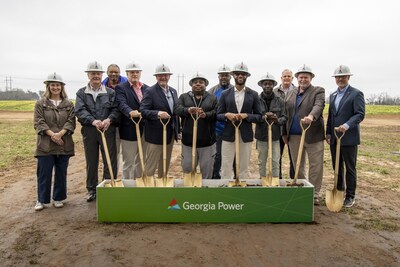
ATLANTA, March 31, 2026 /PRNewswire/ — Georgia Power recently started construction on a new 260 megawatt (MW) battery energy storage system (BESS) in Jefferson County, Ga. just outside of the City of Wadley. The project, approved by the Georgia Public Service Commission (PSC), is located beside the existing third-party owned Wadley solar facility and near existing transmission infrastructure. The new Wadley BESS is a company-owned asset that strengthens the grid and the area’s growing renewable energy resources.

Members of the Jefferson County Board of Commissioners, the Wadley City Council, and other community partners joined Georgia Power leaders to break ground on the project, underscoring the strong partnerships that will help bring this project to life. The event spotlighted not only the importance of the project but also the lasting economic impact and benefits it will bring to Jefferson County.

“On behalf of the Jefferson County community, we welcome this Georgia Power project,” said Mitchell McGraw, chairman of the Jefferson County Board of Commissioners. “We’re so proud to have your investment in Jefferson County, and we hope for more in the future.”

Designed to quickly dispatch stored energy over a four-hour period, the 260 MW system will strengthen reliability and support the growing mix of renewable resources on Georgia’s electric system. At this battery and solar co-located facility, battery energy storage helps capture power generated by renewable resources to use during peak demand periods, such as on cold winter mornings. Battery energy storage helps capture renewable resources produced during periods when the demand for electricity is lower, to use when the demand is higher, such as on cold winter mornings. These projects help to address the state’s growing power needs identified in the 2025 Integrated Resource Plan (IRP) in a cost-effective and strategic manner.

“At Georgia Power, our collaboration with the Georgia PSC and other stakeholders is key to making necessary investments for a reliable and resilient power grid,” said Kerry Bridges, region executive for Georgia Power. “With the construction of the 260 MW BESS in Jefferson County, we are able to better serve our customers today and support Georgia’s growth. As we expand our energy mix to include more renewable sources, these batteries will play an invaluable role in helping ensure reliability and flexibility, particularly when renewable sources are not available.”

The Wadley BESS project, constructed by Burns & McDonnell, is expected to be completed in 2027.

Georgia Power adding BESS statewide
Across the state, Georgia Power is nearing completion of four new BESS facilities totaling 765 MW in Bibb, Cherokee, Floyd, and Lowndes counties, projects previously approved in the 2023 IRP Update.

Building on this momentum, the Georgia PSC approved the construction of nine new BESS facilities strategically placed on seven sites throughout the state, adding nearly 3,000 MW of additional planned storage. The sites were strategically selected based on deployment capabilities, including the opportunity to locate additional resources at existing company plant sites, existing company-owned land, and proximity to substations or current company facilities. New BESS facilities include locations at Plants Bowen, Hammond, McIntosh, Wansley and Yates and stand-alone locations in Hall and McDuffie counties.

To support the increasing demand for renewable energy, the company is also planning two new state-of-the-art solar systems paired with battery storage for a combined capacity of 350 MW. These projects are designed to maximize high solar irradiance, while minimizing land disturbance. New solar + BESS projects include locations in Laurens and Dougherty County.

About Georgia Power
Georgia Power is the largest electric subsidiary of Southern Company (NYSE: SO), America’s premier energy company. Value, Reliability, Customer Service and Stewardship are the cornerstones of the company’s promise to 2.8 million customers in all but four of Georgia’s 159 counties. Committed to delivering clean, safe, reliable and affordable energy, Georgia Power maintains a diverse, innovative generation mix that includes nuclear, coal and natural gas, as well as renewables such as solar, hydroelectric and wind. Georgia Power offers rates below the national average, focuses on delivering world-class service to its customers every day and the company is recognized by J.D. Power as an industry leader in customer satisfaction. For more information, visit www.GeorgiaPower.com and connect with the company on Facebook (Facebook.com/GeorgiaPower), X (X.com/GeorgiaPower) and Instagram (Instagram.com/ga_power).

Cautionary note regarding forward-looking statements
Certain information contained in this release is forward-looking information based on current expectations and plans that involve risks and uncertainties. Forward-looking information includes, among other things, statements concerning the expected completion date for the Wadley BESS project. Georgia Power cautions that there are certain factors that can cause actual results to differ materially from the forward-looking information that has been provided. The reader is cautioned not to put undue reliance on this forward-looking information, which is not a guarantee of future performance and is subject to a number of uncertainties and other factors, many of which are outside the control of Georgia Power; accordingly, there can be no assurance that such suggested results will be realized. The following factors, in addition to those discussed in Georgia Power’s Annual Report on Form 10-K for the year ended December 31, 2025 and subsequent securities filings, could cause actual results to differ materially from management expectations as suggested by such forward-looking information: the ability to control costs and avoid cost and schedule overruns during the development, construction and operation of facilities or other projects due to challenges which include, but are not limited to, changes in labor costs, availability, and productivity, challenges with the management of contractors or vendors, subcontractor performance, adverse weather conditions, shortages, delays, increased costs or inconsistent quality of equipment, materials and labor, contractor or supplier delay, the impacts of inflation and trade policies (including tariffs and other trade measures) of the United States and other countries, delays due to judicial or regulatory action, nonperformance under construction, operating or other agreements, operational readiness, including specialized operator training and required site safety programs, engineering or design problems or any remediation related thereto, design and other licensing-based compliance matters, challenges with start-up activities, including major equipment failure, or system integration and/or operational performance, challenges related to future epidemic or pandemic health events, continued public and policymaker support for projects, environmental and geological conditions, delays or increased costs to interconnect facilities to transmission grids and increased financing costs as a result of changes in interest rates or as a result of project delays; legal proceedings and regulatory approvals and actions related to past, ongoing and proposed construction projects; the ability to construct facilities in accordance with the requirements of permits and licenses, to satisfy any environmental performance standards and the requirements of tax credits and other incentives and to integrate facilities into the Southern Company system upon completion of construction; and catastrophic events such as fires, including wildfires, land movement, earthquakes, explosions, floods, high winds, tornadoes, hurricanes and other storms, solar flares, droughts, future epidemic or pandemic health events, wars, political unrest, or other similar occurrences. Georgia Power expressly disclaims any obligation to update any forward-looking information.
Cision View original content to download multimedia:https://www.prnewswire.com/news-releases/georgia-power-begins-construction-of-newest-battery-storage-system-in-wadley-ga-302730157.html

SOURCE Georgia Power

By

There’s no denying that Artificial Intelligence (AI) has become one of the fastest growing and largest areas of enterprise technology investment and innovation in recent years. Given there are so many practical applications for this technology, it’s no surprise that AI is supporting mainstream use cases, ranging from healthcare and life sciences to semiconductor and chip manufacturing, automotive, financial services, and beyond.

While generative AI tools such as ChatGPT have dominated the headlines in recent months, the reality is that AI has been present for a number of years. However, the latest wave of widely accessible generative AI tools is resulting in more machine generated data than ever before, and this is driving the unprecedented growth of unstructured data worldwide. In fact, IDC predicts that by 2025, the total amount of digital data created globally will rise to 175 zettabytes (from approximately 40 zettabytes in 2019). This estimate can actually be considered conservative, given the surge in AI-generated data we are seeing today.

In a somewhat perpetual cycle, greater volumes of data and the acceleration of AI means a bigger opportunity for businesses to turn this information into actionable intelligence, to innovate faster than their competitors, increase customer satisfaction, streamline operations, and ultimately become a more successful company. However, just as we refine oil into useful products such as fuel and plastics, data must also be refined before it can provide value. This is where data analytics (increasingly AI-based) comes in.

How Can Businesses Succeed with AI Projects?

In order to power AI, and AI-based data analytics, organizations need a flexible, reliable, performant, and perhaps most importantly, sustainable data storage infrastructure in place.

  1. Performance is key because AI relies on sending massive amounts of data into GPUs, over and over again. The faster organizations do that, the quicker and better results they get. AI resources (GPUs, data scientists) are expensive and in high-demand, so keeping them waiting on access to data can lead to a hefty bill. Just as important as feeding the GPUs, is accelerating the whole data preparation and curation workflows, helping to collect and process the data in the first place.
  2. Flexibility comes in as AI is easily the most rapidly evolving space in technology – tools, techniques, data-sets and use-cases are evolving every single day. As a result, it’s critical to invest in technology and infrastructure choices that are going to allow organizations to adapt to changes quickly.
  3. Enterprise reliability and controls are more important to organizations than ever with AI environments. These are mission critical environments, and any downtime can lead to exorbitant costs. As a result, availability and reliability are essential. Additionally, AI projects are often large sprawling projects and heavily automated. Having controls around quotas, security, and ease of management is critical.
  4. Last but certainly not least is one of the planet’s most pressing concerns, sustainability.

Why Do Businesses Need to Run AI Sustainability?

Current estimates have data centers accounting for between one to four percent of all global energy consumption. In fact, in some countries datacenter expansion has been halted because they cannot access adequate power. AI is not going anywhere, and overall it will be an overwhelmingly positive tool for humanity, helping us automate repetitive tasks, treat diseases more effectively, and better understand our world through weather and climate patterns. However, from an environmental perspective, it only adds to energy consumption and carbon footprint concerns. In the wake of this immense challenge and opportunity, building an efficient and sustainable technology infrastructure for AI is critical to mitigating global warming and the worst impacts of climate change.

How Can Customers Capitalize on AI in a Sustainable Way?

As data volumes grow and high performance becomes mainstream as a requirement for AI, sustainability concerns come to the fore. As these needs increase, so do costs in terms of power, cooling and the space to house equipment. In today’s context of soaring energy prices this is not only an environmental issue, but an operational and financial challenge for businesses too.

Fortunately, some companies are designing and building products and delivering services that allow customers to dramatically decrease their own environmental footprints. For example, all-flash storage solutions are considerably more efficient than their spinning disk (HDD) counterparts. What’s more, flash storage is much better suited to running AI projects.

This is because the key to results is connecting AI models or AI powered applications to data. To do this successfully you need lots of data, this data can’t be cold, and crucially data needs to be easily accessible, across silos and applications. This simply isn’t possible with HDD based storage underpinning your operations, all-flash is needed.

To further bolster the adoption of sustainable technology choices, consider whether your organization has a sustainability officer, someone responsible for the company’s overall carbon footprint. Involve those stakeholders at the beginning of the process to ensure no stone goes unturned on your journey to sustainable AI.

How Can You Prepare for Success?

To prepare for a world in which ever-growing amounts of unstructured data will be the subject of much-increased use of AI analytics, companies will need storage in colossal volumes that offers rapid access and is efficient in sustainability terms.

Businesses should look for vendors with a roadmap for high density flash storage capacity that can handle workloads from the most performance-hungry to those currently categorized as secondary but which will gain in importance with the rise of constant AI processing. Companies should also evaluate vendor purchasing options that can build in seamless capacity and technology upgrades for years ahead.

Lastly, organizations should look for all-flash storage providers that can demonstrate third-party verified ESG metrics, so that AI projects can be executed without damaging the environment, and their bottom line.

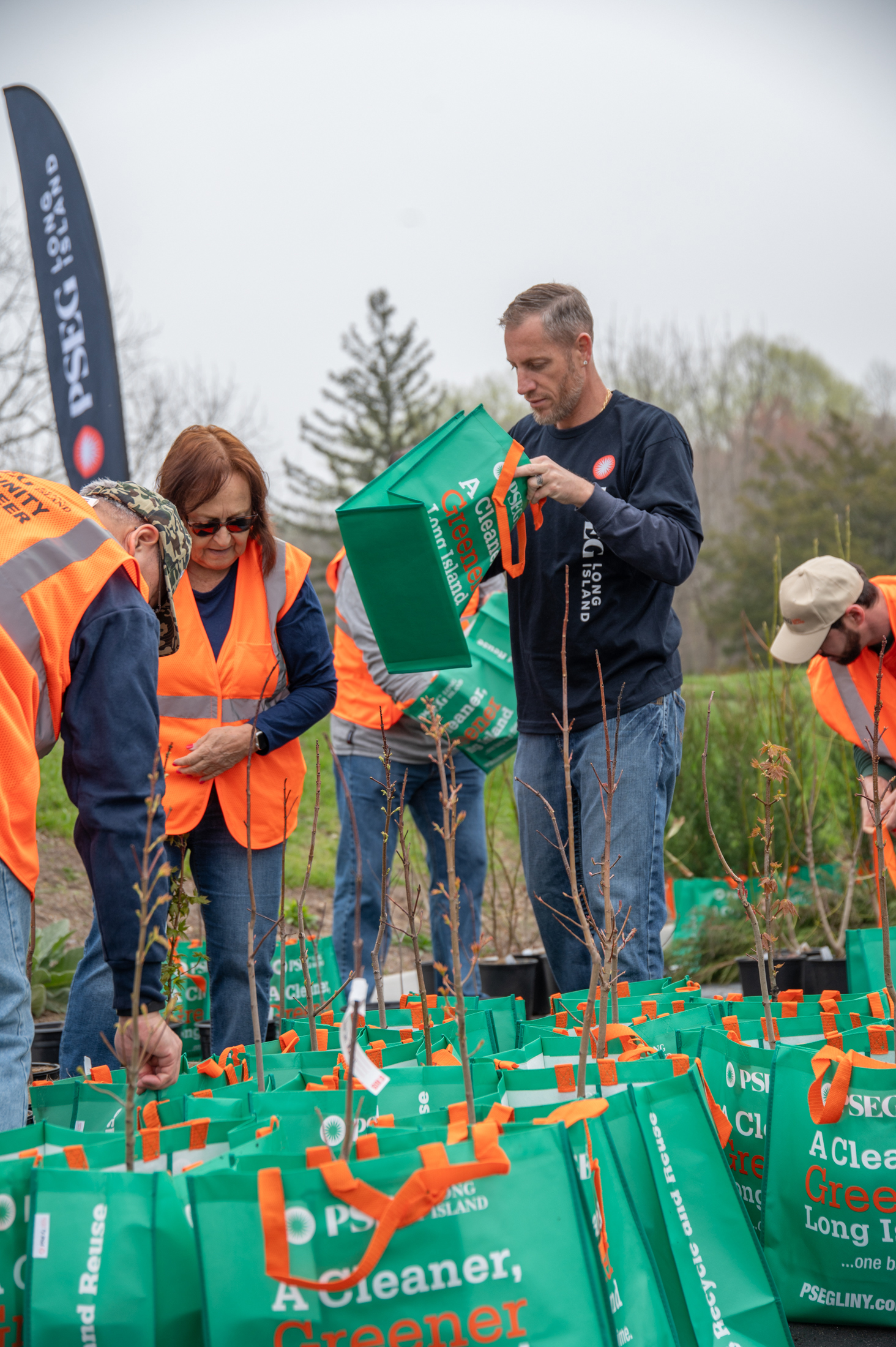
UNIONDALE, N.Y., March 31, 2026 /PRNewswire/ — PSEG Long Island is celebrating Earth Day all month long by distributing free trees and handing out LED lightbulbs and reusable shopping bags throughout Long Island and the Rockaways.

Experience the full interactive Multichannel News Release here: https://www.multivu.com/pseg-long-island/9334151-en-pseg-long-island-is-celebrating-earth-day-all-month-long

To read the full press release, click here.

“At PSEG Long Island, Earth Day is a time to showcase the ways that we can help the environment and also help drive affordability over the long term,” said Scott Jennings, PSEG Long Island’s president and COO. “Customers who strategically plant trees in their yards can save up to 20% on their home’s summer energy bills once the trees are fully grown, while also improving air quality and reducing storm water runoff across Long Island and the Rockaways.”

Energy Saving Trees giveaway
PSEG Long Island, Suffolk County and the Rockaway Initiative for Sustainability and Equity (RISE) are partnering with the PSEG Foundation and the Arbor Day Foundation to provide 500 customers with a free tree. For customers in Suffolk and Nassau counties, the trees can be reserved at https://get.arborday.org/pseg starting Wednesday, April 1, until all trees are claimed.

“Trees add beauty to neighborhoods and provide places of respite, along with many other benefits such as helping reduce energy consumption and filter pollutants that may negatively affect community health and wellbeing,” said Calvin Ledford, president of the PSEG Foundation. “The PSEG Foundation is proud to support the Energy-Saving Trees program.”

LED lightbulbs and shopping bags
PSEG Long Island volunteers will also be in local communities throughout the month to distribute reusable bags and free LED lightbulbs to save customers money and energy.

For more information, visit www.psegliny.com/earthday.

PSEG Long Island
PSEG Long Island operates the Long Island Power Authority’s transmission and distribution system under a long-term contract. PSEG Long Island is a subsidiary of Public Service Enterprise Group Inc. (PSEG) (NYSE:PEG), a publicly traded diversified energy company.

Visit PSEG Long Island at:
psegliny.com
PSEG Long Island on Facebook
PSEG Long Island on Instagram
PSEG Long Island on X (formerly Twitter)
PSEG Long Island on LinkedIn
PSEG Long Island on YouTube
PSEG Long Island on Flickr

About PSEG Foundation
The PSEG Foundation 501(c)(3), the philanthropic arm of Public Service Enterprise Group (PSEG) (NYSE:PEG), prioritizes investments in promoting environmental sustainability, social justice, and equity and economic empowerment.

Contact: Media Relations Pager
516.229.7248
mediarelationsLI@psegliny.com

PSEG Long Island Celebrates Earth Month
78314


Cision View original content:https://www.prnewswire.com/news-releases/pseg-long-island-celebrates-earth-month-with-free-trees-302730140.html

SOURCE PSEG Long Island

https://www.youtube.com/embed/CkHAGfYAPkk?autoplay=0

WASHINGTON, March 31, 2026 /3BL/ – As millions of families and workers continue to face financial pressure and rising costs, Prosperity Now announced that it has received a $1 million dollar Wells Fargo Foundation grant to support IRS-certified Volunteer Income Tax Assistance (VITA) organizations nationwide. This grant expands access to trusted, no-cost tax return preparation services and helps more workers and families claim the refunds and credits they have earned.

The philanthropic investment will strengthen community-based VITA organizations and expand Prosperity Now’s efforts to provide grants, training, and technical assistance to providers across the country. These programs ensure eligible individuals can prepare accurate tax returns and claim refundable credits for which they qualify, including the Earned Income Tax Credit (EITC) and Child Tax Credit (CTC).

Each year, millions of eligible individuals do not claim valuable tax credits. In 2025, approximately 24 million workers and families benefited from the EITC, receiving nearly $70 billion in total credits, with an average refund of $2,894. For many households, a tax refund represents one of the largest single payments they receive all year, helping cover essential expenses such as housing, groceries, childcare, utilities, and education.

“At a time when families continue to navigate rising costs, access to trusted, no-cost tax return preparation is more important than ever,” said Marisa Calderon, President and CEO of Prosperity Now. “We are deeply grateful to the Wells Fargo Foundation for this philanthropic investment, which will allow us to expand support for VITA organizations and help more families access the full refunds and credits they’ve earned.”

Professional tax preparation services can be costly, with average fees for a basic return often exceeding $200. For households managing tight budgets, those fees can create additional strain. VITA programs help remove that barrier by offering trusted, no-cost tax return preparation services in community settings.

“At Wells Fargo, we believe that financial health is the foundation for opportunity,” said Bonnie Wallace, Head of Financial Opportunity Philanthropy for Wells Fargo. “That belief is what connects us so strongly to Prosperity Now’s vision: ensuring every individual and family has access to the tools they need to build stability and long-term prosperity. Our commitment to help strengthen VITA sites nationwide will expand access for families and connect tax time with broader financial opportunities.

Prosperity Now works with hundreds of VITA organizations across the country through its Tax Opportunity Network, the nation’s leading professional network for practitioners and organizations providing tax preparation services. Through this investment, Prosperity Now will provide grants as well as year-round training, technical assistance, and peer learning opportunities to help VITA providers strengthen service delivery and expand access to tax assistance in their communities.

###

About Prosperity Now

Since 1979, Prosperity Now has been a trusted leader in strengthening financial security, expanding access to capital, and ensuring economic stability for businesses, families, and communities. Learn more at www.prosperitynow.org.

Contact:
Lobna Hassairi (202) 250-9168
media@prosperitynow.org

PITTSBURGH, March 31, 2026 /3BL/ – The PNC Financial Services Group, Inc., is kicking off Great Month, its annual celebration of PNC Grow Up Great® and high-quality early childhood education, by announcing new initiatives with two longtime collaborators.

The PNC Foundation announced a $6.2 million grant to Sesame Workshop to support a multi-year school readiness effort focused on outdoor and play-based learning. This initiative will develop new resources to help young children build school readiness skills in science, math and literacy, and will encourage them to explore their interests and form connections that support early learning.

Available this week at sesameworkshop.org and pncgrowupgreat.com are new Sesame Street Muppet videos, printable activity sheets, articles and an outdoor science web-based adult learning app. A Sesame Street “Go Outside…Grow Outside” growth chart will be available April 1 in PNC branches.

Research shows that outdoor and play-based learning can strengthen science, literacy and math skills while supporting physical development and emotional well-being. Many young children, however, have limited opportunities for safe outdoor play and hands-on exploration, particularly in under-resourced communities. The initiative responds to this need by giving parents, caregivers and educators practical tools that make experiential learning easier to integrate into daily routines.

“We know that all experiences can spark learning, especially when a child is curious about what’s around them,” said Sally McCrady, chair and president of the PNC Foundation. “These new resources will help families build on children’s curiosity to learn through simple daily activities, from counting bounces of a ball at the playground to noticing how birds blend into tree branches.”

“Our longstanding partnership with PNC Foundation helps inspire children’s curiosity about their environment,” said Kama Einhorn, senior director of Content Design at Sesame Workshop. “By encouraging outdoor exploration, we nurture a sense of wonder and discovery that is essential for lifelong learning, helping every child connect with nature and develop critical skills for the future.”

Additionally, to continue the momentum of Great Month, PNC Grow Up Great has fully funded nearly 1,000 DonorsChoose classroom projects totaling nearly $600,000, submitted by public pre-K and Head Start teachers in the communities where PNC employees live and work. The projects align with the mission and focus areas of PNC Grow Up Great, with supplemental support directed to needs related to health, sports and wellness, and warmth, care and hunger. PNC and DonorsChoose, an education nonprofit that allows individuals to donate directly to classroom projects, have collaborated since 2017 to help teachers obtain quality resources and experiences for students in public pre-K, public charter and Head Start classrooms. The $20 million alliance has used flash funds, match offers, DonorsChoose gift codes and jumpstart donations to support early childhood learning.

In April, PNC Grow Up Great and DonorsChoose will build on this support by spotlighting the creativity of early childhood educators who are designing innovative outdoor play and learning experiences. During Great Month, public pre-K and Head Start teachers in PNC communities will be invited to submit outdoor-focused classroom projects through DonorsChoose. Qualifying projects will receive a $500 jumpstart donation from PNC Grow Up Great to help expand hands-on learning and exploration for young learners.

To empower employee volunteerism and participation in PNC’s volunteer grant program, PNC announced that beginning April 1, volunteer grants will double for individual and team volunteers. Previously offered as Double the Impact grants during occasions such as PNC Grow Up Great’s 20th anniversary in 2024, the new amounts range from a $2,000 grant for an individual who volunteers 40 hours with an approved partner to $6,000 for a four- to 10-person team that combines for 100 hours. PNC’s paid volunteerism policy provides employees up to 40 hours of paid time off each year to volunteer with approved organizations, and volunteers have earned more than $12 million in grants for PNC Grow Up Great partners. This year, employees can support outdoor learning by assembling Discover Math in Nature! activity kits, reading nature-themed books in pre-K classrooms, and assembling bird houses, bug hotels and sunshine crafts.

The PNC Foundation, which receives its principal funding from The PNC Financial Services Group, Inc. (NYSE: PNC), actively supports organizations that provide services for the benefit of communities in which it has a significant presence. The Foundation focuses its philanthropic mission on early childhood education and community and economic development, which includes the arts and culture. Through PNC Grow Up Great®, its signature cause that began in 2004, PNC has created a bilingual $500 million, multi-year initiative to help prepare children from birth to age 5 for success in school and life. For more information, visit http://www.pncgrowupgreat.com.

# # #

CONTACT:

Angie Carducci
(412) 762-9186
angela.carducci@pnc.com