West Side Market vendors and staff, Cleveland Mayor Justin Bibb, and others will officially open the newly renovated KeyBank Produce Arcade during a ribbon cutting ceremony at 1pm on Wednesday, January 14. The arcade’s re-opening marks the first completed portion of the Market’s larger $70 million transformation project.

Previous: KeyBank to Give $1.5 Million to West Side Market’s Transformation Project and Food Access Programming, New Produce Arcade to be Named in Their Honor

The renovated Arcade, named in recognition of KeyBank’s generous and early support of the project, will be home to all of the Market’s produce vendors, with new amenities and enhanced experiences for customers and vendors alike.

“We are thrilled to welcome Market shoppers into our renovated produce arcade and are grateful for KeyBank’s investment that made these renovations possible,” says Rosemary Mudry, Executive Director for Cleveland Public Market Corporation (CPMC), the non-profit that manages the Market. “What’s exciting is how this showcases the real vision for the whole project: preserved history, enhanced experiences, and all of our customers’ favorite vendors are still here.”

Improvements include climate controlling the full arcade space, with HVAC providing a more comfortable environment for vendors and shoppers, and improving product shelf-life. Refrigerated cases keep produce fresher for longer, while walk-in stands improve customer access to product. Future improvements will include direct elevator access from the Produce Arcade to basement storage.

“The needs of our vendors are at the core of the Market’s masterplan,” explains David Abbott, President of CPMC’s Board of Trustees. “Improvements to the Market’s infrastructure and physical support systems, balanced with layering on new experiences that meet evolving customer demand, will ensure the Market is a place where small business owners can thrive for the next century.”

West Side Market is a vital access point to fresh, healthy food within the C ity of Cleveland. Recent customer research indicates that as many as 33% of the Market’s visitors live within the City of Cleveland, and more than 25% of the Market’s shoppers qualify for SNAP/EBT benefits. The majority of eligible Market vendors accept SNAP/EBT. An improved Produce Arcade, which will also host educational and nutrition programming in the future, will endure as an important resource to the community.

“KeyBank is thrilled to welcome guests to the reimagined arcade at Cleveland’s iconic West Side Market,” said Eric Fiala, KeyBank Chief Corporate Responsibility Officer and CEO, KeyBank Foundation. “This investment reflects our deep commitment to our hometown by improving access to fresh, healthy food for families and creating new opportunities for the small businesses that make the Market a cornerstone of our community. We’re proud to help preserve this historic landmark and ensure it continues to thrive as a vital resource for generations to come.”

Amidst the excitement, Mudry emphasizes that customers be patient and support the Market’s produce vendors.

“While these changes to our arcade are important, they are still changes that will take everyone some time to adjust to,” says Mudry. “We encourage our shoppers to come to the Market and support their go-to merchants as they adjust to their new surroundings.”

The opening of the arcade also marks temporary changes to how many customers enter the Market. From the parking lots, visitors will now enter the KeyBank Produce Arcade and can enter the Market Hall along Lorain Avenue on the building’s south side. The North Arcade and the alley between it and the Market Hall are temporarily closed for construction.

CPMC has raised more than $58 million of the total $70 million project budget to date. Construction for other major infrastructure improvements, including overhauling the Market’s food storage and preparation spaces in the basement, as well as adding power generators and a new refrigeration system, is currently underway. Future enhancements, including expanded seating, an outdoor courtyard, an educational kitchen, and a prepared food space, are still to come.

“We are hopeful this day inspires more support from our community,” says Abbott. “We will not stop until we bring the full transformation vision to life, so that the Market can truly be called the best public market in America.”

West Side Market is owned by the City of Cleveland. CPMC took over operations of the Market in April of 2024.

ABOUT THE MARKET’S MASTERPLAN

The masterplan is the vision for the Market’s future. It includes $70 million in capital renovations that will improve daily operations and create opportunities for community building and revenue generation as the groundwork for the West Side Market’s next 100 years. The masterplan’s four main goals include:

  1. Restoring infrastructure and operating systems
    • Including a complete basement renovation
  2. Expanding the Market’s community impact with neighborhood food access, education, and entrepreneurship programs
  3. Enhancing the Market experience by reimagining underused spaces, including:
    • Renovated North Arcade featuring prepared food hall with local businesses
    • Landscaped courtyard with seating
    • Expanded options for public indoor seating
    • Event space in the East Mezzanine
    • Teaching kitchen
    • Commercial kitchen
  4. Implementing a sustainable operating model through development of new revenue sources

The full plan can be viewed at westsidemarket.org.

ABOUT CLEVELAND PUBLIC MARKET CORPORATION

Cleveland Public Market Corporation strives to make West Side Market the nation’s premier public market by meeting the evolving needs of merchants, customers, and the community. CPMC preserves the city’s public market tradition while making the local food system more accessible, equitable, and diverse.


###
Posted in UncategorizedTagged

As we enter 2026, sustainability is starting to function more as a core business discipline rather than a standalone initiative. The public, private, and civic sectors are applying sustainability strategies to improve energy efficiency, reduce operating costs, strengthen supply chain resilience, and manage long-term risk — much of which is supported by advances in circularity, modern energy systems, artificial intelligence (AI), and emerging quantum technologies.

But progress requires coordination, credible data, and solutions designed to scale. These needs are increasingly impacting the priorities of our customers and partners, and as a result, are now firmly on the boardroom agenda. And across sectors, organizations are incorporating sustainability decisions into operational and technology decisions in response to changing market conditions and AI-era innovations. Here are the trends we expect to take shape in the year ahead.

  1. Sustainability becomes a more structured and strategic business discipline.

    Organizations are increasingly treating sustainability as a core business priority — integrating energy efficiency, energy security, operational resilience, and circularity into day-to-day operations and long-term planning.

    In parallel, global standards and reporting practices are becoming more aligned — particularly for multinational organizations navigating different rules and requirements. Frameworks such as the International Sustainability Standards Board (ISSB) and the European Sustainability Reporting Standards (ESRS) are converging toward clearer guidance on sustainability-related reporting. While approaches vary by jurisdiction, disclosure is now common practice among large enterprises. According to the Organisation for Economic Co-operation and Development (OECD), 91 percent of large companies now disclose sustainability-related information.

    At Cisco, sustainability is one component of our business strategy — helping to inform how we design products and build partnerships to improve efficiency, circularity, and system performance. This approach is reflected in our investment strategy as well, including support for innovators such as CorPower Ocean, whose wave energy technologies represent promising new models for reliable, clean power generation.

  2. Circularity advances from recycling to design-led systems thinking.

    Circularity is becoming an integral part of design and operations strategy — shaping decisions across material selection, engineering, manufacturing, and product life cycle planning. Organizations are moving beyond traditional end-of-life recycling and embedding circularity earlier in the design process — reducing waste upfront, extending useful life, and keeping materials in use longer. Emerging tools such as digital twins allow teams to model product life cycles, evaluate material impacts, and plan for reuse before anything is built — making circular design more practical to implement and embed into everyday engineering decisions. At Cisco, we are proud to be at the forefront of this shift. We recently reached our goal of embedding Circular Design Principles into 100 percent of new products and packaging, demonstrating how circularity is becoming a core sustainability capability.

  3. Innovation scales across systems, from secure grid modernization to microgrids.

    After years of pilots, innovation is being deployed more broadly across both large-scale infrastructure and localized solutions — from smart buildings to neighborhood-level microgrids. Public sector modernization programs, rising resilience requirements, and the need for secure, reliable energy systems are accelerating this transition.

    At Cisco, we are supporting this shift through secure, scalable networking and smart building technologies — along with continued investment in energy-efficient design. Cisco Silicon One, for example, delivers industry-leading performance per watt — helping organizations modernize infrastructure with lower energy consumption and greater capacity. These advances enable utilities and communities alike to deploy energy solutions that are more reliable, resilient, secure, and ready for the future.

  4. AI continues to reshape the energy equation.

    As enterprises scale AI workloads, electricity demand is rising. Data center grid demand in the United States alone is forecast to nearly triple by 2030. AI-optimized servers, which currently represent about 21 percent of data center electricity usage, could account for 44 percent by 2030 — placing new demands on secure and resilient energy infrastructure.

    These trends are prompting organizations to rethink efficiency, load management, and the infrastructure required to support AI at scale. Cisco is helping customers prepare for this shift by optimizing networks and operations for greater efficiency, visibility, and security, so that infrastructure is ready to support increasingly complex workloads.

  5. Quantum moves from concept to preparation.

    Quantum computing remains an emerging field, but 2026 marks a shift from curiosity to preparation. Organizations are beginning to plan for quantum-safe networks, next-generation cryptography, and early simulation capabilities that could eventually accelerate advances in materials science, energy systems, and climate modeling.

    The priority now is readiness. That means building infrastructure and security practices that can evolve as quantum technologies mature. Industry partnerships, including Cisco’s collaboration with IBM to develop fault-tolerant quantum systems, reflect early steps toward this future as organizations focus on long-term security, resilience, and trust.

Looking ahead, progress across all these areas will depend on deeper collaboration across industries, governments, and communities, and on technology choices designed for longevity, security, and adaptability. We anticipate that more organizations will integrate sustainability considerations into core planning as they modernize infrastructure and prepare for emerging technologies.

The organizations that lead will be those that integrate sustainability into core planning, modernize infrastructure with intention, and prepare today for the technologies that will shape tomorrow.

At Cisco, we remain focused on enabling that future by reducing environmental impact, strengthening resilience, and helping our customers design systems that are secure, adaptable, and built to perform as demands evolve.

View original content here.

Posted in UncategorizedTagged

Originally published on January 1, 2026 on LinkedIn.

We’re excited to announce that Sysco Canada has been named one of Atlantic Canada’s Best Places to Work 2026 by Atlantic Business Magazine

This award spotlights companies that excel in areas essential to exceptional workplaces: corporate culture, work/life balance, DEI, benefits/remuneration, incentives, and career development. 

What sets us apart?

  • Flexible, hybrid work models offering the ideal balance of remote and in-office time
  • Competitive compensation, including annual base reviews tied to performance and corporate results
  • Recognition programs celebrating achievements with peer-nominated awards and travel/cash incentives
  • Investment in growth, including $2,500/year tuition reimbursement and tailored development plans
  • ESG impact, featuring route optimization to cut emissions and Canada’s largest food recovery initiative
  • Comprehensive health coverage, including mental health support and virtual care

This award underscores our dedication to being an employer of choice in Atlantic Canada—prioritizing growth, balance, inclusion, and impact.

Interested in joining a Purpose-driven workplace where your well‑being and growth really matter? Explore opportunities here: sysco.ca/careers

View original content here.

About Sysco

Sysco is the global leader in selling, marketing and distributing food products to restaurants, healthcare and educational facilities, lodging establishments and other customers who prepare meals away from home. Its family of products also includes equipment and supplies for the foodservice and hospitality industries. With more than 76,000 colleagues, the company operates 340 distribution facilities worldwide and serves approximately 730,000 customer locations. For fiscal year 2024 that ended June 29, 2024, the company generated sales of more than $78 billion. Information about our Sustainability program, including Sysco’s 2023 Sustainability Report and 2023 Diversity, Equity & Inclusion Report, can be found at www.sysco.com.

 For more information, visit www.sysco.com or connect with Sysco on Facebook at www.facebook.com/SyscoFoods. For important news and information regarding Sysco, visit the Investor Relations section of the company’s Internet home page at investors.sysco.com, which Sysco plans to use as a primary channel for publishing key information to its investors, some of which may contain material and previously non-public information. In addition, investors should continue to review our news releases and filings with the SEC. It is possible that the information we disclose through any of these channels of distribution could be deemed to be material information.

Posted in UncategorizedTagged

Originally published on January 6th, 2025 on LinkedIn

Local fields. Local expertise. Local food.

For more than 30 years, Welgro Produce has been growing Brussels sprouts in Swords, with a third generation now carrying the family tradition forward. Harvested across more than 160 acres, their fresh Irish sprouts are delivered to customers within hours of picking.

Sysco is proud to partner with Welgro to support local growers, sustainable farming practices, and the producers who keep food close to home. Because when we invest in local farms, we strengthen local food systems and communities.

About Sysco

Sysco is the global leader in selling, marketing and distributing food products to restaurants, healthcare and educational facilities, lodging establishments and other customers who prepare meals away from home. Its family of products also includes equipment and supplies for the foodservice and hospitality industries. With more than 76,000 colleagues, the company operates 340 distribution facilities worldwide and serves approximately 730,000 customer locations. For fiscal year 2024 that ended June 29, 2024, the company generated sales of more than $78 billion. Information about our Sustainability program, including Sysco’s 2023 Sustainability Report and 2023 Diversity, Equity & Inclusion Report, can be found at www.sysco.com.

For more information, visit www.sysco.com or connect with Sysco on Facebook at www.facebook.com/SyscoFoods. For important news and information regarding Sysco, visit the Investor Relations section of the company’s Internet home page at investors.sysco.com, which Sysco plans to use as a primary channel for publishing key information to its investors, some of which may contain material and previously non-public information. In addition, investors should continue to review our news releases and filings with the SEC. It is possible that the information we disclose through any of these channels of distribution could be deemed to be material information.

View original content here.


Posted in UncategorizedTagged

Commemorating One Year Since Onset of the LA Fires, BofA Grant Brings Record-Pace Capital Campaign Closer to Completion

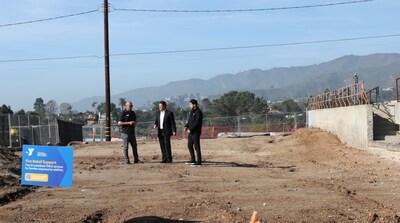
PACIFIC PALISADES, Calif., Jan. 9, 2026 /PRNewswire/ — In recognition of the one-year anniversary of the Los Angeles wildfires, Bank of America announced a $1 million grant to the YMCA of Metropolitan Los Angeles to help rebuild the Lowe Family YMCA serving the Palisades-Malibu community that was destroyed by the fires. The BofA grant is the first and largest corporate award to date for the YMCA’s $25 million capital campaign that was launched over the summer. The project is expected to break ground this spring, bringing new facilities and additional programs for working families and seniors in the community.

“As we mark the first anniversary of the devastating fires, we also celebrate the incredible progress of the YMCA’s efforts to rebuild its destroyed Via de la Paz site and a nearby campus,” said Raul Anaya, Bank of America president for Greater Los Angeles. “The wildfires destroyed so much – thousands of homes, businesses and communities – but it never destroyed L.A.’s spirit. As a longtime supporter of the YMCA, we’re proud to help bring this space back to life for so many residents, and encourage other donors to help bring this important effort over the finish line.” 

“We are deeply grateful to Bank of America for their generosity and for being our first corporate donor to this campaign,” said Victor Dominguez, President and CEO of the YMCA of Metropolitan Los Angeles. “Our corporate partners are critical to engaging our full communities in the rebuilding process. As the Center for Community Well-Being with dozens of locations across the L.A. region, we activated on day one of the fires to support our communities. We will continue to help Palisades rebuild not just the buildings, but the community and connections that make it so special.”

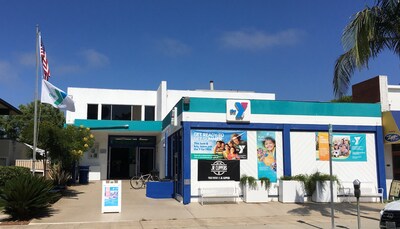
The Lowe Family YMCA has served Palisades and Malibu area children, families and seniors for over 60 years. In response to the widespread displacement and trauma caused by the fires, the YMCA of Metropolitan Los Angeles quickly mobilized through nearby centers and partner sites to deliver emergency childcare, case management, and trauma-informed care to thousands of residents.

These efforts continue today, but the long-term recovery of the community depends on restoring a permanent YMCA presence in the area. The YMCA of Metropolitan Los Angeles has committed to replace the burned site with two new resilient campuses – one on the original Via de la Paz site and one at the nearby Simon Meadow site. The dual campus will expand programming around youth development, mental health services, emergency preparedness and multigenerational engagement.

In recognition of Bank of America’s leading corporate donation, the new Community Room at the Palisades Via De La Paz club will be named for Bank of America.

Having extensive experience supporting clients and communities through various disasters, Bank of America’s expertise, capital and connections continues to support LA’s next chapter. Today’s $1 million grant brings its philanthropic contributions to $4.5 million for fire recovery needs. In addition, BofA recently announced $10 million in zero-interest capital to three CDFIs for ongoing business and housing needs; and a new Rebuild Solution to help qualifying mortgage clients rebuild their homes. The bank will also rebuild its destroyed financial centers in Pacific Palisades and Altadena; and continues providing recovery-related thought leadership and employee volunteerism to local nonprofits.

For more information on Bank of America’s relief efforts, go to BankofAmerica.com/LARebuild. To donate towards the Lowe Family YMCA capital campaign, go to YMCALA.org/give/.

Bank of America
Bank of America is one of the world’s leading financial institutions, serving individual consumers, small and middle-market businesses and large corporations with a full range of banking, investing, asset management and other financial and risk management products and services. The company provides unmatched convenience in the United States, serving nearly 70 million consumer and small business clients with approximately 3,600 retail financial centers, approximately 15,000 ATMs (automated teller machines) and award-winning digital banking with approximately 59 million verified digital users. Bank of America is a global leader in wealth management, corporate and investment banking and trading across a broad range of asset classes, serving corporations, governments, institutions and individuals around the world. Bank of America offers industry-leading support to approximately 4 million small business households through a suite of innovative, easy-to-use online products and services. The company serves clients through operations across the United States, its territories and more than 35 countries. Bank of America Corporation stock (NYSE: BAC) is listed on the New York Stock Exchange.

YMCA of Metropolitan Los Angeles
As the Center for Community Well-Being the LA Y is committed to building stronger communities by providing equitable programs and services to empower all Angelenos. We are focused on fighting food insecurity, providing equity in education, making sure every child has the opportunity to experience the joy of sports, ensuring kids and teens have a safe place to grow, learn and live a healthy lifestyle. The LA Y’s health and wellness initiatives offer medical and mental health resources to ensure everyone has access to basic health needs. Our mission is to provide services and resources that contribute to the well-being of our community. Visit ymcaLA.org for more information. More on Facebook,or  Instagram.

Reporters may contact

Colleen Haggerty, Bank of America
Phone: 1.213.621.7414
colleen.haggerty@bofa.com

Sarah Angel, YMCA PR
Phone: 1.818.693.0967 
sarah@joancollaborative.com

Cision View original content to download multimedia:https://www.prnewswire.com/news-releases/bofa-awards-1-million-to-rebuild-pacific-palisades-ymca-destroyed-in-wildfires-302656971.html

SOURCE Bank of America Corporation

Originally published by Mastercard

Closing out 2025 with an amazing recognition: Mastercard has been named a top 10 company on The Wall Street Journal’s 2025 list of the 250 Best-Managed Companies, earning standout recognition for innovation and social responsibility.

Check out the latest stories in the Mastercard Newsroom showcasing the products and services reshaping the future — and the people and communities we’re empowering along the way. 

https://lnkd.in/eyjBkaNm

Continue reading here

Follow along Mastercard’s journey to connect and power an inclusive, digital economy that benefits everyone, everywhere.

Posted in UncategorizedTagged

Former Urban League president and Urban Empowerment Fund leader backs Dream Exchange

CHICAGO, Jan. 9, 2026 /PRNewswire/ — Dream Exchange introduced another of its investors, Donald Bowen, who served as the National Urban League’s Senior Vice President and Chief Program Officer as well as the President and Chief Executive Officer of the Urban Empowerment Fund. Mr. Bowen made his investment after spending more than a year familiarizing himself with the exchange and its leadership and was invited to observe one of the Exchange’s Board of Directors Meetings.

“At the time of my investment, I was exploring what kind of partnership or strategic alliance might exist between the National Urban League and Dream Exchange. Those conversations evolved into something much deeper,” Bowen said. Over the course of a year, Bowen engaged with Dream Exchange leadership and staff, using the period as an extended due diligence process. His decision to invest came from observing how the organization operated and what drove its mission.

“What impressed me about Joe, Dwain, and the Dream Exchange team was their authenticity and sincerity. They put the mission first. That matters to me more than anything else,” Bowen said.

Joe Cecala, Founder and Chief Executive Officer of Dream Exchange, reflected on the relationship that developed during his initial conversations with Bowen.

“Don did not rush into this. He took his time, asked hard questions, and got to know who we are and what we are trying to accomplish,” Cecala said. “When someone with his experience and commitment chooses to invest after that kind of scrutiny, it validates not just our business model but our approach to this work. We are building something that has to earn trust, and Don’s investment reflects that trust.”

Bowen distinguished between programmatic approaches and structural change. His career has convinced him that addressing economic inequity requires more than incremental initiatives.

“You cannot create structural change by aggregating outcomes from programs,” Bowen said. “There are benefits to programmatic work, but that will not change laws or the systems that govern economic prosperity in this country. Dream Exchange is tackling systemic problems. It can have impact across the country, not just in focused locales. We need transformative change, and we need it at scale. We need to spend less time and money on band aids.”

DX Capital Partners Managing Member, Dwain Kyles, emphasized that investors like Bowen represent the kind of support Dream Exchange needs to succeed.

“Don invested with his heart as well as his capital,” Kyles said. “He understands that what we are building is not incremental. It is structural. It requires people who are willing to commit not because they expect a quick return, but because they believe the work needs to be done. Don has lived this fight for 40 years. His investment says this is how you actually create change. You cannot just talk about it. You have to be about it.”

About Dream Exchange
Dream Exchange is seeking registration with the Securities and Exchange Commission as a national securities exchange and intends to refile a Form 1 application with the Commission. If approved, it would be the first minority-controlled licensed stock exchange in U.S. history. The organization also supports a venture exchange model designed for smaller, early-stage companies that are often excluded from public markets. Learn more at www.dreamex.com.

Media Contact
Robert Todd
PR Manager, Dream Exchange
773-914-1182
407307@email4pr.com

Cision View original content to download multimedia:https://www.prnewswire.com/news-releases/investor-spotlight-donald-bowen-investor-in-dream-exchange-302657085.html

SOURCE Dream Exchange

International Olympic Committee news

The International Olympic Committee (IOC) has announced the 15 finalists for the IOC Climate Action Awards 2025. The awards celebrate innovative projects across the Olympic Movement that are taking tangible steps towards tackling climate change and driving sustainability in sport. The winners will be announced in the run up to the Milano Cortina 2026 Olympic Winter Games.

Key Facts

  • The IOC Climate Action Awards 2025 celebrate impactful initiatives that address climate change across the Olympic Movement.
  • 15 finalists were selected across three categories: Athletes, National Olympic Committees (NOCs) and International Federations (IFs).
  • The winners will be announced in the run up to the Milano Cortina 2026 Olympic Winter Games.

The list of 15 finalists is made up of five representatives from each of the following categories: Olympic and Paralympic athletes, National Olympic Committees (NOCs) and International Federations (IFs). The awards recognise and reward initiatives that deliver measurable impact in reducing the environmental impact of sport while inspiring and educating others to take meaningful climate action.

“As the impacts of climate change touch every corner of the world, sport has a unique power to inspire collaboration and mobilise action,” said Marie Sallois, the IOC’s Corporate and Sustainable Development Director. “We are thrilled to see the momentum generated by the IOC Climate Action Awards – which are now in their third year – and by the growing level of engagement across the Olympic Movement. The quality of this year’s projects truly reflects our commitment to creating a more sustainable future – not only for sport, but for society as a whole.”

The awards are supported by Worldwide Olympic and Paralympic Partner Deloitte, Jennifer Steinmann, Deloitte Global Sustainability Business Leader, said: “Sustainability is a catalyst for innovation, and in recognising this year’s finalists, we see how these creative and data-driven initiatives can lead to new opportunities for sports organisations to evolve and build resilience. Deloitte is proud to once again support the IOC Climate Action Awards and to help scale solutions that have the potential to make lasting impact, both within and beyond the Olympic Movement.”

This year’s finalists are: In the athlete category

Rhydian Cowley, Athletics, Australia – Rhydian advocates for climate action by supporting the development of climate action plans with national sports organisations, including Athletics Australia, the State Institute of Sport and the Victorian Institute of Sport, contributing to reductions in emissions and plastic use. His work has been recognised with awards such as the BBC Green Sports Award (2024) and the IOC P&G Athletes for Good Grant (2023).

Hugo Inglis, Hockey, New Zealand – Hugo is a co-founder of “High Impact Athletes” (HIA), a movement that directs athlete funding towards evidence-based, systemic climate solutions. HIA supports organisations that advance the technologies and policies needed to decarbonise the sectors most responsible for sport’s emissions – aviation, energy and infrastructure. To date, HIA has mobilised over 240 athletes to channel more than USD 2 million to carefully selected charities, driving meaningful, positive change in global health, animal welfare and climate action.

Oliver Scholfield, Hockey, Canada – Oliver co-founded “Racing to Zero”, a non-profit sustainability consultancy that supports sports organisations and events in understanding and reducing their environmental impact. The consultancy measures greenhouse gas emissions, provides tracking tools, and delivers tailored solutions such as sustainability strategies and emission reduction plans. It has worked with organisations and events such as Canada Artistic Swimming, Cycling Canada, Freestyle Canada and the Canada Games.

Gabrielle Smith, Rowing, Canada – Gabrielle leads the “Rising Tides” project, which focuses on improving water quality and cleaning Canada’s waterways. Since 2024, the project has removed 335 kilograms of underwater waste and secured more than CAD 15,000 in grant funding. In addition to this, in partnership with the Shaw Centre for the Salish Sea, Gabrielle supports accessibility for visually impaired children from low-income communities and has funded educational field trips for 200 students.

Kevin Wekesa, Rugby Sevens, Kenya – Kevin promotes eco-conscious behaviour in sport through “Play Green”. By providing aluminium bottles to the men’s and women’s national teams, Play Green cuts down on about 144 single-use plastic bottles each training session, saving nearly 1,000 bottles every week. Additionally, Kevin has collaborated with 40 schools to date in Kenya, providing mentorship and workshops on sustainability in sport. Through this programme, children have put their climate education into action and helped to plant 2,300 trees.

In the NOC category

British Olympic Association (BOA) – The BOA is working to reduce emissions by 50% by 2030 through measures such as the use of sustainable transport options, including trains and hybrid and electric vehicles. The strategy has already delivered an 85% reduction in the BOA’s Games-time footprint for Paris 2024 and a 37% decrease in freight volume since Tokyo 2020.

NOC of Cabo Verde – Through its “Olympic Sea” project, the NOC is leading efforts to reforest, conserve and restore local ecosystems in Cabo Verde. The initiative, currently focused on the maintenance and rehabilitation of two coastal shrub forests and two seagrass meadows on Santiago Island, engages various sports and community actors in nature regeneration, using sport as a tool for climate mitigation and resilience.

NOC of Colombia (COC) – The COC reaffirms its commitment to sustainability by incorporating climate action into the planning and delivery of sporting events, training and community engagement. It promotes environmental awareness and training, and supports initiatives to reduce carbon footprints. Between 2022 and 2025, the COC achieved a 60% reduction in carbon emissions at the 2025 Ladrilleros Triathlon, and helped collect 32 tonnes of waste through the Tierra Bomba project.

NOC of Spain (COE) – In line with the 2030 Agenda for Sustainable Development, the COE has developed a model to integrate the UN Sustainable Development Goals into its operations, achieving a 27% reduction in emissions through measures in energy efficiency, waste reduction and sustainable mobility. Expanding this impact across Spain’s Olympic movement, the COE launched the “Sustainable Sports Seal” project, a certification system that has so far awarded 11 sporting events and seven sports organisations for measurable progress in environmental, social and economic sustainability.

NOC of the Netherlands (NOC*NSF) – Through its “Sustainable Mobility” initiative, the NOC prioritises carbon emission reductions. The largest impact is achieved by promoting train travel and cycling through the launch of Shuttel, a platform that combines public transport, shared mobility, cycling and electric vehicle (EV) charging with a data-driven approach. Central to its impact is the electrification of Team NL’s fleet, with 65% immediately converted to EVs – a transition that has already delivered a 40% reduction in CO₂ emissions and is on track to reach 100% transformation by early 2027. At Paris 2024, the NOC*NSF’s sustainability action plan also reduced the footprint of participants’ kits by more than 70% compared to Tokyo 2020, through the use of more sustainable clothing options.

In the IF category

International Biathlon Union (IBU) – As the first Winter Federation to include World Cups and World Championships in its transition plan, the IBU achieved a 6% reduction in direct and indirect emissions across all three scopes of the GHG Protocol in 2024. It is driving systemic change by supporting national federations to develop sustainability strategies, calculate CO₂ footprints, and educate key stakeholders. Through its collaboration with brands in the Winter Sports Network, the IBU is also developing joint athlete-brand climate advocacy projects, with plans to scale globally in 2026. Through its “Athlete Ambassador Programme”, the IBU has empowered 26 athletes from 17 countries to champion sustainability. Its Biathlon Climate Challenge mobilised 12,000 fans to engage in climate action through physical activity.

International Ski and Snowboard Federation (FIS) – FIS developed its CO₂ calculator, a free tool designed for national ski associations and local organising committees to measure, manage and reduce greenhouse gas emissions. It enables event organisers to assess emissions not only retrospectively, but also during the planning phase, supporting more sustainable decision-making from the outset. At the Nordic World Ski Championships, the tool guided strategies like using wood-chip heating, with hydrotreated vegetable oil (HVO) as a backup, reducing heating-related emissions by 96.6%. Overall, FIS’s footprint, as an organisation, dropped by 7.5% from 2023 to 2024.

International Table Tennis Federation (ITTF) – Through its “Sustainability Education Platform”, the ITTF reinforces and complements its broader sustainability strategy. The platform serves as a catalyst for behavioural change and embeds sustainability within the organisation’s governance priorities. Within three weeks of the platform’s launch, 146 individuals from 56 countries had received training, engaging in interactive, gamified, scenario-based modules. Those who fully complete the modules earn an official ITTF sustainability certificate.

World Sailing – Using its emissions-tracking tool, World Sailing monitored 285 support vessels at Paris 2024, identifying a potential 20% reduction in emissions and fuel consumption. It has also set technical standards to reduce the impact of boat manufacturing and propulsion, and created eco-piloting programmes to spread best practices across sailing.

World Triathlon – Through its “Sustainable Event Certification”, the organisation provided event organisers with an emissions reporting tool to reduce the environmental impact of triathlon events, and is mandating sustainable practices in bid documents for World Triathlon events starting in 2025, with 20 events already incorporating mandatory sustainability requirements.

For more information about the IOC Climate Action Awards, click here.  

Learn more about Worldwide Olympic and Paralympic Partner Deloitte, the supporter of the awards.  

To find out more about the IOC’s work on climate action, click here.

###

The International Olympic Committee is a not-for-profit, civil, non-governmental, international organisation made up of volunteers which is committed to building a better world through sport. It redistributes more than 90 per cent of its income to the wider sporting movement, which means that every day the equivalent of USD 4.7 million goes to help athletes and sports organisations at all levels around the world.

###

For more information, please contact the IOC Media Relations Team:
Tel: +41 21 621 6000, email: pressoffice@olympic.org, or visit our web site at www.ioc.org.

Broadcast quality footage

The IOC Newsroom: https://newsroom.olympics.com/

Videos

YouTube: www.youtube.com/iocmedia

Photos

For an extensive selection of photos available shortly after each event, please follow us on Flickr.

To request archive photos and footage, please contact our Content Licensing Unit at: images@olympic.org.

Social media

For up-to-the-minute information on the IOC and regular updates, please follow us on X and YouTube.

Posted in UncategorizedTagged

Sustainability has spent the last decade sitting uncomfortably at the edge of the business agenda: important yet broadly misunderstood, and widely discussed yet rarely integrated into operations. It has increasingly felt like a compliance exercise or a branding box to tick rather than an opportunity to create and protect value—a reality amplified by academic theories and models that don’t map to the day-to-day of running a business.

At Novata, we believe the next chapter is clear: sustainability will move from “other” to operations, and this will be captured in the bottom line. That’s why we’re launching a value-creation offering grounded in operational realities and the understanding that the clearest, most material, and defensible financial impacts are tied to the basic mechanics of running a company.

Most companies already collect operational sustainability data, such as employee turnover, energy use, water intensity, safety incidents, and cybersecurity exposure, that is both readily available and directly tied to financial performance.

The challenge is not collecting more data. The challenge is treating your data like the asset it is.

Connecting Data and Financial Value

In many ways, sustainability data has become something that companies collect primarily to report to others rather than cash in on the value it holds for their business. As reporting pressures have increased, companies have been drowning in an alphabet soup of acronyms without a clear line of sight into how their data connects to revenue, cost, risk, or enterprise value.

Our approach uses core KPIs that nearly every company already tracks and translates them into financial value using industry-aligned data and Novata benchmarks.

In addition to using sustainability data to inform business decisions, we aim to drive alignment across private markets. With more than 14,000 companies managing their sustainability data on our platform, we are uniquely well-suited to do so. Our offering focuses on topics that are almost universally material, consistently collected across portfolios, and predictive of straightforward financial outcomes. These metrics directly influence cost structure, risk exposure, productivity, competitive positioning, and operational resilience, allowing us to quantify impacts from diligence through exit to help allocate resources to the areas with the highest returns across a relevant time horizon.

But the numbers alone don’t tell a story; they need context, and that’s where Novata Benchmarks come in. For every sustainability KPI translated into dollars, benchmarks help you understand how that figure stacks up against peers. Are you spending too much on turnover compared to similar companies? Are your energy costs a competitive advantage? With Novata Benchmarks, you can pinpoint where sustainability performance signals financial risk, where it signals competitive advantage, and where you’re leaving money on the table.

Sustainability is not a side project. It’s not ideology, and it’s certainly not politics. It’s operational reality. It is business risk and business opportunity, quantified. Companies that treat sustainability performance as a financial lever—not a compliance chore or, worse, a cost center—will be the ones who outperform in the years ahead. The private markets, with their visibility into operations and active ownership model, are uniquely positioned to lead the way.

If you’re ready to move sustainability from storytelling to value creation, stay tuned. We’re just getting started.

This article is the first in a series on financial value creation through sustainability. Read the other articles in the series below:

Posted in UncategorizedTagged

AUSTIN, Texas and TOKYO, Jan. 9, 2026 /PRNewswire/ — According to DataM Intelligence, the global Controlled Environment Agriculture (CEA) Market reached USD 87.19 billion in 2024 and is projected to expand to USD 271.01 billion by 2032, growing at a strong CAGR of 15.23% during the forecast period 2025–2032. Driven by climate volatility, urbanization, and advances in automation and smart farming technologies, CEA is reshaping how food is grown, distributed, and consumed worldwide.

DataM Intelligence Logo

This rapid expansion reflects a structural shift in global food production. Traditional open-field agriculture is increasingly constrained by climate uncertainty, water scarcity, land availability, and supply-chain disruption. In contrast, controlled environment agriculture enables year-round, high-yield, resource-efficient food production independent of external weather conditions.

By 2030, CEA will move beyond being an alternative farming model and emerge as a core pillar of global food security, urban resilience, and sustainable agriculture.

Why Controlled Environment Agriculture Is Becoming Strategic, Not Optional

The acceleration of the CEA market is driven by three converging forces reshaping the global agri-food system.

  • Climate volatility is disrupting conventional agriculture at scale. Extreme heat, droughts, floods, and unpredictable growing seasons are reducing yields and increasing price volatility. Controlled environments mitigate these risks by maintaining optimal growing conditions regardless of external climate.
  • Urbanization and proximity to consumer demand are reshaping food supply chains. Cities increasingly require local, fresh, and traceable food sources. CEA facilities-especially vertical farms and indoor plant factories-enable production close to consumption centers, reducing logistics costs and spoilage.
  • Technology has matured rapidly. Advances in LED lighting efficiency, hydroponics, aeroponics, IoT-enabled automation, and AI-driven crop management have significantly improved productivity, cost control, and scalability.

As a result, CEA is transitioning from niche innovation into mainstream agricultural infrastructure.

Request Executive Sample | Controlled Environment Agriculture Market Intelligence: https://www.datamintelligence.com/download-sample/controlled-environment-agriculture-market

Market Segmentation Analysis

By Facility Type

Greenhouses represent the largest share of the CEA market, accounting for approximately 41% of global market value in 2024, equivalent to around USD 35.7 billion.
Their dominance reflects widespread adoption across commercial agriculture due to relatively lower capital costs, scalability, and suitability for a wide range of crops.

Vertical farms account for approximately 27%, or USD 23.5 billion.
This segment is growing rapidly, driven by urban farming initiatives, high-density production, and integration with automation and robotics. According to DataM Intelligence analysis, vertical farms will be one of the fastest-growing facility types through 2032.

Container farms represent around 12%, or USD 10.5 billion, particularly attractive for decentralized and modular food production in remote or space-constrained locations.

Indoor plant factories account for approximately 14%, or USD 12.2 billion, supported by high-value crop production and pharmaceutical-grade cultivation environments.

By Crop

Leafy greens dominate the crop segmentation, accounting for approximately 38% of market value, or USD 33.1 billion in 2024. Their short growth cycles, high yield per square meter, and strong urban demand make them ideally suited for controlled environments.

Herbs and microgreens together represent around 22%, or USD 19.2 billion, driven by premium pricing and foodservice demand.

Tomatoes and berries account for approximately 19%, or USD 16.6 billion, benefiting from greenhouse and vertical farm expansion.

Mushrooms represent about 11%, or USD 9.6 billion, supported by their natural compatibility with controlled environments.

According to DataM Intelligence analysis, leafy greens will remain the primary revenue driver, while fruit crops will deliver strong incremental growth as technology improves.

By Technique

Hydroponics is the most widely adopted technique, accounting for approximately 36% of total market value, or USD 31.4 billion in 2024. Its efficiency, scalability, and compatibility with multiple crops make it the backbone of most CEA operations.

LED lighting systems represent around 24%, or USD 20.9 billion, reflecting continuous investment in energy-efficient, spectrum-optimized lighting.

IoT and automation account for approximately 18%, or USD 15.7 billion, enabling real-time monitoring, predictive analytics, and labor optimization.

Aeroponics contributes about 12%, or USD 10.5 billion, particularly in high-density vertical farming.

According to DataM Intelligence analysis, automation-driven techniques will gain increasing importance as labor costs and scale requirements rise.

By End User

Commercial agriculture dominates the market, accounting for approximately 52% of global value, or USD 45.3 billion in 2024.
Large-scale operators are investing in CEA to stabilize supply, improve margins, and meet retailer sustainability requirements.

Urban farming represents around 26%, or USD 22.7 billion, driven by city-based production models and retail partnerships.

Community-supported agriculture (CSA) accounts for approximately 14%, or USD 12.2 billion, reflecting localized food systems and consumer engagement.

Purchase Corporate License | Controlled Environment Agriculture Market Intelligence: https://www.datamintelligence.com/buy-now-page?report=controlled-environment-agriculture-market

Regional Analysis

United States

The United States is the largest CEA market globally, accounting for approximately 37% of global revenue, or USD 32.3 billion in 2024.

Key Drivers:

  • Strong investment in ag-tech and automation
  • High urban demand for fresh produce
  • Retail partnerships and private-label growth
  • Water scarcity concerns in key agricultural regions

By 2032, the U.S. CEA market is expected to exceed USD 95 billion, maintaining leadership in technology adoption and scale.

Europe

Europe accounts for approximately 30% of global market value, supported by sustainability mandates, energy-efficient greenhouse systems, and strong consumer demand for local produce.

Competitive Landscape

The major global players in the market include Hydrofarm Inc., Illumitex, Virgo Technologies Inc., Heliospectra AB, Green Automation Group Oy, Kryzen Biotech, Agroz Group, Cultiveat, Boom Grow Farms, Gotham Greens, and others.

Hydrofarm Inc.

Hydrofarm is a prominent supplier of controlled environment agriculture inputs, supporting commercial indoor growers with hydroponic systems, grow lighting, climate control, nutrients, and cultivation accessories. The company plays a key enabling role in scaling indoor and vertical farming operations across North America.

Illumitex

Illumitex has been recognized for its horticulture-focused LED lighting technologies designed to enhance plant growth in indoor and controlled environments. Its solutions have supported vertical farms and greenhouse growers by optimizing light spectrum and energy efficiency across global markets.

Virgo Technologies Inc.

Virgo Technologies operates in the controlled environment and vertical agriculture space, focusing on sustainable indoor farming systems. The company supports modern agricultural practices in Canada, addressing yield stability and resource efficiency through CEA-based approaches.

Heliospectra AB

Heliospectra AB is a specialist in intelligent LED lighting and light control systems for greenhouses and controlled environments. Its advanced, data-driven lighting solutions help growers optimize crop quality, energy use, and operational efficiency, with a strong presence in Europe and expanding global reach.

Green Automation Group Oy

Green Automation Group delivers highly automated hydroponic greenhouse solutions, particularly for large-scale leafy green production. The company enables commercial growers to achieve consistent yields, reduced labor dependency, and efficient operations through advanced automation technologies.

What will define the Market by 2031–2032

By 2031, the controlled environment agriculture market will approach USD 245 billion, driven by:

  • Increasing climate-resilient food production
  • Expansion of vertical and indoor farming
  • Greater automation and AI-driven crop management
  • Rising urban and peri-urban demand

According to DataM Intelligence analysis:

  • Greenhouses will remain the largest facility type
  • Leafy greens will continue to dominate crop demand
  • Hydroponics and automation will anchor technology adoption
  • The U.S. will retain the largest regional share

By 2032, CEA will be recognized as essential infrastructure for sustainable, resilient, and scalable food systems.

Request Customized Intelligence Aligned to Your Business Strategy: https://www.datamintelligence.com/customize/controlled-environment-agriculture-market

Executive Takeaway

For agribusiness leaders, investors, and policymakers, controlled environment agriculture represents a high-growth, technology-enabled solution to global food system challenges.

  • Integrate automation and data-driven cultivation
  • Optimize energy and water efficiency
  • Align production with urban and retail demand
  • Scale sustainably while controlling operational costs

Related Report:

  1. Smart Greenhouse Market Set to 10.1% CAGR Through 2031, Driven by IoT-Enabled Precision Agriculture: DataM Intelligence.
  2. Horticultural Greenhouse Market Set to Expand at a Robust 17.2% CAGR Through 2031 Amid Rising Demand for Controlled-Environment Farming – DataM Intelligence.
  3. Regenerative Agriculture Market Poised for Explosive Growth at an 18.2% CAGR to Reach USD 48.1 Billion by 2032 – DataM Intelligence.
  4. Climate-Resilient Agriculture Market to Reach USD 61.50 Billion by 2032, Expanding at an 11.23% CAGR – DataM Intelligence.
  5. AI in Agriculture Market to Skyrocket from USD 2.57 Billion in 2024 to USD 15.90 Billion by 2032 with a 25.60% CAGR – DataM Intelligence.

About DataM Intelligence

DataM Intelligence is a renowned provider of market research, delivering deep insights through pricing analysis, market share breakdowns, and competitive intelligence. The company specializes in strategic reports that guide businesses in high-growth sectors such as nutraceuticals and AI-driven health innovations.

To find out more, visit https://www.datamintelligence.com/ or follow us on Twitter, LinkedIn, and Facebook.

Contact:

Sai Kiran 
DataM Intelligence 4market Research LLP
Ground floor, DSL Abacus IT Park, Industrial Development Area
Uppal, Hyderabad, Telangana 500039
USA: +1 877-441-4866
Email: Sai.k@datamintelligence.com

Logo: https://mma.prnewswire.com/media/1858619/3573087/DataM_Intelligence_Logo.jpg

Cision View original content:https://www.prnewswire.com/news-releases/controlled-environment-agriculture-market-to-reach-usd-271-01-billion-by-2032-as-climate-volatility-and-urban-food-demand-redefine-modern-farming-302657250.html

SOURCE DataM Intelligence 4 Market Research LLP