The chemical recycling is essential for improving plastic waste management, enabling resource recovery, and supporting the transition toward a circular plastics economy. It includes pyrolysis, gasification, depolymerization, and solvolysis, which convert plastic waste into valuable feedstocks including fuels, monomers, and chemical intermediates. These technologies are used across waste management companies, petrochemical producers, and recycling facilities to process mixed and contaminated plastic waste that cannot be efficiently recycled through conventional mechanical methods. 

PORTLAND, Ore., April 27, 2026 /PRNewswire/ — Allied Market Research published a report, titled, “Chemical Recycling Market – Global Opportunity Analysis and Industry Forecast, 2025-2034″, valued at USD 4,027.4 million in 2025, is poised for significant growth. With a projected CAGR of 13.6%, the market is expected to reach USD 14,394.7 million by the end of 2035. The chemical recycling market is driven by the increasing need for sustainable plastic waste management solutions, rising demand for recycled raw materials, and growing regulatory pressure to reduce landfill waste and promote circular resource utilization.

Market Introduction

Chemical recycling includes technologies such as pyrolysis, gasification, depolymerization, and solvolysis. The market is witnessing strong growth driven by the rising volume of global plastic waste, increasing environmental concerns, and growing demand for sustainable waste management solutions. Additionally, advancements in advanced recycling technologies such as catalytic pyrolysis, improved reactor systems, and chemical depolymerization processes are transforming waste processing capabilities, enhancing resource recovery, and improving material circularity.

The adoption of integrated recycling systems that connect waste management facilities with petrochemical production plants, coupled with the development of large-scale chemical recycling plants and improved feedstock sorting technologies, is further accelerating market expansion. Manufacturers and recycling companies are increasingly focusing on developing energy-efficient, scalable, and environmentally sustainable recycling solutions to improve process efficiency and product quality. Strategic collaborations among petrochemical companies, waste management firms, and technology providers are fostering innovation and enabling the integration of advanced recycling technologies within global circular economy initiatives.

Report Overview:

The chemical recycling market is segmented into technology, industry and region. On the basis of technology, it is classified into pyrolysis, gasification and depolymerization. On the basis of industry, the market is segregated into packaging, automotive, elctronics, construction and others. Region-wise, the market is studied across North America, Europe, Asia-Pacific, and LAMEA.

  • On the basis of technology, the pyrolysis segment dominated the market share in 2025, and depolymerization is expected to register the highest CAGR during the forecast period.
  • On the basis of industry, the packaging segment dominated the market share in 2025, and the others is anticipated to grow at the highest CAGR during the forecast period.
  • On the basis of region, Europe dominated the market share in 2025. However, the Asia-Pacific region is anticipated to grow to the highest CAGR during the forecast period.

Request Free Sample: https://www.alliedmarketresearch.com/request-sample/A326003

Report Coverage & Details

Report Coverage

Details

Forecast Period

2025–2034

Base Year

2025

Market Size in 2025

USD 4,027.4 million

Market Size in 2035

USD 14,394.7 million

CAGR

13.6 %

No. of Pages in Report

182

Segments Covered

Technology, Industry and Region

Target Region / Countries

North America (U.S., Canada, and Mexico), Europe (Germany, France, UK, Italy and rest of Europe), Asia-Pacific (Japan, China, India, Australia, and rest of Asia-Pacific), and LAMEA (Brazil, Saudi Arabia, South Africa, and Rest of LAMEA).

Drivers

Rising global plastic waste generation

Limitations of mechanical recycling

Government regulations and circular economy policies

Opportunities

Growing demand for recycled content in plastics

Restraints

High capital and operational cost

Market Growth & Opportunities Factors:

The chemical recycling market is witnessing growth, driven by the rising volume of global plastic waste, increasing environmental concerns, and a growing demand for sustainable waste management solutions. Advancements in recycling technologies such as pyrolysis, gasification, depolymerization, and catalytic processes are transforming the way plastic waste is processed, improving recovery efficiency and enabling the production of high-quality recycled feedstocks. Additionally, the rise in sustainability commitments by industries, coupled with increase in investments in advanced recycling infrastructure, is supporting the adoption of chemical recycling technologies worldwide. The growing need to process mixed and contaminated plastic waste that cannot be effectively treated through conventional mechanical recycling is further boosting the use of advanced recycling systems across waste management and petrochemical sectors.

Emerging opportunities are centered around the integration of advanced sorting technologies, digital monitoring systems, and process optimization tools in recycling facilities, enabling improved feedstock management and higher recovery yields. The increasing collaboration between petrochemical companies, recycling firms, and technology providers is also accelerating the development of large-scale chemical recycling plants. Moreover, the growing focus on circular economy initiatives and sustainable material management using energy-efficient and environmentally responsible recycling technologies presents new avenues for innovation. Expansion in emerging markets, supported by improving waste management infrastructure, rising industrialization, and government initiatives promoting plastic recycling and circular economy strategies, also provides significant growth potential for chemical recycling technology providers and industry stakeholders.

Major Challenges in Industry & Solutions:

Despite strong growth, the chemical recycling market faces several challenges. High capital investment requirements for advanced recycling technologies such as pyrolysis, gasification, and depolymerization plants can limit adoption, particularly among small and mid-sized recycling operators. Establishing chemical recycling facilities requires significant infrastructure, advanced reactors, and complex purification systems, which increase both operational and maintenance costs. In addition, inconsistent availability and quality of plastic waste feedstock, along with the need for efficient collection and sorting systems, remains a key barrier in many regions. Regulatory uncertainty in some markets, coupled with the need to demonstrate environmental and economic viability of advanced recycling processes, can also slow market expansion.

To address these challenges, companies are increasingly focusing on developing scalable, energy-efficient, and cost-effective chemical recycling technologies that can operate with a wider range of plastic waste streams. Investments in advanced sorting systems and digital waste management platforms are helping improve feedstock quality and supply consistency. Moreover, collaborations between petrochemical companies, recycling firms, technology providers, and government agencies are supporting the development of integrated recycling infrastructure. Policy support for circular economy initiatives and increased investments in waste management systems are also helping improve the accessibility and commercial viability of chemical recycling solutions across global markets.

Customize this report to match your strategic goals:

https://www.alliedmarketresearch.com/request-for-customization/A326003

Regional Insights:

North America holds a notable share of the global chemical recycling market, supported by a strong petrochemical industry, advanced waste management infrastructure, and increasing investments in circular economy initiatives. The U.S., Canada, and Mexico are witnessing growing adoption of technologies such as pyrolysis and depolymerization to convert plastic waste into valuable chemical feedstocks. In addition, increasing sustainability commitments from major corporations and rising demand for recycled polymers across packaging and consumer goods industries are supporting market growth in the region.

Europe represents a mature market driven by strict environmental regulations and strong circular economy policies. Countries such as Germany, the U.K., France, Spain, and Italy are investing in advanced recycling technologies to reduce plastic waste and improve recycling rates. Government initiatives promoting the use of recycled materials and sustainable plastic management are encouraging industries to adopt chemical recycling solutions across the region.

Asia-Pacific holds the major share of the chemical recycling market due to rapid industrialization, high plastic consumption, and rising waste generation. Nations such as China, Japan, South Korea, and India are investing in waste management infrastructure and advanced recycling technologies. The region’s strong manufacturing base and growing packaging and consumer goods industries are further increasing demand for sustainable recycling solutions.

LAMEA (Latin America, Middle East, and Africa) is gradually emerging as a promising market with increasing investments in waste management infrastructure and growing awareness about plastic recycling. Countries such as Brazil, Saudi Arabia, and South Africa are expanding recycling initiatives to address rising plastic waste and support circular economy practices.

Key Players:

The major companies profiled in the report include Eastman Chemical Company, Agilyx, Plastic Energy, BASF, Loop Industries, Brightmark, SABIC, Mura Technology, PureCycle Technologies, and INEOS. The key players operating in the market have adopted collaboration, and partnership, product launch, and innovation as their key strategies to expand their product portfolio.

Enquiry Before Buying: https://www.alliedmarketresearch.com/purchase-enquiry/A326003

Key Strategies Adopted by Competitors

  • November 2025, Eastman, a global specialty materials company, collaborated with Medipack to adopt Eastar 6763 Renew copolyester for medical packaging applications. The material contains up to 50% certified recycled content produced through Eastman’s molecular (chemical) recycling technology, enabling circular packaging solutions by converting hard-to-recycle plastic waste into high-quality polymer feedstock.
  • October 2025, Eastman, partnered with Ugolini to integrate Tritan™ Renew copolyester into beverage equipment containers. The material contains certified recycled content generated through Eastman’s molecular recycling technology, helping reduce fossil resource consumption and greenhouse gas emissions while maintaining product performance.
  • September 2025, Eastman, a global specialty materials company, partnered with Toly to launch Gemini, a luxury cosmetics compact made with Cristal One Renew resin containing up to 100% certified recycled content derived through molecular recycling, demonstrating the use of chemically recycled PET in premium cosmetic packaging.
  • September 2025, Eastman, collaborated with Doloop to unveil a beverage bottle made with 100% recycled PET using Eastar Renew chemically recycled resin, enabling high-quality packaging with recycled content comparable to virgin material.
  • April 2024, Eastman, a global specialty materials company, partnered with Debrand to recycle pre- and post-consumer apparel waste using molecular (chemical) recycling technology. The process converts textile waste into molecular building blocks that are transformed into Naia™ Renew fibers containing recycled content.
  • November 2023, Eastman, collaborated with Ostium to adopt Eastar 6763 Renew copolyester for medical device packaging. The material incorporates recycled content generated through Eastman’s molecular recycling process, enabling the production of high-performance packaging materials.
  • March 2023, Eastman, partnered with Lumene to use Cristal™ One Renew resin in cosmetic packaging. The resin contains certified recycled content derived from Eastman’s molecular recycling technology, supporting high-quality cosmetic packaging with reduced reliance on fossil resources.
  • July 2025, Agilyx signed an agreement to acquire 44% of GreenDot Global, Europe’s largest waste plastic recycling platform, for about €52 million. The investment strengthens Agilyx’s feedstock sourcing capabilities for advanced/chemical recycling technologies and expands its presence in the circular plastics value chain
  • April 2023, Agilyx partnered with BioBTX to produce circular aromatic chemicals such as benzene, toluene, and xylene from waste plastics using advanced recycling technologies. The collaboration aims to create sustainable chemical feedstocks for the petrochemical industry.
  • March 2023, Agilyx partnered with INEOS Styrolution and Technip Energies to develop a large-scale TruStyrenyx plant for chemical recycling of polystyrene waste. The technology converts polystyrene into high-purity styrene monomer that can be reused in food-grade plastic products.
  • July 2023, SABIC and Plastic Energy partnered with Siemer and Landbell to establish a closed-loop system for plastic packaging recycling. The collaboration focuses on sorting and pre-treating post-consumer plastic waste that will be processed at the advanced recycling unit in Geleen, Netherlands.
  • March 2025, BASF signed a long-term agreement with Braven Environmental to source PyChem pyrolysis oil derived from mixed plastic waste. The recycled feedstock will replace fossil raw materials at the BASF TotalEnergies Petrochemical (BTP) complex in Texas and support commercialization of BASF’s ChemCycling portfolio in North America.
  • October 2025, BASF introduced two recycling technologies for polyamide (PA6) from end-of-life vehicles, including depolymerization and solvent-based recycling. The processes enable recovery of monomers such as caprolactam, which can be repolymerized into high-performance automotive plastics, helping close the automotive material loop.
  • September 2025, Loop Industries introduced new applications for Loop PET resin produced from recycled plastic waste. The product is designed for food-grade packaging and textile applications, supporting a closed-loop recycling model.
  • August 2025, Loop Industries announced a collaboration aimed at expanding circular PET supply chains by integrating recycled PET resin into packaging and textile applications. The partnership strengthens adoption of chemically recycled polyester materials.
  • August 2025, Loop Industries formed a joint venture with a regional partner to build an Infinite Loop recycling facility. The plant will use the company’s chemical recycling technology to convert plastic waste into virgin-quality PET resin and monomers.
  • July 2025, Loop Industries signed a multi-year offtake agreement with a global brand for supply of recycled PET resin produced using its depolymerization technology. The agreement supports commercialization of the company’s circular polyester materials.
  • May 2023, Loop Industries announced a collaboration with a global textile company to expand textile-to-textile recycling using its depolymerization technology. The partnership aims to convert waste polyester fibers into new high-quality polyester materials for apparel and textile markets.
  • July 2024, Brightmark partnered with Lewis Salvage to collect and recycle healthcare plastic waste such as IV bags and packaging materials. The project supports Brightmark’s advanced recycling process that converts plastic waste into fuels and circular raw materials.
  • October 2025, SABIC partnered with Zuyderland Medical Center in the Netherlands to recover and recycle hospital plastic waste that is typically incinerated. The materials are converted through advanced recycling into circular polymers used for new medical packaging applications.
  • March 2024, SABIC signed an MoU with Pashupati Group to explore opportunities for plastic waste recycling and conversion to pyrolysis oil feedstock. The initiative aims to strengthen feedstock supply for SABIC’s TRUCIRCLE certified circular polymers in Asia.
  • April 2024, SABIC launched bread packaging in Saudi Arabia made with certified circular polyethylene (PE) produced from recycled plastic feedstock under the TRUCIRCLE program. The project demonstrates the use of chemically recycled plastics in food packaging applications.

Unlock the Full 182-Page report: Grab every insight, chart, and trend at our exclusive sale price:

https://www.alliedmarketresearch.com/chemical-recycling-market/purchase-options

Unlimited Intelligence, One Subscription.

Data shouldn’t be a bottleneck for your research. Avenue offers enterprises, investors, and universities a cost-effective gateway to a massive repository of quantitative and qualitative insights.

Whether you need deep-dive niche market analysis or granular company profiles, Avenue delivers it all in one stop—complete with customization and live analyst support.

Ready to unlock 12,000+ profiles? Claim your access here: https://www.alliedmarketresearch.com/library-access

About us

Allied Market Research (AMR) is a full-service market research and business-consulting wing of Allied Analytics LLP based in Wilmington, Delaware. Allied Market Research provides global enterprises as well as medium and small businesses with unmatched quality of “Market Research Reports” and “Business Intelligence Solutions.” AMR has a targeted view to provide business insights and consulting to assist its clients to make strategic business decisions and achieve sustainable growth in their respective market domain. 

Contact:
David Correa
1209 Orange Street,
Corporation Trust Center,
Wilmington, New Castle,
Delaware 19801 USA.
Int’l: +1-503-894-6022
Toll Free: +1-800-792-5285
UK: +44-845-528-1300
India (Pune): +91-20-66346060
Fax: +1-800-792-5285
help@alliedmarketresearch.com


Logo – https://mma.prnewswire.com/media/636519/5918347/Allied_Market_Research_Logo.jpg


Cision View original content to download multimedia:https://www.prnewswire.com/news-releases/chemical-recycling-market-to-reach-usd-14-394-7-million-globally-by-2035-at-13-6-cagr-allied-market-research-302754122.html

SOURCE Allied Market Research

HONG KONG, April 27, 2026 /PRNewswire/ — J&T Global Express Limited (“J&T Express” or “J&T” or “the Company”, stock code: 01519), a global logistics service provider, today released its 2025 Environmental, Social and Governance (ESG) Report. The report comprehensively presents the Company’s latest practices and achievements in intelligent operations, energy management, employee rights protection, talent development, business ethics management, and social welfare, demonstrating its firm commitment to integrating sustainable development concepts into its global logistics network and continuously promoting high-quality development.

Deepening Green Operations and Continuously Promoting Energy Conservation and Carbon Reduction

Over the past year, J&T Express has continued to advance smart logistics and energy transition, utilizing technologies such as AI and big data throughout the entire process of pickup, sorting, line-haul transportation, and delivery to optimize transportation routes, improve transit and sorting efficiency, and enhance last-mile delivery capabilities. In terms of transit, by the end of 2025, J&T Express had put into operation a total of 14 self-built core logistics parks globally, with a total gross floor area of 1.05 million square meters. In addition, the Company has invested heavily in energy-saving logistics equipment, deploying over 150,000 permanent magnet synchronous motorized rollers and more than 400 energy-saving conveyor belts. In terms of last-mile transportation, J&T Express is accelerating the construction of an autonomous vehicle delivery network, with the number of autonomous vehicles put into operation exceeding 1,000 by the end of 2025, leveraging intelligent algorithms to achieve optimal route planning and improve last-mile delivery efficiency. In terms of green packaging, the cumulative deployment of reusable transit bags globally reached approximately 38.27 million, with cumulative usage reaching approximately 3.33 billion times.

In terms of low-carbon transportation, J&T Express has continuously promoted the use of clean and electric transportation vehicles. In China, the Company had been investing in new LNG tractors in 2025, bringing the total to 1,697, accounting for 30% of the total number of self-owned tractors, with the greenhouse gas emission intensity of self-owned line-haul vehicles decreasing by 6% compared to 2024. The Philippines took the lead in achieving 100% use of B5 biodiesel for vehicle transportation; Singapore introduced electric trucks, accounting for 6% of its total truck fleet. At the same time, the Company promoted the coordinated development of green transportation methods such as railway and maritime transport, further optimizing the transportation structure and improving efficiency.

Strengthening Employee Care and Safeguarding Rights and Growth

J&T Express continues to create an open, inclusive, and equal-opportunity work environment, improving its employee care system around career growth, health management, and employee welfare and care. In China, the 2025 J&T Express Co., Ltd. (Entire Network) Platform Algorithm and Labor Rules Agreement was implemented in Shanghai last July, becoming the first network-wide algorithm negotiation agreement in China’s express delivery industry. It covers over 290,000 workers in J&T Express’s self-operated and franchise outlets across provinces and regions in Chinese Mainland. Focusing on three major issues: salary protection, career development, and algorithm transparency, it further improves the rights protection mechanism for workers in new forms of employment.

In terms of talent development, J&T Express systematically advanced the construction of a multi-level talent training system around four strategic directions: “building channels, supplying talent, strengthening overseas presence, and solidifying foundations.” In 2025, the total number of courses on the digital training and knowledge management platform for global employees increased by 60% year-over-year (YoY), and total training hours increased by 2.8 times YoY. In addition, during the reporting period, the Company organized and participated in various safety training sessions globally over 27,000 times, covering over 1.4 million participants, continuously consolidating its safety culture and employee protection foundation.

Fulfilling Social Responsibilities and Supporting Local Community Development

J&T Express continued to carry out social welfare actions in areas such as rural revitalization, educational public welfare, and post-disaster assistance. In Chongqing, China, the Company introduced drones for the first time to collect and transport navel oranges in mountainous areas, with a single drone providing a daily transport capacity of up to 10,000 kilograms, effectively reducing labor costs for fruit farmers. In Thailand, the Company partnered with the Department of Agricultural Extension to launch fresh fruit logistics services, facilitating the efficient circulation of agricultural products.

In terms of emergency disaster relief, the Company’s teams in various countries continued to participate in disaster assistance efforts. Following the fire in Tai Po, Hong Kong, J&T Express swiftly initiated a special donation of HK$10 million and delivered 300 sets of daily necessities to temporary shelters. After the floods in Indonesia, the Company’s Indonesian headquarters chartered flights to transport 13 tons of supplies to severely affected areas, supporting the affected population in restoring their livelihoods.

Improving Business Ethics and Building a Solid Global Compliance Bottom Line

In terms of business ethics and compliance management, J&T Express continued to improve its global governance system, which is coordinated by the Group headquarters and executed locally by subsidiaries, covering multiple dimensions such as anti-corruption, fair competition, and supply chain compliance. During the reporting period, the Company conducted special training on anti-money laundering, counter-terrorist financing, and anti-corruption for directors and senior management, achieving a 100% coverage rate. It also carried out integrity education and training, covering over 89,000 participants cumulatively, and extended compliance requirements to the supply chain system, further solidifying the foundation for global operations.

Dylan Tey, Chief Financial Officer of J&T Express, stated: “Within J&T’s rapidly developing global logistics network, ESG has evolved from a concept into concrete operational capabilities. Over the past year, we have proactively explored green transportation transformation and the governance of new forms of employment, including advancing diversified low-carbon transportation solutions and establishing one of the industry’s first algorithm negotiation mechanisms. These relevant practices have received multiple industry recognitions. Looking ahead, J&T will continue to leverage technology to empower operations and let responsibility drive growth, continuously improving our ESG governance system and the quality of information disclosure to create long-term value for key stakeholders including global customers, employees, and communities.”

Cision View original content to download multimedia:https://www.prnewswire.com/news-releases/jt-express-releases-2025-esg-report-from-smart-logistics-to-social-responsibility-writing-a-new-chapter-in-sustainability-302754081.html

SOURCE J&T Global Express Limited

HONG KONG, April 27, 2026 /PRNewswire/ — J&T Global Express Limited (“J&T Express” or “J&T” or “the Company”, stock code: 01519), a global logistics service provider, today released its 2025 Environmental, Social and Governance (ESG) Report. The report comprehensively presents the Company’s latest practices and achievements in intelligent operations, energy management, employee rights protection, talent development, business ethics management, and social welfare, demonstrating its firm commitment to integrating sustainable development concepts into its global logistics network and continuously promoting high-quality development.

Deepening Green Operations and Continuously Promoting Energy Conservation and Carbon Reduction

Over the past year, J&T Express has continued to advance smart logistics and energy transition, utilizing technologies such as AI and big data throughout the entire process of pickup, sorting, line-haul transportation, and delivery to optimize transportation routes, improve transit and sorting efficiency, and enhance last-mile delivery capabilities. In terms of transit, by the end of 2025, J&T Express had put into operation a total of 14 self-built core logistics parks globally, with a total gross floor area of 1.05 million square meters. In addition, the Company has invested heavily in energy-saving logistics equipment, deploying over 150,000 permanent magnet synchronous motorized rollers and more than 400 energy-saving conveyor belts. In terms of last-mile transportation, J&T Express is accelerating the construction of an autonomous vehicle delivery network, with the number of autonomous vehicles put into operation exceeding 1,000 by the end of 2025, leveraging intelligent algorithms to achieve optimal route planning and improve last-mile delivery efficiency. In terms of green packaging, the cumulative deployment of reusable transit bags globally reached approximately 38.27 million, with cumulative usage reaching approximately 3.33 billion times.

In terms of low-carbon transportation, J&T Express has continuously promoted the use of clean and electric transportation vehicles. In China, the Company had been investing in new LNG tractors in 2025, bringing the total to 1,697, accounting for 30% of the total number of self-owned tractors, with the greenhouse gas emission intensity of self-owned line-haul vehicles decreasing by 6% compared to 2024. The Philippines took the lead in achieving 100% use of B5 biodiesel for vehicle transportation; Singapore introduced electric trucks, accounting for 6% of its total truck fleet. At the same time, the Company promoted the coordinated development of green transportation methods such as railway and maritime transport, further optimizing the transportation structure and improving efficiency.

Strengthening Employee Care and Safeguarding Rights and Growth

J&T Express continues to create an open, inclusive, and equal-opportunity work environment, improving its employee care system around career growth, health management, and employee welfare and care. In China, the 2025 J&T Express Co., Ltd. (Entire Network) Platform Algorithm and Labor Rules Agreement was implemented in Shanghai last July, becoming the first network-wide algorithm negotiation agreement in China’s express delivery industry. It covers over 290,000 workers in J&T Express’s self-operated and franchise outlets across provinces and regions in Chinese Mainland. Focusing on three major issues: salary protection, career development, and algorithm transparency, it further improves the rights protection mechanism for workers in new forms of employment.

In terms of talent development, J&T Express systematically advanced the construction of a multi-level talent training system around four strategic directions: “building channels, supplying talent, strengthening overseas presence, and solidifying foundations.” In 2025, the total number of courses on the digital training and knowledge management platform for global employees increased by 60% year-over-year (YoY), and total training hours increased by 2.8 times YoY. In addition, during the reporting period, the Company organized and participated in various safety training sessions globally over 27,000 times, covering over 1.4 million participants, continuously consolidating its safety culture and employee protection foundation.

Fulfilling Social Responsibilities and Supporting Local Community Development

J&T Express continued to carry out social welfare actions in areas such as rural revitalization, educational public welfare, and post-disaster assistance. In Chongqing, China, the Company introduced drones for the first time to collect and transport navel oranges in mountainous areas, with a single drone providing a daily transport capacity of up to 10,000 kilograms, effectively reducing labor costs for fruit farmers. In Thailand, the Company partnered with the Department of Agricultural Extension to launch fresh fruit logistics services, facilitating the efficient circulation of agricultural products.

In terms of emergency disaster relief, the Company’s teams in various countries continued to participate in disaster assistance efforts. Following the fire in Tai Po, Hong Kong, J&T Express swiftly initiated a special donation of HK$10 million and delivered 300 sets of daily necessities to temporary shelters. After the floods in Indonesia, the Company’s Indonesian headquarters chartered flights to transport 13 tons of supplies to severely affected areas, supporting the affected population in restoring their livelihoods.

Improving Business Ethics and Building a Solid Global Compliance Bottom Line

In terms of business ethics and compliance management, J&T Express continued to improve its global governance system, which is coordinated by the Group headquarters and executed locally by subsidiaries, covering multiple dimensions such as anti-corruption, fair competition, and supply chain compliance. During the reporting period, the Company conducted special training on anti-money laundering, counter-terrorist financing, and anti-corruption for directors and senior management, achieving a 100% coverage rate. It also carried out integrity education and training, covering over 89,000 participants cumulatively, and extended compliance requirements to the supply chain system, further solidifying the foundation for global operations.

Dylan Tey, Chief Financial Officer of J&T Express, stated: “Within J&T’s rapidly developing global logistics network, ESG has evolved from a concept into concrete operational capabilities. Over the past year, we have proactively explored green transportation transformation and the governance of new forms of employment, including advancing diversified low-carbon transportation solutions and establishing one of the industry’s first algorithm negotiation mechanisms. These relevant practices have received multiple industry recognitions. Looking ahead, J&T will continue to leverage technology to empower operations and let responsibility drive growth, continuously improving our ESG governance system and the quality of information disclosure to create long-term value for key stakeholders including global customers, employees, and communities.”

Cision View original content to download multimedia:https://www.prnewswire.com/news-releases/jt-express-releases-2025-esg-report-from-smart-logistics-to-social-responsibility-writing-a-new-chapter-in-sustainability-302754081.html

SOURCE J&T Global Express Limited

HONG KONG, April 27, 2026 /PRNewswire/ — J&T Global Express Limited (“J&T Express” or “J&T” or “the Company”, stock code: 01519), a global logistics service provider, today released its 2025 Environmental, Social and Governance (ESG) Report. The report comprehensively presents the Company’s latest practices and achievements in intelligent operations, energy management, employee rights protection, talent development, business ethics management, and social welfare, demonstrating its firm commitment to integrating sustainable development concepts into its global logistics network and continuously promoting high-quality development.

Deepening Green Operations and Continuously Promoting Energy Conservation and Carbon Reduction

Over the past year, J&T Express has continued to advance smart logistics and energy transition, utilizing technologies such as AI and big data throughout the entire process of pickup, sorting, line-haul transportation, and delivery to optimize transportation routes, improve transit and sorting efficiency, and enhance last-mile delivery capabilities. In terms of transit, by the end of 2025, J&T Express had put into operation a total of 14 self-built core logistics parks globally, with a total gross floor area of 1.05 million square meters. In addition, the Company has invested heavily in energy-saving logistics equipment, deploying over 150,000 permanent magnet synchronous motorized rollers and more than 400 energy-saving conveyor belts. In terms of last-mile transportation, J&T Express is accelerating the construction of an autonomous vehicle delivery network, with the number of autonomous vehicles put into operation exceeding 1,000 by the end of 2025, leveraging intelligent algorithms to achieve optimal route planning and improve last-mile delivery efficiency. In terms of green packaging, the cumulative deployment of reusable transit bags globally reached approximately 38.27 million, with cumulative usage reaching approximately 3.33 billion times.

In terms of low-carbon transportation, J&T Express has continuously promoted the use of clean and electric transportation vehicles. In China, the Company had been investing in new LNG tractors in 2025, bringing the total to 1,697, accounting for 30% of the total number of self-owned tractors, with the greenhouse gas emission intensity of self-owned line-haul vehicles decreasing by 6% compared to 2024. The Philippines took the lead in achieving 100% use of B5 biodiesel for vehicle transportation; Singapore introduced electric trucks, accounting for 6% of its total truck fleet. At the same time, the Company promoted the coordinated development of green transportation methods such as railway and maritime transport, further optimizing the transportation structure and improving efficiency.

Strengthening Employee Care and Safeguarding Rights and Growth

J&T Express continues to create an open, inclusive, and equal-opportunity work environment, improving its employee care system around career growth, health management, and employee welfare and care. In China, the 2025 J&T Express Co., Ltd. (Entire Network) Platform Algorithm and Labor Rules Agreement was implemented in Shanghai last July, becoming the first network-wide algorithm negotiation agreement in China’s express delivery industry. It covers over 290,000 workers in J&T Express’s self-operated and franchise outlets across provinces and regions in Chinese Mainland. Focusing on three major issues: salary protection, career development, and algorithm transparency, it further improves the rights protection mechanism for workers in new forms of employment.

In terms of talent development, J&T Express systematically advanced the construction of a multi-level talent training system around four strategic directions: “building channels, supplying talent, strengthening overseas presence, and solidifying foundations.” In 2025, the total number of courses on the digital training and knowledge management platform for global employees increased by 60% year-over-year (YoY), and total training hours increased by 2.8 times YoY. In addition, during the reporting period, the Company organized and participated in various safety training sessions globally over 27,000 times, covering over 1.4 million participants, continuously consolidating its safety culture and employee protection foundation.

Fulfilling Social Responsibilities and Supporting Local Community Development

J&T Express continued to carry out social welfare actions in areas such as rural revitalization, educational public welfare, and post-disaster assistance. In Chongqing, China, the Company introduced drones for the first time to collect and transport navel oranges in mountainous areas, with a single drone providing a daily transport capacity of up to 10,000 kilograms, effectively reducing labor costs for fruit farmers. In Thailand, the Company partnered with the Department of Agricultural Extension to launch fresh fruit logistics services, facilitating the efficient circulation of agricultural products.

In terms of emergency disaster relief, the Company’s teams in various countries continued to participate in disaster assistance efforts. Following the fire in Tai Po, Hong Kong, J&T Express swiftly initiated a special donation of HK$10 million and delivered 300 sets of daily necessities to temporary shelters. After the floods in Indonesia, the Company’s Indonesian headquarters chartered flights to transport 13 tons of supplies to severely affected areas, supporting the affected population in restoring their livelihoods.

Improving Business Ethics and Building a Solid Global Compliance Bottom Line

In terms of business ethics and compliance management, J&T Express continued to improve its global governance system, which is coordinated by the Group headquarters and executed locally by subsidiaries, covering multiple dimensions such as anti-corruption, fair competition, and supply chain compliance. During the reporting period, the Company conducted special training on anti-money laundering, counter-terrorist financing, and anti-corruption for directors and senior management, achieving a 100% coverage rate. It also carried out integrity education and training, covering over 89,000 participants cumulatively, and extended compliance requirements to the supply chain system, further solidifying the foundation for global operations.

Dylan Tey, Chief Financial Officer of J&T Express, stated: “Within J&T’s rapidly developing global logistics network, ESG has evolved from a concept into concrete operational capabilities. Over the past year, we have proactively explored green transportation transformation and the governance of new forms of employment, including advancing diversified low-carbon transportation solutions and establishing one of the industry’s first algorithm negotiation mechanisms. These relevant practices have received multiple industry recognitions. Looking ahead, J&T will continue to leverage technology to empower operations and let responsibility drive growth, continuously improving our ESG governance system and the quality of information disclosure to create long-term value for key stakeholders including global customers, employees, and communities.”

Cision View original content to download multimedia:https://www.prnewswire.com/news-releases/jt-express-releases-2025-esg-report-from-smart-logistics-to-social-responsibility-writing-a-new-chapter-in-sustainability-302754081.html

SOURCE J&T Global Express Limited

STOCKHOLM, April 27, 2026 /PRNewswire/ — Loomis has set new near-term science-based GHG reduction targets within Scope 1, 2 and 3 and has become the first company in its industry to receive validation from the Science Based Targets initiative (SBTi). The validation demonstrates Loomis’ commitment to reducing the Group’s negative impact on the climate by adopting climate targets that conform to the IPCC’s recommendation to limit global warming to well below 2°C.

Loomis climate targets cover Scope 1, 2 and 3 and include both the company’s direct and indirect emissions across the value chain. Loomis has chosen to set near-term targets to ensure that its emission reduction commitments are achievable, realistic, and grounded in operational realities.

The science-based emissions reduction targets that have been validated by the SBTi are:

  • Loomis commits to reduce absolute scope 1 and 2 GHG emissions 48.0 percent by 2030 from the base year 2019.
  • Loomis also commits to reduce absolute scope 3 GHG emissions from capital goods, fuel- and energy-related activities, business travel, downstream transportation and distribution and downstream leased assets with 37.5 percent by 2035 from the base year 2024.

Loomis already has a strategic target to reach a 34 percent absolute reduction in Scope 1 and 2 by 2027 compared to the 2019 base year. This target remains and is an important milestone to reaching the 2030 target.

“Loomis’ journey to mitigate climate change continues across the Group. With our new climate targets, we are demonstrating that it is possible to reduce the industry’s climate impact while continuing to deliver critical infrastructure. We are taking a leading role in transforming the industry towards a more sustainable future,” says Aritz Larrea, President and CEO of Loomis.

Over the past years, Loomis has reviewed the company’s direct and indirect climate impact. As a means of achieving the objectives, the company will especially focus on the transition to renewable energy and renewable fuel within both its operations and the value chain.

The Science Based Targets Initiative is a joint venture between the Carbon Disclosure Project (CDP), the UN Global Compact (UNGC), the World Resources Institute (WRI) and the World Wide Fund For Nature (WWF). The Science Based Targets initiative develops the methodology that enables companies to set targets that are in line with the latest climate science. This secures that the targets are in line with the Paris Agreement, as adopted by 195 Parties at the UN Climate Change Conference (COP21) in December 2015.

For more information, please contact:
Jenny Boström
Head of Sustainability and IR
ir@loomis.com
+46 79 006 45 92

Fredrik Hammarbäck

Media Relations and External Communications Manager
media@loomis.com
+46 76 311 56 29

This information was brought to you by Cision http://news.cision.com.

https://news.cision.com/loomis-ab/r/the-science-based-targets-initiative-has-validated-loomis–new-emissions-reduction-targets,c4340437

The following files are available for download:

https://mb.cision.com/Main/51/4340437/4059088.pdf

The Science Based Targets initiative has validated Loomis’ new emissions reduction targets

https://news.cision.com/loomis-ab/i/loomis-electric-vehicle,c3531976

Loomis Electric Vehicle


Cision View original content:https://www.prnewswire.com/news-releases/the-science-based-targets-initiative-has-validated-loomis-new-emissions-reduction-targets-302754061.html

SOURCE Loomis AB

HEFEI, China, April 27, 2026 /PRNewswire/ — Sungrow, the globally leading PV inverter and energy storage system (ESS) provider, presented its full-scenario solution at Sungrow GRES (Global Renewable Energy Summit) 2026 on April 24th, outlining how integrated energy solutions can address the surging power demands and structural challenges facing industries worldwide.

Sectors such as mining & microgrid, hydrogen production, and EV charging are expanding at an unprecedented speed, with power supply becoming increasingly critical. According to third-party analysis, combined annual electricity demand from these sectors is expected to reach 4,000 TWh by 2030, while the power costs have already become a major operational challenge.

Despite a shared demand for reliable and affordable electricity, each industry faces unique pain points. Additionally, the wide divergence in operating environments, grid strength, load conditions, and power quality requirements underscores the need for scenario-specific energy solutions. Sungrow believes that premium, customized energy solutions are essential to addressing the diverse needs of different scenarios.

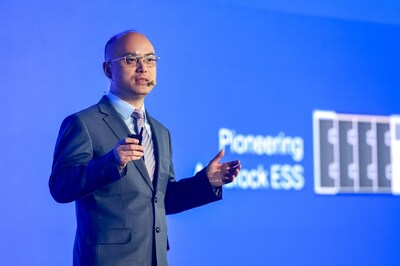
Dr. Jack Gu unveiled full-scenario solution

Customized Designs for Full-Scenario Applications
AIDC Scenario
In the digital era, rapid advances in AI are driving a surge in data center power demand, calling for a next-generation power supply architecture defined by high efficiency, high density, and strong resilience. Leveraging its expertise in power electronics and renewable energy, Sungrow entered the AIDC (Artificial Intelligence Data Center) sector last year with a comprehensive grid-to-chip solution. This year, Sungrow will launch a dedicated SST (Solid-State Transformers) solution for data centers, significantly reducing footprint while improving efficiency. Sungrow will also integrate grid-forming technology in AIDC ESS to mitigate grid disturbances and enhance system stability.

Mining Microgrid Scenario
Most mines are located in remote areas with limited grid access, complex loads, and strict power stability requirements, making energy supply a significant challenge. Sungrow addresses this with an integrated PV–wind–storage–EV charger–controller solution, reducing energy costs by 20–50% compared with a diesel generator. Given the variability of mining loads, Sungrow leverages advanced simulation capabilities to deliver tailored solutions with optimized equipment configurations, ensuring a reliable power supply and reduced CAPEX. Moreover, a five-level progressive protection system further safeguards stable operations under extreme conditions.

PV-ESS-EV Charging Integrated Scenario
Many EV charging projects suffer from poor coordination among system components, resulting in underperformance and reduced returns. Sungrow addresses this challenge with a one-stop, fully integrated solution that enables deep synergy across equipment and incorporates AI-driven operations, increasing overall revenue by more than 50%. Meanwhile, grid-forming technology has been extended to C&I applications to mitigate grid fluctuations caused by large-scale ultra-fast charging. In addition, Sungrow’s systems enable seamless integration with VPPs (Virtual Power Plants) through unified interfaces, unlocking greater value through diversified, future-ready revenue streams.

Hydrogen Production Scenario
In hydrogen production applications, Sungrow optimizes equipment configuration, reducing CAPEX by over 20% through PV–wind–storage–hydrogen integration and system-level simulation. In parallel, PV–storage–hydrogen DC coupling and flexible production technologies enhance energy efficiency and lower electricity costs by more than 10%.

Powering the Next Phase of Energy Transition
Renewable energy is shifting from a supplementary resource to a primary power source. This transition drives demand for premium energy solutions built on multi-energy integration for cost-efficient power, systematic grid-forming technologies for enhanced stability, and customized designs tailored to diverse scenarios. Sungrow believes that the deep integration of premium products and proven expertise is key to delivering truly scenario-adapted solutions.

Looking ahead, Sungrow will continue to build a more flexible, resilient, and sustainable energy landscape, helping industries meet growing energy demand and accelerate the transition to a low-carbon future.

About Sungrow
Sungrow, a global leader in renewable energy technology, has pioneered sustainable power solutions for over 29 years. As of Dec 2025, Sungrow has installed over 1000 GW of power electronic converters worldwide. The company is recognized as the world’s most bankable PV inverter and energy storage company (BloombergNEF). Its innovations power clean energy projects across the globe, supported by a network of 520 service outlets guaranteeing excellent customer experiences. At Sungrow, we’re committed to bridging to a sustainable future through cutting-edge technology and unparalleled service. For more information, please visit: www.sungrowpower.com/en

Cision View original content to download multimedia:https://www.prnewswire.com/news-releases/sungrow-unveils-full-scenario-solution-to-address-emerging-global-energy-challenges-302754036.html

SOURCE Sungrow

HANGZHOU, China, April 24, 2026 /PRNewswire/ — For scientific instrument companies competing globally, differentiation increasingly depends on more than product specifications alone. Customers are looking beyond performance claims to assess whether a company can consistently translate technology into manufacturable products, proven applications, reliable delivery and long-term service support.

That shift was evident during Focused Photonics Inc.’s (FPI) Global Customer Experience Day 2026 in Hangzhou, where customers and partners from dozens of countries visited the company’s Qingshanhu Innovation Base, headquarters and live application sites. For many attendees, the event offered a closer look at how a China-headquartered scientific instrument company is building capabilities across R&D, manufacturing, systems integration and lifecycle support.

At Qingshanhu Innovation Base, visitors saw key stages of FPI’s operations firsthand, including engineering, precision manufacturing, system integration, testing and service readiness. For many international customers, these visits are less about viewing a production line and more about assessing execution: whether a supplier has the engineering discipline, manufacturing depth and support infrastructure required to deliver consistently in real operating environments.

This is becoming increasingly important across the industry. As customer expectations evolve, competition is moving beyond stand-alone instrument performance toward integrated solutions, automation, data integrity, compliance and lifecycle value. In industrial and environmental applications in particular, uptime, stability and workflow fit often matter as much as analytical capability.

At its global customer conference, FPI outlined how it is responding to that transition, highlighting continued investment across environmental monitoring, industrial process analysis, laboratory analysis and life science applications. The company is also expanding the role of digitalization, automation and AI to improve application readiness and solution delivery.

Application-focused exchanges during the event reinforced the same point. In discussions on environmental, industrial and laboratory scenarios, customers focused not only on performance metrics, but also on regulatory fit, workflow integration, long-term operation under complex conditions, and the ability of solutions to function reliably once deployed. These are increasingly central criteria in global purchasing decisions.

The clearest proof came from real-world settings. At the Hangzhou Ecological Environment Monitoring Center, visitors saw FPI’s automated water quality laboratory in operation, where sample handling, workflow continuity and data generation are integrated into day-to-day use. For customers, this offered a more concrete view of how a solution performs not just in demonstration, but in routine operation.

Taken together, the event underscored a broader industry reality: global competition in scientific instruments is increasingly defined not only by what a product can do, but by whether a company can manufacture it at scale, deploy it effectively, support it locally and sustain performance over time. That broader operational capability is becoming a decisive part of how international customers evaluate suppliers.

Cision View original content:https://www.prnewswire.com/news-releases/global-customers-are-taking-a-closer-look-at-focused-photonics-inc-302753822.html

SOURCE Focused Photonics Inc.

HANGZHOU, China, April 24, 2026 /PRNewswire/ — For scientific instrument companies competing globally, differentiation increasingly depends on more than product specifications alone. Customers are looking beyond performance claims to assess whether a company can consistently translate technology into manufacturable products, proven applications, reliable delivery and long-term service support.

That shift was evident during Focused Photonics Inc.’s (FPI) Global Customer Experience Day 2026 in Hangzhou, where customers and partners from dozens of countries visited the company’s Qingshanhu Innovation Base, headquarters and live application sites. For many attendees, the event offered a closer look at how a China-headquartered scientific instrument company is building capabilities across R&D, manufacturing, systems integration and lifecycle support.

At Qingshanhu Innovation Base, visitors saw key stages of FPI’s operations firsthand, including engineering, precision manufacturing, system integration, testing and service readiness. For many international customers, these visits are less about viewing a production line and more about assessing execution: whether a supplier has the engineering discipline, manufacturing depth and support infrastructure required to deliver consistently in real operating environments.

This is becoming increasingly important across the industry. As customer expectations evolve, competition is moving beyond stand-alone instrument performance toward integrated solutions, automation, data integrity, compliance and lifecycle value. In industrial and environmental applications in particular, uptime, stability and workflow fit often matter as much as analytical capability.

At its global customer conference, FPI outlined how it is responding to that transition, highlighting continued investment across environmental monitoring, industrial process analysis, laboratory analysis and life science applications. The company is also expanding the role of digitalization, automation and AI to improve application readiness and solution delivery.

Application-focused exchanges during the event reinforced the same point. In discussions on environmental, industrial and laboratory scenarios, customers focused not only on performance metrics, but also on regulatory fit, workflow integration, long-term operation under complex conditions, and the ability of solutions to function reliably once deployed. These are increasingly central criteria in global purchasing decisions.

The clearest proof came from real-world settings. At the Hangzhou Ecological Environment Monitoring Center, visitors saw FPI’s automated water quality laboratory in operation, where sample handling, workflow continuity and data generation are integrated into day-to-day use. For customers, this offered a more concrete view of how a solution performs not just in demonstration, but in routine operation.

Taken together, the event underscored a broader industry reality: global competition in scientific instruments is increasingly defined not only by what a product can do, but by whether a company can manufacture it at scale, deploy it effectively, support it locally and sustain performance over time. That broader operational capability is becoming a decisive part of how international customers evaluate suppliers.

Cision View original content:https://www.prnewswire.com/news-releases/global-customers-are-taking-a-closer-look-at-focused-photonics-inc-302753822.html

SOURCE Focused Photonics Inc.

MILWAUKEE, April 25, 2026 /PRNewswire/ — Tru Earth™, a B Corp-certified, household cleaning products company, Milwaukee Riverkeeper and 2,082 volunteers made history today, setting the GUINNESS WORLD RECORDS™ title for the most participants in a river clean-up (multiple locations).

For years, Milwaukee Riverkeeper volunteers have quietly eclipsed the world record for the largest river clean-up. Tru Earth got involved, supporting an official GUINNESS WORLD RECORDS title attempt to ensure all involved receive the recognition they deserve. “As corporations, we have the power to do good and celebrate the work that organizations, like Milwaukee Riverkeeper, are doing every day in their local communities,” said Brad Liski, Tru Earth CEO. “We believe it is our corporate responsibility, and we challenge other companies to join with non-profits to make a difference in the world.”

During today’s event, the 31st Annual Milwaukee Riverkeeper Spring Cleanup, volunteers of all ages gathered at 120+ locations across Milwaukee to remove litter, plastic, and other pollution from area rivers and green spaces. In all, participants collected more than 100,000 pounds of trash today. The new record of 2,082 surpasses the GUINNESS WORLD RECORDS benchmark of 1,795 participants. The record was verified in accordance with the GUINNESS WORLD RECORDS guidelines.

“Today really belongs to the volunteers who showed up and got to work,” said Jennifer Bolger Breceda, Executive Director of Milwaukee Riverkeeper. “This record only happened because so many people care deeply about our rivers and each other. We’re grateful to Tru Earth for working with us to set this world record, but it’s our community that made this possible.”

About Tru Earth
In 2019, Tru Earth™ carved out a new category for laundry detergent with its innovative laundry sheet providing customers #TruChangeMakers—a better way to clean. Tru Earth’s disruptive suite of household cleaning products—including fabric enhancers, dishwashing detergent, toilet and multi-surface cleaning strips—are water-activated, ultraconcentrated, premeasured, and easy-to-use, all packaged in plastic-free packaging. For more information, visit: Our Critical Cause – Tru Earth

About Milwaukee Riverkeeper
Milwaukee Riverkeeper is a community-powered nonprofit working to ensure safe, clean, and accessible waterways for all. By engaging volunteers, advancing science-based solutions, and advocating for stronger environmental protections, the organization protects the health of rivers that serve communities across southeastern Wisconsin. For more information visit: www.milwaukeeriverkeeper.org

Contact Info: Mike Roach, mikeroach34@gmail.com 312-316-0771

Cision View original content to download multimedia:https://www.prnewswire.com/news-releases/tru-earth-and-milwaukee-riverkeeper-set-guinness-world-records-title-for-most-participants-in-a-river-clean-up-multiple-locations-302753596.html

SOURCE Tru Earth

MILWAUKEE, April 25, 2026 /PRNewswire/ — Tru Earth™, a B Corp-certified, household cleaning products company, Milwaukee Riverkeeper and 2,082 volunteers made history today, setting the GUINNESS WORLD RECORDS™ title for the most participants in a river clean-up (multiple locations).

For years, Milwaukee Riverkeeper volunteers have quietly eclipsed the world record for the largest river clean-up. Tru Earth got involved, supporting an official GUINNESS WORLD RECORDS title attempt to ensure all involved receive the recognition they deserve. “As corporations, we have the power to do good and celebrate the work that organizations, like Milwaukee Riverkeeper, are doing every day in their local communities,” said Brad Liski, Tru Earth CEO. “We believe it is our corporate responsibility, and we challenge other companies to join with non-profits to make a difference in the world.”

During today’s event, the 31st Annual Milwaukee Riverkeeper Spring Cleanup, volunteers of all ages gathered at 120+ locations across Milwaukee to remove litter, plastic, and other pollution from area rivers and green spaces. In all, participants collected more than 100,000 pounds of trash today. The new record of 2,082 surpasses the GUINNESS WORLD RECORDS benchmark of 1,795 participants. The record was verified in accordance with the GUINNESS WORLD RECORDS guidelines.

“Today really belongs to the volunteers who showed up and got to work,” said Jennifer Bolger Breceda, Executive Director of Milwaukee Riverkeeper. “This record only happened because so many people care deeply about our rivers and each other. We’re grateful to Tru Earth for working with us to set this world record, but it’s our community that made this possible.”

About Tru Earth
In 2019, Tru Earth™ carved out a new category for laundry detergent with its innovative laundry sheet providing customers #TruChangeMakers—a better way to clean. Tru Earth’s disruptive suite of household cleaning products—including fabric enhancers, dishwashing detergent, toilet and multi-surface cleaning strips—are water-activated, ultraconcentrated, premeasured, and easy-to-use, all packaged in plastic-free packaging. For more information, visit: Our Critical Cause – Tru Earth

About Milwaukee Riverkeeper
Milwaukee Riverkeeper is a community-powered nonprofit working to ensure safe, clean, and accessible waterways for all. By engaging volunteers, advancing science-based solutions, and advocating for stronger environmental protections, the organization protects the health of rivers that serve communities across southeastern Wisconsin. For more information visit: www.milwaukeeriverkeeper.org

Contact Info: Mike Roach, mikeroach34@gmail.com 312-316-0771

Cision View original content to download multimedia:https://www.prnewswire.com/news-releases/tru-earth-and-milwaukee-riverkeeper-set-guinness-world-records-title-for-most-participants-in-a-river-clean-up-multiple-locations-302753596.html

SOURCE Tru Earth

Privacy Overview

This website uses cookies so that we can provide you with the best user experience possible. Cookie information is stored in your browser and performs functions such as recognising you when you return to our website and helping our team to understand which sections of the website you find most interesting and useful.