Recently, Chemours announced that Gerardo Familiar, President of the company’s Advanced Performance Materials (APM) business, has been appointed to the SEMI North America Advisory Board (NAAB). SEMI is a global industry association serving thousands of member companies across the semiconductor and electronics design and manufacturing supply chain. The SEMI NAAB serves as the principal advocate for member companies throughout North America, providing strategic guidance on programs that advance semiconductor industry growth, supply chain robustness, sustainability, workforce development, and manufacturing excellence.
“Semiconductors are the backbone of modern technology, and Chemours responsibly delivers essential materials that enable next‑generation performance, efficiency, and the reliability needed,” said Gerardo Familiar, President of Advanced Performance Materials at Chemours. “I am honored to serve on the SEMI North America Advisory Board at such a pivotal time and look forward to partnering with SEMI and its members to help shape the future of the industry and support the continued growth of the North American semiconductor ecosystem.”
“We are delighted to see Gerardo join the SEMI North America Advisory Board,” said Joe Stockunas, President of SEMI America’s. “His deep knowledge of advanced fluoropolymers and leadership across global semiconductor markets make him an ideal advocate for the materials science innovations essential to next-generation electronics.”
Familiar brings more than 25 years of global experience across business strategy, commercial excellence, marketing, finance, product management, operations and regulatory affairs. As President of APM, he leads a portfolio of critical chemistries, including high‑performance fluoropolymers used across semiconductor manufacturing, clean energy, advanced electronics, and other high‑technology sectors. His leadership has been central to Chemours’ efforts to expand capacity, drive product innovation, and champion responsible manufacturing.
Familiar’s SEMI NAAB appointment took effect on January 14, 2026, marking the beginning of his three-year term.
This announcement originally appeared on Chemours.com.
This article is authored by Cal Krause, Operational Impacts Program Manager at Trane Technologies.
What exactly is embodied carbon? Well, think about an everyday item, like a fork, for instance. We use forks every day to eat, but we don’t often think about the emissions and environmental impacts associated with making them. To create a fork, metals were extracted, then transported to a smelter that used heat and energy to melt and purify them. Then, the fork had to be formed and polished, and then packaged and transported to the customer who will use it. Eventually, it will be discarded or recycled. Each of those steps creates environmental impacts and emissions, which make up that fork’s embodied carbon.
In buildings, the same concept applies at a much larger scale. From the concrete, steel, wood and glass that form the structure, to the systems that bring power, water, heating and cooling to the space, every component has a carbon footprint created long before a new building first opens its doors.
Across our sector, we’re seeing sustainable innovations that can help reduce embodied carbon throughout the built environment. From low-carbon steel used for HVAC solutions to new construction materials that could turn buildings into carbon sinks, innovative technologies and processes are making it possible to decarbonize challenging segments within our field.
For industry innovators and first movers, there has never been a better time to focus on embodied carbon.
Embodied carbon in the built environment
Embodied carbon is the term used to refer to all of the emissions generated by making, transporting and disposing of a product, whether it’s a fork or an entire building. Embodied carbon includes the total greenhouse gas (GHG) emissions of the entire lifecycle, including extraction, manufacturing, transportation, installation, maintenance and eventual disposal or deconstruction. The emissions created by actual use of an item or product are called operational carbon and are measured separately. Together, embodied carbon and operational carbon encompass the total carbon footprint of the item’s lifecycle.
Embodied carbon within the built environment is particularly complex. A building is composed of thousands of things, including structural materials like concrete and steel, exterior materials like glass, and all the systems inside: mechanical, electrical and plumbing.
The footprint of those systems can be significant, especially after factoring in the embodied carbon of repairs, maintenance and renovations over time. But with innovative new technologies and collaborations, we are making progress on reducing embodied carbon across our value chain.
Opportunities for embodied carbon impact: evaluating the supply chain
One of the biggest opportunities for embodied carbon reduction is through our supply chain. Trane Technologies works with a large network of suppliers, so we prioritize the highest-impact inputs and working together with the suppliers to reduce the embodied carbon of those materials. The first steps of collaborating with any supplier include understanding where they are, what strategies they already have in place and how we can help accelerate progress.
When we assessed the largest sources of embodied carbon in the materials we buy, metals like steel, aluminum and copper rose to the top. Metals are a practical starting point because the levers for improvement are relatively clear: shift to renewable electricity for manufacturing, improve energy efficiency in production, reduce high-emissions fuels and increase recycled content. Each of these steps can significantly reduce the embodied carbon of the final product.
We are also seeing momentum around innovative lower carbon steel options, including steel made with higher recycled content and produced in electric furnaces rather than traditional furnaces that rely on coal for fuel. To date, we’ve delivered over one million HVAC systems made with low-carbon steel, and have pledged to move to 100% net-zero steel by 2050.
Even daily decisions like transport choices can help cut embodied carbon. For example, Molly Swanson, a transportation management technology analyst at Trane Technologies, outlines how we now can use precise calculations for the emissions from ocean shipments to help in selecting carriers and making other decisions in planning for transport. “When we have that data, we’re able to make better decisions to help reduce our emissions,” she says.
Sector-wide innovation
Trane Technologies is not alone in prioritizing embodied carbon reduction. Exciting innovations from a broad array of industries are resulting in better solutions. Nollaig Forrest, the chief marketing and corporate affairs officer at Amrize, the largest building solutions company in North America, notes that the built environment represents 40% of global greenhouse gas emissions, with about one quarter tied to construction and three quarters tied to building operations like heating, cooling and power.
Forrest emphasizes the opportunity to extend building lifespans through repair and refurbishment and advancing circular construction through recycling and upcycling materials at the end of life. “The technologies to make the building stock carbon neutral and even carbon positive actually exist today,” she says. “A big part of our challenge is to bring these solutions to market at scale.”
Forrest also highlights the importance of partnering across the value chain and unlocking value for customers with new solutions. For example, Amrize launched the low-carbon concrete brand ECOPact, which performs like traditional concrete but creates 30% less CO2. Other innovations include building materials that actually store carbon and technologies that turn captured CO2 into building blocks for cement and concrete. Each step forward moves our current and future built environment closer to sustainability.
Industry-leading sustainability commitments
At Trane Technologies, we have made reducing embodied carbon central to our strategy, committing to a 40% embodied carbon reduction by 2030. We are taking a practical, strategic approach to this goal, collaborating with our supply chain to identify alternatives and innovations that can lower upstream emissions and also increasing the recycled content of our key materials.
And, while reducing embodied carbon is key, the other side of the sustainability coin is operational emissions – the greenhouse gases created while the product is actually in use. We’ve pledged to help our customers eliminate a gigaton of carbon emissions by 2030 in our Gigaton Challenge, and we’re well on our way.
Accelerating decarbonization across the value chain
Once we understand the embodied carbon behind an everyday object, like a fork, it becomes easier to visualize opportunities for decarbonizing the built environment. If we can reduce the carbon footprint of materials and products while continuing to improve operational efficiency, we unlock sustainability progress and business value in multiple ways.
But, if we want to achieve these goals, we need to achieve progress on both embodied carbon and operational emissions. From working with key suppliers to source lower-carbon materials to increasing the operational efficiency of our products, we are impacting both sides of the equation to reduce the total carbon footprint of the built environment.
By collaborating with our suppliers, customers and industry peers, we can move faster toward a net-zero built environment. Together, we can turn today’s decarbonization goals into tomorrow’s measurable sustainability progress.
This article is authored by Cal Krause, Operational Impacts Program Manager at Trane Technologies.
What exactly is embodied carbon? Well, think about an everyday item, like a fork, for instance. We use forks every day to eat, but we don’t often think about the emissions and environmental impacts associated with making them. To create a fork, metals were extracted, then transported to a smelter that used heat and energy to melt and purify them. Then, the fork had to be formed and polished, and then packaged and transported to the customer who will use it. Eventually, it will be discarded or recycled. Each of those steps creates environmental impacts and emissions, which make up that fork’s embodied carbon.
In buildings, the same concept applies at a much larger scale. From the concrete, steel, wood and glass that form the structure, to the systems that bring power, water, heating and cooling to the space, every component has a carbon footprint created long before a new building first opens its doors.
Across our sector, we’re seeing sustainable innovations that can help reduce embodied carbon throughout the built environment. From low-carbon steel used for HVAC solutions to new construction materials that could turn buildings into carbon sinks, innovative technologies and processes are making it possible to decarbonize challenging segments within our field.
For industry innovators and first movers, there has never been a better time to focus on embodied carbon.
Embodied carbon in the built environment
Embodied carbon is the term used to refer to all of the emissions generated by making, transporting and disposing of a product, whether it’s a fork or an entire building. Embodied carbon includes the total greenhouse gas (GHG) emissions of the entire lifecycle, including extraction, manufacturing, transportation, installation, maintenance and eventual disposal or deconstruction. The emissions created by actual use of an item or product are called operational carbon and are measured separately. Together, embodied carbon and operational carbon encompass the total carbon footprint of the item’s lifecycle.
Embodied carbon within the built environment is particularly complex. A building is composed of thousands of things, including structural materials like concrete and steel, exterior materials like glass, and all the systems inside: mechanical, electrical and plumbing.
The footprint of those systems can be significant, especially after factoring in the embodied carbon of repairs, maintenance and renovations over time. But with innovative new technologies and collaborations, we are making progress on reducing embodied carbon across our value chain.
Opportunities for embodied carbon impact: evaluating the supply chain
One of the biggest opportunities for embodied carbon reduction is through our supply chain. Trane Technologies works with a large network of suppliers, so we prioritize the highest-impact inputs and working together with the suppliers to reduce the embodied carbon of those materials. The first steps of collaborating with any supplier include understanding where they are, what strategies they already have in place and how we can help accelerate progress.
When we assessed the largest sources of embodied carbon in the materials we buy, metals like steel, aluminum and copper rose to the top. Metals are a practical starting point because the levers for improvement are relatively clear: shift to renewable electricity for manufacturing, improve energy efficiency in production, reduce high-emissions fuels and increase recycled content. Each of these steps can significantly reduce the embodied carbon of the final product.
We are also seeing momentum around innovative lower carbon steel options, including steel made with higher recycled content and produced in electric furnaces rather than traditional furnaces that rely on coal for fuel. To date, we’ve delivered over one million HVAC systems made with low-carbon steel, and have pledged to move to 100% net-zero steel by 2050.
Even daily decisions like transport choices can help cut embodied carbon. For example, Molly Swanson, a transportation management technology analyst at Trane Technologies, outlines how we now can use precise calculations for the emissions from ocean shipments to help in selecting carriers and making other decisions in planning for transport. “When we have that data, we’re able to make better decisions to help reduce our emissions,” she says.
Sector-wide innovation
Trane Technologies is not alone in prioritizing embodied carbon reduction. Exciting innovations from a broad array of industries are resulting in better solutions. Nollaig Forrest, the chief marketing and corporate affairs officer at Amrize, the largest building solutions company in North America, notes that the built environment represents 40% of global greenhouse gas emissions, with about one quarter tied to construction and three quarters tied to building operations like heating, cooling and power.
Forrest emphasizes the opportunity to extend building lifespans through repair and refurbishment and advancing circular construction through recycling and upcycling materials at the end of life. “The technologies to make the building stock carbon neutral and even carbon positive actually exist today,” she says. “A big part of our challenge is to bring these solutions to market at scale.”
Forrest also highlights the importance of partnering across the value chain and unlocking value for customers with new solutions. For example, Amrize launched the low-carbon concrete brand ECOPact, which performs like traditional concrete but creates 30% less CO2. Other innovations include building materials that actually store carbon and technologies that turn captured CO2 into building blocks for cement and concrete. Each step forward moves our current and future built environment closer to sustainability.
Industry-leading sustainability commitments
At Trane Technologies, we have made reducing embodied carbon central to our strategy, committing to a 40% embodied carbon reduction by 2030. We are taking a practical, strategic approach to this goal, collaborating with our supply chain to identify alternatives and innovations that can lower upstream emissions and also increasing the recycled content of our key materials.
And, while reducing embodied carbon is key, the other side of the sustainability coin is operational emissions – the greenhouse gases created while the product is actually in use. We’ve pledged to help our customers eliminate a gigaton of carbon emissions by 2030 in our Gigaton Challenge, and we’re well on our way.
Accelerating decarbonization across the value chain
Once we understand the embodied carbon behind an everyday object, like a fork, it becomes easier to visualize opportunities for decarbonizing the built environment. If we can reduce the carbon footprint of materials and products while continuing to improve operational efficiency, we unlock sustainability progress and business value in multiple ways.
But, if we want to achieve these goals, we need to achieve progress on both embodied carbon and operational emissions. From working with key suppliers to source lower-carbon materials to increasing the operational efficiency of our products, we are impacting both sides of the equation to reduce the total carbon footprint of the built environment.
By collaborating with our suppliers, customers and industry peers, we can move faster toward a net-zero built environment. Together, we can turn today’s decarbonization goals into tomorrow’s measurable sustainability progress.
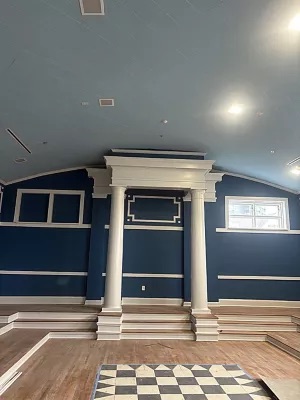
Located on the corner of Auburn Avenue and Hilliard Street, the Prince Hall Masonic Temple and Lodge, built between 1937 and 1941, is a vital part of Atlanta’s history. Through its long-standing partnership with the Trust for Public Land, Georgia-Pacific provided funding and in-kind support to restore the building as a 16,000-square-foot, multi-use space. The building will also be a part of the Martin Luther King Jr. National Historical Park, with programming provided by the National Park Service (NPS) later this year.
Georgia-Pacific provided funding to help restore the Prince Hall Masonic Temple and Lodge, which will be a part of the Martin Luther King Jr. National Historical Park. Photo Credit: Tom Miller, courtesy of Trust for Public Land.
The lodge is home to the local Prince Hall Masons, a fraternal organization founded in 1775 by former slave and civil rights activist Prince Hall. The Prince Hall Masonic Temple and Lodge was developed by John Wesley Dobbs, a mason who was considered the unofficial mayor of Auburn Avenue. Decades later, his grandson — Maynard Jackson Jr. — became Atlanta’s first Black mayor, and the first Black mayor of a major Southern city.
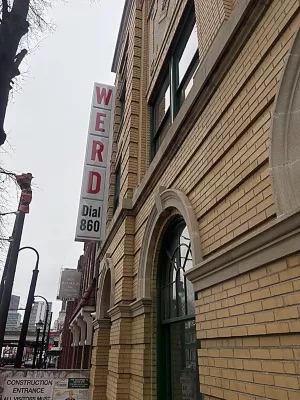
WERD, the first radio station owned and operated by Black Americans in the U.S., operated out of the Prince Hall Masonic Temple and Lodge. Photo Credit: Tom Miller, courtesy of Trust for Public Land.
The lodge became the epicenter for influential Black organizations and the Civil Rights Movement. It was a frequent meeting space for the Atlanta Civic-Political League, a voting-rights organization, and the Brotherhood of Sleeping Car Porters, a labor organization. It was the longtime headquarters of Dr. King’s Southern Christian Leadership Conference (SCLC). The building also housed a Madam C.J. Walker Beauty Shoppe, whose owner became America’s first self-made female millionaire. In 1948, WERD, the nation’s first Black-owned and directed radio station, began broadcasting at the Lodge and offered a rare public venue for black jazz and blues performers during the Jim Crow era, while also playing a key role in helping Dr. King and the SCLC deliver their message.
The lodge is home to the local Prince Hall Masons, a fraternal organization founded in 1775 by former slave and civil rights activist Prince Hall. The Prince Hall Masonic Lodge was built between 1937 and 1941. Photo Credit: Tom Miller, courtesy of Trust for Public Land.
Community enrichment is one of Georgia-Pacific’s pillars of philanthropy. We want to ensure that the communities in which we operate, and where our team members live and work, provide educational opportunities and community enrichment as well. With our headquarters in downtown Atlanta, Georgia-Pacific is committed to the area’s revitalization and success through supporting projects and initiatives with significant impact on the city’s past, present and future. Learn more about our stewardship programs here.
SINGAPORE, February 23, 2026 /3BL/ – Federal Express Corporation (FedEx), one of the world’s largest express transportation companies, shared key findings from its Asia Pacific (APAC) survey of consumers and businesses on sustainability and cross-border trade, highlighting emerging areas of focus for businesses across the region.
The survey shows that 80% of APAC Small and Medium Enterprises (SMEs) consider environmental concerns when trading with Europe, with sustainability playing a bigger role in logistics decisions. Southeast Asian markets are leading this trend, with over 55% of SMEs in Malaysia and Indonesia prioritizing sustainability in their supply chain choices. This highlights rising awareness and action on environmental issues among businesses and consumers in the region.
Consumers Pushing Businesses to Incorporate Sustainability into Operations Consumers are driving demand for sustainable practices, with 84% of APAC consumers pushing businesses to develop eco-friendly online shopping options. Environmental responsibility is becoming a key differentiator, influencing purchasing decisions:
81% of APAC consumers prefer companies that appear to operate more sustainably compared to competitors offering similar products without the same visible operational integrations of sustainability.
While product integrity and competitive pricing remain key preferences for online shoppers, nearly four in ten APAC consumers are willing to pay premium prices for sustainable packaging.
As environmental awareness grows, businesses are taking note. Sustainable practices are no longer a nice to have, but a must-have for companies to stay competitive in the digital marketplace. Companies are seeing consumers factor in environmental values to their spending decisions, which could directly impact their bottom line.
“We are seeing sustainability shifting from a compliance checkbox to a key driver of growth, resilience, and differentiation in global commerce,” said Salil Chari, regional president, Asia Pacific, FedEx. “At FedEx, we are committed to supporting this shift, aiming for carbon-neutral operations globally by 2040. We are innovating our services, optimizing our network, and providing smarter digital tools to help businesses turn sustainability ambitions into action, enabling lower-emission shipping decisions that strengthen competitiveness and can reduce environmental impact.”
Reimagining Operations for More Sustainable Logistics
FedEx is stepping up to meet the growing demand for sustainable logistics, investing in cutting-edge technologies and infrastructure that reduce environmental impact while boosting operational efficiency.
One example is the company’s AI-powered Stops Sequencing tool, which optimizes delivery routes in real time based on package volume and customer specifications. By intelligently planning delivery sequences and minimizing unnecessary mileage, it has the potential to reduce carbon emissions, while simultaneously improving operational efficiency[1].
In addition, FedEx provides customers with the visibility needed to make informed sustainability decisions. FedEx® Sustainability Insights, a cloud-based platform, provides enhanced transparency into environmental impact. Using near-real-time FedEx network data, the tool estimates CO2e emissions for both individual tracking numbers and entire FedEx shipping accounts. Customers can access historical emissions data and search by tracking numbers via their FedEx.com login.
On the aviation side, FedEx recently began using sustainable aviation fuel (SAF) at Chicago O’Hare and Miami International Airports, marking another step in reducing aviation-related emissions within its global air network.In the last mile, FedEx is transforming urban delivery through fleet electrification. Electric vehicles are now deployed across several APAC markets—including Japan, New Zealand, Singapore, and Thailand—and account for more than 20% of the company’s delivery fleet in China. In Taiwan, electric tricycles have been introduced to better navigate dense urban environments, reducing emissions while improving delivery efficiency.
As cross-border trade continues evolving, the company remains dedicated to delivering faster, smarter, and more sustainable shipping solutions that empower customers to succeed while delivering a more sustainable future.
About the Survey This online survey was conducted by Milieu Insight in September 2025 across 13 Asia Pacific markets including Australia, New Zealand, China, Hong Kong SAR, Indonesia, Japan, Malaysia, Philippines, Singapore, South Korea, Taiwan, Thailand, and Vietnam. The survey gathered insights from 850 Asia Pacific consumers and 850 SMEs who actively trade with Europe. Click here to download the full report.
Click here to learn about FedEx Cares, our global community engagement program.
Tell us a little bit about yourself and your career journey to date.
My career hasn’t evolved in a vacuum; it’s been shaped by the life I’ve lived outside of work, the challenges that stretched me, and the moments that forced me to grow in ways I never anticipated. Before I ever found my footing at GoDaddy, my wife and I were navigating a deeply personal journey—one marked by loss, hope, and the decision to build our family through foster care and adoption. The resilience we developed through that experience didn’t just transform our home; it changed how I show up professionally. It taught me patience, empathy, and the importance of fighting for people when the path isn’t easy. My story is a reminder that the strengths we bring to our careers often come from the hardest chapters of our lives, and that personal healing and professional growth are more connected than we sometimes realize.
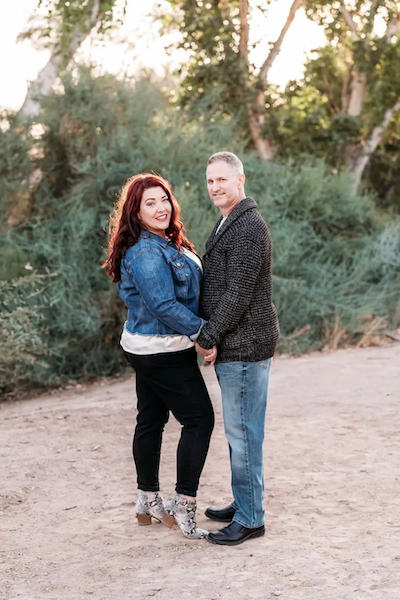
My wife and I met at a crossroads, both bearing the scars of previous marriages. I walked in with a daughter—a little miracle. My wife, conversely, arrived carrying the heavy silence of infertility, her own dreams of motherhood crushed by biology.
We were two people with empty arms, staring down a future that felt terrifyingly quiet. But where biology closed a door, love kicked one open. We decided that if we couldn’t make a family, we would build one. We spent 11 weeks in parenting classes, learning the logistics of foster care, clinging to the fragile hope that one day, we might be called “Dad” and “Mom” together.
Thirteen months later, the silence of our home was shattered—beautifully.
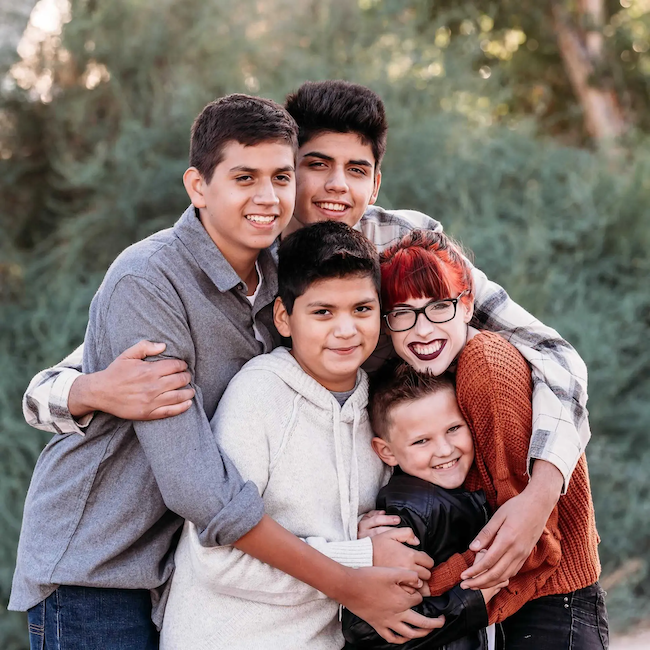
It happened in a whirlwind. First, we were entrusted with two brothers from a rough corner of West Phoenix. Shortly after, their baby brother arrived. Almost overnight, we went from raising one child to four. Then, fate offered us one more chance to serve: a young, single mother in crisis. We walked her through her pregnancy, and when she couldn’t stay, her son remained. We grew to a family of seven.
We adopted all four boys. We signed the papers, changed their names, and promised them forever. But we quickly learned that you cannot simply love away the past; you have to walk through the fire with them.
We didn’t just adopt children; we adopted a mission to heal. We immediately surrounded them with therapists, services, and unwavering advocacy. We fought for their smiles, their sanity, and their futures.
Today, the house is no longer quiet. It is loud with the chaotic, beautiful noise of healing. We are a family forged not by blood, but by the refusal to give up on each other. Our lives were forever changed, turned upside down and inside out, but looking at them now—safe, loved, and home—we know it was all for the good.
When it comes to my career, there was a point in my GoDaddy journey when I genuinely considered walking away. After transferring into the Server department, I felt completely out of my depth. The technology didn’t click, no matter how hard I tried, and I spent more than a year feeling like I was wearing down everyone’s patience with my constant questions. It was an isolating and humbling season.
Everything shifted after my ADHD diagnosis. Finding the right medication was like flipping a switch—suddenly the information that once slipped through the cracks finally stuck. That clarity changed everything. To go from feeling lost and overwhelmed to now writing the documentation that helps others succeed has been one of the most meaningful turnarounds of my career.
How do you balance proactive planning with those unexpected fires that pop up in your role?
I come to work with a singular focus: to deliver my absolute best. My competitive advantage is planning. I ensure I’m completely dialed in on any incidents or roadblocks before I even clock in, so I never start on the back foot. This level of preparation allows me to attack the day with confidence and clarity.
How do you keep yourself motivated and inspired in your work?
At my core, my family is my “why.” They are the fuel for every challenge I tackle and the reason I strive for excellence every day.
My journey has been anything but ordinary. I’ve stood between the pipes as a semi-pro ice hockey goalie, where I learned to handle pressure, and I’ve educated minds globally as a zoology teacher, sharing a love for the natural world. For the last 11+ years, I have channeled that same energy into my career at GoDaddy.
I rely on a blend of learned generosity and a genuine zest for life to stay motivated. My background in athletics and martial arts instilled in me an unshakeable focus—the discipline to keep my eyes on the prize, regardless of the chaos around me. But it is my role as a father to children with special needs that has sharpened my professional edge. I have learned that while passion starts the project, it is unwavering consistency and routine that delivers the results. I bring that same dedication, structure, and heart to everything I do.
I’m incredibly fortunate to work alongside such a supportive team, including my leadership.
I’ve honestly never worked with a better group of people, and their support makes navigating my role so much easier.
How has your personal journey shaped the way you approach your work?
I approach my professional life with the same relentless spirit I pour into my family: with passion, dedication, and the deep satisfaction of a job well done. I have learned that true patience is a skill forged through experience, not just a personality trait. My goal is to bring that hard-won perspective and calm demeanor to every single customer interaction, ensuring that I meet their needs with the same care, persistence, and steady hand that I apply to the rest of my life.
If you had to describe GoDaddy’s culture in one word, what would it be and why?
Support. I have learned that true leadership isn’t just about managing work; it’s about supporting people. In this regard, I have been incredibly lucky. My leadership has made an indelible impact on my life, offering grace and understanding when I’ve needed it most. Raising a family with complex needs requires flexibility, and on multiple occasions, I have had to step away to tend to my children. Every single time, I am met with unwavering support.
In my honest opinion, this team is the best of the best. They have transcended the titles of “managers” or “bosses”, “colleagues” or “cohorts” to become true friends and allies. I say this with absolute certainty: I would not still be at GoDaddy today if it weren’t for their compassion. To J, S, and B —thank you for standing by me so I could stand by my family.
What do you enjoy doing outside of work?
After everything we have been through, we have learned to breathe deeply and embrace the joy of simply living. We fill our days with movement and discovery—hiking, fishing, and taking road trips to connect with our roots in my wife’s home of Minnesota and my native California. We made a vow to flood our children’s lives with positive experiences, to show them a world that is bigger and brighter than the one they came from. And looking at them now, I believe it has made all the difference.
Our children have grown into incredible individuals. Our daughter is building her own life in California with her boyfriend. Our oldest son is serving in the Army, stationed in Germany. In a twist of fate that makes us smile every time we think about it, our middle son has also enlisted and is heading to the exact same base in Germany. To know they will be together, brothers in arms and in life, is a comfort beyond words.
Our younger boys are thriving in their own arenas. While our son with autism still navigates daily challenges with social cues and understanding the nuances of the world, he has found his freedom on the field. He is a phenomenal athlete, channeling his energy into football, rugby, and track. Our youngest is also a stellar athlete, having spent nine years on the baseball diamond, dominating as a club-level pitcher.
Sports have become a cornerstone of our family culture; teaching them self-discipline, teamwork, and the vital lesson of working towards the greater good rather than just personal glory.
For all the travel and touchdowns, the best moment of the week is the simplest one. Every Friday night, the world stops. We order pizza, put on a movie, and just be. It is our time to exhale, to look around the room at this family we fought so hard to build, and feel nothing but gratitude. We are together. We are home.
Are you enjoying this series and want to know more about life at GoDaddy? Check out our GoDaddy Life social pages! Follow us to meet our team, learn more about our culture (Teams, ERGs, Locations), careers, and so much more. You’re more than just your day job, so come propel your career with us.
Tell us a little bit about yourself and your career journey to date.
My career hasn’t evolved in a vacuum; it’s been shaped by the life I’ve lived outside of work, the challenges that stretched me, and the moments that forced me to grow in ways I never anticipated. Before I ever found my footing at GoDaddy, my wife and I were navigating a deeply personal journey—one marked by loss, hope, and the decision to build our family through foster care and adoption. The resilience we developed through that experience didn’t just transform our home; it changed how I show up professionally. It taught me patience, empathy, and the importance of fighting for people when the path isn’t easy. My story is a reminder that the strengths we bring to our careers often come from the hardest chapters of our lives, and that personal healing and professional growth are more connected than we sometimes realize.
My wife and I met at a crossroads, both bearing the scars of previous marriages. I walked in with a daughter—a little miracle. My wife, conversely, arrived carrying the heavy silence of infertility, her own dreams of motherhood crushed by biology.
We were two people with empty arms, staring down a future that felt terrifyingly quiet. But where biology closed a door, love kicked one open. We decided that if we couldn’t make a family, we would build one. We spent 11 weeks in parenting classes, learning the logistics of foster care, clinging to the fragile hope that one day, we might be called “Dad” and “Mom” together.
Thirteen months later, the silence of our home was shattered—beautifully.
It happened in a whirlwind. First, we were entrusted with two brothers from a rough corner of West Phoenix. Shortly after, their baby brother arrived. Almost overnight, we went from raising one child to four. Then, fate offered us one more chance to serve: a young, single mother in crisis. We walked her through her pregnancy, and when she couldn’t stay, her son remained. We grew to a family of seven.
We adopted all four boys. We signed the papers, changed their names, and promised them forever. But we quickly learned that you cannot simply love away the past; you have to walk through the fire with them.
We didn’t just adopt children; we adopted a mission to heal. We immediately surrounded them with therapists, services, and unwavering advocacy. We fought for their smiles, their sanity, and their futures.
Today, the house is no longer quiet. It is loud with the chaotic, beautiful noise of healing. We are a family forged not by blood, but by the refusal to give up on each other. Our lives were forever changed, turned upside down and inside out, but looking at them now—safe, loved, and home—we know it was all for the good.
When it comes to my career, there was a point in my GoDaddy journey when I genuinely considered walking away. After transferring into the Server department, I felt completely out of my depth. The technology didn’t click, no matter how hard I tried, and I spent more than a year feeling like I was wearing down everyone’s patience with my constant questions. It was an isolating and humbling season.
Everything shifted after my ADHD diagnosis. Finding the right medication was like flipping a switch—suddenly the information that once slipped through the cracks finally stuck. That clarity changed everything. To go from feeling lost and overwhelmed to now writing the documentation that helps others succeed has been one of the most meaningful turnarounds of my career.
How do you balance proactive planning with those unexpected fires that pop up in your role?
I come to work with a singular focus: to deliver my absolute best. My competitive advantage is planning. I ensure I’m completely dialed in on any incidents or roadblocks before I even clock in, so I never start on the back foot. This level of preparation allows me to attack the day with confidence and clarity.
How do you keep yourself motivated and inspired in your work?
At my core, my family is my “why.” They are the fuel for every challenge I tackle and the reason I strive for excellence every day.
My journey has been anything but ordinary. I’ve stood between the pipes as a semi-pro ice hockey goalie, where I learned to handle pressure, and I’ve educated minds globally as a zoology teacher, sharing a love for the natural world. For the last 11+ years, I have channeled that same energy into my career at GoDaddy.
I rely on a blend of learned generosity and a genuine zest for life to stay motivated. My background in athletics and martial arts instilled in me an unshakeable focus—the discipline to keep my eyes on the prize, regardless of the chaos around me. But it is my role as a father to children with special needs that has sharpened my professional edge. I have learned that while passion starts the project, it is unwavering consistency and routine that delivers the results. I bring that same dedication, structure, and heart to everything I do.
I’m incredibly fortunate to work alongside such a supportive team, including my leadership.
I’ve honestly never worked with a better group of people, and their support makes navigating my role so much easier.
How has your personal journey shaped the way you approach your work?
I approach my professional life with the same relentless spirit I pour into my family: with passion, dedication, and the deep satisfaction of a job well done. I have learned that true patience is a skill forged through experience, not just a personality trait. My goal is to bring that hard-won perspective and calm demeanor to every single customer interaction, ensuring that I meet their needs with the same care, persistence, and steady hand that I apply to the rest of my life.
If you had to describe GoDaddy’s culture in one word, what would it be and why?
Support. I have learned that true leadership isn’t just about managing work; it’s about supporting people. In this regard, I have been incredibly lucky. My leadership has made an indelible impact on my life, offering grace and understanding when I’ve needed it most. Raising a family with complex needs requires flexibility, and on multiple occasions, I have had to step away to tend to my children. Every single time, I am met with unwavering support.
In my honest opinion, this team is the best of the best. They have transcended the titles of “managers” or “bosses”, “colleagues” or “cohorts” to become true friends and allies. I say this with absolute certainty: I would not still be at GoDaddy today if it weren’t for their compassion. To J, S, and B —thank you for standing by me so I could stand by my family.
What do you enjoy doing outside of work?
After everything we have been through, we have learned to breathe deeply and embrace the joy of simply living. We fill our days with movement and discovery—hiking, fishing, and taking road trips to connect with our roots in my wife’s home of Minnesota and my native California. We made a vow to flood our children’s lives with positive experiences, to show them a world that is bigger and brighter than the one they came from. And looking at them now, I believe it has made all the difference.
Our children have grown into incredible individuals. Our daughter is building her own life in California with her boyfriend. Our oldest son is serving in the Army, stationed in Germany. In a twist of fate that makes us smile every time we think about it, our middle son has also enlisted and is heading to the exact same base in Germany. To know they will be together, brothers in arms and in life, is a comfort beyond words.
Our younger boys are thriving in their own arenas. While our son with autism still navigates daily challenges with social cues and understanding the nuances of the world, he has found his freedom on the field. He is a phenomenal athlete, channeling his energy into football, rugby, and track. Our youngest is also a stellar athlete, having spent nine years on the baseball diamond, dominating as a club-level pitcher.
Sports have become a cornerstone of our family culture; teaching them self-discipline, teamwork, and the vital lesson of working towards the greater good rather than just personal glory.
For all the travel and touchdowns, the best moment of the week is the simplest one. Every Friday night, the world stops. We order pizza, put on a movie, and just be. It is our time to exhale, to look around the room at this family we fought so hard to build, and feel nothing but gratitude. We are together. We are home.
Are you enjoying this series and want to know more about life at GoDaddy? Check out our GoDaddy Life social pages! Follow us to meet our team, learn more about our culture (Teams, ERGs, Locations), careers, and so much more. You’re more than just your day job, so come propel your career with us.
At Henkel, our pioneers are driven by an unwavering spirit to explore, create, and transform possibilities into progress and improve life for generations to come. Learn their stories.
In this story, you will discover:
Introducing Jen Rivera: A leader who empowers others to be innovators
Putting the Care in Laundry Care: Jen and her team are driving innovation and growth with purpose
Leading Beyond the Lab: Volunteer activities can build bonds in and out of the workplace
The Roots of Caring: Jen’s values have inspired her work ethic and mentorship approach
Introducing Jen Rivera:
Jen Rivera, Director of Research and Development for Laundry Cleaning at Henkel North America, brings purpose and passion to every facet of her work. From advancing Henkel’s iconic brands, including all®, Persil® and Purex®, to investing in her team and community, Jen pushes boundaries to embody what it means to be a pioneer for good and make a tangible difference for consumers.
Jen shares what inspires her to be a pioneer for good
Putting the Care in Laundry Care
As part of the leadership team for research and development across Henkel’s laundry portfolio, Jen focuses on transforming products with a purpose-driven mindset. Her mission is to ensure Henkel’s laundry brands are the preferred choice for consumers seeking quality and trust.
On all® free clear, we are the technology leader in the sensitive skin care space. Our product is the top choice for consumers with sensitive skin needs and the #1 recommended laundry brand by healthcare practitioners.
Jen Rivera, Director of Research and Development for Laundry Cleaning at Henkel North America
Behind these accomplishments is a team culture of belonging and shared purpose. Jen strives to create an environment where colleagues feel welcomed, heard, and encouraged to share ideas freely.
Leadership is about listening to your team and understanding their needs so that we can collectively solve problems. My goal is to promote a culture of safety and comfort that empowers others to bring new ideas and innovate.
Jen Rivera, Director of Research and Development for Laundry Cleaning at Henkel North America
Leading Beyond the Lab
Jen’s leadership philosophy has been shaped by mentorship throughout her career. Her relationships with mentors and mentees have helped her navigate career growth, combat workplace stigmas, and learn valuable lessons to pass along to the next generation of innovators. Today, Jen actively mentors young professionals and speaks at events like UConn Stamford Business School and the Society of Women in Engineering, inspiring the future of STEM talent.
Cultivating empowerment is central to Jen’s mentorship philosophy and that starts with creating shared experiences beyond the workplace. Last year, Jen organized a volunteer day at the Ronald McDonald House, a home for families with children undergoing medical treatments at Yale New Haven Hospital in Connecticut, where her team spent the day cooking and serving lunch.
Through this event, we grew closer as a team. We shared a purpose for helping others that we brought back into our professional relationships.
Jen Rivera, Director of Research and Development for Laundry Cleaning at Henkel North America
The Roots of Caring
Jen’s commitment to compassion began in childhood. Growing up playing sports, her dad was her biggest fan, cheering her on at every game. To show her appreciation, Jen brought her dad to a soccer match in Hartford, CT, where Henkel hosted an employee event as part of its sponsorship with U.S. Soccer Federation.
This blend of gratitude and sportsmanship has inspired Jen to give back, leading her to coach a Special Olympics volleyball team. The experience taught her important lessons, including compromise and communication, that she applies daily in the lab.
Motivated by experiences inside and outside the workplace, Jen is dedicated to leading with care. By creating shared moments, uplifting her team, and passing along lessons learned, she encourages others to embrace innovation and drive positive change.
KeyBank’s Key4Women program will host a free virtual webinar on March 4 aimed at helping women strengthen their financial confidence through practical, real‑life strategies.
The one‑hour event, titled “Financially Whole, Financially Confident: Insights from The Budgetnista,” will feature nationally recognized financial educator Tiffany Aliche, also known as The Budgetnista. The webinar begins at 1 p.m. EST / 11 a.m. MT / 10 a.m. PST and is open to the public at no cost.
Aliche, a former teacher turned financial expert, has helped more than two million women improve their financial well‑being and is the bestselling author of Get Good with Money. She is also known for championing New Jersey’s “Budgetnista Law,” which requires financial education for middle school students. During the webinar, Aliche will join Rachael Sampson, Key4Women’s National Director, for a conversation designed to help attendees make smarter financial decisions and reduce money‑related stress.
Participants will learn how to:
Make confident money decisions
Use money as a tool to support personal and professional goals
Build budgeting habits that align with long‑term priorities
“Tiffany brings a rare blend of expertise, energy, and real-world wisdom to the topic of financial confidence,” Sampson said. “Her guidance is accessible, encouraging, and actionable—exactly what so many women need as they navigate financial decisions in work and life.”
Key4Women, founded in 2005, has generated more than $12 billion in loans to women-owned businesses and offers members access to advisors, education, and community support focused on financial wellness. Membership is free.
Those interested can register online here by March 3 or email key4women@keybank.com for more information.
When Miray Kaplangi, 29, visited her grandparents in Istanbul, they would often pull out their smartphones and ask her to help them adjust their settings or check their bank balance online, small tasks that carried big anxieties.
Like many seniors, they had heard plenty of horror stories about people falling victim to online scams, making them hesitant to use digital banking, even though it could make their everyday lives easier.
It’s a trepidation many older people share as more of daily life moves online and as AI sends cybercrime into overdrive, with scams from romance fraud to phishing attacks now totalling trillions of dollars a year in losses. Estimating that more than half of older people globally have been victims of online threats, cybersecurity firm Avast says many still write passwords on a piece of paper and are more likely to click on suspicious links and share personal information.
Fraud isn’t limited to the elderly — in fact, recent surveys have shown that Gen Z is more likely to fall for certain scams than older generations are — but older adults have distinct needs around security, clarity and control. Banks and fintechs are responding with tools that balance independence and protection. For example, Greenlight’s Family Shield subscription plan in the U.S., with an optional Mastercard debit card, lets families receive real‑time fraud alerts and offers up to $100,000 in deceptive transfer fraud coverage.
Earlier this year, when Kaplangi, a Mastercard data and services consultant, recounted her grandparents’ anxiety to her Istanbul colleagues, they hit on an idea for how they could best use the time the company gives them to volunteer. By combining their finance knowledge and consulting skills, they could help their grandparents’ generation better understand digital banking.
They pitched the idea of financial literacy workshops for those over age 65 to a center for older people in the district of Besiktas. Just 10 minutes from the Mastercard office, the center offers activities designed to encourage people to pick up hobbies and develop new skills. After getting the green light, the five-strong volunteer team began drawing up a series of PowerPoints for their initial session.
When 25 seniors brought their smartphones to the first class, the Mastercard team members were relieved to know they had hit on the right topic but realized they needed to find ways to combat the distrust of online transactions many of the older folks had.
“There was a stigma toward mobile apps, like, ‘If I log in, then someone’s going to steal my money,’” Kaplangi says. “They were all scared and seeking reassurance.”
Starting with the basics, Kaplangi and the team designed visuals to walk people through how to register for online banking, set up secure passwords and biometrics and see their balances on-screen.
Next, they showed the older adults how to use their phones to turn off their payment cards, request changes to credit card limits and receive notifications when money was withdrawn from their accounts.
“Overall, the feedback was great,” Kaplangi says. “They said, ‘Our grandsons tried to show us, but it was never as detailed or visual as you guys have shown.’ They were hungry for more.”
More than just learning the online banking basics, the session was the first step toward integrating them into the wider digital sphere. Once they can confidently make payments online, older people can pay bills and use apps to have groceries delivered instead of struggling with bags as they shop around Istanbul, which is famously built on seven hills.
The project was recently recognized by Mastercard’s CEO Force for Good Awards, the company’s highest volunteering honor, and the volunteer team is planning to host regular sessions at the municipality-run center in Besiktas.
With fewer people over age 65 making payments and transactions online than any other age group, according to the Banks Association of Türkiye, there is plenty of room to expand projects that are carefully tailored to older individuals.
Recalling how one Besiktas participant had been the victim of a costly scam after using his bank card on an unsecured website, Kaplangi says future sessions will emphasize how to stay safe online.
Treading a fine line between scaring and protecting older people, the Mastercard team plans to highlight classic scams, show how to spot fraud attempts, and explain why password hygiene and two-factor authentication matter.
For Kaplangi and her colleagues, it’s rewarding to see the positive real-world impact of their efforts to help usher older adults into the digital ecosystem.
It’s also underscored why it’s more effective to give people like their own elders a big- picture view and help visualize their digital banking journey, instead of just tackling ad hoc problems: “It’s just enabled them to have confidence and convenience in their life.”
This website uses cookies so that we can provide you with the best user experience possible. Cookie information is stored in your browser and performs functions such as recognising you when you return to our website and helping our team to understand which sections of the website you find most interesting and useful.
Strictly Necessary Cookies
Strictly Necessary Cookie should be enabled at all times so that we can save your preferences for cookie settings.
If you disable this cookie, we will not be able to save your preferences. This means that every time you visit this website you will need to enable or disable cookies again.