From Apprentice to Teacher: Robert Collins on the Power of Paying It Forward

When Robert Collins walked into Trane Technologies’ Charlotte office for the first time in 1992, he had no idea what a centrifugal chiller was. Coming from a residential HVAC background, he quickly realized he had a lot to catch up on. “I thought I was pretty savvy with HVAC,” he recalls, “but when I got here, I realized how much more I had to learn.”

More than three decades later, Robert is now one of the expert technical trainers at Trane Technologies’ new state-of-the-art Advanced Technology Training Center (ATTC) in Davidson, North Carolina – a 45,199 square foot training center that’s capable of accommodating up to 4,500 students and delivering 108,000 training hours annually.

“It’s a great time to be at Trane Technologies. I love my job. I love doing what I do. For the past 33 years, I’ve worked with a lot of good people who helped me throughout my career, and now I’m looking forward to helping others in theirs.”

VIDEO: Building Careers and Community: Robert Collins on 30+ Years with Trane

A career built on mentorship

Like many of our technicians, Robert doesn’t see his career as having been built alone. In fact, he credits much of his success to his mentors and teachers. “There were some great people who were willing to teach me. We became personal friends.”

Those early experiences shaped how Robert viewed his work. “I’m a servant of people,” he says simply. “I just love helping people.” As he advanced to a team leader role in the Charlotte office, Robert oversaw a growing team of service technicians from just nine to over 60. But for him, leadership was never about hierarchy; it was about helping others grow. That belief is what ultimately led him to the new training center. “When I found out this facility was being built, I felt like it was my next natural step. It just seemed like where I needed to be,” he says. 

Teaching the next generation of HVAC technicians 

Robert started as an apprentice, literally sweeping the floors in Trane‘s Charlotte Sales and Service office. Today, he’s a technical trainer at the world’s most advanced HVAC training facility, a place where apprentices and seasoned technicians alike gain hands-on experience with both legacy and cutting-edge systems. “In this center, we’ll be teaching basic refrigeration and electricity, all the way up to working on a Centravac system,” Robert explains. “Technicians will be taught everything they need to know now along with new technology they’ll see more of in the future.”

But more than teaching talent about compressors and wiring diagrams, Robert is hoping to continue Trane Technologies’ culture of people-first leadership. “The biggest things I’ve learned here haven’t been to do with equipment. It’s to do with people,” he says. “I’ve learned to listen to others, understand their point of view and put myself in their shoes.”

Life beyond the technician job

This belief that people are the foundation of every successful system is what drives both Robert’s teaching and Trane Technologies’ continued investment in mentorship. As Holly Paeper, Trane Technologies’ president of Commercial HVAC Americas says, “The ATTC embodies what has always set Trane Technologies apart: the belief that systems are only as strong as the people behind them, and people are only as strong as the knowledge they share.”

Outside of work, Robert finds balance in family and the outdoors. He and his wife are proud new grandparents, and he often spends weekends fishing, boating or volunteering with organizations that introduce children and people with disabilities to nature. “I spend time with a lot of children, getting them into the outdoors and helping them understand what it’s like to be out in the woods, hunting and fishing.” he says.

The company’s commitment to work-life balance and community engagement helps make that possible. “Trane Technologies promotes that life-work balance,” Robert says.

Passing knowledge forward

Looking back, Robert can trace his career through the people who guided him — the mentors who became friends, the colleagues who became family. Now, standing at the entrance of the ATTC, he’s ready to do the same for others. “I had great people who taught me and helped me,” he says. “Now it’s my turn.”

Ready to make an impact? Explore careers with great potential at Trane Technologies.
Posted in UncategorizedTagged

Next-Generation Designers at Parsons School of Design Advance Sustainable Design

Cascale recently joined a first-year course at the Parsons School of Design, part of The New School, to engage the next generation of designers on sustainability systems and supply chain realities.

The February 12 session took place within “Sustainable Systems,” a foundational course reaching all first-year Parsons students, approximately 1,300 students annually. Joleen Ong, Cascale’s senior director of brand and retailer membership, presented to the class. She introduced Cascale’s role as a global alliance convening brands, retailers, manufacturers, and stakeholders to drive measurable progress across the consumer goods value chain.

Students then presented findings from a traceability assignment that challenged them to map an item back to its factory and material origins.

The exchange underscored the growing interest among emerging designers in advancing sustainable design approaches in the existing and future sustainability landscape. Questions from students covered topics related to systems change, Cascale membership, NGO stakeholder engagement, and access to the Higg Index.

Since 2014, Parsons has required students to take sustainable design curriculum. As part of this focus, Parsons faculty is exploring ways to embed more sustainability coursework into the core and advanced curriculum. As a starting point, Cascale has been invited to participate as a recurring guest contributor in this required course, as well as others.

Shaping upstream talent entering the apparel and footwear industry is a powerful opportunity to embed systems-level sustainability from day one. Today’s students are tomorrow’s sustainability leads, sourcing managers, and Higg Index users. By connecting early with future practitioners, Cascale looks to strengthen the foundation for credible measurement, aligned standards, and collective action across the industry.

Posted in UncategorizedTagged

Carton Recycling Access Expands to 2.5 Million New U.S. Households in 2025

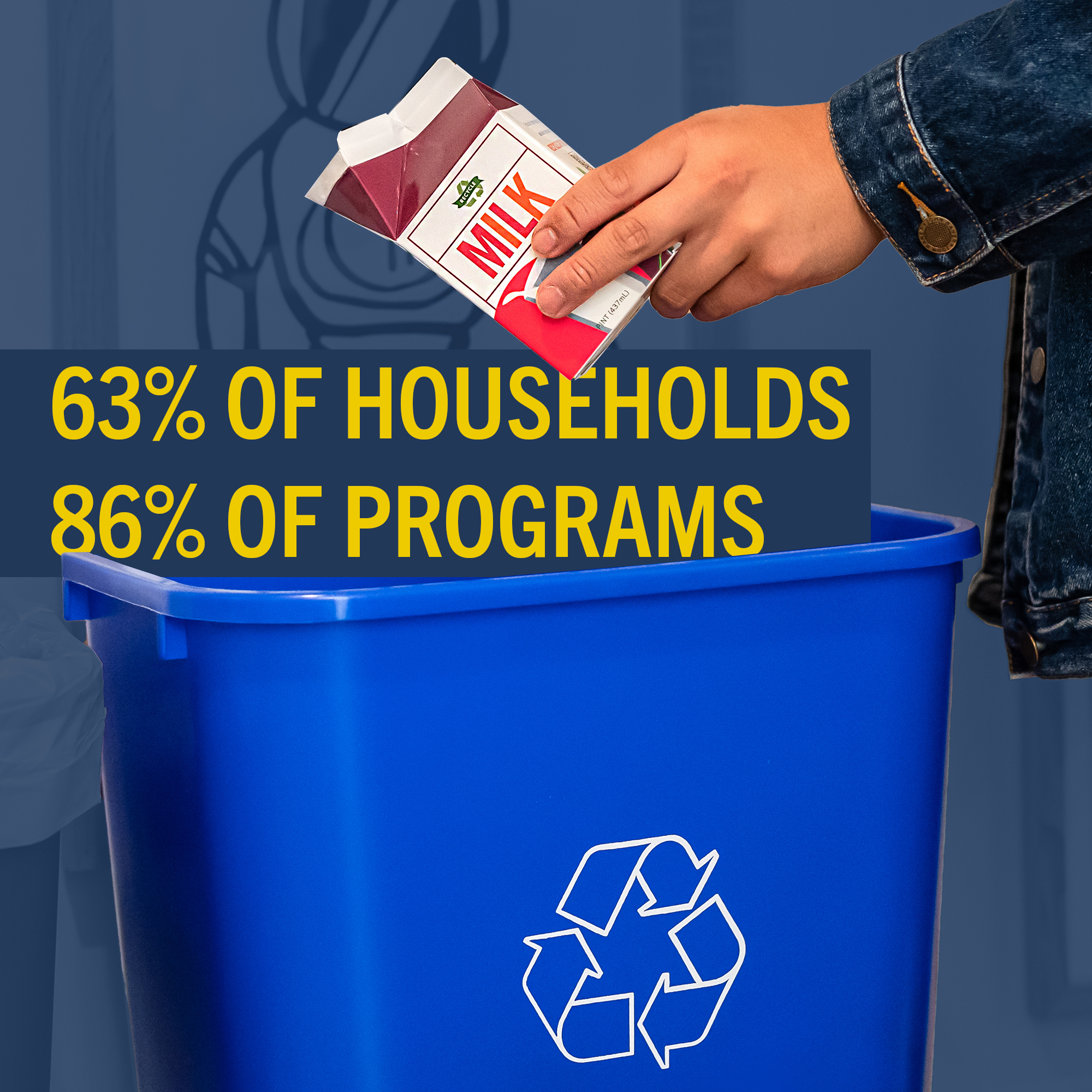
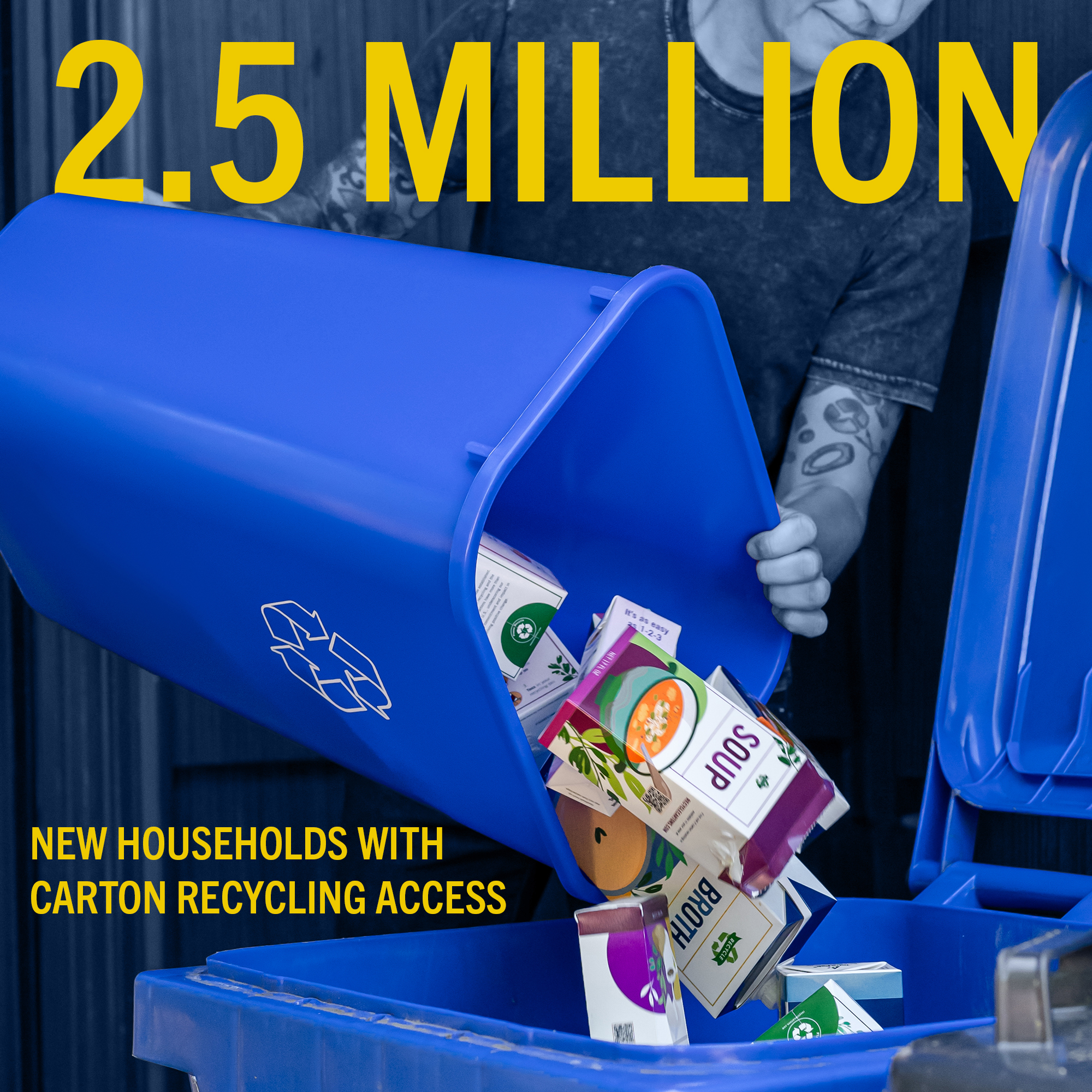
"2.5 Million New Households with Carton Recycling Access"

DENTON, Texas, February 19, 2026 /3BL/ – The Carton Council today announced continued growth in carton recycling access across the United States. In 2025, nearly 2.5 million additional households gained the ability to recycle food and beverage cartons, a figure that represents approximately 1.5% of all American households:

  • Household growth in 2025 (net): 2,464,653
  • 2025 year-end access: 63%
  • Recycling programs that include cartons (by household): 86%

Carton recycling access is tracked through an independent third-party that measures whether households have a local recycling program that includes cartons. Today, 63% of U.S. households have access to carton recycling programs – up from 18% in 2009 when the Carton Council was founded. Residents can transparently view recycling access using the Carton Council’s address locator tool.

“Real-world recycling begins with household access,” said Jordan Fengel, Executive Director of the Carton Council. “Before a material can be sorted and recycled, residents must be able to place cartons in the recovery stream. This growth reflects direct collaboration with communities, recyclers, and policymakers to strengthen the recycling system.”

The Recycling Partnership has indicated that approximately 73% of U.S. households have access to recycling services. The Carton Council’s data indicates cartons are accepted in the vast majority of programs (86% by household), demonstrating broad compatibility with existing collection systems.

"63% of households & 86% of programs"

Diverse Community Partnerships Drive 2025 Growth

Because many regions already offer recycling services, recent progress increasingly comes from targeted improvements that are aligned with local capacity and existing infrastructure. Several 2025 additions illustrate this range of approaches:

  • Austin, Texas 
    An expanded MRF partnership added carton access for approximately 500,000 households and created a foundation for future expansion into nearby communities.
  • Marion County, Florida 
    Targeted outreach supported the implementation of county-wide drop-off recycling, bringing access to about 127,000 households.
  • Robeson County, North Carolina 
    Updated program guidance provides roughly 35,000 households with county-wide drop-off recycling.
  • Cedar Falls, Iowa 
    Coordination with municipal staff established city-wide drop-off access for approximately 16,000 households.
  • Titusville, Florida 
    A curbside recycling program update added cartons to accepted materials for about 21,000 households.
  • Oregon – Statewide 
    With packaging extended producer responsibility (EPR) now active in Oregon, better aligned collection lists led to 627,000 households gaining access to carton recycling (38% increase).

“At this stage, progress happens one program at a time,” said Jason Pelz, Vice President of Recycling at the Carton Council. “We’re working directly with local governments and material recovery facilities to update accepted material lists, optimize sortation, and ensure cartons enter recycling streams. Each community addition strengthens supply for established and emerging recycling end markets.”

Access remains the entry point that enables the rest of the system to function. The 2025 increase reflects continued coordinated growth across collection programs, sorting facilities, and recyclers – demonstrating steady, measurable improvement in real-world recycling infrastructure.

cartons being recycled

Photo Caption: Recovered cartons at a U.S. tissue mill are recycled into new paper products.

###

About the Carton Council 
The Carton Council is composed of four leading carton manufacturers, Elopak, Novolex, SIG and Tetra Pak. Formed in 2009, the Carton Council works to deliver long-term collaborative solutions to divert valuable cartons from the landfill. Cartons are commonly used to package products like milk, broth, soup, juice and other beverages. When recycled, they can be transformed into premium building materials or new paper products, contributing to a circular economy.

Through a united effort, the Carton Council is committed to building a sustainable infrastructure for carton recycling in the U.S. and Canada and works toward its goals of adding access to carton recycling, as well as increasing recycling rates. For more information, visit recyclecartons.com.

Contact: 
Brendon Holland Communications Manager 
brendon.holland@cartoncouncil.org 
940-999-7221

Posted in UncategorizedTagged

Global Business Leaders Explore Responsible Leadership in an Era of Shared Challenges

NEW YORK, February 19, 2026 /3BL/ – Discussing responsible leadership in an era of shared challenges, leading CEOs who are a part of a coalition of more than 200 of the world’s largest companies collectively representing $8.3 trillion in annual revenue and $33 billion in total community investment attended Chief Executives for Corporate Purpose’s© (CECP) Board of Boards this week in New York, New York.

This closed-door, CEO-only session provided a distinct opportunity for CEOs to discuss how they can connect their investments in their people and communities and their corporate purpose to the business strategy.

CEO discussion leaders included:

  • Brian Moynihan, Chair, President & CEO, Bank of America
  • Dave Ricks, Chair and Chief Executive Officer, Eli Lilly and Company
  • Richard Dickson, President & CEO, Gap Inc.
  • Richard Edelman, President & CEO, Edelman
  • Nancy Chung, Management Committee and Executive Committee Member, Managing Partner of the New York office, Head of the Litigation group in New York, and Co-Head of the global Investment Funds Litigation practice, Sidley Austin LLP

Key Takeaways

  • When asked for words to describe how they were feeling, attending CEOs noted that they felt uncertain, disappointed, unsettled, tentative, and frustrated. Further takeaways include:
  • Purpose and profit are increasingly inseparable. Genuine purpose — not performative CSR — is now a core business strategy that drives employee retention, consumer trust, and long-term growth.
    • A company has permission from the public to operate when it feels the value your company provides.
    • Focus on those who might not benefit from your company’s innovations right away.
  • CEOs must navigate a set of compounding pressures. Economic and geopolitical volatility, accelerating AI transformation, shareholder activism, and regulatory scrutiny are all hitting at once, demanding agility rather than relying on long-term static plans.
    • Without purpose, democracy and capitalism will not survive.
    • A collective of companies need to step up on vital issues to encourage those who may not step up on their own.
  • Workforce development is a major differentiator. Whether it’s hiring underserved youth, career-trajectory wage increases, or the broader push for skills-first hiring over four-year degrees, companies that invest in their people — especially entry-level workers — are seeing real business returns.
    • Companies can be clearer on what they want people to do. Companies weren’t meaning enough to anyone.
    • An employee can’t have a relationship with a brand without empathy, inclusion, and belonging.
  • AI governance, not just adoption, is the real leadership challenge. The conversation has shifted from “are you using AI?” to “is it delivering value and do you have oversight?” Unintended consequences, regulatory divergence, and cybersecurity risks are now boardroom-level concerns.
    • AI mirrors what humanity wants it to be; we have a choice in what we do with these new tools.
    • Chase trust; we better trust what we are building.
  • Authenticity inside the organization has to come before external storytelling. Purpose-driven messaging only lands when it’s genuinely felt by employees first. Culture, internal communications, and meaningful day-to-day connection to mission are what make external narratives credible.

“The Board of Boards provides a forum for CEOs to candidly share their experiences—both successes and setbacks—in embedding purpose at the heart of their organizations,” said Daryl Brewster, CEO of CECP. “In an increasingly complex and unpredictable environment, these leaders rely on corporate purpose as their compass for navigating critical decisions and driving meaningful impact.”

The event was limited to CECP CEOs, and the list of attendees included:

  • Amit Bajaj, President, TCS North America, Tata Consultancy Services
  • Arianna Huffington, Founder & CEO, Thrive Global
  • Bill Rogers, CEO and Chairman, Truist Financial
  • Bijal Shah, CEO, Guild
  • Brian Shaw, CEO, Discovery Education
  • C. Thomas Evans Jr., Interim CEO, Secretary & General Counsel, Kemper Corporation
  • Darrel Hackett, US CEO, Bank of Montreal
  • Doug Conant, Founder & CEO, ConantLeadership
  • Fred Khosravi, CEO, Imperative Care
  • John Wood, Vice Chairman, Heidrick & Struggles International, Inc.
  • Jon Clifton, CEO, Gallup
  • Karthik Rao, CEO, Nielsen
  • Kecia Steelman, CEO, Ulta Beauty
  • Margaret Rogers, CEO, Pariveda
  • Jon Clifton, CEO, Gallup
  • Mark Weinberger, Former Global Chairman and CEO, EY
  • Michael Brandstaedter, President & CEO, The Topps Company
  • Sara Armbruster, President and CEO, Steelcase
  • Shelly Lazarus, Chairman Emeritus, Ogilvy
  • Soraya Alexander, CEO, Benevity
  • Steve Beard, Chairman & CEO, Covista
  • Theodore Dysart, Vice Chairman, Russell Reynolds

This year’s 2026 Sandy Weill Force for Good honorees, recognized at the event, are:

  • Brian Moynihan, Chair, President & CEO, Bank of America
  • Dave Ricks, Chair and Chief Executive Officer, Eli Lilly and Company
  • Richard Dickson, President & CEO, Gap Inc.

The Sandy Weill Force for Good honorees advocate on behalf of their companies to create a better world through business, and the recognition acknowledges a CEO’s leadership in the community and within their companies.

Additionally, this year’s Lawrence A. Wien Legacy Award honoree is Ginni Rometty. Ginni Rometty was the ninth Chairman, President, and Chief Executive Officer of IBM. Under her leadership, the 100-year-old company reinvented 50 percent of its portfolio, built a $25 billion hybrid cloud business, and established leadership in AI and quantum computing. Rometty also drove record results in workforce transformation and supported the explosive growth of an innovative high school program to prepare the workforce of the future in over twenty-eight countries. She was named Fortune’s #1 Most Powerful Woman three years in a row, is a member of the National Academy of Engineering, and has been honored with the designation of Officier in the French Légion d’Honneur. Today, Rometty serves on multiple boards and cochairs OneTen, a coalition of companies driving a SkillsFirst movement to unlock career opportunities for talent without four-year degrees. She is the author of the bestselling book Good Power: Creating Positive Change in Our Lives, Work and World. She exemplifies CECP founder Paul Newman’s belief that businesses can always “do more”, where CEOs’ purpose-driven and values-first work raise the bar.

CECP also thanks Sidley Austin LLP for hosting the event, Your Cause by Blackbaud for its support of all of CECP’s events, and the Empire State Building for lighting in CECP Blue.

The 2027 Board of Boards will be held in New York City. Interested CEOs can reach out to info@cecp.co.

CECP Media Contact

Katie Leasor
kleasor@cecp.co

###


About Chief Executives for Corporate Purpose (CECP)

Chief Executives for Corporate Purpose® (CECP) is the only nonpartisan business counsel and network dedicated to driving measurable returns on purpose. We promote responsible purpose-driven business as it increases customer loyalty, builds employee engagement, improves brand trust, attracts top talent, connects with strategic investors, and contributes to the bottom line.

More than 200 of the world’s leading companies seek to improve their return on purpose through access to CECP’s solutions in insights and benchmarking. With our companies, we harness the power of purpose for business, stakeholders, and society.

For more information, visit http://cecp.co.

Posted in UncategorizedTagged

CNH in Top 1% of S&P Global’s 2026 Sustainability Yearbook

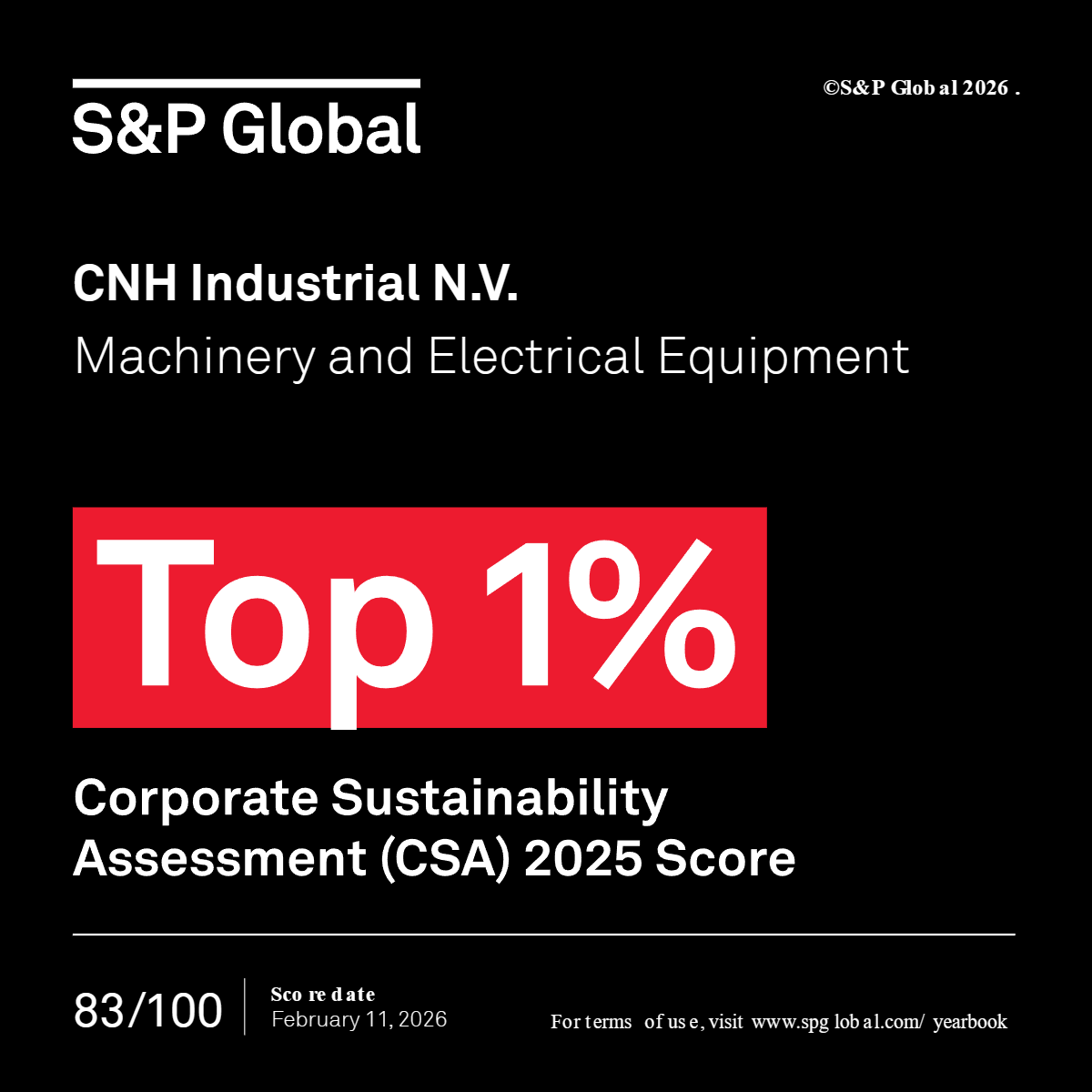
"S&P Global CNH Industrial N.V. Machineray and Electrical Equipment, Top 1%, Corporate Sustainability Assessment (CSA) 2025 Score"

CNH has ranked in the top 1% of companies featured in S&P Global’s 2026 Sustainability Yearbook. This distinction reflects the Company’s relative performance in the S&P Global 2025 Corporate Sustainability Assessment (CSA) and is based on its score of 83/100. The 2025 CSA evaluated submissions from over 9,200 organizations from 62 industries. The 2026 Yearbook included 848 companies, 70 of which are ranked in the top 1%.

This recognition builds on CNH’s recent inclusion in S&P Global’s Dow Jones Sustainability World and North America Indices (DJSI World and DJSI North America), where it received a joint first place ranking in the Machinery and Electrical Equipment Industry category.

“Our inclusion and ascent to the top 1% in S&P Global’s sustainability benchmark is powerful recognition that our strategy is delivering real‑world impact where it matters most – in the fields, on job sites, and in our communities. For agriculture in particular, sustainability quite literally starts in the soil, where our machines and precision technologies help farmers build healthier soils, protect biodiversity, and use fewer inputs while growing more to feed a growing population,” said Chun Woytera, Chief Sustainability Officer at CNH.

Alongside this most recent achievement, CNH was recognized with an A Climate score and an A- Water score from CDP – a global non-profit that runs the world’s only independent environmental disclosure system.

Posted in UncategorizedTagged

CNH in Top 1% of S&P Global’s 2026 Sustainability Yearbook

"S&P Global CNH Industrial N.V. Machineray and Electrical Equipment, Top 1%, Corporate Sustainability Assessment (CSA) 2025 Score"

CNH has ranked in the top 1% of companies featured in S&P Global’s 2026 Sustainability Yearbook. This distinction reflects the Company’s relative performance in the S&P Global 2025 Corporate Sustainability Assessment (CSA) and is based on its score of 83/100. The 2025 CSA evaluated submissions from over 9,200 organizations from 62 industries. The 2026 Yearbook included 848 companies, 70 of which are ranked in the top 1%.

This recognition builds on CNH’s recent inclusion in S&P Global’s Dow Jones Sustainability World and North America Indices (DJSI World and DJSI North America), where it received a joint first place ranking in the Machinery and Electrical Equipment Industry category.

“Our inclusion and ascent to the top 1% in S&P Global’s sustainability benchmark is powerful recognition that our strategy is delivering real‑world impact where it matters most – in the fields, on job sites, and in our communities. For agriculture in particular, sustainability quite literally starts in the soil, where our machines and precision technologies help farmers build healthier soils, protect biodiversity, and use fewer inputs while growing more to feed a growing population,” said Chun Woytera, Chief Sustainability Officer at CNH.

Alongside this most recent achievement, CNH was recognized with an A Climate score and an A- Water score from CDP – a global non-profit that runs the world’s only independent environmental disclosure system.

Posted in UncategorizedTagged

CNH in Top 1% of S&P Global’s 2026 Sustainability Yearbook

"S&P Global CNH Industrial N.V. Machineray and Electrical Equipment, Top 1%, Corporate Sustainability Assessment (CSA) 2025 Score"

CNH has ranked in the top 1% of companies featured in S&P Global’s 2026 Sustainability Yearbook. This distinction reflects the Company’s relative performance in the S&P Global 2025 Corporate Sustainability Assessment (CSA) and is based on its score of 83/100. The 2025 CSA evaluated submissions from over 9,200 organizations from 62 industries. The 2026 Yearbook included 848 companies, 70 of which are ranked in the top 1%.

This recognition builds on CNH’s recent inclusion in S&P Global’s Dow Jones Sustainability World and North America Indices (DJSI World and DJSI North America), where it received a joint first place ranking in the Machinery and Electrical Equipment Industry category.

“Our inclusion and ascent to the top 1% in S&P Global’s sustainability benchmark is powerful recognition that our strategy is delivering real‑world impact where it matters most – in the fields, on job sites, and in our communities. For agriculture in particular, sustainability quite literally starts in the soil, where our machines and precision technologies help farmers build healthier soils, protect biodiversity, and use fewer inputs while growing more to feed a growing population,” said Chun Woytera, Chief Sustainability Officer at CNH.

Alongside this most recent achievement, CNH was recognized with an A Climate score and an A- Water score from CDP – a global non-profit that runs the world’s only independent environmental disclosure system.

Posted in UncategorizedTagged

CNH in Top 1% of S&P Global’s 2026 Sustainability Yearbook

"S&P Global CNH Industrial N.V. Machineray and Electrical Equipment, Top 1%, Corporate Sustainability Assessment (CSA) 2025 Score"

CNH has ranked in the top 1% of companies featured in S&P Global’s 2026 Sustainability Yearbook. This distinction reflects the Company’s relative performance in the S&P Global 2025 Corporate Sustainability Assessment (CSA) and is based on its score of 83/100. The 2025 CSA evaluated submissions from over 9,200 organizations from 62 industries. The 2026 Yearbook included 848 companies, 70 of which are ranked in the top 1%.

This recognition builds on CNH’s recent inclusion in S&P Global’s Dow Jones Sustainability World and North America Indices (DJSI World and DJSI North America), where it received a joint first place ranking in the Machinery and Electrical Equipment Industry category.

“Our inclusion and ascent to the top 1% in S&P Global’s sustainability benchmark is powerful recognition that our strategy is delivering real‑world impact where it matters most – in the fields, on job sites, and in our communities. For agriculture in particular, sustainability quite literally starts in the soil, where our machines and precision technologies help farmers build healthier soils, protect biodiversity, and use fewer inputs while growing more to feed a growing population,” said Chun Woytera, Chief Sustainability Officer at CNH.

Alongside this most recent achievement, CNH was recognized with an A Climate score and an A- Water score from CDP – a global non-profit that runs the world’s only independent environmental disclosure system.

Posted in UncategorizedTagged

MetLife Skills in Action: Empowering Non-Profits to Thrive

Watch this video to learn how Metlife employee volunteers are using their expertise to help nonprofits thrive.  

At MetLife, we believe volunteering can be a powerful force for good. Through our MetLife Skills for Impact program, employees partner directly with nonprofits – bringing their knowledge and experience to help them tackle mission-critical challenges and build solutions that strengthen communities.  

Posted in UncategorizedTagged

MetLife Skills in Action: Empowering Non-Profits to Thrive

Watch this video to learn how Metlife employee volunteers are using their expertise to help nonprofits thrive.  

At MetLife, we believe volunteering can be a powerful force for good. Through our MetLife Skills for Impact program, employees partner directly with nonprofits – bringing their knowledge and experience to help them tackle mission-critical challenges and build solutions that strengthen communities.  

Posted in UncategorizedTagged