How To Create an Effective Incident Response Communication Plan

Key Takeaways: Incident Response Communication

  • Plan incident communications in advance to reduce confusion and protect people during emergencies.
  • Define clear communication roles and authority, so messages are accurate, timely, and consistent.
  • Communicate early and often, even while response actions are underway.
  • Tailor messages by stakeholder, including employees, customers, regulators, and the public.
  • Use the right channels for urgency, from immediate safety alerts to scheduled updates and public statements.
  • Strong communication accelerates recovery, enabling faster closure and a safer return to normal operations.

Communication planning for incident response often gets overlooked. But when you consider just how much has to be done in the event of an incident, and how fast it all has to happen, it’s easy to see why this critical step needs dedicated attention.

When an incident occurs, the right messages—delivered to the right people, through the right channels, at the right time—can make the difference between chaos and control. In this guide, we focus specifically on building an incident response communication plan that protects people, minimizes risk, and accelerates recovery

Develop Your Incident Response Communication Plan

A strong communication plan ensures consistency, transparency, and trust during an incident. Here are the key steps:

Identify Stakeholders Early: List out internal and external audiences (employees, customers, regulators, media, community, etc.).

Define Communication Protocols: Establish who communicates what, when, and how. Avoid ambiguity by assigning clear spokespersons and backup roles.

Establish Channels and Tools: Email, text alerts, intranet updates, social media, and press releases all serve different purposes. Map channels to stakeholder needs and urgency.

Create Templates: Pre-approved templates for press releases, customer notices, and regulator updates save valuable time. Generative AI tools can help you outline first drafts quickly, but ensure all templates are reviewed and approved by people with specific knowledge of your business.

Test and Train: Run regular drills to validate the communication plan, identify gaps, and ensure spokespersons are comfortable under pressure.

Start Communication Early

Many organizations wait until the emergency response phase is complete before investigating or updating stakeholders. However, it is best practice to start communication immediately, even while response actions are underway. Early, accurate updates help leadership make informed decisions and reassure stakeholders that the situation is being managed.

Make Engagement an Ongoing Practice

One message is not enough. Federal, state, and local regulators—as well as employees, customers, and communities—expect regular, transparent updates. You can demonstrate that the situation is under control by sending:

  • Consistent briefings for regulators (e.g., OSHA, EPA, Coast Guard, state agencies, and cybersecurity authorities as applicable)
  • Clear updates for employees on safety requirements and operational impacts
  • Public-facing messaging through media or social channels to maintain trust and manage rumors

Tailor Communications to Key Stakeholders

Different audiences respond to different tones, details, and delivery methods. Communications will be more relevant and effective when they are customized for stakeholder groups:

  • Employees: Direct, actionable safety updates via internal channels
  • Customers: Transparent messaging on impacts and recovery timelines, often via email or public status pages
  • Regulators: Factual, detailed compliance reports Supported by documented response actions
  • Media/Public: Clear, concise statements emphasizing public safety, and taking responsibility and corrective actions

Communication Channels and Timing

  • Immediate Alerts: Text messages, automated calls, intranet banners or site PA systems for urgent safety information
  • Regular Updates: Email bulletins, status dashboards for customers, and scheduled regulator briefings
  • Public Statements: Social media and press releases (or press conferences, when needed) for broad awareness

Facilitate Faster Closure

Once site data has been gathered and stakeholders have been engaged, the next priority is driving closure. The faster the transition from response to remediation, the sooner operations can return to normal—with the credibility that comes from consistent and transparent communication.

Plan for Ongoing Support

Many risks persist even after conditions stabilize. Health and safety considerations, for example, can’t be ignored. From audits and exposure assessments to industrial hygiene support and process safety management, it’s important to address remaining concerns and ensure a safe environment for workers and the surrounding community.

Lead with Peace of Mind

Incidents are stressful and often chaotic. But with a clear communication plan and the right partners, incident management doesn’t need to feel like a balancing act. Antea Group’s Incident Management (AIM) helps organizations transition from initial response to recovery while ensuring all stakeholders stay informed and confident throughout the process.
Learn more about our approach to proactive incident management or check out the AIM intro video below. Contact us today if you need immediate support!

Posted in UncategorizedTagged

Unlocking the Business Case for Digital Finance at Scale

Originally published by Accion

By Gayatri Mehta

Globally, advances in technology, data, and internet connectivity are rapidly reshaping the way we deliver financial services. Financial service providers (FSPs), particularly those serving women-led micro and small enterprises (MSEs) facing the highest barriers to access, know they need to digitize to keep pace with this shift. Indonesia’s digital economy, one of the fastest growing in the world, is projected to quadruple in size and reach $360 billion by 2030, underscoring both the scale of opportunity and urgency for providers to adapt.

But digital transformation is far more than a simple tech upgrade and doesn’t happen overnight. It demands significant investment, strategic leadership and alignment, and rigorous change management to deliver tangible, commercial benefits. Yet, for many high-touch FSPs, the challenge is not whether to digitalize, but where to focus. With a growing array of digital tools and solutions, it is often unclear which investments will deliver the greatest impact and commercial returns. This lack of clarity risks consuming significant time and capital for limited payoff. What’s more, poorly prioritized or implemented digital initiatives risk deepening digital exclusion.

At Accion, our work digitalizing operating models, channels infrastructure, and customer engagement with our partners, based on clearly defined and prioritized business objectives, is helping strengthen the business case for digital transformation across financial institutions globally, while simultaneously building the financial resilience of microentrepreneurs, especially women.

In 2024, the Accion Digital Transformation Fund announced an investment in Amartha, Indonesia’s largest P2P lending platform serving over 1.9 million active women-led ultra microbusinesses, a segment that dominates the small business sector yet has significant unmet financial needs. Accion Advisory, with support from Mastercard Center for Inclusive Growth, also worked with Amartha to support the institution’s journey to digitize its group lending operations and diversify product offerings.

Anchored in a multi-year growth and scale plan, Amartha recognized that sustaining momentum would require a transformation of its operating model, revenue streams, and cost structure. This meant a substantial investment in digital infrastructure and change management, reshaping the roles and capabilities of loan officers, and strengthening risk management and underwriting processes. Amartha’s leadership evaluated opportunities against a clear set of business criteria: customer expansion, operational productivity, and revenue diversification. Digital initiatives were then prioritized using a framework that assessed expected commercial impact, operational feasibility, and ability to deliver near-term efficiency gains.

Taking this approach ensured resources remained concentrated on projects that delivered measurable business and customer value — such as faster renewal processes, lower servicing costs, and higher field officer productivity — while also creating the digital rails needed to support longer-term product diversification. Competing priorities that risked diverting critical resources and attention away from near-term business goals, such as complex feature builds or adjacent business opportunities outside the core lending model that would have stretched technical and operational capacity, were deliberately deprioritized.

By combining traditional and alternative data, digital channels such as a customer app, e-wallet, and agent network, and offline/online customer support modalities, Amartha modernized its operating model, generating substantial efficiencies and reducing customer acquisition and service costs. Where appropriate, manual, high-touch processes — such as in-person home and field visits, manual verification, or eligibility checks — were streamlined with automation powered by machine learning for credit scoring, while digital channels have reduced friction in onboarding and payments.

The results are already demonstrating measurable commercial impact. Within eight months, more than 275,000 women-led MSEs have received the new digital lending product, and over 900,000 customers — nearly 50 percent of their active customer base — are making digital repayments monthly. Field officers can now serve customers up to 50 percent faster. Branches using fully digital processes have already seen a 23 percent increase in caseload productivity. With digital repayments at least 21 percent cheaper than cash, this is significantly improving unit economics while enhancing security.

These operational efficiencies have enabled field officers to nearly double the time spent on new sales. While initially only rolled out to a subset of the customer base, the product has already increased monthly disbursements by nearly 10 percent across the overall portfolio, and Amartha aims to triple this growth by 2027.

Olip, Amartha’s field manager, told me, “With the new digital product and e-wallet, my field team can go home two hours earlier each day because we don’t have to do cash reconciliation at the branch. We’re also no longer worried about thefts or break-ins, and the time saved in collecting cash can be used to train our customers on how to use new and better products, like digital savings.”

Efficiency gains have cut time spent in group meetings in half, creating opportunities for field staff to train customers on digital usage best practices. The digital channels infrastructure has enabled Amartha to more seamlessly launch other offerings, like payments, digital savings, and microinsurance, boosting customer lifetime value and improving MSE financial resilience.

For the women entrepreneurs we surveyed who often juggle informal income streams, multiple household obligations, and cash-flow volatility, faster and more convenient access to financial services is invaluable. Sixty percent of customers surveyed reported saving time through the new digital processes, and 67 percent used that time to increase business activities and income. Many of these MSEs have taken advantage of the opportunity to become sales agents themselves, starting new revenue-generating side hustles without distracting from other business and household responsibilities.

However, the story of digitalization is not all positive. Convenience alone doesn’t erase or downplay concerns around trust and security. In fact, our research reveals that even the most digitally active customers often feel vulnerable when using digital financial services. These insights mirror findings in research from the Center for Financial Inclusion and reinforce the broader messaging that trust in technology is as important as the technology itself.

To mitigate cyber-related risks, Amartha has invested in a multi-layered, end-to-end fraud-prevention system, reinforced training programs, and provides continuous support to customers via field officers.

Contrary to concerns, digitalization hasn’t weakened customer connection; if anything, it has deepened it by giving field officers more capacity for personalized support, reinforcing the need for providers to prioritize security, fraud prevention, and change management.

Amartha’s transformation, and that of many financial institutions globally, can be a strategic mechanism for growth and scalable impact that requires enormous investment in organizational and operational change. It’s not about going “fully digital” overnight or replacing essential human touch with technology. For FSPs questioning whether to digitalize, the real focus should be how to do it well and where to stay focused to derive value for both the customers and the institution.

Our experience has shown us that prioritizing well and investing in the right technology, data, and skillsets — combined with responsible design and implementation — can help strengthen an institution’s bottom line while building financially inclusive and resilient communities.

Click here to read more on Accion

Follow along Mastercard’s journey to connect and power an inclusive, digital economy that benefits everyone, everywhere.

Posted in UncategorizedTagged

PBF Energy 2024 Sustainability Report Spotlight: Energy, Waste and Water Resource Management

Originally published in PBF Energy’s 2024 Sustainability Report

NEW RENEWABLE DIESEL UNIT POWERS FORWARD TOWARD A SUSTAINABLE FUTURE

In 2023, PBF Energy completed the successful startup of the Saint Bernard Renewables (SBR) business, marking a significant milestone in our offering of lower-carbon fuels. SBR, a joint venture partnership between PBF Energy and Enilive S.p.A., is an operating biorefinery consisting of a pre-treatment unit and a renewable diesel unit (RDU), with a production capacity of 306 million gallons per year of renewable diesel. This state-of-the-art facility, fully operational as of June 2023, demonstrates PBF Energy’s continued commitment to deliver diversified sources of energy to customers while lowering the carbon intensity of its products.

Located within our Chalmette refinery, the SBR RDU is designed to convert organic feedstocks, such as used cooking oils, animal fats, and seed oils, into high-quality renewable diesel. This drop-in fuel is chemically similar to petroleum diesel but offers lower lifecycle GHG emissions, helping to reduce the carbon footprint of both PBF Energy and our customers.

With a production capacity of 840,000 gallons per day, SBR positions PBF Energy as a leading producer of renewable diesel in the United States. The RDU leverages advanced hydroprocessing technology, which enables feedstock flexibility while maintaining the high-energy density and performance characteristics of traditional diesel that customers demand.

ENVIRONMENTAL AND ECONOMIC IMPACT

The RDU plays a critical role in PBF Energy’s broader resiliency strategy. Its operation demonstrates PBF Energy’s commitment to the innovations that will play a crucial part in the energy of the future. Since coming online, SBR has converted hundreds of millions of gallons of organic feedstocks into high-quality renewable diesel. The resulting renewable diesel meets stringent environmental standards, including the California Low Carbon Fuel Standard and Renewable Fuel Standard, and also supports waste reuse, cleaner air, and healthier communities.

In addition to its environmental benefits, the RDU contributes positively to the local economy. The project supported over 200 jobs during its construction phase and has created approximately 20 direct refinery positions and an estimated 90 new, indirect jobs within the St. Bernard Parish and region.

STRATEGIC ALIGNMENT

Our RDU is an infrastructure investment that clearly demonstrates our purpose-driven approach to energy. By integrating next generation fuels into our operations, PBF Energy is creating long-term value for our stakeholders and contributing to a resilient energy future.

“Closing this strategic partnership with Eni Sustainable Mobility, a global leader in biorefining, demonstrates our commitment to delivering diversified sources of energy to our customers, while lowering the carbon intensity of the products we manufacture.”
Matthew Lucey
At time of quote, serving as PBF Energy President

WASTE MANAGEMENT

PBF Energy is committed to the continuous reduction of waste generated through our operations. Our refineries prioritize source reduction efforts and comprehensive materials management to ensure all waste is safely, efficiently, and responsibly handled. Our approach includes various recycling and reuse initiatives, including our successful catalyst recycling program in which catalysts containing recoverable metals, such as molybdenum and platinum, are sent for regeneration or reclamation. In 2024, this process diverted over 3.9 million pounds of catalyst metals from landfill, generating cost savings and helping build operational resilience. PBF Energy has a comprehensive waste segregation program at each of our refineries, ensuring that hazardous and non-hazardous wastes are properly stored, managed, and disposed to ensure safe, efficient handling, maintain regulatory compliance, and reduce risk of environmental impact.

Our refineries further demonstrate responsible waste management through the use of the Oil-Bearing Hazardous Secondary Material (OBHSM) exemption program. Through this program, oil product is recovered from oil-bearing materials otherwise destined to be waste, helping to maximize yield while minimizing waste generation. In 2024, over 10 million pounds of OBHSM was sent for product recovery, reducing the environmental impact of PBF Energy’s products while underscoring our continued dedication to the efficient use of resources.

In addition to the recycling of process waste, our refineries also recover construction materials. In 2024, we recycled approximately 3.5 million pounds of scrap metal, 1.4 million pounds of concrete, and 0.2 million pounds of asphalt. These materials are able to be reused in infrastructure and manufacturing projects, reducing landfill impact and conserving natural resources.

TOTAL WASTE GENERATED AND RECYCLED

  2022 2023 2024
TOTAL WASTE GENERATED TONNES* 95,699 107,842 186,379
TOTAL WASTE RECYCLED TONNES 29,500 22,700 56,494

*Waste generated can fluctuate year over year based on scheduled annual cleanings and maintenance.

WATER RESOURCE MANAGEMENT

We take a holistic approach to water resource management in our operations through responsible use and conservation initiatives to drive efficiency and minimize impacts on the surrounding environment. We track water use, consumption, and discharge across our operations and use this data to identify opportunities for efficiency improvements. Where possible, we prioritize water reuse for cleaning, cooling, and other non-potable processes. Through monitoring, recycling, and treatment efforts, we work to ensure our operations meet all regulatory requirements for water use and discharge and support the vitality of local water systems.

TOTAL FRESHWATER WITHDRAWN

  2022 2023 2024
TOTAL FRESHWATER WITHDRAWN (THOUSAND CUBIC METERS) 210,000 200,00 179,000
PERCENTAGE OF TOTAL FRESHWATER WITHDRAWN IN REGIONS WITH HIGH OR EXTREMELY HIGH BASELINE WATER STRESS* 2.9% 9.1% 8.3%

*Source is WRI aqueduct. The year 2022 does not include Delaware as it was not yet considered a water stressed area. As of 2023, Delaware is considered a water stressed area.

To learn more about PBF Energy’s commitment to sustainability, visit our sustainability webpage

For full details about PBF Energy’s 2024 Sustainability Report, visit here

About PBF Energy Inc.
PBF Energy Inc. (NYSE:PBF) is one of the largest independent refiners in North America, operating, through its subsidiaries, oil refineries and related facilities in California, Delaware, Louisiana, New Jersey and Ohio. Our mission is to operate our facilities in a safe, reliable and environmentally responsible manner, provide employees with a safe and rewarding workplace, become a positive influence in the communities where we do business, and provide superior returns to our investors.

PBF Energy is also a 50% partner in the St. Bernard Renewables joint venture focused on the production of next generation sustainable fuels.

Posted in UncategorizedTagged

AB Volunteers Support Munich Young People in Need

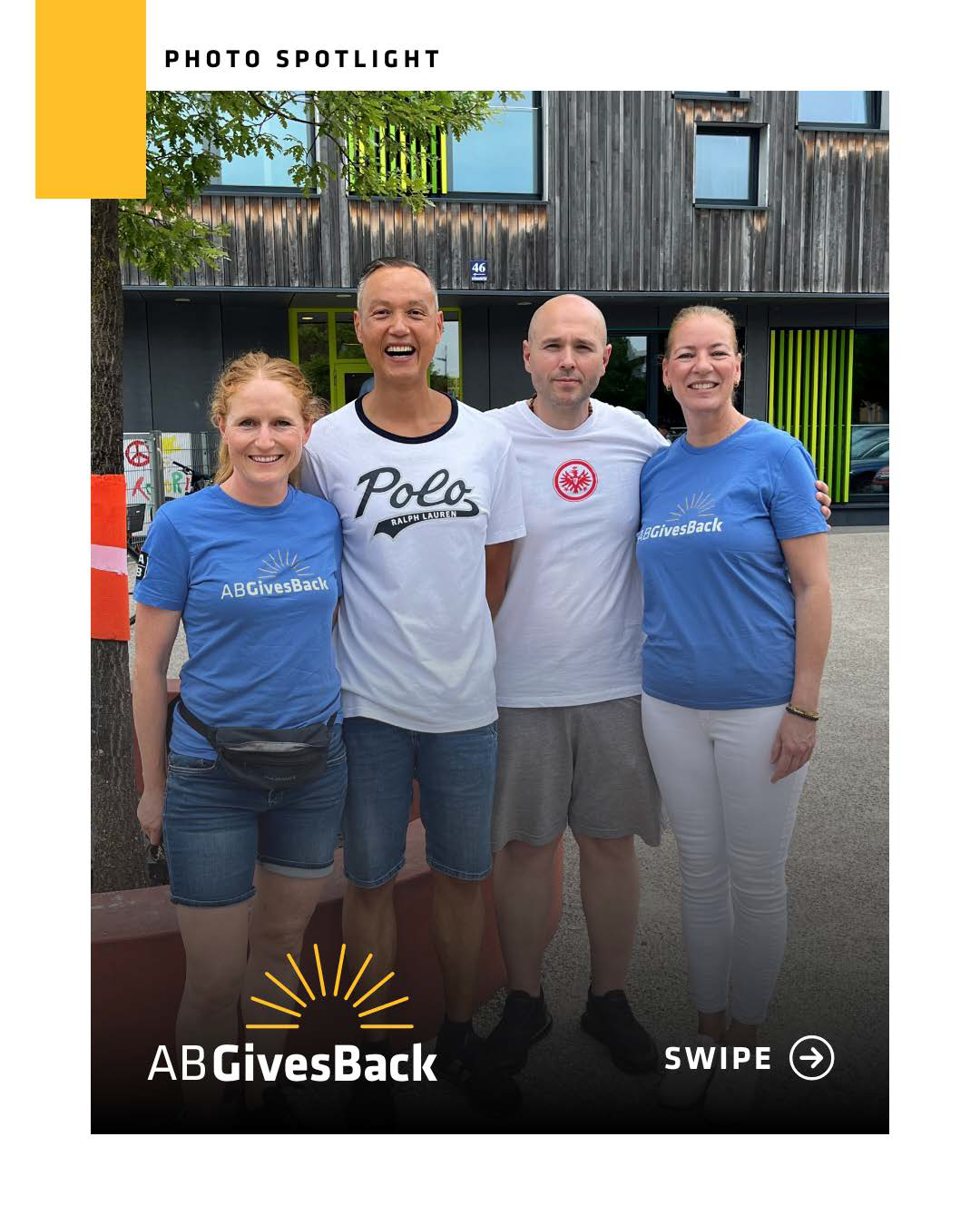
Four smiling people standing together

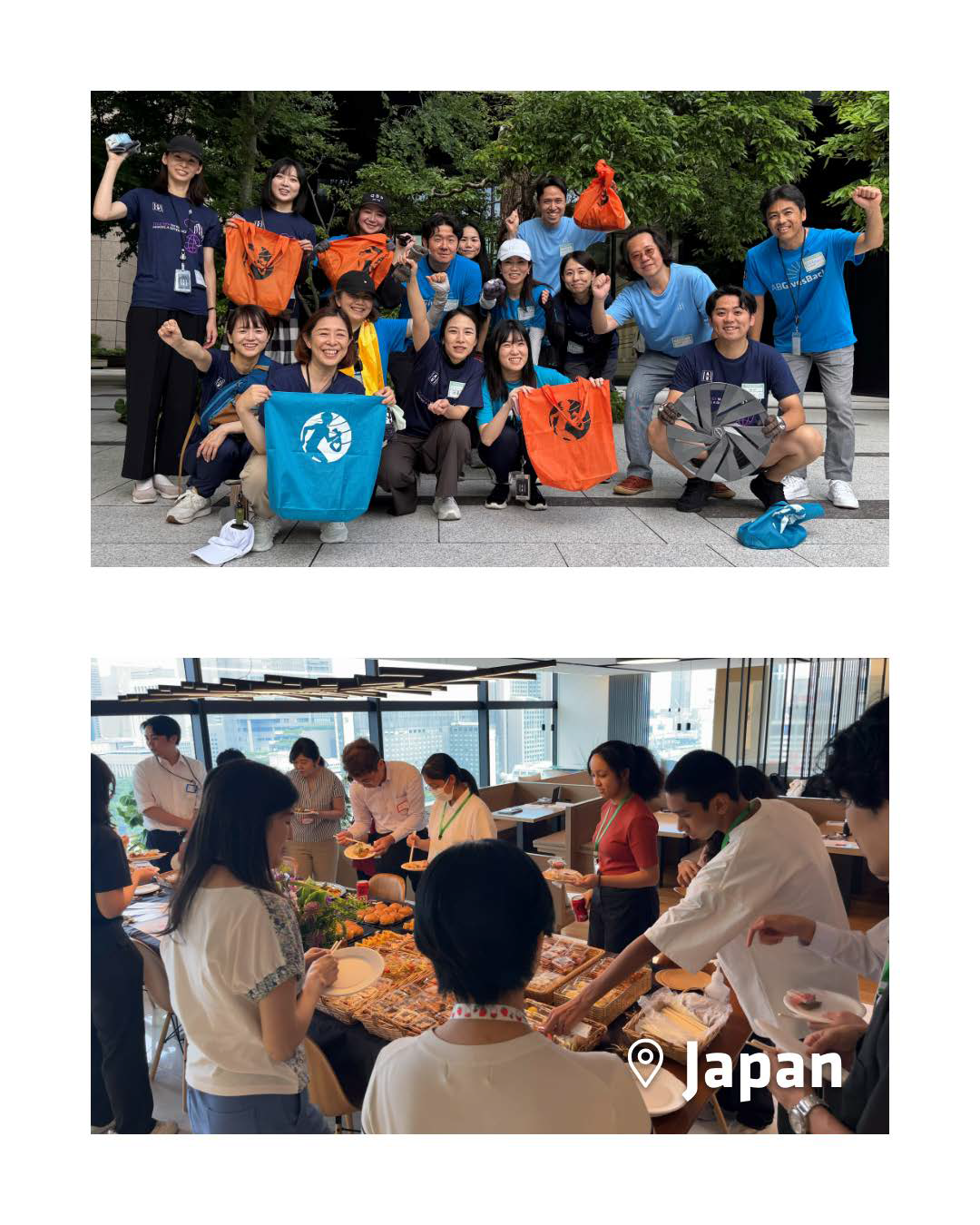
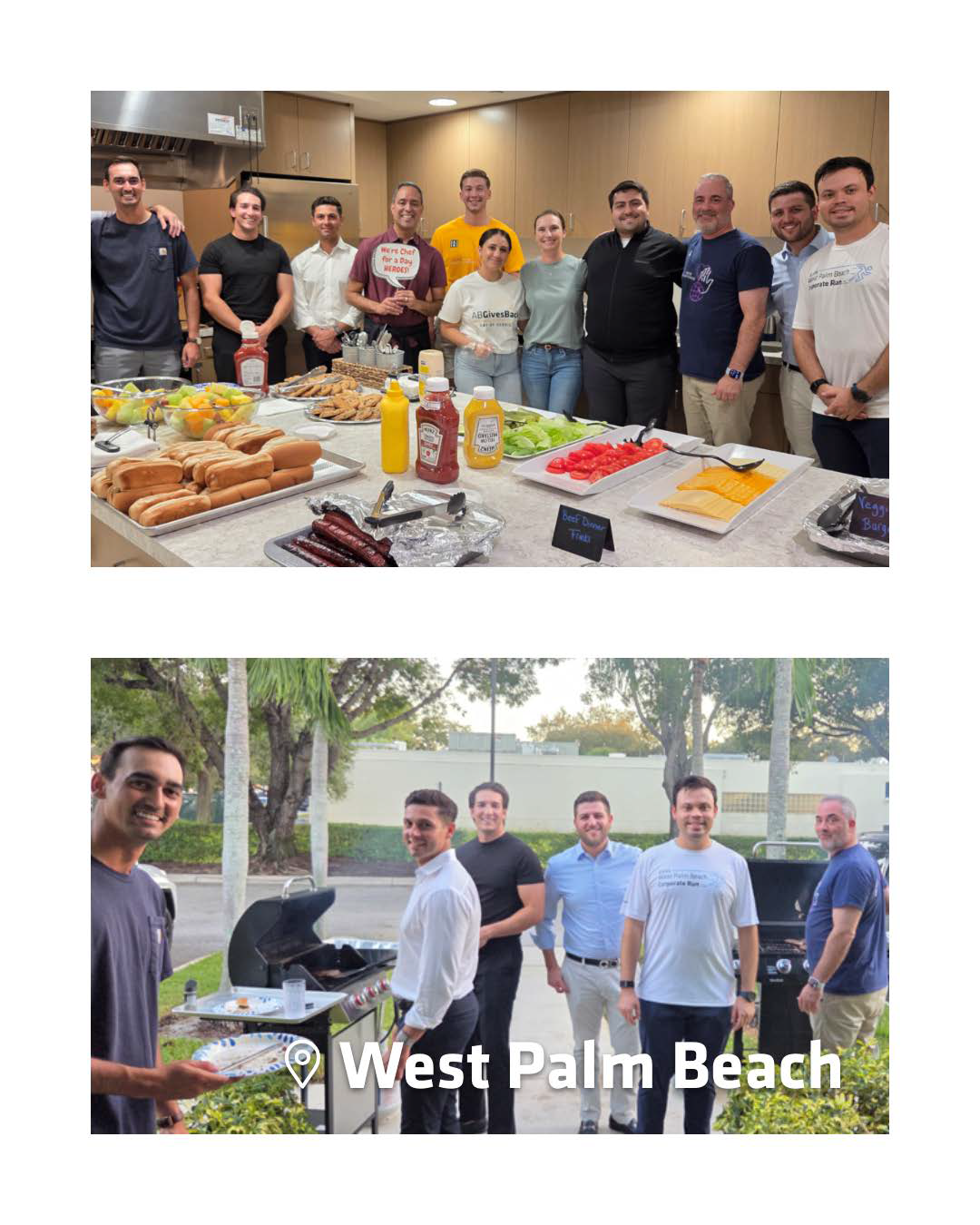
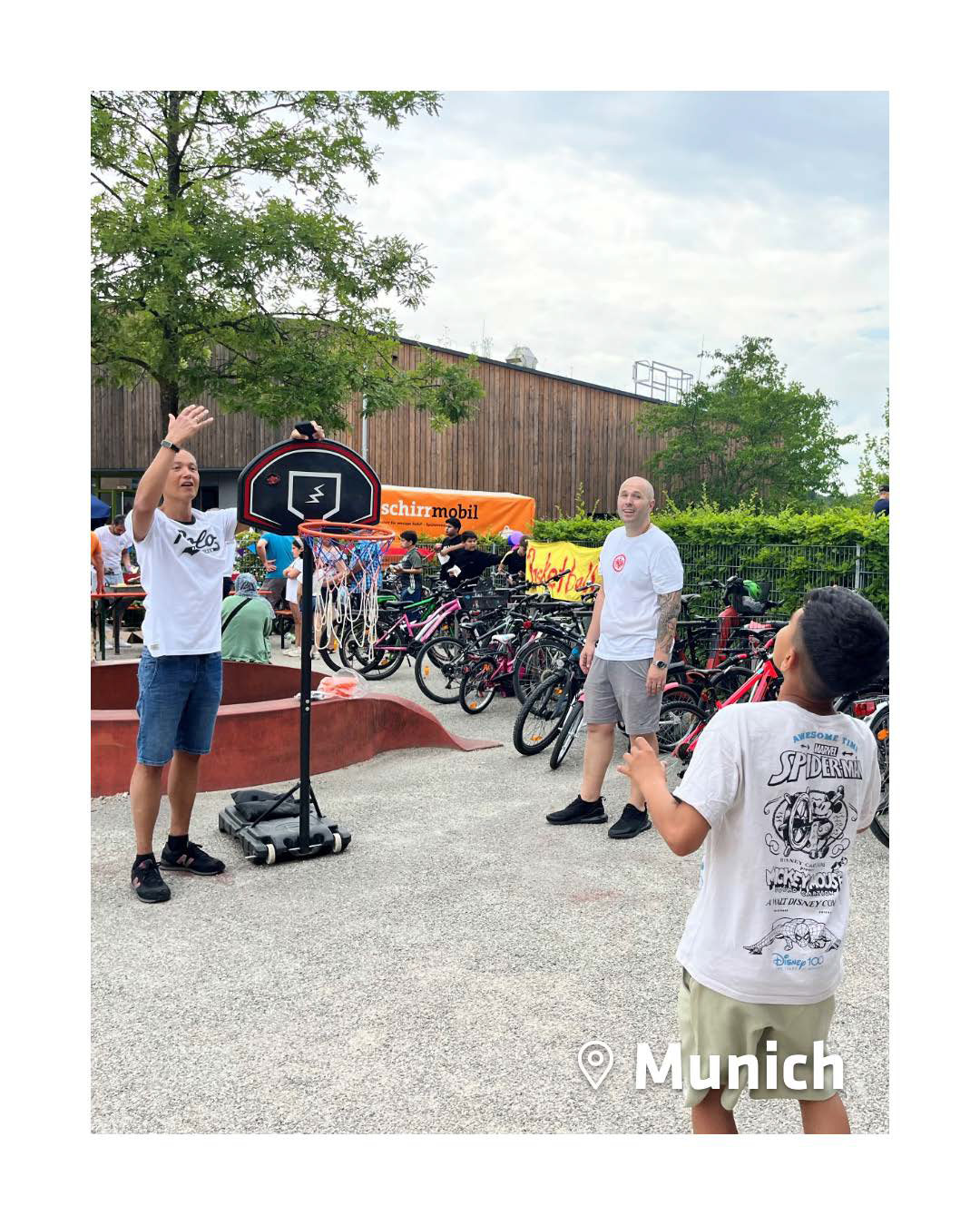
At AB, our volunteer program reflects our commitment to serving our local communities. In Munich, our team dedicated two days to organizing and building a workstation while repairing bicycles for Arche Kinderstiftung, an organization that supports children and young people in need. Meanwhile, AB Japan partnered with Katariba to host a financial education event for high school students, where they explored career paths, interviewed employees, and networked over lunch. Our Bernstein West Palm Beach office took on the role of “Chef for a Day” at Quantum House, a nonprofit hospitality home that supports families with children undergoing medical treatment.

people playing basketballcollage showing volunteerscollage showing volunteers in West Palm Beach

AllianceBernstein (AB) is a leading global investment management firm that offers diversified investment services to institutional investors, individuals, and private wealth clients in major world markets.

To be effective stewards of our clients’ assets, we strive to invest responsibly—assessing, engaging on and integrating material issues, including environmental, social and governance (ESG) considerations into most of our actively managed strategies (approximately 79% of AB’s actively managed assets under management as of December 31, 2024).

Our purpose—to pursue insight that unlocks opportunity—describes the ethos of our firm. Because we are an active investment manager, differentiated insights drive our ability to design innovative investment solutions and help our clients achieve their investment goals. We became a signatory to the Principles for Responsible Investment (PRI) in 2011. This began our journey to formalize our approach to identifying responsible ways to unlock opportunities for our clients through integrating material ESG factors throughout most of our actively managed equity and fixed-income client accounts, funds and strategies. Material ESG factors are important elements in forming insights and in presenting potential risks and opportunities that can affect the performance of the companies and issuers that we invest in and the portfolios that we build. AB also engages issuers when it believes the engagement is in the best financial interest of its clients.

Our values illustrate the behaviors and actions that create our strong culture and enable us to meet our clients’ needs. Each value inspires us to be better:

  • Invest in One Another: At AB, there’s no “one size fits all” and no mold to break. We celebrate idiosyncrasy and make sure everyone’s voice is heard. We seek and include talented people with diverse skills, abilities and backgrounds, who expand our thinking. A mosaic of perspectives makes us stronger, helping us to nurture enduring relationships and build actionable solutions.
  • Strive for Distinctive Knowledge: Intellectual curiosity is in our DNA. We embrace challenging problems and ask tough questions. We don’t settle for easy answers when we seek to understand the world around us—and that’s what makes us better investors and partners to our colleagues and clients. We are independent thinkers who go where the research and data take us. And knowing more isn’t the end of the journey, it’s the start of a deeper conversation.
  • Speak with Courage and Conviction: Collegial debate yields conviction, so we challenge one another to think differently. Working together enables us to see all sides of an issue. We stand firmly behind our ideas, and we recognize that the world is dynamic. To keep pace with an ever changing world and industry, we constantly reassess our views and share them with intellectual honesty. Above all, we strive to seek and speak truth to our colleagues, clients and others as a trusted voice of reason.
  • Act with Integrity—Always: Although our firm is comprised of multiple businesses, disciplines and individuals, we’re united by our commitment to be strong stewards for our people and our clients. Our fiduciary duty and an ethical mind-set are fundamental to the decisions we make.

As of December 31, 2024, AB had $792B in assets under management, $555B of which were ESG-integrated. Additional information about AB may be found on our website, www.alliancebernstein.com.

Learn more about AB’s approach to responsibility here.

Posted in UncategorizedTagged

CVS Health Makes Health Insurance Simpler and More Affordable for Americans

Originally published on CVS Health Company News

HARTFORD, CT — CVS Health® recently announced key milestones in its ongoing effort to make health care simpler and more affordable for American consumers.

“Our ambition is to be America’s most trusted health care company,” said David Joyner, President and CEO of CVS Health. “We are partnering with the Administration and Congress to deliver common-sense solutions that make health care more affordable and improve outcomes for the people we serve. We continue to decrease prior authorizations, reduce hospital readmissions and emergency room visits, and bring down the costs of prescription drugs. The underlying costs of health care — primarily hospitals and new pharmaceuticals — continue to push up insurance premiums in the United States. We welcome policymakers’ assistance in driving out provider fraud and combatting drugmaker price gouging.”

Simplification

Part of CVS Health, Aetna® continues to make good on significant commitments to remove friction in the health care system and improve the experience for health care professionals and their patients. The prior authorization process has been hindered by incomplete data provided by clinicians, as well as the lack of technology interoperability across the health care system, but we have made significant strides in making the process simpler.

Affordability

CVS Health works across our businesses to ensure each of the 185 million Americans we serve are receiving the right care at the right cost. We are expanding low-cost primary care, covering preventive care at no cost to patients, and offering free virtual care to eliminate barriers to access.

Community impact

In 2024, CVS Health delivered $474 billion in positive contributions to the United States economy. We employ more than 300,000 United States citizens, and indirectly create an additional one million jobs through the partners and vendors who work with us.

In an era when other major retail pharmacies have declared bankruptcy or turned to private equity, more than 85% of Americans live within 10 miles of one of our 9,000 community pharmacies. We continue to put the people of the United States first in the work we do to simplify health care. One patient, one family, and one community at a time.

###

About CVS Health
CVS Health® is a leading health solutions company building a world of health around every consumer, wherever they are. As of September 30, 2025, the Company had approximately 9,000 retail locations, more than 1,000 walk-in and primary care medical clinics, and a leading pharmacy benefits manager with approximately 87 million plan members. The Company also serves an estimated more than 37 million people through traditional, voluntary and consumer-directed health insurance products and related services, including highly rated Medicare Advantage offerings and a leading standalone Medicare Part D prescription drug plan. The Company’s integrated model uses personalized, technology driven services to connect people to simply better health, increasing access to quality care, delivering better outcomes, and lowering overall costs.

Posted in UncategorizedTagged

Turning Decarbonization Into a Long-Term Business Advantage

This blog is authored by Charlie Jelen and Dan Gentry, co-hosts of the Cool Air, Hot Takes podcast.

Some decision-makers might view decarbonization as a compliance box to check or a constraint to manage. But, when we look closely at what’s happening inside buildings, across markets and within organizations, a different story emerges. Viewed through the lens of creating business value, decarbonization is an opportunity to rethink how we operate our built environment and what will make those systems more cost-effective while also reducing emissions. Decarbonization isn’t just a sustainability term, but an opportunity to create value.

On our podcast, Cool Air, Hot Takes, we talk about subjects ranging from AI to venture capital and then connect the dots on how those forces relate to the built environment. Decarbonization is one of the most exciting topics we cover: what it means, how it works and what technologies can help companies decarbonize while making operations more efficient.

What is decarbonization?

At its core, decarbonization is about reducing (and ultimately eliminating) emissions. Often, people hear about decarbonizing buildings and assume that it means an immediate leap to all-electric systems or a complete redesign of existing infrastructure, but that’s not the reality. Organizations are already decarbonizing, often without calling it that, simply by making systems more efficient and more intelligent.

Molly Ramasamy, the director of deep carbon reduction at Jaros, Baum & Bolles, recently joined us on the podcast and shared her perspective that decarbonization is one of HVAC’s biggest opportunities. Small operational improvements, equipment innovations and smarter controls can create meaningful efficiency gains and cost savings. Even improving simple maintenance processes can reduce energy use and emissions over time.

The most successful projects begin with questions, not solutions. How does the building actually operate today? Where is energy being used inefficiently? Where is heat being wasted that could be recovered and reused? When teams slow down enough to ask these questions, opportunities for cost efficiencies and decarbonization often quickly surface.

After teams identify those opportunities, they can map key priorities. Some organizations see results from efficiency improvements that reduce energy use and cost. Others prioritize a rethink of how the building meets heating needs or how to leverage waste heat. In many cases, the process involves examining where energy comes from and how it is procured over time.

Decarbonization in action

The most rewarding part of our work is when we see these innovations applied in projects that move the needle on decarbonization. One example is our work with EnerSys, a global battery manufacturer with a strong commitment to reducing fossil fuel use and achieving net-zero operations. Their team knew they would need to electrify heating, but standard financial models always favored energy efficiency projects.

Together, we took a systemic approach to decarbonization across the company’s facilities and created what was essentially an internal green bank that used the savings from energy efficiency projects to fund electrification. It is a powerful model of decarbonization solutions at the enterprise level, where each project generates financial resources for the next.

Another story comes from our colleague Emma Van Fossen, a Trane Technologies energy engineering team lead. Her team redesigned a customer’s HVAC system to eliminate on-site natural gas needs. After implementation, the building significantly reduced Scope 1 and Scope 2 emissions, and those emissions are projected to keep falling in the years ahead. Learn more about how Emma Van Fossen helps make buildings greener.

Heat recovery is another good example. Reusing the thermal energy already present in a building is often a good entry point into electrification. It reduces fossil fuel use, improves system performance, and sets the stage for subsequent decarbonization strategies.

A recent heat recovery case study comes from a project in Maine. Trane Technologies partnered with the local team to design a new state-of-the-art high school with a goal of all-electric operations. Using our Storage Source Heat Pump system, the team combined heat recovery chillers, air-to-water heat pumps and thermal storage to create an all-electric heating and cooling solution.

As we tested similar systems in our own facilities, we shared lessons learned and helped refine the design, creating a model that balanced decarbonization goals with performance and smart lifetime cost management.

Decarbonization is both a process and a goal

We are operating in a time of deep innovation and change in the HVAC sector. As innovation in AI and data analytics accelerates and new product technologies evolve, we will see more breakthroughs that create efficiency and cost savings while helping reduce climate impact.

Decarbonization is an opportunity for our industry: a chance to rethink how buildings operate, deliver value in new ways and help organizations move forward with confidence. Ultimately, decarbonization is not about doing everything at once. Progress, one practical step at a time, matters more than perfection.

Meet the hosts of the Cool Air, Hot Takes podcast, Charlie Jelen and Dan Gentry, both experts in a broad range of HVAC topics from microprocessors to the largest chilled water systems in the world at Trane Technologies. And to learn more, listen to the Healthy Spaces podcast episode, “Get the Scoop on Decarbonization.”

The Future is Ours to Create – Explore careers that make an impact at Trane Technologies.

Posted in UncategorizedTagged

Webster Bank Strengthens Communities and Creates Lasting Impact

STAMFORD, Conn. – Webster Bank has published a Philanthropic Impact Report detailing its support of nonprofit organizations that aim to bolster economic inclusion, with a focus on financial empowerment, community and workforce development, and providing basic needs in underserved communities.

The report details Webster’s philanthropic projects from 2022-2024, the period covering the launch of Webster’s first multi-year Community Investment Strategy. This includes $15 million in financial contributions and thousands of volunteer hours dedicated to nonprofit organizations in communities that are, on average, 82% low-to moderate-income.

“Our philanthropic priorities reflect our conviction that thriving communities start with access to opportunity,” said Marissa Weidner, Chief Corporate Responsibility Officer, Webster Bank. “We believe investing in the nonprofit community to provide essential services to individuals and families is incredibly important.”

Webster Bank’s philanthropic efforts focus primarily on communities in Connecticut, Massachusetts, New York and Rhode Island. Results from 2022-2024 highlighted in the Report include:

  • Grants totaling $3.4 million for financial empowerment initiatives, including Webster Finance Labs and many other nonprofits. To date, nine Finance Labs have launched serving more than 2,300 students ages 13 to 25. Webster provides support for technology and curriculum as well as volunteer opportunities for colleagues to participate in financial empowerment workshops, pitch competitions and career fairs.
  • Providing $4.4 million to nonprofits supporting community development, affordable housing programs, homeownership counseling, foreclosure prevention and credit remediation, as well as support for Community Development Financial Institutions (CDFI) and Community Development Corporations (CDC).
  • Contributing $1.8 million to support workforce development initiatives, promoting job creation, small business growth and career readiness for underserved populations and system-impacted individuals.
  • Investing $4.8 million to address basic needs and human services, partnering with regional food banks and nonprofits to combat food insecurity and homelessness.

Learn more about Webster Bank’s commitment to communities and corporate citizenship in our Philanthropic Impact Report.

About Webster
Webster Bank (“Webster”) is a leading commercial bank in the Northeast that provides a wide range of digital and traditional financial solutions across three differentiated lines of business: Commercial Banking, Consumer Banking and Healthcare Financial Services, one of the country’s largest providers of employee benefits and administration of medical insurance claim settlements solutions. Webster is a values-driven organization headquartered in Stamford, CT, with more than $82 billion in assets. Its core footprint spans the northeastern U.S. from New York to Massachusetts, with certain businesses operating in extended geographies. Webster Bank is a member of the FDIC and an equal housing lender. For more information about Webster, including past press releases and the latest annual report, visit the Webster website at websterbank.com.

Posted in UncategorizedTagged

MPLX Trucking Fleets Deliver for Ute Tribe’s Youth

Key Points

  • Young people from the Ute Indian Tribe are benefiting from the collective efforts in 2025 of companies operating in northeastern Utah, including Marathon Petroleum’s midstream segment, MPLX.
  • Their support of an annual golf fundraiser strengthened the Ute Education Endowment Foundation, which provides scholarships and related programs.
  • Additionally, MPLX trucking fleet employees provided over $3,000 in school supplies and helped distribute winter coats to elementary school children in need.

Over the past several years, a nonprofit foundation has been established to raise funds for scholarships and related educational programs for youth from the Ute Indian Tribe in northeastern Utah. Creation of the Ute Education Endowment Foundation is largely attributable to ongoing support from companies that operate in the region such as Marathon Petroleum’s midstream segment, MPLX.

“MPLX’s trucking fleets have played a vital role in bringing this vision to life,” said Blake Buxbaum, Project Manager with Ute Energy, the energy development company for the Ute Tribe that led the foundation’s formation. “By serving as a key sponsor and regularly fielding teams for the annual Ute Education Endowment Fund golf tournament, MPLX sets a strong example that encourages other industry partners to participate and further strengthen the endowment fund.”

In 2025, employee volunteers from MPLX’s trucking fleets based in Roosevelt and Salt Lake City supported the tribe’s youth in more ways than one. Along with participating in the endowment fund’s golf tournament fundraiser, volunteers from the Salt Lake City fleet conducted a school supply drive.

“We collected more than $3,000 of classroom essentials and backpacks,” said Salt Lake City Transport Supervisor Hannah Shank. “Building this relationship with the tribe has been important to us, and we’ve been working hard to partner with them and work together.”

Employee volunteers from the Roosevelt fleet staffed a winter coat distribution event that the company funded in support of the nonprofit, Operation Warm. They provided coats to more than 250 children from three elementary schools that Ute students attend.

“This activity was very meaningful to our families. We frequently have students without coats during the winter months and have loaners we give to students for recess and the like,” said Eagle View Elementary School Principal Chris Jones. “Across the three schools involved in the distribution, we serve about 80% of elementary students from the Uintah and Ouray Reservation of the Ute Tribe.” 

Buxbaum pointed to the powerful impacts that can come from collaboration.

“Being able to make a meaningful difference in people’s lives through this kind of assistance is both humbling and deeply rewarding,” he said. “These efforts not only expand opportunities for Ute youth but also demonstrate what can be achieved when industry partners and tribal enterprises work together in support of the next generation.”


Posted in UncategorizedTagged

MPLX Trucking Fleets Deliver for Ute Tribe’s Youth

Key Points

  • Young people from the Ute Indian Tribe are benefiting from the collective efforts in 2025 of companies operating in northeastern Utah, including Marathon Petroleum’s midstream segment, MPLX.
  • Their support of an annual golf fundraiser strengthened the Ute Education Endowment Foundation, which provides scholarships and related programs.
  • Additionally, MPLX trucking fleet employees provided over $3,000 in school supplies and helped distribute winter coats to elementary school children in need.

Over the past several years, a nonprofit foundation has been established to raise funds for scholarships and related educational programs for youth from the Ute Indian Tribe in northeastern Utah. Creation of the Ute Education Endowment Foundation is largely attributable to ongoing support from companies that operate in the region such as Marathon Petroleum’s midstream segment, MPLX.

“MPLX’s trucking fleets have played a vital role in bringing this vision to life,” said Blake Buxbaum, Project Manager with Ute Energy, the energy development company for the Ute Tribe that led the foundation’s formation. “By serving as a key sponsor and regularly fielding teams for the annual Ute Education Endowment Fund golf tournament, MPLX sets a strong example that encourages other industry partners to participate and further strengthen the endowment fund.”

In 2025, employee volunteers from MPLX’s trucking fleets based in Roosevelt and Salt Lake City supported the tribe’s youth in more ways than one. Along with participating in the endowment fund’s golf tournament fundraiser, volunteers from the Salt Lake City fleet conducted a school supply drive.

“We collected more than $3,000 of classroom essentials and backpacks,” said Salt Lake City Transport Supervisor Hannah Shank. “Building this relationship with the tribe has been important to us, and we’ve been working hard to partner with them and work together.”

Employee volunteers from the Roosevelt fleet staffed a winter coat distribution event that the company funded in support of the nonprofit, Operation Warm. They provided coats to more than 250 children from three elementary schools that Ute students attend.

“This activity was very meaningful to our families. We frequently have students without coats during the winter months and have loaners we give to students for recess and the like,” said Eagle View Elementary School Principal Chris Jones. “Across the three schools involved in the distribution, we serve about 80% of elementary students from the Uintah and Ouray Reservation of the Ute Tribe.” 

Buxbaum pointed to the powerful impacts that can come from collaboration.

“Being able to make a meaningful difference in people’s lives through this kind of assistance is both humbling and deeply rewarding,” he said. “These efforts not only expand opportunities for Ute youth but also demonstrate what can be achieved when industry partners and tribal enterprises work together in support of the next generation.”


Posted in UncategorizedTagged

MPLX Trucking Fleets Deliver for Ute Tribe’s Youth

Key Points

  • Young people from the Ute Indian Tribe are benefiting from the collective efforts in 2025 of companies operating in northeastern Utah, including Marathon Petroleum’s midstream segment, MPLX.
  • Their support of an annual golf fundraiser strengthened the Ute Education Endowment Foundation, which provides scholarships and related programs.
  • Additionally, MPLX trucking fleet employees provided over $3,000 in school supplies and helped distribute winter coats to elementary school children in need.

Over the past several years, a nonprofit foundation has been established to raise funds for scholarships and related educational programs for youth from the Ute Indian Tribe in northeastern Utah. Creation of the Ute Education Endowment Foundation is largely attributable to ongoing support from companies that operate in the region such as Marathon Petroleum’s midstream segment, MPLX.

“MPLX’s trucking fleets have played a vital role in bringing this vision to life,” said Blake Buxbaum, Project Manager with Ute Energy, the energy development company for the Ute Tribe that led the foundation’s formation. “By serving as a key sponsor and regularly fielding teams for the annual Ute Education Endowment Fund golf tournament, MPLX sets a strong example that encourages other industry partners to participate and further strengthen the endowment fund.”

In 2025, employee volunteers from MPLX’s trucking fleets based in Roosevelt and Salt Lake City supported the tribe’s youth in more ways than one. Along with participating in the endowment fund’s golf tournament fundraiser, volunteers from the Salt Lake City fleet conducted a school supply drive.

“We collected more than $3,000 of classroom essentials and backpacks,” said Salt Lake City Transport Supervisor Hannah Shank. “Building this relationship with the tribe has been important to us, and we’ve been working hard to partner with them and work together.”

Employee volunteers from the Roosevelt fleet staffed a winter coat distribution event that the company funded in support of the nonprofit, Operation Warm. They provided coats to more than 250 children from three elementary schools that Ute students attend.

“This activity was very meaningful to our families. We frequently have students without coats during the winter months and have loaners we give to students for recess and the like,” said Eagle View Elementary School Principal Chris Jones. “Across the three schools involved in the distribution, we serve about 80% of elementary students from the Uintah and Ouray Reservation of the Ute Tribe.” 

Buxbaum pointed to the powerful impacts that can come from collaboration.

“Being able to make a meaningful difference in people’s lives through this kind of assistance is both humbling and deeply rewarding,” he said. “These efforts not only expand opportunities for Ute youth but also demonstrate what can be achieved when industry partners and tribal enterprises work together in support of the next generation.”


Posted in UncategorizedTagged