Welcome Harriet Cullum, BIER’s 2026 Steering Committee Co-Chair

February 19, 2026 /3BL/ – Welcome to the BIER Member Spotlight series, highlighting the leaders advancing environmental sustainability across BIER member companies and the global beverage sector.

As the Beverage Industry Environmental Roundtable enters its 20th year, we are pleased to welcome Harriet Cullum, Global Head of Water, Agriculture and Nature Strategy at Diageo, as BIER’s 2026 Steering Committee Co-Chair, serving alongside Chair David Grant.

Harriet is the Global Head of Water, Nature and Agriculture at Diageo, leading a team of talented sustainability professionals focused on integrated strategy development and execution, in partnership with functional and market teams. This work helps drive performance toward Diageo’s Spirit of Progress plan, supporting continuous evolution in a fast-moving regulatory and societal landscape, and contributing to broader environmental and social progress.

With a career spanning environmental and social sustainability in corporates and not-for-profits in Europe and Asia Pacific, Harriet brings a strong global perspective and a deep understanding of how data, transparency and communication can accelerate meaningful change. She is a passionate advocate for sustainability and impact storytelling, and firmly believes in leveraging data to engage stakeholders and drive action.

Harriet’s systems-level approach, spanning water, agriculture, nature, and ESG performance, aligns closely with BIER’s mission to advance practical, science-based solutions through collaboration. Her experience and leadership will be a valuable asset as BIER continues to support its members in navigating complex environmental challenges and strengthening collective impact.

“I am delighted to be taking on the role of BIER Co-Chair, supporting David in his role as Chair. I am passionate about the power of industry collaboration to make progress on complex sustainability challenges, so it’s a real privilege to support the important role BIER plays in this for the beverage industry.”” ~ Harriet Cullum, Global Head of Water, Nature and Agriculture Strategy

As BIER looks ahead to 2026 and beyond, Harriet’s role as Co-Chair comes at a pivotal moment, building on two decades of industry collaboration while helping guide the organization’s next chapter of strategic evolution.

“Harriet is a thoughtful and inclusive leader with a pragmatic, systems-driven approach and a clear focus on action. That mindset will be incredibly valuable as BIER builds momentum and expands its collective impact.”~ Erica Pann, Executive Director of BIER

We are delighted to welcome Harriet into this leadership role and look forward to her contributions as BIER continues to advance environmental sustainability across the global beverage sector.

Posted in UncategorizedTagged

Whirlpool Corporation Named One of America’s Most Iconic Companies by Time

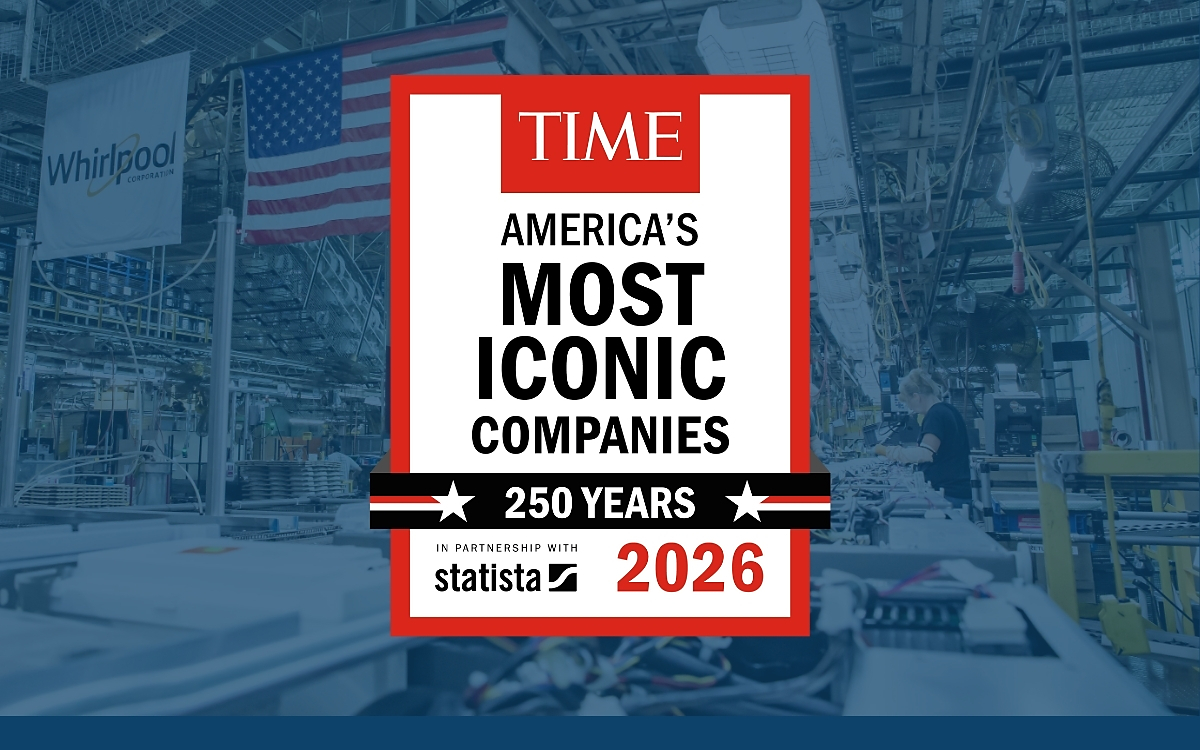
Time Most Iconic Companies logo

February 17, 2026 /3BL/ – Whirlpool Corporation has been named to TIME’s list of “America’s Most Iconic Companies,” earning a place among 250 U.S. companies recognized for their enduring influence on the fabric of American culture.

“It is an honor to be named one of the nation’s most iconic companies, especially as we prepare to celebrate America’s 250th birthday,” said Marc Bitzer, chairman and CEO of Whirlpool Corporation. “From the company’s humble start in 1911 to the millions of American homes we serve today, our legacy is built on designing and manufacturing appliances that improve life at home. We’re proud to have started in America and stayed in America, growing for generations alongside the communities that have helped make us who we are.”

Whirlpool Corporation is the only home appliance company to be recognized as one of America’s Most Iconic Companies, which is based on an independent survey of U.S. residents who were invited to evaluate companies on recognition, cultural impact, emotional connection, and resilience.

The company’s iconic brand portfolio includes Whirlpool, KitchenAid, JennAir, Maytag, Amana, Brastemp, Consul, and InSinkErator. Approximately 80% of the products the company sells in the U.S. are manufactured domestically, supported by more than 20,000 U.S. employees, including 14,000 manufacturing workers across 10 U.S. plants. Over the past decade, Whirlpool Corporation has invested $23 billion in American manufacturing, labor and logistics.

Click here to see TIME’s full list of America’s Most Iconic Companies.

View original content here.

About Whirlpool Corporation

Whirlpool Corporation (NYSE: WHR) is a leading home appliance company, in constant pursuit of improving life at home. As the only major U.S.-based manufacturer of kitchen and laundry appliances, the company is driving meaningful innovation to meet the evolving needs of consumers through its iconic brand portfolio, including Whirlpool, KitchenAid, JennAir, Maytag, Amana, Brastemp, Consul, and InSinkErator. In 2025, the company reported approximately $16 billion in annual net sales – close to 90% of which were in the Americas – 41,000 employees, and 35 manufacturing and technology research centers. Additional information about the company can be found at WhirlpoolCorp.com

Posted in UncategorizedTagged

KeyBank Invests in New Affordable Senior Housing on Cleveland’s West Side

KeyBank, the City of Cleveland, and LISC Cleveland have taken a major step toward transforming the region’s affordable housing landscape with the groundbreaking of Walton Senior Apartments, the first of two investments launched under the Cleveland Housing Investment Fund, a new $100 million initiative designed to close long‑standing financing gaps and accelerate development across the city. This milestone marks the beginning of a series of strategic investments that will strengthen neighborhoods and create long‑term housing affordability for Cleveland residents.

A Model of Partnership Making Immediate Impact

Walton Senior Apartments represents what’s possible when public and private partners come together with a shared purpose. Developed in collaboration with Volker Development, Cuyahoga County, LISC Cleveland, and the City of Cleveland, the project demonstrates how aligned investments can address critical housing shortages while supporting seniors who want to remain rooted in their communities.

Meeting a Critical Need for Cleveland’s Older Adults

Located in the heart of the Clark‑Fulton neighborhood, the development will bring 52 new affordable homes for residents ages 55 and older. Twenty of those homes will include long‑term Section 8 Project‑Based Vouchers, ensuring deeply affordable rents for seniors living on fixed incomes. The project will help older adults maintain stability, dignity, and community connection, an essential part of aging in place.

KeyBank’s Investment in Cleveland’s Housing Future

As part of its commitment to expanding affordable housing, Key provided nearly $24 million in construction financing and Low‑Income Housing Tax Credit (LIHTC) equity through its CDLI platform and Key Community Development Corporation. This investment supports more than the construction of a building—it supports opportunity, security, and a stronger future for residents who have long contributed to the community.

A Foundation for More to Come

With Walton Senior Apartments leading the way, the Cleveland Housing Investment Fund is poised to spark additional development that expands access to safe, affordable housing across the city. This groundbreaking marks the first of many projects that will help reshape Cleveland’s housing landscape for years to come.

National Leadership in Affordable Housing

Ranked the #2 affordable housing lender in the nation, KeyBank continues to invest in developments that change lives and uplift communities. Each new project is a testament to Key’s belief that housing is the foundation for healthier, stronger neighborhoods—and that supporting communities means supporting the people who call them home.


Posted in UncategorizedTagged

The 7 Steps of Conducting a Materiality Survey

Key Takeaways:

  • Stronger double materiality assessments emerge when stakeholder surveys are used to validate ESG priorities with real-world input.
  • A strategic survey approach helps translate diverse stakeholder perspectives into decision-ready materiality insights.
  • Well-analyzed survey data can be transformed into a materiality matrix that directly informs strategy, reporting, and governance.
  • Alignment with evolving ESG reporting requirements, including CSRD and ISSB, is reinforced through documented stakeholder input.
  • Consistent use of survey insights enables ongoing stakeholder engagement and supports long-term value creation.

Even well-intentioned businesses can benefit from deeper insight into what matters most to their stakeholders. While ESG priorities are often informed by internal expertise, direct stakeholder input helps ensure those priorities are grounded in real-world perspectives.

Incorporating surveys into a double materiality assessment (DMA) is an effective way to gather this input at scale. Surveys enable companies to systematically capture stakeholder views on both financial impacts and broader societal and environmental effects, helping to validate assumptions, identify gaps, and focus on the issues most relevant to decision-making and long-term value creation.

In this guide, we’ll examine what a materiality assessment is, then walk through how to conduct materiality assessment surveys using the following seven steps:

  1. Identify internal and external stakeholders
  2. Conduct initial stakeholder outreach
  3. Identify and prioritize what you want to measure
  4. Design your materiality survey
  5. Launch your survey and start collecting insights
  6. Analyze the insights
  7. Put insights into action

What Is a Materiality Assessment?

A double materiality assessment is a structured process used to identify and prioritize the environmental, social, and governance (ESG) topics that are most relevant to a company from two perspectives:

  • How sustainability issues affect the company’s financial performance
  • How the company’s activities affect society and the environment

The process combines multiple inputs, including internal expertise, risk and opportunity analysis, regulatory and peer research, and direct stakeholder engagement. Together, these elements inform a materiality matrix that visualizes priorities and guides strategy, reporting, and communications. Over time, this approach supports more focused decision-making and clearer, more credible sustainability narratives.

Surveys play a specific role within this process by fostering stakeholder engagement. They provide a scalable, consistent way to capture their perspectives and validate internal assumptions, particularly when assessing impact materiality.

How to Conduct a Materiality Assessment Survey

Understanding how to effectively design and execute materiality assessment surveys is a crucial part of a comprehensive DMA. The following steps outline how to plan, execute, and apply survey insights within the broader materiality process.

1. Identify internal and external stakeholders

Materiality assessments are most effective when they reflect a wide range of perspectives across the value chain.

Begin by identifying relevant stakeholder groups and key contacts within each group who can provide informed input. This typically includes internal stakeholders such as executive leadership, board members, regional managers, and employees, as well as external stakeholders such as customers, suppliers, trade associations, and non-governmental organizations. Including both groups helps ensure a balanced view of priorities and impacts.

2. Conduct initial stakeholder outreach

Once stakeholders have been identified, reach out early to encourage participation and set expectations.

Communicate why their perspective matters, how their input will be used, and how it will inform sustainability strategy and decision-making. Clear, concise outreach helps build trust and improve response rates once the survey is launched.

3. Identify and prioritize what you want to measure

Before designing the survey, determine which ESG topics and indicators stakeholders will evaluate.

These indicators are commonly grouped into economic, social, and environmental categories, such as financial performance, labor practices, human rights, resource use and climate impacts. Use existing internal data, preliminary stakeholder feedback, media and peer analysis, and external frameworks such as GRI, SASB, and CSRD to identify topics most relevant to your business context. This step ensures that the survey focuses on issues that are meaningful and relevant.

4. Design your materiality survey

Surveys should be structured and consistent to produce insights that can be compared, analyzed, and visualized.

A traditional survey format allows stakeholders to rate the importance and impact of each ESG topic using a numerical scale, such as 1 to 5 or 1 to 10. This provides quantitative data that can be aggregated across stakeholder groups. Optional open-text fields allow respondents to add context and qualitative insights that enrich the results.

Once the survey content is finalized, deploy it using a tool that is easy for stakeholders to access and simple for your team to analyze. Common options include dedicated sustainability software or general survey platforms such as SurveyMonkey, Alchemer, or Google Forms.

5. Launch your survey and start collecting insights

Invite stakeholders to participate by sharing the survey link and giving them a clear deadline.

Thank them for their time and explain how their input contributes to the assessment. As the deadline approaches, follow up with reminders to encourage completion. Providing a point of contact for questions can further improve participation and data quality.

6. Analyze the insights

Once responses are collected, review results both collectively and by stakeholder group. Aggregate scores by ESG topic and compare results across internal and external stakeholders, or across roles such as management and employees. Pay close attention to written comments, which often provide valuable context behind numerical rankings.

Use this analysis to identify common priorities, areas of divergence, and topics with high stakeholder significance. These insights can then be visualized in a materiality matrix that supports decision-making and reporting.

7. Put insights into action

Survey results should inform strategy, not conclude the engagement.

Share outcomes with stakeholders through sustainability reports, summaries, or digital channels, and invite ongoing feedback. Use findings to refine sustainability priorities, guide communications, and align initiatives with stakeholder expectations.

By integrating survey insights into broader strategy and reporting efforts, companies can strengthen stakeholder trust and ensure their materiality assessment delivers long-term value.

Aligning Materiality Assessments with Emerging ESG Standards

As sustainability reporting requirements evolve, materiality assessments are expected to clearly show how ESG topics were identified and prioritized. Stakeholder surveys support this expectation by providing structured, documented input that strengthens the double materiality assessment and supports alignment with frameworks such as CSRD and ISSB. When combined with internal analysis and regulatory research, survey results help demonstrate the ways in which stakeholder perspectives informed topic selection and prioritization across both impact and financial dimensions.

Align With Your Stakeholders

Surveys translate stakeholder engagement into actionable insights by capturing perspectives in a consistent and measurable way. When survey results are analyzed alongside internal data, they inform ESG priorities, reporting decisions, and communications. Sharing outcomes with stakeholders and explaining how their input influenced decisions reinforces transparency and supports ongoing engagement.

Have any questions?

Contact us to discuss your environment, health, safety and sustainability needs today.

Posted in UncategorizedTagged

From Team Member to General Manager – Heilyn’s Story of Growth

Taco Bell

When Heilyn G. came to the United States from Cuba in 2016, she arrived with her family for a new start, not speaking any English. In April 2018, she started her first job as a Team Member at Taco Bell, stepping into an unfamiliar environment with curiosity, a strong work ethic and a desire to learn.

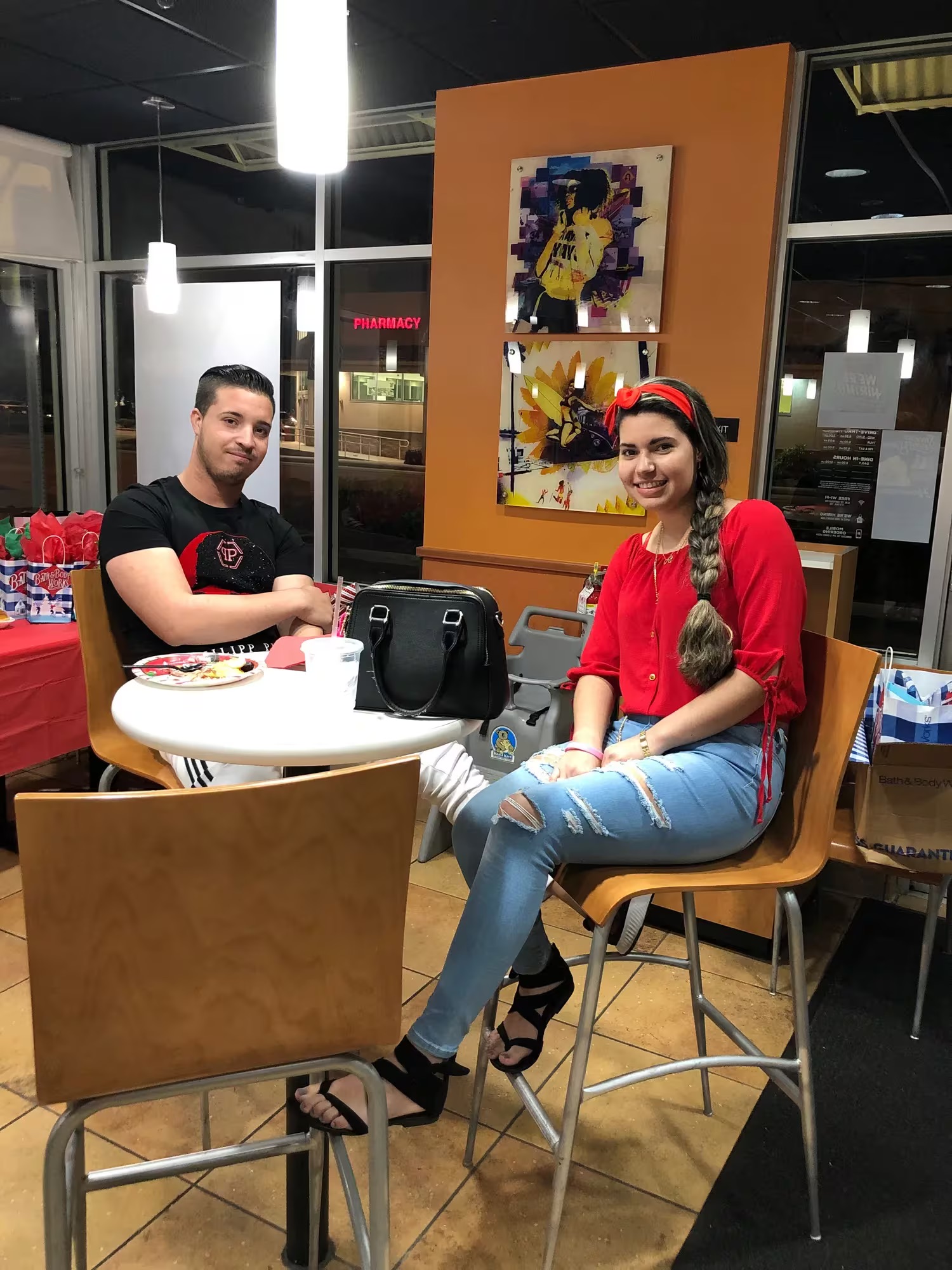
people sitting at a table together

From the very beginning, Heilyn stood out. She learned English on the job, communicating with her team while continuously seeking opportunities to grow. Her mindset quickly set her apart, leading to her promotion to Shift Manager in June 2019. Just six months later, she advanced to Assistant General Manager, and in December 2025, she took on the role of Restaurant General Manager.

Her leadership truly shined during the COVID pandemic. While her Assistant General Manager was on leave, Heilyn stepped up to run the restaurant, persevering through one of the most challenging periods the world faced. Her dedication to the team ensured the restaurant continued to succeed during uncertain times.

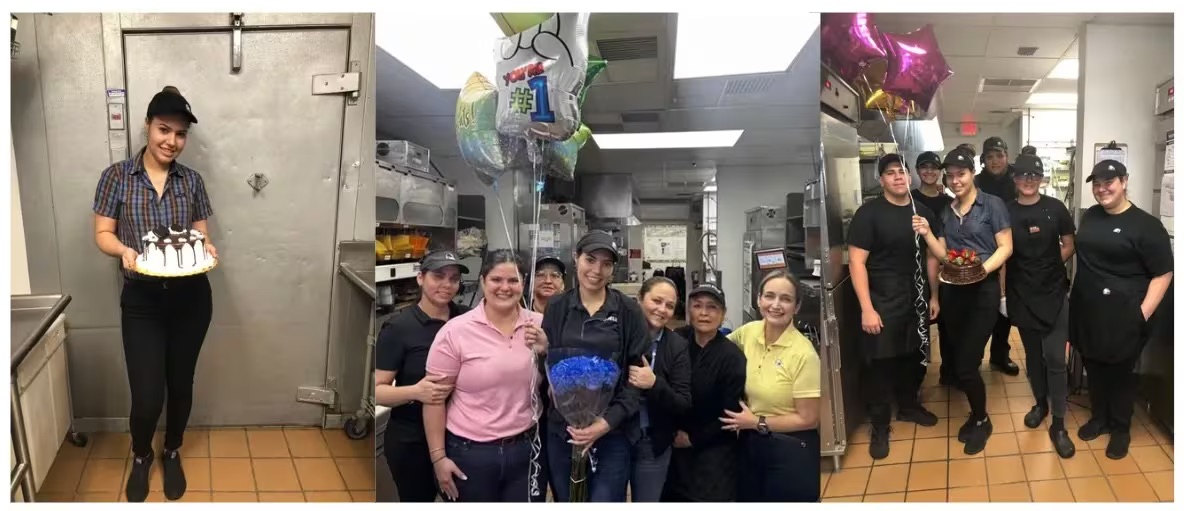
collage of employees smiling together

Heilyn’s impact has extended far beyond her own role as Heilyn has played a critical part in developing new Shift Leads, Assistant General Managers, and future leaders at Taco Bell. She partners closely with her Restaurant General Manager to identify talent, strengthen the restaurant culture, and elevate the Team Member experience every day!

Those who work alongside Heilyn often speak about her humility and thoughtfulness. Xochitl Z., People & Culture Director at Taco Bell Corp., who trained with her in Miami, shared how inspired she was by Heilyn’s pride in her restaurant and her approach to leadership.

“During training, I observed her onboarding a new employee and how thoughtful she was to make that new employee feel welcomed. She was so proud of her restaurant, the food quality, and leveraging all the tools the company provided…I learned a lot from her!”

Heilyn’s journey is a powerful reminder of what’s possible when opportunity meets determination. She continues to inspire her team every day, proving that with passion and leading with heart, there are no limits to how far you can go.

Heilyn, you make more people say, “This is the best job.” Thank you for all that you do… we’ll continue to cheer you on and can’t wait to see what you do next!

Posted in UncategorizedTagged

Sustainability Year in Review: How DP World Advanced Climate, Community, and Inclusive Growth Across Latin America

Across Latin America, 2025 marked a year of measurable sustainability progress for DP World — driven by decarbonization, renewable energy adoption, biodiversity protection, education, and inclusive community development.

From ports and terminals to surrounding communities, DP World continued embedding sustainability into core operations, translating long-term commitments into tangible environmental and social outcomes across the region.

DP World in Brazil: Accelerating Decarbonization Through RTG Electrification and Environmental Investment

In Brazil, DP World delivered some of its most tangible emissions reductions in the region by targeting diesel-intensive port equipment and scaling long-term environmental programs at DP World’s Santos terminal

  • Electrified 13 rubber-tired gantry (RTG) cranes, converting them from diesel to electric power and reducing diesel consumption by up to 60% — a major step toward DP World’s carbon neutrality target by 2040
  • RTG electrification formed part of an R$80 million (US$16.2 million) investment, using overhead cable systems to maintain operational efficiency while cutting emissions
  • Earned a second consecutive Gold Seal for Emissions Transparency, recognizing robust measurement, reporting, and disclosure of greenhouse gas emissions
  • Invested R$12 million (US$2.4 million) in more than 30 environmental projects, including mangrove conservation, biomass reuse, and waste reduction initiatives
  • Advanced its Zero Landfill program, eliminating landfill waste from terminal operations and reinforcing circular economy principles

DP World in Ecuador: Biodiversity Protection, Education, and Gender Inclusion

In Ecuador, sustainability initiatives combined environmental stewardship with workforce development and inclusion.

  • Delivered an Agreement for the Sustainable Use and Stewardship of the Mangrove Ecosystem (AUSCEM), placing more than 900 hectares of mangroves under community custodianship — a first for Ecuador’s port sector
  • Advanced nature-based solutions to strengthen coastal resilience and marine biodiversity at and around DP World’s Posorja terminal
  • Graduated students from the “Comienza con Nosotros” dual-training program, developed with ESPOL, supporting careers in mechatronics and port logistics
  • Formalized a Letter of Intent with Red MAMLa, reinforcing commitments to gender equality and female leadership in the maritime sector

DP World in Peru: Decarbonization Leadership and Community Investment

In Peru, DP World continued to demonstrate how operational growth and emissions reduction can advance in parallel — delivering measurable progress on its decarbonization roadmap while expanding community impact.

  • Advanced its commitment to a 90% reduction in Scope 1 and 2 emissions by 2030, positioning DP World in Peru as a leader within the company’s global decarbonization strategy
  • Reduced its carbon footprint from nearly 13,000 tons of CO₂ to a projected 9,700 tons by the end of 2025 — an approximate 22% reduction, despite increased capacity and cargo volumes
  • Achieved emissions reductions through energy efficiency measures and cleaner operations at DP World Callao
  • Inaugurated six digital classrooms, benefiting more than 300 students and expanding access to digital education
  • Continued the “Emprende DP World” program, supporting local micro-entrepreneurs and strengthening economic resilience in the Callao community
  • Recognized with Best Good Practices in Social Sustainability by the Ministry of Transport and Communications’ Sustainability Observatory

DP World in the Dominican Republic: Clean Energy, Electrification, and Inclusive Growth

In the Dominican Republic, DP World delivered one of its most comprehensive sustainability performances of the year.

  • Generated more than 3.26 million kWh of renewable energy through its photovoltaic solar plant, reducing over 1,100 tons of CO₂ emissions in 2025
  • Expanded electric internal transfer vehicle (E-ITV) integration, reducing emissions, noise, and operational inefficiencies
  • Advanced mangrove reforestation and watershed restoration projects for a third consecutive year, supporting climate resilience and water security
  • Delivered youth training and micro-entrepreneurship programs, reaching thousands of community beneficiaries
  • Earned the 3R Sustainability Certification and the “Sustainable Investment” award from ProDominicana

DP World in Chile: Clean Energy, Sustainable Mobility, and Community Wellbeing

In Chile, DP World’s sustainability impact spanned clean energy enablement, low-carbon transport, education, and community investment.

  • Continued to operate on 100% renewable electricity, sourced from hydroelectric power, the first port in South America to do so.
  • Supported the handling and movement of wind energy components at DP World’s Lirquén terminal, strengthening supply chains for Chile’s renewable energy sector
  • Enabled one of the largest global shipments of electric buses through DP World’s San Antonio terminal, supporting national clean mobility goals
  • Launched a fully funded English Academy in San Antonio and sports and social center in Lirquén, expanding access to language education for local youth
  • Opened the DP World Sports and Social Centre in Lirquén, a CLP $150 million (US $290k+) community investment supporting recreation, wellbeing, and social connection
  • Established a CLP $2.2 billion (US$2M+) fund to support permanent housing for 164 DP World employees and their families in the wake of devastating wild fires in Lirquén.

A Regional Commitment to Sustainable Trade

Across Latin America, DP World’s 2025 sustainability performance reflects a consistent, integrated approach — embedding environmental responsibility, social inclusion, and economic growth into everyday operations.

Whether cutting emissions through electrification, restoring ecosystems, expanding access to education, or strengthening community wellbeing, DP World continues to demonstrate that sustainable trade is not a parallel initiative — it is fundamental to how the company operates across the region.

Learn more about DP World’s global sustainability work.

Posted in UncategorizedTagged

45Z Proposed Regulations Add Clarifications on Sales, Production, and Eligibility Framework

By Baker Tilly’s Gideon GradmanBob Hofacker, Shristhi Negi, Beckett Woodworth

The Treasury Department and the IRS have issued proposed regulations on Feb. 3, 2026, providing expanded guidance on the Clean Fuel Production Credit under IRC section 45Z and significantly building on the framework previewed last year in Notice 2025-10. The proposed rules formalize definitions and procedures and introduce several important clarifications regarding who qualifies as a producer, what constitutes “production,” how qualified sales through intermediaries are treated, and safe harbors for substantiating a fuel’s emissions rate and qualified sales.

Background

Section 45Z, enacted by the Inflation Reduction Act and later amended by the One Big Beautiful Bill Act (OBBBA), provides an income tax credit for domestic production of qualifying clean transportation fuels sold after Dec. 31, 2024, and before Jan. 1, 2030. For production years after 2025, the credit amount equals to $0.20 per gallon or gasoline gallon equivalent, depending on the fuel emissions factor.

The credit amount is increased to $1.00 if prevailing wage and apprenticeship requirements are satisfied. Additionally, OBBBA imposed new prohibited foreign entity (PFE) and foreign feedstock limitations for purposes of claiming a section 45Z PTC beginning in taxable years after enactment, generally Jan. 1, 2026.

Earlier guidance included:

  • Notice 2024-49: addressing registration requirements
  • Notice 2025-10: announcing forthcoming regulations and proposed rule concepts
  • Notice 2025-11: issuing initial emissions-rate methodologies and tables

The proposed regulations now consolidate and expand these rules into a comprehensive regulatory framework.

Key updates and clarifications from the proposed regulations

Broader “qualified sale” rules for producers

One of the most notable changes from Notice 2025-10 involves defining a qualified sale. The earlier draft language in Notice 2025-10 suggested a narrow interpretation that required fuel to be “sold for use in a trade or business” to mean sold for “use as a fuel” in a trade or business. Industry commenters noted this would disqualify common wholesale and intermediary sales structures.

The proposed regulations revise Treasury’s initial approach by removing the restrictive “use as a fuel” standard introduced in Notice 2025-10, clarifying that sales to wholesalers and resellers may qualify, and adding a look-through rule that allows sales made through related intermediaries to count as sales to unrelated persons. These changes are expected to make it easier for producers operating through dealers, marketers, or related distribution entities to satisfy the statutory sale requirement.

The proposed regulations would also clarify the term “suitable for use as a fuel in a highway vehicle or aircraft” (suitable for use) to mean that the fuel has practical and commercial fitness for use as a fuel in a highway vehicle or aircraft, or may be blended into a fuel mixture that has practical and commercial fitness for use as a fuel in a highway vehicle or aircraft. Actual use as a fuel in a highway vehicle or aircraft is not required.

The look-through rule provides that a producer does not lose eligibility for the section 45Z credit merely because fuel is first sold to a related entity, provided that the related party ultimately sells the fuel to an unrelated person. While Notice 2025-10 primarily followed the statutory consolidated group rule, the proposed regulations adopt a broader look-through framework that applies to both corporate and non-corporate structures, including partnerships, limited liability companies, and other pass-through structures. Under this approach, a sale to a related intermediary is treated as a qualified sale if that intermediary subsequently resells the transportation fuel in a qualifying transaction to an unrelated customer.

Finally, Notice 2025-10 used the term “qualifying sale.” The proposed regulations instead standardize the term “qualified sale.”

Blending with fossil fuels permitted prior to sale

The proposed regulations also clarify that, although blending activities generally do not themselves constitute “production” for purposes of section 45Z, a producer does not forfeit credit eligibility merely because a qualifying transportation fuel is blended with fossil fuels or other components prior to sale. In other words, blending does not constitute production, but it also does not disqualify an otherwise qualifying producer. So long as the taxpayer has already completed the substantive production process (i.e., transforming feedstocks into a finished clean fuel), the subsequent mixing of that fuel is treated as a post-production handling step rather than a new production activity.

RNG processor, not compressor, treated as producer

The proposed regulations also reaffirm which party is treated as the “producer” of renewable natural gas (RNG) for purposes of section 45Z, confirming that the credit attaches to the entity that performs the substantive upgrading of raw biogas rather than to downstream service providers. Specifically, the proposed regulations provide that the person who processes and conditions raw landfill gas or digester gas so that it becomes interchangeable with fossil natural gas, by removing water, carbon dioxide, and other impurities to meet pipeline-quality specifications, is treated as the producer, even if that entity does not perform subsequent compression to satisfy American Society for Testing and Materials (ASTM) D8080 or other transportation standards. Compression and similar steps are characterized as post-production handling activities rather than fuel production.

Negative emissions rates

The proposed regulations also confirm that negative emissions rates are only possible for animal manure feedstocks. A revised 45ZCF-GREET model will still need to be released to determine the exact value, but no caps or restrictions were noted for animal manure feedstocks. Other feedstocks are barred from utilizing negative emissions rates for production years after 2025.

Safe harbors for substantiating emissions rates and qualified sales

The proposed regulations move beyond general recordkeeping concepts and establish two formal, certificate-based safe harbors to substantiate both a fuel emissions rate and whether a sale qualifies under section 45Z.

First, for non-SAF transportation fuels whose lifecycle emissions are determined using the 45ZCF-GREET model, Proposed Reg. section 1.45Z-4(g)(2) allows taxpayers to rely on a safe harbor if they obtain third-party certification in substantially the same form and manner required for SAF under Proposed Reg. section 1.45Z-5. In effect, Treasury extends the SAF-style independent verification framework to non-SAF fuels, permitting taxpayers to rely on certified emissions determinations rather than recreating or defending technical modeling assumptions during an IRS examination.

Second, Proposed Reg. section 1.45Z-4(g)(3) provides a safe harbor for demonstrating that a transaction constitutes a “qualified sale.” Under this rule, the producer must obtain a certificate from the purchaser, signed under penalties of perjury, attesting that the fuel will be used in a qualifying manner. For single transactions, the certificate must be secured at or before the time of sale; for ongoing sales, it must be obtained before or contemporaneously with the first covered purchase. The producer may rely on the certificate so long as it has no reason to know the information is false and retains the documentation in its books and records. The proposed regulations include an example of a qualified sale certificate in Proposed Reg. section 1.45Z-4(g)(3)(ii).

Clarity on facility definition and anti-stacking rules

The proposed regulations also adopt a more precise definition of a “qualified facility,” narrowing the scope of what constitutes credit-eligible property, and providing clearer boundaries for purposes of coordinating section 45Z with other clean energy tax credits.

Rather than defining a facility broadly by geographic location or site, the proposed regulations treat a facility as a single production line comprised of interdependent equipment that collectively performs the fuel production process. Equipment that is ancillary or post-production—such as storage, transportation, or compression assets—is generally excluded. The proposed regulations did not add additional detail about what components specifically qualify or offer concrete examples of components included in the qualified facility definition.

This definition also facilitates compliance with statutory anti-stacking rules by clarifying which specific production line is eligible for section 45Z and ensuring that the same property or process cannot simultaneously generate benefits under other clean energy credit provisions, such as sections 45V (clean hydrogen), 45Q (carbon capture), or 48(a)(15) investment tax credit elections. In practice, this approach provides clearer credit boundaries for multi-technology or co-located sites.

In addition, the proposed regulations introduce clear anti-double-crediting rules designed to prevent multiple section 45Z credits from being claimed across successive stages of a fuel production chain. The rules provide that transportation fuel produced from another fuel that has already generated a section 45Z credit generally does not independently qualify for an additional credit, effectively limiting eligibility to the first qualifying production activity. This provision addresses scenarios in which an intermediate clean fuel is later converted into a second fuel product and could otherwise create opportunities for stacked incentives. For example, sustainable aviation fuel (SAF) produced from ethanol, or hydrogen produced from renewable natural gas that has already been treated as section 45Z-eligible, may not generate a second credit if the upstream fuel has already benefited from section 45Z.

Registration and compliance framework

The proposed regulations also clarify and expand the registration requirements under section 4101. Building on the framework first introduced in Notice 2024-49, the proposed regulations require each credit-claiming entity to register separately at the EIN level, including disregarded entities and other business units that might otherwise be consolidated for tax purposes.

The rules further clarify that registration is not always a one-time exercise: taxpayers must update or re-register when there are material changes in ownership, organizational structure, or business activities. Importantly, the proposed regulations emphasize that a registration letter is not a substantive determination of eligibility and does not preclude later IRS examination of the credit. Treasury also expressly reserves the authority to deny, suspend, or revoke registrations where a taxpayer fails to satisfy the regulatory requirements or maintain adequate records.

The proposed regulations also maintain the safe harbor in Notice 2025-10 for entities that are required to re-register as a producer of transportation fuel due to a change in ownership or EIN as of the date the IRS received the application for re-registration, even if, at the time of fuel production, the IRS has not yet approved the re-registration.

Transferability and elective pay ownership rules clarified

The proposed regulations also include conforming amendments to the elective payment and transferability rules under sections 6417 and 6418 to address a technical issue specific to section 45Z. Unlike other clean energy credits that are tied to ownership of tangible credit property, section 45Z is based on the production and sale of qualifying fuel, raising questions about whether the general requirement to own “eligible credit property” could inadvertently restrict elective payment or credit transfers. The proposed regulations resolve this uncertainty by clarifying that ownership of underlying production assets is not required for section 45Z purposes when making an elective pay election or transferring the credit.

Energy attribute certificates

The proposed regulations also introduce new, explicit rules governing the use of energy attribute certificates (EACs) when calculating lifecycle emissions rates under the 45ZCF-GREET model, an area that Notice 2025-10 did not address. Rather than simply allowing modeled electricity inputs, the proposed regulations incorporate by reference the framework used for the section 45V clean hydrogen credit, providing that rules similar to Reg. section 1.45V-4(d) apply to EAC usage. As a result, taxpayers must satisfy an incrementality requirement, meaning EACs generally must be associated with newly placed-in-service generation rather than legacy renewable assets.

The proposed regulations further impose a 36-month commercial operations date (COD) test, under which the electricity-generating facility tied to an EAC must have begun operations no earlier than 36 months before the first taxable year the fuel facility produces qualifying transportation fuel. The rules also clarify that, for purposes of applying this timing test, a clean fuel facility is treated as placed in service in the first year it produces transportation fuel and include an example illustrating how older production sites retrofitted for section 45Z eligibility must rely only on relatively recent power generation.

PER process explained and expanded

The proposed regulations also describe the mechanics for obtaining a Provisional Emissions Rate (PER), converting the conceptual framework in Notice 2025-10 into a practical guide. While Notice 2025-10 previewed that taxpayers could seek a PER by first obtaining an emissions value from the Department of Energy (DOE), the proposed rules now establish detailed procedures under Prop. Reg. section 1.45Z-2(f).

Taxpayers must submit an emissions value request (EVR) to DOE, obtain a calculated emissions value letter (CEVL), and then file a formal PER petition with Form 7218 attached to the first return on which the section 45Z credit is claimed. The proposed regulations further provide that a properly filed petition is deemed accepted by the IRS, with the deemed acceptance constituting the Secretary’s PER determination, and allows taxpayers to rely on the DOE-provided emissions value absent inaccuracies in the underlying representations.

In addition, the proposed regulations clarify that PERs are available only for fuels or categories not already covered by the annual emissions rate table and introduce a relation-back rule under which newly established emissions rates or PER determinations apply retroactively to production beginning Jan. 1, 2025.

However, at the time the proposed regulations were published, the PER application was not yet available on the DOE website. Credit claimants must continue to wait for the PER application to open before submitting an EVR.

Section 45Z-specific Feedstock Carbon Intensity Calculator

The proposed regulations also preview the incorporation of a section 45Z-specific version of the U.S. Department of Agriculture’s Feedstock Carbon Intensity Calculator (FD-CIC) to account for emissions reductions associated with certain agricultural practices used to produce qualifying feedstocks. The preamble explains that, once finalized, this 45Z-specific FD-CIC module will be integrated into the 45ZCF-GREET model and used to calculate carbon intensity adjustments for feedstocks grown using practices such as no-till or reduced-till farming, cover cropping, and improved nutrient management.

Other key considerations

The proposed regulations also address anti-abuse concerns, particularly regarding imported used cooking oil (UCO). To mitigate potential abuse, UCO will initially be excluded from the 45ZCF-GREET model until the Treasury and IRS issue further guidance on appropriate substantiation and recordkeeping.

The proposed regulations did not expand on foreign entities of concern rules, alter prevailing wage and apprenticeship compliance requirements promulgated in Reg. section 1.45Z-3, or offer concrete examples of components included in the qualified facility definition.

Conclusion

Baker Tilly is actively monitoring developments related to the proposed section 45Z regulations and is continuing to evaluate the technical and operational impacts for fuel producers, developers, and investors. We will share additional insights and guidance as the Treasury and IRS issue further updates or move toward final rules.

In the meantime, the Treasury and IRS are inviting public comments on these proposed regulations. All written and electronic comments must be submitted by April 6, 2026. A public hearing on the proposed rules has been scheduled for May 28, 2026. Parties interested in submitting comments or who wish to speak at the hearing can do so through the Federal e-Rulemaking portal.

Contact a Baker Tilly specialist to learn more

Posted in UncategorizedTagged

How Cisco’s Partnerships With LISC, Per Scholas Are Building Resilience in Western North Carolina

When Hurricane Helene struck Western North Carolina in September 2024, the storm didn’t just damage buildings and roads. It disrupted the economic fabric of the region, shuttering small businesses that had served their communities for generations, displacing workers from jobs they’d held for years, and leaving families uncertain about their financial futures.

In Helene’s immediate aftermath, Cisco Crisis Response quickly mobilized to restore connectivity and help local organizations meet the urgent needs of affected communities. But as the region began transitioning from relief to recovery, we worked alongside local leaders to identify priorities and understand how we could best support that work.

In Western North Carolina — the first site in Cisco’s 40 Communities initiative — that meant aligning our engagement with long-term economic recovery efforts and supporting partners who were already positioned to advance that work. Now, a little more than a year after the storm, we’re proud to partner with the Local Initiatives Support Corporation (LISC) and Per Scholas, two community-centric organizations with deep experience working in areas to build and maximize economic opportunities. Together, we’re working to strengthening the resilience of hundreds of small and medium businesses, train a new generation of tech workers, and build the economic capacity Western North Carolina needs to recover and thrive.

Supporting small businesses: Western North Carolina’s economic backbone

For more than 40 years, LISC has connected communities with resources they can’t easily access on their own, bridging capital and opportunity by working through trusted local partners who know how to put resources to work. In Western North Carolina, where small and medium businesses form the backbone of the local economy, that expertise is critical.

Through our partnership with LISC, we’re working to strengthen both the small businesses themselves and the local business development organizations (BDOs) that already serve as trusted intermediaries in the region. LISC is building the capacity of BDOs across the region, equipping them to better serve small businesses through disaster recovery and beyond. In turn, these organizations are providing assistance to hundreds of small and medium businesses on everything from financing and disaster planning to digital tools that can help them reach new customers. For these businesses — many of which were already struggling before the storm — this support can make the difference between closing their doors and finding a path forward.

“Small businesses are the heart of our country. They employ our neighbors, keep local dollars circulating within communities, and give local regions, like Western North Carolina, its character,” said Michael Pugh, president and CEO of LISC. “Through our partnership with Cisco, we’re helping to ensure that more small business have resources available to them to ensure that they are able to not only rebuild after disasters strike, but also uncover new pathways to build more sustainable, stronger businesses in the process.”

The tech partnership upskilling Western North Carolina’s workforce

While supporting existing businesses is critical, long-term economic recovery also requires developing the skilled workforce that can support the region’s growth. That’s why Cisco is partnering with Per Scholas, a national nonprofit with three decades of experience creating pathways to tech careers and connecting skilled workers with employers who need them.

In the aftermath of Hurricane Helene, Cisco is supporting Per Scholas as it expands its footprint in Western North Carolina. Over the next year, Per Scholas will provide rigorous training, at no cost to the learner, for aspiring tech professionals statewide, including residents in the western part of the state. As a Cisco Networking Academy, Per Scholas incorporates both Networking Academy and Splunk curriculum in their programming, ensuring participants receive training in IT skills critical to businesses and essential services. In a region recovering from disaster, these aren’t just marketable skills; they’re the technical capacity communities need to stay connected and operational during crises and beyond.

“What makes this partnership powerful is our shared commitment to lasting impact,” says Per Scholas North Carolina Senior Managing Director Michael Terrell. “By leveraging Cisco’s technology and expertise, we’re creating pathways to opportunity for people in Western North Carolina who are ready to rebuild not just their own futures, but their community’s future, and power the region’s long-term recovery.”

Moving forward together: A long-term commitment to recovery and resilience

The work in Western North Carolina through Cisco’s partnerships with LISC and Per Scholas shows what recovery can look like when technology, local knowledge, and committed partners come together. It’s not about quick fixes or temporary interventions. It’s about building the foundations — skilled workers, resilient businesses, reliable digital infrastructure —that allow communities to not just bounce back, but to grow stronger.

As a testament to this commitment, in December 2024, Cisco selected Western North Carolina as the first of 40 Communities — our ambition to bring the full force of our capabilities, technology, and people to engage, support, and invest in 40 communities worldwide. These partnerships with LISC and Per Scholas exemplify that approach: working alongside trusted organizations who understand their communities and are committed to creating lasting change.

Long-term recovery takes time. The road ahead is long, but Western North Carolina isn’t walking it alone. Working alongside partners like LISC and Per Scholas, Cisco remains committed to helping rebuild the economic foundations the region needs — not just to recover, but to thrive for years to come.

View original content here.

Posted in UncategorizedTagged

CVS Health Collaborates With Ronald McDonald House To Bring Holiday Cheer to Families

Originally published on CVS Health

CVS Health® recently worked with Ronald McDonald House® Global to support families during their children’s medical journeys during the holiday season. On December 3, the company collaborated with Philadelphia home decor creator Meghan Gallagher to decorate the first-ever Ronald McDonald House in Philadelphia with seasonal products from Joyward™, a new collection of decor, gifts and more just introduced by CVS Health.  

Common areas were decked out with Joyward’s cozy home accents and festive pieces, including soft throws and patterned pillows, colorful nutcrackers, ceramic trees and more, to help bring cheer to Ronald McDonald House families. CVS Health also provided curated care packages of Well Market™ snacks and personal care essentials. To close the evening, families came together to create ornaments and decorate the floor-to-ceiling dining room windows alongside CVS Health and Ronald McDonald House representatives.

“We believe that health extends beyond clinical care – it’s about supporting families during life’s most challenging moments,” said Jenny McColloch, VP, Community Impact and Chief Sustainability Officer, CVS Health. “Our work with Ronald McDonald House reflects that commitment. By combining our resources with Ronald McDonald House’s incredible work, we’re helping families stay close to their children’s medical care, while creating opportunities for our colleagues to make a meaningful impact in their communities. Together, we’re building healthier, stronger futures – one family at a time.”

The Philadelphia event is part of a longer-term collaboration between CVS Health and Ronald McDonald House Global. Through a $600,000 grant, CVS Health colleagues across 10 regions will be able to participate in organized volunteer activities that focus on supporting Ronald McDonald House families, such as preparing meals and hosting activity nights. Colleagues nationwide will also have the opportunity to create their own volunteer events – empowering them to help make an impact in their own communities and advancing the two organizations’ shared commitment to supporting better health outcomes.

“Ronald McDonald House provides nearly 90 percent of all pediatric-only temporary housing for families in the United States, according to research from the University of Maryland, Baltimore. However, we estimate that we are only meeting 55 percent of current demand for our services in the U.S.,” said Katie Fitzgerald, President and Chief Executive Officer at Ronald McDonald House Global. “CVS Health will help Ronald McDonald House improve health outcomes by enabling more families to stay together and be involved in their child’s care.”

######

About CVS Health

CVS Health is a leading health solutions company building a world of health around every consumer, wherever they are. As of September 30, 2025, the Company had approximately 9,000 retail pharmacy locations, more than 1,000 walk-in and primary care medical clinics and a leading pharmacy benefits manager with approximately 87 million plan members. The Company also serves an estimated more than 37 million people through traditional, voluntary and consumer-directed health insurance products and related services, including highly rated Medicare Advantage offerings and a leading standalone Medicare Part D prescription drug plan. The Company’s integrated model uses personalized, technology driven services to connect people to simply better health, increasing access to quality care, delivering better outcomes, and lowering overall costs.About CVS Health

About Ronald McDonald House:

Ronald McDonald House® is an independent, nonprofit 501(C)(3) organization that cares for families when they have children who are ill or injured. Through a global network of 250+ independently operated Chapters in 60+ countries and regions, we surround families with the resources, services and support they need, removing barriers so they can be at the heart of their child’s care and ensure the best possible health outcomes. For more information, visit ronaldmcdonaldhouse.org.

Posted in UncategorizedTagged

CVS Health Collaborates With Ronald McDonald House To Bring Holiday Cheer to Families

Originally published on CVS Health

CVS Health® recently worked with Ronald McDonald House® Global to support families during their children’s medical journeys during the holiday season. On December 3, the company collaborated with Philadelphia home decor creator Meghan Gallagher to decorate the first-ever Ronald McDonald House in Philadelphia with seasonal products from Joyward™, a new collection of decor, gifts and more just introduced by CVS Health.  

Common areas were decked out with Joyward’s cozy home accents and festive pieces, including soft throws and patterned pillows, colorful nutcrackers, ceramic trees and more, to help bring cheer to Ronald McDonald House families. CVS Health also provided curated care packages of Well Market™ snacks and personal care essentials. To close the evening, families came together to create ornaments and decorate the floor-to-ceiling dining room windows alongside CVS Health and Ronald McDonald House representatives.

“We believe that health extends beyond clinical care – it’s about supporting families during life’s most challenging moments,” said Jenny McColloch, VP, Community Impact and Chief Sustainability Officer, CVS Health. “Our work with Ronald McDonald House reflects that commitment. By combining our resources with Ronald McDonald House’s incredible work, we’re helping families stay close to their children’s medical care, while creating opportunities for our colleagues to make a meaningful impact in their communities. Together, we’re building healthier, stronger futures – one family at a time.”

The Philadelphia event is part of a longer-term collaboration between CVS Health and Ronald McDonald House Global. Through a $600,000 grant, CVS Health colleagues across 10 regions will be able to participate in organized volunteer activities that focus on supporting Ronald McDonald House families, such as preparing meals and hosting activity nights. Colleagues nationwide will also have the opportunity to create their own volunteer events – empowering them to help make an impact in their own communities and advancing the two organizations’ shared commitment to supporting better health outcomes.

“Ronald McDonald House provides nearly 90 percent of all pediatric-only temporary housing for families in the United States, according to research from the University of Maryland, Baltimore. However, we estimate that we are only meeting 55 percent of current demand for our services in the U.S.,” said Katie Fitzgerald, President and Chief Executive Officer at Ronald McDonald House Global. “CVS Health will help Ronald McDonald House improve health outcomes by enabling more families to stay together and be involved in their child’s care.”

######

About CVS Health

CVS Health is a leading health solutions company building a world of health around every consumer, wherever they are. As of September 30, 2025, the Company had approximately 9,000 retail pharmacy locations, more than 1,000 walk-in and primary care medical clinics and a leading pharmacy benefits manager with approximately 87 million plan members. The Company also serves an estimated more than 37 million people through traditional, voluntary and consumer-directed health insurance products and related services, including highly rated Medicare Advantage offerings and a leading standalone Medicare Part D prescription drug plan. The Company’s integrated model uses personalized, technology driven services to connect people to simply better health, increasing access to quality care, delivering better outcomes, and lowering overall costs.About CVS Health

About Ronald McDonald House:

Ronald McDonald House® is an independent, nonprofit 501(C)(3) organization that cares for families when they have children who are ill or injured. Through a global network of 250+ independently operated Chapters in 60+ countries and regions, we surround families with the resources, services and support they need, removing barriers so they can be at the heart of their child’s care and ensure the best possible health outcomes. For more information, visit ronaldmcdonaldhouse.org.

Posted in UncategorizedTagged