Join BayPort’s free virtual workshops and take the next step toward paying for your education

Calling Local Students and Skilled Trades

NEWPORT NEWS, Va. , Feb. 6, 2026 /PRNewswire/ —

WHAT:

February is Financial Aid Awareness Month, and BayPort is empowering member students to apply for $100,000 in tuition assistance that will be awarded for the 2026-2027 academic year.

Throughout February, BayPort will host free virtual scholarship workshops, each spotlighting a different scholarship opportunity. These quick, 30-minute sessions break down eligibility requirements, award details, and the application process—so applicants know exactly what to expect before applying.

WHO:  

Local high school seniors, college students, and working adults are invited to attend a free workshop.

WHEN:  

The submission deadline for all scholarships is the end of business on March 31, 2026. 

WHERE:

Registration is required. Visit bayportcu.org/events or click on any of the workshop links below.

February Workshop Schedule:

February 3, 2026 | 6–6:30 p.m.
Beard/Bennett Memorial Scholarship Overview – Scholarship for six eligible high school seniors.

February 5, 2026 | 6–6:30 p.m.
Directors Scholarship Overview – Scholarship for seven eligible college students.

February 10, 2026 | 6–6:30 p.m.
SRCU Member Scholarship Overview – Scholarship for six eligible high school seniors from BayPort partner high schools.

February 12, 2026 | 6–6:30 p.m.
Legacy Scholarships Overview (Heldreth, McGee, Rowe, Steppe, Wright) – Scholarships for seven eligible college students/working adults.

February 19, 2026 | 6–6:30 p.m.
Tuition Booster Scholarship Overview – Scholarship for six eligible working adults.

February 24, 2026 | 6–6:30 p.m.
Wiatt Memorial Apprentice School Scholarship Overview – Scholarship for two eligible shipyard apprentices or graduates.

About BayPort
In 1928, 12 shipyard workers from Newport News Shipbuilding formed an organization with a specific purpose as a low-interest source of loans and a trusted place to deposit money. Today, BayPort Credit Union is rated a Superior 5-Star credit union by Bauer Financial, managing $2.6 billion in assets and servicing over 154,000 individuals and businesses with 29 branch locations across the Virginia Peninsula and Southside communities. Visit us at www.bayportcu.org.

Cision View original content to download multimedia:https://www.prnewswire.com/news-releases/join-bayports-free-virtual-workshops-and-take-the-next-step-toward-paying-for-your-education-302681678.html

SOURCE BayPort Credit Union

Join BayPort’s free virtual workshops and take the next step toward paying for your education

Calling Local Students and Skilled Trades

NEWPORT NEWS, Va. , Feb. 6, 2026 /PRNewswire/ —

WHAT:

February is Financial Aid Awareness Month, and BayPort is empowering member students to apply for $100,000 in tuition assistance that will be awarded for the 2026-2027 academic year.

Throughout February, BayPort will host free virtual scholarship workshops, each spotlighting a different scholarship opportunity. These quick, 30-minute sessions break down eligibility requirements, award details, and the application process—so applicants know exactly what to expect before applying.

WHO:  

Local high school seniors, college students, and working adults are invited to attend a free workshop.

WHEN:  

The submission deadline for all scholarships is the end of business on March 31, 2026. 

WHERE:

Registration is required. Visit bayportcu.org/events or click on any of the workshop links below.

February Workshop Schedule:

February 3, 2026 | 6–6:30 p.m.
Beard/Bennett Memorial Scholarship Overview – Scholarship for six eligible high school seniors.

February 5, 2026 | 6–6:30 p.m.
Directors Scholarship Overview – Scholarship for seven eligible college students.

February 10, 2026 | 6–6:30 p.m.
SRCU Member Scholarship Overview – Scholarship for six eligible high school seniors from BayPort partner high schools.

February 12, 2026 | 6–6:30 p.m.
Legacy Scholarships Overview (Heldreth, McGee, Rowe, Steppe, Wright) – Scholarships for seven eligible college students/working adults.

February 19, 2026 | 6–6:30 p.m.
Tuition Booster Scholarship Overview – Scholarship for six eligible working adults.

February 24, 2026 | 6–6:30 p.m.
Wiatt Memorial Apprentice School Scholarship Overview – Scholarship for two eligible shipyard apprentices or graduates.

About BayPort
In 1928, 12 shipyard workers from Newport News Shipbuilding formed an organization with a specific purpose as a low-interest source of loans and a trusted place to deposit money. Today, BayPort Credit Union is rated a Superior 5-Star credit union by Bauer Financial, managing $2.6 billion in assets and servicing over 154,000 individuals and businesses with 29 branch locations across the Virginia Peninsula and Southside communities. Visit us at www.bayportcu.org.

Cision View original content to download multimedia:https://www.prnewswire.com/news-releases/join-bayports-free-virtual-workshops-and-take-the-next-step-toward-paying-for-your-education-302681678.html

SOURCE BayPort Credit Union

ThreatHunter.ai Announces Free 90-Day MILBERT.ai Access for Qualified Firms

Zero-False-Positive Authentication Monitoring Now Available Free for 90 Days, No Commitment as AiTM/Evilginx Attacks Bypass MFA Protections Across the Enterprise

BREA, Calif., Feb. 6, 2026 /PRNewswire/ — ThreatHunter.ai, a Service-Disabled Veteran-Owned Small Business providing 24/7 threat hunting services since 2007, today announced that its MILBERT.ai real-time authentication monitoring platform is now available free for 90 days with no commitment required to qualified firms. The decision comes as Adversary-in-the-Middle (AiTM) attacks using tools like Evilginx continue to compromise organizations that believe their Multi-Factor Authentication (MFA) makes them safe. It does not.

MILBERT processes authentication events in real time, currently handling 6,380 authentication events per second per customer with near zero false positives. Unlike traditional security tools that flood SOC teams with alerts they cannot act on, MILBERT identifies actual compromised accounts and credential abuse as it happens, not after the damage is done, and takes immediate action and closes the Threat Actor down.

The MFA Problem Nobody Wants to Talk About

AiTM attacks using frameworks like Evilginx sit between users and their authentication providers. When a user enters their credentials and completes MFA, the attacker captures the session token in real time. The user sees a normal login. The attacker walks right through MFA as if it does not exist. Organizations that spent significant budgets deploying MFA are being breached because they believe the problem is solved. It is not.

“I am watching company after company get breached through AiTM attacks while their security teams tell leadership that MFA has them covered,” said James McMurry, CEO and Founder of ThreatHunter.ai. “MFA is not the finish line. It is a speed bump for attackers using Evilginx. We built MILBERT to catch exactly this, real-time detection of compromised authentication events with zero false positives. If we can help organizations see what is actually happening in their environment before it becomes a breach notification, we are going to do that.”

“From day one, this company has been about one thing, protecting organizations from threat actors who are constantly evolving their tactics,” said Eric Cowperthwaite, COO of ThreatHunter.ai. “We have watched the industry sell MFA as a silver bullet for years while attackers developed tools that go right through it. The reality is that most organizations have no visibility into whether their authenticated sessions are legitimate or hijacked. MILBERT changes that equation completely. Offering 90 days free is not a marketing play. It is consistent with who we have always been.”

How MILBERT Works

MILBERT monitors authentication events in real time across the enterprise environment. It analyzes login patterns, session behavior, and credential usage to identify compromised accounts, token theft, and AiTM attacks as they occur. The platform’s zero false positive track record means that when MILBERT flags an event, security teams can act immediately with confidence rather than chasing phantom alerts.

Qualified firms can deploy MILBERT free for 90 days with no commitment required. There are no feature gates, no sales calls required to get started, and no obligation at the end of the trial.

https://www.threathunter.ai/milbert

About ThreatHunter.ai

ThreatHunter.ai is a Service-Disabled Veteran-Owned Small Business that has provided 24/7 threat hunting services since 2007. The company operates multiple cybersecurity platforms including MILBERT (real-time authentication monitoring), ARGOS (MDR), GEIGER (attack path analysis), TACT-IO (vulnerability scanning), and VIZIUM (network traffic analysis). ThreatHunter.ai serves enterprise clients and is headquartered in Brea, California.

Media Contact:
Greg Nance
408859@email4pr.com
714-515-4011

Cision View original content to download multimedia:https://www.prnewswire.com/news-releases/threathunterai-announces-free-90-day-milbertai-access-for-qualified-firms-302681658.html

SOURCE ThreatHunter.ai

ThreatHunter.ai Announces Free 90-Day MILBERT.ai Access for Qualified Firms

Zero-False-Positive Authentication Monitoring Now Available Free for 90 Days, No Commitment as AiTM/Evilginx Attacks Bypass MFA Protections Across the Enterprise

BREA, Calif., Feb. 6, 2026 /PRNewswire/ — ThreatHunter.ai, a Service-Disabled Veteran-Owned Small Business providing 24/7 threat hunting services since 2007, today announced that its MILBERT.ai real-time authentication monitoring platform is now available free for 90 days with no commitment required to qualified firms. The decision comes as Adversary-in-the-Middle (AiTM) attacks using tools like Evilginx continue to compromise organizations that believe their Multi-Factor Authentication (MFA) makes them safe. It does not.

MILBERT processes authentication events in real time, currently handling 6,380 authentication events per second per customer with near zero false positives. Unlike traditional security tools that flood SOC teams with alerts they cannot act on, MILBERT identifies actual compromised accounts and credential abuse as it happens, not after the damage is done, and takes immediate action and closes the Threat Actor down.

The MFA Problem Nobody Wants to Talk About

AiTM attacks using frameworks like Evilginx sit between users and their authentication providers. When a user enters their credentials and completes MFA, the attacker captures the session token in real time. The user sees a normal login. The attacker walks right through MFA as if it does not exist. Organizations that spent significant budgets deploying MFA are being breached because they believe the problem is solved. It is not.

“I am watching company after company get breached through AiTM attacks while their security teams tell leadership that MFA has them covered,” said James McMurry, CEO and Founder of ThreatHunter.ai. “MFA is not the finish line. It is a speed bump for attackers using Evilginx. We built MILBERT to catch exactly this, real-time detection of compromised authentication events with zero false positives. If we can help organizations see what is actually happening in their environment before it becomes a breach notification, we are going to do that.”

“From day one, this company has been about one thing, protecting organizations from threat actors who are constantly evolving their tactics,” said Eric Cowperthwaite, COO of ThreatHunter.ai. “We have watched the industry sell MFA as a silver bullet for years while attackers developed tools that go right through it. The reality is that most organizations have no visibility into whether their authenticated sessions are legitimate or hijacked. MILBERT changes that equation completely. Offering 90 days free is not a marketing play. It is consistent with who we have always been.”

How MILBERT Works

MILBERT monitors authentication events in real time across the enterprise environment. It analyzes login patterns, session behavior, and credential usage to identify compromised accounts, token theft, and AiTM attacks as they occur. The platform’s zero false positive track record means that when MILBERT flags an event, security teams can act immediately with confidence rather than chasing phantom alerts.

Qualified firms can deploy MILBERT free for 90 days with no commitment required. There are no feature gates, no sales calls required to get started, and no obligation at the end of the trial.

https://www.threathunter.ai/milbert

About ThreatHunter.ai

ThreatHunter.ai is a Service-Disabled Veteran-Owned Small Business that has provided 24/7 threat hunting services since 2007. The company operates multiple cybersecurity platforms including MILBERT (real-time authentication monitoring), ARGOS (MDR), GEIGER (attack path analysis), TACT-IO (vulnerability scanning), and VIZIUM (network traffic analysis). ThreatHunter.ai serves enterprise clients and is headquartered in Brea, California.

Media Contact:
Greg Nance
408859@email4pr.com
714-515-4011

Cision View original content to download multimedia:https://www.prnewswire.com/news-releases/threathunterai-announces-free-90-day-milbertai-access-for-qualified-firms-302681658.html

SOURCE ThreatHunter.ai

Inland Empire Health Plan earns Best in the West Award from the Public Relations Society of America (PRSA)

RANCHO CUCAMONGA, Calif., Feb. 6, 2026 /PRNewswire/ — Inland Empire Health Plan’s (IEHP) “Start the Conversation” mental health awareness campaign earned the Best in the West award at the 2026 Public Relations Society of America (PRSA) Western District Conference on Feb. 4.

The Best in the West title recognizes the creative communication efforts of PRSA members from 11 different chapters across five states and is voted on by an independent panel of judges each year.

IEHP’s multi-channel mental health campaign, developed in partnership with Meehan Business Advisers, featured 2024 “American Idol” winner and Inland Empire native Abi Carter and also earned Best in Show by PRSA’s Los Angeles chapter last fall.

IEHP maximized Carter’s passion for mental health awareness through a video public service announcement, a headline act at Palm Springs Unified School District’s Kidchella music festival, viral social media videos, and a graduation speech and musical performance for Palm Springs High School.

“This initiative was more than a campaign—it was a movement,” said IEHP Chief Communications & Marketing Officer Michelle Rai. “Engaging with a talented, local musician like Abi Carter, who was an IEHP member as a child, brought this full circle for us. We wanted our community to know they can get help and not suffer in silence.”

Meehan Business Advisers’ President, Andrew Meehan, agreed.

“Partnering with IEHP on this campaign has been a powerful journey in spreading hope and mental health awareness to area youth,” he said. “We are deeply humbled to have brought the campaign to life and are so grateful for the appreciation it has generated among the PRSA community.”

In addition to the Best in the West distinction, the campaign has received five other PRSA awards:

  • PRism: Best in Show – PRSA-LA (October 2025)
  • PRism: Health Care Media Relations – PRSA-LA (October 2025)
  • PRism: Branded Content – PRSA-LA (October 2025)
  • PRism: Influencer Marketing – PRSA-LA (October 2025)
  • Capella: Campaigns – Public Relations – PRSA-IE (November 2025)

PRSA is the nation’s largest professional public relations association with more than 30,000 members representing 400 chapters across the country and connects PR professionals to training and networking opportunities year-round.

To view a list of past Best in the West recipients or to learn more about PRSA’s Western District, visit www.prsawesterndistrict.org.

For resources on how to “Start the Conversation” with your loved ones, visit www.iehp.org/mentalhealth. There, visitors can download tip sheets on how to ask for help or ways to reach out to a young adult in crisis.

About IEHP

With a mission to heal and inspire the human spirit, Inland Empire Health Plan (IEHP) is one of the top 10 largest Medicaid health plans, the largest not-for-profit Medicare-Medicaid public health plan in the country, and for the fifth year in a row, certified as A Great Place To Work®. Founded in 1996, IEHP supports more than 1.4 million Riverside and San Bernardino County residents enrolled in Medicaid or IEHP DualChoice (those with both Medi-Cal and Medicare). As of 2024, IEHP also offers Covered California plans, further ensuring health care access for even more IE residents. Today, IEHP has a robust network of quality doctors throughout our two counties and nearly 3,800 team members who are fully committed to the vision: We will not rest until our communities enjoy optimal care and vibrant health. To learn more, go to iehp.org.

Cision View original content to download multimedia:https://www.prnewswire.com/news-releases/inland-empire-health-plan-earns-best-in-the-west-award-from-the-public-relations-society-of-america-prsa-302681577.html

SOURCE Inland Empire Health Plan (IEHP)

Inland Empire Health Plan earns Best in the West Award from the Public Relations Society of America (PRSA)

RANCHO CUCAMONGA, Calif., Feb. 6, 2026 /PRNewswire/ — Inland Empire Health Plan’s (IEHP) “Start the Conversation” mental health awareness campaign earned the Best in the West award at the 2026 Public Relations Society of America (PRSA) Western District Conference on Feb. 4.

The Best in the West title recognizes the creative communication efforts of PRSA members from 11 different chapters across five states and is voted on by an independent panel of judges each year.

IEHP’s multi-channel mental health campaign, developed in partnership with Meehan Business Advisers, featured 2024 “American Idol” winner and Inland Empire native Abi Carter and also earned Best in Show by PRSA’s Los Angeles chapter last fall.

IEHP maximized Carter’s passion for mental health awareness through a video public service announcement, a headline act at Palm Springs Unified School District’s Kidchella music festival, viral social media videos, and a graduation speech and musical performance for Palm Springs High School.

“This initiative was more than a campaign—it was a movement,” said IEHP Chief Communications & Marketing Officer Michelle Rai. “Engaging with a talented, local musician like Abi Carter, who was an IEHP member as a child, brought this full circle for us. We wanted our community to know they can get help and not suffer in silence.”

Meehan Business Advisers’ President, Andrew Meehan, agreed.

“Partnering with IEHP on this campaign has been a powerful journey in spreading hope and mental health awareness to area youth,” he said. “We are deeply humbled to have brought the campaign to life and are so grateful for the appreciation it has generated among the PRSA community.”

In addition to the Best in the West distinction, the campaign has received five other PRSA awards:

  • PRism: Best in Show – PRSA-LA (October 2025)
  • PRism: Health Care Media Relations – PRSA-LA (October 2025)
  • PRism: Branded Content – PRSA-LA (October 2025)
  • PRism: Influencer Marketing – PRSA-LA (October 2025)
  • Capella: Campaigns – Public Relations – PRSA-IE (November 2025)

PRSA is the nation’s largest professional public relations association with more than 30,000 members representing 400 chapters across the country and connects PR professionals to training and networking opportunities year-round.

To view a list of past Best in the West recipients or to learn more about PRSA’s Western District, visit www.prsawesterndistrict.org.

For resources on how to “Start the Conversation” with your loved ones, visit www.iehp.org/mentalhealth. There, visitors can download tip sheets on how to ask for help or ways to reach out to a young adult in crisis.

About IEHP

With a mission to heal and inspire the human spirit, Inland Empire Health Plan (IEHP) is one of the top 10 largest Medicaid health plans, the largest not-for-profit Medicare-Medicaid public health plan in the country, and for the fifth year in a row, certified as A Great Place To Work®. Founded in 1996, IEHP supports more than 1.4 million Riverside and San Bernardino County residents enrolled in Medicaid or IEHP DualChoice (those with both Medi-Cal and Medicare). As of 2024, IEHP also offers Covered California plans, further ensuring health care access for even more IE residents. Today, IEHP has a robust network of quality doctors throughout our two counties and nearly 3,800 team members who are fully committed to the vision: We will not rest until our communities enjoy optimal care and vibrant health. To learn more, go to iehp.org.

Cision View original content to download multimedia:https://www.prnewswire.com/news-releases/inland-empire-health-plan-earns-best-in-the-west-award-from-the-public-relations-society-of-america-prsa-302681577.html

SOURCE Inland Empire Health Plan (IEHP)

Inland Empire Health Plan earns Best in the West Award from the Public Relations Society of America (PRSA)

RANCHO CUCAMONGA, Calif., Feb. 6, 2026 /PRNewswire/ — Inland Empire Health Plan’s (IEHP) “Start the Conversation” mental health awareness campaign earned the Best in the West award at the 2026 Public Relations Society of America (PRSA) Western District Conference on Feb. 4.

The Best in the West title recognizes the creative communication efforts of PRSA members from 11 different chapters across five states and is voted on by an independent panel of judges each year.

IEHP’s multi-channel mental health campaign, developed in partnership with Meehan Business Advisers, featured 2024 “American Idol” winner and Inland Empire native Abi Carter and also earned Best in Show by PRSA’s Los Angeles chapter last fall.

IEHP maximized Carter’s passion for mental health awareness through a video public service announcement, a headline act at Palm Springs Unified School District’s Kidchella music festival, viral social media videos, and a graduation speech and musical performance for Palm Springs High School.

“This initiative was more than a campaign—it was a movement,” said IEHP Chief Communications & Marketing Officer Michelle Rai. “Engaging with a talented, local musician like Abi Carter, who was an IEHP member as a child, brought this full circle for us. We wanted our community to know they can get help and not suffer in silence.”

Meehan Business Advisers’ President, Andrew Meehan, agreed.

“Partnering with IEHP on this campaign has been a powerful journey in spreading hope and mental health awareness to area youth,” he said. “We are deeply humbled to have brought the campaign to life and are so grateful for the appreciation it has generated among the PRSA community.”

In addition to the Best in the West distinction, the campaign has received five other PRSA awards:

  • PRism: Best in Show – PRSA-LA (October 2025)
  • PRism: Health Care Media Relations – PRSA-LA (October 2025)
  • PRism: Branded Content – PRSA-LA (October 2025)
  • PRism: Influencer Marketing – PRSA-LA (October 2025)
  • Capella: Campaigns – Public Relations – PRSA-IE (November 2025)

PRSA is the nation’s largest professional public relations association with more than 30,000 members representing 400 chapters across the country and connects PR professionals to training and networking opportunities year-round.

To view a list of past Best in the West recipients or to learn more about PRSA’s Western District, visit www.prsawesterndistrict.org.

For resources on how to “Start the Conversation” with your loved ones, visit www.iehp.org/mentalhealth. There, visitors can download tip sheets on how to ask for help or ways to reach out to a young adult in crisis.

About IEHP

With a mission to heal and inspire the human spirit, Inland Empire Health Plan (IEHP) is one of the top 10 largest Medicaid health plans, the largest not-for-profit Medicare-Medicaid public health plan in the country, and for the fifth year in a row, certified as A Great Place To Work®. Founded in 1996, IEHP supports more than 1.4 million Riverside and San Bernardino County residents enrolled in Medicaid or IEHP DualChoice (those with both Medi-Cal and Medicare). As of 2024, IEHP also offers Covered California plans, further ensuring health care access for even more IE residents. Today, IEHP has a robust network of quality doctors throughout our two counties and nearly 3,800 team members who are fully committed to the vision: We will not rest until our communities enjoy optimal care and vibrant health. To learn more, go to iehp.org.

Cision View original content to download multimedia:https://www.prnewswire.com/news-releases/inland-empire-health-plan-earns-best-in-the-west-award-from-the-public-relations-society-of-america-prsa-302681577.html

SOURCE Inland Empire Health Plan (IEHP)

Introducing Keysight’s Novel Assembly Simulation Software: The New Standard for Automotive Body-In-White Assembly Distortion Engineering

By Mark Vrolijk, Product Marketing, CAE

Introduction

In today’s automotive world, digital transformation is rapidly reshaping every corner of the industry—but one area has remained surprisingly traditional: Body-in-White (BIW) assembly. While simulation tools have revolutionized stamping and crash testing, the actual assembly process still leans heavily on physical tryouts and late-stage corrections. That is, until now.

Keysight is unveiling a brand-new solution set to transform how engineers approach BIW assembly. Called simply Keysight Assembly, this new software promises to empower automotive manufacturers with early insight, seamless integration, and a dramatically more intuitive user experience.

To learn more, Mark Vrolijk, Keysight’s product marketing manager for the Virtual Manufacturing portfolio, sat down with San Gooroochurn, the product manager behind this next-generation simulation tool, for an in-depth conversation about what makes this solution so different—and why it’s arriving at just the right time for the automotive industry.

Mark: Hi San, thanks for joining us today. Could you start by telling a bit about your background and how your career led you to this point?

San: Starting from my educational background: I have a dual degree; a master’s in mechanical engineering from Central Lyon (ENISE, St. Etienne, France) and an MBA from Colorado Technical University (Colorado Springs, CO, USA).

I started my professional career in the manufacturing sector as a welder and workshop supervisor nearly 30 years ago. Along the way, I worked and acquired firsthand experience in many countries (Mauritius, France, Belgium and USA) and in many industries (Construction & Manufacturing, Steel Production, Automotive, Research & Development and Software).

I have been in the software industry for 18 plus years with ESI, now Keysight, using my past manufacturing, research and educational background to approach complex industrial challenges in pragmatic ways and to provide realistic modeling solutions to customers in various industries across disciplines.

Since 2022, I embarked in a new endeavor as a Senior Product Manager, working alongside a team of highly talented software developers, mechanical and materials engineers and UX designers to deliver the next generation Assembly Simulation Software, focused on providing an enhanced user-oriented software solution to customers for resolving real life assembly challenges related to Automotive Body In White Assemblies.

Today, we are proudly releasing the first version of Keysight Assembly, a simulation software tool which is a product of our hard work and the collaboration and guidance of our early adopters.

Mark: Great, now turning to today’s topic—for those who might not be too familiar with how automotive bodies are put together, can you walk us through the current BIW assembly process?

San: Sure. In today’s automotive world, assembling the body structure—the Body-in-White—is primarily done using resistance spot welding. It’s the standard method for joining sheet metal components, and even though there are new joining technologies being developed, spot welding is still the most important one because it’s fast, reliable, and cost-effective.

The BIW is essentially the skeleton of the vehicle, made up of stamped steel or aluminum parts. These parts are brought together in robotic assembly lines, where arms equipped with spot welding guns fuse them together. The actual process involves pressing two or more overlapping sheets of metal with copper electrodes and running a high electrical current through them. The resistance at the contact point generates heat, and that’s what creates the weld. It happens in milliseconds, and one car can easily have over 3,000 of these welds.

It’s quick and works well at scale, but there are issues. Forming tolerances and springback can introduce gaps at the weld locations, and that can cause dimensional problems or inconsistent weld quality. So engineers are constantly trying to manage those small variations to keep everything in spec.

Mark: That definitely highlights the challenges. So where does simulation fit into all this today?

San: Simulation is already well-established in other parts of automotive manufacturing—like forming simulations for stamping or crash simulations for safety analysis—but when it comes to BIW assembly, simulation isn’t used as widely as people might expect. Some innovative OEMs are starting to adopt it, but the traditional approach still relies on physical try-outs.

Usually, engineers will wait until late in the development process when production-intent parts and fixtures are ready. They build up the body, measure the result, and then make adjustments. If distortion shows up at that point, it’s a problem. Fixing it can require redesigns, changes to welding sequences, or even modifications to the fixtures—and all that eats into budgets and could even potentially delay the start of production.

Mark: So how does your new solution change that picture?

San: Our goal with Keysight Assembly is to move those decisions much earlier in the process. With this software, engineers can simulate any sub-assembly of the Body-In-White, like doors, hoods, bodyside etc, in a virtual environment—well before any physical parts or tools exist.

It’s built to be useful at every stage. In the concept phase, you can use it with nominal CAD geometry to quickly setup the global production intent and explore different clamp and weld setups. Then, when forming simulation data becomes available, you can include realistic distortions like springback, which is critical for predicting gaps and internal stresses. Later on, once you have scanned components of even entire sub-assemblies, those can be imported as well to bring the simulation even closer to reality.

The beauty of it is that you’re working with the same model the whole way through, just updating it as better inputs become available. That means you’re not constantly starting over, and you can keep refining your understanding of how the body will behave. It really reduces surprises and lets you solve problems before they turn into production issues.

Mark: That sounds like a major shift. There are already some tools on the market, though. What sets this solution apart?

San: What really makes this tool different is how it’s been designed from the ground up with usability and accessibility at its core. Our goal was to empower assembly process engineers—not just experienced FEM users—to take control of virtual validation. A lot of existing tools in the market fall into one of two extremes.

On one end, you have highly advanced FEM-based platforms that offer strong predictive capabilities—but they’re also extremely complex. They require deep simulation expertise, long training cycles, and often a dedicated team just to operate them effectively. That creates a barrier for most body-in-white (BIW) manufacturing engineers who need quick, actionable insights and often lack (in-depth) FEM and meshing knowledge.

On the other end, there are simplified assembly tools designed to maximize ease of use. But these often over-simplify the real process, skipping critical details like material behavior, realistic gaps, or thermal distortions. As a result, they work well only for basic configurations, but their predictive value quickly breaks down in more complex or realistic setups, which is exactly when you need simulation the most.

Our solution is aiming for the right balance. It’s built with an assembly process-driven workflow that mirrors shop-floor logic—clamping, joining, measuring—and it features a graphical drag-and-drop interface that lets engineers define assembly cells and sequences just like they would in reality. Even complex lines can be configured in minutes.

At the same time, we’ve made sure it’s open and powerful enough for FEM experts, who can dive deeper when needed. They can access detailed solver parameters, material models, and mesh control to push the predictive boundaries and fine-tune results.

So whether you’re a manufacturing engineer needing quick insight or a simulation expert looking to optimize a process to the finest detail, Keysight Assembly assists you at any level—intuitive for newcomers, detailed for specialists, and predictive across the full spectrum of assembly complexity.

Mark: That’s impressive. Anything in the tool that deals with getting results earlier and faster compared to current practice?

San: Yes—and that’s actually one of the most important developments in the tool. In early phases of assembly process planning, accurate stamped part data or 3D scans often just don’t exist yet. Traditionally, engineers are forced to work with nominal CAD geometry—clean, perfect shapes that look great on screen but don’t reflect the realities of manufacturing.

But in the real world, stamped parts come with imperfections: springback, warping, surface waviness, you name it. These small deviations might seem minor, but when you try to clamp and weld them in an assembly, they can cause significant distortion. Gaps that form between parts are forcibly closed by clamps, generating hidden stresses. Once the structure is welded and then unclamped, these stresses are released—and that’s when unexpected distortions appear.

If you’re only simulating the perfect nominal CAD shape, you miss all of that. The results might look fine, but they’re not highly predictive. That’s why we introduced a unique feature: realistic geometry generation. It creates non-nominal part shapes automatically using just three basic inputs: the part’s geometry, its material type, and thickness. That’s it—no need to be a stamping simulation expert or rely on detailed springback data.

This approach gives assembly engineers a powerful head start. They can generate plausible distorted shapes, entirely within defined tolerances, and use them to evaluate distortion effects much earlier in the process. That means they’re no longer dependent on the stamping team to move forward—they can explore and validate weld and clamp strategies on their own, weeks or even months earlier than before.

On top of that, we also support the import of full sub-assembly scans. That’s a huge benefit, especially for OEMs that outsource parts of their body structure. Instead of waiting for physical parts to arrive on-site, engineers can simply use scan data to simulate the assembly process digitally and validate results early.

By combining early, realistic input without needing stamping expertise and digital validation using scan data, we’re closing a critical gap in today’s development cycle—bringing actionable insights to the assembly engineer much earlier and with far greater realism.

Mark: What about materials and quality control? Are those supported too?

San: Definitely. We have a built-in automotive material database, so users don’t have to manually source or input material properties. That saves time and reduces setup errors.

And for quality control, there’s a virtual quality inspection cell (QC) inside the tool that works just like a real inspection station. It lets you measure dimensional deviations, internal stresses, clamp forces, and component gaps—both before and after welding. That data helps engineers apply the right countermeasures and improve overall assembly quality based on solid, physics-driven insights.

Mark: That’s quite a lot. I’m curious—how did you build all of this? Was it all developed in-house?

San: Actually, no. That’s another important part of the story. When we started, we didn’t just sit in a room and developed a product based on what we thought people wanted. We had a pretty novel concept in mind—a new way to approach assembly—but we weren’t sure how the industry would respond.

So we started by building a prototype that focused more on the graphical interface and workflow, rather than hardcore FEM. Then we went to some of the big OEMs to show them what we were thinking.

The feedback was overwhelmingly positive—but they also told us that what we had in mind wasn’t ambitious enough. So we teamed up with a few early adopters and really developed the product together.

It was an iterative process. They’d give feedback, we’d refine features, and we made sure the language and flow of the tool matched how real engineers think and work. We also made integration a top priority, so it would plug right into their existing CAD, PLM, simulation systems and other 3rd party tools without creating friction.

In addition, thanks to this close collaboration, we could also integrate assembly domain intelligence—like automatic checks for spot weld spacing or proximity to edges. The tool flags those things without users having to run special checks. And throughout development, we kept sending them early versions, collecting feedback, and refining. This really is a tool we built with the industry.

Mark: Sounds like a strong foundation. What can users expect in terms of future capabilities?

San: Well, I can’t reveal too much just yet—but the product has been built in a very flexible way from the beginning.

We’re already thinking ahead to support a wide range of materials—steel, aluminum, magnesium—and advanced manufacturing methods like press hardening, casting, forging, extrusion, even tailored property parts. The goal is to support whatever the industry is currently using or will be using in the near future, and then not only the automotive industry, but it should become the leading assembly and joining simulation software in nearly all industries.

We also recognize that spot welding isn’t the only joining method in play. So we’re planning to add functionality for other thermal processes like arc welding, laser welding, friction stir welding—and mechanical or chemical processes like hemming, clinching, riveting, and gluing.

And a big part of our roadmap is helping engineers in their day-to-day work. That means not only adding tools and utilities to facilitate decision making, but also supporting the countless iterations they go through, and giving them tools to propose small design tweaks which still allow the final assembly to land within specifications. We call that ‘build-for-assembly.’

Plus, we’re aiming to give engineers more insight into how variations propagate—where they come from and how they impact the final structure. That’s key to managing risk and improving quality from the start.

Mark: Thank you very much for walking us through all of that. It’s clear that the new Keysight Assembly Software brings something truly new to the industry. Before we wrap up, is there anything else you’d like to share?

San: Just that if any of this has woken your interest, we’d love to connect. You can check out more information on our Keysight Assembly webpage, or reach out to your local Keysight contact. We’re also hosting some free webinars to support the worldwide release of this first version of Keysight Assembly, where we’ll go deeper into how the solution works, what the benefits are and how it is supporting your company’s KPI’s, show a live industrial use-case, and answer questions live. It’s a great way to see how assembly simulation can make a real difference in BIW manufacturing.

Mark: Thanks again, San. This has been a fascinating discussion.

San: Thanks for having me.

Posted in UncategorizedTagged

At Davos 2026, Sustainability Was Everywhere, Just Not in the Headlines

by Monica Molesag

Sustainability rarely took center stage at Davos this year. Instead, it quietly delivered by playing an implicit and influential role in most conversations throughout the week.

The major topics of geopolitical risk, artificial intelligence, and economic uncertainty consistently circled back to environmental exposure and long-term resilience, pointing to a broader shift: sustainability is becoming less of a separate agenda item and more an underlying consideration in enterprise risk and strategy.

For leaders looking to shape the next phase of business, two major and consequential themes emerged.

1. AI is a sustainability enabler with responsibilities

Artificial intelligence was central to many Davos discussions this year, including those touching on sustainability. The focus was less on experimentation and more on how AI is already influencing operational and strategic decisions.

In several sessions, leaders pointed to practical applications where AI, combined with sustainability and operational data, is helping organizations to reduce waste, improve resource efficiency, and better anticipate environmental risks.

At the same time, there was no lack of recognition that AI brings new challenges. Its growing energy and water requirements, along with questions around governance, transparency, and equity, featured prominently in discussions. Leaders emphasized the fact that AI’s sustainability value depends heavily on how well it is integrated into existing business systems and decision-making processes, rather than deployed as a standalone technology. This was also underscored by broader analysis showing that emerging regulatory frameworks are struggling to keep pace with AI’s environmental footprint and governance needs.

For many organizations, the focus shifted towards how responsible AI can support sustainability objectives while remaining aligned with enterprise governance and financial oversight.

2. Water is key to societal and economic stability

One of the most prominent sustainability topics at Davos 2026 was water. Across both formal and informal sessions, leaders discussed water and ocean health as a foundational element to stable societies, economies, and business continuity.

Much of the conversation focused on the growing gap between economic dependence on water and the level of investment dedicated to protecting and managing water systems. With a significant share of global GDP expected to be exposed to high water stress in the coming decades, participants highlighted the operational and financial implications for supply chains, production facilities, and communities. According to the World Economic Forum, 31% of global GDP could be located in regions of high water stress by 2050, underscoring the urgency of rethinking water investment and risk.

To this end, new collaborative initiatives were announced during the week, including efforts aimed at integrating water considerations more directly into corporate strategies and strengthening ocean stewardship across industries. For example:

  • Early-stage innovators were selected at Davos to boost water resilience across infrastructure, industry, and agriculture systems.
  • Public-private collaboration initiatives were launched to accelerate water finance and investment ahead of the 2026 UN Water Conference.
  • Research and alliance work was directed at bridging the €6.5 trillion global water infrastructure gap, and commitments were made to mobilize private capital and improve water resilience strategies.

These discussions signaled a move away from viewing water solely through a sustainability reporting lens and toward understanding it as a material risk and resilience issue for businesses.

What can business leaders take away?

While AI and water dominated the headlines at this annual meeting, sustainability quietly permeated most strategy meetings, with three takeaways arising as directional signals for leaders looking to build resilience into their business:

Sustainability is increasingly understood as financial risk

One of the clearest signals from Davos was the extent to which sustainability risks are now discussed in financial terms.

The World Economic Forum’s Global Risks Report 2026, released shortly before the meeting, reinforced this view by ranking environmental risks (including extreme weather and biodiversity loss) and critical changes to Earth systems among the most severe long-term global threats. The same report also highlighted that adverse outcomes from artificial intelligence are rising sharply in long-horizon risk rankings, reflecting growing concern about both technological and environmental disruption.

While geopolitical and economic issues dominated short-term attention at the annual meeting, environmental risks were consistently framed as persistent factors shaping long-term planning and resilience strategies.

Furthermore, the role of the CFO is also evolving to meet sustainability requirements, including reporting non-financial KPIs, managing plastic and carbon taxes, steering the business, and aligning business decisions with carbon and environmental cost trade-offs. SAP’s carbon accounting and management solutions can provide the capabilities needed to address CFO sustainability priorities.

As SAP Chief Sustainability & Commercial Officer Sophia Mendelsohn noted during the week, “Sustainability remains firmly planted in both the Davos agenda and the minds of the CEO and CFO. The reality of climate change persists—both its risks and opportunities, and they are already showing up on the balance sheet.

For many executives, this framing reflects how sustainability considerations are increasingly influencing investment decisions, insurance strategies, and assessments of long-term enterprise value.

The focus is shifting from ambition to execution

Davos discussions also underscored a growing emphasis on execution. While sustainability remains firmly planted in the C-suite agenda, many leaders acknowledged a gap between ambition and implementation.

Despite years of commitments and target-setting, fewer than one in five companies have implemented climate adaptation and mitigation measures at scale. This is a persistent action gap that helps explain why sustainability strategies are now evaluated more closely through the lens of financial feasibility, operational readiness, and data credibility.

In an environment where sustainability investments compete with other priorities, including AI and digital infrastructure, leaders emphasized the need for clear business cases and measurable outcomes. Sustainability initiatives that can demonstrate value creation and risk reduction are more likely to secure long-term support.

Integration decides whether sustainability insights lead to action

Data availability is no longer the primary challenge for most organizations. The tools to measure emissions, water use, climate exposure, and supplier impacts are widely accessible. What remains difficult is turning that information into decisions.

Across Davos, there was broad agreement that sustainability data needs to be integrated into core business systems for planning, procurement, asset management, and finance. When sustainability information sits outside these systems, it tends to inform reporting rather than operational or strategic action. When it is embedded, it can support more forward-looking decisions around resilience, investment, and supply chain design.

This shift toward integration reflects a broader understanding that sustainability efforts are most effective when they are aligned with how the business already operates.

SAP’s ERP-centric, AI-enabled approach connects business and sustainability data to help give full visibility across a company’s value chain, enabling it to align business objectives with sustainability priorities across areas like material choice, efficient transport and distribution, improved asset performance, and reduced carbon impact.

Davos 2026 clearly reflected a maturing phase of the sustainability conversation, one that is less about visibility and increasingly about how organizations can confidently prepare for the decade ahead.

For business leaders shaping sustainability strategies, there is a pressing need to make plans financially grounded, operationally integrated, and supported by reliable data.

Enterprise systems play an important role in this transition. When sustainability information is connected across business functions, leaders gain clearer insight into risk and opportunity, supporting more resilient and informed decision-making.

Monica Molesag is global head of Sustainability Communications at SAP.

Posted in UncategorizedTagged

IOC President Celebrates Volunteers at Milano Cortina 2026: “You Are Like the Special Secret Source of Magic at the Games”

International Olympic Committee news

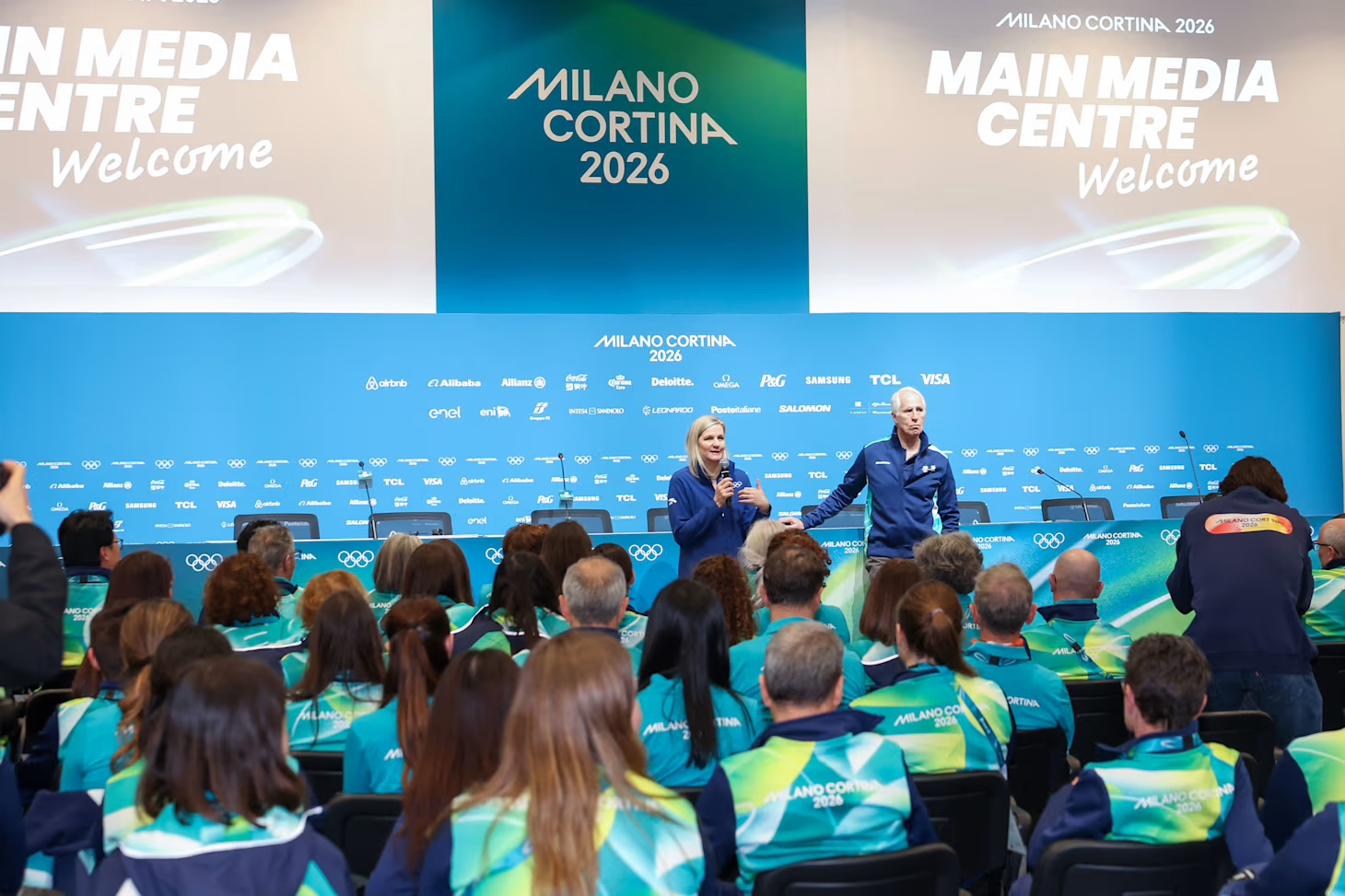
“You’re going to make these Games so special for millions of people,” said International Olympic Committee (IOC) President Kirsty Coventry, as she greeted volunteers in the Main Press Centre (MPC) in Milan today. “Thank you, thank you, thank you for everything that you have done and that you will be doing throughout the Games,” she said, wrapping up her motivational speech.

Key facts

  • IOC President celebrates Milano Cortina 2026 volunteers
  • Volunteers play a key role in welcoming the athletes to the Games
  • Milano Cortina President Giovanni Malagò praises volunteers

Famed for their smiles, willingness to help and their Olympic spirit, Olympic volunteers help to make special Games memories for the athletes, fans and officials that they encounter in their different roles. More of those special memories were created, as President Coventry, Milano Cortina 2026 President Giovanni Malagò and 100 volunteers met. Gathering together for a group photo, the volunteers showed their Olympic spirit in a celebratory image that underlined their high spirits before the Games get underway.

President Coventry emphasised to the volunteers the key role that they play in welcoming the world to their Games. “I’ve been to five Olympic Games and the volunteers during the Games were like the special secret source of magic. So, it is really exciting to be here with all of you. I can’t emphasise enough how the atmosphere is created around the Games by all of you, and all of the thousands of volunteers around Italy, because, a lot of the time, you are the first people that athletes, that their families, and that the fans come into contact with.”

© IOC/Sara Cavallini

She continued with her own experience from London 2012. “I remember in London, you would get on the train and there were volunteers in all the train stations. And all the way from the train station to the Olympic Park, the volunteers were sitting on big chairs with microphones and they were calling out: ‘Zimbabwe! How are you doing? South Africa! Italy!’ Everyone was just like: ‘wow’. It was so cool and that excitement was just incredible for us as athletes because you felt the excitement and the passion of everyone around.”

She continued, “What those volunteers did for the spectators and the crowds that were coming to watch, was to get them excited about being there and what they were going to get to experience, and they became the best spectators to swim in front of, because they were loud and they were excited. The atmosphere that you’re going to help create is so important. So again, from all of us at the Olympic Movement, thank you so much for everything that you’re going to be doing.”

Milano Cortina 2026 President Malagò spoke about his pride in the diversity of the volunteers, “I think there’s about 100 volunteers representing more than 18,000.” He continued, “I’m sure that all of you will have a unique experience.”

“I know very well that you are from all parts of Italy and further afield. I know that you have contributed a lot and that you have made great sacrifices to be here. Some have taken holidays, some have missed special occasions in order to live this experience, and we are very grateful. There are three, maybe four generations here, male and female, and there’s no difference between the social classes. This is a fantastic world that you represent. I think you are the best example of Italy.”

After the meeting with the volunteers, President Coventry answered a few questions about the volunteers in an interview. Her answers can be found here:

How is it going? How is the feel of the Games?

It’s been great. It’s been so nice to finally get here and to have a feel of the ground in Milan. I think the last couple of weeks we started having more teams arrive in Milan, and I was feeling a little left out. So, I’m very happy to be here now with everybody.

Things are moving really well. The organising committee and all of our stakeholders… I think everyone is at the realisation that it’s so close, that things are really moving in the right direction. And it’s so exciting. All the excitement is starting to come. We’re just really happy to be here.

And this was a good start—meeting the volunteers. How would you best describe the volunteers?

The volunteers… I shared with them a story that I remember from the volunteers in London and how they changed the Games. They were the heartbeat of the Games. for all spectators, and they got the crowds excited about going in, watching, filling the venues, and allowing all the athletes to have the best experience ever.

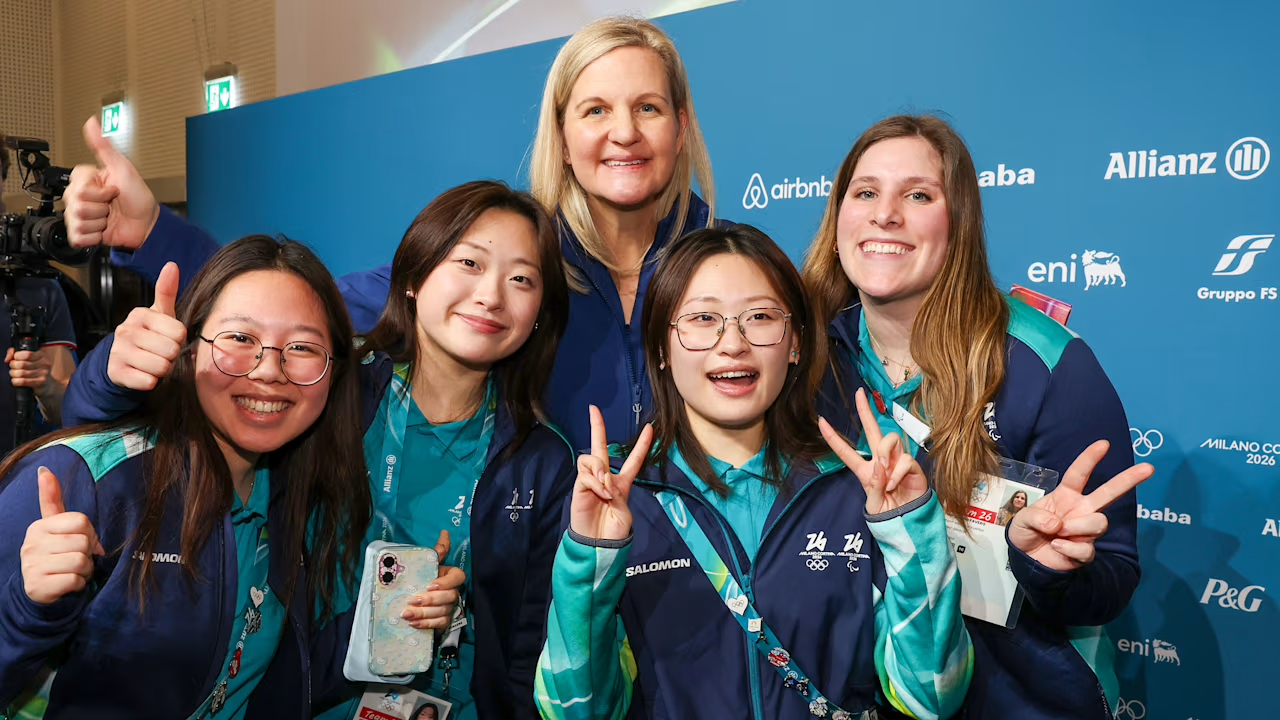
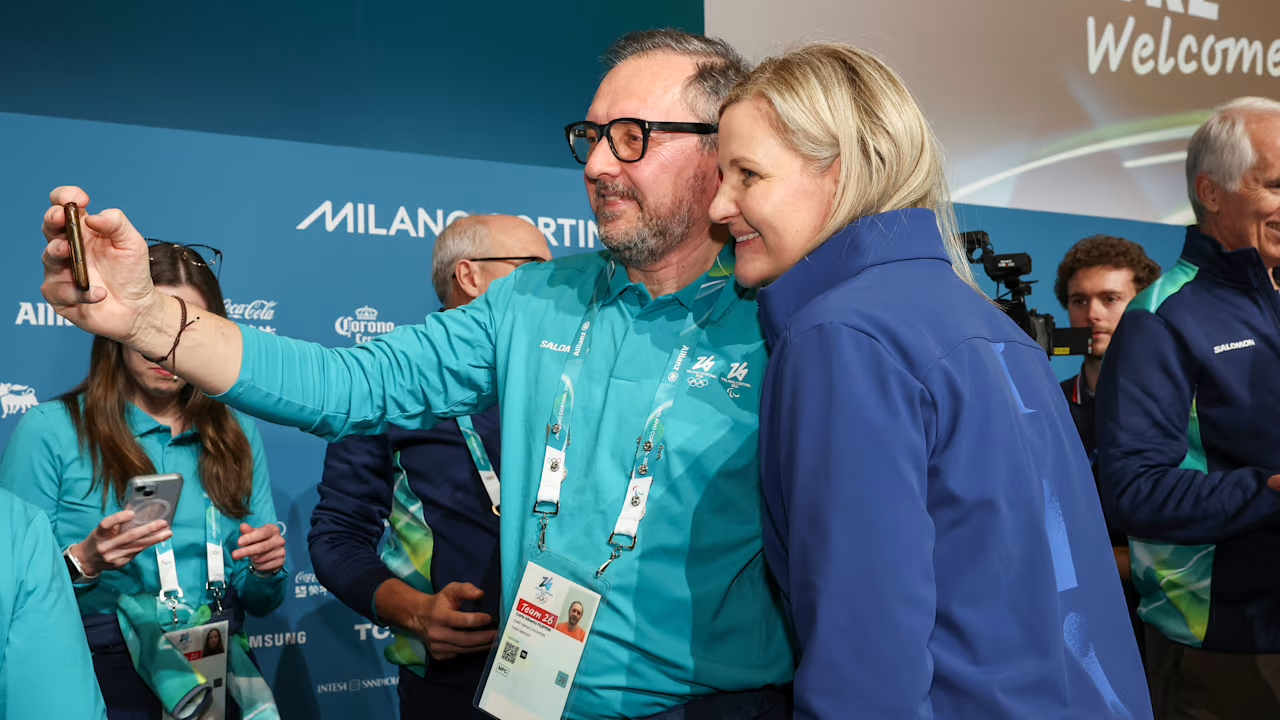
I was telling them they’re sort of like the secret sauce to the spirit and the magic of the Olympic Games. What they’re doing every day is so important for the entire Movement. It was a really nice opportunity to spend time with them, say hello and thank them. We took a few pictures, and they came and said, “We’re so excited.” So, I think that was good.

© IOC/Sara Cavallini


© IOC/Sara Cavallini

What do they represent for the Olympic family and the Olympic Games?

I think the volunteers showcase the true spirit of Olympism. They’ve given up their time to come because they believe in something and they want to be a part of it. I don’t think even they realise that they’re a part of making the Games an even bigger success, because they help create this environment and the spirit of the Olympic Games.

Especially for spectators—they are sometimes the first point of contact that visitors, families of athletes, spectators, fans, everyone will meet. If they’re happy and proud to be doing this, that will shine through and change the experience for all stakeholders, which is invaluable.

What message would you send out to the athletes and the others who are ready?

I’d say to them: have fun. Enjoy the moment. Like in everything, it’s not always going to be the easiest ride. You’re going to come across sometimes, like we do everywhere, people who may be having a bad day, and the challenge is to try to turn their day into a good one. Embrace everyone and get everyone excited about the Olympic Games and the movement—about what they’re about to go and watch.

The volunteers at the airport are welcoming everybody to Italy and to the Italian spirit. The Italians—they love sport. We’re going to see incredible venues in the most iconic, beautiful areas of Italy. Be proud of that. Be proud that you’re helping shape what these Games will be remembered for in the future.

Thank you so much. Enjoy the rest of your stay and the Games.

I look forward to it. I’m very excited. Thank you so much.

Image credits: © IOC/Sara Cavallini

Posted in UncategorizedTagged