Inogen Alliance Announces Sponsorship of 2026 AWS Global Water Stewardship Forum

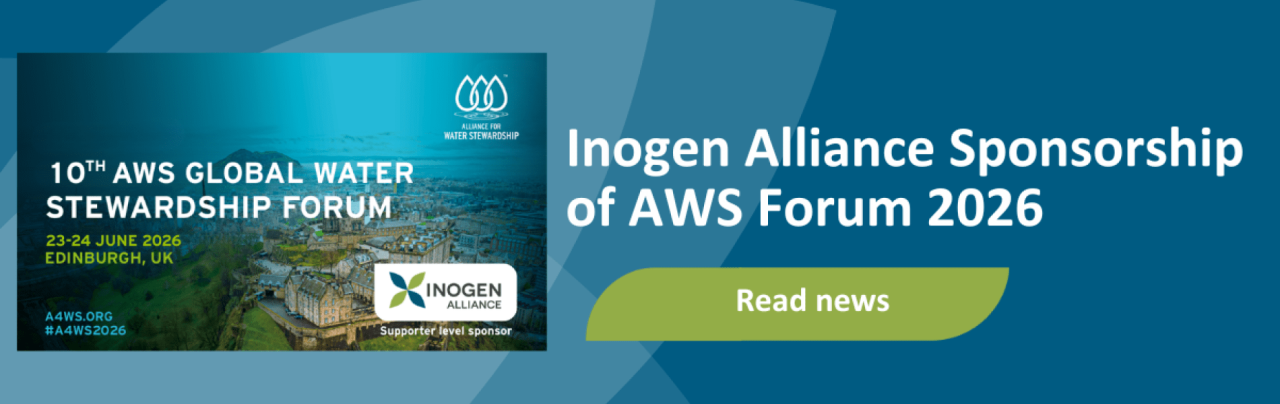
Press release title text and event promotional banner

ST PAUL, Minn., February 12, 2026 /3BL/ – Inogen Alliance is an official sponsor of the upcoming annual Global Water Stewardship Forum with the Alliance for Water Stewardship (AWS), for the fourth year. The forum runs from 23-24 June 2026 in Edinburgh, Scotland at the Edinburgh International Conference Centre (EICC).

As an Alliance we are representing our global presence at this event with thirteen Associate co-sponsors including Antea Group UK, Antea Brasil, Antea Group France, Antea Group USA, Baden Consulting in Switzerland, Brown & Green in Philippines, CDG Environmental in Costa Rica, Chola MS Risk Services Limited (CMSRS) in India, HPC France, HPC Italy, Mediterra in Spain, and Sustainera Solutions in Azerbaijan, Tonkin + Taylor in New Zealand; with our global Water Working Group leader Beatrice Bizzaro.

Since October 2025, Beatrice was elected as a member of the AWS Technical Committee, serving as one of the four global representatives from the Private Sector. At Inogen Alliance, we are thrilled about this opportunity and look forward to actively supporting AWS in their strategy.

The Alliance for Water stewardship Forum is one of the key events in which our community of members, implementers and stakeholders to share knowledge and learning on the evolution of water stewardship practice and forge new directions through dialogue and partnerships. Held annually in Edinburgh, Scotland, since 2016, it has become the must-attend event for the international water stewardship community.

We are proud to be sponsors among brands including WWF, Diageo and Haleon.

To learn more about the AWS Forum 2026 visit: AWS Global Water Stewardship Forum | Alliance for Water Stewardship

“Inogen Alliance remains committed to helping organizations worldwide strengthen water stewardship programs aligned with the Alliance for Water Stewardship (AWS) Standard. Our mission is to help clients implement sustainable water stewardship and management practices both at their Sites and across broader watershed contexts, generating positive values for the environment, communities, organizations and other key Stakeholders. Through our Global Water Working Group, we bring together local expertise to share practical insights, case studies, and perspectives on emerging water challenges and opportunities. This effort is supported by over 30 colleagues across 16 countries who are part of the AWS Professional Credentialing System.” 
– Beatrice Bizzaro, HPC Italy, Inogen Alliance global Water Working Group leader.

The complete list of AWS credentialed implementors is available here.

The AWS Global Water Forum is a unique opportunity to exchange water stewardship experiences with industry leaders and build connections with members of the wider global water stewardship community. This event has become a cornerstone annual global meeting for our water experts and clients to come together across geographic locations.

Registration for general tickets is open now. If you are interested, get your tickets early as this event has a history of selling out. Our global water team would love to see you in person at the AWS Forum in June!

If you are looking for support with your water stewardship strategies or AWS check out more on our global water services here.

About Inogen Alliance

Inogen Alliance is a global network made up of over 70 of independent local businesses and over 6,000 consultants around the world who can help make your project a success. Our Associates collaborate closely to serve multinational corporations, government agencies, and nonprofit organizations, and we share knowledge and industry experience to provide the highest quality service to our clients. If you want to learn more about how you can work with Inogen Alliance, you can explore our Associates or Contact Us. Watch for more News & Blog updates, listen to our podcast and follow us on LinkedIn.

Posted in UncategorizedTagged

Inogen Alliance Announces Sponsorship of 2026 AWS Global Water Stewardship Forum

Press release title text and event promotional banner

ST PAUL, Minn., February 12, 2026 /3BL/ – Inogen Alliance is an official sponsor of the upcoming annual Global Water Stewardship Forum with the Alliance for Water Stewardship (AWS), for the fourth year. The forum runs from 23-24 June 2026 in Edinburgh, Scotland at the Edinburgh International Conference Centre (EICC).

As an Alliance we are representing our global presence at this event with thirteen Associate co-sponsors including Antea Group UK, Antea Brasil, Antea Group France, Antea Group USA, Baden Consulting in Switzerland, Brown & Green in Philippines, CDG Environmental in Costa Rica, Chola MS Risk Services Limited (CMSRS) in India, HPC France, HPC Italy, Mediterra in Spain, and Sustainera Solutions in Azerbaijan, Tonkin + Taylor in New Zealand; with our global Water Working Group leader Beatrice Bizzaro.

Since October 2025, Beatrice was elected as a member of the AWS Technical Committee, serving as one of the four global representatives from the Private Sector. At Inogen Alliance, we are thrilled about this opportunity and look forward to actively supporting AWS in their strategy.

The Alliance for Water stewardship Forum is one of the key events in which our community of members, implementers and stakeholders to share knowledge and learning on the evolution of water stewardship practice and forge new directions through dialogue and partnerships. Held annually in Edinburgh, Scotland, since 2016, it has become the must-attend event for the international water stewardship community.

We are proud to be sponsors among brands including WWF, Diageo and Haleon.

To learn more about the AWS Forum 2026 visit: AWS Global Water Stewardship Forum | Alliance for Water Stewardship

“Inogen Alliance remains committed to helping organizations worldwide strengthen water stewardship programs aligned with the Alliance for Water Stewardship (AWS) Standard. Our mission is to help clients implement sustainable water stewardship and management practices both at their Sites and across broader watershed contexts, generating positive values for the environment, communities, organizations and other key Stakeholders. Through our Global Water Working Group, we bring together local expertise to share practical insights, case studies, and perspectives on emerging water challenges and opportunities. This effort is supported by over 30 colleagues across 16 countries who are part of the AWS Professional Credentialing System.” 
– Beatrice Bizzaro, HPC Italy, Inogen Alliance global Water Working Group leader.

The complete list of AWS credentialed implementors is available here.

The AWS Global Water Forum is a unique opportunity to exchange water stewardship experiences with industry leaders and build connections with members of the wider global water stewardship community. This event has become a cornerstone annual global meeting for our water experts and clients to come together across geographic locations.

Registration for general tickets is open now. If you are interested, get your tickets early as this event has a history of selling out. Our global water team would love to see you in person at the AWS Forum in June!

If you are looking for support with your water stewardship strategies or AWS check out more on our global water services here.

About Inogen Alliance

Inogen Alliance is a global network made up of over 70 of independent local businesses and over 6,000 consultants around the world who can help make your project a success. Our Associates collaborate closely to serve multinational corporations, government agencies, and nonprofit organizations, and we share knowledge and industry experience to provide the highest quality service to our clients. If you want to learn more about how you can work with Inogen Alliance, you can explore our Associates or Contact Us. Watch for more News & Blog updates, listen to our podcast and follow us on LinkedIn.

Posted in UncategorizedTagged

Cooling Tower Market to Exceed USD 5 Billion by 2031 Fueled by Power Generation and Data Center Expansion, Says Mordor Intelligence

HYDERABAD, India, Feb. 12, 2026 /PRNewswire/ — According to Mordor Intelligence, the cooling tower market size is expected to grow from USD 4.59 billion in 2026 to nearly USD 5.89 billion by 2031, registering a CAGR of 5.09%. Market growth is being driven by fresh investments in power generation and the rapid expansion of large-scale data centers that require high-capacity cooling solutions. At the same time, stricter regulations on water usage and energy efficiency are accelerating demand for hybrid wet–dry systems, counterflow designs, and larger installations above 20 MW. The transition toward PFAS-free materials, along with the adoption of digital technologies such as predictive maintenance and smart monitoring, is further strengthening the competitive advantage of suppliers focused on sustainability and operational efficiency.

Trends Influencing Cooling Tower Market Growth

Expansion of Power Generation Across Asia and the Middle East

Power producers across Asia and the Middle East are adding new generation assets that demand robust cooling infrastructure. Counterflow towers are widely selected to handle fluctuating thermal loads from nuclear, gas, and hybrid renewable plants. Coastal facilities are leaning toward seawater-based cooling to reduce pressure on freshwater resources, while integrated heat-recovery concepts are improving overall plant economics. These trends are reinforcing the role of advanced cooling towers in modern utility-scale projects.

Tightening Rules on Water and Energy Management

Stricter environmental and health regulations are accelerating upgrades to existing cooling tower systems. Facility owners are investing in improved fill designs, automation, and chemical control to meet higher efficiency and safety expectations. Concerns around plume control and water quality are also steering adoption toward closed-loop and hybrid configurations. In response, manufacturers are focusing on independent performance validation and new material innovations to stay ahead of regulatory demands.

For a full breakdown of market size, segmentation data, and competitive intelligence, access the details of the Mordor Intelligence report: https://www.mordorintelligence.com/industry-reports/cooling-tower-market?utm_source=prnewswire 

Cooling Tower Market Segment Outlook

By Flow Type

  • Cross-Flow
  • Counter-Flow

By Tower Type

  • Evaporative
  • Dry
  • Hybrid (Wet–Dry)

By Capacity Range

  • Below 5 MW
  • 5 to 20 MW
  • Above 20 MW

By Application

  • Oil and Gas
  • Chemical and Petrochemical
  • Power Generation
  • HVACR (Commercial Buildings)
  • Data Centers
  • Pulp and Paper
  • Food and Beverage
  • Others

By Geography

  • North America
  • Europe
  • Asia Pacific
  • South America
  • Middle East and Africa

Cooling Tower Market Regional Overview

In North America, growth is tied to expanding data-center hubs and modernization projects in the refining sector, with buyers prioritizing low-drift and environmentally compliant systems. Europe is seeing steady adoption through district energy projects that rely on hybrid configurations to manage seasonal demand while conserving water.

Across the Middle East and Africa, water scarcity is accelerating the shift toward dry and seawater-based towers linked to solar and desalination facilities. South America’s activity remains centered on heavy industrial zones, where large counter-flow systems are preferred for their ability to perform under harsh operating conditions.

Cooling Tower Companies:

  • SPX Technologies, Inc.
  • Baltimore Aircoil Company, Inc.
  • EVAPCO, Inc.
  • Johnson Controls International plc
  • Hamon and CIE (John Cockerill SA)
  • Brentwood Industries, Inc.
  • Babcock & Wilcox Enterprises, Inc.
  • ENEXIO Management GmbH
  • Thermax Ltd.
  • Artech Cooling Towers Pvt. Ltd.
  • Kelvion Holding GmbH
  • Paharpur Cooling Towers Ltd.
  • Liang Chi Industry Co., Ltd.
  • Star Cooling Towers Pvt. Ltd.
  • Delta Cooling Towers, Inc.
  • Reymsa Cooling Towers, Inc.
  • SPIG S.p.A. (Babcock & Wilcox)
  • Kimre, Inc.
  • Mesan Group

Check out related reports published by Mordor Intelligence: 

Air Compressor Market Size: Air compressor market report is segmented by operating principle, technology, portability, cooling method, power rating, end-use industry, and regional markets across North America, Europe, Asia-Pacific, South America, and the Middle East & Africa.

Cryogenic Pump Market Share: Cryogenic pump market report is categorized by pump type, cryogenic gas handled, end-use industry, and regional coverage across North America, Europe, Asia-Pacific, South America, and the Middle East & Africa.

Electric Motor Market Trends: Electric motor market report is segmented by motor type, power rating, voltage level, application area, end-use industry, and regional markets spanning North America, Europe, Asia-Pacific, South America, and the Middle East & Africa

About Mordor Intelligence: 

Mordor Intelligence is a trusted partner for businesses seeking comprehensive and actionable market intelligence. Our global reach, expert team, and tailored solutions empower organizations and individuals to make informed decisions, navigate complex markets, and achieve their strategic goals. With a team of over 550 domain experts and on-ground specialists spanning 150+ countries, Mordor Intelligence possesses a unique understanding of the global business landscape. This expertise translates into comprehensive syndicated and custom research reports covering a wide spectrum of industries, including aerospace & defense, agriculture, animal nutrition and wellness, automation, automotive, chemicals & materials, consumer goods & services, electronics, energy & power, financial services, food & beverages, healthcare, hospitality & tourism, information & communications technology, investment opportunities, and logistics.    

For any inquiries, please contact:
media@mordorintelligence.com
https://www.mordorintelligence.com/contact-us

Logo – https://mma.prnewswire.com/media/2746908/Mordor_Intelligence_Logo.jpg

Cision View original content to download multimedia:https://www.prnewswire.com/news-releases/cooling-tower-market-to-exceed-usd-5-billion-by-2031-fueled-by-power-generation-and-data-center-expansion-says-mordor-intelligence-302686447.html

SOURCE Mordor Intelligence Private Limited

Cooling Tower Market to Exceed USD 5 Billion by 2031 Fueled by Power Generation and Data Center Expansion, Says Mordor Intelligence

HYDERABAD, India, Feb. 12, 2026 /PRNewswire/ — According to Mordor Intelligence, the cooling tower market size is expected to grow from USD 4.59 billion in 2026 to nearly USD 5.89 billion by 2031, registering a CAGR of 5.09%. Market growth is being driven by fresh investments in power generation and the rapid expansion of large-scale data centers that require high-capacity cooling solutions. At the same time, stricter regulations on water usage and energy efficiency are accelerating demand for hybrid wet–dry systems, counterflow designs, and larger installations above 20 MW. The transition toward PFAS-free materials, along with the adoption of digital technologies such as predictive maintenance and smart monitoring, is further strengthening the competitive advantage of suppliers focused on sustainability and operational efficiency.

Trends Influencing Cooling Tower Market Growth

Expansion of Power Generation Across Asia and the Middle East

Power producers across Asia and the Middle East are adding new generation assets that demand robust cooling infrastructure. Counterflow towers are widely selected to handle fluctuating thermal loads from nuclear, gas, and hybrid renewable plants. Coastal facilities are leaning toward seawater-based cooling to reduce pressure on freshwater resources, while integrated heat-recovery concepts are improving overall plant economics. These trends are reinforcing the role of advanced cooling towers in modern utility-scale projects.

Tightening Rules on Water and Energy Management

Stricter environmental and health regulations are accelerating upgrades to existing cooling tower systems. Facility owners are investing in improved fill designs, automation, and chemical control to meet higher efficiency and safety expectations. Concerns around plume control and water quality are also steering adoption toward closed-loop and hybrid configurations. In response, manufacturers are focusing on independent performance validation and new material innovations to stay ahead of regulatory demands.

For a full breakdown of market size, segmentation data, and competitive intelligence, access the details of the Mordor Intelligence report: https://www.mordorintelligence.com/industry-reports/cooling-tower-market?utm_source=prnewswire 

Cooling Tower Market Segment Outlook

By Flow Type

  • Cross-Flow
  • Counter-Flow

By Tower Type

  • Evaporative
  • Dry
  • Hybrid (Wet–Dry)

By Capacity Range

  • Below 5 MW
  • 5 to 20 MW
  • Above 20 MW

By Application

  • Oil and Gas
  • Chemical and Petrochemical
  • Power Generation
  • HVACR (Commercial Buildings)
  • Data Centers
  • Pulp and Paper
  • Food and Beverage
  • Others

By Geography

  • North America
  • Europe
  • Asia Pacific
  • South America
  • Middle East and Africa

Cooling Tower Market Regional Overview

In North America, growth is tied to expanding data-center hubs and modernization projects in the refining sector, with buyers prioritizing low-drift and environmentally compliant systems. Europe is seeing steady adoption through district energy projects that rely on hybrid configurations to manage seasonal demand while conserving water.

Across the Middle East and Africa, water scarcity is accelerating the shift toward dry and seawater-based towers linked to solar and desalination facilities. South America’s activity remains centered on heavy industrial zones, where large counter-flow systems are preferred for their ability to perform under harsh operating conditions.

Cooling Tower Companies:

  • SPX Technologies, Inc.
  • Baltimore Aircoil Company, Inc.
  • EVAPCO, Inc.
  • Johnson Controls International plc
  • Hamon and CIE (John Cockerill SA)
  • Brentwood Industries, Inc.
  • Babcock & Wilcox Enterprises, Inc.
  • ENEXIO Management GmbH
  • Thermax Ltd.
  • Artech Cooling Towers Pvt. Ltd.
  • Kelvion Holding GmbH
  • Paharpur Cooling Towers Ltd.
  • Liang Chi Industry Co., Ltd.
  • Star Cooling Towers Pvt. Ltd.
  • Delta Cooling Towers, Inc.
  • Reymsa Cooling Towers, Inc.
  • SPIG S.p.A. (Babcock & Wilcox)
  • Kimre, Inc.
  • Mesan Group

Check out related reports published by Mordor Intelligence: 

Air Compressor Market Size: Air compressor market report is segmented by operating principle, technology, portability, cooling method, power rating, end-use industry, and regional markets across North America, Europe, Asia-Pacific, South America, and the Middle East & Africa.

Cryogenic Pump Market Share: Cryogenic pump market report is categorized by pump type, cryogenic gas handled, end-use industry, and regional coverage across North America, Europe, Asia-Pacific, South America, and the Middle East & Africa.

Electric Motor Market Trends: Electric motor market report is segmented by motor type, power rating, voltage level, application area, end-use industry, and regional markets spanning North America, Europe, Asia-Pacific, South America, and the Middle East & Africa

About Mordor Intelligence: 

Mordor Intelligence is a trusted partner for businesses seeking comprehensive and actionable market intelligence. Our global reach, expert team, and tailored solutions empower organizations and individuals to make informed decisions, navigate complex markets, and achieve their strategic goals. With a team of over 550 domain experts and on-ground specialists spanning 150+ countries, Mordor Intelligence possesses a unique understanding of the global business landscape. This expertise translates into comprehensive syndicated and custom research reports covering a wide spectrum of industries, including aerospace & defense, agriculture, animal nutrition and wellness, automation, automotive, chemicals & materials, consumer goods & services, electronics, energy & power, financial services, food & beverages, healthcare, hospitality & tourism, information & communications technology, investment opportunities, and logistics.    

For any inquiries, please contact:
media@mordorintelligence.com
https://www.mordorintelligence.com/contact-us

Logo – https://mma.prnewswire.com/media/2746908/Mordor_Intelligence_Logo.jpg

Cision View original content to download multimedia:https://www.prnewswire.com/news-releases/cooling-tower-market-to-exceed-usd-5-billion-by-2031-fueled-by-power-generation-and-data-center-expansion-says-mordor-intelligence-302686447.html

SOURCE Mordor Intelligence Private Limited

Cooling Tower Market to Exceed USD 5 Billion by 2031 Fueled by Power Generation and Data Center Expansion, Says Mordor Intelligence

HYDERABAD, India, Feb. 12, 2026 /PRNewswire/ — According to Mordor Intelligence, the cooling tower market size is expected to grow from USD 4.59 billion in 2026 to nearly USD 5.89 billion by 2031, registering a CAGR of 5.09%. Market growth is being driven by fresh investments in power generation and the rapid expansion of large-scale data centers that require high-capacity cooling solutions. At the same time, stricter regulations on water usage and energy efficiency are accelerating demand for hybrid wet–dry systems, counterflow designs, and larger installations above 20 MW. The transition toward PFAS-free materials, along with the adoption of digital technologies such as predictive maintenance and smart monitoring, is further strengthening the competitive advantage of suppliers focused on sustainability and operational efficiency.

Trends Influencing Cooling Tower Market Growth

Expansion of Power Generation Across Asia and the Middle East

Power producers across Asia and the Middle East are adding new generation assets that demand robust cooling infrastructure. Counterflow towers are widely selected to handle fluctuating thermal loads from nuclear, gas, and hybrid renewable plants. Coastal facilities are leaning toward seawater-based cooling to reduce pressure on freshwater resources, while integrated heat-recovery concepts are improving overall plant economics. These trends are reinforcing the role of advanced cooling towers in modern utility-scale projects.

Tightening Rules on Water and Energy Management

Stricter environmental and health regulations are accelerating upgrades to existing cooling tower systems. Facility owners are investing in improved fill designs, automation, and chemical control to meet higher efficiency and safety expectations. Concerns around plume control and water quality are also steering adoption toward closed-loop and hybrid configurations. In response, manufacturers are focusing on independent performance validation and new material innovations to stay ahead of regulatory demands.

For a full breakdown of market size, segmentation data, and competitive intelligence, access the details of the Mordor Intelligence report: https://www.mordorintelligence.com/industry-reports/cooling-tower-market?utm_source=prnewswire 

Cooling Tower Market Segment Outlook

By Flow Type

  • Cross-Flow
  • Counter-Flow

By Tower Type

  • Evaporative
  • Dry
  • Hybrid (Wet–Dry)

By Capacity Range

  • Below 5 MW
  • 5 to 20 MW
  • Above 20 MW

By Application

  • Oil and Gas
  • Chemical and Petrochemical
  • Power Generation
  • HVACR (Commercial Buildings)
  • Data Centers
  • Pulp and Paper
  • Food and Beverage
  • Others

By Geography

  • North America
  • Europe
  • Asia Pacific
  • South America
  • Middle East and Africa

Cooling Tower Market Regional Overview

In North America, growth is tied to expanding data-center hubs and modernization projects in the refining sector, with buyers prioritizing low-drift and environmentally compliant systems. Europe is seeing steady adoption through district energy projects that rely on hybrid configurations to manage seasonal demand while conserving water.

Across the Middle East and Africa, water scarcity is accelerating the shift toward dry and seawater-based towers linked to solar and desalination facilities. South America’s activity remains centered on heavy industrial zones, where large counter-flow systems are preferred for their ability to perform under harsh operating conditions.

Cooling Tower Companies:

  • SPX Technologies, Inc.
  • Baltimore Aircoil Company, Inc.
  • EVAPCO, Inc.
  • Johnson Controls International plc
  • Hamon and CIE (John Cockerill SA)
  • Brentwood Industries, Inc.
  • Babcock & Wilcox Enterprises, Inc.
  • ENEXIO Management GmbH
  • Thermax Ltd.
  • Artech Cooling Towers Pvt. Ltd.
  • Kelvion Holding GmbH
  • Paharpur Cooling Towers Ltd.
  • Liang Chi Industry Co., Ltd.
  • Star Cooling Towers Pvt. Ltd.
  • Delta Cooling Towers, Inc.
  • Reymsa Cooling Towers, Inc.
  • SPIG S.p.A. (Babcock & Wilcox)
  • Kimre, Inc.
  • Mesan Group

Check out related reports published by Mordor Intelligence: 

Air Compressor Market Size: Air compressor market report is segmented by operating principle, technology, portability, cooling method, power rating, end-use industry, and regional markets across North America, Europe, Asia-Pacific, South America, and the Middle East & Africa.

Cryogenic Pump Market Share: Cryogenic pump market report is categorized by pump type, cryogenic gas handled, end-use industry, and regional coverage across North America, Europe, Asia-Pacific, South America, and the Middle East & Africa.

Electric Motor Market Trends: Electric motor market report is segmented by motor type, power rating, voltage level, application area, end-use industry, and regional markets spanning North America, Europe, Asia-Pacific, South America, and the Middle East & Africa

About Mordor Intelligence: 

Mordor Intelligence is a trusted partner for businesses seeking comprehensive and actionable market intelligence. Our global reach, expert team, and tailored solutions empower organizations and individuals to make informed decisions, navigate complex markets, and achieve their strategic goals. With a team of over 550 domain experts and on-ground specialists spanning 150+ countries, Mordor Intelligence possesses a unique understanding of the global business landscape. This expertise translates into comprehensive syndicated and custom research reports covering a wide spectrum of industries, including aerospace & defense, agriculture, animal nutrition and wellness, automation, automotive, chemicals & materials, consumer goods & services, electronics, energy & power, financial services, food & beverages, healthcare, hospitality & tourism, information & communications technology, investment opportunities, and logistics.    

For any inquiries, please contact:
media@mordorintelligence.com
https://www.mordorintelligence.com/contact-us

Logo – https://mma.prnewswire.com/media/2746908/Mordor_Intelligence_Logo.jpg

Cision View original content to download multimedia:https://www.prnewswire.com/news-releases/cooling-tower-market-to-exceed-usd-5-billion-by-2031-fueled-by-power-generation-and-data-center-expansion-says-mordor-intelligence-302686447.html

SOURCE Mordor Intelligence Private Limited

Global PFAS Regulatory Acceleration: Implications for U.S. Insurance Carriers

Per and polyfluoroalkyl substances (PFAS) remain at the center of regulatory activity worldwide, with glimmers of accelerated standards, enhanced enforcement, and more stringent product restrictions. While U.S. federal regulation remains fragmented and incremental, international frameworks are changing. This is particularly true across the European Union (EU), where the regulatory agenda is progressing toward a near-total class-based PFAS restriction. Plus, select Middle Eastern countries are advancing rapidly toward stricter standards, class-based restrictions, and enhanced enforcement.

For U.S. insurers underwriting multinational risks, these global developments signal a shift that warrants attention and raises critical questions: Are insureds operating within expanding compliance blind spots? And are carriers fully accounting for the downstream liability, remediation, and business interruption exposures created by divergent global PFAS regimes?

These questions are no longer theoretical. They are being answered first, and most decisively, outside the United States, beginning with the European Union.

European Union: Accelerating Toward Class-Based PFAS Restrictions

EU regulators are moving beyond incremental controls toward a precautionary, class-based PFAS framework that materially alters liability, remediation, and operational risks for insureds operating in or supplying the EU market. The following are key elements of this evolving regulatory landscape and their implications for multinational insurers:

1. PFAS Restriction Proposal

The European Chemicals Agency (ECHA) confirmed that its scientific committees resumed evaluation of the proposed universal PFAS restriction in September 2025, with a particular focus on sector-specific impacts across:

  • Electronics and semiconductors
  • Manufacturing and industrial processes
  • Lubricants and specialty chemicals
  • Energy and infrastructure systems

Final scientific opinions are anticipated in late 2026. This is a milestone expected to shape not only EU compliance obligations but also global supply chain expectations and product design standards. A near total class-based PFAS ban remains a central policy objective.

Insurance Implications: Broad class-based restrictions will increase the likelihood of legacy contamination claims, stranded assets, and accelerated substitution risks tied to insured product portfolios in the EU.

2. EU Chemicals Action Plan (July 2025)

The European Commission’s Chemicals Action Plan establishes a coordinated framework that includes:

  • An EU-wide PFAS monitoring and reporting system
  • Mapping of PFAS pollution “hot spots”
  • Harmonized remediation strategies across member states
  • Alignment with Safe and Sustainable by Design (SSbD) principles

The Plan explicitly encourages innovation in PFAS alternatives while increasing scrutiny of legacy contamination.

Insurance implications: Expansion of monitoring and hotspot mapping creates clearer pathways for identifying responsible parties, increasing litigation predictability and claim frequency.

3. Firefighting Foam Restrictions

As of October 2025, the European Commission formally restricted PFAS-containing firefighting foams following a multiyear scientific review process.

Insurance implications: Airports, industrial sites, ports, and municipal entities face heightened exposure for historical foam usage, with potential impacts on environmental liability, public entity coverage, and reinsurance assumptions.

Spotlight on France: Heightened PFAS Controls

France has emerged as one of the EU’s most proactive PFAS regulators, combining early product bans, import controls, and litigation activity that set it apart from broader EU initiatives, including the following:

  • Statutory bans on PFAS in cosmetics, waxes, and textiles above defined thresholds beginning in 2026, with broader expansion by 2030
  • Litigation against cookware manufacturers for allegedly misleading marketing of polytetrafluoroethylene (PTFE) based products as “safe”
  • Introduction of a hazardous chemical import tax, targeting small, PFAS-containing consumer imports—particularly from China

Insurance implications: Product liability, false advertising, and import-related enforcement actions elevate both defense and indemnity risk for global manufacturers and distributors.

Developments Outside the EU: Emerging Regulatory Risk Hotspots

In jurisdictions beyond the EU, regulators are moving quickly toward class-based PFAS controls and stricter enforcement, creating emerging liability, operational, and compliance risks for insurers with multinational exposures.

United Arab Emirates (UAE): Stringent Drinking Water Standards in Force

The UAE has enacted one of the most restrictive national PFAS drinking water standards globally:

  • Total PFAS limit: 0.0001 milligrams per liter (mg/L)/ 0.1 micrograms per liter (µg/L), effective January 2025
  • Mandatory routine monitoring and inspections
  • 24-hour notification requirement for exceedances, followed by corrective reporting within seven days

Failure to comply may result in administrative fines, license suspension or facility closure, and public disclosure in cases involving negligence.

Insurance implications: Strict thresholds and rapid response obligations heighten operational risk for insureds in water-intensive industries and create loss triggers tied to regulatory noncompliance.

Israel: Rapidly Expanding Multi-Agency PFAS Oversight

Israel is advancing PFAS governance through coordinated action across ministries:

  • Establishment of an interministerial PFAS task force
  • Environmental compliance mandates addressing PFAS emissions and use
  • Nationwide PFAS monitoring of drinking water
  • Development of human biomonitoring guidance, signaling future public health-based exposure thresholds

Insurance implications: Israel is trending toward EU-style chemical controls, increasing longtail environmental and bodily injury exposure for industrial and municipal insureds.

Egypt: Limited PFAS Controls Despite Treaty Commitments

Although Egypt has been a party to the Stockholm Convention since 2004, national implementation remains substantially outdated:

  • No PFAS-specific environmental or drinking water standards
  • National Implementation Plan last updated in 2005
  • Perfluoro octane sulfonic acid (PFOS), perfluorooctanoic acid (PFOA), and newer PFAS not covered in domestic regulation

Insurance implications: The absence of current regulation creates uncertainty; however, future regulatory acceleration could substantially increase retroactive liability exposure for multinational operators.

Saudi Arabia: Expanding PFAS Controls and Remediation Demand

Saudi Arabia is strengthening environmental regulation as part of broader economic modernization initiatives, including:

  • Development of PFAS discharge limits
  • Expanded remediation requirements
  • Alignment with international environmental best practices

Oversight responsibilities are shared among water and environmental authorities, and remediation services are expanding alongside infrastructure growth and ESG commitments.

Insurance implications: Growth in remediation activity increases contractor exposure and professional liability risk while signaling future tightening of regulatory enforcement.

Global Framework vs. the U.S. Regulatory Patchwork

Globally, PFAS regulation is accelerating through class-based bans, expanded monitoring, and aggressive enforcement. By contrast, the United States remains divided:

  • Federal Environmental Protection Agency (EPA) initiatives have narrowed in scope and pace
  • States are driving the most stringent—and fragmented—PFAS requirements worldwide

Insurance implications: For insurers, this divergence complicates portfolio risk modeling, claims forecasting, and underwriting consistency, particularly for insureds operating across borders.

A Structural and Risk Allocation Comparison

Core Philosophical Difference: Risk-Based vs. Precautionary Regulation

Regulatory philosophy is the most consequential difference between U.S. and global PFAS regimes, influencing how rules are set, enforced, and experienced by insureds worldwide. United States: Risk-Based, Chemical Specific Regulation

U.S. PFAS regulation is grounded in a risk-based, substance-specific framework, requiring:

  • Demonstrated toxicity, exposure pathways, and dose response data
  • Individual chemical evaluations rather than class-wide controls
  • Extensive notice and comment rulemaking under statutes such as the Safe Drinking Water Act (SDWA) and Toxic Substances Control Act (TSCA)

As a result, federal rules develop slowly, are chemically narrow, and are vulnerable to legal challenge. Even where PFAS are regulated, compliance timelines are extended and enforcement is cautious.

Global (EU-Led): Precautionary, Class-Based Controls

By contrast, the European Union and several non-EU jurisdictions apply the precautionary principle, allowing restrictions based on persistence, bioaccumulation, or uncertainty—without requiring chemical-by-chemical proof of harm.

This has enabled:

  • Broad PFAS class definitions that include thousands of compounds
  • Proactive bans and use restrictions
  • Faster regulatory escalation once hazard concerns are identified

This philosophical divide drives nearly all downstream risk implications for insurers.

Scope of Regulation: Narrow U.S. Federal Focus vs. Expansive Global Coverage

The philosophical differences between U.S. and global PFAS regulation are reflected in the scope and structure of rules themselves; from the narrowly defined federal standards in the United States to the broad, class-based restrictions and monitoring requirements abroad.United States (Federal Level)

At present, enforceable federal PFAS regulation focuses primarily on:

  • Drinking water Maximum Contaminant Levels (MCLs) for six PFAS
  • Targeted reporting and testing obligations
  • Limited wastewater and biosolids studies still in progress

Notably, EPA has:

  • Retained MCLs for PFOA and PFOS
  • Delayed or reconsidered broader mixture-based regulations
  • Extended compliance deadlines well into the next decade

This results in regulatory certainty for a small set of compounds, but little clarity for the thousands of PFAS still in commerce. Global (EU and Selected National Regimes)

Outside the U.S., regulators are proceeding with:

  • Class-wide PFAS bans across product categories
  • National monitoring systems
  • Import restrictions and product labeling controls
  • Firefighting foam bans and remediation mandates

The EU’s REACH Annex XVII proposal alone could eliminate most PFAS uses unless explicitly exempted, fundamentally reshaping global manufacturing and supply chains.

Federal vs. Subnational Fragmentation in the U.S.

A defining feature of U.S. PFAS regulation is state-driven escalation.

Federal Role: Ceiling, Not a Floor

Federal EPA standards frequently function as:

  • Minimum requirements
  • Reference points for states
  • Litigation anchors rather than operational endpoints

EPA enforcement has been measured, emphasizing guidance, funding assistance, and phased compliance timelines. [epa.gov]

State Role: Aggressive and Divergent

U.S. states have adopted:

  • Drinking water standards below federal levels
  • Product bans (food packaging, textiles, cosmetics)
  • Firefighting foam prohibitions
  • PFAS reporting and disclosure regimes

The result is arguably the most fragmented PFAS regulatory environment in the world, creating compliance complexity even for domestically focused insureds.

Enforcement and Liability Posture

United States

  • Enforcement is divided among federal agencies, states, and private litigant
  • Liability often arises via toxic tort claims, public nuisance actions, or cost recovery suits
  • Regulatory enforcement itself has been cautious, especially at the federal level

Insurance exposure is therefore driven more by litigation risk than regulatory penalties.

Global (EU and Middle East)

  • Enforcement tools include product seizures, import controls, license suspension, and public disclosure
  • Regulators increasingly map contamination locations and identify responsible parties proactively
  • Administrative penalties and forced remediation are more common

This shifts exposure from speculative litigation to direct regulatory loss triggers, often with lower thresholds for enforcement action.

Key Takeaways for U.S. Insurance Carriers

  • Global PFAS regulation is accelerating, regardless of slower U.S. federal action
  • International developments increasingly drive liability, supply chain disruption, and product restrictions
  • Insureds may unknowingly face compliance gaps outside the U.S., creating latent exposure
  • Early identification of jurisdiction-specific PFAS risk is critical for underwriting, claims, and reinsurance strategy

U.S. carriers ensuring global operations should review PFAS exposure assumptions across environmental liability, product liability, and casualty lines—particularly where insureds operate in the EU, Middle East, or other rapidly evolving regulatory environments.

Do you have questions? Reach out to our insurance experts or our PFAS experts today!

Stay ahead of global PFAS developments with our PFAS Dashboard, a tool designed to track evolving regulations, highlight jurisdiction-specific risks, and support insurance decision-making.

Explore the dashboard here, and for more in-depth regulatory information, subscribe today!

Posted in UncategorizedTagged

Global PFAS Regulatory Acceleration: Implications for U.S. Insurance Carriers

Per and polyfluoroalkyl substances (PFAS) remain at the center of regulatory activity worldwide, with glimmers of accelerated standards, enhanced enforcement, and more stringent product restrictions. While U.S. federal regulation remains fragmented and incremental, international frameworks are changing. This is particularly true across the European Union (EU), where the regulatory agenda is progressing toward a near-total class-based PFAS restriction. Plus, select Middle Eastern countries are advancing rapidly toward stricter standards, class-based restrictions, and enhanced enforcement.

For U.S. insurers underwriting multinational risks, these global developments signal a shift that warrants attention and raises critical questions: Are insureds operating within expanding compliance blind spots? And are carriers fully accounting for the downstream liability, remediation, and business interruption exposures created by divergent global PFAS regimes?

These questions are no longer theoretical. They are being answered first, and most decisively, outside the United States, beginning with the European Union.

European Union: Accelerating Toward Class-Based PFAS Restrictions

EU regulators are moving beyond incremental controls toward a precautionary, class-based PFAS framework that materially alters liability, remediation, and operational risks for insureds operating in or supplying the EU market. The following are key elements of this evolving regulatory landscape and their implications for multinational insurers:

1. PFAS Restriction Proposal

The European Chemicals Agency (ECHA) confirmed that its scientific committees resumed evaluation of the proposed universal PFAS restriction in September 2025, with a particular focus on sector-specific impacts across:

  • Electronics and semiconductors
  • Manufacturing and industrial processes
  • Lubricants and specialty chemicals
  • Energy and infrastructure systems

Final scientific opinions are anticipated in late 2026. This is a milestone expected to shape not only EU compliance obligations but also global supply chain expectations and product design standards. A near total class-based PFAS ban remains a central policy objective.

Insurance Implications: Broad class-based restrictions will increase the likelihood of legacy contamination claims, stranded assets, and accelerated substitution risks tied to insured product portfolios in the EU.

2. EU Chemicals Action Plan (July 2025)

The European Commission’s Chemicals Action Plan establishes a coordinated framework that includes:

  • An EU-wide PFAS monitoring and reporting system
  • Mapping of PFAS pollution “hot spots”
  • Harmonized remediation strategies across member states
  • Alignment with Safe and Sustainable by Design (SSbD) principles

The Plan explicitly encourages innovation in PFAS alternatives while increasing scrutiny of legacy contamination.

Insurance implications: Expansion of monitoring and hotspot mapping creates clearer pathways for identifying responsible parties, increasing litigation predictability and claim frequency.

3. Firefighting Foam Restrictions

As of October 2025, the European Commission formally restricted PFAS-containing firefighting foams following a multiyear scientific review process.

Insurance implications: Airports, industrial sites, ports, and municipal entities face heightened exposure for historical foam usage, with potential impacts on environmental liability, public entity coverage, and reinsurance assumptions.

Spotlight on France: Heightened PFAS Controls

France has emerged as one of the EU’s most proactive PFAS regulators, combining early product bans, import controls, and litigation activity that set it apart from broader EU initiatives, including the following:

  • Statutory bans on PFAS in cosmetics, waxes, and textiles above defined thresholds beginning in 2026, with broader expansion by 2030
  • Litigation against cookware manufacturers for allegedly misleading marketing of polytetrafluoroethylene (PTFE) based products as “safe”
  • Introduction of a hazardous chemical import tax, targeting small, PFAS-containing consumer imports—particularly from China

Insurance implications: Product liability, false advertising, and import-related enforcement actions elevate both defense and indemnity risk for global manufacturers and distributors.

Developments Outside the EU: Emerging Regulatory Risk Hotspots

In jurisdictions beyond the EU, regulators are moving quickly toward class-based PFAS controls and stricter enforcement, creating emerging liability, operational, and compliance risks for insurers with multinational exposures.

United Arab Emirates (UAE): Stringent Drinking Water Standards in Force

The UAE has enacted one of the most restrictive national PFAS drinking water standards globally:

  • Total PFAS limit: 0.0001 milligrams per liter (mg/L)/ 0.1 micrograms per liter (µg/L), effective January 2025
  • Mandatory routine monitoring and inspections
  • 24-hour notification requirement for exceedances, followed by corrective reporting within seven days

Failure to comply may result in administrative fines, license suspension or facility closure, and public disclosure in cases involving negligence.

Insurance implications: Strict thresholds and rapid response obligations heighten operational risk for insureds in water-intensive industries and create loss triggers tied to regulatory noncompliance.

Israel: Rapidly Expanding Multi-Agency PFAS Oversight

Israel is advancing PFAS governance through coordinated action across ministries:

  • Establishment of an interministerial PFAS task force
  • Environmental compliance mandates addressing PFAS emissions and use
  • Nationwide PFAS monitoring of drinking water
  • Development of human biomonitoring guidance, signaling future public health-based exposure thresholds

Insurance implications: Israel is trending toward EU-style chemical controls, increasing longtail environmental and bodily injury exposure for industrial and municipal insureds.

Egypt: Limited PFAS Controls Despite Treaty Commitments

Although Egypt has been a party to the Stockholm Convention since 2004, national implementation remains substantially outdated:

  • No PFAS-specific environmental or drinking water standards
  • National Implementation Plan last updated in 2005
  • Perfluoro octane sulfonic acid (PFOS), perfluorooctanoic acid (PFOA), and newer PFAS not covered in domestic regulation

Insurance implications: The absence of current regulation creates uncertainty; however, future regulatory acceleration could substantially increase retroactive liability exposure for multinational operators.

Saudi Arabia: Expanding PFAS Controls and Remediation Demand

Saudi Arabia is strengthening environmental regulation as part of broader economic modernization initiatives, including:

  • Development of PFAS discharge limits
  • Expanded remediation requirements
  • Alignment with international environmental best practices

Oversight responsibilities are shared among water and environmental authorities, and remediation services are expanding alongside infrastructure growth and ESG commitments.

Insurance implications: Growth in remediation activity increases contractor exposure and professional liability risk while signaling future tightening of regulatory enforcement.

Global Framework vs. the U.S. Regulatory Patchwork

Globally, PFAS regulation is accelerating through class-based bans, expanded monitoring, and aggressive enforcement. By contrast, the United States remains divided:

  • Federal Environmental Protection Agency (EPA) initiatives have narrowed in scope and pace
  • States are driving the most stringent—and fragmented—PFAS requirements worldwide

Insurance implications: For insurers, this divergence complicates portfolio risk modeling, claims forecasting, and underwriting consistency, particularly for insureds operating across borders.

A Structural and Risk Allocation Comparison

Core Philosophical Difference: Risk-Based vs. Precautionary Regulation

Regulatory philosophy is the most consequential difference between U.S. and global PFAS regimes, influencing how rules are set, enforced, and experienced by insureds worldwide. United States: Risk-Based, Chemical Specific Regulation

U.S. PFAS regulation is grounded in a risk-based, substance-specific framework, requiring:

  • Demonstrated toxicity, exposure pathways, and dose response data
  • Individual chemical evaluations rather than class-wide controls
  • Extensive notice and comment rulemaking under statutes such as the Safe Drinking Water Act (SDWA) and Toxic Substances Control Act (TSCA)

As a result, federal rules develop slowly, are chemically narrow, and are vulnerable to legal challenge. Even where PFAS are regulated, compliance timelines are extended and enforcement is cautious.

Global (EU-Led): Precautionary, Class-Based Controls

By contrast, the European Union and several non-EU jurisdictions apply the precautionary principle, allowing restrictions based on persistence, bioaccumulation, or uncertainty—without requiring chemical-by-chemical proof of harm.

This has enabled:

  • Broad PFAS class definitions that include thousands of compounds
  • Proactive bans and use restrictions
  • Faster regulatory escalation once hazard concerns are identified

This philosophical divide drives nearly all downstream risk implications for insurers.

Scope of Regulation: Narrow U.S. Federal Focus vs. Expansive Global Coverage

The philosophical differences between U.S. and global PFAS regulation are reflected in the scope and structure of rules themselves; from the narrowly defined federal standards in the United States to the broad, class-based restrictions and monitoring requirements abroad.United States (Federal Level)

At present, enforceable federal PFAS regulation focuses primarily on:

  • Drinking water Maximum Contaminant Levels (MCLs) for six PFAS
  • Targeted reporting and testing obligations
  • Limited wastewater and biosolids studies still in progress

Notably, EPA has:

  • Retained MCLs for PFOA and PFOS
  • Delayed or reconsidered broader mixture-based regulations
  • Extended compliance deadlines well into the next decade

This results in regulatory certainty for a small set of compounds, but little clarity for the thousands of PFAS still in commerce. Global (EU and Selected National Regimes)

Outside the U.S., regulators are proceeding with:

  • Class-wide PFAS bans across product categories
  • National monitoring systems
  • Import restrictions and product labeling controls
  • Firefighting foam bans and remediation mandates

The EU’s REACH Annex XVII proposal alone could eliminate most PFAS uses unless explicitly exempted, fundamentally reshaping global manufacturing and supply chains.

Federal vs. Subnational Fragmentation in the U.S.

A defining feature of U.S. PFAS regulation is state-driven escalation.

Federal Role: Ceiling, Not a Floor

Federal EPA standards frequently function as:

  • Minimum requirements
  • Reference points for states
  • Litigation anchors rather than operational endpoints

EPA enforcement has been measured, emphasizing guidance, funding assistance, and phased compliance timelines. [epa.gov]

State Role: Aggressive and Divergent

U.S. states have adopted:

  • Drinking water standards below federal levels
  • Product bans (food packaging, textiles, cosmetics)
  • Firefighting foam prohibitions
  • PFAS reporting and disclosure regimes

The result is arguably the most fragmented PFAS regulatory environment in the world, creating compliance complexity even for domestically focused insureds.

Enforcement and Liability Posture

United States

  • Enforcement is divided among federal agencies, states, and private litigant
  • Liability often arises via toxic tort claims, public nuisance actions, or cost recovery suits
  • Regulatory enforcement itself has been cautious, especially at the federal level

Insurance exposure is therefore driven more by litigation risk than regulatory penalties.

Global (EU and Middle East)

  • Enforcement tools include product seizures, import controls, license suspension, and public disclosure
  • Regulators increasingly map contamination locations and identify responsible parties proactively
  • Administrative penalties and forced remediation are more common

This shifts exposure from speculative litigation to direct regulatory loss triggers, often with lower thresholds for enforcement action.

Key Takeaways for U.S. Insurance Carriers

  • Global PFAS regulation is accelerating, regardless of slower U.S. federal action
  • International developments increasingly drive liability, supply chain disruption, and product restrictions
  • Insureds may unknowingly face compliance gaps outside the U.S., creating latent exposure
  • Early identification of jurisdiction-specific PFAS risk is critical for underwriting, claims, and reinsurance strategy

U.S. carriers ensuring global operations should review PFAS exposure assumptions across environmental liability, product liability, and casualty lines—particularly where insureds operate in the EU, Middle East, or other rapidly evolving regulatory environments.

Do you have questions? Reach out to our insurance experts or our PFAS experts today!

Stay ahead of global PFAS developments with our PFAS Dashboard, a tool designed to track evolving regulations, highlight jurisdiction-specific risks, and support insurance decision-making.

Explore the dashboard here, and for more in-depth regulatory information, subscribe today!
Posted in UncategorizedTagged

Global PFAS Regulatory Acceleration: Implications for U.S. Insurance Carriers

Per and polyfluoroalkyl substances (PFAS) remain at the center of regulatory activity worldwide, with glimmers of accelerated standards, enhanced enforcement, and more stringent product restrictions. While U.S. federal regulation remains fragmented and incremental, international frameworks are changing. This is particularly true across the European Union (EU), where the regulatory agenda is progressing toward a near-total class-based PFAS restriction. Plus, select Middle Eastern countries are advancing rapidly toward stricter standards, class-based restrictions, and enhanced enforcement.

For U.S. insurers underwriting multinational risks, these global developments signal a shift that warrants attention and raises critical questions: Are insureds operating within expanding compliance blind spots? And are carriers fully accounting for the downstream liability, remediation, and business interruption exposures created by divergent global PFAS regimes?

These questions are no longer theoretical. They are being answered first, and most decisively, outside the United States, beginning with the European Union.

European Union: Accelerating Toward Class-Based PFAS Restrictions

EU regulators are moving beyond incremental controls toward a precautionary, class-based PFAS framework that materially alters liability, remediation, and operational risks for insureds operating in or supplying the EU market. The following are key elements of this evolving regulatory landscape and their implications for multinational insurers:

1. PFAS Restriction Proposal

The European Chemicals Agency (ECHA) confirmed that its scientific committees resumed evaluation of the proposed universal PFAS restriction in September 2025, with a particular focus on sector-specific impacts across:

  • Electronics and semiconductors
  • Manufacturing and industrial processes
  • Lubricants and specialty chemicals
  • Energy and infrastructure systems

Final scientific opinions are anticipated in late 2026. This is a milestone expected to shape not only EU compliance obligations but also global supply chain expectations and product design standards. A near total class-based PFAS ban remains a central policy objective.

Insurance Implications: Broad class-based restrictions will increase the likelihood of legacy contamination claims, stranded assets, and accelerated substitution risks tied to insured product portfolios in the EU.

2. EU Chemicals Action Plan (July 2025)

The European Commission’s Chemicals Action Plan establishes a coordinated framework that includes:

  • An EU-wide PFAS monitoring and reporting system
  • Mapping of PFAS pollution “hot spots”
  • Harmonized remediation strategies across member states
  • Alignment with Safe and Sustainable by Design (SSbD) principles

The Plan explicitly encourages innovation in PFAS alternatives while increasing scrutiny of legacy contamination.

Insurance implications: Expansion of monitoring and hotspot mapping creates clearer pathways for identifying responsible parties, increasing litigation predictability and claim frequency.

3. Firefighting Foam Restrictions

As of October 2025, the European Commission formally restricted PFAS-containing firefighting foams following a multiyear scientific review process.

Insurance implications: Airports, industrial sites, ports, and municipal entities face heightened exposure for historical foam usage, with potential impacts on environmental liability, public entity coverage, and reinsurance assumptions.

Spotlight on France: Heightened PFAS Controls

France has emerged as one of the EU’s most proactive PFAS regulators, combining early product bans, import controls, and litigation activity that set it apart from broader EU initiatives, including the following:

  • Statutory bans on PFAS in cosmetics, waxes, and textiles above defined thresholds beginning in 2026, with broader expansion by 2030
  • Litigation against cookware manufacturers for allegedly misleading marketing of polytetrafluoroethylene (PTFE) based products as “safe”
  • Introduction of a hazardous chemical import tax, targeting small, PFAS-containing consumer imports—particularly from China

Insurance implications: Product liability, false advertising, and import-related enforcement actions elevate both defense and indemnity risk for global manufacturers and distributors.

Developments Outside the EU: Emerging Regulatory Risk Hotspots

In jurisdictions beyond the EU, regulators are moving quickly toward class-based PFAS controls and stricter enforcement, creating emerging liability, operational, and compliance risks for insurers with multinational exposures.

United Arab Emirates (UAE): Stringent Drinking Water Standards in Force

The UAE has enacted one of the most restrictive national PFAS drinking water standards globally:

  • Total PFAS limit: 0.0001 milligrams per liter (mg/L)/ 0.1 micrograms per liter (µg/L), effective January 2025
  • Mandatory routine monitoring and inspections
  • 24-hour notification requirement for exceedances, followed by corrective reporting within seven days

Failure to comply may result in administrative fines, license suspension or facility closure, and public disclosure in cases involving negligence.

Insurance implications: Strict thresholds and rapid response obligations heighten operational risk for insureds in water-intensive industries and create loss triggers tied to regulatory noncompliance.

Israel: Rapidly Expanding Multi-Agency PFAS Oversight

Israel is advancing PFAS governance through coordinated action across ministries:

  • Establishment of an interministerial PFAS task force
  • Environmental compliance mandates addressing PFAS emissions and use
  • Nationwide PFAS monitoring of drinking water
  • Development of human biomonitoring guidance, signaling future public health-based exposure thresholds

Insurance implications: Israel is trending toward EU-style chemical controls, increasing longtail environmental and bodily injury exposure for industrial and municipal insureds.

Egypt: Limited PFAS Controls Despite Treaty Commitments

Although Egypt has been a party to the Stockholm Convention since 2004, national implementation remains substantially outdated:

  • No PFAS-specific environmental or drinking water standards
  • National Implementation Plan last updated in 2005
  • Perfluoro octane sulfonic acid (PFOS), perfluorooctanoic acid (PFOA), and newer PFAS not covered in domestic regulation

Insurance implications: The absence of current regulation creates uncertainty; however, future regulatory acceleration could substantially increase retroactive liability exposure for multinational operators.

Saudi Arabia: Expanding PFAS Controls and Remediation Demand

Saudi Arabia is strengthening environmental regulation as part of broader economic modernization initiatives, including:

  • Development of PFAS discharge limits
  • Expanded remediation requirements
  • Alignment with international environmental best practices

Oversight responsibilities are shared among water and environmental authorities, and remediation services are expanding alongside infrastructure growth and ESG commitments.

Insurance implications: Growth in remediation activity increases contractor exposure and professional liability risk while signaling future tightening of regulatory enforcement.

Global Framework vs. the U.S. Regulatory Patchwork

Globally, PFAS regulation is accelerating through class-based bans, expanded monitoring, and aggressive enforcement. By contrast, the United States remains divided:

  • Federal Environmental Protection Agency (EPA) initiatives have narrowed in scope and pace
  • States are driving the most stringent—and fragmented—PFAS requirements worldwide

Insurance implications: For insurers, this divergence complicates portfolio risk modeling, claims forecasting, and underwriting consistency, particularly for insureds operating across borders.

A Structural and Risk Allocation Comparison

Core Philosophical Difference: Risk-Based vs. Precautionary Regulation

Regulatory philosophy is the most consequential difference between U.S. and global PFAS regimes, influencing how rules are set, enforced, and experienced by insureds worldwide. United States: Risk-Based, Chemical Specific Regulation

U.S. PFAS regulation is grounded in a risk-based, substance-specific framework, requiring:

  • Demonstrated toxicity, exposure pathways, and dose response data
  • Individual chemical evaluations rather than class-wide controls
  • Extensive notice and comment rulemaking under statutes such as the Safe Drinking Water Act (SDWA) and Toxic Substances Control Act (TSCA)

As a result, federal rules develop slowly, are chemically narrow, and are vulnerable to legal challenge. Even where PFAS are regulated, compliance timelines are extended and enforcement is cautious.

Global (EU-Led): Precautionary, Class-Based Controls

By contrast, the European Union and several non-EU jurisdictions apply the precautionary principle, allowing restrictions based on persistence, bioaccumulation, or uncertainty—without requiring chemical-by-chemical proof of harm.

This has enabled:

  • Broad PFAS class definitions that include thousands of compounds
  • Proactive bans and use restrictions
  • Faster regulatory escalation once hazard concerns are identified

This philosophical divide drives nearly all downstream risk implications for insurers.

Scope of Regulation: Narrow U.S. Federal Focus vs. Expansive Global Coverage

The philosophical differences between U.S. and global PFAS regulation are reflected in the scope and structure of rules themselves; from the narrowly defined federal standards in the United States to the broad, class-based restrictions and monitoring requirements abroad.United States (Federal Level)

At present, enforceable federal PFAS regulation focuses primarily on:

  • Drinking water Maximum Contaminant Levels (MCLs) for six PFAS
  • Targeted reporting and testing obligations
  • Limited wastewater and biosolids studies still in progress

Notably, EPA has:

  • Retained MCLs for PFOA and PFOS
  • Delayed or reconsidered broader mixture-based regulations
  • Extended compliance deadlines well into the next decade

This results in regulatory certainty for a small set of compounds, but little clarity for the thousands of PFAS still in commerce. Global (EU and Selected National Regimes)

Outside the U.S., regulators are proceeding with:

  • Class-wide PFAS bans across product categories
  • National monitoring systems
  • Import restrictions and product labeling controls
  • Firefighting foam bans and remediation mandates

The EU’s REACH Annex XVII proposal alone could eliminate most PFAS uses unless explicitly exempted, fundamentally reshaping global manufacturing and supply chains.

Federal vs. Subnational Fragmentation in the U.S.

A defining feature of U.S. PFAS regulation is state-driven escalation.

Federal Role: Ceiling, Not a Floor

Federal EPA standards frequently function as:

  • Minimum requirements
  • Reference points for states
  • Litigation anchors rather than operational endpoints

EPA enforcement has been measured, emphasizing guidance, funding assistance, and phased compliance timelines. [epa.gov]

State Role: Aggressive and Divergent

U.S. states have adopted:

  • Drinking water standards below federal levels
  • Product bans (food packaging, textiles, cosmetics)
  • Firefighting foam prohibitions
  • PFAS reporting and disclosure regimes

The result is arguably the most fragmented PFAS regulatory environment in the world, creating compliance complexity even for domestically focused insureds.

Enforcement and Liability Posture

United States

  • Enforcement is divided among federal agencies, states, and private litigant
  • Liability often arises via toxic tort claims, public nuisance actions, or cost recovery suits
  • Regulatory enforcement itself has been cautious, especially at the federal level

Insurance exposure is therefore driven more by litigation risk than regulatory penalties.

Global (EU and Middle East)

  • Enforcement tools include product seizures, import controls, license suspension, and public disclosure
  • Regulators increasingly map contamination locations and identify responsible parties proactively
  • Administrative penalties and forced remediation are more common

This shifts exposure from speculative litigation to direct regulatory loss triggers, often with lower thresholds for enforcement action.

Key Takeaways for U.S. Insurance Carriers

  • Global PFAS regulation is accelerating, regardless of slower U.S. federal action
  • International developments increasingly drive liability, supply chain disruption, and product restrictions
  • Insureds may unknowingly face compliance gaps outside the U.S., creating latent exposure
  • Early identification of jurisdiction-specific PFAS risk is critical for underwriting, claims, and reinsurance strategy

U.S. carriers ensuring global operations should review PFAS exposure assumptions across environmental liability, product liability, and casualty lines—particularly where insureds operate in the EU, Middle East, or other rapidly evolving regulatory environments.

Do you have questions? Reach out to our insurance experts or our PFAS experts today!

Stay ahead of global PFAS developments with our PFAS Dashboard, a tool designed to track evolving regulations, highlight jurisdiction-specific risks, and support insurance decision-making.

Explore the dashboard here, and for more in-depth regulatory information, subscribe today!

Posted in UncategorizedTagged

ROCHESTER MIDLAND CORPORATION ACQUIRES SOLID BLEND TECHNOLOGIES, INC.

ROCHESTER, N.Y., Feb. 12, 2026 /PRNewswire/ — Rochester Midland Corporation (“Rochester Midland”), a leading provider of route-based, technical services and specialty chemical products across water treatment, food safety and other verticals, today announced that it has acquired Solid Blend Technologies, Inc. (“Solid Blend”), a water management and environmental solutions provider based in Dayton, OH.

Founded in 1999, Solid Blend utilizes innovative solid chemistry solutions to treat scale, corrosion and microbiological concerns in cooling towers, boilers and closed loop systems. Solid Blend provides its mission-critical water safety services to healthcare facilities, federal government agencies and assisted living communities, ensuring regulatory compliance through customized water management programs.

Jim White, CEO of Rochester Midland, commented, “We are elated to welcome Solid Blend to the Rochester Midland team. This acquisition is a perfect fit for our U.S. water business, as it grows our presence in the Midwest, expands our use of differentiated solid chemistry solutions and adds additional water safety expertise within healthcare.”

Lois and Ken Elrich, Co-Founders of Solid Blend, commented, “We are excited to join Rochester Midland’s preeminent water treatment platform. Their extensive capabilities and resources will allow us to service our customers to an even higher degree.”

Jim White, CEO of Rochester Midland, added, “We continue to seek additional partnership opportunities with like-minded businesses to enhance our world-class water treatment platform with differentiated and value-added capabilities for our customers.”

ABOUT ROCHESTER MIDLAND

Founded in 1888, Rochester Midland is a leading provider of route-based, technical services and specialty chemical products across water treatment, food safety and other verticals. With numerous facilities across North America and Europe, Rochester Midland provides unparalleled solutions and service to its blue-chip customer base. For more information on Rochester Midland, visit us online at www.rochestermidland.com.

Media Contact:
Daniel Yunger
Kekst CNC
(212) 521-4800
daniel.yunger@kekstcnc.com

Cision View original content:https://www.prnewswire.com/news-releases/rochester-midland-corporation-acquires-solid-blend-technologies-inc-302686476.html

SOURCE Rochester Midland Corporation

Saint-Gobain Video Series: Success in the Making: Amanda Barrientez

There’s nothing better than loving what you do! After transitioning to a new role as a Material Supply Lead, Amanda Barrientez found a passion for supply chain at our Saint-Gobain Life Sciences facility in Gaithersburg, Maryland. 

Saint-Gobain is an industry leader with thousands of talented team members who are dedicated to one unified purpose: Making the World a Better Home. With more than 160 manufacturing facilities throughout the United States and Canada, there are so many robust and fulfilling career opportunities available. You’ll have the opportunity to work with colleagues from a wide range of businesses, cultures, and experiences.

About Success in the Making

Anyone can be a manufacturer! Whether you are just starting out or transitioning your career path, the manufacturing industry presents opportunities for success. Saint-Gobain North America’s Success in the Making series features the stories of team members who built their careers in manufacturing and thrived!

Watch the full Success in the Making series on YouTube.

About Saint-Gobain

Worldwide leader in light and sustainable construction, Saint-Gobain designs, manufactures and distributes materials and services for the construction and industrial markets. Its integrated solutions for the renovation of public and private buildings, light construction and the decarbonization of construction and industry are developed through a continuous innovation process and provide sustainability and performance. The Group, celebrating its 360th anniversary in 2025, remains more committed than ever to its purpose “MAKING THE WORLD A BETTER HOME”.

€46.6 billion in sales in 2024
More than 161,000 employees, locations in 80 countries
Committed to achieving net zero carbon emissions by 2050

Posted in UncategorizedTagged