What happens to used wipes, dispensers and skin care cartridges after they leave your facility? For many organizations, the answer is simple: they end up in landfill, which adds up quickly. More than 146 million tons of U.S. municipal solid waste goes to landfills each year, and landfill capacity remains a concern in some parts of the country.¹
As organizations work toward waste reduction and landfill diversion goals, facility leaders are taking a closer look at materials that have traditionally been difficult to address after use. Used cleaning supplies are one example.
The Challenge with Facility Waste
The challenge isn’t identifying facility waste. It’s figuring out what to do with it. Wipes support a wide range of cleaning tasks across facilities. Once used, residue and contamination can make traditional recycling difficult, limiting disposal options.
The same applies to products such as dispensers and skin care cartridges. During renovations, upgrades or routine maintenance, those items are often removed and discarded.
Nearly 60% of manufacturing executives say sustainability is essential to future competitiveness, and nearly three in four large companies are expected to establish zero waste-to-landfill goals within the next few years.²,³
Some materials fit neatly into existing recycling programs. But others don’t. That leaves facility leaders looking for additional ways to reduce landfill waste while supporting broader sustainability objectives.
An Alternative to Landfill
For materials that are difficult to recycle, alternative fuel offers another pathway. Alternative Engineered Fuel (AEF), often called alternative fuel, allows certain qualified products* to be processed and used as fuel in industrial applications such as cement manufacturing. Rather than going directly to landfill, qualified products* are converted into a resource with another purpose.
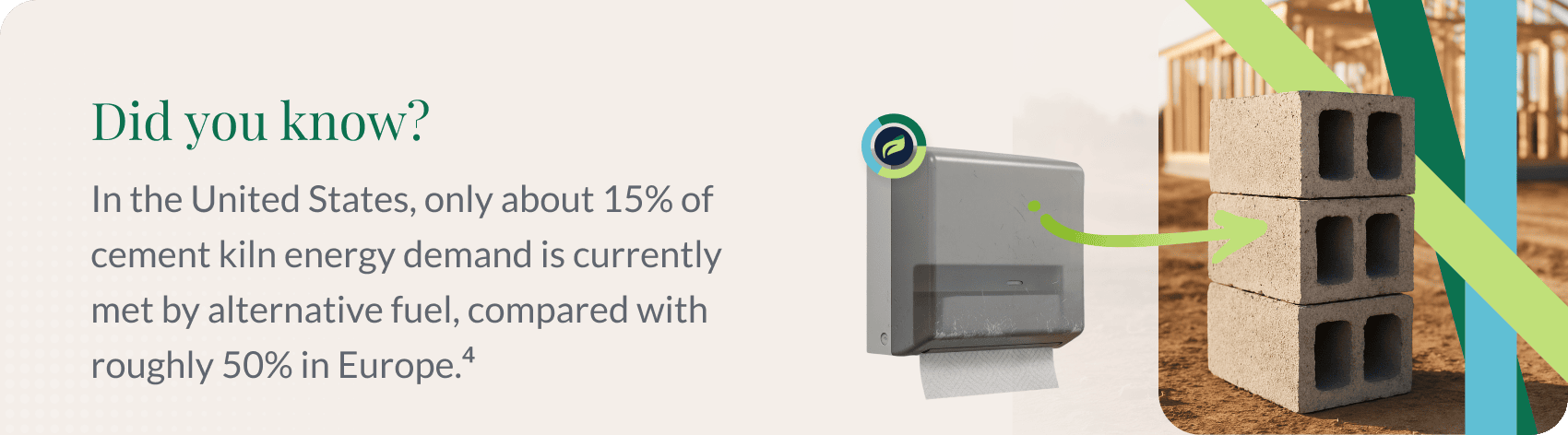
In the United States, only about 15% of cement kiln energy demand is currently met by alternative fuel, compared with roughly 50% in Europe⁴
Not every waste stream has a practical recycling solution. Alternative fuel creates another destination for certain materials that might otherwise be sent to landfill.
Why Visibility Matters
Reducing waste is only part of the story. Organizations need to know what is being diverted from landfill, where products go after collection and how results are measured over time.
The ability to document landfill diversion efforts and monitor participation across locations helps organizations understand what’s working, identify gaps and support reporting needs across the business. For many organizations, visibility is becoming just as important as diversion itself.
How Thrive™Supports Landfill Diversion
Thrive™ Sustainability Services from Kimberly-Clark Professional helps facilities divert eligible used cleaning supplies* from landfill through a fully traceable collection and conversion process.
The program is designed for qualified products and dispensers that may not be suitable for traditional waste handling. Eligible products include wipes, plastic dispensers and skincare cartridges.* Once collected, those materials are converted into alternative fuel.
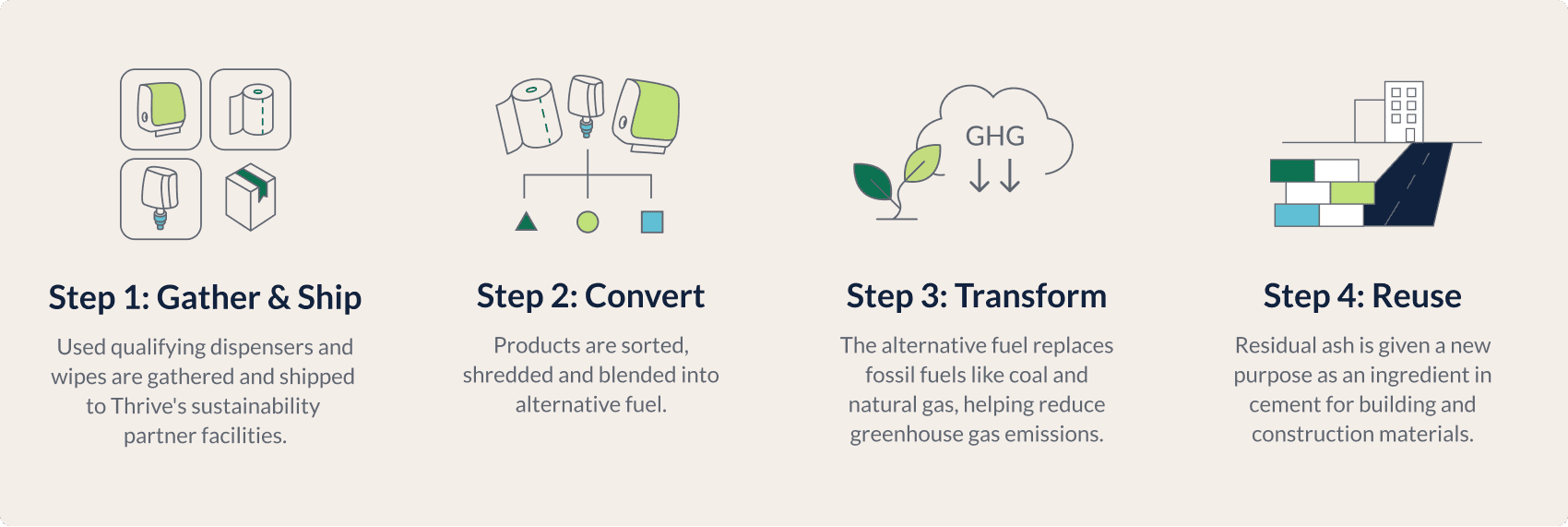
Thrive™ includes customer- and site-specific tracking, along with monthly reporting on pounds diverted from landfill. That reporting helps organizations understand participation by location, monitor diversion performance and measure results over time.
The Kimberly-Clark Professional team also supports implementation through site walks, process recommendations and ongoing program guidance.
Looking Beyond Traditional Waste Streams
When organizations talk about waste reduction, the conversation often starts with recycling. But not every material fits within a traditional recycling stream.
Alternative fuel creates another pathway for materials that have historically had limited disposal options. For facility leaders focused on landfill diversion, it offers another way to think about waste that might otherwise be discarded.
Landfill diversion is important. Knowing where materials go afterward is becoming just as important. Programs such as Thrive™ Sustainability Services combine landfill diversion with traceability and reporting, giving organizations greater visibility into both process and results.
Learn More About Thrive™ Sustainability Services
Read the whitepaper, A New Future for Facility Waste: Turning Used Cleaning Supplied into Alternative Fuel
Download Now
View original content here.
* Qualifying wipes, skin care and dispensers are eligible for landfill diversion so long as after use they are non-hazardous as classified by federal, state and local regulations.
1 U.S. Environmental Protection Agency, Project and Landfill Data by State, as cited in A New Future for Facility Waste: Turning Used Cleaning Supplies into Alternative Fuel.
2 National Association of Manufacturers, Sustainability Is a Top Manufacturer Priority, Survey Shows, 2022, as cited in A New Future for Facility Waste: Turning Used Cleaning Supplies into Alternative Fuel.
3 Veolia, Market Study: Are U.S. Companies on Course to Meet Their Sustainability Commitments?, 2023, as cited in A New Future for Facility Waste: Turning Used Cleaning Supplies into Alternative Fuel.
4 MIT Concrete Sustainability Hub, Transitioning to Alternative Fuels in U.S. Cement Production, 2024, as cited in A New Future for Facility Waste: Turning Used Cleaning Supplies into Alternative Fuel.