Every week, millions of people sit down with their mental health therapy provider, take a deep breath, and try to answer a deceptively simple question: “So, how was your week?”
For many, answering that question feels like trying to reconstruct a faded memory. The intense anxiety felt while sitting in traffic on Tuesday or the sudden wave of overwhelm on Thursday evening has lost its sharp edges by Monday morning. Clients often spend the first 15 minutes of a 50-minute appointment trying to recap past events rather than diving into meaningful healing work.
This disconnect between weekly visits is a major contributor to a quiet crisis in mental healthcare: one in four clients discontinue psychotherapy, most after a single session.
At the same time, the market has been flooded with thousands of standalone consumer wellness apps, with research showing that roughly 89% – 92% of mental health applications are abandoned by clients. The reason is simple: self-guided algorithms can’t replace the trust, empathy and safety of a human therapist.
Why Do Standalone Apps Fail Where Clinician-Guided Tools Succeed?
Unlike standalone apps that ask users to navigate their mental health journeys alone, next-generation platforms are designed to operate directly within existing clinical practices. By keeping the mental healthcare provider at the center of the care journey, technology transforms from a passive self-help tool into an active bridge between sessions.
Exemplifying this shift is ReliefAI Health, a digital health venture created through LG NOVA (the North American Innovation Center for LG Electronics), exemplifies this shift. ReliefAI is built as a digital cognitive behavioral therapy (CBT) platform, for providers and clients.
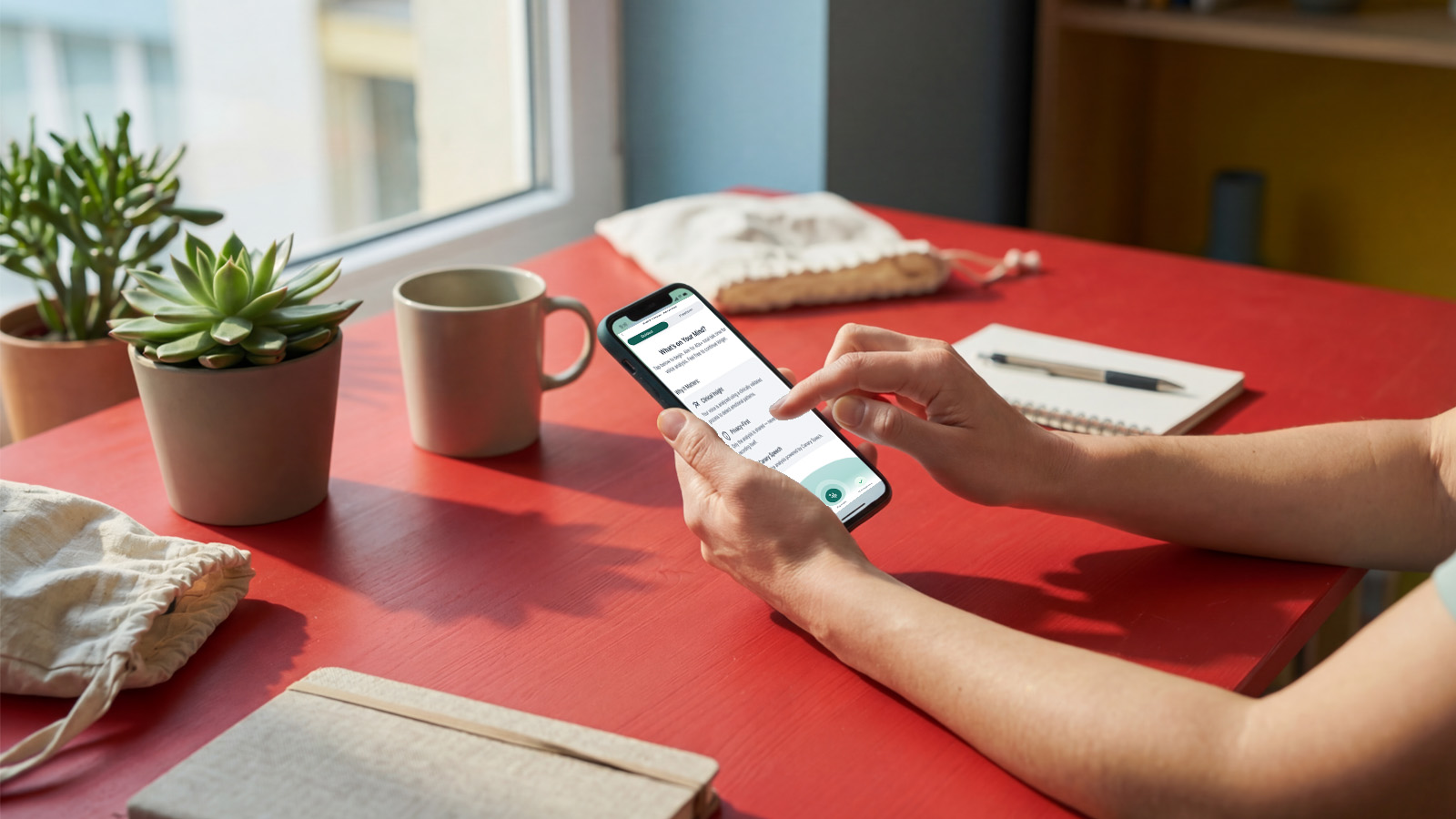
The mobile app enables clients to engage with their care plan daily and capture their mental state throughout their week. This gives providers the ability to understand what is going on with their clients at those crucial times to be better able to assess and support their clients through the therapy process.
Rather than relying on paper notebooks or delayed memory, clients can use voice-journaling features while emotional experiences are still raw, work with interactive CBT exercises, complete clinical assessments and capture real-time mood patterns on their own schedule.
How Does Between-Session Tracking Turn Passive Time Into Active Care?
When technology integrates seamlessly into a clinic’s electronic health records system, the impact on care continuity is profound.
“We see a crucial opportunity for technology to transform mental healthcare by strengthening the vital relationship between therapists and their clients,” says the head of LG NOVA Sokwoo Rhee, Executive Vice President of Innovation at LG Electronics. “ReliefAI answers that need.”
Instead of starting an appointment with a blank slate, clinicians can review synthesized, objective data beforehand—observing mood trends, completed assessments and key themes from voice entries. Mental health providers begin the session already informed, bypassing routine recaps to focus immediately on deeper therapeutic progress.
Rhee says this continuous model provides several distinct advantages for both clients and providers:
- Keeping clients connected to their therapeutic goals throughout the week can significantly reduce early dropout rates and help individuals stay committed through the critical first month.
- Tracking real-time insights that allow providers to tailor treatment plans dynamically and show clients tangible evidence of their growth over time.
- Remote therapeutic monitoring frameworks give practices structured clinical documentation and continuous engagement capabilities.
What Does a Human-Centered Future for Mental Healthcare Look Like?
As National Depression & Mental Health Screening Month highlights the growing demand for accessible, effective care, the narrative around digital health is evolving. The future of mental healthcare does not belong to standalone algorithms or automated substitutes for human connection, according to Rhee.
Instead, the true breakthrough lies in next-generation platforms giving practitioners the data and visibility they need to do their best work, he says, adding: “By turning the days between sessions into an active, supported part of the healing process, clinician-guided technology can help assure that more people stay in care, build resilience and experience lasting well-being.”