Originally published on PSEG ENERGIZE!
At a hospital, there’s no room for downtime.
Every system, including heating, cooling and lighting, has to work seamlessly to support patient care around the clock. For Holy Name Medical Center, an accredited, not-for-profit hospital in Teaneck, New Jersey, that reliability is essential.
Serving more than 350,000 outpatients and 27,000 admissions each year, Holy Name supports patients at every stage, from prevention and early intervention to treatment and rehabilitation. That role makes it important for the hospital’s building systems to operate without disruption so care can continue uninterrupted.
Improving systems without interrupting care
Hospitals cannot pause operations for construction. Through our Engineered Solutions Program, one of several energy efficiency offerings we provide to businesses, our project team worked closely with hospital staff to phase the work and put temporary systems in place where needed.
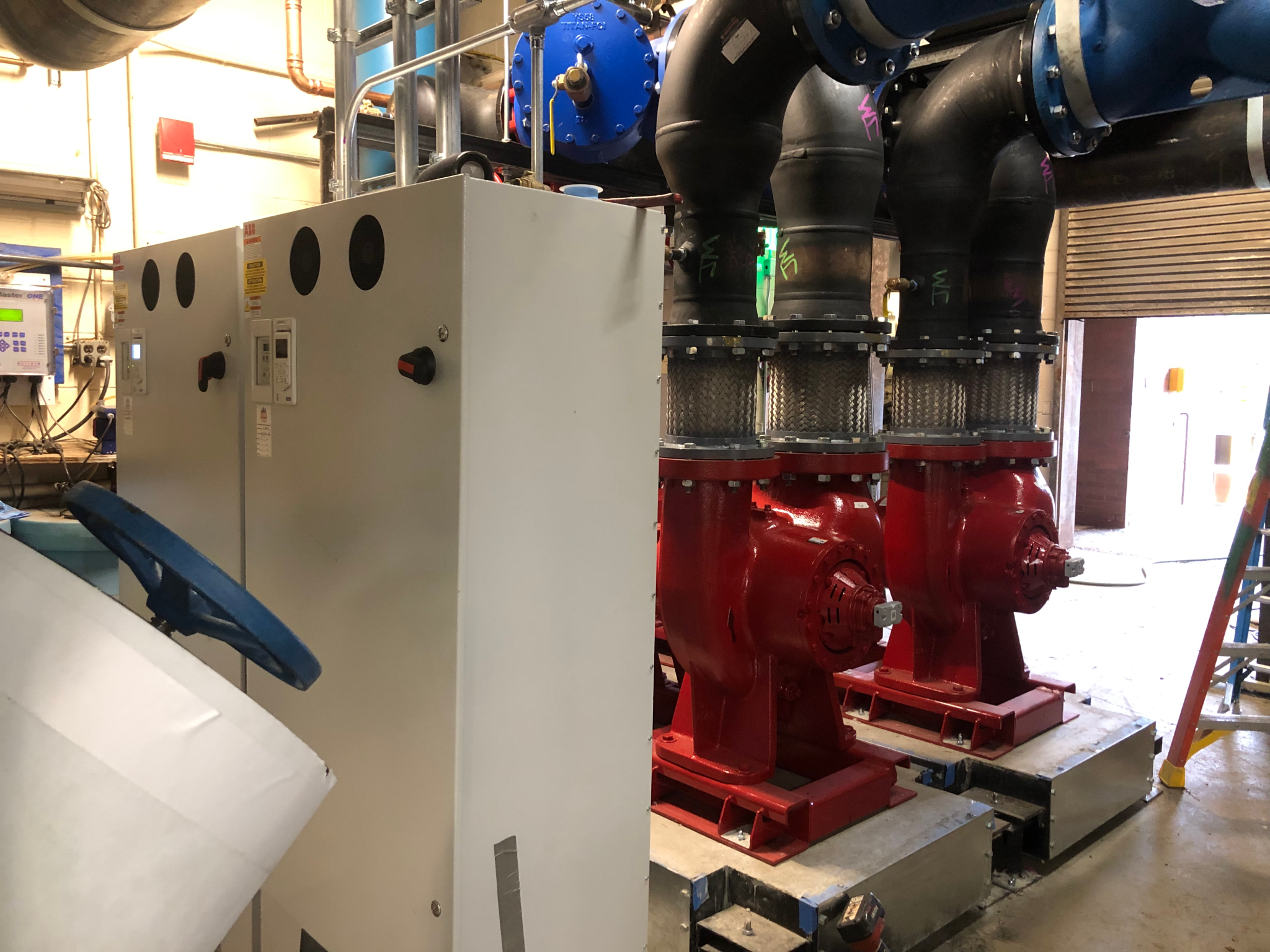
We worked alongside engineering consultants and union construction labor to complete a comprehensive set of upgrades across the facility.
Lighting, heating and cooling systems, as well as controls and critical equipment, were modernized to improve performance, reliability and comfort.
How do hospital energy upgrades help improve reliability and lower operating costs?
The completed upgrades are helping Holy Name reduce energy use, improve system reliability and better manage operating costs, all without disrupting patient care.
The project represents a $12.7 million investment, supported by PSE&G incentives that covered approximately 35% of the total cost. The remaining balance is being repaid over time through interest-free, on-bill repayment, helping make the upgrades more manageable for the hospital.
As the improvements take effect, Holy Name is expected to reduce energy use by more than 5.2 million kilowatt-hours of electricity and 38,000 therms of natural gas each year. That’s roughly equivalent to the annual energy use of more than 590 homes.
The entire project took about four years, with construction beginning in December 2021 and wrapping up in December 2025. In the first year following completion, the hospital is expected to see about $750,000 in energy cost savings. Savings will change over time as equipment ages and on-bill repayment is completed, but the project helps reduce energy use, improve system performance and make energy costs more manageable.
For a not-for-profit hospital, those savings can make a meaningful difference. They help create flexibility to invest in patient care, upgrade equipment and continue supporting the programs and services the community relies on.
“Cost-effective energy efficiency is about responsible stewardship, ensuring our health system operates sustainably while directing more resources to patient care and safety,” said Steven Mosser, executive vice president of Operations at Holy Name.
Beyond energy savings: Improving day-to-day operations
Beyond the energy savings, the upgrades have also helped improve day-to-day operations across the hospital. Systems are easier to monitor, maintenance needs have been reduced and teams have better visibility into how the building is performing.
While many of the upgrades happened behind the scenes, they’ve helped support a more comfortable and consistent environment for patients and staff, highlighting how energy efficiency can help essential institutions operate more effectively so they can continue doing what matters most: caring for people.
This project shows how energy efficiency programs, along with incentives and on-bill repayment, can help hospitals move forward with major improvements while keeping their operations running and focused on patient care.”
-Rachael Fredericks, Director of Energy Services at PSE&G
To learn more about how your organization can benefit from our suite of energy efficiency programs, visit mybizenergy.pseg.com.