Key Takeaways:
- CDP expands disclosure scope in 2026, adding ocean-related topics and refining climate, water, and forest requirements.
- Scoring places greater emphasis on clarity, consistency, and transition planning, particularly for climate disclosures.
- 2025 results provide a critical baseline for identifying gaps and prioritizing improvements ahead of the 2026 cycle.
- Early preparation is essential, with updated CDP guidance expected in late April and rising expectations for assured data.
- CDP increasingly supports regulatory readiness, aligning with ISSB, CSRD, TCFD, and TNFD requirements.
- High-quality, validated data and scenario analysis are now foundational, not optional, for strong CDP performance.
CDP, formerly known as the Carbon Disclosure Project, is a cornerstone of corporate sustainability reporting. With nearly 25,000 organizations disclosing in 2025, nearly two-thirds of the global market are sharing progress on their environmental impacts such as climate change, water security, forests, and biodiversity. Using major frameworks, such as the International Sustainability Standards Board (ISSB), Global Reporting Initiative (GRI), Task Force on Climate-Related Financial Disclosures (TCFD), and Taskforce on Nature-related Financial Disclosures (TNFD), CDP is also helping organizations prepare for new and developing environment, social, and governance (ESG)-related regulatory disclosures around the world.
CDP Changes in 2026
For the 2026 reporting cycle, CDP is introducing updates to clarify reporting expectations, expand environmental topics, and better align disclosures with emerging global frameworks. The updates below summarize the most important changes for reporters.
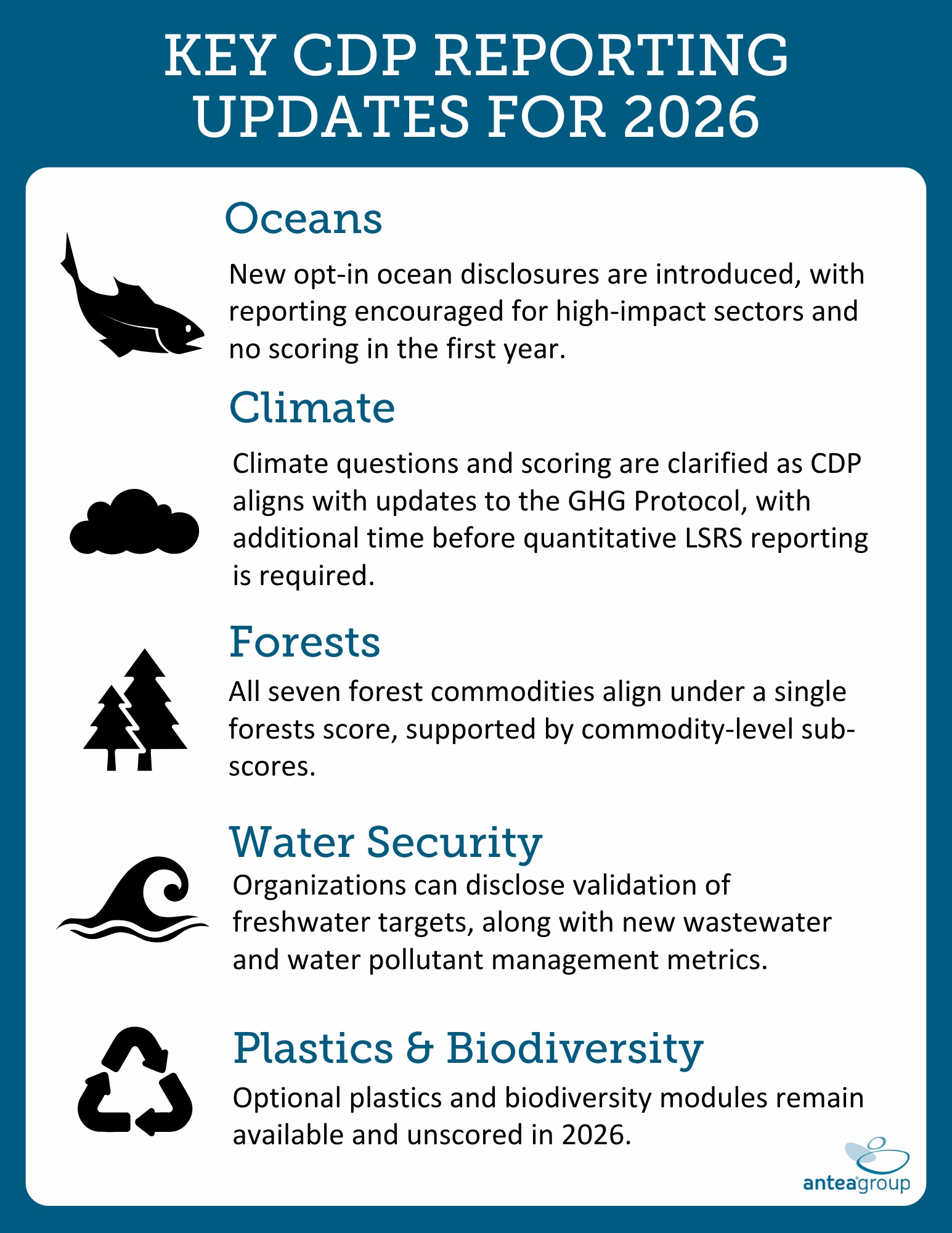
Introduction of ocean-related issues into CDP’s existing framework and modules. While all organizations responding to the full corporate questionnaire will have the ability to opt in, CDP strongly encourages high-impact sectors, such as fishing and aquaculture, shipping, and offshore energy, to disclose ocean-related information. Ocean content in the 2026 questionnaire will not be scored, in line with CDP’s precedent of allowing organizations time to evaluate and prepare for disclosure.
For climate change, CDP is closely monitoring the Greenhouse Gases (GHG) Protocols for updates to their suite of standards and guidance materials, and will adjust questions as necessary. In response to the timeline of the GHG Protocol Land Sector and Removals Standard (LSRS), CDP does not expect organizations to report quantitative data in alignment yet, but will instead provide time for organizations to collect data and align in future cycles. CDP’s scoring for climate-related matters will be streamlined and clarified.
Organizations disclosing to the Forests questionnaire will see all seven commodities align, providing a more comprehensive, single score for forests. Commodity sub-scores will be provided to disclosers and data users.
Water security will now allow organizations to disclose validation of their freshwater targets. There will be specific questions regarding the level of wastewater treatment, as well as questions about how water pollutant management is measured for success.
As in past years, plastics and biodiversity modules will be made available for organizations to opt-in but remain unscored.
With the 2025 CDP behind us, now is the time to reflect on the Corporate Questionnaire and evaluate areas for improvement for the 2026 season. Whether you have reported for the past 25 years or are just starting your CDP journey, these actionable tips to help you prepare for the upcoming 2026 cycle.
Preparing for the 2026 Climate Change Disclosure
As climate disclosures continue to evolve, preparing for the 2026 cycle requires organizations to strengthen data, assess climate risks, and define transition pathways. The five steps below break this into practical, actionable actions.
1. Start Early
CDP has shared their commitment to enhancing the reporting experience, including providing clearer guidance materials, as it seeks to strengthen the link between data and action. The 2026 materials are scheduled to be released in late April. With the 2025 scores released, organizations can leverage the existing 2025 disclosure materials, including the Scoring Methodologies, to re-evaluate their most recent submissions. This approach can help reporters assess improvement opportunities and develop a strategy for 2026 and beyond.
Our Advice: Organizations should think of CDP as a strategic exercise, preparing their organization for compliance with current and developing ESG-related disclosures around the world.
2. Strategize Data Collection & Validation
Many global regulations, including California, Canada, United Kingdom, and the European Union, are mandating that greenhouse gas (GHG) inventories be disclosed and undergo assurance. As you prepare for CDP, think strategically about your data collection process. CDP is a great tool to help organizations gather information and understand the level of effort required from a voluntary perspective—before it becomes mandatory. The same can be said about water, forest, and biodiversity data, if applicable.
Our Advice: Begin by mapping where your emissions and environmental data lives across the organization and who owns it. While many organizations can readily calculate Scope 1 and 2 emissions, Scope 3 often presents the greatest challenge due to data gaps, supplier engagement, and methodological complexity. Use the GHG Protocols to define boundaries and prioritize material Scope 3 categories, focusing first on those most relevant to your business.
For water, forest, and biodiversity data, engage procurement and site teams early to support consistent data collection, particularly where monitoring is limited or information is needed from tier-one suppliers and beyond.
3. Conduct a Climate Risk Assessment and Scenario Analysis
Conduct a climate risk assessment and scenario analysis to help evaluate how current and potential future climate-related events could affect your business. By understanding these climate-related physical and transition risks, organizations can also uncover new opportunities as they build a more resilient organization. Scenario analysis is also an expectation for the European Union (EU) Corporate Sustainability Reporting Directive (CSRD) and the International Financial Reporting Standards Sustainability Disclosure Standard S2, and is helpful for completing a TCFD report.
Our Advice: Undergoing complete scenario analyses and establishing business continuity plans enables organizations to mitigate risks associated with droughts, wildfires, floods, and beyond. It also future-proofs organizations by planning for long-term resiliency.
4. Set Environmental Targets
Setting meaningful targets—especially those aligned with Science Based Targets initiative (SBTi) for climate, the United Nation’s Sustainable Development Goal 6 for access to safe water, sanitation, and hygiene, or the —can lead to cost savings through more resource-efficient programs and strengthen brand reputation, in addition to meeting any applicable regulatory requirements or contractual obligations. Setting goals is also a requirement for achieving high marks across all three themes of CDP.
Our Advice: Leverage the right framework(s) to inform your goals, as both a best practice and starting point. While SBTi provides an excellent framework for many organizations, it may not be right for every organization or industry. Be sure to also evaluate what contractual obligations you may be facing and if you have any regulatory requirements that may also influence your target-setting process.
5. Establish a Climate Transition Plan
It is not enough to simply have a goal; organizations need to have a clear, actionable plan to help them achieve these aspirations. Whether it is through the purchase of renewable energy, installation of more efficient equipment, or innovations that are yet to be seen, these actions can require significant financial investments. CDP rewards organizations that disclose climate transition plans and increase their use of renewable energies.
Our Advice: Plan a clear pathway to actively reduce your carbon footprint. It sends a strong signal to your stakeholders that you are committed to achieving the goal, unlocking potential access to finances, enhancing your brand reputation, and fostering innovation. Transition plans also represent an essential scoring criteria and are an important component of regulations such as the EU’s CSRD.
Need help? Antea Group USA is proud to be an Accredited Solutions Provider with CDP, providing responding organizations with full-service support disclosing to CDP.
Visit our website to learn more about our Sustainability Services that can help you prepare your GHG emissions inventory, set targets, conduct climate scenario analysis, and more.