Spring Cleaning Your Budget: A Fresh Start for Your Finances

Originally published on Aflac Newsroom

If spring cleaning your closet feels satisfying, scrubbing your budget might feel downright transformative. Just like clutter tends to accumulate in the corners of your home, unused subscriptions, autopay traps and shifting expenses gather quietly in your financial life. If you’ve felt financially strained, a seasonal audit isn’t just helpful — it’s essential.

Recent national data shows that financial uncertainty remains common, even as some economic indicators improve. For instance, 55% of U.S. adults are concerned about their financial decisions, and 59% of Americans reported that high prices for essential goods are their top financial stressor.1 Against this backdrop, a thoughtful review of your expenses can be one of the most effective ways to regain control.

Think of your budget as a living document. It’s meant to flex as life does. But many people tend to set a budget once and never revisit it, even though their needs and income evolve over time, even within a single year.

This habit can leave consumers unprepared for surprises. According to the 2025-2026 Aflac WorkForces Report®, 44% of U.S. adults said they would not be able to handle an unexpected $1,000 medical bill.2 Similarly, the Federal Reserve found that 37% of adults cannot fully cover a $400 emergency expense with cash or its equivalent, often turning to credit or borrowing instead.3

Inaccurate or outdated budgets can make these financial shocks even harder to manage, but regular budget audits can help you track these improvements, plug spending leaks and make sure your money is aligned with your goals and not disappearing into digital subscription oblivion.

So grab your metaphorical gloves — here’s why a budget dusting and cleaning matters and how to do it without excess stress.

5 budget spring-cleaning tips to help strengthen your finances

1. Dust off your spending categories (they’ve probably shifted).

Prices on essentials like food, housing and insurance have climbed in recent years. Many Americans still feel these effects, with inflation named a top concern for 41% of households.4 Review your last three months of statements to compare what you think you spend with what you actually spend.

You might discover that your grocery bill has quietly grown or that your gym membership hasn’t been used since you set your New Year’s resolutions … in 2025. Reallocating funds based on current reality helps ensure your budget reflects the world you’re living in today, not last year’s.

2. Build (or rebuild) your emergency cushion.

Emergency savings can be a cornerstone of financial resilience, and it’s one area where many people need reinforcement. According to the Federal Reserve, the share of adults who have at least three months of expenses in rainy day funds has ticked up slightly in recent years but still remains below 2021 levels at just 55%.5

Start by aiming for one month of expenses, then gradually work toward three to six months. Think of this as the financial equivalent of cleaning out your gutters before storm season — you’ll be glad you did.

3. Prepare for life’s curveballs with the right financial protections.

Even the most careful budgeter can’t predict everything, but insurance can help soften the blow. Supplemental insurance, for example, provides payments when you face unexpected medical events or accidents, helping cover out-of-pocket costs that your major health insurance might not fully address.

Pairing supplemental insurance with an updated budget can give you two layers of defense to help protect your savings and your financial stability.

4. Tidy up your debts with a strategy you’ll actually stick to.

Debt can often grow in the shadows like those dust bunnies under the bed. About 41% of U.S. adults carry credit card debt,6 and credit card APRs remain near historic highs, with interest‑bearing accounts averaging about 22.30% as of late 2025.7

Consider using the avalanche method (tackling the highest interest rate first) or the snowball method (eliminating the smallest balances first). Whichever feels more motivating is the right choice — behavioral momentum matters as much as math.

And if your debt balances have changed recently, adjust your budget to reflect new minimum payments so there are no surprises.

5. Refresh your goals and make them practical.

Financial goals should be as dynamic as your life. According to a recent Fidelity study, 64% of Americans are setting financial resolutions this year, with rising everyday prices and unexpected expenses topping their list of concerns for 2026.8

This spring, once you’ve cleaned out your closets and garage, take some time to revisit your goals and confirm they still match your priorities. Are you saving for a vacation? A down payment? A medical procedure you’ve put off? Update contribution amounts, timelines and savings categories accordingly. Are you prepared for that unexpected medical bill?

A goal that felt exciting a year ago may not fit your needs today, and that’s okay. Adjusting is part of staying financially nimble.

The bottom line

Spring cleaning your budget doesn’t have to be a chore. With a little time and attention, you can uncover hidden expenses, strengthen your safety net and chart a more confident financial path forward. Taking these proactive steps — such as regular check-ins, improved emergency savings and thoughtful use of tools like supplemental insurance — can help lighten the mental load.

Your finances deserve a fresh start just as much as your home does. So while you’re opening the windows and shaking off the dust, be sure to also give your budget the seasonal refresh it deserves. Your future self will thank you.

1,4,6 Moneywise (2025, Feb. 11). 54 eye-opening personal finance statistics and facts in 2025. https://moneywise.com/research/personal-finance-statistics

2 Aflac WorkForces Report® (2025), page 24. Workplace benefits trends: Executive summary. https://www.aflac.com/docs/awr/pdf/2025-overview/2025-aflac-awr-executive-summary.pdf

3 Federal Reserve (May 2025). Report on the Economic Well-Being of U.S. Households in 2024 – May 2025. https://www.federalreserve.gov/publications/2025-economic-well-being-of-us-households-in-2024-savings-and-investments.htm

5 Federal Reserve (2025, May 28). Survey of Household Economics and Decisionmaking: Adults who have 3 months emergency savings. https://www.federalreserve.gov/consumerscommunities/sheddataviz/emergency-savings.html

7 Federal Reserve (2026, Feb. 6). Consumer Credit – G.19. https://www.federalreserve.gov/Releases/g19/current/

8 Fidelity (2024, Dec. 11). Fidelity’s 17th Annual Resolutions Study: Americans Preparing For a Year of ‘Planning with Purpose’. https://newsroom.fidelity.com/pressreleases/fidelity-s-17th-annual-resolutions-study–americans-preparing-for-a-year-of–planning-with-purpose-/s/fc3d5689-e2a4-433b-8048-d56053f283e0

Content within this article is provided for general informational purposes and is not provided as tax, legal, health, or financial advice for any person or for any specific situation. Employers, employees, and other individuals should contact their own advisers about their situations. For complete details, including availability and costs of Aflac insurance, please contact your local Aflac agent/producer.  

Aflac coverage is underwritten by American Family Life Assurance Company of Columbus. In New York, Aflac coverage is underwritten by American Family Life Assurance Company of New York.

Aflac WWHQ | 1932 Wynnton Road | Columbus, GA 31999

Z2600158 
EXP 3/27

Posted in UncategorizedTagged

DP World Advances Gender Equity in Peru With “Women Moving the World” Panel

At DP World in Peru, progress toward gender equity is no longer a future goal — it’s already measurable.

Over the past five years, the company has increased women’s participation in operational roles by 367% and grown female representation in leadership positions by 41% — a significant shift in an industry historically defined by low female participation.

Building on that momentum, DP World recently hosted “Women Moving the World,” a panel discussion that brought together leading voices from across Peru’s trade, shipping, and agriculture sectors to explore how greater inclusion can strengthen the industry and drive national development.

A platform for leadership and real-world perspectives

The event convened prominent leaders whose careers reflect the evolving role of women in global trade:

  • Teresa Mera Gómez, former Minister of Foreign Trade and Tourism for Peru, offered a policy and economic lens on how diversity supports more competitive and resilient trade ecosystems.
  • Gloria Barandiarán, Deputy General Manager at Evergreen Shipping Agency (Peru) S.A.C., shared insights from the shipping sector and the importance of representation across maritime operations.
  • Roxana Nolte, Commercial Manager at Agrícola Don Ricardo — one of Peru’s leading agricultural export companies — provided a perspective from the agribusiness sector, highlighting how a diverse logistics workforce enables Peru’s global competitiveness.

Together, the panelists explored how creating more inclusive workplaces is not only a social priority, but also a business imperative — one that drives innovation, improves decision-making, and strengthens supply chains.

Turning momentum into measurable impact

While the panel underscored how far the industry has come, it also highlighted the importance of sustaining that progress through action.

At DP World in Peru, gender equity efforts are part of a broader sustainability strategy that connects workforce development, environmental innovation, and community impact. In 2025 alone, the team: 

  • Inaugurated six digital classrooms at the Virgen de la Inmaculada Concepción school, benefiting more than 300 students and contributing to over 3,000 students reached through education initiatives to date.
  • Received the Best Good Practices in Social Sustainability award from the Sustainability Observatory of the Ministry of Transport and Communications for its Emprende DP World program — an initiative that has supported the growth of more than 300 micro and small enterprises (MYPES) in Callao, including more than 50 entrepreneurs.
  • Reduced its carbon footprint in Peru by approximately 22%, cutting emissions from nearly 13,000 tons of CO₂ to a projected 9,700 tons by the end of 2025 — advancing toward its broader goal of a 90% reduction in Scope 1 and 2 emissions.

A stronger industry through inclusion

As Peru continues to strengthen its position in global trade, the path forward is increasingly clear: diversity and sustainability are not separate priorities — they are mutually reinforcing drivers of long-term growth.

Through initiatives like “Women Moving the World” — and tangible progress across education, entrepreneurship, and decarbonization — DP World is helping shape a more inclusive, more resilient logistics sector across Peru. One where opportunity expands alongside impact, and where a more diverse industry is ultimately a stronger one.

Learn more about how DP World is advancing gender equity and sustainability across Latin America.  

Posted in UncategorizedTagged

Born From a Promise, Built for What’s Next: World ORT and ORT America Unite

NEW YORK and LONDON, March 25, 2026 /PRNewswire/ — World ORT and ORT America have united, bringing together two organizations that have long shared a mission yet operated with distinction: one raised funds, the other developed programs. Now, both will operate under the leadership of CEO Dov Ben-Shimon with headquarters in New York and offices in London and Israel. The announcement marks a defining moment for a cause that has never stopped evolving or wavered on why it exists.

A Promise Made in 1880
In 1880, Jewish life in Tsarist Russia was under siege. Legal restrictions barred Jewish people from most professions, owning land, and living freely outside the Pale of Settlement. When a group of Jewish leaders in St. Petersburg petitioned to establish an organization dedicated to teaching trades to impoverished Russian Jews, they were determined to improve their circumstances— they called it ORT.

That promise has proven itself across every generation since. From 1880 Russia to 30+ countries spanning five continents, World ORT has grown into one of the most far-reaching Jewish educational networks in the world.

What the Merger Makes Possible
World ORT is positioned to deepen relationships with locally run schools, connect educators across borders, and direct funding more strategically to where the need is greatest. The ambition is not to standardize. It’s to strengthen. Every student in the World ORT network, wherever they are, should have access to the best that the network has to offer.

“Even when situations are dire — poverty, war, displacement — ORT students can imagine a future. That is what World ORT has done for 145 years. And we will carry it forward for 145 more.”
Dov Ben-Shimon, CEO, World ORT

“World ORT doesn’t just teach skills. We also share the joy of Jewish Peoplehood, ensuring our students are both prepared for the future and proud of their identity.”
 Jon Levine, Board Chair, World ORT

World ORT by the Numbers
145 years of impact • 30+ countries • 5 continents • 80K annual students • 200K annual beneficiaries

To see the video created for the announcement, visit ort.org/merger.

MEDIA CONTACT: ALEX GALBINSKI
411054@email4pr.com
+44 (0) 20 7446 8502

Cision View original content:https://www.prnewswire.com/news-releases/born-from-a-promise-built-for-whats-next-world-ort-and-ort-america-unite-302724175.html

SOURCE World ORT

27 Years, 260,000 Appliances: Whirlpool Celebrates Habitat for Humanity’s 50th Anniversary and Improving Lives and Communities Together

Whirlpool Corporation is celebrating Habitat for Humanity International’s 50th anniversary, marking five decades of building homes, communities and hope across more than 60 countries. As one of Habitat’s longest-standing corporate partners, Whirlpool Corp. reaffirmed its commitment to expanding access to safe, affordable housing for families in the U.S. and around the world and support for Habitat’s “Let’s Open the Door” global campaign.

“Whirlpool Corporation is built on a simple idea: that life at home should be better for everyone,” said Marc Bitzer, chairman and CEO of Whirlpool Corporation and member of the Habitat for Humanity International board. “For 27 years, Habitat for Humanity has been one of our most meaningful relationships in living out that ideal. Their work, and the families they serve, remind us why what we do matters. As Habitat marks 50 years of impact, we are proud to stand alongside them and to keep opening doors for families across America and around the world.”

Whirlpool and Habitat for Humanity have worked side by side since 1999. During that time, the relationship has delivered meaningful impact for families across the U.S. and in approximately 50 countries around the world: 

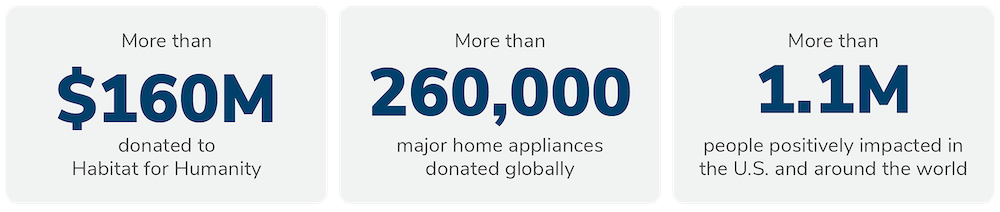
More thank $160M donated to Habitat for Humanity.

Whirlpool Corp. also supports every Habitat home built in the U.S. and Canada by providing a range, refrigerator and garbage disposal, helping new homeowners reduce major appliance costs, lower utility bills and spend less on food.

The company’s support has grown well beyond appliance donations. The BuildBetter with Whirlpool program has helped build sustainable, affordable homes nationwide and the backing of Habitat’s Cost of Home campaign has contributed to changing more than 300 housing policies for an estimated 10 million people. And in the company’s own backyard, Whirlpool Foundation is supporting Project T, a revitalization initiative targeting working families in Benton Harbor, Michigan.

That same belief in supporting American families also drives Whirlpool Corp.’s commitment to American manufacturing. Whirlpool Corp. is proud to be the only major kitchen and laundry appliance company based and owned in the U.S. The company was founded in America in 1911 and has never left. Today, approximately 80 percent of the major appliances it sells in the U.S. are produced in American factories — three times the industry average. Its industry leadership in U.S. production is made possible by $23 billion spent in manufacturing, labor and logistics over the past decade and, most importantly, by its approximately 20,000 person U.S workforce, including nearly 14,000 manufacturing employees, across 10 factories nationwide.

As Habitat marks this milestone, Whirlpool Corp. looks forward to continuing to open doors for families across America and around the world.

To learn more about Habitat for Humanity’s 50th anniversary, visit habitat.org. To learn more about Whirlpool Corporation, visit whirlpoolcorp.com.

View original content here.

About Whirlpool Corporation

Whirlpool Corporation (NYSE: WHR) is a leading home appliance company, in constant pursuit of improving life at home. As the only major U.S.-based manufacturer of kitchen and laundry appliances, the company is driving meaningful innovation to meet the evolving needs of consumers through its iconic brand portfolio, including Whirlpool, KitchenAid, JennAir, Maytag, Amana, Brastemp, Consul, and InSinkErator. In 2025, the company reported approximately $16 billion in annual net sales – close to 90% of which were in the Americas -41,000 employees, and 35 manufacturing and technology research centers. Additional information about the company can be found at WhirlpoolCorp.com.

Posted in UncategorizedTagged

From the Classroom to the Community: How Chemours Is Inspiring the Next Generation of STEM Leaders

From site visits to community science fairs, Chemours is helping bring STEM learning to life for students across the communities where it operates. Through hands-on experiences and employee engagement, the company is connecting classroom concepts to real-world applications — inspiring curiosity, creativity, and confidence in the next generation of problem solvers.

Chemours Offerman Site Inspires Student Innovation Through Hands-On Learning
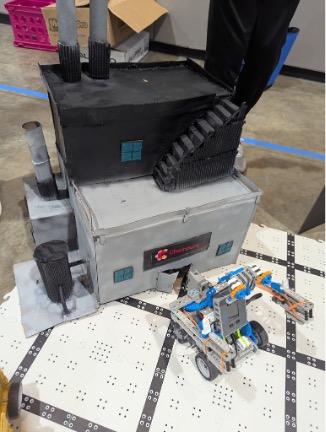
Pierce County Middle School’s Jr. Beta robotics team earned praise for an innovative project at the Beta Club convention in Savannah, Georgia—an idea sparked by a visit to Chemours’ Offerman Separation Plant. The field trip gave students an inside look at how minerals are mined and processed, inspiring the team to design a robot that mimicked the process by scooping simulated dirt, transporting it, and depositing it into a miniature dump truck.

A robot that mimicks the process by scooping simulated dirt, transporting it, and depositing it into a miniature dump truck.

“Their project blended engineering with environmental understanding, showing how robotics can help model the careful work involved in mineral sand mining,” said Jr. Beta sponsor Katie Cravey. “Through creativity, teamwork, and hands-on learning, the team brought their Chemours experience to life in a fun and innovative way.”

Chemours employees provided hard hats and vests for the students, helping them look the part during their competition. Judges praised the team for its “excellent use of innovation in design,” strong collaboration, and ability to complete the required task. Led by teacher James Wood and supported by sponsors Cravey and Bryany Walker, the group’s achievement reflects the power of experiential learning and community partnership.

Group of students wearing hard hats and vests during their competition

Extending STEM Learning Beyond the Site
Chemours’ commitment to hands-on STEM education extends beyond the Offerman site. For decades, the company’s Chambers Works site has proudly supported the Salem County Science Fair.

More than 200 students from across Salem County, New Jersey gathered to participate in the 37th annual Science Fair. Students in grades five through twelve presented projects that applied classroom learning to real-world questions, using the scientific method to explore ideas, test hypotheses, and analyze results.

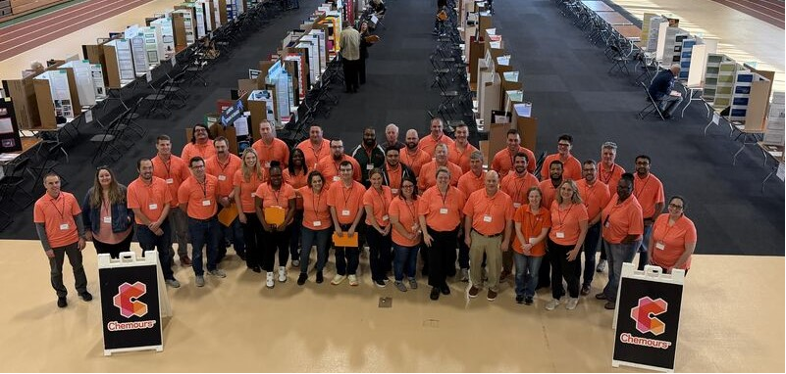
Chemours volunteers from the Chambers Works and Delaware sites, along with local community members, supported the event by reviewing student projects. Together, they engaged students presenting work across a wide range of topics — from chemistry and engineering concepts to cybersecurity, mental health, consumer science, and biology. Through interviews with judges, students strengthened public speaking, presentation, and critical thinking skills.

Group photo of Chemours volunteers

Top projects from the Salem County Science Fair will advance to the Delaware Valley Science Fair, where students can compete for scholarship opportunities and further recognition.

These events reflect Chemours’ broader commitment to making a difference beyond its walls by advancing STEM education, community safety, and environmental sustainability. By opening its doors and engaging with students in the communities where it operates, Chemours helps spark curiosity, foster innovation, and build connections that strengthen both the workforce of tomorrow and the communities it serves.

Posted in UncategorizedTagged

Maximo Completes 100 MW of Robotic Solar Installation

Milestone represents one of the largest robotic solar deployments executed to date

ARLINGTON, Va., March 25, 2026 /PRNewswire/ — Maximo, the solar robotics company incubated by The AES Corporation (NYSE: AES), today announced the successful installation of 100 megawatts (MW) of utility-scale solar capacity at AES’ Bellefield complex.

Demand for electricity continues to grow rapidly, driven by data center expansion, electrification and industrial manufacturing. Solar construction faces increasing pressure from labor constraints, compressed project timelines and cost volatility. Maximo’s robotic solar installation solution is helping close the gap between the need for faster time to power and construction capacity. Today’s 100 MW achievement marks the transition of robotic module installation from early deployment validation to sustained commercial production.

“Reaching 100 MW at a single site is an important milestone for Maximo and for the role robotics can play in solar construction. It demonstrates that intelligent field robotics can deliver consistent results at utility scale. As solar deployment continues to accelerate globally, technologies that improve installation speed, quality and reliability will become increasingly important,” said Chris Shelton, President of Maximo.

The Bellefield project scaled from a single robot to a coordinated fleet of four Maximo units operating in parallel. By tightly integrating robotic placement into standard construction workflows alongside skilled union technicians, the fleet delivered a step‑change in productivity while maintaining high safety and quality standards. Maximo’s version 3.0 units’ technical performance rate consistently surpassed one module per minute, with crews installing as many as 24 modules per shift hour per person, nearly double the output of traditional installation methods in the region. The upcoming major release of Maximo version 4.0 builds on the industry leading scale and performance accomplished at Bellefield.

NVIDIA technologies supported the development and readiness of the Maximo robotic fleet deployed in California. Leveraging NVIDIA AI infrastructure together with NVIDIA Omniverse libraries and NVIDIA Isaac Sim open robotics simulation framework, the Maximo team was able to develop, test and refine robotic capabilities through physics-based simulation and AI driven modeling before deploying updates in the field. The combination of AI, vision, robotics and simulation driven engineering reduced development and validation timelines and increased confidence in field performance as the robotic fleet scaled. 

“Physical AI is a powerful force for accelerating real world energy infrastructure,” said Marc Spieler, Senior Director of Energy, NVIDIA. “By combining AI infrastructure, simulation, and edge AI, platforms like Maximo demonstrate how physical AI can help accelerate solar panel installation while maintaining high reliability in complex environments.”

Amazon Web Services (AWS) powered the development, deployment, and operation of Maximo’s AI-driven field systems. AWS provides scalable computing, automated software delivery, and advanced data analytics, including real-time construction intelligence, enabling Maximo to collect operational robotics data and continuously improve performance.

“Innovation in carbon-free energy development is critical to meeting the world’s growing energy needs,” said Kara Hurst, Chief Sustainability Officer, Amazon. “By combining AI and robotics, technologies like Maximo demonstrate how we can accelerate the transition to carbon-free energy while improving safety and efficiency. Amazon is proud to support projects that push the boundaries of what’s possible in sustainable infrastructure.”

Utility-scale solar construction must expand rapidly to meet growing electricity demand, and the United States is expected to deploy hundreds of gigawatts of new solar capacity this decade. Robotic installation solutions like Maximo allow Engineering, Procurement and Construction (EPC) firms to increase productivity, improve workforce safety and standardize installation quality while operating within complex construction environments.

The Bellefield project installation demonstrates that robotics can now operate reliably at a gigawatt scale in solar construction.

About Maximo

Maximo is an intelligent field robotics company incubated by AES, focused on accelerating utility-scale solar construction through autonomous installation systems. Its physical AI and robotics platform is designed to augment skilled construction crews, improve safety, and increase installation speed.

AES Safe Harbor Disclosure

This news release contains forward-looking statements within the meaning of the Securities Act of 1933 and of the Securities Exchange Act of 1934. Such forward-looking statements include, but are not limited to, those related to future earnings, growth and financial and operating performance. Forward-looking statements are not intended to be a guarantee of future results, but instead constitute AES’ current expectations based on reasonable assumptions. Forecasted financial information is based on certain material assumptions. These assumptions include, but are not limited to, our expectations regarding accurate projections of future interest rates, commodity price and foreign currency pricing, continued normal levels of operating performance and electricity volume at our distribution companies and operational performance at our generation businesses consistent with historical levels, as well as the execution of PPAs, conversion of our backlog and growth investments at normalized investment levels, and rates of return consistent with prior experience.

Actual results could differ materially from those projected in our forward-looking statements due to risks, uncertainties and other factors. Important factors that could affect actual results are discussed in AES’ filings with the Securities and Exchange Commission (the “SEC”), including, but not limited to, the risks discussed under Item 1A: “Risk Factors” and Item 7: “Management’s Discussion & Analysis” in AES’ 2025 Annual Report on Form 10-K and in subsequent reports filed with the SEC. Readers are encouraged to read AES’ filings to learn more about the risk factors associated with AES’ business. AES undertakes no obligation to update or revise any forward-looking statements, whether as a result of new information, future events or otherwise, except where required by law.

Any Stockholder who desires a copy of the Company’s 2025 Annual Report on Form 10-K filed March 2, 2026 with the SEC may obtain a copy (excluding the exhibits thereto) without charge by addressing a request to the Office of the Corporate Secretary, The AES Corporation, 4300 Wilson Boulevard, Arlington, Virginia 22203. Exhibits also may be requested, but a charge equal to the reproduction cost thereof will be made. A copy of the Annual Report on Form 10-K may be obtained by visiting the Company’s website at www.aes.com.

AES Website Disclosure

AES uses its website, including its quarterly updates, as channels of distribution of Company information. The information AES posts through these channels may be deemed material. Accordingly, investors should monitor our website, in addition to following AES’ press releases, quarterly SEC filings and public conference calls and webcasts. In addition, you may automatically receive e-mail alerts and other information about AES when you enroll your e-mail address by visiting the “Subscribe to Alerts” page of AES’ Investors website. The contents of AES’ website, including its quarterly updates, are not, however, incorporated by reference into this release.

Media Contact: Katie Lau, katie.lau@aes.com

Cision View original content to download multimedia:https://www.prnewswire.com/news-releases/maximo-completes-100-mw-of-robotic-solar-installation-302723835.html

SOURCE Maximo

SANY Debuts World’s First Intelligent Hybrid Pump Truck

SHANGHAI, March 25, 2026 /PRNewswire/ — SANY recently held a product launch event themed “Usher New Chapter with Intelligent-Electric Innovation” in China, where it introduced the world’s first intelligent hybrid pump truck, along with several other new intelligent-electric models. The event drew nearly 600 industry customers, professionals, and media representatives, with online viewership surpassing one million.

“Through continued R&D investment, we are bringing a new generation of products to market, including the smart hybrid pump truck, electric mixer truck, and 33-meter pump truck – all designed to address customer concerns around energy costs and operational range,” said Yuan Yue, Chairman of the Concrete & Road Machinery BU.

World’s First Intelligent Hybrid Pump Truck Addressing Range Challenges

The newly launched intelligent hybrid pump truck combines a smart drivetrain with a range-extended hybrid system, designed to overcome long-standing challenges in electric construction equipment.

– Extended Range: Tests show the vehicle achieves a maximum range of 1,400.5 kilometers, with continuous pumping capacity of more than 650 cubic meters. It set industry records with 84 consecutive days of uninterrupted operation, a cumulative pumping volume exceeding 120,000 cubic meters, and sustained high-pressure pumping at 20 MPa, establishing a new benchmark for durability in construction machinery.

– Cost Efficiency: Under typical operating conditions of 50 to 100 cubic meters per day, operating costs are reduced by 50% to 75%. For operations averaging 100 to 200 cubic meters per day, costs are lowered by 30% to 50%.

Energy Efficiency and Safety Enhancements for Confined Jobsite Applications

The event also introduced the 2026 E-truck mixer, focusing on low energy consumption and enhanced safety.

The EBI smart braking system achieves an energy recovery rate of up to 30%. Equipped with the industry’s most comprehensive “Safety First” package, the truck includes a one-button insulation detection that completes fault diagnosis in just three minutes. Additional intelligent safety capabilities include lane departure warning, AEB forward emergency braking, and REB right-turn emergency braking, which together help reduce accident rates by 15% to 20%.

Two additional compact models—the 206 E-truck mixer and the 33-meter pump truck—were also introduced, targeting narrower jobsites and rural construction applications.

From its focus on core technology development to its shift toward intelligent-electric solutions, SANY continues to align its efforts with global low-carbon initiatives. Leveraging its innovation capabilities, the Group is further integrating intelligent and electric technologies to drive the next evolution of pumping solutions.

Cision View original content to download multimedia:https://www.prnewswire.com/news-releases/sany-debuts-worlds-first-intelligent-hybrid-pump-truck-302724379.html

SOURCE SANY Group

atNorth Heat Reuse Partnership with Kesko Goes Live, Delivering Recycled Data Center Heat to Finnish Retail Store

HELSINKI, March 25, 2026 /PRNewswire/ — atNorth, the leading Nordic high-density colocation and built-to-suit data center provider, today announced that its heat reuse partnership with Kesko Corporation, went live in November 2025 and is delivering waste heat generated at atNorth’s FIN02 data center in Espoo to a neighboring branch of the Finnish retail giant.

The project marks a significant milestone in atNorth’s ongoing commitment to integrating circular economy principles into its operations. By repurposing excess heat generated by the data center’s infrastructure, the collaboration will supply almost all of the heating required by the adjacent Kesko store, reducing reliance on district heating and lowering emissions for both organizations.

For Kesko, the project supports its target of achieving a 58.8 percent reduction in Scope 1 and Scope 2 emissions, a large portion of which results from heating its buildings. The recycled heat from FIN02 is expected to reduce Kesko’s emissions from district heating use by approximately 200 tons of CO₂ equivalent per year, representing around 0.9 percent of Kesko’s district heating emissions.

“Reducing emissions from the heating of our properties is a key priority within our sustainability strategy,” said Antti Kokkonen, Director of Energy at Kesko. “Through this collaboration with atNorth, we are able to significantly cut emissions at one of our stores while demonstrating how innovative partnerships can accelerate the transition to lower-carbon operations.”

The initiative also highlights the broader role data centers can play in supporting local energy ecosystems. By capturing and repurposing surplus heat, the project enhances the energy efficiency of the FIN02 facility while contributing to Finland’s wider circular economy ambitions.

“As demand for AI-ready digital infrastructure continues to grow, it is essential that data centers scale responsibly,” said Erling Gudmundsson, COO of atNorth. “This project demonstrates how data centers can become active contributors to local energy systems. By recycling excess heat, we can reduce our client’s environmental footprint while supporting our partners’ sustainability goals and delivering tangible benefits to the surrounding community.”

The FIN02 facility is part of atNorth’s expanding presence across the Nordics and forms a key element of the company’s strategy to develop sustainable digital infrastructure across the region. The business continues to explore innovative partnerships that reuse excess heat and support circular energy solutions.

The launch of the Kesko initiative follows several other heat reuse collaborations across atNorth’s portfolio, including a new community greenhouse in Akureyri, Iceland and also partnerships with waste-to-energy company Vestforbrænding in Denmark and Stockholm Exergi in Sweden to provide heat for the local district heating networks. These initiatives reinforce the company’s commitment to responsible and community-focused data center development.

About atNorth

atNorth is the leading Nordic data center company that offers cost-effective, scalable high-density colocation and built-to-suit services trusted by industry-leading organizations.

With sustainability at its core, atNorth’s data centers run on renewable energy resources and support circular economy principles. All atNorth sites leverage innovative design, power efficiency, and intelligent operations to provide long-term infrastructure and flexible colocation deployments.

atNorth is headquartered in Reykjavik, Iceland and operates eight data centers in strategic locations across the Nordics, as well as a ninth under construction in Kouvola, Finland, a tenth site in Ølgod, Denmark and an eleventh campus in Stockholm, Sweden. The business has also announced a new mega-site development in the Sollefteå Municipality in Sweden

For more information, visit atNorth.com or follow atNorth on LinkedIn.

Press Contact

Laura Cameron
Mead Cameron for atNorth
+44 (0) 7740 948 378
laura@meadcameron.com

This information was brought to you by Cision http://news.cision.com

https://news.cision.com/atnorth/r/atnorth-heat-reuse-partnership-with-kesko-goes-live–delivering-recycled-data-center-heat-to-finnish,c4326237

The following files are available for download:

https://mb.cision.com/Main/18907/4326237/4004078.pdf

Release

https://news.cision.com/atnorth/i/fin02-1,c3522884

FIN02 1

https://news.cision.com/atnorth/i/erling-gu-mundsson,c3522885

Erling Gudmundsson

Cision View original content:https://www.prnewswire.com/news-releases/atnorth-heat-reuse-partnership-with-kesko-goes-live-delivering-recycled-data-center-heat-to-finnish-retail-store-302724667.html

SOURCE atNorth

Europe Building Insulation Material Market is Projected to Reach USD 12.06 Billion by 2032 Amid Rising Demand for Energy-Efficient Buildings, Reports MarkNtel Advisors

NEW DELHI, March 25, 2026 /PRNewswire/ — According to the latest research report published by MarkNtel Advisors, the Europe Building Insulation Material Market is projected to grow at a CAGR of around 4.5% during 2026–2032. The market expansion is primarily driven by the increasing focus on energy-efficient building solutions, stringent regulatory frameworks for building insulation, and rising renovation and retrofitting activities across residential and commercial sectors in Europe.

MarkNtel Advisors Logo

Across Europe, Germany dominated the building insulation material market, accounting for more than 26% of the regional market share in 2026. The country’s leadership is supported by its strong regulatory environment promoting energy-efficient construction, increasing investments in sustainable infrastructure, and widespread adoption of advanced insulation materials across residential and non-residential buildings.

Europe Building Insulation Material Market Key Takeaways

  • The Europe Building Insulation Material Market is estimated to be valued at around USD 8.86 billion in 2026 and is projected to reach approximately USD 12.06 billion by 2032, reflecting steady market expansion supported by growing demand for thermal efficiency, energy conservation, and sustainable building practices.
  • By material type, mineral wool accounted for approximately 52% of the market share in 2026, driven by its superior thermal insulation properties, fire resistance, durability, and increasing preference for environmentally sustainable materials in construction applications.
  • By end-user, the residential sector captured nearly 54% of the market share in 2026, as homeowners and developers increasingly invest in insulation solutions to enhance energy efficiency, reduce heating and cooling costs, and comply with evolving building standards.
  • The presence of leading insulation material manufacturers continues to strengthen the competitive landscape through product innovation, sustainability initiatives, and strategic collaborations aimed at improving material performance and environmental impact.

Download a FREE PDF Sample of the Report:
 https://www.marknteladvisors.com/query/request-sample/europe-building-insulation-material-market-report.html (Discover the market potential, technology insights, and key industry trends)

Key Growth Factors Driving the Europe Building Insulation Material Market Outlook

  • Rising Focus on Energy Efficiency and Sustainable Construction

The growing emphasis on reducing carbon emissions and enhancing energy efficiency across Europe is playing a pivotal role in driving the demand for building insulation materials. Governments and regulatory authorities are increasingly implementing stringent building codes and energy performance standards, compelling developers and property owners to adopt advanced insulation solutions in both new construction and renovation projects.

In this context, building insulation has emerged as a critical component in improving overall building performance. It helps minimize heat loss, enhances indoor comfort, and significantly reduces energy consumption. Consequently, homeowners, developers, and commercial property stakeholders are actively investing in high-performance insulation materials to meet sustainability targets while optimizing long-term operational costs.

  • Accelerating Renovation and Retrofitting Activities Across Aging Infrastructure

In addition to new construction, the modernization of Europe’s aging building stock is significantly contributing to market expansion. A substantial proportion of existing buildings requires upgrades to comply with current energy efficiency standards, leading to a notable increase in renovation and retrofitting activities, particularly within the residential sector.

The integration of advanced insulation materials in retrofit projects enables considerable energy savings and improves structural efficiency. Moreover, supportive government policies, subsidies, and financial incentives aimed at promoting energy-efficient renovations are further encouraging widespread adoption, thereby strengthening the overall market outlook.

  • Technological Advancements Enhancing Material Performance and Applications

Complementing regulatory and renovation-driven growth, continuous advancements in insulation technologies are further transforming the market landscape. Manufacturers are increasingly focusing on developing innovative materials that offer enhanced thermal performance, fire resistance, moisture control, and environmental sustainability.

The introduction of high-performance materials such as advanced foamed plastics, aerogels, and eco-friendly insulation solutions is expanding the applicability of insulation products across diverse building segments, including residential, commercial, and industrial structures. These innovations not only improve efficiency but also align with Europe’s broader sustainability and circular economy goals.

Key Challenges Impacting Market Expansion

  • High Initial Costs and Performance–Cost Trade-Offs

Despite the strong growth outlook, the Europe Building Insulation Material Market faces certain challenges, primarily associated with the high initial costs of advanced insulation materials and installation processes. Premium insulation solutions, particularly those offering superior thermal performance and sustainability benefits, often require significant upfront investment, which can limit adoption among cost-sensitive consumers and small-scale developers.

Additionally, while innovative materials such as aerogels and high-performance polymers provide enhanced efficiency, their relatively higher costs compared to conventional insulation materials may pose a barrier to widespread adoption. Balancing performance benefits with cost-effectiveness remains a key consideration for both manufacturers and end users.

Therefore, continued innovation focused on cost optimization, along with supportive policy frameworks and financial incentives, will be essential to overcoming these challenges and sustaining long-term market growth.

Market Analysis by Material Type, End User & Region

By material type, mineral wool dominated the Europe Building Insulation Material Market, accounting for around 52% of the total market share in 2026. This strong position is primarily driven by its superior thermal and acoustic insulation capabilities, along with excellent fire resistance properties that align with stringent European safety standards. Additionally, the growing emphasis on sustainable construction materials has further accelerated its adoption. Mineral wool, including both stone wool and glass wool, is widely utilized across residential and commercial buildings due to its durability and energy efficiency benefits. As a result, it continues to serve as a preferred insulation solution across diverse construction applications.

By end user, the residential segment held approximately 54% of the market share in 2026, establishing itself as the leading contributor to overall market demand. This dominance is largely attributed to the rising need for energy-efficient housing solutions and the increasing number of renovation and retrofitting projects across Europe. Homeowners are increasingly adopting insulation materials to reduce energy consumption and lower heating and cooling costs. Furthermore, supportive government regulations and incentive programs promoting sustainable housing have significantly boosted adoption. Growing consumer awareness regarding environmental sustainability and long-term cost savings continues to reinforce the demand for insulation materials within the residential sector.

Regionally, Germany dominated the Europe Building Insulation Material Market, accounting for more than 26% of the total market share in 2026. This leadership position is supported by the country’s well-established construction sector and a robust regulatory framework focused on enhancing energy efficiency in buildings. Stringent building codes, coupled with the widespread adoption of sustainable construction practices, have significantly driven the demand for advanced insulation materials. Furthermore, increasing investments in green building initiatives and renovation projects continue to strengthen market growth. Germany’s strong emphasis on reducing carbon emissions further accelerates insulation adoption, positioning it as a key benchmark market within the European region.

View Full Report (All Data, In One Place):
 https://www.marknteladvisors.com/research-library/europe-building-insulation-material-market-report.html (Explore in-depth analyses, technology trends, and investment patterns)

Innovation Wave Reshaping Europe’s Insulation Landscape Through Advanced Materials and Smart Collaborations

The Europe Building Insulation Material Market is witnessing a transformative phase marked by continuous innovation and strategic collaborations aimed at enhancing energy efficiency and sustainability across building applications. In 2025, BASF introduced Cavipor clay foam, a next-generation mineral-based insulation material specifically designed for energy-efficient renovations of walls, floors, and roofs. This development represents a significant step toward expanding sustainable thermal solutions, particularly for retrofitting aging building infrastructure across Europe. The product enhances building envelope performance while supporting substantial energy savings, with early adoption already reported in approximately 2,000 homes across Germany, the Netherlands, Ireland, and the UK.

Building on this momentum, the same year also saw Saint-Gobain Glass partner with LuxWall to introduce INSIO transparent insulation technology to the European market. This innovation integrates advanced vacuum glazing solutions aimed at significantly reducing energy losses through windows, which traditionally account for nearly 40% of heating and cooling demand in buildings. By improving window insulation performance, the solution supports the development of energy-efficient façades while maintaining transparency and aesthetic appeal.

Collectively, these advancements highlight a broader industry shift toward high-performance, sustainable, and application-specific insulation technologies. As companies continue to invest in material innovation and strategic partnerships, the market is steadily evolving to address Europe’s stringent energy efficiency goals and decarbonization targets.

Prominent Building Insulation Material Companies in Europe

Key companies shaping innovation and competition in the market include:

  • Johns Manville Corporation
  • Saint-Gobain S.A.
  • BASF SE
  • Kingspan Group plc
  • Knauf Insulation, Inc.
  • Owens Corning
  • Huntsman Corporation
  • Rockwool International A/S
  • Firestone Building Products Company
  • Cabot Corporation
  • Dow Corning Corporation
  • Covestro AG
  • URSA Insulation, S.A.
  • Paroc Group Oy
  • Atlas Roofing Corporation
  • Others

Europe Building Insulation Material Market Scope

By Material Type: Mineral Wool (Stone Wool, Glass Wool), Foamed Plastics (Expanded Polystyrene (EPS), Extruded Polystyrene (XPS), Polyurethane (PU), Polyisocyanurate (PIR)), Fiberglass, Cellulose, Aerogels, Others
By Application: Floor/Basement Insulation, Wall Insulation, Roof/Ceiling Insulation
By End User: Residential, Non-Residential, Industrial, Commercial, Others
By Country: Germany, United Kingdom, France, Italy, Spain, BENELUX, Switzerland, Rest of Europe

Browse More Reports

India Building Insulation Materials Market: The India Building Insulation Materials Market size is valued at around USD 29.6 billion in 2024 and is anticipated to reach around USD 38.4 billion by 2030. The market is expected to grow at a CAGR of around 4.2% during the forecast period, i.e., 2024-30.

Saudi Arabia Building Insulation Material Market: The Saudi Arabia Building Insulation Material Market size was valued at around USD258 million in 2025 and is projected to reach USD321.86 million by 2032. Along with this, the market is estimated to grow at a CAGR of around 3.21% during the forecast period, i.e., 2026-32.

Global Building Energy Management System (BEMS) Market: The Global Building Energy Management System (BEMS) Market size was valued at around USD 8,172 million in 2024 and is projected to reach USD 29,373 million by 2030. Along with this, the market is estimated to grow at a CAGR of around 23.77% during the forecast period, i.e., 2025-30.

Southeast Asia Building Automation Market: The Southeast Asia Building Automation Market is estimated to grow at a CAGR of around 6.12% during the forecast period, i.e., 2025-30.

Global Green Building Materials Market: The Green Building Materials size was valued at around USD 290 billion in 2025 and is projected to grow from USD 329 billion in 2026 to approximately USD 563.5 billion by 2032. Along with this, the market is estimated to grow at a CAGR of around 9.36% during the forecast period, i.e., 2026-32.

Global Building Integrated Photovoltaics Market: The Global Building Integrated Photovoltaics Market size is valued at USD 20.80 billion in 2023 & is expected to reach around USD 90 billion in 2030. The market is estimated to grow at a CAGR of around 19.64% during the forecast period, i.e., 2025-30.

UAE Green Building Material Market: The UAE Green Building Material Market size was valued at around USD 1.76 billion in 2025 and is projected to reach USD 4.86 billion by 2032. Along with this, the market is estimated to grow at a CAGR of around 15.62% during the forecast period, i.e., 2026-32.

GCC Prefabricated Buildings Market: The GCC Prefabricated Buildings Market size was valued at around USD 6.2 billion in 2025 and is projected to reach USD 8.28 billion by 2032. Along with this, the market is estimated to grow at a CAGR of around 4.95% during the forecast period, i.e., 2026-32.

About MarkNtel Advisors

MarkNtel Advisors is a leading market research and consulting firm dedicated to delivering reliable, data-driven insights across a wide range of global industries. Our research methodology integrates extensive primary interviews with industry experts along with rigorously validated secondary data to ensure the accuracy and credibility of our market intelligence. Backed by deep sector expertise and a team of experienced analysts, we provide businesses and investors with actionable insights and strategic guidance that enable informed decision-making in today’s rapidly evolving market landscape.

Contact Us:
MarkNtel Advisors
Office No.109, H-159, Sector 63, Noida, Uttar Pradesh – 201301, India
Contact No: +91 87199 99009
Email: sales@marknteladvisors.com
Website: MarkNtel Advisors 

Logo: https://mma.prnewswire.com/media/2687299/MarkNtel_Advisors_Logo.jpg


Cision View original content:https://www.prnewswire.com/news-releases/europe-building-insulation-material-market-is-projected-to-reach-usd-12-06-billion-by-2032-amid-rising-demand-for-energy-efficient-buildings-reports-markntel-advisors-302723153.html

SOURCE MarkNtel Advisors

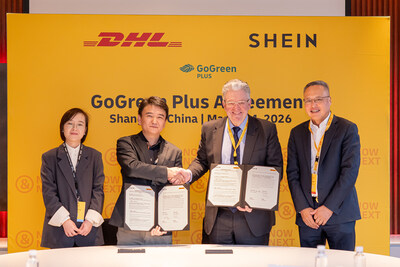
SHEIN Expands Sustainable Aviation Fuel Pilot Initiatives, Signs Agreement with DHL for GoGreen Plus Service

SINGAPORE, March 25, 2026 /PRNewswire/ — SHEIN, a global online fashion and lifestyle retailer, has signed an agreement with DHL to adopt its GoGreen Plus service, supporting the use of sustainable aviation fuel (SAF) within air cargo logistics. The collaboration forms part of SHEIN’s broader efforts to explore approaches for reducing carbon emissions associated with air transport, while engaging with broader industry initiatives to scale sustainable aviation fuel.

DHL’s GoGreen Plus service enables corporate customers to support the use of SAF by introducing it into the aviation fuel supply used within the network. Lifecycle emissions reductions associated with the SAF, relative to conventional jet fuel, are allocated to participating corporate customers using internationally recognised accounting methodologies. These allocations are documented through recognised certification frameworks, enabling participating customers to account for associated SAF-related lifecycle emissions reductions within their emissions reporting.

“Working with partners such as DHL allows us to better understand how sustainable aviation fuel solutions may be incorporated into air cargo logistics,” said Mustan Lalani, SHEIN’s Head of Sustainability. “Initiatives like this are part of SHEIN’s broader efforts to explore how emerging approaches across the aviation sector may contribute to addressing carbon emissions associated with air transport.”

“DHL is a pioneer in sustainable logistics. Signing the GoGreen Plus agreement with SHEIN marks another important milestone in DHL Express’s commitment to driving the green transformation of air logistics,” says John Pearson, CEO of DHL Express. “As a long-term partner in SHEIN’s global logistics network, we are pleased to work together to explore how sustainable aviation fuel can be integrated into their air cargo operations.”

Industry Partnerships Supporting SAF Adoption

The agreement with DHL builds on a broader set of pilot initiatives and industry collaborations that SHEIN has undertaken across the air cargo ecosystem. Building on an earlier Memorandum of Understanding signed with Lufthansa Cargo in 2025, SHEIN has also embarked on additional partnerships with logistics providers, cargo airlines and industry groups to better understand how SAF-related solutions may support efforts to reduce lifecycle emissions in air cargo logistics, the economic feasibility of such efforts, and how associated certification and accounting frameworks operate in practice.

SAF Pilot with Atlas Air

In 2025, SHEIN piloted the procurement and use of 187.3 tonnes of sustainable aviation fuel (SAF) across 14 Atlas Air charter flights, achieving an estimated emissions reduction of 579.1 tCO₂e.

China SAF Pilot Collaboration with Air China Cargo

SHEIN is participating in a pilot programme organised by China National Aviation Fuel (CNAF) and the Second Research Institute of Civil Aviation of China (CASRI) aimed at bringing together multiple airline and corporate partners, in order to advance SAF adoption in China.

Through this programme, corporate participants will be able to support SAF adoption through procurement agreements, contributing to the development of a broader commercial framework for sustainable aviation fuel in China. Under this initiative, SHEIN plans to procure from Air China Cargo an initial batch of SAF, with traceability mechanisms to track SAF usage and associated emissions reductions.

SHEIN will be among the initial group of participating companies. As part of the pilot, the CASRI and CNAF will jointly issue Certificates based on Proof of Sustainability documenting SAF volumes used and associated lifecycle emissions reductions relative to conventional jet fuel.

World Economic Forum Initiative Supporting SAF Adoption

To complement these initiatives, SHEIN has also joined Green Fuel Forward, a World Economic Forum–led campaign focused on accelerating SAF adoption in the Asia-Pacific region. The initiative seeks to raise awareness of SAF, foster collaboration between corporates, airlines and fuel producers, and strengthen the demand signal for SAF in Asia Pacific through capacity building activities.

Industry Efforts to Scale SAF

SAF currently represents a limited share of global aviation fuel supply, and its wider adoption remains constrained by limited production capacity and higher costs compared with conventional jet fuel. Addressing these challenges will require continued investment and collaboration across airlines, fuel producers, logistics providers and corporate customers.

Through partnerships with logistics providers and airlines, SHEIN is evaluating how SAF-related solutions may support broader industry efforts aimed at reducing lifecycle emissions associated with air transport, while gaining insights into economic feasibility, certification frameworks, emissions accounting and operational integration.

While these initiatives represent early-stage pilots, SHEIN recognises that the emissions impact will be modest relative to the company’s overall air transport footprint, based on the fact that only a small proportion of SAF is currently blended into conventional fuel globally. These programmes are intended to help establish partnerships and operational experience that may support broader adoption of SAF-related solutions over time as industry capacity and participation continue to expand.

Cision View original content to download multimedia:https://www.prnewswire.com/news-releases/shein-expands-sustainable-aviation-fuel-pilot-initiatives-signs-agreement-with-dhl-for-gogreen-plus-service-302724536.html

SOURCE SHEIN