Muhammad Ibrahim assumed office as IICA Director General, pledging to deepen science-based cooperation to strengthen agriculture in the Americas

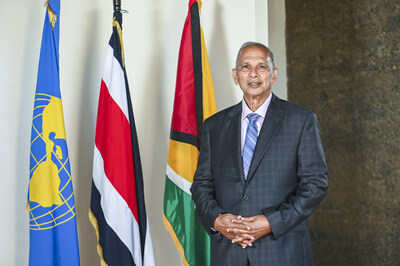
Muhammad Ibrahim has assumed office as the IICA General Director for the 2026-2030 period.

SAN JOSE, Costa Rica, Jan. 16, 2026 /PRNewswire/ — (IICA) – Muhammad Ibrahim assumed office as the new Director General of the Inter-American Institute for Cooperation on Agriculture (IICA), in a ceremony witnessed by ministers and senior officials of more than thirty countries. The Guyanese agronomist pledged to work for all regions of the Americas, striving to build more competitive and efficient science-based agrifood systems.

Mary Munive Angermüller, Vice-President of Costa Rica; Arnoldo Tinoco and Alejandro Solano, Minister and Deputy Minister of Foreign Affairs of Costa Rica, the country where IICA Headquarters is located; Zulfikar Mustapha, Minister of Agriculture of Guyana; and Cleber Soares, Deputy Minister of Agriculture and Livestock of Brazil, were seated on the main platform during the ceremony in which outgoing Director General, Manuel Otero, handed over the reins of the institution to his successor. 

Also present at the inauguration ceremony were officials from the United States—representing the State Department and the Secretariat of Agriculture—and from Argentina.

Ibrahim boasts extensive experience in agricultural development, international cooperation and public policy and has occupied various leadership positions in academic institutions and international organizations, establishing himself as an authority in issues related to sustainable agriculture and rural development.

On the other hand, IICA, which has a presence in thirty-four countries of the Americas, plays a fundamental role in providing support to governments to design and implement public policies to boost agricultural productivity and resilience.

Cleber Soares—who was representing Minister of Agriculture of Brazil and current Chair of IICA’s highest governing body, the Inter-American Board of Agriculture (IABA), Carlos Fávaro—was tasked with swearing in Ibrahim as the new Director General.

“I accept this tremendous responsibility with gratitude, humility and a profound sense of purpose”, said the Guyanese agronomist. “I am going to be a Director General for all the Americas, recognizing that we need differentiated strategies for each region of the hemisphere”.

“I promise to raise the bar of excellence of the Institute even more, to strengthen joint work with the countries and to close the gaps to ensure more sustainable agrifood systems. I will foster an environment in which collaboration, partnerships and technical capacities can flourish, guided by transparency, financial prudence and accountability”, he added. He also acknowledged the work of his predecessor Manuel Otero, whose tenure had positioned IICA as a benchmark institution in providing technical support for agricultural and rural development in the countries.

The outgoing Director General, in turn, stated, “I had the honor of leading an institution with history, prestige and a future, that plays a critical role in transforming our countries”. He also underscored the priority given to farmers and their quality of life in the Institute’s work.

In attendance at the ceremony of inauguration were Víctor Carvajal, Rodwell Ferguson and Ignacia Fernández, ministers of Agriculture of Costa Rica, Belize and Chile, respectively; and Silvia Massruhá, President of the Brazilian Agricultural Research Corporation (EMBRAPA), among other high-level officials. Former IICA Directors General Víctor Villalobos of Mexico, Chelston Brathwaite of Barbados and Martín Piñeiro of Argentina also participated in person. 

A message on behalf of the U.S. government noted that, “IICA delivers tangible results in the hemisphere, strengthening the agrifood systems that support farmers and ranchers, thereby facilitating international trade and enhancing the sovereignty and resilience of its Member States. During Dr. Otero’s eight-year tenure, relationships and partnerships were strengthened for the benefit of the Western Hemisphere, agriculture was positioned as a strategic sector, and cooperation in the Americas was enhanced based on science and trust”.

“The challenges facing agriculture today and in the future require a renewed approach. Agriculture will need to be viewed as a priority for national security, in order to enhance resilient exports and empower consumers. We look forward to working with Dr. Ibrahim in the Member States to ensure that agriculture remains a pillar for security, prosperity and opportunities. We have the land, the people and the expertise, and when we put farmers first, we win”, he added.

Agustín Tejeda,  Deputy Secretary of Agrifood Markets at the Secretariat of Agriculture of Argentina, highlighted Ibrahim’s “professional and technical experience and profound knowledge of the region, which provide a solid foundation for leading IICA during a key phase in which production and international trade must be strengthened”.

“At present, agriculture in our region faces the great challenge of improving productivity, advancing toward a more efficient use of inputs and resources, incorporating innovation, and fully capitalizing on the opportunities afforded by international markets. Within this context, IICA plays a fundamental role as a technical cooperation agency, assisting countries in designing and implementing science- and evidence-based public policies aimed at reducing costs, eliminating distortions and improving competitiveness”, he added.

Senior officials from all countries in the Western Hemisphere watched the ceremony online.

Speaking from Georgetown, Mohamed Irfaan Ali, President of Guyana, delivered remarks via a video message in which he referred to IICA’s “critical role” in generating agricultural value added and supporting development. He also congratulated his fellow countryman Ibrahim on the responsibility he was assuming.

“Agriculture is the backbone of rural prosperity. It stabilizes our economy, which is why IICA plays such a vital role. I congratulate Muhammad Ibrahim and recognize IICA’s importance as a pillar for development and for strengthening partnerships to achieve a competitive, resilient and sustainable agriculture sector”, remarked the president.

Minister Mustapha, who is also Chair of the Ministerial Task Force on Agriculture of the Caribbean Community (CARICOM), congratulated Ibrahim on becoming “the first Guyanese to lead this prestigious institution” and highlighted the fact that “his career, both in our homeland and on this global stage, is a testament to the tremendous potential that exists in our region”.

The Minister commended Manuel Otero on his tenure and stated that the new IICA Director General’s “proven capacity to integrate science, policies and practical actions represents the type of leadership needed to address the complex agricultural and food security scenario”.
 

Cision View original content to download multimedia:https://www.prnewswire.com/news-releases/muhammad-ibrahim-assumed-office-as-iica-director-general-pledging-to-deepen-science-based-cooperation-to-strengthen-agriculture-in-the-americas-302663620.html

SOURCE Inter-American Institute for Cooperation on Agriculture

Benjamin Cremaschi and Lilly Reale Receive the 2025 U.S. Soccer Young Player of the Year Award Presented by Henkel

In honor of their impact on and off the field, Henkel announces $20,000 in donations to charities selected by the award recipients.

ROCKY HILL, Conn., Jan. 16, 2026 /PRNewswire/ — As a proud Official Partner of U.S. Soccer, Henkel, a leading manufacturer of well-known consumer and industrial brands including Dial® soap, Persil® and all® free clear laundry detergent, Snuggle® fabric softeners, Schwarzkopf® hair care and Loctite®, OSI®, Technomelt®, and Bonderite® adhesives, sealants, and functional coatings, today announced that Benjamin Cremaschi and Lilly Reale have been named the 2025 U.S. Soccer Young Player of the Year Award recipients. In recognition of their achievements and influence beyond the game, Henkel will donate a total of $20,000 to charities selected by each player. It is the first time the award includes a charitable donation provided by a U.S. Soccer sponsor.

Presented annually to recognize the exceptional accomplishments of U.S. Soccer Youth National Team players, the Young Player of the Year Award honors Benjamin Cremaschi as the Young Male Player of the Year and Lilly Reale as the Young Female Player of the Year for their performances, leadership, and impact throughout the 2025 season. The awardees were selected by U.S. Soccer sporting representatives, select national media members, and a fan vote at the end of 2025.

“We are thrilled to celebrate the incredible talent and dedication of this year’s Young Male and Female Player of the Year award winners,” said Stephanie Bates, Vice President, Partnership Marketing of U.S. Soccer. “These athletes represent the future of our sport, and their achievements reflect the passion and commitment that drive U.S. Soccer forward. We’re equally proud to have Henkel as the presenting sponsor of these awards. Their commitment to supporting young athletes and shaping future stars ensures that the game continues to thrive for generations to come.”

Henkel will donate $10,000 to the Foundation for Angelman Syndrome Therapeutics (FAST), selected by Benjamin Cremaschi, to support research and treatment for Angelman Syndrome.

Henkel will donate $10,000 to Boys & Girls Club of Boston, chosen by Lilly Reale in support of its efforts to create opportunities to help youth explore their passions and find their purpose to set them up for success.

“We are honored to be the presenting sponsor of the Young Player of the Year Award as part of our commitment to grow the game for future generations,” said Jennifer Schiavone, Henkel Vice President, Corporate Communications, Americas. “We congratulate Benjamin and Lilly on this well-deserved recognition and celebrate the example they set for young athletes everywhere. Their leadership and impact extend beyond the game, and we are proud to introduce the donations in their name to charitable organizations that are close to their hearts.”

Henkel’s support of the Young Player of the Year Award is part of a multi-year sponsorship with U.S. Soccer to improve access to the game of soccer by creating moments of community, inclusion and opportunity. Henkel is also working with U.S. Soccer and the American Youth Soccer Organization (AYSO) to expand access to the game through free youth clinics. Alongside Henkel’s community equipment drives that provide needed gear and the Dial® Clean Sheet program supporting classrooms nationwide—these efforts create opportunities for kids to play, grow and thrive on and off the field.

About U.S. Soccer
Founded in 1913, U.S. Soccer has been the official governing body of the sport in the United States for more than 100 years. As U.S. Soccer looks toward the future amid an unprecedented moment of opportunity, it has aligned its efforts around five strategic pillars: Grow the game by increasing youth and adult participation and accessibility to the sport; Foster best playing environments through quality of referees and coaches, and commitment to participant safety; Develop winning teams through solidified pathways and success of professional leagues; Grow the soccer economy to fuel reinvestment by increasing membership, fandom and commercial success; and Create a world-class organization through revitalized structure and culture, best-in-class talent, progress in DEIB, and more. For more information, visit ussoccer.com/ourvision.

About Henkel in North America
Henkel’s portfolio of well-known brands in North America includes all®, Purex® and Persil® laundry detergents, Snuggle® fabric softeners, Dial® soaps, Schwarzkopf® hair care, as well as Loctite®, Technomelt® and Bonderite® adhesives. With sales close to 6.5 billion US dollars (6 billion euros) in 2024, North America accounts for 28 percent of the company’s global sales. Henkel employs around 8,000 people across the U.S., Canada and Puerto Rico. For more information, please visit www.henkel-northamerica.com and on X @Henkel_NA.

About Henkel
About Henkel With its brands, innovations and technologies, Henkel holds leading market positions worldwide in the industrial and consumer businesses. The business unit Adhesive Technologies is the global leader in the market for adhesives, sealants and functional coatings. With Consumer Brands, the company holds leading positions especially in laundry & home care and hair in many markets and categories around the world. The company’s three strongest brands are Loctite, Persil and Schwarzkopf. In fiscal 2024, Henkel reported sales of more than 21.6 billion euros and adjusted operating profit of around 3.1 billion euros. Henkel’s preferred shares are listed in the German stock index DAX. Sustainability has a long tradition at Henkel, and the company has a clear sustainability strategy with specific targets. Henkel was founded in 1876 and today employs a diverse team of about 47,000 people worldwide – united by a strong corporate culture, shared values and a common purpose: “Pioneers at heart for the good of generations.” More information at www.henkel.com.

Henkel Contact
Erica Cooper, Director, External Communications
Phone: 475-232-4973
Email: erica.cooper@henkel.com

Cision View original content to download multimedia:https://www.prnewswire.com/news-releases/benjamin-cremaschi-and-lilly-reale-receive-the-2025-us-soccer-young-player-of-the-year-award-presented-by-henkel-302663588.html

SOURCE Henkel

Mistral and UVision Team Announces HERO-90 Selection for U.S. Army’s LASSO Program

BETHESDA, Md., Jan. 16, 2026 /PRNewswire/ — Mistral Inc. and its teammate UVision Inc. today announced that the HERO-90 loitering munition has been selected by Program Executive Office (PEO) Soldier to participate in the U.S. Army’s Low Altitude Stalking and Strike Ordnance (LASSO) program—an urgent initiative to deliver a man-portable, precision anti-armor capability to Brigade Combat Teams.

LASSO is a U.S. Army initiative to provide dismounted units with a man-portable, precision loitering munition capability for rapid, lethal engagement of armored threats.

The HERO-90, developed by UVision, delivers extended-range, counter-armor precision from a highly portable form factor, supporting rapid launch by a single operator in under two minutes. Configurable warheads (including anti-armor), mission-abort/re-engage options, and secure BLOS communications provide decisive effects with top attack capabilities.

“Selection of HERO-90 reflects the Army’s focus on portability, lethality, and MOSA-ready integration. Together with UVision, Mistral will support PdM Soldier Precision Targeting Devices with a solution that aligns to Common Control and integrates seamlessly across the BCT kill chain.” — Yoav Banai, Senior Vice President, Mistral Inc.

“The Army’s LASSO program is accelerating a transformational anti-armor capability for dismounted units. HERO-90 was designed precisely for this mission—fast to deploy, lethal at range, and adaptable through open architectures. We’re proud to collaborate with Mistral to deliver this overmatch to U.S. Soldiers.” — Jarmin Blanton Vice President of Business Development, Sales & Marketing.

About HERO-90

HERO-90 is UVision’s advanced loitering munition designed for anti-armor missions. It features multiple warhead configurations including anti-armor and high-explosive. The system supports man-in-the-loop control, mission abort and re-engage capabilities, and integrates with Common Control architectures. Its lightweight, backpack-portable launcher enables rapid deployment by a single operator, while AI-assisted tracking and EO/IR sensors ensure precision in complex environments.

About Mistral Inc.

Mistral Inc. is a U.S.-based defense technology company specializing in soldier-centric solutions for precision targeting, advanced sensors, and integrated fire control systems. With decades of experience supporting U.S. and allied forces, Mistral delivers modular, interoperable platforms that meet MOSA standards and accelerate sensor-to-shooter timelines.

About UVision

UVision is a global leader in loitering munition systems, offering the HERO family of solutions for tactical, operational, and strategic missions. UVision’s products are fielded worldwide and recognized for their reliability, precision, and adaptability across land, air, and maritime domains. The company focuses on innovation, safety, and mission flexibility to empower modern forces in multi-domain operations.

Cision View original content to download multimedia:https://www.prnewswire.com/news-releases/mistral-and-uvision-team-announces-hero-90-selection-for-us-armys-lasso-program-302663549.html

SOURCE Mistral Inc.

From Global Risk to Supply Chain Reality

by Lee Green, Cascale Vice President, Communications & Marketing

Each year, the Global Risks Report offers a snapshot of how leaders around the world see the near and long-term risk landscape evolving. The 2026 edition, published by the World Economic Forum, is not a radical departure from previous years. Climate change remains a defining risk. Economic pressure, geopolitical fragmentation, and social stress continue to intensify. What feels different this year is not the diagnosis, but the clarity of the signal.

The risks shaping the global economy are increasingly interconnected, mutually reinforcing, and deeply embedded in the systems that underpin consumer goods supply chains. For our industry, this is no longer a future-facing warning. It is a description of current operating conditions.

Global Risk is Now Supply Chain Risk

The report highlights how environmental, economic, and geopolitical risks are converging rather than occurring in isolation. For consumer goods companies, this convergence is most visible in manufacturing regions, where climate exposure, regulatory change, cost volatility, and labor pressures are felt at the same time, often by the same actors.

Suppliers today are navigating rising energy costs while being asked to decarbonize, manage water scarcity, comply with new due diligence legislation, and respond to shifting demand patterns. These pressures are not sequential. They are simultaneous. When viewed through that lens, the risks described in the Global Risks Report – like geoeconomics confrontation, state-based conflict, and extreme weather – are not abstract global forces. They are practical constraints shaping day-to-day decisions across value chains.

This matters because risk exposure is no longer limited to operational continuity. It now extends directly into financial performance, regulatory compliance, brand trust, and long-term access to supply.

Fragmentation is Amplifying Risk, Not Containing It

One of the less explicit but most important messages in the report is how fragmentation increases vulnerability. As global systems become more politically divided, the burden of complexity grows. Nowhere is this more evident than in supply chains.

Multiple regulatory regimes, overlapping reporting requirements, and unaligned standards increase cost and dilute focus. When brands and retailers pursue disconnected approaches to climate action or responsible purchasing, suppliers absorb the complexity. The result is not greater resilience, but higher risk concentration at the most vulnerable points in the system.

The report implicitly challenges the idea that risk can be managed through isolated, company-by-company strategies. In a tightly coupled global system, fragmented responses often create new points of failure rather than reducing exposure.

Resilience is Not Built Through Individual Action Alone

Another clear takeaway from the 2026 report is the limitation of resilience narratives that focus on individual preparedness without addressing system-level design. While company-level risk management remains essential, it is no longer sufficient on its own.

Supplier resilience cannot be built brand by brand when suppliers serve dozens of customers with differing expectations, timelines, and data requests. Climate risk cannot be reduced through parallel, uncoordinated decarbonization efforts that compete for the same limited resources. Regulatory readiness cannot be achieved when suppliers are required to respond to multiple interpretations of similar rules.

The report points toward a simple but often uncomfortable conclusion. In an interconnected risk environment, coordination becomes a core risk mitigation strategy.

Turning Insight Into Industry Response

This is where the implications for the consumer goods industry become practical. The Global Risks Report does not prescribe solutions, but it makes clear that effective responses must operate at the level of systems, not just organizations.

For the industry, this means prioritizing approaches that reduce duplication, align expectations, and support suppliers in navigating transition pressures. It means investing in shared tools and data frameworks that enable comparability and credibility. It also means recognizing that responsible purchasing practices are not only a social issue, but a structural lever for risk reduction and long-term resilience.

These are not abstract ideals. They are business necessities in a context where risk is increasingly collective in nature.

Cascale’s Role in a Shifting Risk Landscape

Cascale exists to help the industry respond to exactly this kind of challenge. Not by positioning itself as the solution, but by enabling alignment where fragmentation increases risk.

Through shared tools, common metrics, and collaborative programs, Cascale helps members move from risk awareness to coordinated action. This includes supporting credible climate action that is grounded in data, advancing responsible purchasing practices that improve supplier stability, and reducing the reporting burden on manufacturers through greater alignment.

In a world where global risks are converging, the ability to act collectively and consistently across value chains becomes a competitive advantage. Cascale’s role is to support that shift, turning ambition into measurable progress while keeping the realities faced by manufacturers firmly in view.

One report quote reinforces this plainly for us: “In a world with greater competition, [cooperation] may be harder to achieve, but only by rebuilding trust and new forms of collaborative mechanisms can leaders steer us towards greater resilience and help shape a more stable future.”

What This Means for Members

The 2026 Global Risks Report reinforces three messages that are particularly relevant for consumer goods companies.

First, global risk is no longer external to supply chains. It is embedded within them, shaping cost, capacity, and continuity.

Second, fragmentation carries a rising price. The cost of unaligned approaches is increasingly borne by suppliers, and ultimately reflected back in business performance and risk exposure.

Third, collective action is becoming a core business capability. Not a values statement, and not a communications exercise, but a practical response to a risk environment that no single organization can manage alone.

The Global Risks Report is, in many ways, a mirror. It reflects the reality that many in the industry already recognize. The challenge now is not whether we understand the risks, but whether we are willing to respond in ways that match their scale and interconnected nature.

Cascale will continue working with members to translate global risk into practical, aligned action across consumer goods supply chains. Join us.

Posted in UncategorizedTagged

Newsweek Names TCS America’s Most Reliable IT Services Company in 2026 Ranking

NEW YORK and MUMBAI, January 16, 2026 /3BL/ – Tata Consultancy Services (TCS) (BSE: 532540, NSE: TCS), a global leader in IT services, consulting, and business solutions, has been recognized by Newsweek as the most reliable IT services company in the Unites States for 2026.

The ranking, developed by Newsweek in collaboration with Statista, a global leader in industry rankings and statistical analysis, is based on an independent survey of more than 1,700 U.S. participants. Companies were evaluated across five key metrics: Likelihood of Customer Recommendation, Ease of Doing Business, Value for Money, Consistency of Deliverables, and Reputation for Dependability. The top 300 companies with the highest overall scores were included in the list.

Anil Bhatt, EVP, Chief Information and Digital Officer, Norfolk Southern, said, “I’d like to congratulate TCS on their well-deserved recognition as one of Newsweek’s America’s Most Reliable Companies. At Norfolk Southern, safety isn’t just a priority—it’s a core value that guides everything we do. Our work with TCS embeds technology into our business processes and supports our ability to maintain a secure and reliable technology ecosystem. We are united with TCS in viewing reliability as a core operating principle.”

Amit Bajaj, President, North America, Tata Consultancy Services, said, “We are deeply grateful to our clients for the trust they place in TCS and to our associates who go above and beyond to live our customer centric values. For over five decades and across technology cycles, we have partnered with organizations across industries to deliver reliable, resilient, and future ready business outcomes. With AI becoming integral to enterprise transformation—and given the probabilistic nature of technology—reliability is more critical than ever for delivering real, measurable value in a responsible way.”

Ryan Kinney, Senior Vice President of Research Strategy and Revenue, Newsweek, said, “Congratulations to Tata Consultancy Services on its inclusion in Newsweek and Statista’s America’s Most Reliable Companies 2026. The ranking reflects feedback from thousands of U.S. business decision-makers and emphasizes practical measures like ease of doing business and consistency of deliverables—core elements of dependable business to business partnerships.”

TCS’ leadership in IT services has been consistently recognized by industry analysts and market rankings. Last year, TCS debuted on Newsweek’s list of America’s Greatest Workplaces 2025.

For more information about Newsweek’s America’s Most Reliable Companies 2026 Ranking, visit: https://rankings.newsweek.com/americas-most-reliable-companies-2026

About Newsweek

Newsweek is the global digital news organization built around the iconic 93-year-old American magazine. Newsweek reaches 100 million people monthly with its thought-provoking news, opinion, images, graphics, and video delivered across a dozen print and digital platforms. Headquartered in New York City, Newsweek also publishes international editions in EMEA and Asia.

About Statista

Statista produces hundreds of global industry rankings and company listings in partnership with leading media outlets. Its research and analysis service is powered by the data-driven expertise of statista.com, a premier business intelligence portal offering comprehensive market insights, statistics, and consumer studies.

About Tata Consultancy Services (TCS)

Tata Consultancy Services (TCS) (BSE: 532540, NSE: TCS) is a digital transformation and technology partner of choice for industry-leading organizations worldwide. Since its inception in 1968, TCS has upheld the highest standards of innovation, engineering excellence and customer service.

Rooted in the heritage of the Tata Group, TCS is focused on creating long term value for its clients, its investors, its employees, and the community at large. With a highly skilled workforce of 580,000 spread across 55 countries and 202 service delivery centers across the world, the company has been recognized as a top employer in six continents. With the ability to rapidly apply and scale new technologies, the company has built long term partnerships with its clients – helping them emerge as perpetually adaptive enterprises. Many of these relationships have endured into decades and navigated every technology cycle, from mainframes in the 1970s to Artificial Intelligence today.

TCS sponsors 14 of the world’s most prestigious marathons and endurance events, including the TCS New York City Marathon, TCS London Marathon and TCS Sydney Marathon with a focus on promoting health, sustainability, and community empowerment.

TCS generated consolidated revenues of over US $30 billion in the fiscal year ended March 31, 2025. For more information, visit www.tcs.com

Follow TCS on LinkedIn| Instagram | YouTube| X

###

Posted in UncategorizedTagged

Proposals of the Shareholders’ Nomination Board to Stora Enso Oyj’s Annual General Meeting 2026

STORA ENSO OYJ STOCK EXCHANGE RELEASE 16 January 2026 at 16:45 EET

HELSINKI, Finland, Jan. 16, 2026 /PRNewswire/ — The Shareholders’ Nomination Board, established by Stora Enso’s Annual General Meeting (AGM), will propose to the AGM planned to be held on 24 March 2026 that the Company’s Board of Directors shall have eight (8) members. 

The Shareholders’ Nomination Board proposes that of the current members of the Board of Directors, Håkan Buskhe, Helena Hedblom, Astrid Hermann, Christiane Kuehne, Richard Nilsson, Elena Scaltritti and Antti Vasara be re-elected members of the Board of Directors until the end of the following AGM and that Jouko Karvinen be elected new member of the Board of Directors for the same term of office.

Kari Jordan, currently Chair of the Board, and Reima Rytsölä have announced that they are not available for re-election to the Board of Directors.

I thank Kari for serving four years as a member of the Board of Directors and especially for the last three years as Chair. During his time as Board Chair, Stora Enso has renewed its leadership, turned around and improved financial performance, executed major growth investments and taken significant steps to strengthen its balance sheet. Furthermore, the Company’s strategic focus and direction have been clarified to maximise value creation. I also thank Reima for his contributions during three years on the Board of Directors,” says Marcus Wallenberg, Chair of the Shareholders’ Nomination Board.

The Shareholders’ Nomination Board proposes that Håkan Buskhe be elected Chair and Jouko Karvinen be elected Vice Chair of the Board of Directors. 

“I welcome Jouko to join the Board. Håkan’s proposed nomination as Board Chair and Jouko’s as Vice Chair reflect both continuity and endorsement of the strategic direction as well as strong owners’ commitment and engagement,” continues Marcus Wallenberg.

Jouko Karvinen, born in 1957, Finnish citizen with a Master of Science in Engineering (M.Sc. Eng.), is Chair of the Board of Solidium. He has an extensive industrial experience from executive and leading roles in global companies. These include acting as the CEO of Stora Enso (2007–2014), CEO of Philips Medical Systems Division (2002-2006), Executive Vice President & Head of the Automation technology Products Division at ABB Group (2000-2002) as well as several prior leadership roles in the ABB Group. He further has an extensive board professional background with previous roles including the Chair, Vice Chair or member of the Board of, amongst others, Finnair, Nokia, SKF and Valmet. Currently, he is a Board Member of Heritage Foundation Opportunity Corporation or HFOC, an investment management company owned by the province of Alberta, Canada. Jouko Karvinen is independent of the Company but not of its shareholders due to his position as Chair of the Board of Solidium. Currently, he does not own shares in Stora Enso.

With regard to the selection procedure for the members of the Board of Directors, the Shareholders’ Nomination Board recommends that shareholders take a position on the proposal as a whole at the General Meeting. This recommendation is based on the fact that at Stora Enso, in line with a good Nordic governance model, the Shareholders’ Nomination Board is separate from the Board of Directors.

The Shareholders’ Nomination Board, in addition to ensuring that individual nominees for membership of the Board of Directors possess the required competences, is also responsible for making sure that the proposed Board of Directors as a whole has the best possible expertise and experience for the company and that the composition of the Board of Directors also meets other requirements of the Finnish Corporate Governance Code for listed companies.

The Shareholders’ Nomination Board proposes to the AGM that the annual remuneration for the Chair, Vice Chair and members of the Board of Directors be maintained at the 2025 level and be paid as follows:  

Board of Directors

Chair  EUR 221,728
Vice Chair   EUR 125,186
Members   EUR 85,933

The Shareholders’ Nomination Board also proposes that the annual remuneration for the members of the Board of Directors be paid in Company shares and cash so that 40% is paid in Stora Enso R shares to be purchased on the Board members’ behalf from the market at a price determined in public trading, and the rest in cash. The shares will be purchased within two weeks of the publication of the interim report for the period 1 January 2026–31 March 2026 or as soon as possible in accordance with applicable legislation. The Company will pay any costs and transfer tax related to the purchase of Company shares.

The Shareholders’ Nomination Board further proposes that the annual remuneration for the members of the Financial and Audit Committee, the People and Culture Committee and the Sustainability and Ethics Committee be maintained at the 2025 level and be paid as follows:

Financial and Audit Committee
Chair    EUR 23,976
Members   EUR 16,868

People and Culture Committee
Chair  EUR 11,988
Members  EUR 7,214

Sustainability and Ethics Committee
Chair   EUR 11,988
Members   EUR 7,214

In 2025–2026, the Shareholders’ Nomination Board comprised four members: Kari Jordan (Chair of the Board), Håkan Buskhe (Vice Chair of the Board) and two other members appointed by the two largest shareholders, namely Matts Rosenberg (Solidium Oy) and Marcus Wallenberg (FAM AB). Until 18 December 2025, Solidium was represented by Jouko Karvinen.  Marcus Wallenberg was elected Chair of the Shareholders’ Nomination Board.

The main tasks of the Shareholders’ Nomination Board were to prepare the proposals for the AGM 2026 concerning Board members and their remuneration. The Shareholders’ Nomination Board convened six times during its 2025-2026 working period. Each member of the Shareholders’ Nomination Board attended all the meetings. Kari Jordan and Håkan Buskhe did not participate in the preparation of or decision on remuneration.   

The forest is at the heart of Stora Enso, and we believe that everything made from fossil-based materials today can be made from a tree tomorrow. We are the leading provider of renewable products in packaging, biomaterials, and wooden construction, and one of the largest private forest owners in the world. Stora Enso has approximately 19,000 employees and our sales in 2024 were EUR 9 billion. Stora Enso shares are listed on Nasdaq Helsinki Oy (STEAV, STERV) and Nasdaq Stockholm AB (STE A, STE R). In addition, the shares are traded in the USA on OTC Markets (OTCQX) as ADRs and ordinary shares (SEOAY, SEOFF, SEOJF). storaenso.com/investors

STORA ENSO OYJ

CONTACT:

For further information, please contact: 
Hanna Rutanen 
SVP Communications 
tel. +358 41 507 1361 

Jutta Mikkola 
SVP Investor Relations 
tel. +358 50 544 6061

This information was brought to you by Cision http://news.cision.com

https://news.cision.com/stora-enso-oyj/r/proposals-of-the-shareholders–nomination-board-to-stora-enso-oyj-s-annual-general-meeting-2026,c4293733


Cision View original content:https://www.prnewswire.com/news-releases/proposals-of-the-shareholders-nomination-board-to-stora-enso-oyjs-annual-general-meeting-2026-302663498.html

SOURCE Stora Enso Oyj

C-Suite Remains Committed to Sustainability as a Top Priority Heading Into 2026

While regulatory uncertainty and anti-ESG backlash dominated headlines in 2025, surveys of global C-suite leaders reported an increased commitment to sustainability. In our Top Stories this issue, SustainabilityOnline.com said a new report from Reuters found that 75% of C-suite leaders rate sustainability as a ‘top priority,’ an increase of six percentage points from six months ago.

The Reuters IMPACT: Global Sustainability Report 2025 also found that close to two-thirds (64%) of organizations remain committed to net zero and have not altered their targets. The full Reuters report, which gathered insights from more than 500 global decision-makers, is available for download at the link in our Top Stories below. Among the key findings from the report are:

  • 61% of C-suite leaders cited emerging sustainability-related risks as a main factor for prioritizing sustainability, including risks from climate impacts, supply chain vulnerabilities, and resource constraints.
  • Other operational risks cited include customer expectations, reputational risk, and regulatory changes.
  • Organizations are adapting their strategies including reframing sustainability messaging, with 39% of organizations emphasizing terms like “efficiency” and “resilience” rather than more traditional sustainability terminology.
  • 34% of C-suite leaders reported making no changes to sustainability strategy or communications.
  • Organizations scaling up sustainability goals (30%) outnumbered those scaling down (9%) by more than three to one.

The Reuters report closely tracked the findings of the UN Global Compact’s 2025 CEO Study published in September 2025, in which 88% of CEOs said that the business case for sustainability is stronger now than it was five years ago. This study, conducted in partnership with the global professional services firm Accenture, is based on a quantitative assessment of nearly 2,000 CEOs across 128 countries, as well as in-depth one-to-one interviews with CEOs, chairpersons, and presidents of UN Global Compact member companies.

In another of our Top Stories, BusinessChief.com highlights the findings of the UN Global Compact’s report along with Deloitte Global’s 2025 C-Suite Sustainability Report, which for the fourth year surveyed more than 2,100 executives across 27 countries. The results of Deloitte’s report also indicated that sustainability remains a top-three priority on the C-suite agenda, alongside technology adoption and artificial intelligence (AI).

The full Deloitte report is available for download at the link in our Top Stories below. Key findings include:

  • 83% of companies increased sustainability investments in the last year.
  • 66% said their priority actions have a positive impact on revenue generation.
  • 79% are transforming their business model or embedding sustainability throughout their organization.
  • 81% are already using AI to support their sustainability efforts.

As we head into 2026, companies are focused on ensuring that their sustainability investments and strategies are delivering tangible results for stakeholders. The G&A team is available to provide counsel to CEOs and the entire C-suite to help your company move your sustainability programs forward. Reach out to us at info@ga-institute.com.

This is just the introduction of G&A’s Sustainability Highlights newsletter this week. Click here to view the full issue

Posted in UncategorizedTagged

From Code to Connection: Meet Jonathan Roig

Originally published on GoDaddy Resource Library

Tell us a little bit about yourself and your career journey, to date.

Throughout my time at GoDaddy, I’ve held a variety of positions. As the company has grown, my roles have grown with it. I started out as a PHP Developer on our legacy in-house Webmail system and gradually expanded my skills. This growth enabled me to serve as both a Senior Developer and a Manager. Currently, I’ve returned to being an individual contributor within the organization.

What initially attracted you to GoDaddy, and what has kept you here for nearly two decades?

What has kept me committed over the years is the people. A surprising number of us have been with the company for more than a decade.

The value of institutional knowledge is undeniable, and these long-standing relationships prove invaluable every day when it comes to getting things done.

How have you seen the software development landscape change during your time at GoDaddy?

There’s the push and pull of moving code and logic from the frontend to the backend and back, so while I’m not working in PHP anymore, the Javascript world continues to evolve and deliver interesting experiences. Of course, the introduction of AI means I can now approach these problems on a more abstract and conceptual level… it’s less about writing lines of code and more about delivering well designed features. That said, it’s still essential to understand what the code is actually doing.

What has been your most significant learning experience within the past year?

This job has a way of keeping you humble. Sure, there are times when you feel on top of the world—like you’re the smartest developer out there—but in my experience, those moments don’t last long. After about a month of experimenting with a particular JavaScript MicroFrontEnd technology (remote React components loaded from a CDN) I discovered some serious performance issues with the strategy and had to pivot and start again with a new approach.

Is wisdom simply the result of making mistakes and learning not to repeat them? Sometimes, you don’t even realize what you don’t know, until you’ve learned it. But now that you do, you’re able to make better, more informed decisions moving forward.

What’s the best career advice you’ve ever received, and how has it influenced your journey?

When I was 21, I found myself at a bar in Tucson, Arizona with a well known alternative comic creator, back when that was a thing (The 90s)! He told me: “Find something niche that you like doing and no one else is doing well. Do that and people will give you money for it.”

Now, after spending 30 years in the tech industry—a wild thought—I’m still searching for ways to be helpful, identify gaps, and pursue work that excites me.

What do you enjoy doing outside of work?

I’m a trail runner. When I’m not at work, I like to leave all the electronics behind, get out into the mountains, explore, and run free. We’ve got a great community of athletes here in Arizona and while my competitive days are mostly behind me, I don’t think I’ll ever stop loving the camaraderie and adventure.

Are you enjoying this series and want to know more about life at GoDaddy? Check out our GoDaddy Life social pages! Follow us to meet our team, learn more about our culture (Teams, ERGs, Locations), careers, and so much more. You’re more than just your day job, so come propel your career with us.

Posted in UncategorizedTagged

Mastercard – 'Doing Good by Default': How This Vision of Consumer Protection Can Build Resilience

Originally published by Mastercard

By Vicki Hyman – Director, Global Communications, Mastercard

Since the launch of the World Bank’s Findex database in 2011, bank account ownership among adults has grown from 51% to 79%. But a new report by Consumers International, the global membership organization for consumer associations, suggests that this progress masks an underlying fragility, with as many as 75% of consumers considered financially vulnerable to some degree.

In some low-income countries, less than half of people can come up with emergency funds within 30 days, says Helena Leurent, the director general of Consumers International. “That’s just not a level of resilience that is reasonable,” she says. “You can’t wait for another financial crisis to amend this issue, to build resilience.”

Though policy can be a powerful tool, you can’t regulate a community into resilience. Digital financial systems need to be designed with inclusion as a core principle, says Shamina Singh, the president and founder of the Mastercard Center for Inclusive Growth.

The Center has supported Consumers International’s “Building the Consumer Voice in Digital Finance,” an initiative that calls for regulators, policymakers, financial services providers and consumer organizations to adopt a common framework for building consumer resilience. The work includes designing and implementing outcomes-based regulation, integrating real-time consumer risk monitoring, strengthening and modernizing enforcement, and updating and developing financial products and services with consumer protection and feedback baked in.

Leurent and Singh recently spoke with the Mastercard Newsroom about the role of transparency in fortifying consumer trust, the need for greater collaboration to build resilience, and how to ensure vulnerable communities aren’t left behind as technology and financial services change faster than ever.

The following interview has been edited and condensed.

Digital finance has changed drastically since 2011. What is the answer to building consumer resilience? New policies? Better technology? More industry buy-in? More consumer education?

Leurent: In 2011, the world was exiting the financial crisis, and there was an important moment when the OECD said that consumer protection had been overlooked and that we needed a common, cross-sectoral set of principles for financial consumer protection. Their implementation is worth celebrating: They’ve become a reference standard for the need for, and importance of, consumer protection. Since then, the landscape has shifted dramatically. You’ve got so much more innovation — just look at the number of fintechs — more providers, the growth in mobile money, all sorts of shifts. There is greater recognition that consumers need to be included, but that in doing so, they can become more exposed. It means that the consumer outcomes are not progressing in tandem with that thinking about access and inclusion.

“Consumer protection builds trust, builds resilience. It means you can lean into the future. It means you can lean into innovation with confidence.”

Helena Leurent

There is a recognition that growth and consumer protection go hand in hand. Consumer protection builds trust, builds resilience. It means you can lean into the future. It means you can lean into innovation with confidence.

Singh: If the outcome that we’re looking for is resilience — being able to withstand shocks, being able to recover from financial hardships so that consumers can continue on their journey to financial health — then an essential component is protection. And protection in some respects can be legislated, can be implemented in policy. But a written policy doesn’t equal enforcement. To build resilience and protection, regulators, consumers, product providers and advocacy organizations all play a part. It requires constant communication and collaboration across various centers.

Do you think the lack of transparency in digital finance depresses access and usage for consumers, particularly those who are just entering the formal financial system? What’s the long-term impact for them and for the economy as a whole?

Leurent: Over time the meaning and value of transparency has shifted. In the past, it might have been enough to give people more information, but they could not make sense of it. Now we understand that disclosure is not the only solution. There must be well-designed products and process along the consumer journey where you factor in relevant, timely, inclusive information. It’s not just about telling me the price or the term, but answering the questions like: Is this product suitable and right for me? Are the distribution practices fair? Am I given a meaningful explanation? It’s a broader definition of what real transparency is.

Price transparency is a known issue. Asking consumer advocates around the world, close to 60% say that the lack of transparency in fees and charges is a significant factor that causes lack of trust in digital finance. But transparency in digital finance isn’t just on the demand side. There are supply-side issues that can be improved: Our research also shows that 88% of financial services regulators in low- and middle-income countries collect complaints data, but only 44% make that data available publicly. Doing so can help consumer advocates and financial service providers improve. If all parts of the ecosystem can see what’s happening behind the scenes in an increasingly complex marketplace, they can work together to improve it.

“Transparency is critical as part of the entire user experience. User experience and early interactions with the financial system will develop trust if they are repeated, predictable positive experiences.”

Shamina Singh

Singh: Transparency is critical as part of the entire user experience. User experience and early interactions with the financial system will develop trust if they are repeated, predictable positive experiences. One of the lessons that we can replicate from the Mastercard experience is protection by default, security by default, resolution by default. You know that when you use a digital form of payment, whether it’s a phone or a wallet or a card, protection is built into that experience. So that if something happens, if the purchase doesn’t work, you have a way of getting your money back. If you don’t, then that defeats the purpose of ensuring that a digital economy works for everyone, everywhere.

Can you point to an example of recent policies or an initiative that is already proving itself by empowering consumers in practical ways or making communities more resilient? Are there any common threads that could be easily replicated?

Leurent: In our report, we highlighted the U.K.’s relatively recent Consumer Duty regulation, which was a move from a “do no harm” approach to a “doing good by default” approach. In Malaysia, the Fair Treatment of Financial Consumers policy integrated a principle related to vulnerability, in which financial services providers should develop policies, procedures and controls to ensure fair treatment of vulnerable consumers through their entire journey. There are also examples of when regulators have intervened in specific circumstances, such as capping the cost of short-term credit, or stepping in to reduce the risk of mortgage defaults in the wake of interest rate rises after the COVID-19 pandemic. These are instances where different parts of the ecosystem have coordinated to focus on consumer and systemic outcomes and have been able to quickly design and implement effective solutions.

Singh: I’ll give you two examples around our work with women entrepreneurs that I’m really proud of. Through Mastercard Strive, we have a program called Strive Women that aims to turn cultural norms into opportunities in places like Pakistan and Peru. In Pakistan, we worked with a leading microfinance bank to remove male guarantor requirements and allow women to serve as loan guarantors. Now, instead of requiring a male co-signer, these women can use gold jewelry, which many South Asian women acquire in preparation for marriage, as collateral against a loan. These gold-backed loans make up 40% of total borrowers, and the repayment rate is an incredible 100%.

Separately, we have also been working to help digitize wages in the textile space, which builds trust and increases safety and autonomy for workers. By working with RISE in Egypt, where 93% of 24,000 garment workers now receive digital payments instead of cash, we’re reducing wage exploitation and theft while improving financial wellness and health. Across the two examples, the common thread is inclusion. When we think about bringing everyone, especially underserved or underrepresented communities in, we are creating systems that are resilient and sustainable.

The latest Global Findex showed significant strides in access to financial services, although there is more work to do. What do you think is the next gap or challenge that you’re looking to tackle?

Leurent: The reason we care so much about consumer resilience is that we don’t know what the next big shock could be. I could give you agentic AI, whatever comes after agentic AI, stablecoins, digital identity, energy costs and how we connect digitization with energy provision and energy services — major shifts coming down the pike, but we won’t know. If we thought back even five years, would we really know what was heading our way, and even faster?

If you build consumer resilience — that is a huge challenge on its own — if you get that right, then no matter what comes along, you’ve got a framework to be able to face it. The next challenge is this one: resilience.

Singh: Cybersecurity and fraud protection is the name of the game, especially for small businesses, where it’s very tough to withstand a cybersecurity attack. At the Center, we are working with many partners to create cyber toolkits bundled with our cyber products.

I would also say AI. The Center can intervene in this space by reducing the gap between the data-haves and the data have-nots. That’s why we’re working with organizations like data.org and Datakind and others that are fit for purpose and built for this moment, along with international consumer protection organizations, to ensure that the distance between those who understand data and AI and those who don’t isn’t insurmountable. So our area of focus has been on building the capacity of social sector organizations to realize the power of data and AI. And if I have one call to action, it’s please join us in this important work. Everyone has a part to play and we welcome your partnership.

From excluded to empowered

Shamina Singh on the latest Global Findex report, which shows that 79% of adults now have access to formal financial services, up from 51% in 2011.

Read more

Continue reading here.

Follow along Mastercard’s journey to connect and power an inclusive, digital economy that benefits everyone, everywhere.

Posted in UncategorizedTagged

Kinderhook Industries Closes $1.0 Billion Solid Waste Services Combination in Partnership with Goldman Sachs Alternatives and Apollo S3

NEW YORK , Jan. 16, 2026 /PRNewswire/ — Kinderhook Industries, LLC (“Kinderhook”), a leading middle market private equity firm, announced the closing of a single-asset continuation vehicle transaction for Ecowaste Solutions (“Ecowaste” or the “Company”), a newly formed waste services provider created through the combination of Live Oak Environmental and CARDS Recycling. Ecowaste represents Kinderhook’s 159th Environmental & Industrial Services acquisition since inception, and its ninth platform investment within the Solid Waste Management vertical. The transaction provides an optional liquidity event for Kinderhook’s limited partners while securing over $400 million in new equity capital to support continued organic growth and an active pipeline of strategic acquisitions. The continuation vehicle is anchored by Kinderhook Fund 8 and funds managed by Goldman Sachs Alternatives and Apollo S3.

The combination creates a leading, vertically integrated waste management platform with collection and post-collection operations across the Mid-South, a region benefiting from strong population growth and expanding commercial and industrial activity. Ecowaste is built around high-quality, differentiated assets and is well positioned to execute its proven value-creation playbook through organic growth initiatives, operational efficiencies, and strategic acquisitions.

“We are proud to partner with Goldman Sachs Alternatives and Apollo S3,” said Rob Michalik, Managing Director of Kinderhook. “This is a very exciting transaction for Kinderhook and our investors and represents the largest environmental services investment in our firm’s history. We look forward to continuing our partnership with CEO Dustin Reynolds and the Ecowaste Management Team as they lead the next phase of growth.”

“We are pleased to announce the Ecowaste brand and believe it marks an exciting next chapter for our business,” said Dustin Reynolds, Chief Executive Officer of Ecowaste Solutions. “The Company is built around a shared commitment to service, safety, and operational discipline. With Kinderhook’s continued backing and new growth capital, we are well positioned to expand our footprint, invest in our people and assets, and continue delivering high-quality service to our customers.”

“Under Kinderhook’s ownership, Live Oak and CARDS both successfully executed on aggressive growth strategies, collectively completing more than 35 add-on acquisitions resulting in established industry positions,” said Cor Carruthers, Managing Director of Kinderhook. “As a combined company, Ecowaste has meaningful scale, proven integration capabilities, and a deep pipeline of acquisition opportunities across its core markets.”

Jefferies served as financial advisor on the continuation vehicle transaction, and Stifel served as financial advisor and sole placement agent for the debt financing. Kirkland & Ellis LLP served as legal advisor. Debt financing for the transaction was provided by a syndicate led by Ares Capital with participation from MidCap Financial, Willow Tree, and the Stifel Lending Program.

About Ecowaste Solutions
Headquartered in Dallas, Texas, Ecowaste is a leading provider of solid waste collection and disposal services across the Mid-South with collection and post-collection operations in Alabama, Arkansas, Florida, Kansas, Louisiana, Mississippi, Missouri, Oklahoma, and Texas. Ecowaste provides residential, commercial, and industrial waste collection services to over 400,000 customers. For more information on Ecowaste please visit https://www.ecowastesol.com/.

About Kinderhook Industries
Founded in 2003, Kinderhook Industries, LLC is a private investment firm that has raised over $10 billion of committed capital. We have made in excess of 500 investments and follow-on acquisitions since inception. Kinderhook’s investment philosophy is predicated on matching differentiated, growth-oriented investment opportunities with financial expertise and our proprietary network of operating partners. Our focus is on middle market businesses with defensible niche market positioning in the healthcare services, environmental & industrial services, and light manufacturing & automotive sectors. For more information on Kinderhook please visit https://www.kinderhook.com/.

Cision View original content to download multimedia:https://www.prnewswire.com/news-releases/kinderhook-industries-closes-1-0-billion-solid-waste-services-combination-in-partnership-with-goldman-sachs-alternatives-and-apollo-s3–302663087.html

SOURCE Kinderhook Industries