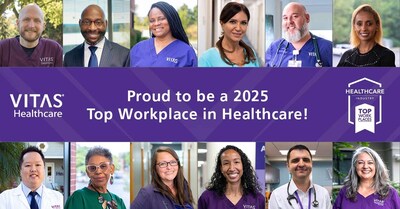
VITAS® Healthcare, Leading Hospice Provider, Named a 2025 Top Workplace in Healthcare by Top Workplaces USA

MIRAMAR, Fla., Sept. 25, 2025 /PRNewswire/ — VITAS Healthcare, the nation’s leading provider of end-of-life care, has been named a 2025 Top Workplace in Healthcare by Top Workplaces USA, a national program that honors organizations based solely on employee feedback. VITAS is one of only 57 healthcare organizations nationwide with more than 1,000 employees to receive this distinction.

The award reflects VITAS’ ongoing commitment to fostering a purpose-driven culture that supports its employees and enhances the quality of hospice and palliative care delivered to patients and families.

“This honor belongs to our employees,” said Ava Padmore-Lewis, senior vice president and chief human resources officer for VITAS. “Their compassion, dedication and purpose-driven work are what make VITAS a special place for patients, families and each other. I am proud of the culture they have created and the difference they make every day.”

Employee voices were central to the recognition, underscoring the organization’s longstanding commitment to its people and mission. VITAS team members were invited to share their experiences in a confidential survey earlier this year. Responses measured key drivers of engaged workplace cultures, including alignment, connection and purpose.

One anonymous employee stated, “I’m in love with the culture at VITAS. The mentality to help each other makes you feel like you’re never alone. To be able to work with leaders who will listen to your concerns and help you work through those concerns is truly one of a kind.”

“I would recommend VITAS as a great place to work,” said another undisclosed employee. “The leaders genuinely care for their employees’ success and have created a supportive environment. They encourage a culture of kindness, respect and integrity, which our leadership best exemplifies.”

VITAS continues to invest in its workforce through career development programs, employee recognition platforms, and new technologies that enhance collaboration and productivity. In 2023, VITAS received a best-in-class award from the HRO Today Association for excellence in employee experience in healthcare.

Founded in 1978, VITAS today employs nearly 12,000 professionals across 15 states and the District of Columbia, delivering compassionate hospice and palliative care to 22,000 seriously ill patients each day.

VITAS is hiring! Join a team where purpose meets compassion. Explore meaningful job opportunities at careers.vitas.com.

About VITAS® Healthcare
VITAS Healthcare is the nation’s leading provider of end-of-life care. For almost 50 years, VITAS (pronounced VEE-tahs) has delivered compassionate hospice and palliative care to seriously ill patients and their families. Headquartered in Miramar, Florida, the company operates 58 service areas across 15 states (Alabama, California, Connecticut, Delaware, Florida, Georgia, Illinois, Kansas, Missouri, New Jersey, Ohio, Pennsylvania, Texas, Virginia and Wisconsin) and the District of Columbia. 

VITAS cares for more than 22,000 patients daily, primarily wherever they call home, as well as in its inpatient hospice settings and through partnerships with hospitals, nursing homes and assisted living communities. With a team of nearly 12,000 employees, VITAS was named a 2025 Top Workplace in Healthcare. Visit www.vitas.com.

Media inquiries contact: media@vitas.com, 877-848-2701 

Cision View original content to download multimedia:https://www.prnewswire.com/news-releases/vitas-healthcare-leading-hospice-provider-named-a-2025-top-workplace-in-healthcare-by-top-workplaces-usa-302567348.html

SOURCE VITAS Healthcare

PECO Pallet Commits to Net Zero Emissions by 2050, Strengthens Sustainability Program with Lifecycle Analysis and GHG Inventory

ITASCA, Ill., Sept. 25, 2025 /PRNewswire/ — PECO Pallet, Inc. (PECO), one of North America’s leading pooled pallet rental providers, has enhanced its long-standing commitment to environmental sustainability, completing a study detailing the company’s carbon footprint, establishing a framework for continued GHG reduction and committing to net zero emissions by 2050.

“PECO has embraced sustainability from the start. It’s not something we’ve added on, it’s built into how we operate,” said Joe Dagnese, PECO’s chief executive officer. “Our share and reuse model is inherently circular and reduces waste, emissions and resource consumption. That not only delivers environmental benefits, its core to our business model and the value we provide to our customers.”

Driving to Net Zero

PECO completed a formal third-party verified (Tunley Environmental) GHG inventory for 2023 establishing an accurate baseline to measure future progress. This work created the framework for setting environmental targets, which include:

  • Net zero emissions by 2050: Achieve net zero GHG emissions.
  • Short-term: Reduce absolute Scope 1 and 2 emissions by 55 percent by 2035, aligned with the Science Based Target Initiative (SBTi).
  • Waste: Divert 35 percent of waste from landfill by 2035.

PECO also completed a lifecycle analysis (LCA) which revealed that PECO’s pooled pallet model produces 88 percent fewer emissions than one-way whitewood pallets, which often are disposed of after a single use. The analysis used actual PECO operational data to compare against whitewood pallets.

The pooled pallet model is an example of supply chain “circularity” in action. Operating in a continuous loop, it extends pallet lifecycles, reduces waste, increases efficiency and conserves resources leading to less impact on the environment.

“We have a responsibility to be a good steward of the environment, and that’s why we’ve taken steps to measure our greenhouse gas emissions, set reduction targets, and invest in tools to better understand our impact,” added Dagnese. “Today’s customers want more than a sustainable product; they’re looking for a sustainable partner and the value we provide goes well beyond the pallet itself.”

About PECO Pallet, Inc. – Itasca, IL-based PECO Pallet is one of North America’s leaders in pallet rental services and provides tens of millions of its red block pallets to major grocery and consumer goods manufacturers in the U.S., Mexico, and Canada. PECO Pallet’s tremendous growth over the last 25+ years reflects the company’s commitment to quality and service. Customers using PECO’s superior pallets experience less product damage, greater efficiency, improved safety, and significant cost savings. For more information about PECO Pallet, please visit www.pecopallet.com.

Cision View original content to download multimedia:https://www.prnewswire.com/news-releases/peco-pallet-commits-to-net-zero-emissions-by-2050-strengthens-sustainability-program-with-lifecycle-analysis-and-ghg-inventory-302566551.html

SOURCE PECO Pallet, Inc.

From Compassion to Connection — Inside T-Mobile’s Disaster Response

T-Mobile employees across network engineering, public safety, community support and field ops prepare year-round for the moments that matter most. When the unexpected hits, their training, new tools and hard-earned experience come together to keep families and first responders connected — fast and with compassion.

That preparation came into action when Monika Thornton, Program Manager for T-Mobile’s Consumer Group, was deployed to St. Louis after a tornado.

“When we arrived at the fire station with our community support truck, the firehouse told us, ‘We don’t actually need the Wi-Fi. But this community does,’” Thornton said. “And then we joined them, going house to house, inviting neighbors to use our charging stations and Wi-Fi. Later, the first responders showed us a block where homes had collapsed — families were eating dinner outside because they had nowhere else to go. We were able to give them power, and the firehouse gave them hope.

“That night, we were more than a network. We were a neighbor.”

September’s National Preparedness Month is a reminder that readiness can save lives. And for T-Mobile, that means constantly evolving the technologies and playbooks that keep families, first responders and communities connected when it matters most.

“Connectivity is more than calling loved ones, it’s an essential service,” says Nicole Hudnet, Industry Segment Adviser for T-Mobile for Business. “It enables 911, power restoration, road clearing, prescription access and even grocery transactions. We don’t just restore signal. We help restore life as people know it.”

The goal is simple: keeping communities and first responders connected. The approach is layered, with our largest ever mobile cell sites on heavy duty trucks and drones that provide temporary coverage, software that reroutes network traffic during congestion and conserves power, hardened sites with batteries and generators and satellites in low earth orbit linking directly to smartphones — all led in the field by T-Mobile’s experienced and compassionate emergency response teams. And with 50% more drones, more satellite trucks and trailers, and nearly double the number of VSATs — small portable satellite antennas that provide temporary wireless service — T-Mobile is equipping teams to move faster, go farther and reach more people when disasters hit.

An Evolving Tool Kit

“There isn’t a one size fits all in disaster recovery,” says Stacy Tindell, Senior Director of National Operations at T-Mobile. “You have to have a lot of different tools in the tool kit to respond to different types of situations that happen on the ground.”

A key part of that toolkit is an expanded drone program, which is transforming disaster response by providing critical coverage, situational awareness and communications access in areas unreachable by ground vehicles.

The various drones available provide a range of important functions in disaster scenarios. For example, heavy-lift drones have a 60-minute battery endurance for multi-mile range use and 100 lb. payload, which is perfect for rapid deployable communications tools and cargo drops.

“Some of the drones that I’m flying, like the tethered drone systems, are capable of reaching 400 feet high to operate as a mobile coverage source on T-Mobile’s 5G network, creating a coverage bubble of about two miles,” says Kris Rhoades, Senior Disaster Recovery Manager at T-Mobile. “That lets us reach areas without ground access and provide that critical communications piece for first responders.”

In addition to coverage, search and rescue drones are equipped with thermal imaging, high-resolution cameras and AI tools to help locate missing persons or give first responders aerial visibility of areas needing support.

Smart and Self-Healing: The Self-Organizing Network (SON)

Another innovation powering T-Mobile’s readiness is the Self-Organizing Network (SON), which uses automation, AI and machine learning to monitor the network and make real-time adjustments — no human intervention needed.

SON can automatically tilt antennas to strengthen coverage, reroute signals around outages and scale back non-essential services to conserve power when running on backup generators or batteries, keeping people connected as long as possible.

Leveraging the Network

Another key part of T-Mobile’ s disaster response strategy is T-Priority, the cutting-edge public safety solution that combines a dedicated 5G network slice with an ecosystem of tools including drones and deployables. The slice helps provide public safety agencies with lower latency and faster speeds more consistently with the highest priority across all 5G bands. So, the essential tools that firefighters, paramedics, utility crews and healthcare teams depend on every day — like smartphones, tablets, thermal imaging and radios — run on a network that keeps up with them.

“Technologies like T-Priority and network slicing will continue to help create a streamlined and effective way to keep connectivity happening in real time during high stress situations,” says Luis Reyes, Vice President of Field Engineering for the West Region at T-Mobile.

T-Mobile’s direct-to-cell satellite solution, T-Satellite with Starlink, is another critical component of its disaster response playbook.

“T-Satellite is a game changer,” Tindell says. “We first turned it on during Hurricane Helene in 2024 and then put those lessons to work when Southern California faced devastating wildfires. Across those events, it carried more than 1 million texts — including to 911 — and over 200 Wireless Emergency Alerts.”

Satellite texting, including the ability to text 911, is now available for almost every smartphone, with data use for select apps already available on Pixel 10. This has been especially useful in areas where cell towers are down or inaccessible.

Proven Tools and Community Commitment

These advancements build on T-Mobile’s on-the-ground response including deployable units, power redundancy and community outreach. Deployable assets like SatCOWs (Satellite Cell on Wheels) and SatCOLTs (Satellite Cell on Light Trucks) can be quickly dispatched to restore coverage when infrastructure is damaged.

“These are cell sites on wheels. We roll them in to provide temporary coverage after an event,” says John Melbert, Manager of Emergency Operations. “It’s like picking the right tool from a toolbox — you don’t always need a bigger hammer. We assess the need, then assemble the right assets.”

“As satellite tech advances, each truck can do more,” he adds. “We can offer services from a single vehicle that weren’t possible before.”

And sometimes, the right tool is meeting people where they are.

“When we were in Malibu during the devastating fires in January, a man walked up needing power banks, not for himself, but for six people staying in his home who had lost everything,” Thornton recalls. “Our team gave him chargers and Wi-Fi so they could file insurance claims, reach out to loved ones and feel safe. It reminded me that the most difficult situations can bring out the best in people — and our role is to support that goodness.”

Learn more at T-Mobile.com/news/emergency-response.

###

T-Satellite: Available with compatible device in most outdoor areas in the U.S. where you can see the sky. Satellite service, including text to 911, may be delayed, limited, or unavailable. Included with Experience Beyond; or $10/mo.; auto renews monthly. Cancel anytime. T-Priority features available for eligible emergency response organizations on select plans. Capable device required. Performance baseline commits available network resources to help maintain threshold throughput, even in times of congestion. See 5G device, coverage and access details at T-Mobile.com.

Posted in UncategorizedTagged

Environmental Consulting Services Market Is Projected To Reach US$63.94 Billion By 2031 At CAGR Of 6.5% | The Insight Partners

NEW YORK, Sept. 25, 2025 /PRNewswire/ — According to a new comprehensive report from The Insight Partners, the global environmental consulting services market is observing significant growth, owing to the emphasis on recycling and waste minimization in production and supply chains.

The Insight Partners Logo

The report runs an in-depth analysis of market trends, key players, and future opportunities. The environmental consulting services market generally comprises a vast array of service types, media types, industry verticals, and geography, which are expected to register strength in the coming years.

The report from The Insight Partners, therefore, provides several stakeholders—including environmental consulting services providers, law enforcement & government agencies, cybersecurity firms, regulatory & standards organizations, and end-users—with valuable insights into how to successfully navigate this evolving market landscape and unlock new opportunities.

Check valuable insights in the Environmental Consulting Services Market report. You can easily get a sample PDF of the report – https://www.theinsightpartners.com/sample/TIPTE100000749

Overview of Report Findings

1. Market Dynamics and Insights: As governments, corporations, and consumers are seeking more sustainable practices, industries are being compelled to reassess and redesign their operations to reduce waste generation, increase material reuse, and integrate circular economy principles. Environmental consultants are crucial in guiding this transition, offering expertise in regulatory compliance, waste auditing, life cycle assessments, and sustainable materials management. Legislation is a fundamental enabler of this tendency.

For instance, the European Union’s Circular Economy Action Plan requires member states to adopt comprehensive waste reduction strategies, influencing companies to reevaluate their waste streams. In the United States, the Environmental Protection Agency (EPA) has promoted sustainable materials management through initiatives that encourage industries to adopt recycling-based manufacturing. As a result, businesses seek consulting firms to help implement new processes, ensure compliance, and report progress under evolving regulatory frameworks.

2. Moreover, numerous companies across the globe are committing to zero-waste goals. Multinational corporations such as Unilever and Apple Inc have publicly pledged to reduce or eliminate waste. For instance, Apple Inc is unveiling a roadmap to achieve zero carbon for its supply chain and products by 2030. The company has built disassembly robots such as “Daisy” to recover valuable materials from used devices, showcasing an innovative approach to recycling. To execute such strategies effectively, these corporations often rely on environmental consultants for feasibility studies, environmental impact assessments, and supply chain audits. Additionally, with increased investor and consumer scrutiny on corporate sustainability performance, firms are pressured to demonstrate environmental stewardship transparently. This increases the demand for third-party consultants to verify waste reduction claims and provide strategic insights into sustainable production models.

3. Regional Insights: The demand for environmental consulting services is rising dramatically owing to stringent European Union (EU)-wide environmental policies, aggressive climate neutrality targets, and a cultural shift toward sustainability.

The European Union’s Green Deal aims for net-zero greenhouse gas emissions by 2050, accelerating investments in renewable energy, energy efficiency, biodiversity conservation, and pollution reduction. As a result, organizations across industries are increasingly reliant on consultants to navigate complex regulations such as the EU Emissions Trading System (EU ETS) and the Corporate Sustainability Reporting Directive (CSRD). Environmental consultants in Europe are in high demand to provide services in carbon footprint analysis, lifecycle assessments, biodiversity impact studies, and remediation strategies for brownfield redevelopment.

Moreover, the circular economy agenda is pushing businesses to rethink resource use and waste management, creating new niches for environmental expertise in sustainable product design and supply chain assessments. The growing number of urban development projects and favorable government initiatives is boosting the environmental consulting services market during the forecast period. According to European Commission data of March 2025, the European Commission and the Hauts-de-France Region, acting as the Entrusted Entity for the European Urban Initiative (EUI), have revealed the outcomes of the third call for innovative urban projects. Backed by €94 million (US$101.69 million) from the European Regional Development Fund (ERDF), 20 projects across 13 EU Member States will trial cutting-edge solutions to enhance sustainability and digital transformation in cities. These real-world pilot initiatives include reusing electric vehicle batteries in Tilburg, Netherlands, and converting underused public buildings into community hubs in Košice, Slovakia.

Each project is eligible to receive up to €5 million (US$5.41 million), with the European Regional Development Fund (ERDF) covering 80% of costs. This investment aligns with the growing demand for environmental consulting services, as cities increasingly seek expert guidance to implement green strategies and meet regulatory targets. The growth in urban development is expected to drive significant growth in the environmental consulting services market, particularly in sustainable infrastructure and circular economy solutions.

4. Geographical Insights: North America is expected to dominate the environmental consulting services market with the highest market share in 2024.

Get Research Sample Copy of the Environmental Consulting Services Market: https://www.theinsightpartners.com/sample/TIPTE100000749

Market Segmentation

  • The environmental consulting services market is segmented into investment assessment and auditing, permitting and compliance, project and information management, monitoring and testing, and others based on service type.
  • In terms of media type, the environmental consulting services market is divided into water management, waste management, and others.
  • By industry vertical, the environmental consulting services market is segmented into energy and utilities, chemicals and petroleum industries, manufacturing and process industries, transportation and construction sectors, and others.
  • The environmental consulting services market is segmented into five major regions: North America, Europe, Asia Pacific, the Middle East and Africa, and South and Central America.

Competitive Strategy and Development

– Key Players: A few major companies operating in the environmental consulting services market include AECOM, Jacobs Solutions Inc, Arcadis NV, Bechtel Corp, The ERM International Group Limited, Tetra Tech Inc., Antea Group, Stantec Inc, Ramboll Group A/S, and SLR Consulting, among others.

– Trending Topics: Environmental & Sustainability Consulting, Environmental, Social and Governance Consulting, and Environmental Risk Management, among others.

Global Headlines on the Environmental Consulting Services Market

  • ” AECOM announced it has been awarded three architect-engineer indefinite delivery, indefinite quantity (IDIQ) contracts by the U.S. Army Corps of Engineers (USACE) Honolulu District. Under these contracts, AECOM will provide architectural design, civil design, and environmental planning services across the Pacific region in support of the U.S. Army’s mission readiness and infrastructure modernization. The three multi-award IDIQ contracts have a combined contract ceiling of more than US$400 million.”
  • Arcadis in collaboration with the Consulate General of the Kingdom of the Netherlands in Hong Kong and Macau, is proud to host the Symposium on Nature Positive Cities. This impactful event gathers thought leaders and industry experts to explore transformative solutions that integrate sustainability into urban development. With a spotlight on Hong Kong’s Northern Metropolis, the symposium highlights the potential for nature-positive urban environments to drive ecological preservation and economic growth.

Get Premium Copy of Environmental Consulting Services Market Size and Growth Report by 2031 at:  https://www.theinsightpartners.com/buy/TIPTE100000749 

Conclusion

The growing industrial expansion, stringent environmental regulations, and rising focus on corporate sustainability initiatives (ESG) are among the main factors driving the demand for environmental consulting services. Rapid urbanization and emphasis on recycling and waste minimization in production and supply chains are fueling the market. The growth of renewable energy projects and a growing number of green infrastructure projects are expected to create lucrative opportunities in the market during the forecast period. Further, growing environmental concern and industrial demand for AI-driven models and consulting models are expected to generate future growth opportunities in the market.

Trending Related Reports:

About Us:

The Insight Partners is a one-stop industry research provider of actionable intelligence. We help our clients in getting solutions to their research requirements through our syndicated and consulting research services. We specialize in semiconductor and electronics, aerospace and defense, automotive and transportation, biotechnology, healthcare IT, manufacturing and construction, medical devices, technology, media and telecommunications, and chemicals and materials.

Contact Us:
If you have any queries about this report or if you would like further information, please get in touch with us:
Contact Person: Ankit Mathur
E-mail: ankit.mathur@theinsightpartners.com
Phone: +1-646-491-9876
Also Available in : Korean | German | Japanese | French | Arabic | Chinese | Italian | Spanish

Logo: https://mma.prnewswire.com/media/1586348/5449703/The_Insight_Partners_Logo.jpg

Cision View original content:https://www.prnewswire.com/news-releases/environmental-consulting-services-market-is-projected-to-reach-us63-94-billion-by-2031-at-cagr-of-6-5–the-insight-partners-302567257.html

SOURCE The Insight Partners

Center for Disaster Philanthropy Announces $6.8M in New Grants from Truist Foundation-Supported Fund for Ongoing Helene Recovery Efforts in Western North Carolina

WASHINGTON, D.C., September 25, 2025 /3BL/ – The Center for Disaster Philanthropy (CDP), a nonprofit organization that mobilizes philanthropy to support recovery from disasters, today announced $6.8 million in funding for community-led recovery efforts as part of the second round of grants from its Truist Foundation Western North Carolina Recovery and Resiliency Fund to support ongoing recovery efforts following Hurricane Helene. This investment in recovery is part of Truist and Truist Foundation’s $725 million Truist Cares for Western North Carolina initiative.

“We know that when local communities and organizations are at the center of efforts to rebuild, leading the way with their knowledge and dedication, long-term recovery is more sustainable and effective,” said Patricia McIlreavy, President and CEO of CDP. “Thanks to Truist Foundation’s support, we are proud to stand alongside the people and organizations of Western North Carolina as recovery from Hurricane Helene continues. The strength and creativity of local leaders inspire us, and we are committed to supporting their vision for a recovery that includes everyone. Together, we can help ensure that every community has the resources and support it needs to rebuild and thrive.”

In September 2024, Hurricane Helene devastated Western North Carolina with damaging winds, unprecedented levels of flooding and landslides. The storm killed 108 people, including 100 from Western North Carolina, and destroyed dozens of homes, businesses, and other critical infrastructure in the area. A year later, the community continues to rebuild and experience the lasting impacts of Helene’s devastation, even as several encouraging recovery efforts are underway.

In January 2025, Truist Foundation announced the launch of CDP’s Truist Foundation Western North Carolina Recovery and Resiliency Fund, a partnership that is part of a $725 million commitment from Truist and Truist Foundation called Truist Cares for Western North Carolina. Through the Fund, CDP addresses medium- and long-term needs to help strengthen the region’s housing and small businesses. In June 2025, CDP announced that the first $3.3 million in grants had been awarded to four organizations actively leading recovery efforts.

“At Truist Foundation, we believe that community investment is most impactful when it’s rooted in the voices and leadership of local communities,” said Lynette Bell, president of Truist Foundation. “Guided by Truist’s purpose to inspire and build better lives and communities, we are proud to partner with the Center for Disaster Philanthropy to support organizations that are driving long-term recovery across the region. This second round of grants reflects our continued commitment to helping Western North Carolina rebuild in ways that are inclusive, adaptive and forward-looking.”

CDP’s grantmaking is guided by its assessment of damages, systemic marginalization, community capacity and unmet needs to support the area’s equitable recovery.

Learn more about the Round 2 grantees below:

  • Appalachian Community Capital Development Foundation was awarded $1 million to advance small business recovery and resilience in Western North Carolina through their connection to community development financial institutions (CFDIs) and direct small business grant opportunities. Funds will also support technical assistance and organizational infrastructure development to sustain operations and strengthen planning around future disasters.
  • Boone Area Chamber of Commerce Economic Development Commission Foundation received $250,000 for long-term economic recovery and small business resilience in Ashe, Avery and Watauga Counties. The funding will support direct subgrants and recovery training programs for small businesses.
  • Carolina Farm Stewardship Association received $200,000 to support independent farmers through its Western North Carolina Food System Recovery and Resilience Initiative. Funding will support small business grant opportunities, technical assistance and tools and resources for farms impacted by Helene.
  • Children and Families Resource Center received $100,000 to support long-term housing recovery and supportive services through their disaster case navigation program in Henderson County.
  • Colaborativa La Milpa, as a fiscal sponsor for PODER Emma, received $500,000 for long-term housing recovery in the Carolina Wren Housing Cooperative in the unincorporated Buncombe County community of Emma. The funding will support mobile home replacement and refurbishment, first-time homebuyer education and economic recovery initiatives.
  • High Country Caregiver Foundation received $350,000 to support housing repair and replacement in Avery, Mitchell and Yancey Counties. The funding will support dozens of families enrolled in the organization’s kinship care case management system by repairing heavily impacted homes, including mobile homes. The initiative aims to stabilize housing to allow families to remain together and more fully participate in the organization’s support programs.
  • Madison Alliance for Rebuilding Communities, through fiscal sponsor Community Housing Coalition of Madison County, received $488,625 for its Rebuild and Fortification Program. The funding will support direct repairs, rebuilds and mitigation, along with associated case management services, in rural Madison County communities.
  • Mennonite Disaster Service was awarded $300,000 to support the renovation of a church into a dormitory to house cohorts of up to 40 skilled volunteers who will deploy throughout the impacted region to repair and rebuild homes and private-access bridges.
  • Mitchell County Development Foundation received $510,000 to advance small business recovery. The funding will support small business grant opportunities in Spruce Pine and throughout the county to allow businesses to reopen or sustain operations.
  • MountainTrue was awarded $750,000 to support waterway cleanup in Helene-impacted waterways. The initiatives will support small businesses that drive the outdoor recreation economy, monitor and help restore river water quality, and enhance resiliency.
  • The National Community Pharmacists Association Foundation received $300,000 to support independent community pharmacies throughout Western North Carolina as they recover from Helene. This funding will support equipment, technical assistance, certification and access to workforce development resources that will increase community resilience.
  • Northwestern Housing Enterprises, Inc., also known as Northwestern Regional Housing Authority (NWRHA), received $750,000 for long-term housing recovery. Funding will support the development of two affordable-housing communities in Yancey and Avery Counties.
  • Pisgah Legal Services received $400,000 to provide no-cost disaster-related legal services to survivors and eligible disaster-impacted nonprofit organizations across 18 counties in Western North Carolina.
  • Swannanoa Communities Together, via fiscal sponsor Asheville Creative Arts, Inc., received $300,000 for housing recovery, case navigation services and community-led disaster recovery initiatives for the unincorporated Swannanoa Valley.
  • Transylvania Habitat for Humanity received $585,000 for housing recovery and case navigation services in Transylvania County. The funding will support sustainable long-term housing by delivering disaster-resilient housing solutions and reinforcing community infrastructure.

CDP funds a wide range of critical programs in communities devastated by wildfires, hurricanes, flooding and other natural hazards, as well as humanitarian crises. These efforts include mental health initiatives, housing repair, food access and other essential services. CDP also offers free educational resources and advises corporations, foundations and individual donors to ensure that they can more effectively support equitable, community-led disaster preparedness and recovery.

# # #

About the Center for Disaster Philanthropy

CDP mobilizes philanthropy to strengthen communities’ ability to withstand disasters and recover equitably when they occur. It provides expert advice and educational resources, supports diverse coalitions and manages domestic and international disaster funds on behalf of corporations, foundations and individuals through targeted, holistic and localized grantmaking. Find out more at disasterphilanthropy.org and on X and LinkedIn.

About Truist Foundation

Truist Foundation is committed to Truist Financial Corporation’s (NYSE: TFC) purpose to inspire and build better lives and communities. The foundation, an endowed private foundation established in 2020 whose operating budget is independent of Truist Financial Corporation, makes strategic investments in a wide variety of nonprofit organizations centered around two focus areas: building career pathways to economic mobility and strengthening small businesses to ensure all communities have an equal opportunity to thrive. Embodying these focus areas are the foundation’s leading initiatives — the Inspire Awards and Where It Starts. Learn more at Truist.com/Foundation.

Posted in UncategorizedTagged

EHS Guide: Building a Modern Environmental Health and Safety Program

Environmental, Health, and Safety (EHS) programs are vital for safeguarding employees, ensuring regulatory compliance, and maintaining uninterrupted business operations. Navigating the complexities of EHS regulations can be a formidable task. This guide cuts through the complexity, outlining the core elements of an effective EHS strategy and providing actionable insights to move your business toward proactive risk management.

Table of Contents

Understanding EHS Regulations and Standards

Establishing a strong EHS program starts with understanding the regulatory framework that governs workplace safety and environmental protection.

Overview of key regulatory bodies

While EHS regulations can vary by region and industry, several prominent organizations set the standard for environmental health and safety practices. Key regulatory bodies include:

Navigating regulatory uncertainty: Why best practices matter

The EHS regulatory environment has always been subject to shifting political priorities, economic pressures, and public demands. In times of regulatory upheaval, businesses that maintain high EHS standards are better positioned to safeguard their workforce, protect surrounding communities, and maintain public trust.

Proactive EHS practices can:

  • Reduce operational risks: Strong EHS protocols minimize the likelihood of incidents that could lead to reputational damage, legal penalties, or operational downtime.
  • Strengthen employee retention and morale: Proactive EHS practices signal a commitment to employee well-being, boosting morale and reducing turnover.
  • Preserve community trust: Companies that demonstrate environmental responsibility are more likely to build positive relationships with stakeholders and avoid public backlash.

To stay informed on evolving EHS regulations, businesses should designate a compliance lead or team responsible for tracking regulatory updates. Subscribing to updates from governing bodies such as OSHA, EPA, and ILO can provide timely insights. Industry associations often deliver guidance on best practices and regulatory trends, while EHS management software can automate compliance tracking and alert teams to important changes.

Related resources:

Building an Effective EHS Program

Developing an effective EHS program requires a structured, strategic approach. While the following is by no means a comprehensive plan, this list can act as a framework for building a highly effective EHS program:

Conduct a thorough EHS risk assessment

  • Identify potential hazards in the workplace, including physical, chemical, ergonomic, and biological risks.
  • Conduct site audits and employee interviews to uncover risks that may not be immediately obvious.
  • Use risk assessment tools to prioritize threats based on severity and likelihood.

Related resources:

Develop clear EHS policies and procedures

  • Establish clear protocols for safety procedures, emergency response, and employee conduct.
  • Ensure policies are well-documented, easily accessible, and consistently updated.
  • Align EHS policies with regulatory requirements and industry best practices.

Related resource: The Complete Guide to Creating an EHS Policy

Establish emergency response and incident reporting processes

  • Develop a detailed emergency response plan that outlines evacuation procedures, medical response protocols, and communication plans.
  • Train employees on how to respond to emergencies through regular drills.
  • Implement an incident reporting system to track and investigate workplace incidents.

Related resources:

Develop ongoing training programs

  • Create interactive training sessions that engage employees and reinforce safety concepts.
  • Tailor training to specific roles, ensuring workers understand the risks most relevant to their tasks.
  • Provide refresher courses to ensure EHS knowledge remains top of mind.

Related resources:

Create KPIs to measure EHS efforts

  • Develop key performance indicators (KPIs) that track progress, such as incident rates, audit scores, and training completion rates.
  • Use EHS data to identify trends and proactively address potential risks.

Related resource: Tips for Effectively Communicating ROI to Secure the EHS Budget You Need

Make EHS a core organizational value

  • Encourage senior management to actively participate in EHS initiatives and communicate the importance of safety to all employees
  • Foster a safety-first culture where employees feel empowered to report risks and suggest improvements.
  • Highlight the role of leadership in driving accountability and ensuring long-term EHS success.

Related resources:

Leveraging EHS Management Systems

EHS management systems provide structure for organizations to build, monitor, and improve EHS performance. These systems centralize critical safety data and streamline compliance reporting, enabling proactive risk management.

Key features often include incident tracking to document and investigate safety incidents, compliance management tools that track regulatory requirements and deadlines, and training management features that monitor employee certifications and training progress.

To evaluate the effectiveness of EHS software, businesses should track key performance indicators such as incident reduction rates, audit completion rates, and training completion metrics. Monitoring these metrics allows organizations to assess program success, identify areas for improvement, and demonstrate compliance during regulatory reviews.

Related Resources:

Compliance and Risk Management Strategies

Integrating proactive risk management strategies with compliance efforts helps EHS teams create safer work environments while maintaining operational efficiency.

The importance of proactive risk management

Waiting until an incident occurs to address safety risks can lead to costly fines and, most importantly, harm to employees. Proactive risk management ensures that potential hazards are identified, evaluated, and mitigated before they escalate.

Part of this management approach involves staying ahead of regulatory changes. This ensures businesses are always prepared, minimizing the risk of enforcement actions or the need for last-minute compliance adjustments.

Perhaps most importantly, a strong risk management strategy supports business continuity, keeping operations running smoothly even in the face of regulatory shifts or unexpected disruptions.

Balancing compliance with broader organizational goals

EHS compliance should not be viewed as a standalone function but rather as a core component of your business. When safety and environmental initiatives reinforce corporate priorities such as sustainability or efficiency, they contribute to long-term success.

Compliance data can also serve as a valuable business tool, offering insights into operational inefficiencies and highlighting areas for improvement. When leadership actively prioritizes EHS, it reinforces a culture where safety becomes second nature rather than an obligation. Investing in scalable EHS solutions further strengthens compliance efforts to create a safer, more resilient workplace.

Related resource: Risk Management vs. Compliance: Key Differences & Strategic Impact

Strategies for Fostering an EHS-Focused Workplace Culture

A strong EHS program does more than protect employees—it also strengthens morale and retention. When workers see that their employer is committed to their well-being, they are more likely to feel valued and engaged.

How do leaders accomplish this?

  • Lead by example: When executives and managers follow safety protocols and participate in EHS initiatives, it reinforces their importance.
  • Encourage open communication: Creating a culture where employees feel comfortable reporting hazards or suggesting improvements helps prevent incidents before they occur.
  • Recognize and reward safe behaviors: Acknowledging employees who prioritize safety reinforces a positive, proactive approach to EHS.
  • Integrate EHS into onboarding and training: Ensuring new hires understand safety expectations from day one helps build long-term compliance.

In industries where there is a lot of competition for talent, a reputation for prioritizing workplace safety can also serve as a differentiator, attracting skilled professionals who seek a responsible and supportive employer.

Emerging Trends in EHS

As workplace risks evolve, organizations must stay ahead of emerging challenges that impact employee safety and environmental responsibility.

The impact of climate change on workplace safety

Extreme weather events, rising temperatures, and worsening air quality are introducing new hazards that demand proactive safety measures. Heatwaves increase the risk of heat stress for outdoor and industrial workers, severe storms and flooding can disrupt operations and create hazardous conditions, and air quality concerns from wildfires or industrial pollution make respiratory protection and indoor air quality management critical priorities.

Organizations must continually assess climate-related risks and adapt their EHS protocols to safeguard employees and maintain business continuity.

Related resource: Bring on the Heat: Get Ahead of Summer EHS Hazards

How sustainable practices combat those risks

As climate change spurs greater environmental threats, sustainability is becoming a core component of EHS programs, with businesses recognizing the need to minimize their environmental footprint while staying compliant with evolving regulations.

Many companies are reducing emissions, improving waste management, and adopting energy-efficient practices. Sustainable procurement policies, such as prioritizing eco-friendly materials and ethical supply chains, are also gaining traction. Businesses that integrate sustainability into their EHS programs will be better equipped to navigate both environmental challenges and regulatory pressures in the years ahead.

Related resource: Navigating EHS and Sustainability in 2025: What to Expect from the Incoming U.S. Administration

The rise of smart EHS technologies

Advancements in technology are transforming how organizations manage EHS programs, making compliance tracking, risk assessment, and incident prevention more efficient.

Some of the most impactful advancements in smart EHS technology are transforming workplace safety by providing real-time monitoring, predictive insights, and streamlined compliance management:

  • Wearable safety devices: Smart helmets, biometric sensors, and connected PPE monitor worker health and alert teams to potential hazards in real time.
  • AI-powered risk analytics: Predictive analytics tools analyze historical safety data to identify patterns and potential risks before incidents occur.
  • IoT-enabled environmental monitoring: Sensors track air quality, temperature, and noise levels, ensuring compliance with safety regulations and improving worker conditions.
  • Cloud-based compliance management: Digital platforms centralize regulatory requirements, training records, and incident reports, simplifying compliance tracking and reporting.

These technologies are helping organizations shift from reactive safety management to proactive risk mitigation.

Related resource: EHS Technology: Learn About Key Workplace Safety Innovations

Whether you’re refining your compliance strategy or exploring new technologies to enhance workplace safety, expert guidance can help you navigate the complexities of EHS management.

Learn more about EHS auditing and compliance best practices by visiting Antea Group’s EHS Auditing and Compliance page.

Posted in UncategorizedTagged

Guiding Stars: The Fresh Start Effect of Fall

Originally published on Guiding Stars Health & Nutrition News

By Allison Stowell

Whether you have children starting a new school year or not, September brings “reset” vibes. We finally take on that stack of papers that was pushed aside to relish summer days. And we return to a regular pattern of grocery shopping and cooking as summer travel wanes. With wellness in mind, let’s embrace a fresh start this fall.

Menu Reset

The unofficial end of summer brings a menu shift. Maybe it’s due to the end of summer hours at work, the start of a school year, or less travel. Whatever the reason, it’s time to review the calendar and menu plan to match your new schedule. Return to regular grocery shopping. Choose new “ingredient prep” days—slice and dice fresh produce, and grill or roast proteins and vegetables. Keep whole grains and other starches in the pantry, and you’ll have everything you need to round out meals. Use these versatile ingredients to bring easy meals together as you adjust to a new schedule. And make meals easier with slow-cooked dishes and make-ahead meals.

Exercise Reset

It’s time to settle back into a pattern of regular fitness. This may mean a different approach than what has worked over the summer, especially for families adjusting to a new fall schedule. Remember that the priority is consistency and doing something most days of the week. If timing is tight, embrace fitness apps that make workouts more effective. You can use them at home, in the gym, or even on the sidelines of your child’s sports practice.

Nutrition Reset

This may be the perfect time to focus on your diet, especially if you enjoyed more take-out and seasonal treats this summer. Focus on meeting your nutrition goals as you shop and menu plan. For most of us, this means consuming less sodium, added sugar, and saturated fat. Rely on Guiding Stars to help. Guiding Stars evaluates food labels for you so you can quickly fill your cart with nutritious, star-earning foods that align with your goals. By doing so, you’ll be able to engage in a fresh start this fall with less effort and more ease.

Wellness Reset

Have other aspects of your wellness been neglected over the summer? Maybe it’s your sleep hygiene, regular stretching, hydration, or commitment to safely reducing stress. “Dry January” works for September too. If your summer pace was fun, but not centered around wellness, this is the moment to return to better balance.

About Guiding Stars

Guiding Stars is an objective, evidence-based, nutrition guidance program that evaluates foods and beverages to make nutritious choices simple. Products that meet transparent nutrition criteria earn a 1, 2, or 3 star rating for good, better, and best nutrition. Guiding Stars can be found in more than 2,000 grocery stores and through the Guiding Stars Food Finder app.

*Image by Freepik

Posted in UncategorizedTagged

Echo Carrier Sales Director and Premier Client Management Director Named to 2025 Women in Supply Chain Awards

Echo leaders Lauren Marciano and Stacey Lewis were named to this year’s award list

CHICAGO, Sept. 25, 2025 /PRNewswire/ — Echo Global Logistics, Inc. (“Echo”), a leading provider of technology-enabled transportation and supply chain management services, announced that Lauren Marciano, Director of Carrier Sales, and Stacey Lewis, Director of Premier Client Management, have been named to the 2025 Women in Supply Chain awards. These awards, hosted by Supply & Demand Chain Executive, honor women supply chain leaders and executives whose accomplishments and mentorship set an example for women in all levels of a company. Marciano was honored in the Trailblazers category and Lewis was recognized in the Workforce Innovator category.

“It’s an honor to be named to this award and to be recognized as a leader in our industry,” Marciano said. “It’s essential to value what women have contributed to the supply chain and serving as an example encourages others to pursue leadership opportunities and create innovations which further advance our business.”

“I’m proud to be included as a supply chain trailblazer,” Lewis said. “Creating advancements for women in logistics helps bring more talented pioneers into the transportation space and sets the standard for excellence across our various areas of expertise. I’m honored to be named to this award and excited for the future of women in the supply chain.”

“We’re happy to see two of Echo’s most outstanding professionals honored for this award,” said Paula Frey, Chief Human Resources Officer at Echo. “Lauren and Stacey’s contributions to our company and industry are emblematic of Echo’s values. Through women-centered initiatives and employee-led programs, Echo is proud to support the efforts of all of our emerging leaders.”

Echo is proud to support the contributions of women in the supply chain, as well as all of its dedicated team members of various backgrounds. One of the ways the company does this is through its Business Resource Groups (BRGs), employee-led organizations which provide space for team members to find community in their diverse backgrounds and identities. One such group, Women at Echo, partners with industry organizations such as Women in Trucking and Women Impacting Supply Chain Excellence to promote advancement and visibility for women in logistics. Learn more about this program by visiting: Inclusion and Belonging | Echo Global Logistics.

The Women in Supply Chain awards highlight forward-thinking women that think outside the box. From creating new initiatives to promoting leadership and developing technology solutions, all 225 winners were found to make a strategic and intentional impact on the supply chain.

About Echo Global Logistics

Echo Global Logistics, Inc. is a leading provider of technology-enabled transportation and supply chain management services. Headquartered in Chicago with more than 60 locations across North America, Echo offers freight brokerage and Managed Transportation Solutions for all major modes, including Truckload, Partial Truckload, LTL, Intermodal, Cross-Border, Food-Grade and Temperature-Controlled shipping, warehousing, and Warehouse Services. Named one of Newsweek’s Most Trusted Companies in America, Echo leverages its advanced, web-based and mobile app technology, analyzing data from its network of more than 50,000 transportation providers to help its 35,000 clients simplify the critical tasks involved in transportation management. For more information on Echo Global Logistics, visit: www.echo.com

ECHO: Corporate

MEDIA CONTACT:

Christopher Clemmensen
EVP of Marketing
Echo Global Logistics
312-784-2132

Cision View original content to download multimedia:https://www.prnewswire.com/news-releases/echo-carrier-sales-director-and-premier-client-management-director-named-to-2025-women-in-supply-chain-awards-302566263.html

SOURCE Echo Global Logistics

Johnson Pump Marine Marks Summer’s End with Local Youth Fishing Victories

CHARLOTTE, N.C., Sept. 25, 2025 /PRNewswire/ — Johnson Pump Marine, a brand of SPX FLOW, is proud to sponsor the “York County High School Anglers” youth fishing team in South Carolina. Of 27 teams, the budding fishing group finished third, with wins in the Clarks Hill and Lake Keowee tournaments. Several members recently earned top individual finishes too. Soon, the team will compete in the Major League Fishing Open on Lake Hartwell.


The program brings together about 50 middle and high school students who compete across South Carolina and Georgia. Sponsorships like this from Johnson Pump Marine helps cover tournament fees, fishing gear and food, making the sport accessible to more young anglers.

“Support from companies like Johnson Pump’s marine division makes it possible for these kids to enjoy the sport they love, compete and learn the importance of conservation,” said Team Coach, Mike Prater. “It’s not just about fishing; it’s about growing as young men and women and keeping the sport alive for future generations.”

To learn more about Johnson Pump’s marine advancements, visit the brand’s YouTube channel.

“Just like our pumps are built to keep fish healthy in live wells, our sponsorship helps keep opportunities alive for young anglers to study our industry and grow,” said Tim Gaddini, Johnson Pump Marine Product Manager at SPX FLOW. “Seeing these students succeed on the water reflects the same values we put into every product: reliability, conservation and passion for the sport.”

The Johnson Pump marine team looks forward to renewing the sponsorship again for the next tournament year.

About SPX FLOW, Inc.
Based in Charlotte, N.C., SPX FLOW, Inc. improves the world through innovative and sustainable solutions. The company’s product offering is concentrated in process technologies that perform mixing, blending, fluid handling, separation, thermal heat transfer and other activities that are integral to processes performed across a wide variety of nutrition, health, and industrial markets. SPX FLOW has operations in more than 25 countries and sales in more than 140 countries. To learn more about SPX FLOW, please visit www.spxflow.com

Media Contact:
Melissa Buscher, Chief Communications and Marketing Officer
Melissa.Buscher@spxflow.com 


Cision View original content to download multimedia:https://www.prnewswire.com/news-releases/johnson-pump-marine-marks-summers-end-with-local-youth-fishing-victories-302566327.html

SOURCE SPX FLOW, INC.

How Cisco Is Empowering Brazil’s Next Generation of Cybersecurity Talent

Technology has the power to transform lives, bridge opportunity gaps, and strengthen communities. At Cisco, our Purpose is to Power an Inclusive Future for All, building a more inclusive digital future where education and opportunity go hand in hand.

The urgency for skilled cybersecurity talent has never been greater. Recent research underscores this need: according to PwC’s Global Digital Trust Insights 2025, 65% of technology leaders in Brazil identify cyber risk as the top threat to manage—well above the global average. Meanwhile, Deloitte finds that 57% of global organizations plan to increase investment in digital security over the next two years.

Cisco’s Cyber Education program stand at the forefront of addressing this gap, preparing Brazil’s workforce for the challenges—and opportunities—of a digital era. The program is now celebrating its 11th edition and a landmark achievement: reaching one million students through Cisco Networking Academy.

A milestone year for cyber education

Cyber Education is a cornerstone of Cisco’s Brazil Digital and Inclusive initiative and the broader Cisco Networking Academy, which has touched more than 1,000,000 learners nationwide. Through the power of partnership—with educational institutions, government agencies, and industry leaders—we are building a talent pipeline that supports not only Brazil’s digital transformation but also the global cybersecurity ecosystem.

Within this overarching effort, the dedicated Cyber Education program, launched in 2020, has emerged as Brazil’s leading professional training initiative in cybersecurity. This multi-phase event brings together learners and educators from across Brazil to delve into cybersecurity basics and advanced concepts. To date, it has successfully equipped more than 8,000 professionals with the necessary skills to secure the nation’s digital future.

This year’s Cyber Education event is in full swing, with the first phase—the Cyber Education Marathon—running from September 1 to 21. During this, participants complete the “Cyber Threat Management” course, aimed at equipping learners with fundamental skills to identify, understand, and combat common cyber threats. Participants gain crucial insights into protecting digital assets and recognizing vulnerabilities in today’s interconnected world.

Those who succeed advance to compete for 1,500 professional training scholarships in sought-after fields like CCNA ITN (Introduction to Networks), a foundational course for understanding network infrastructure- a critical prerequisite for any aspiring cybersecurity professional. In addition to this is the CyberOps Associate certification, which trains individuals in the vital skills needed for cybersecurity operations, from monitoring and detecting threats to responding to incidents.

For many, this program is just the beginning of their cybersecurity journey. The crucial third phase actively connects graduates with strong job and internship opportunities with Cisco partners, customers, and more, helping to bridge the talent gap by placing qualified professionals directly into the workforce. Furthermore, the final stage of the program invests in training the next generation of instructors, creating a sustainable ecosystem that ensures continuous growth and impact of cybersecurity across Brazil for years to come.

To date, Cisco Brazil’s Cyber Education program has successfully placed over 1,500 students in job opportunities across the country, connecting them with 52 employability partners, including partners and customers.

To drive even greater participation and impact, Cyber Education rewards partner academies with the highest number of graduates across four key categories. This year, we’ll celebrate institutions that champion female participation in cybersecurity—a vital step toward a more inclusive future for all.

A win-win for learners, partners, and communities

For Cisco, Cyber Education is more than a program—it’s a shared commitment to lasting impact. By investing in skills, empowering talent, and opening doors to new careers, we are helping to shape a future where everyone can thrive.

As we embark on the 11th Marathon, Cisco and our partners are unlocking opportunities for individuals and communities alike proving that when technology meets Purpose, extraordinary things happen.

Learn more and register for the Cyber Education Marathon here

View original content here.

Posted in UncategorizedTagged