
The National Pest Management Association’s Bug Barometer® warns unpredictable winter weather could drive early pest emergence
FAIRFAX, Va., Feb. 23, 2026 /PRNewswire/ — After a winter marked by plunging temperatures and unusual precipitation patterns, experts at the National Pest Management Association (NPMA) are warning Americans to brace for an active pest season. NPMA’s latest Bug Barometer® forecast predicts pests could emerge sooner and in greater numbers across the country – driven by erratic weather that allowed more pests to survive while creating ideal breeding conditions ahead.
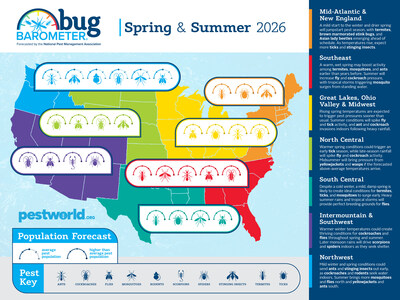
The Bug Barometer® analyzes weather patterns, long-term forecasts and pest biology to deliver regional predictions for pest activity nationwide. The experts say that while this winter’s polar vortex and heavy snowfall felt brutal to humans, that snow insulates the ground, creating a protective blanket that helped pests survive beneath the surface.
“This winter was about as extreme as it gets, and those conditions can create a domino effect that impacts pest activity well into spring and summer,” said Dr. Jim Fredericks, senior vice president of public affairs at NPMA. “This is our way of visualizing the science and giving homeowners a head start on preparing. Stay vigilant about prevention, as we’re expecting heightened activity from a number of pests that can threaten both property and health.”
NPMA’s Spring & Summer 2026 Bug Barometer® predictions include:
Mid-Atlantic & New England (Maine, New Hampshire, Vermont, Massachusetts, New York, Rhode Island, Connecticut, New Jersey, Pennsylvania, Delaware, Maryland, Washington, D.C., Virginia):
A mild start to the winter and drier spring will jumpstart pest season, with termites, brown marmorated stink bugs, and Asian lady beetles emerging ahead of schedule. As temperatures rise, expect more ticks and stinging insects.
Southeast (North Carolina, South Carolina, Georgia, Alabama, Florida):
A warm, wet spring may boost activity among termites, mosquitoes, and ants earlier than years before. Summer will increase fly and cockroach pressure, with tropical storms triggering mosquito surges from standing water.
Great Lakes, Ohio Valley & Midwest (West Virginia, Ohio, Kentucky, Indiana, Michigan, Wisconsin, Illinois, Iowa, Missouri, Minnesota):
Rising spring temperatures are expected to trigger pest pressures sooner than usual. Summer conditions will spike fly and tick activity, and ant and cockroach invasions indoors following heavy rainfall.
North Central (North Dakota, South Dakota, Nebraska, Kansas, Montana, Wyoming):
Warmer spring conditions could trigger an early tick season, while late-season rainfall will spike fly and cockroach activity. Midsummer will bring pressure from yellowjackets and wasps if the forecasted above-average temperatures arrive.
South Central (Mississippi, Tennessee, Louisiana, Arkansas, Oklahoma, Texas):
Despite a cold winter, a mild, damp spring is likely to create ideal conditions for termites, ticks, and mosquitoes to surge early. Heavy summer rains and tropical storms will provide perfect breeding grounds for flies.
Intermountain & Southwest (New Mexico, Arizona, Utah, Colorado, Nevada, California):
Warmer winter temperatures could create thriving conditions for cockroaches and flies throughout spring and summer. Later monsoon rains will drive scorpions and spiders indoors as they seek shelter.
Northwest (Idaho, Washington, Oregon):
Mild winter and spring conditions could send ants and stinging insects out early, as cockroaches and rodents seek water indoors. Summer brings more mosquitoes and flies north and yellowjackets and ants south.
Expert Tips to Protect Your Home
NPMA recommends these steps to reduce the risk of pest infestations:
- Seal entry points: Inspect your home’s exterior for cracks and gaps around windows, doors, utility pipes and foundations. Seal openings with caulk or weatherstripping.
- Eliminate standing water: Mosquitoes can breed in as little as a bottle cap of water. Regularly empty birdbaths, gutters, flowerpots and other containers around your property.
- Maintain your yard: Keep grass trimmed and shrubs pruned away from the home’s exterior. Remove leaf litter and debris where pests can hide.
- Store food properly: Keep food in airtight containers and promptly clean up crumbs and spills.
- Fix moisture issues: Repair leaky pipes and clogged drains. Ensure proper ventilation in basements, attics and crawl spaces.
- Work with a professional: Schedule a pest inspection with a qualified pest control professional who can identify vulnerabilities and implement a customized prevention plan for your home.
“The most effective pest management strategy is a proactive one,” added Dr. Fredericks. “Don’t wait until you see pests to take action. A professional inspection can identify problem areas before they become full-blown infestations, protecting your family’s health and your property investment.”
For more information and to find a trusted pest control professional near you, visit www.pestworld.org.
About the National Pest Management Association
The National Pest Management Association (NPMA), a non-profit organization with more than 4,000 members, was established in 1933 to support the pest management industry’s commitment to the protection of public health, food and property from the diseases and dangers of pests. For more information, visit PestWorld.org or follow @PestWorld on Facebook, Pinterest, TikTok and YouTube and @PestWorldOfficial on Instagram.
 View original content to download multimedia:https://www.prnewswire.com/news-releases/from-coast-to-coast-pests-are-coming-early-experts-forecast-heightened-activity-this-spring-and-summer-302694676.html
SOURCE National Pest Management Association


